-
-
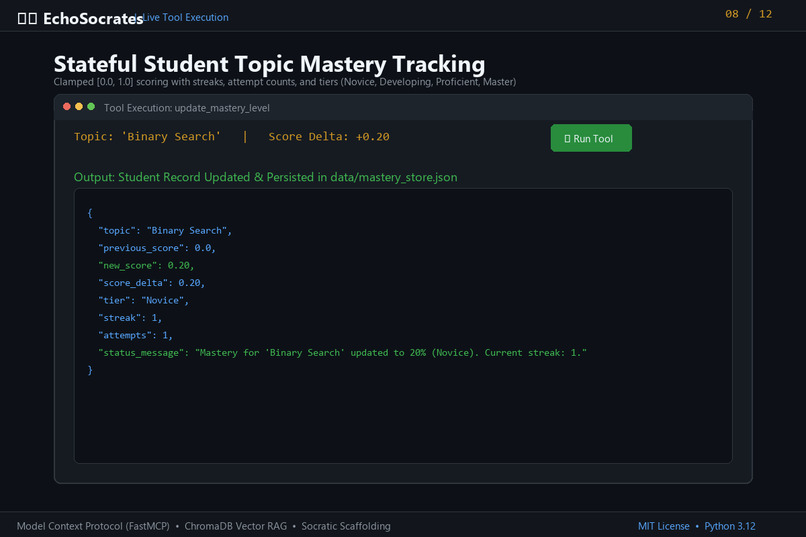
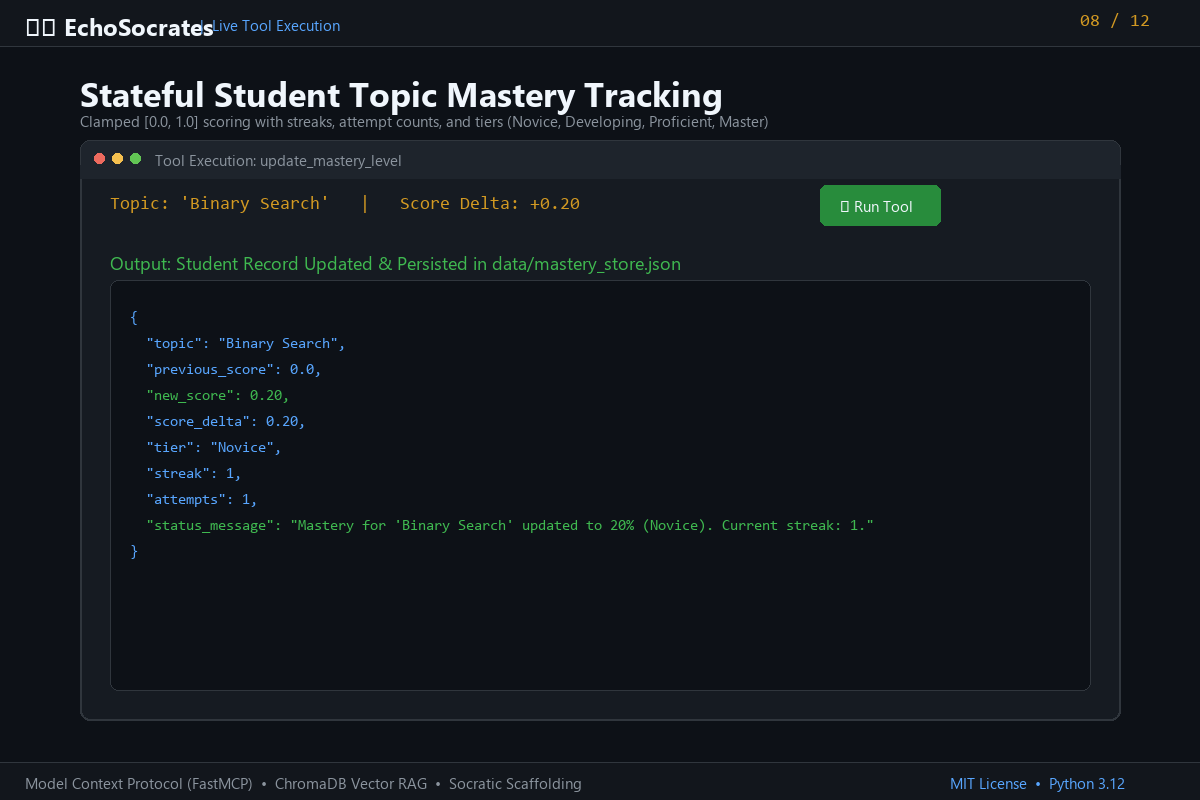
Tool 3: Mastery Tracking
-
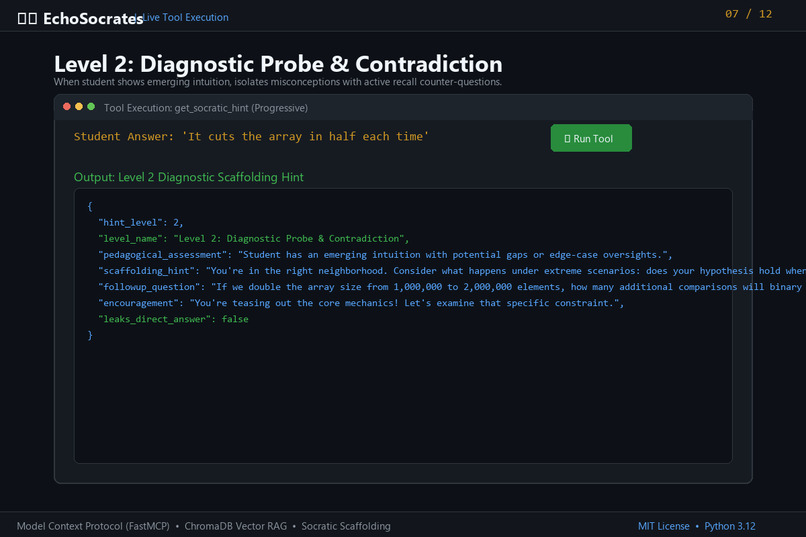
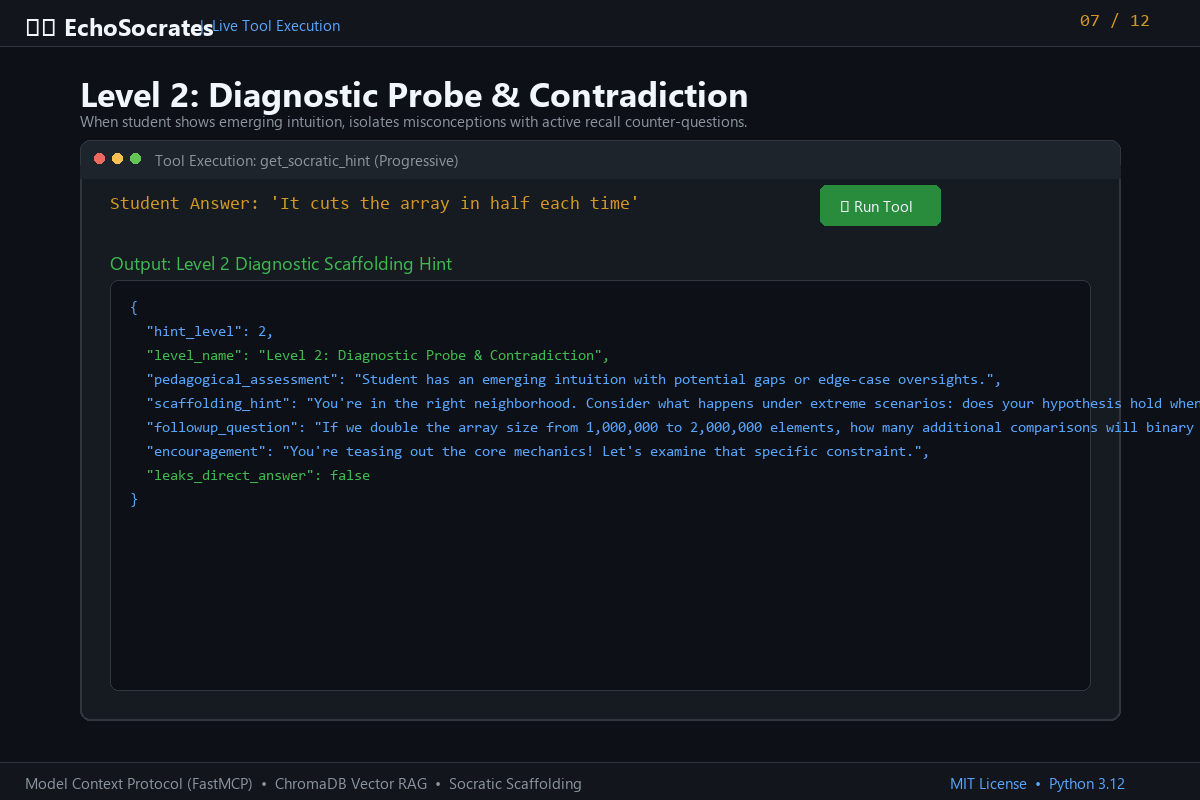
Tool 2: Socratic Hint L2
-
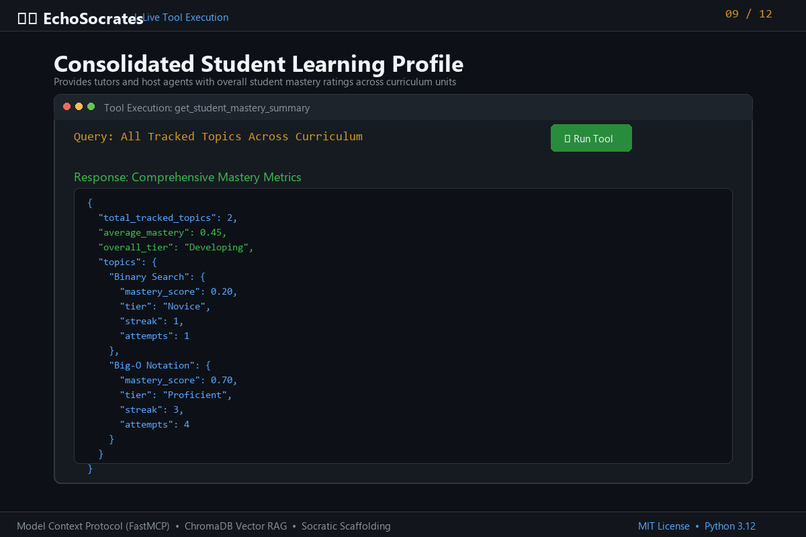
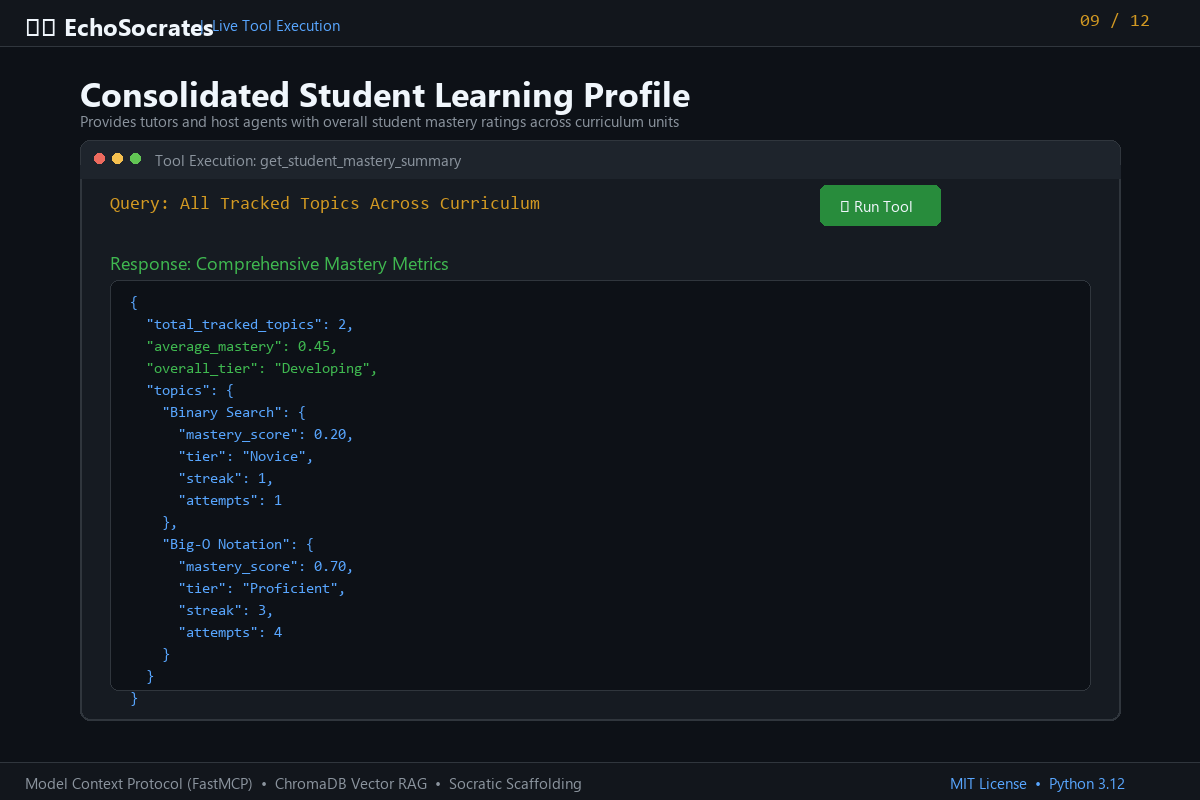
Tool 4: Mastery Summary
-
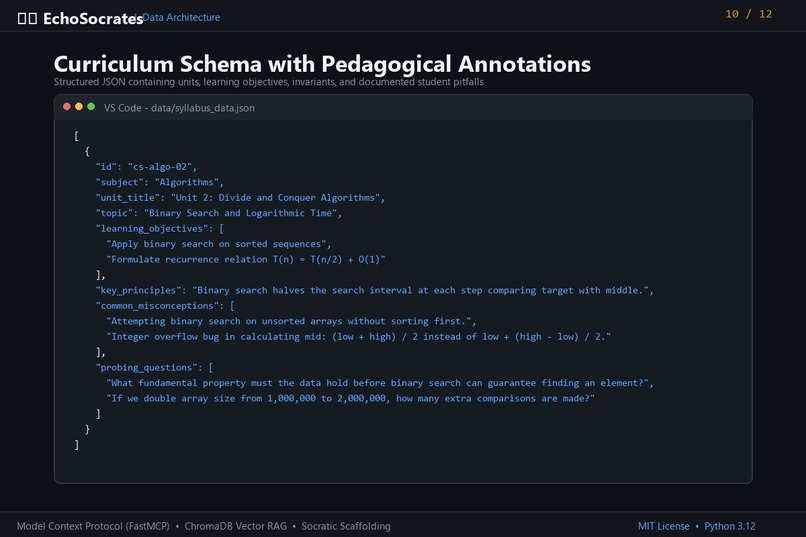
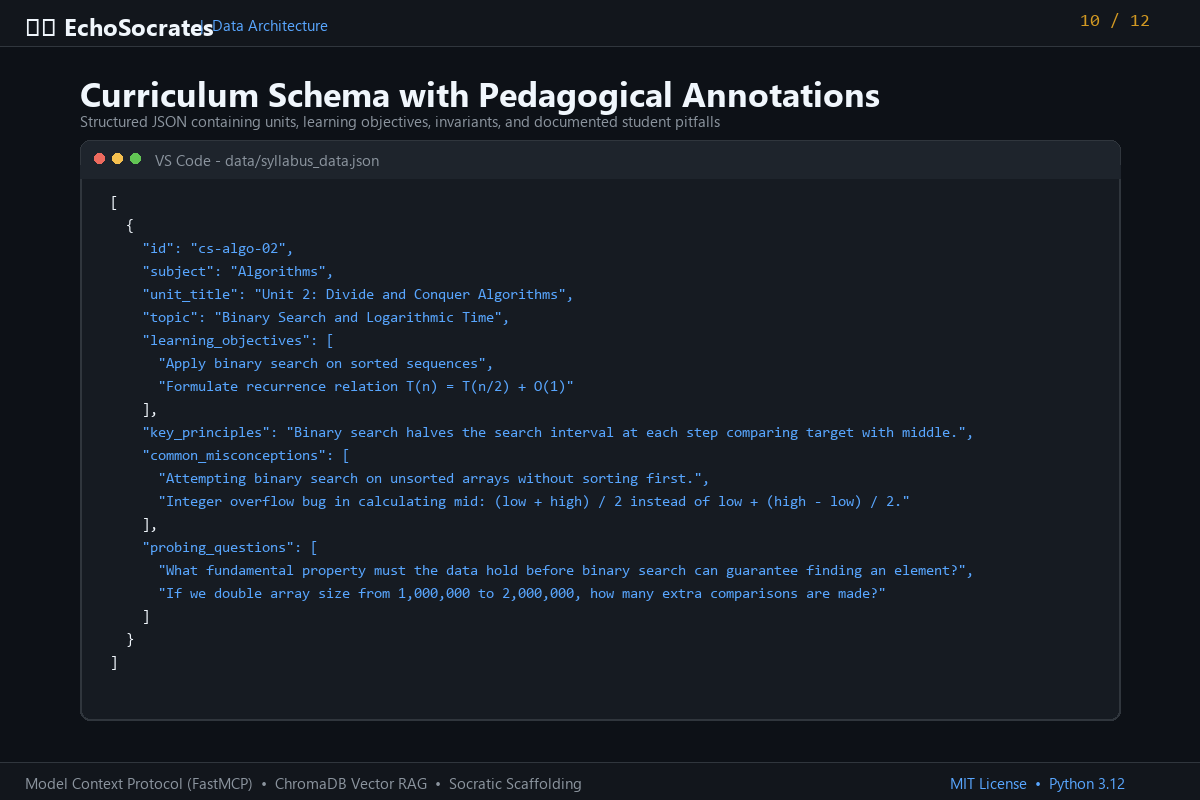
Curriculum Dataset
-
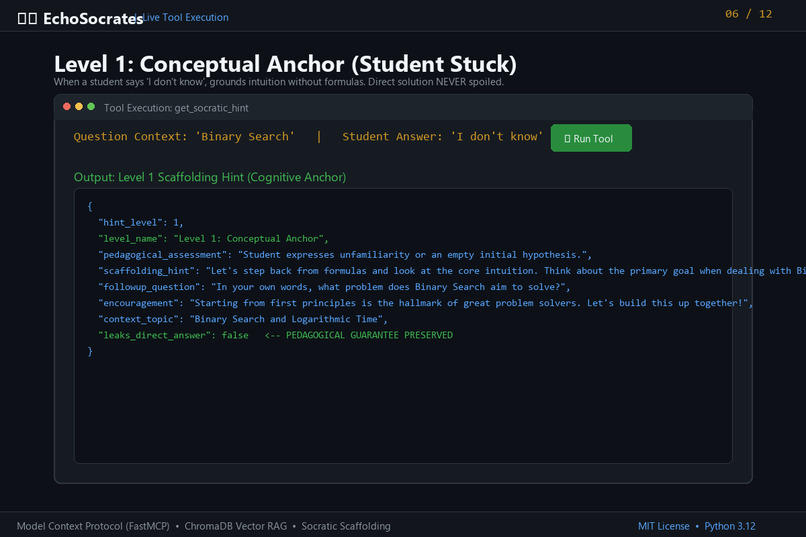
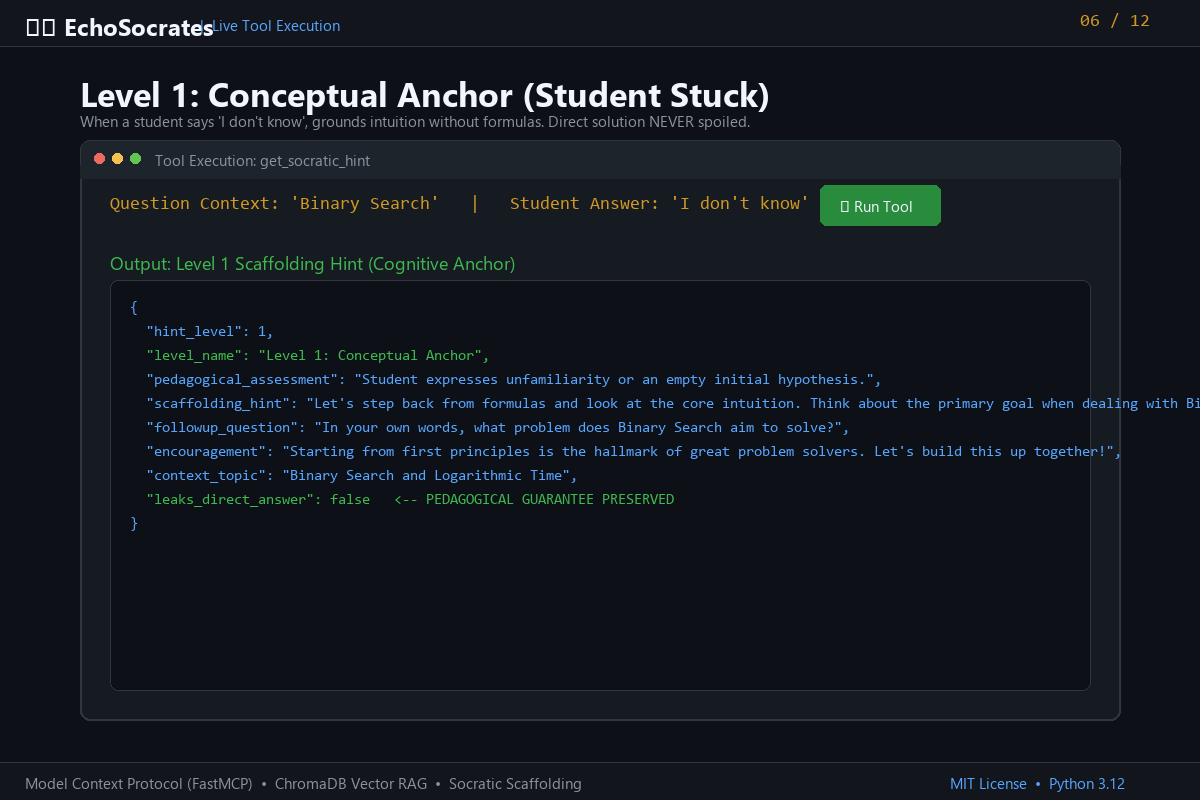
Tool 2: Socratic Hint L1
-
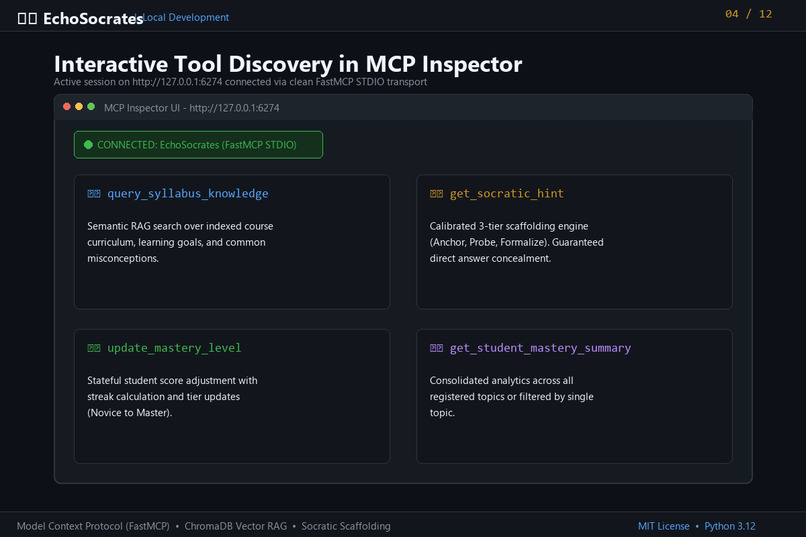
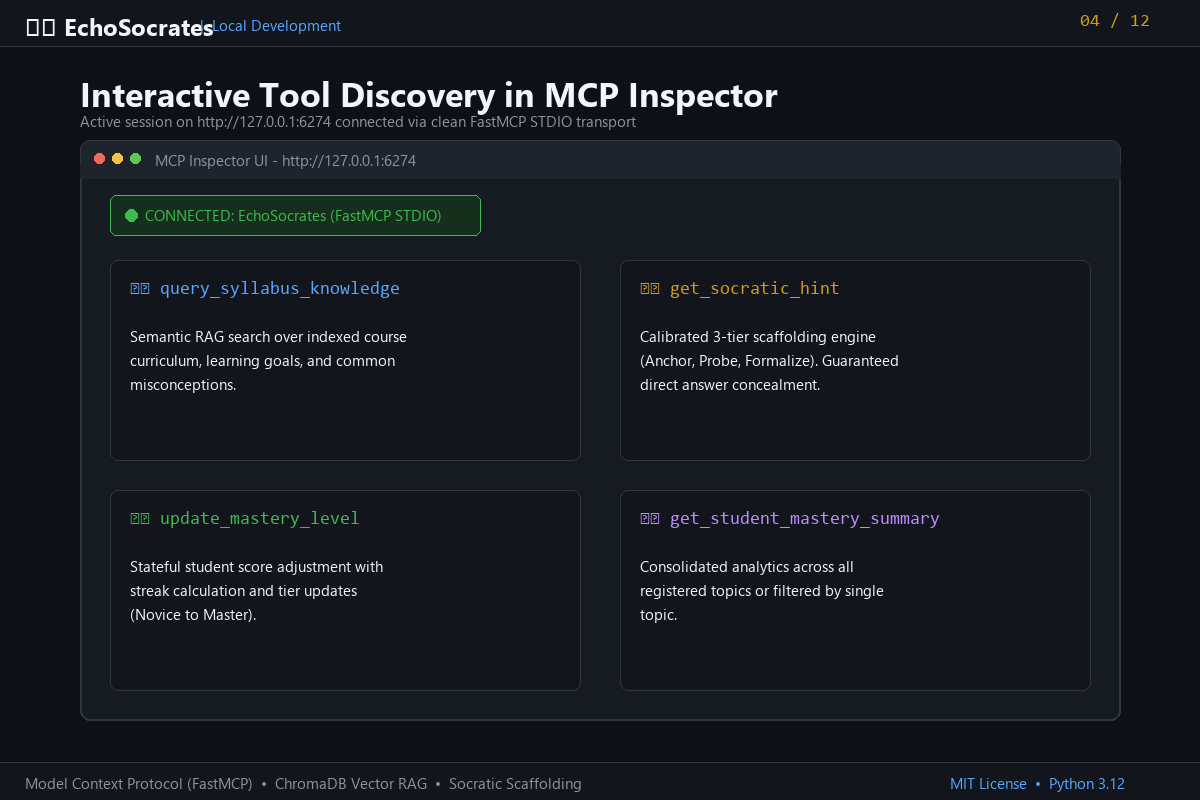
MCP Inspector UI
-
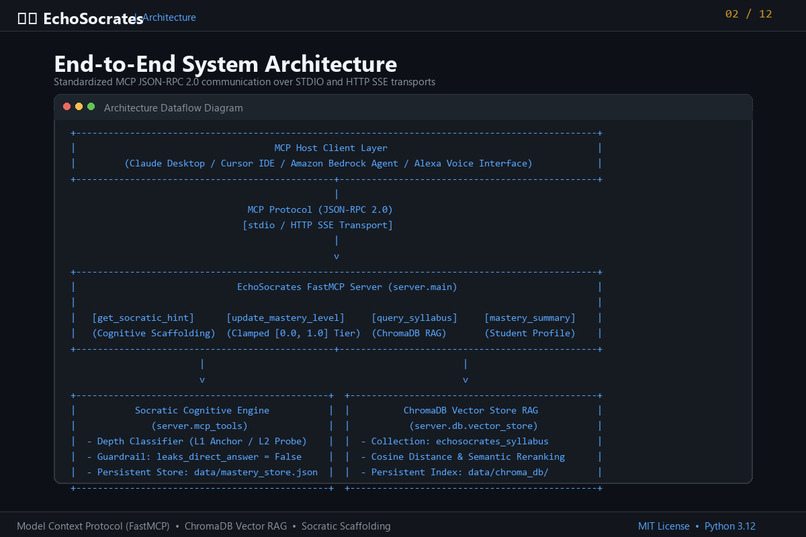
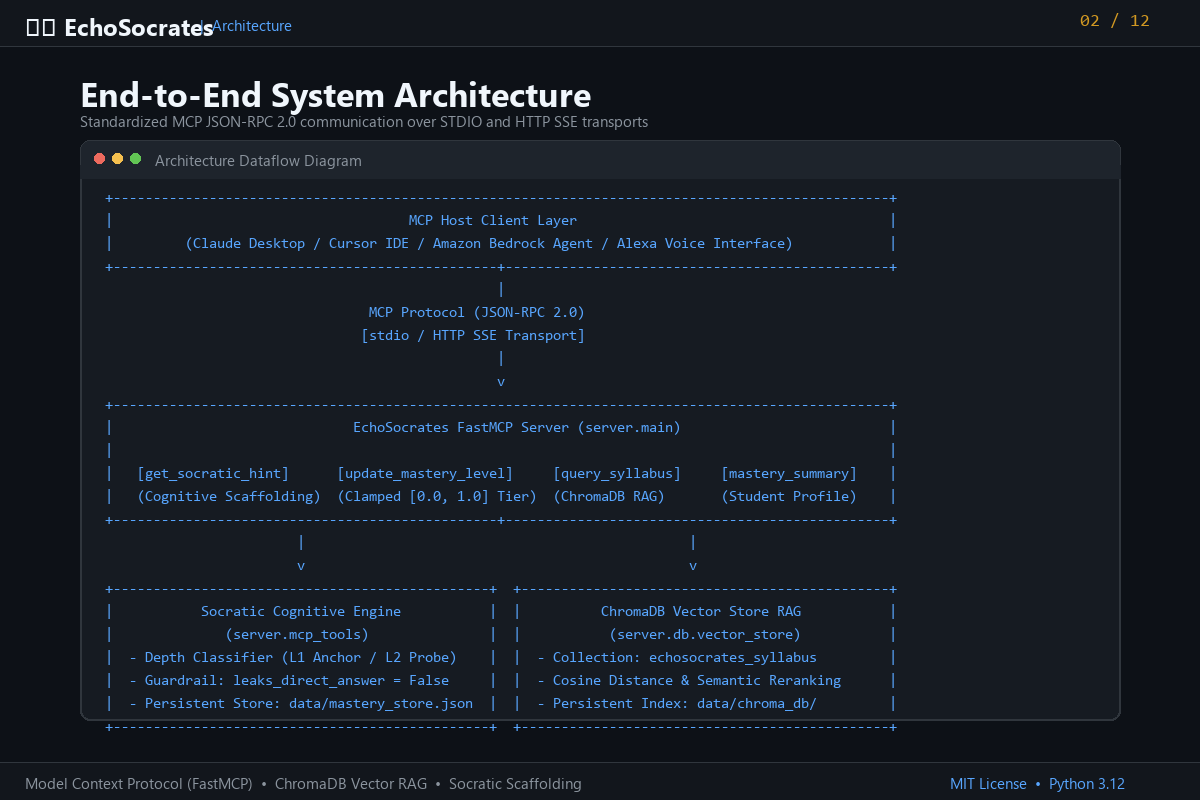
System Architecture
-
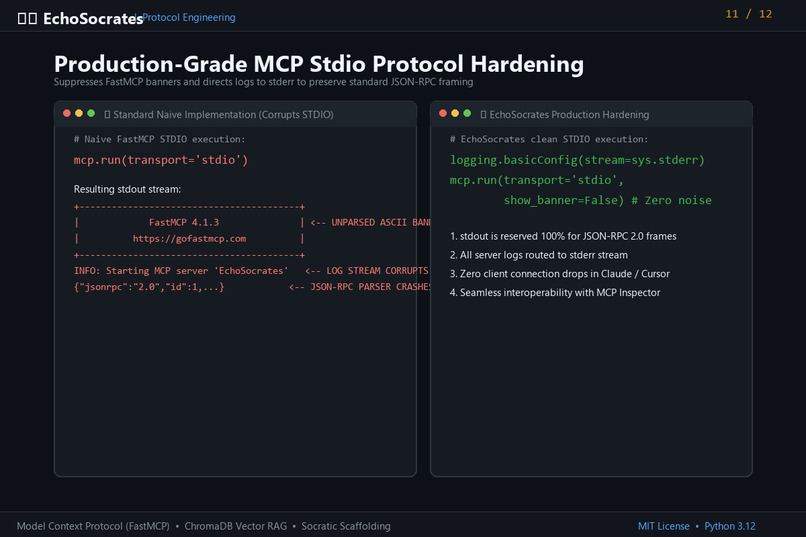
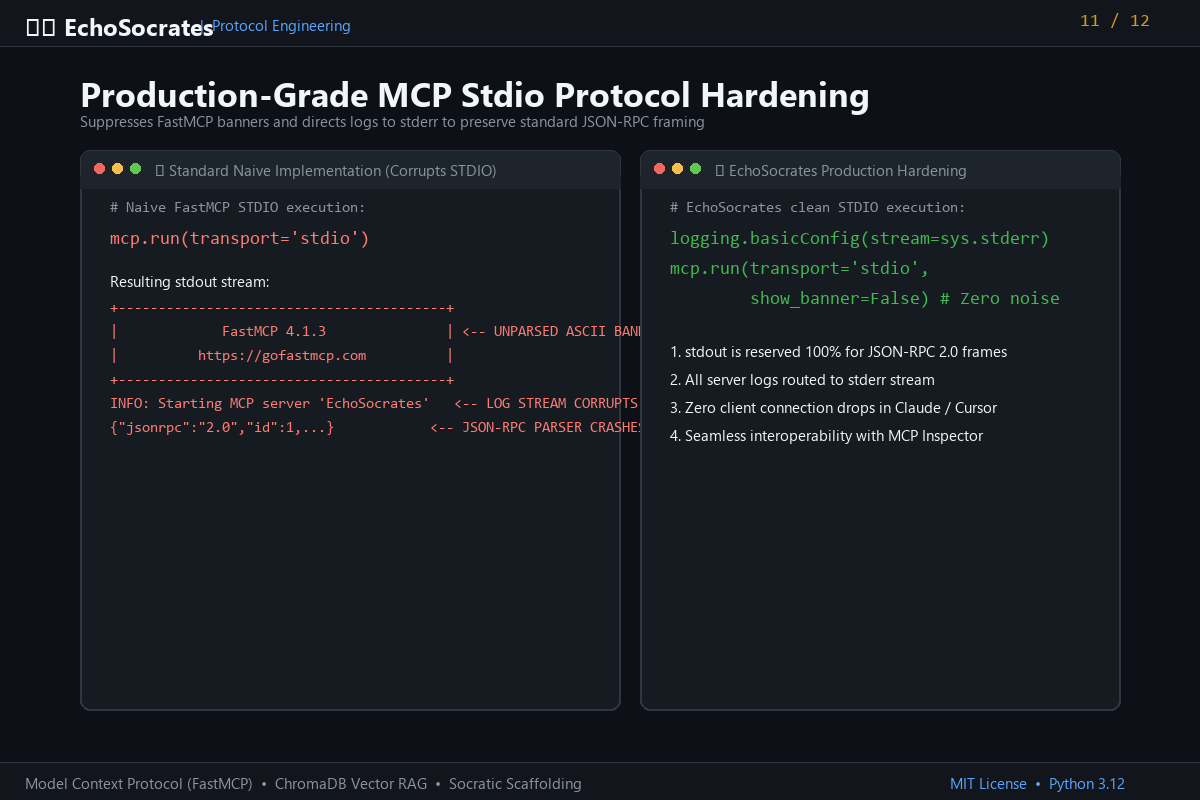
Protocol Hardening
-
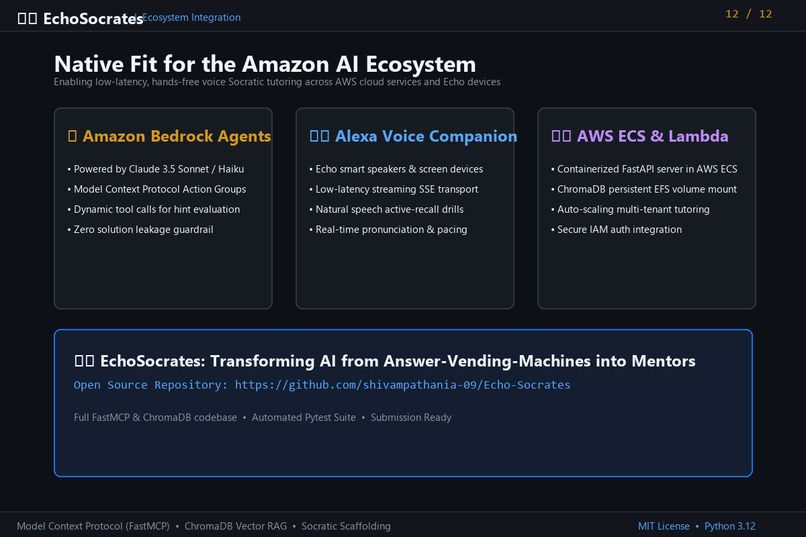
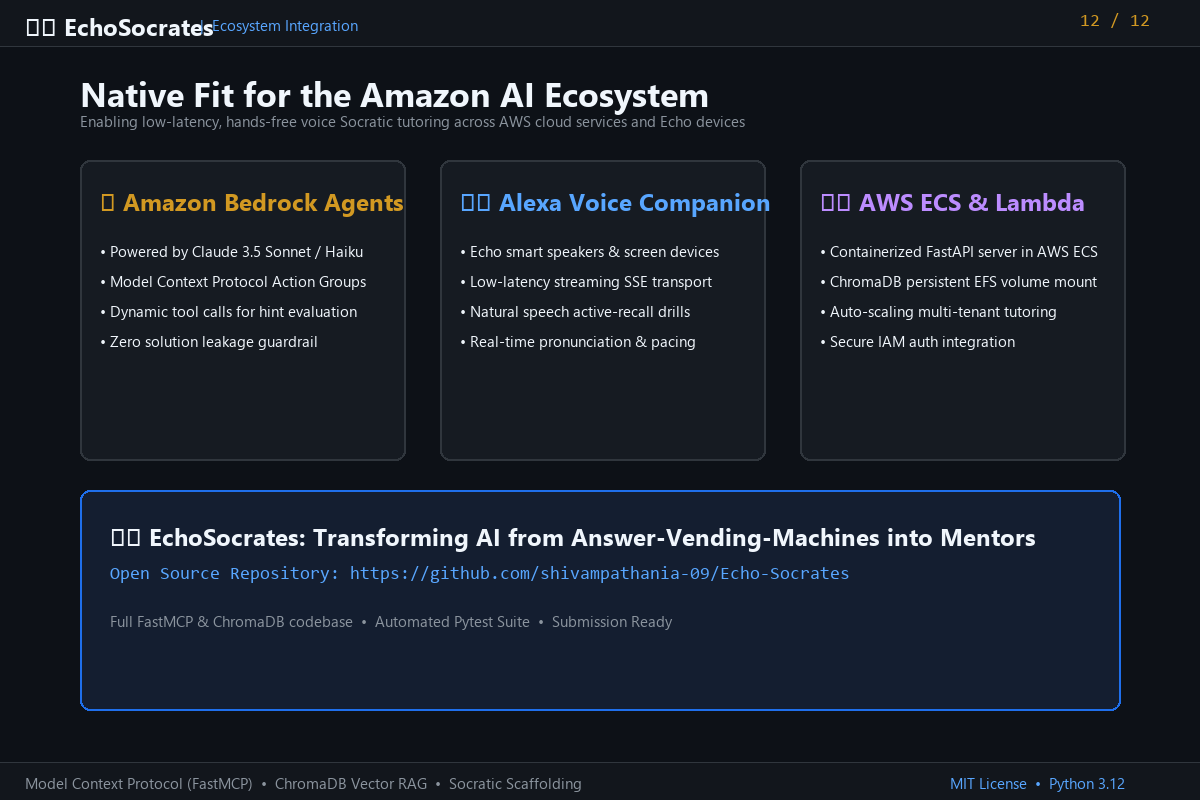
Amazon Ecosystem Fit
-
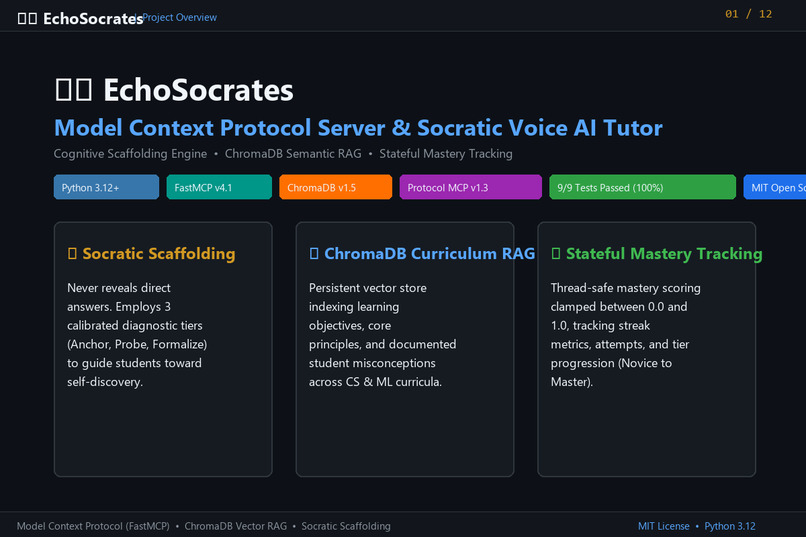
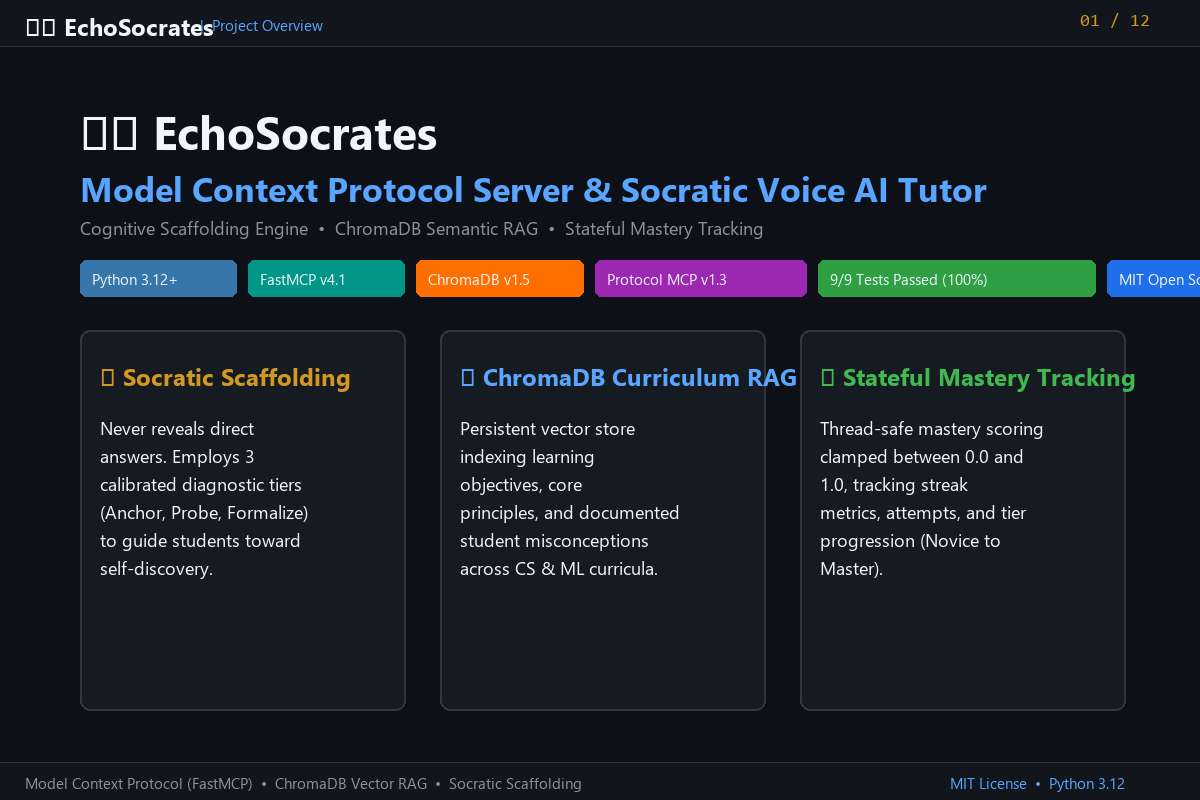
Hero Showcase Banner
-
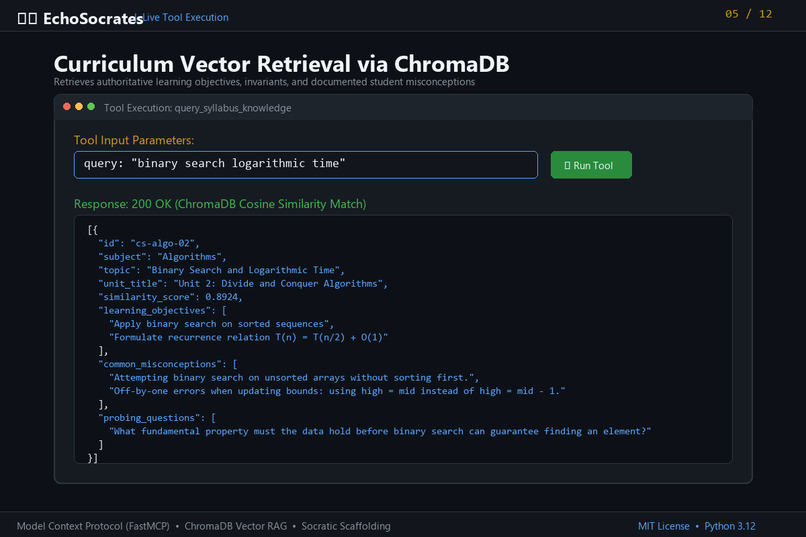
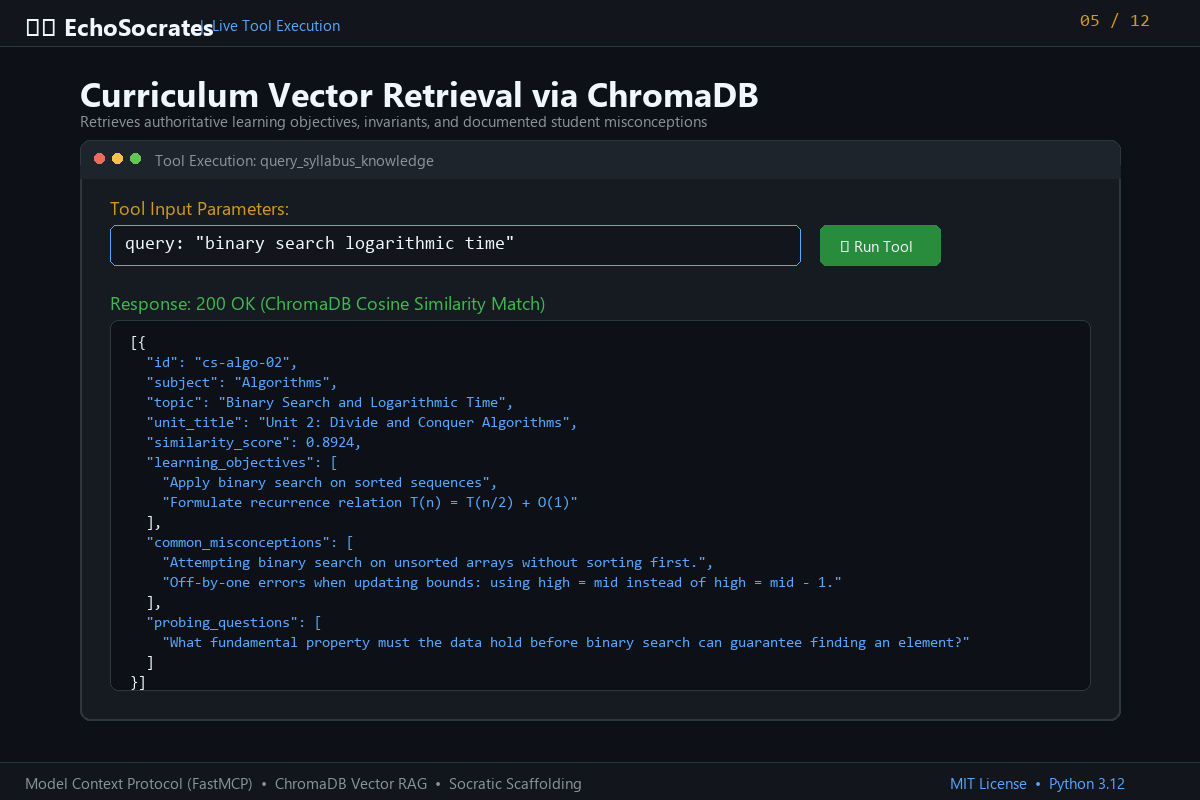
Tool 1: ChromaDB RAG
-
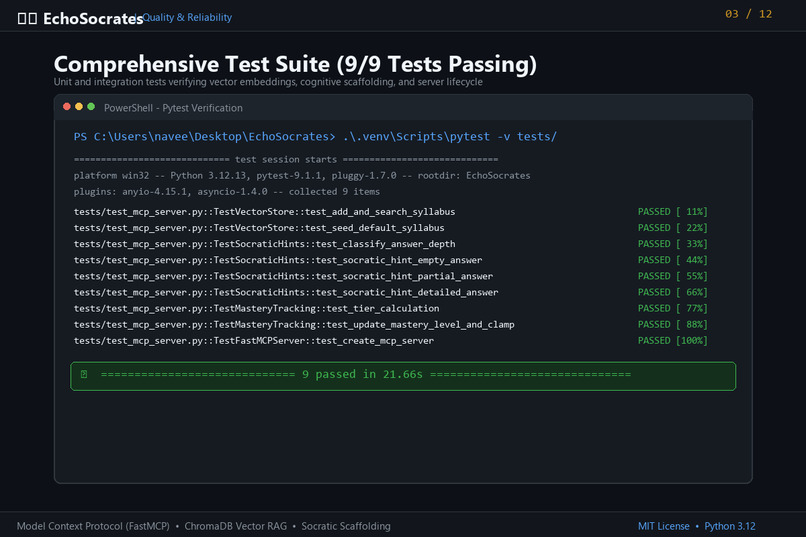
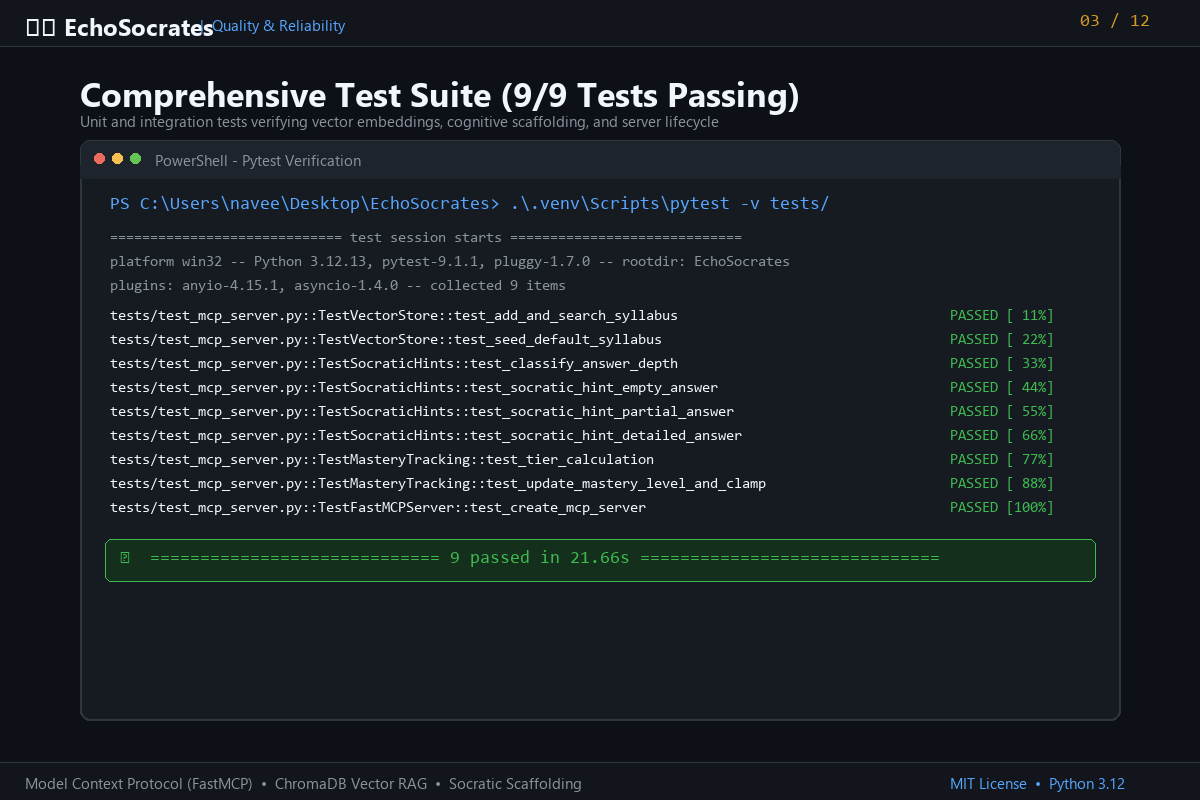
Automated Pytest Suite
Inspiration
Traditional voice assistants often fail at education because they immediately deliver flat, direct answers rather than encouraging critical thinking. Inspired by the Socratic method, EchoSocrates transforms AI from an answer generator into a guided learning companion. By uniting Amazon’s voice ecosystem with the Model Context Protocol (MCP), EchoSocrates dynamically evaluates a student’s current understanding and asks probing follow-up questions to promote deep retention.
What it does
EchoSocrates acts as an agentic, voice-enabled study tutor: 1- Socratic Hint Engine: Instead of giving explicit solutions, it analyzes student responses and generates calibrated scaffolding questions. 2- Context-Aware Syllabus Search: Integrates a ChromaDB vector store via custom MCP tools to retrieve relevant syllabus concepts instantly. 3- Live Mastery Tracking: Quantifies student comprehension over time, adjusting question difficulty dynamically. 4- Model Context Protocol (MCP) Integration: Exposes structured learning tools, dynamic resources, and stateful tracking to any LLM client powering the voice experience.
How we built it
1- Backend Core: Built using Python and FastAPI utilizing the FastMCP framework to expose tools and resources via SSE transport. 2- RAG & Knowledge Storage: ChromaDB and PyTorch embeddings for instant semantic search over syllabus documents and textbook notes. 3- Agent Infrastructure: Structured tool calling (get_socratic_hint, update_mastery_level, search_syllabus) enabling the LLM agent to fetch grounding context without hallucinating answers.
Challenges we ran into
Fine-tuning the prompt constraints and tool logic to ensure the agent never accidentally leaks the final answer was a major challenge. Balancing vector search latency with real-time streaming constraints was critical to maintaining a fast, natural voice feedback loop.
Accomplishments that we're proud of
Successfully architected an end-to-end MCP server that connects complex vector database pipelines with agentic tool calls, demonstrating how conversational AI can be engineered for pedagogical growth rather than passive information retrieval.
What we learned
1- Model Context Protocol (MCP) Design: Gained hands-on experience in structuring agentic tool schemas, dynamic resources, and state management so LLMs can interact cleanly with external APIs and databases. 2- Pedagogical Prompt Engineering & Guardrails: Learned how to enforce strict systemic constraints on AI agents—ensuring they act as Socratic facilitators that ask guiding questions rather than passive answer engines. 3- Vector Database Integration for Real-Time RAG: Mastered optimizing ChromaDB query pipelines to deliver low-latency semantic search results suitable for conversational and voice-first applications.
What's next for Echo-Socrates
1- Integrating multi-modal diagnostic feedback (diagram analysis via Computer Vision). 2- Expanding native support for Amazon Bedrock and Alexa+ Agent Skills. 3- Adding multi-student group study session orchestration.
Built With
- amazon-bedrock
- amazon-web-services
- chromadb
- fastapi
- model-context-protocol-(mcp)
- python
- pytorch
- rag


Log in or sign up for Devpost to join the conversation.