-
-
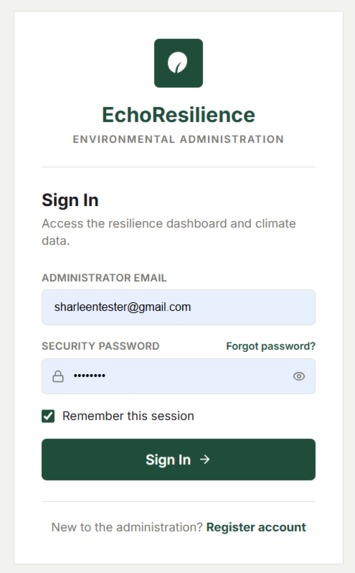
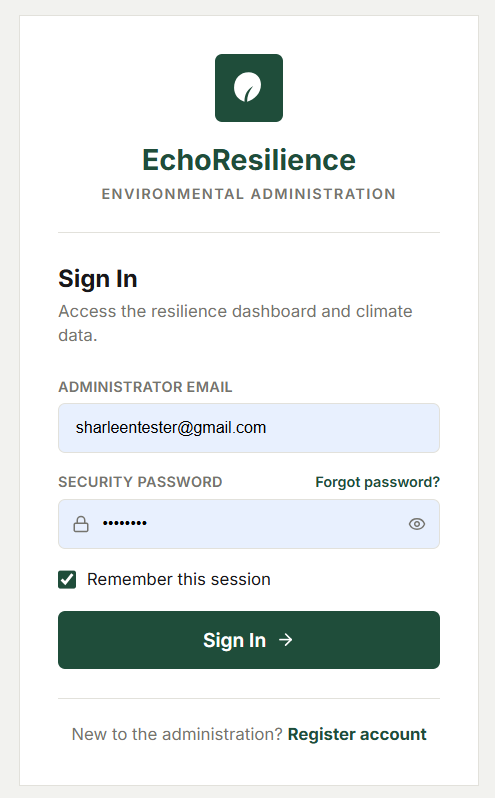
Login/signup page
-
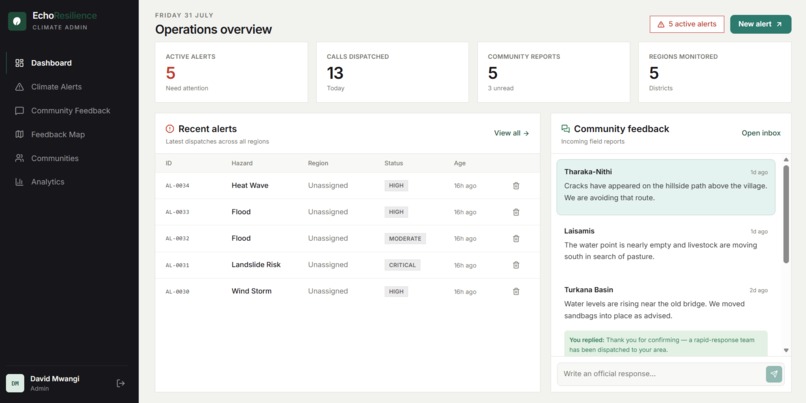
Dashboard
-
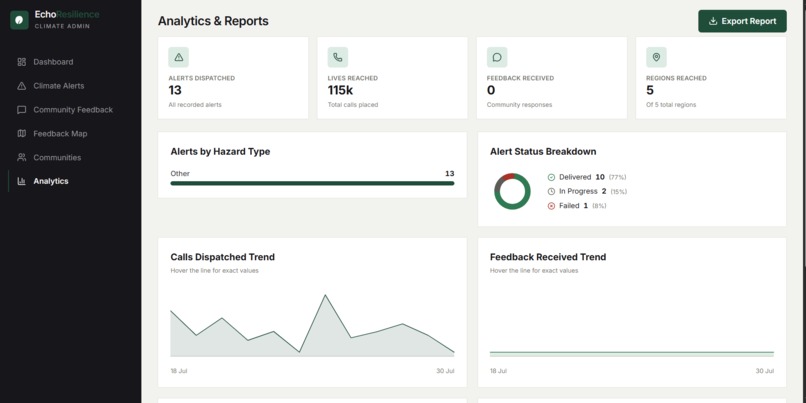
Analytics
-
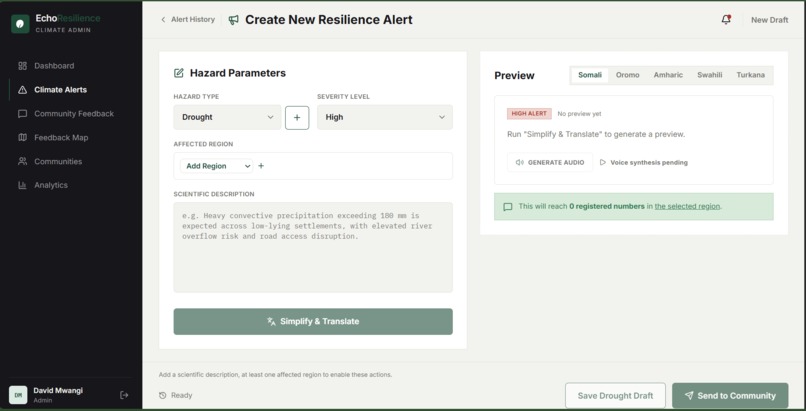
Add new alert page
-
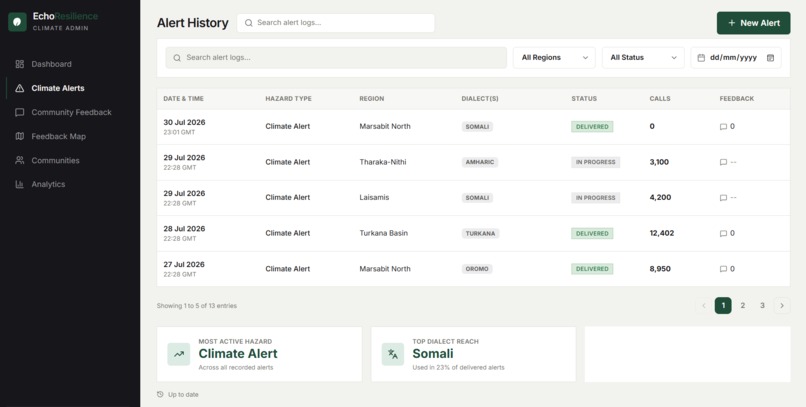
Climate alert page
-
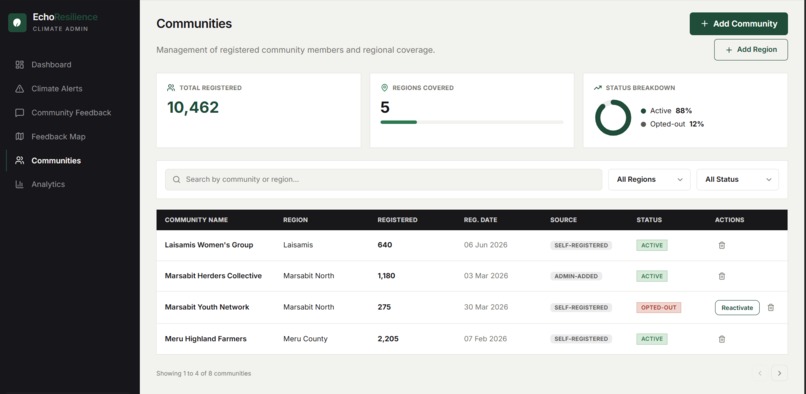
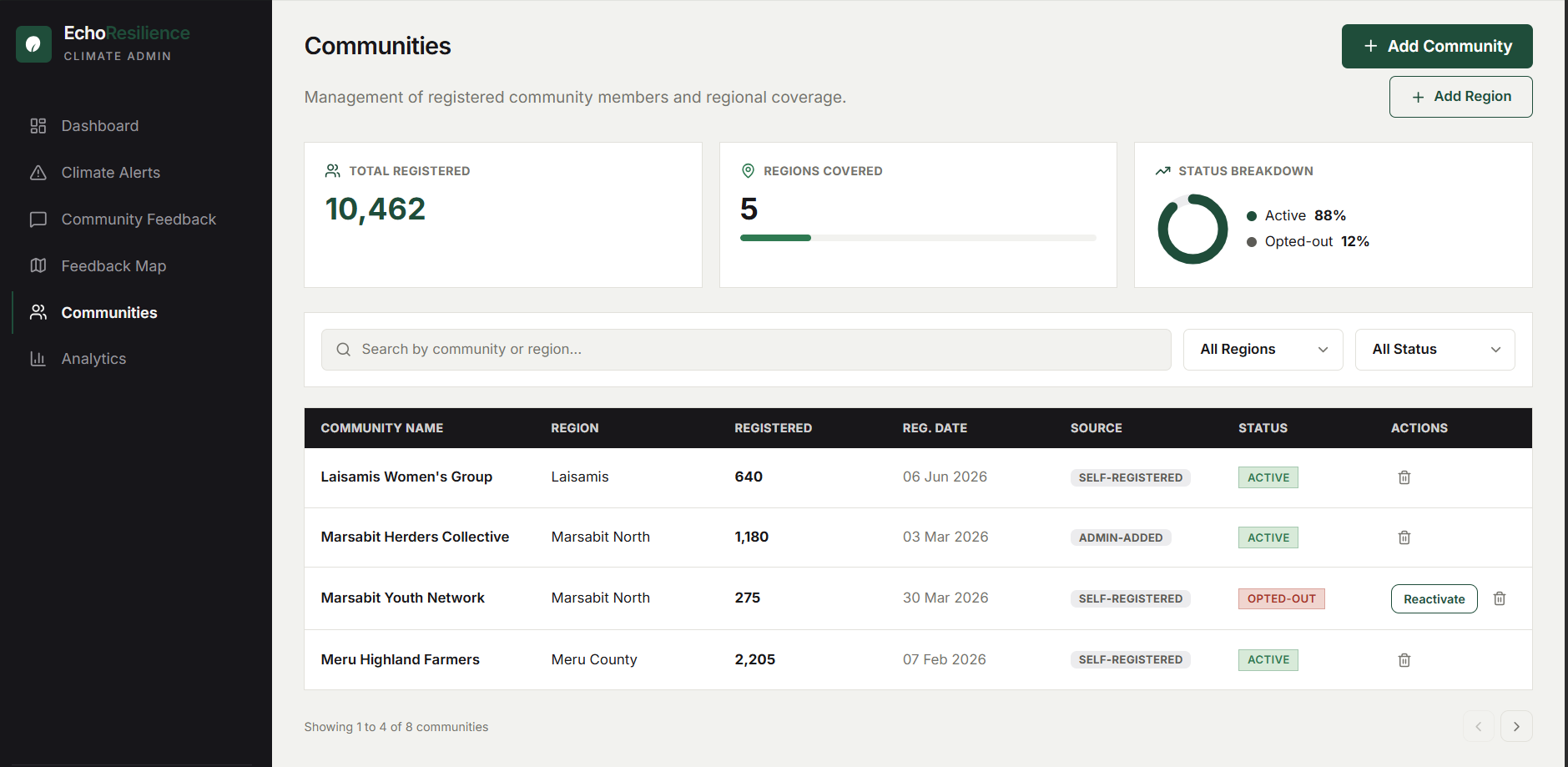
Communities Page
-
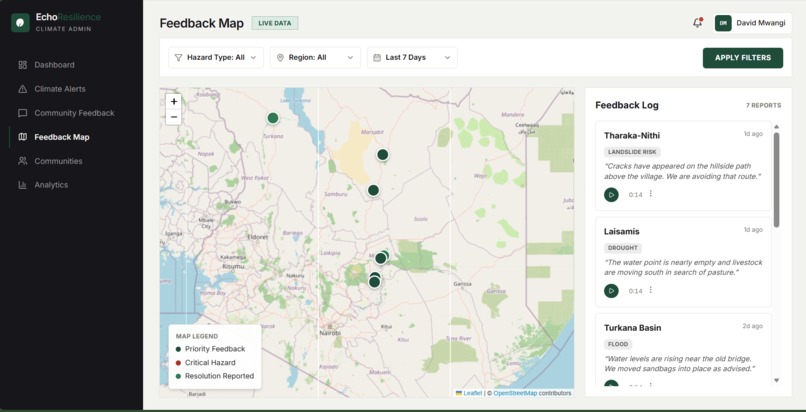
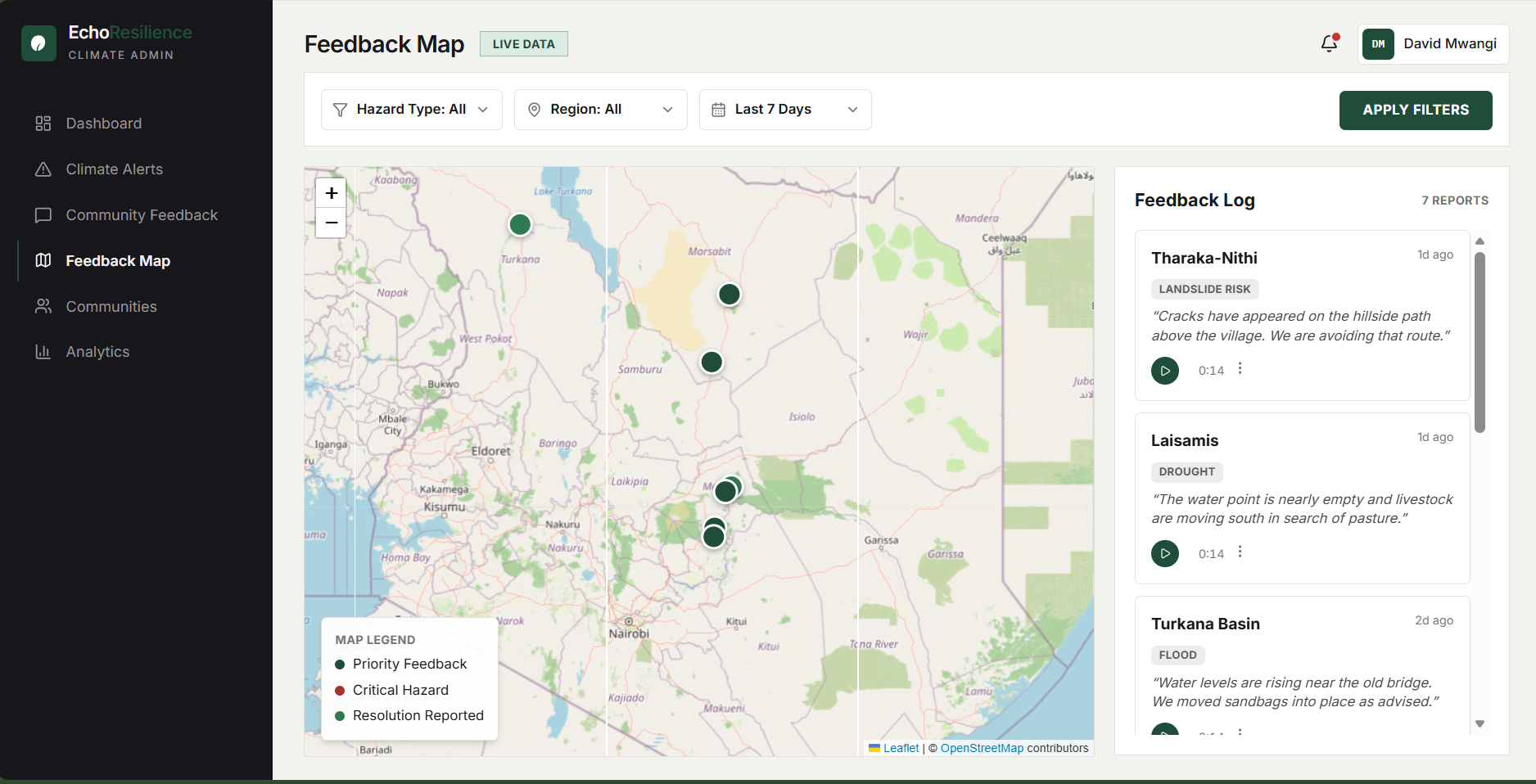
Feedback Map
-

Call from the twilio number to my phone
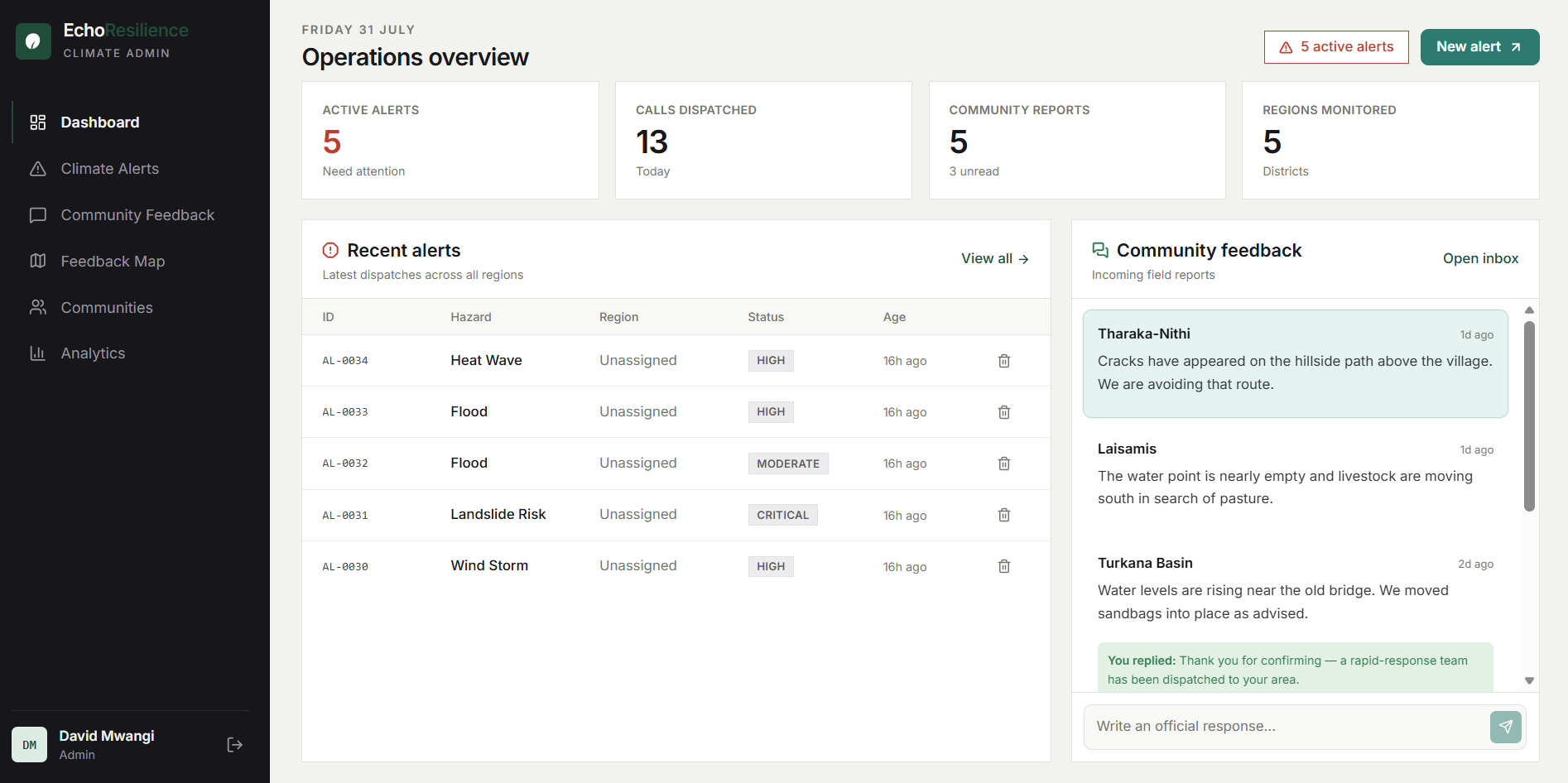
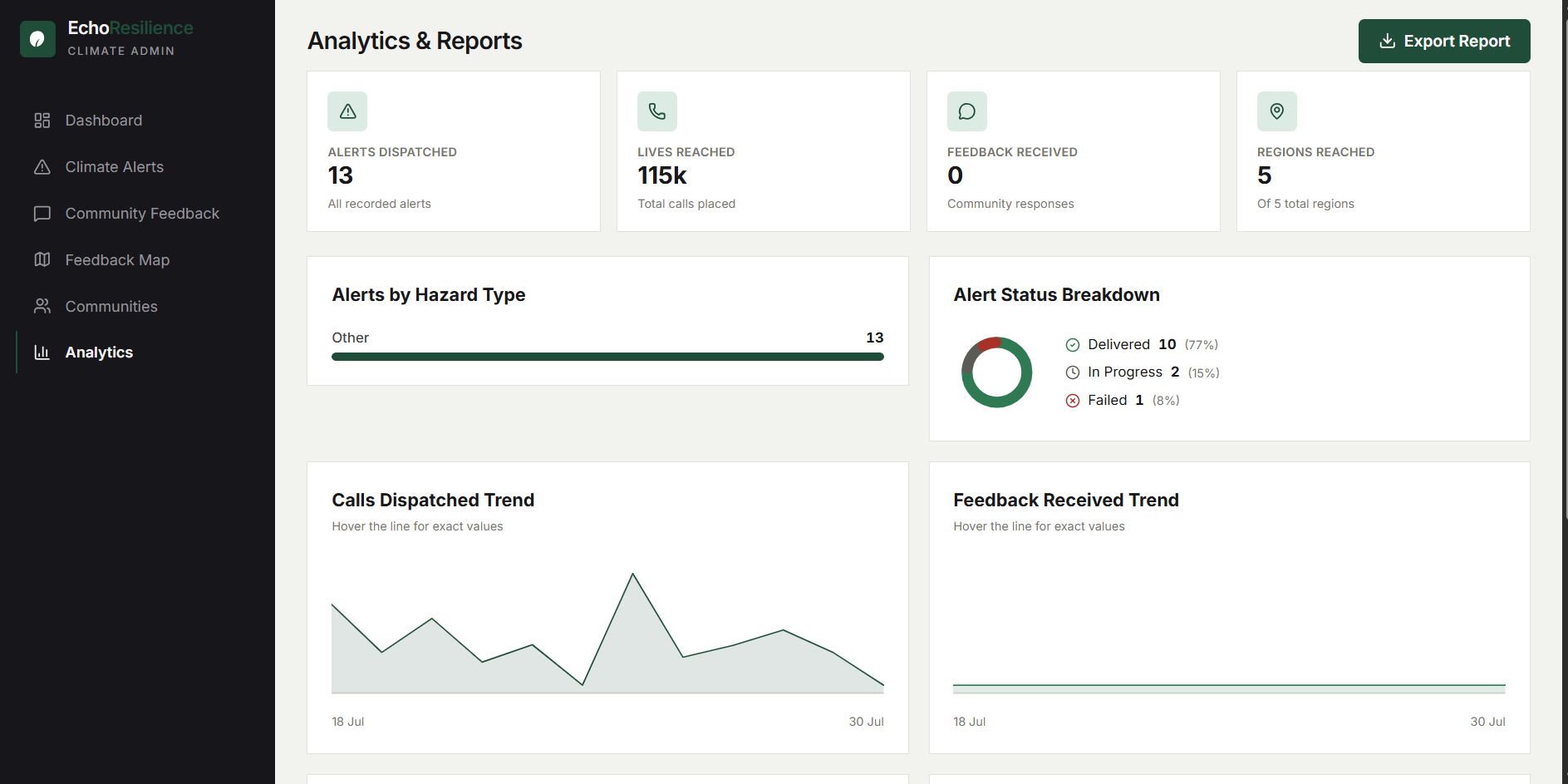
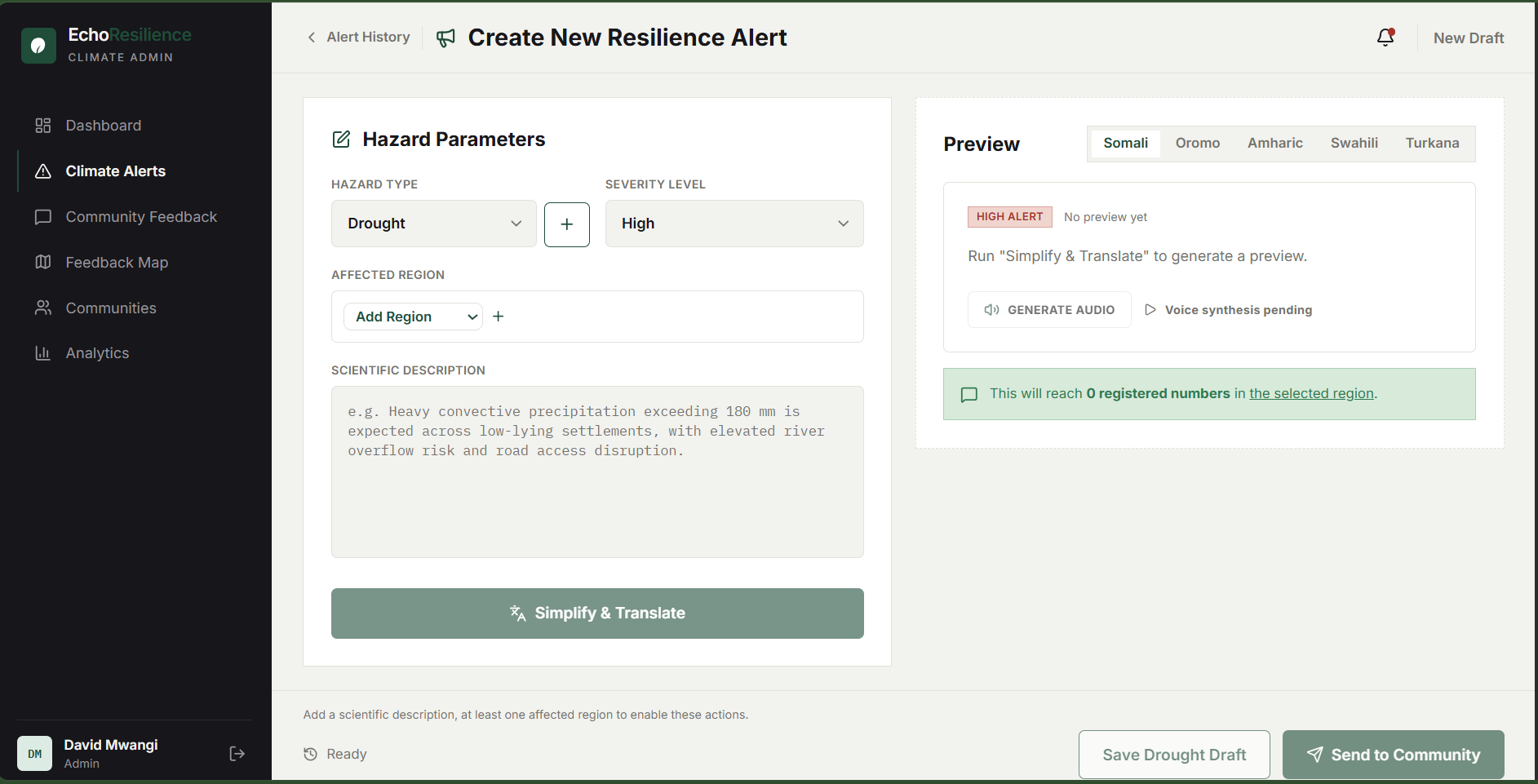
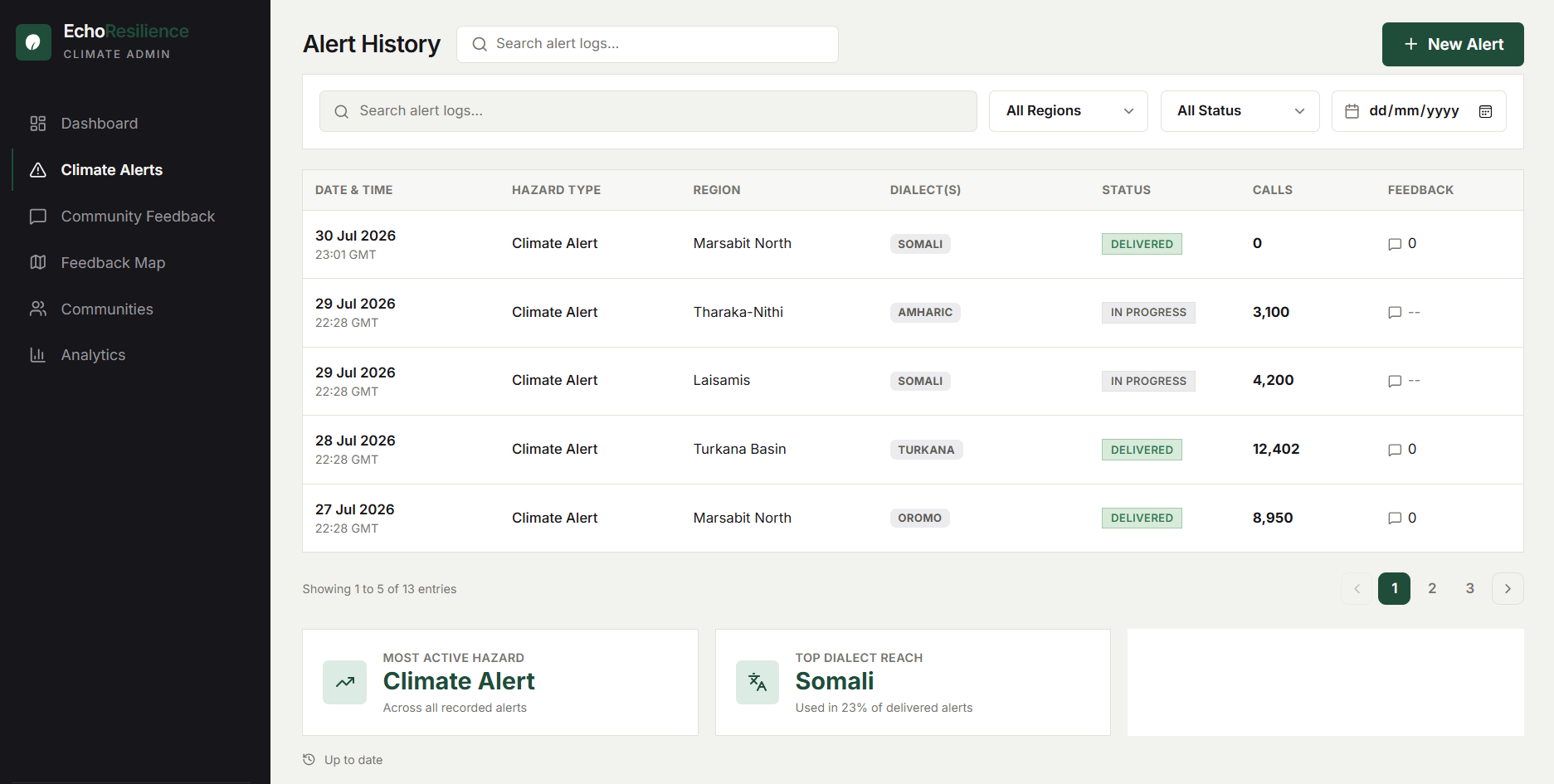

Inspiration
Centralized climate bodies like ICPAC generate highly accurate, life-saving predictive data across the Horn of Africa. However, we realized a devastating disconnect: what good is a world-class early warning system if the pastoralist in Marsabit cannot read the technical English report, or afford the mobile data to open an app?
In remote Arid and Semi-Arid Lands (ASALs), internet penetration drops below 10%, literacy barriers are high, and over 60% of the adult population relies entirely on localized, spoken native dialects. Watching extreme weather events trigger preventable livestock and human losses simply because early warnings failed to reach the "last mile" inspired us to build Echo-Resilience. We wanted to create a solution that doesn't demand remote communities adapt to modern tech, but rather forces cloud AI and telecommunications to adapt to human realities.
What it does
Echo-Resilience is an AI-powered, voice-first communication framework that bridges the linguistic and technological gap between high-level scientists and frontline communities:
- Localized Spoken Alerts: It ingests technical weather reports, uses AI to simplify and translate them into native dialects (such as Somali, Oromo, and Turkana), converts them to speech, and delivers them as automated, free-to-receive 2G phone calls straight to basic feature phones.
- Frictionless Accessibility: Delivers critical climate directives directly to pastoralists and smallholder farmers with zero dependence on smartphones, mobile data plans, or text literacy.
- Actionable Guidance: Transforms complex meteorological figures into immediate, practical preventative instructions (e.g., relocating herds, securing grain stores, or prepping for flash floods).
How we built it
We engineered a synchronized, voice-first pipeline connecting cloud AI orchestration with legacy cellular networks:
[ ICPAC Climate Feeds ] ──► [ Gemini AI Engine ] ──► [ Text-to-Speech ]
                                                           │
                                                           ▼
                                               [ Africa's Talking IVR ]
- Ingestion & Translation Core: Built on a Python (FastAPI) backend, the system listens for central climate feeds. We leveraged the Gemini API with specialized prompt engineering to translate technical text into traditional agricultural idioms and local dialects.
- Telecommunications Layer: The synthesized dialect audio is pushed through the Africa’s Talking Voice/IVR API, triggering automated phone calls over basic 2G channels and capturing touch-tone (DTMF) keypad inputs.
- Outbound Dispatch Engine: Schedules and queues automated outbound calls based on targeted geographic zones flagged by severe weather models.
Challenges we ran into
- Preserving Nuance in Low-Resource Dialects: Standard translation models often perform word-for-word literal translations, losing critical cultural meaning. We had to carefully engineer prompts using custom agricultural glossaries to ensure scientific risks (e.g., "high precipitation runoff probability") translated into actionable local advice (e.g., "move livestock away from the riverbed before nightfall").
- Handling Webhook Concurrency: Managing multiple simultaneous voice calls during simulated surge periods created server-side race conditions. We resolved this by implementing an asynchronous background task queue (Celery + Redis) to handle heavy AI speech generation without dropping active telecom connections.
- Low-Latency Requirements: Minimizing call setup delays was essential to prevent callers from hanging up. Pre-synthesizing common voice prompts significantly reduced call delivery latency.
Accomplishments that we're proud of
- Zero Internet & Zero Data Dependency: We successfully built an advanced AI pipeline that works end-to-end on a basic feature phone over simple 2G voice channels.
- High Dialect Accuracy: Successfully mapped complex meteorological anomalies into natural, culturally resonant agricultural advisories in key regional languages.
- Accessible Disaster Preparedness: Designed a frictionless distribution system built entirely around the physical, economic, and operational realities of ASAL communities.
What we learned
- Build for Constraints, Not the Ideal: Designing for basic feature phones forced us to eliminate unnecessary UI clutter and engineer a leaner, faster, and more resilient backend than any standard web application.
- Empathy in AI Engineering: Technical metrics don't save lives unless they are translated into culturally resonant, actionable instructions that communities trust.
- The Power of Asynchronous Pipelines: Decoupling telecom voice connections from heavy AI background jobs is essential for building scalable systems under harsh network conditions.
What's next for Echo-Resilience
- Two-Way Citizen Reporting & Live Feedback Loop: Expanding the platform to enable community members to call a toll-free shortcode and record verbal reports describing localized hazards (e.g., flash floods, rising stream levels, or locust swarms) in their spoken dialect. The platform will transcribe incoming voice messages, translate them into English, extract key entity metrics (location, hazard type, severity), and map them onto a live administrative geospatial dashboard for disaster coordinators in under 60 seconds.
- Expanding Dialect Datasets: Fine-tuning specialized open-source speech-to-text and text-to-speech models for additional under-represented indigenous languages across the Horn of Africa.
- Offline-First Mesh Nodes: Exploring integration with localized solar-powered micro-cell towers or mesh radio nodes to maintain voice communication even when central telecom towers go offline during severe disasters.
- Pilot Deployments: Partnering with regional disaster management authorities and local NGOs to run field pilots in select ASAL sub-counties, gathering real-world user testing data directly from pastoralist communities.
Built With
- africa's-talking
- africa's-talking-(sms/voice)
- bcryptjs
- cors
- dotenv
- express.js
- helmet
- jsonwebtoken
- languages:-javascript-(es-modules-/-node-22)
- lucide-react-1.24
- morgan
- ngrok-database:-postgresql
- prisma-5-orm-platforms-&-runtime:-node.js-22
- python-3.13
- react-router-dom-7
- sql-frameworks-&-libraries:-react-19
- tailwind-css-4
- twilio
- typescript-5.7
- vite-8
- windows-(local)-cloud-services:-google-ai-studio-(gemini-api)


Log in or sign up for Devpost to join the conversation.