Inspiration
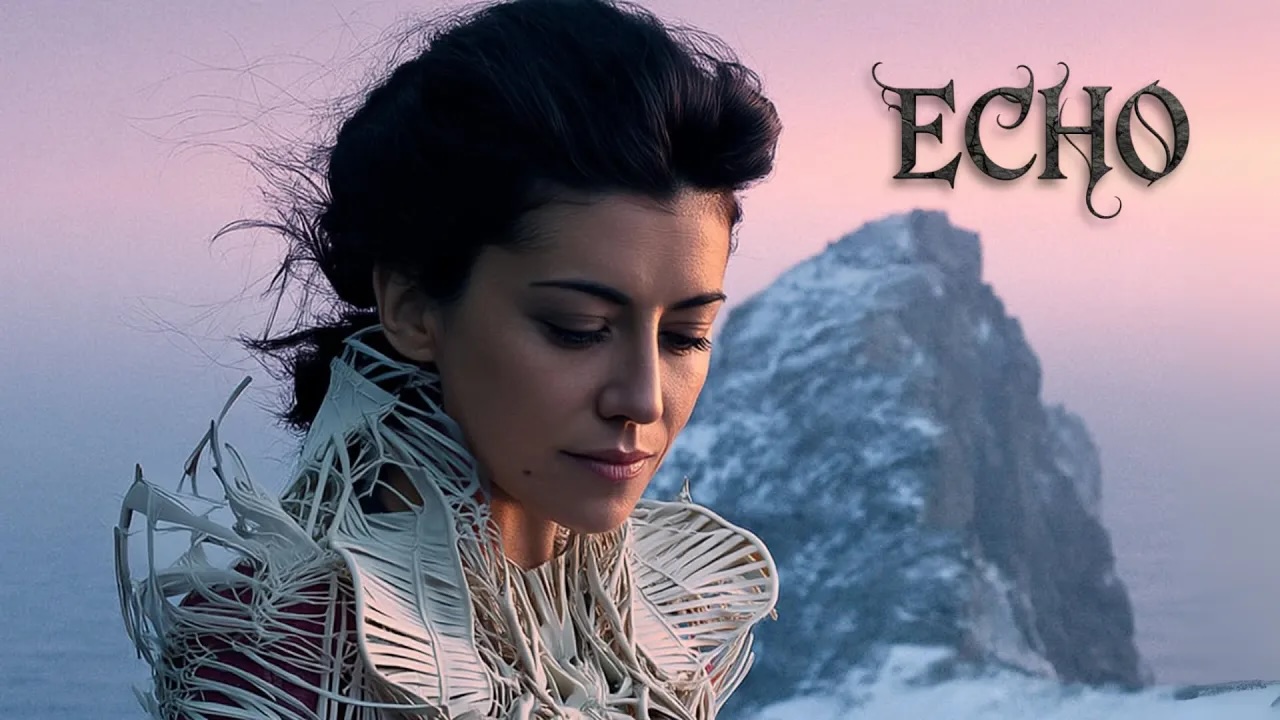
ECHO was born from a simple question: What happens when the mirror becomes more real than the self? I wanted to explore the emotional collapse of a woman consumed by the digital reflections she creates, an allegory for a generation haunted by its own projection. The lyrics, generated through Suno, became the soul of that idea: a fragile melody about identity, illusion, and awakening. Visually, I drew from gothic romanticism and Iris Van Herpen’s sculptural couture. The result is a story that exists between dream and technology, between what we show the world and what we hide from ourselves.
What it does
ECHO is an AI-generated gothic-fantasy music video about the journey from illusion to truth. It follows a protagonist trapped behind a flawless mask: a woman whose online persona has devoured her sense of reality. Each world she crosses reflects fragments of her psyche. The video visualizes her inner transformation .. the echo of her true self.
How we built it
The project was crafted entirely with generative AI tools, without any live-action footage. Every stage of creation: sound, visuals, motion, and editing was designed as an experiment in AI-based storytelling.
Concept & Lyrics (ChatGPT & Suno) I generated multiple lyrical compositions in Suno around the theme of duality and echo. The final track’s tone shaped the emotional tempo and narrative arc.
Visual Design (MidJourney & Nanobanana) Using MidJourney, I developed concept frames and world designs: gothic architecture, surreal landscapes etc. I iterated with advanced prompts (cinematic lensing, camera angles, volumetric light) to preserve a coherent visual language across scenes.
Character & Motion (Kling AI + VEO 3 + Freepick) Kling AI was used for dynamic character movement and continuity between frames. VEO 3 helped create cinematic motion, depth of field, and realism in transitions.
Assembly & Edit (CapCut) I layered sequences, synchronized beats to the Suno track, refined pacing, and added subtle sound FX generated with elevenlab.
Challenges we ran into
Maintaining Visual Continuity: Achieving consistency between AI-generated shots (lighting, costume, and face structure) was one of the hardest aspects.
Emotion vs. Automation: Early outputs were too sterile. It took some iterations to inject emotional nuance especially in the eyes and gestures of the protagonist.
Balancing the Tools: Finding harmony between Suno’s sound texture, MidJourney’s aesthetics, Kling’s motion realism, and VEO 3’s cinematic depth required careful orchestration.
Accomplishments that we're proud of
Full AI Pipeline: Completing a cohesive audiovisual narrative solely through generative AI, with no traditional footage.
Art-Technology Integration: Transforming a song into a story where lyrics dictate the visuals: each verse visually reinterpreted as a world of emotion.
Emotional Resonance: Viewers recognized themselves in the protagonist’s breakdown- not as fantasy, but as mirror. That reaction confirmed the film’s purpose: to humanize AI storytelling.
What we learned
1- AI is not a shortcut; it’s a dialogue. The most powerful outputs came when I treated each model as a collaborator, not a tool.
2- Emotion still comes from intention. No algorithm can replace artistic direction, it amplifies it when the vision is clear.
3- Prompt design is a cinematic language. Crafting visuals through text demands precision akin to directing actors or lighting a scene.
What's next for ECHO
ECHO started as more than a music video: it’s the first step toward building a larger cinematic universe shaped by AI. The next phase is to refine the workflow and expand it into a short narrative film, using generative tools not just for visuals and music, but also for storytelling, dialogue, and emotional depth. The goal isn’t to go bigger, but to go deeper to show that AI-driven filmmaking can create stories that feel human, meaningful, and emotionally real.

Log in or sign up for Devpost to join the conversation.