Inspiration
Echo was inspired by the vision of creating a world where individuals who rely on sign language can communicate effortlessly with anyone, anywhere. Observing how many people struggle to express themselves in daily situations motivated us to build a tool that understands their hands and speaks for them. This project embodies inclusion, accessibility, and the belief that technology should empower every voice.
What it does
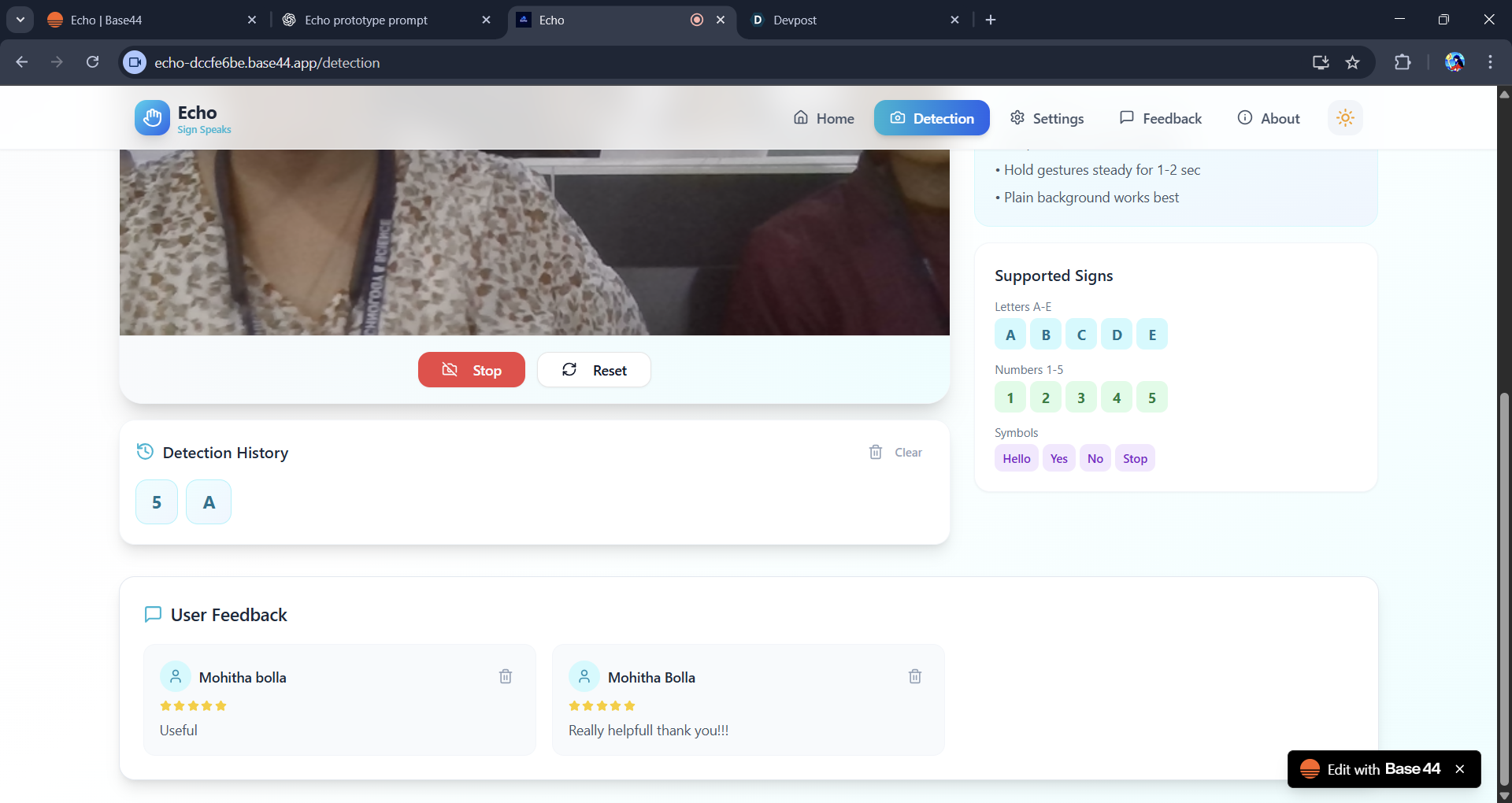
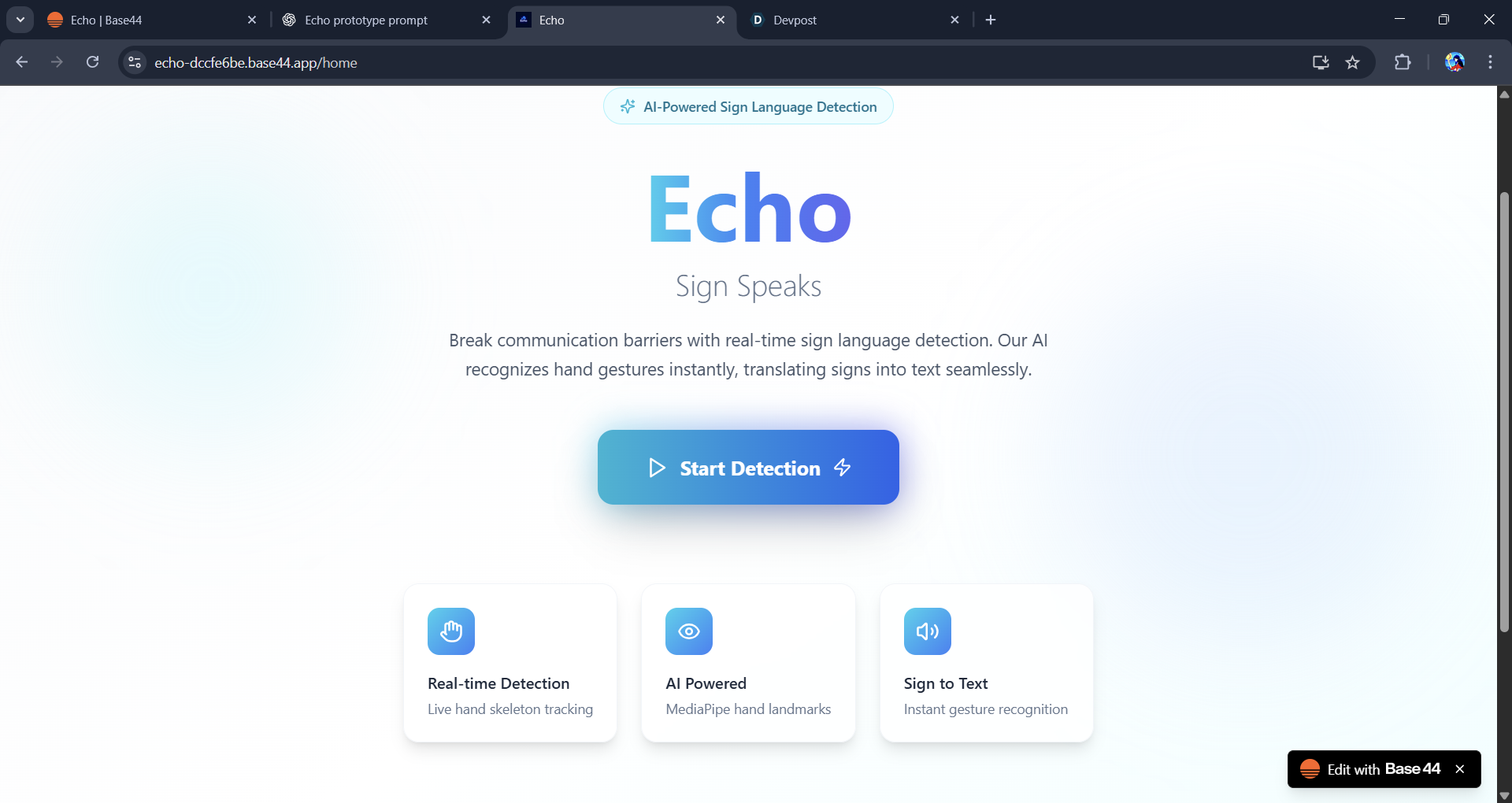
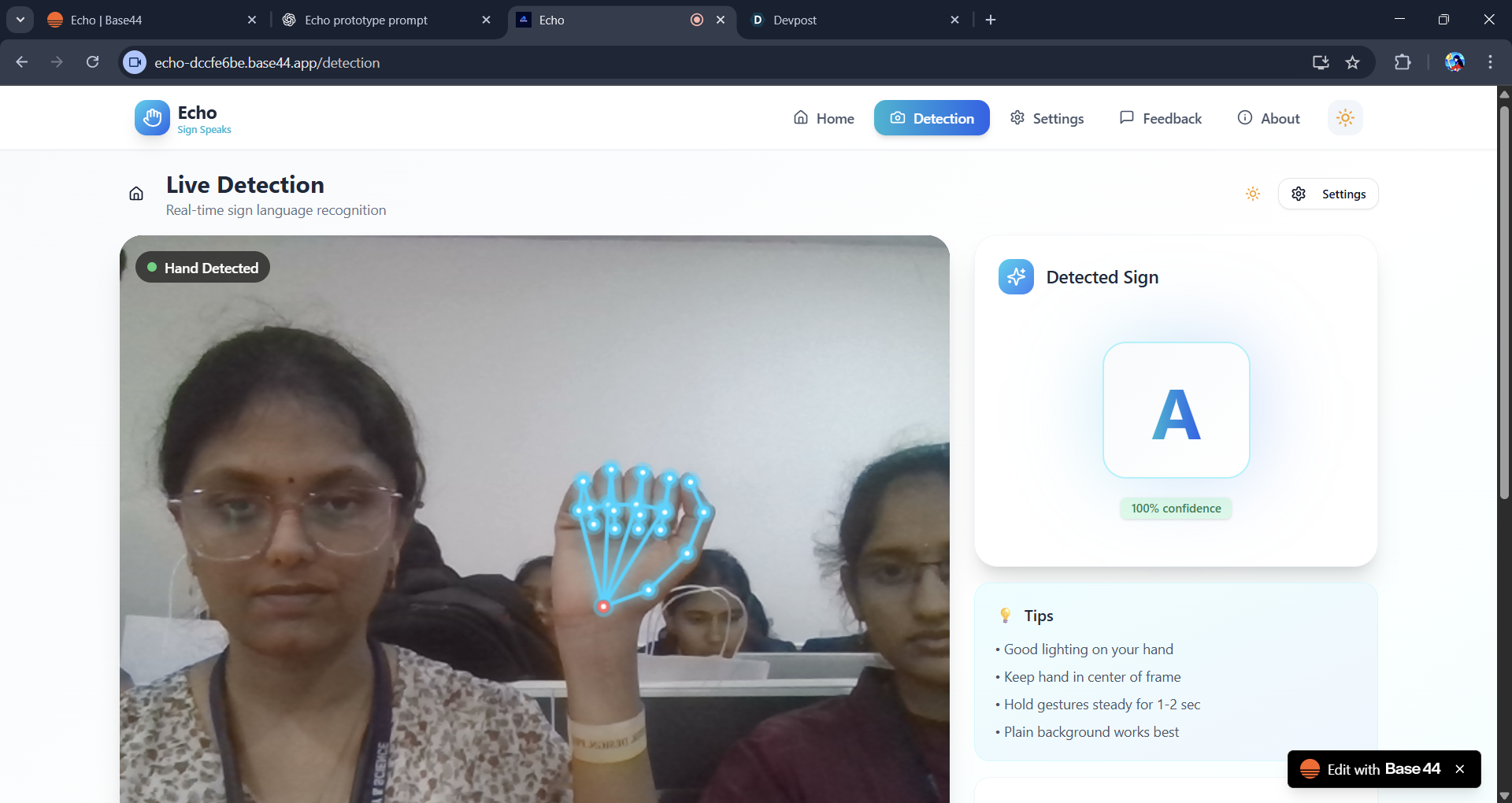
Echo captures live hand movements through the camera, tracks the user’s hand using a precise 21-point skeleton, and identifies the gesture in real time. It converts signs—letters, numbers, and common symbols—into readable text instantly on the screen. With its smooth UI, dark mode, and accurate detection pipeline, Echo bridges the communication gap by ensuring that your hands become your voice.
How we built it
We built Echo using Base44 as the core platform, leveraging its camera components, gesture-processing blocks, and UI tools. We integrated a hand-tracking system that extracts 21 landmark points for every frame, then passed those points into a gesture-classification workflow. The model was trained on curated datasets for letters, numbers, and essential ASL symbols. We designed a responsive UI with smooth transitions, skeleton overlays, detection history, and dark mode. The entire pipeline—camera → hand detection → skeleton mapping → prediction → display—was optimized to ensure real-time accuracy.
Challenges we ran into
Building Echo came with several challenges. The biggest issue was achieving accurate gesture detection without random or simulated outputs—especially since similar signs like B and 5 often confused the model. Training a reliable classifier with clean data required multiple iterations. Hand-tracking stability was another hurdle; the skeleton sometimes drifted or lost alignment when lighting changed or when the background was not uniform. Implementing dark mode while keeping the UI readable and ensuring real-time performance also required careful optimization. Despite these challenges, each obstacle pushed us to refine the system and make Echo stronger.
Accomplishments that we're proud of
Built a fully functional real-time sign-language detection system using Base44 with consistent accuracy.
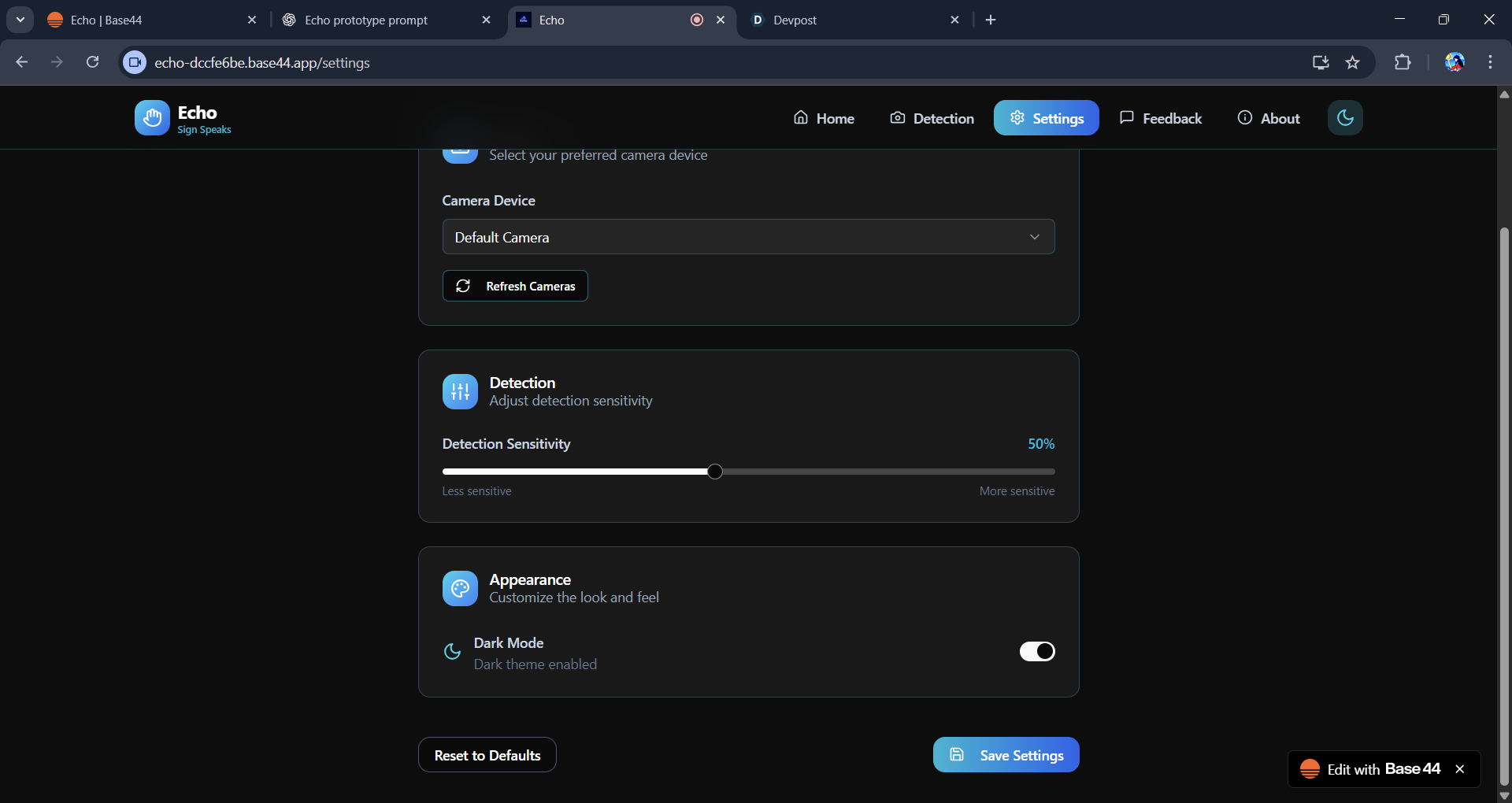
Designed a clean and accessible UI with dark-mode support.
Optimized the model to differentiate similar gestures like B and 5.
Achieved smooth hand-skeleton tracking and stable predictions.
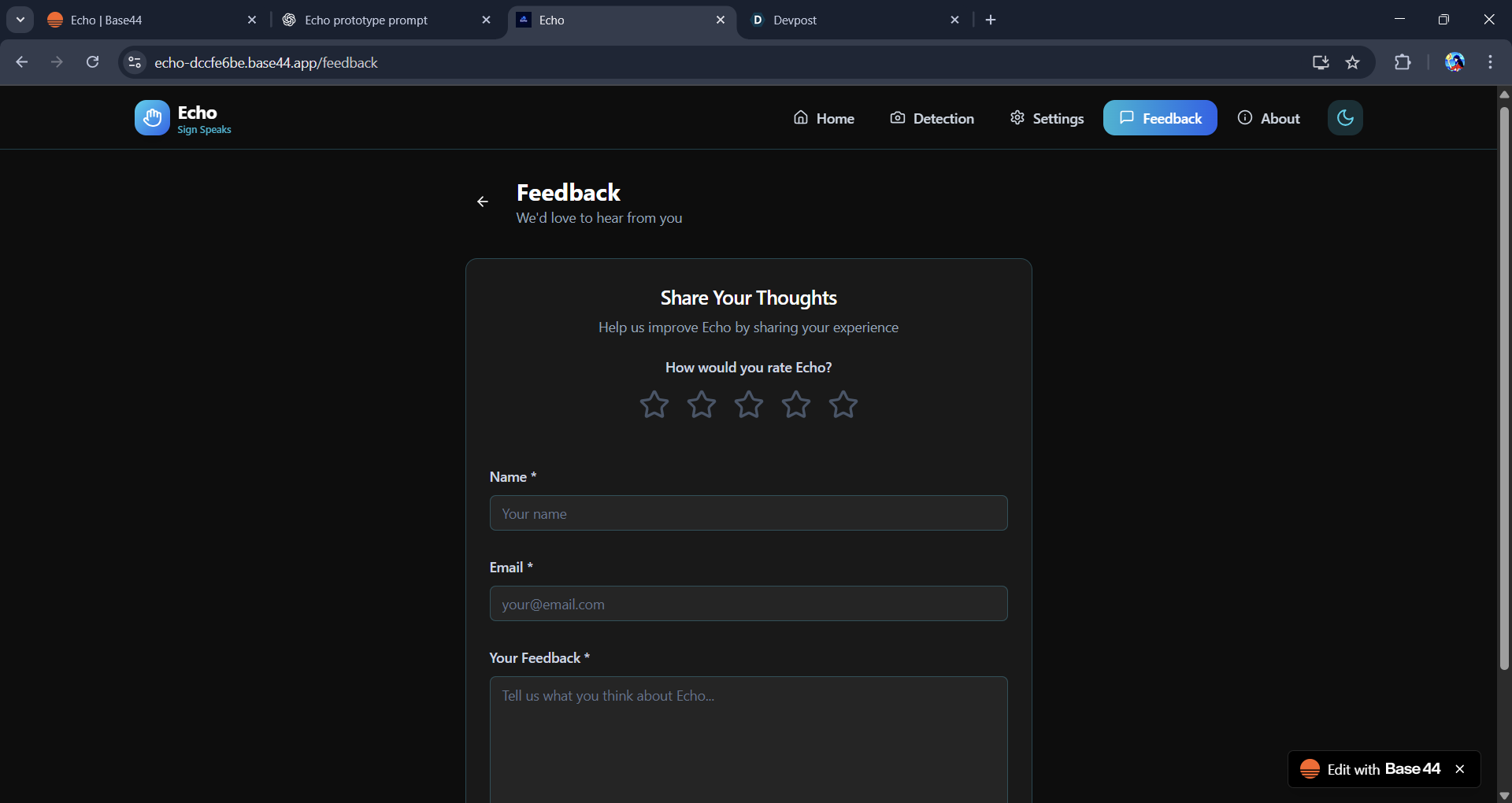
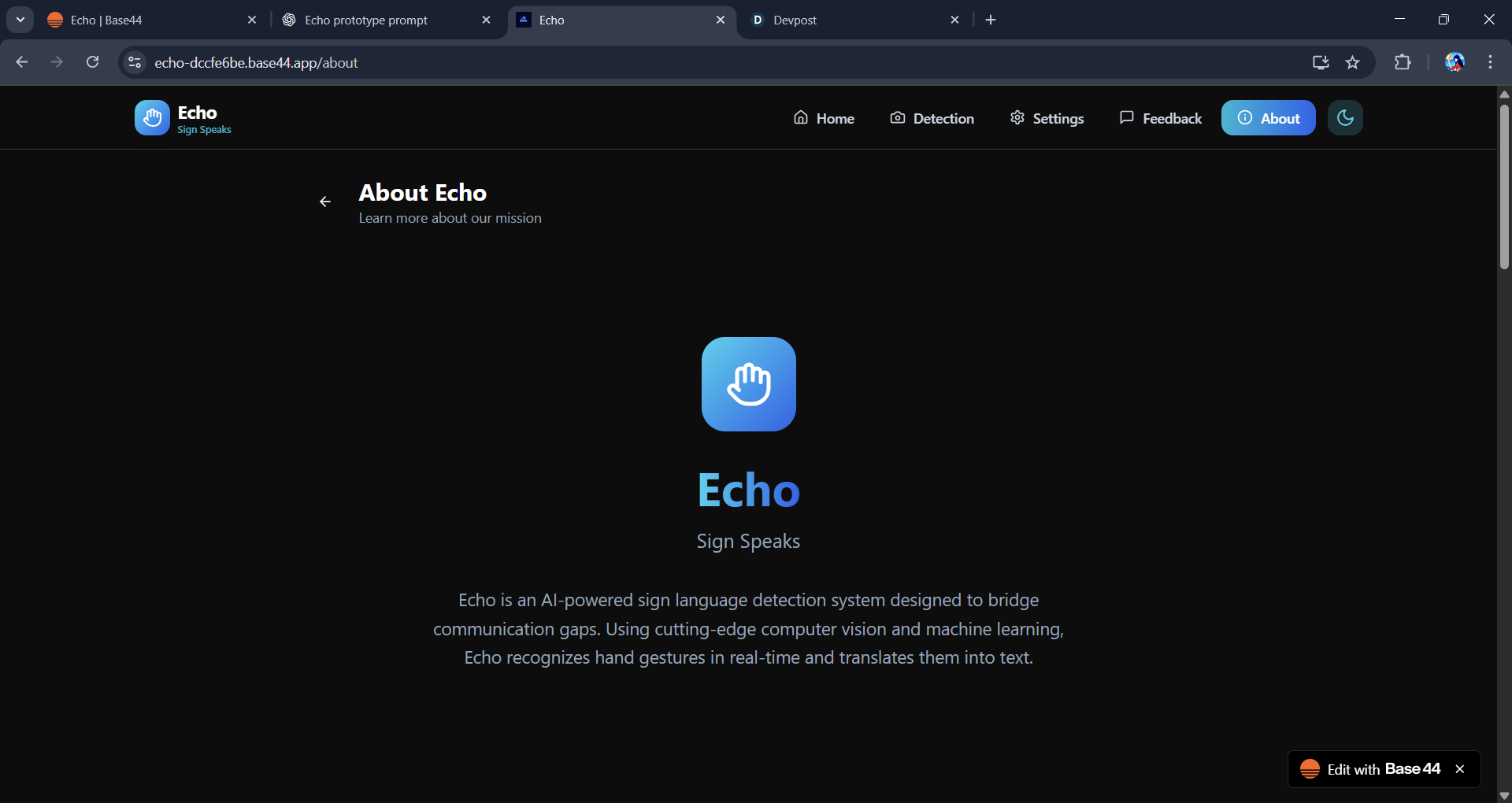
Created a complete project flow — landing page, detection page, settings, and feedback — within strict hackathon time.
What we learned
How to work with hand-tracking frameworks and interpret 21-point landmark data.
The importance of gesture consistency and how small changes in finger position affect model predictions.
How to structure a real-time detection pipeline inside Base44.
Improved teamwork, quick debugging, and fast iteration during hackathon pressure.
Learned to convert a simple idea into a polished assistive-tech product with UI + ML + real-time camera workflow.
What's next for Echo
The next big step for Echo is evolving into an AR/VR-powered immersive communication assistant. We envision:
AR glasses that overlay detected signs as text in real time.
VR learning environments where users can practice or teach sign language interactively.
3D hand-mesh tracking for improved accuracy.
Gesture-to-speech output in virtual spaces, enabling inclusive communication in AR/VR meetings.


Log in or sign up for Devpost to join the conversation.