Inspiration
Inspiration — The Reason Behind ECHO Odyssey
This project began with someone very close to my heart: my sister.
My sister lives in Nepal and has a visual impairment. Growing up, she experienced something no one should have to face: being bullied because she was different.
Knowing that someone I love had to experience that kind of treatment has stayed with me. It made me think about how easily the world can make someone feel excluded simply because they experience it differently.
For many people, reading a piece of text, recognizing an object, understanding a conversation, or navigating technology is something they do without thinking. But for someone with a disability, these everyday activities can come with barriers that others rarely notice.
I kept coming back to one question:
What if technology could help remove some of those barriers instead of creating more of them?
That question became ECHO Odyssey.
I wanted to build something that could help people like my sister feel more confident and independent. Something that could read words aloud when seeing them is difficult, recognize objects when visual information isn't accessible, turn speech into captions, and make everyday tasks easier to manage.
Most importantly, I wanted to create something that reminds people with disabilities that they deserve the same opportunities, dignity, and independence as everyone else.
My sister's experience inspired me, but ECHO Odyssey is for everyone who has ever felt that the world wasn't designed with them in mind.
What We Built
ECHO Odyssey is an AI-powered accessibility companion that brings multiple assistive tools together in one web application.
Its features include:
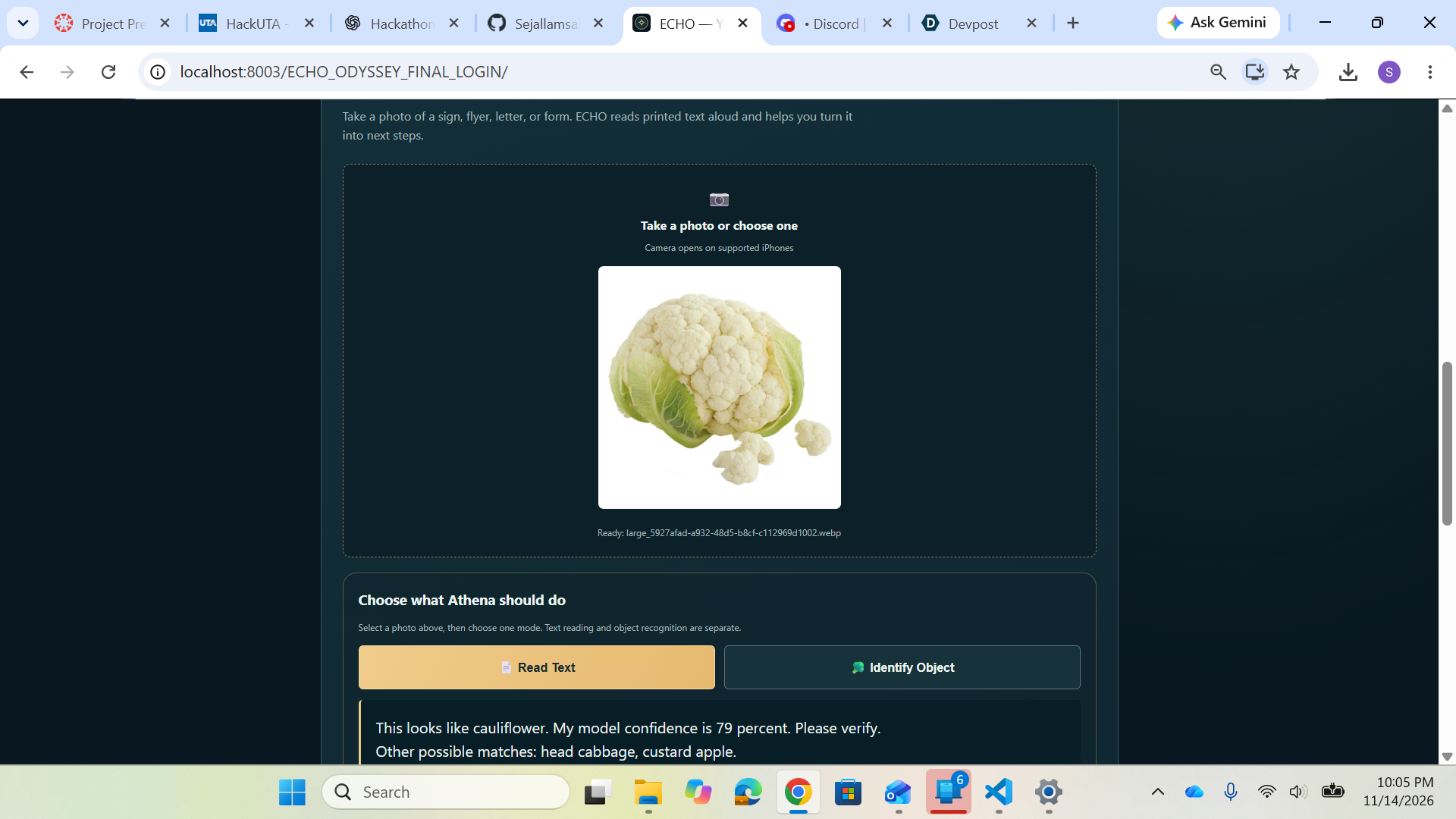
- Athena Vision: Extracts text from images, reads it aloud, and uses AI to identify objects.
- Athena Hearing: Converts supported microphone speech into live captions.
- Athena Voice: Enables hands-free navigation through spoken commands.
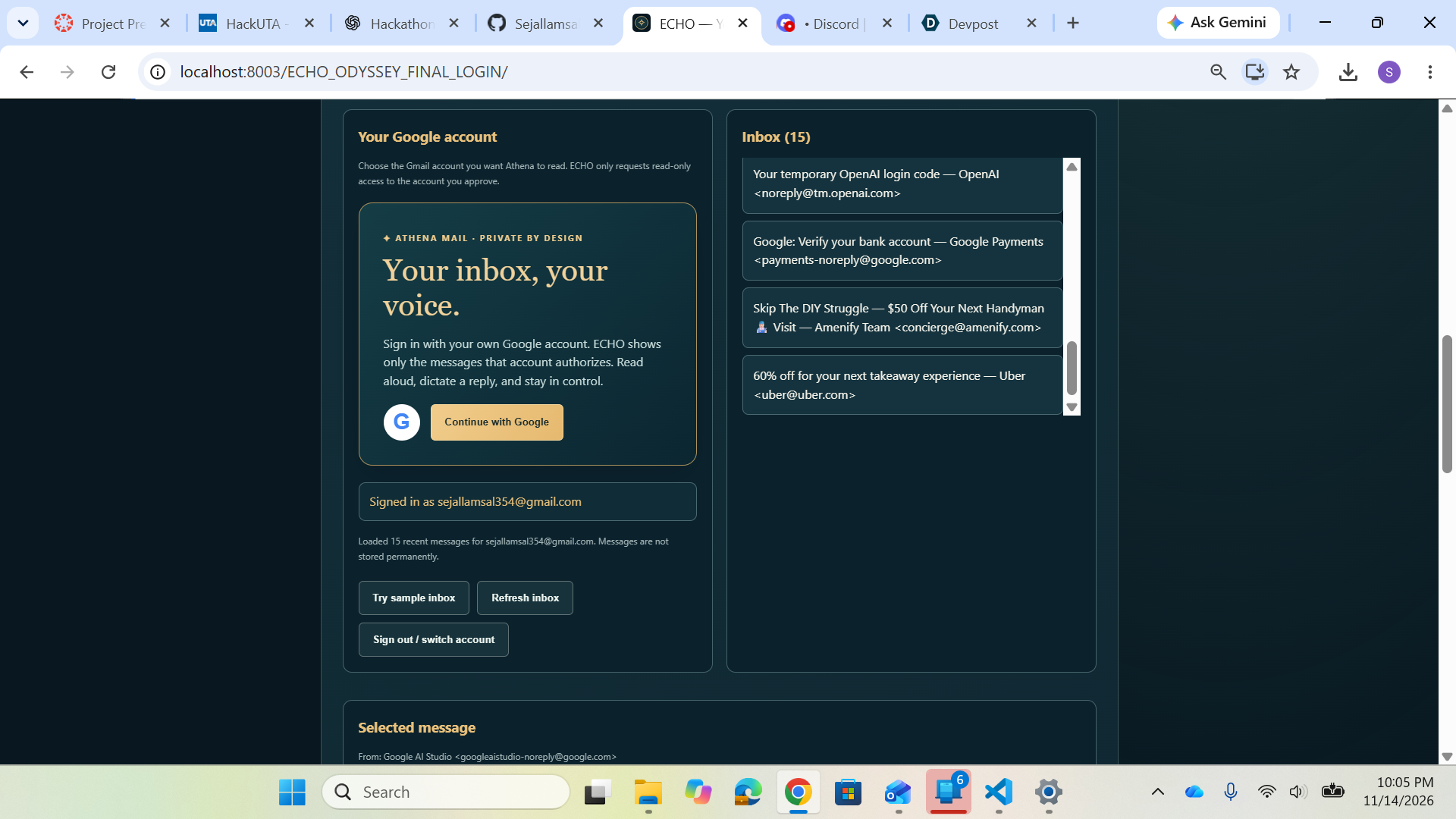
- Athena Mail: Connects to Gmail and helps users listen to and navigate their emails.
- Quest and Daily: Helps users organize responsibilities, routines, and personal goals.
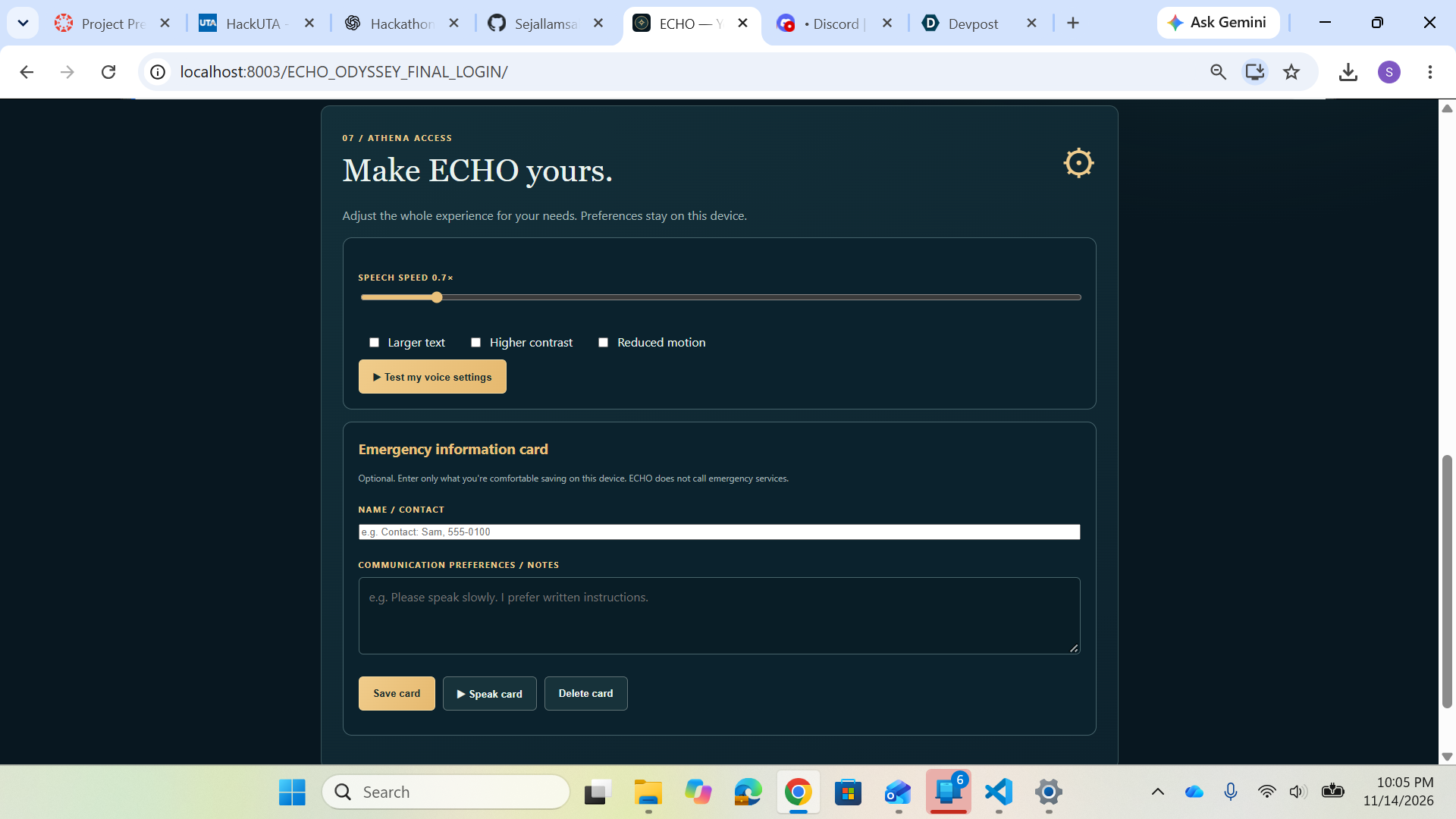
- Accessibility Settings: Supports a more personalized and comfortable experience.
- Life Tools: Offers reminders, emergency contact shortcuts, document reading, and progress tracking.
The application uses an ancient Greek-inspired design, with Athena representing wisdom and guidance and the Odyssey representing the journey toward independence.
How We Built It
We developed ECHO Odyssey as a browser-based web application using HTML, CSS, and JavaScript.
We integrated browser speech recognition and text-to-speech for voice interaction, OCR for reading text from images, and a browser-based machine learning model for object identification.
We also incorporated Google OAuth and the Gmail API to make email more accessible through speech.
Our goal was to combine these technologies into one interface rather than requiring users to switch between multiple accessibility tools.
Challenges We Faced
One of the biggest challenges was integrating different technologies into a single, accessible experience.
Voice recognition depends on browser and microphone permissions. Google authentication requires careful configuration and testing. Object recognition can produce uncertain results, and accessibility features need to remain understandable and easy to use.
We worked through these challenges by testing individual features, troubleshooting integration issues, and improving the interface step by step.
What We Learned
Building ECHO Odyssey taught us that accessibility is not just about adding features.
It is about understanding the obstacles people face, designing with empathy, and making technology easier for more people to use.
We also gained practical experience integrating AI models, browser APIs, Google authentication, and responsive web interfaces.
What's Next
ECHO Odyssey is a working hackathon prototype, and we hope to keep improving it.
Our future goals include more reliable cross-device accessibility, stronger account-based data privacy, additional language support, improved object recognition, and testing with people who use assistive technology.
We would especially love to explore support for Nepali, so tools like ECHO can become more useful to people in communities like the one that inspired this project.
Why This Matters
I know one application cannot erase the pain of bullying or solve every challenge someone with a disability faces.
But I believe technology can help create a world where fewer people feel excluded.
I cannot change what my sister experienced. But I can let her experience inspire something that might make life easier for someone else.
That is why I built ECHO Odyssey.
Because everyone deserves to feel seen, heard, included, and independent.
What it does
How we built it
Challenges we ran into
Accomplishments that we're proud of
What we learned
What's next for ECHO Odyssey
Built With
- css3
- gmail
- html5
- javascript
- python
- tensorflow.js
- tesseract.js
