-
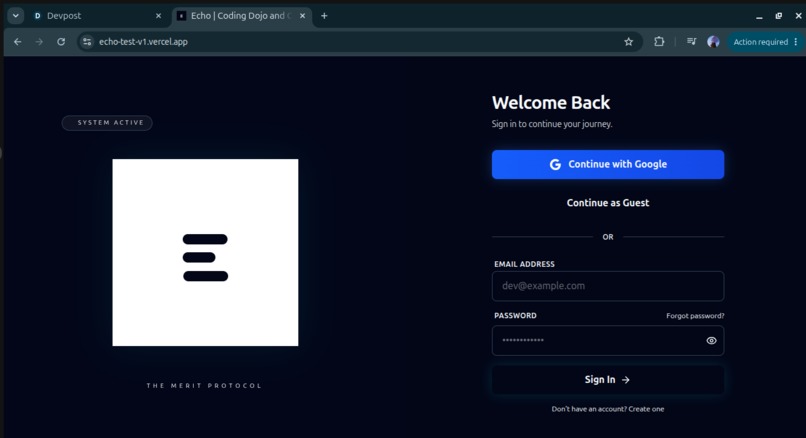
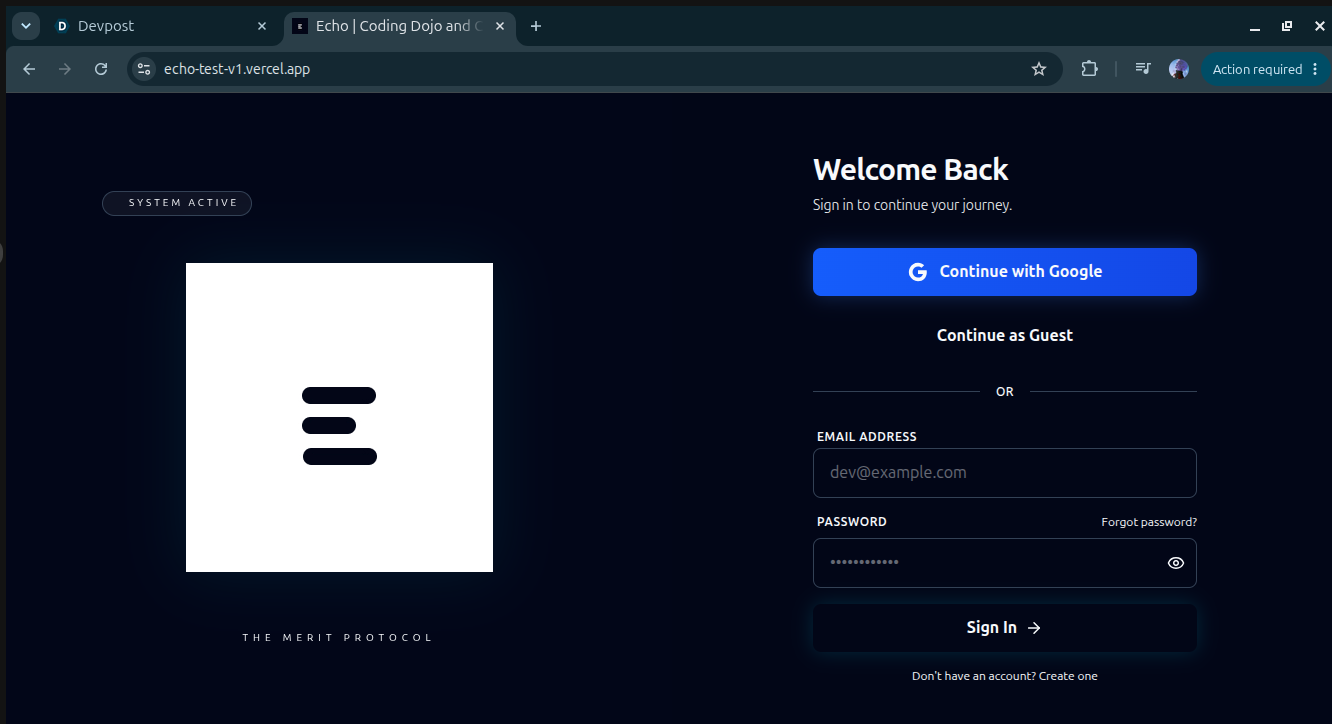
login
-
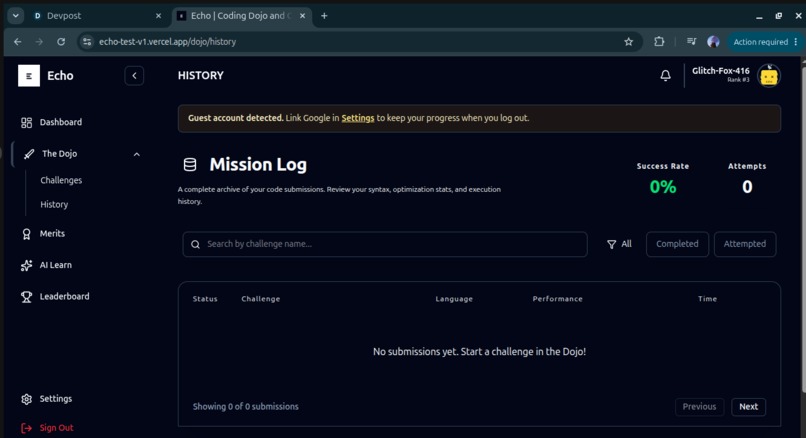
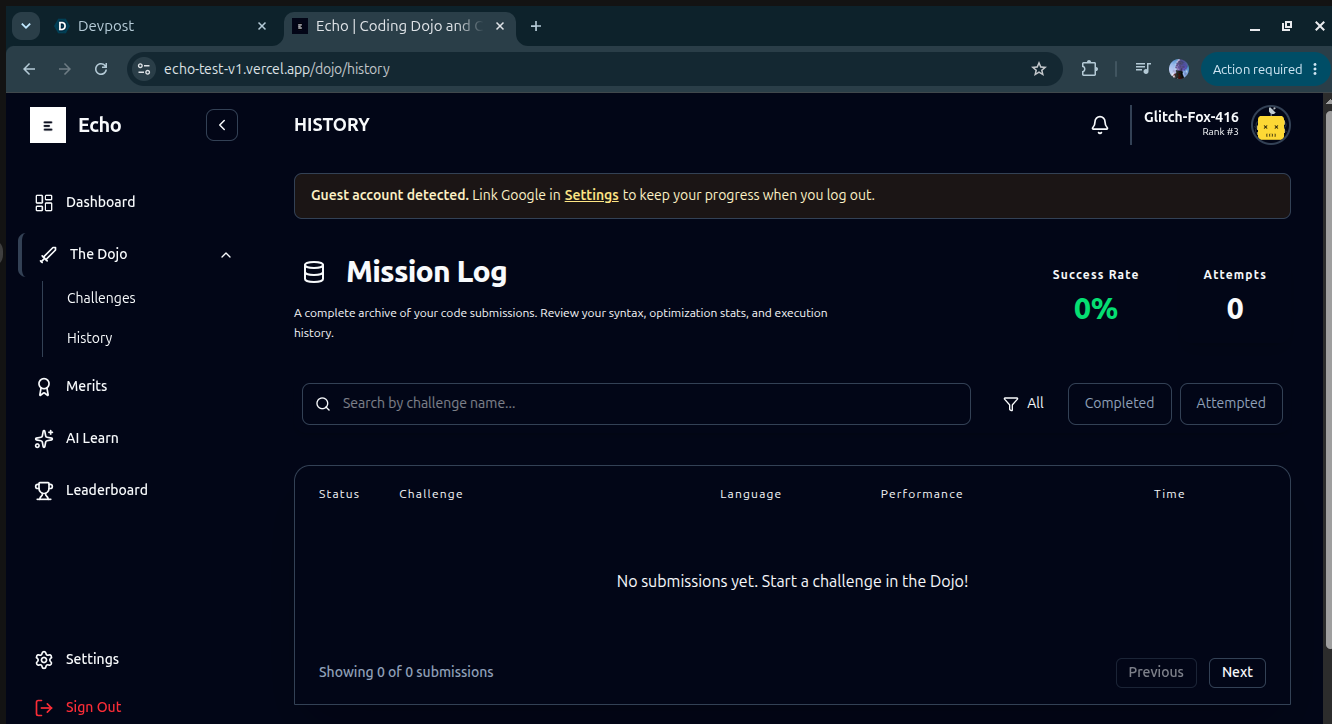
dojo/history
-
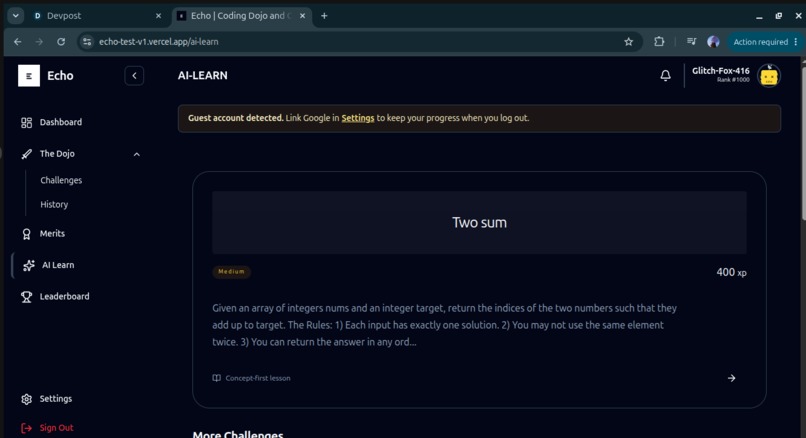
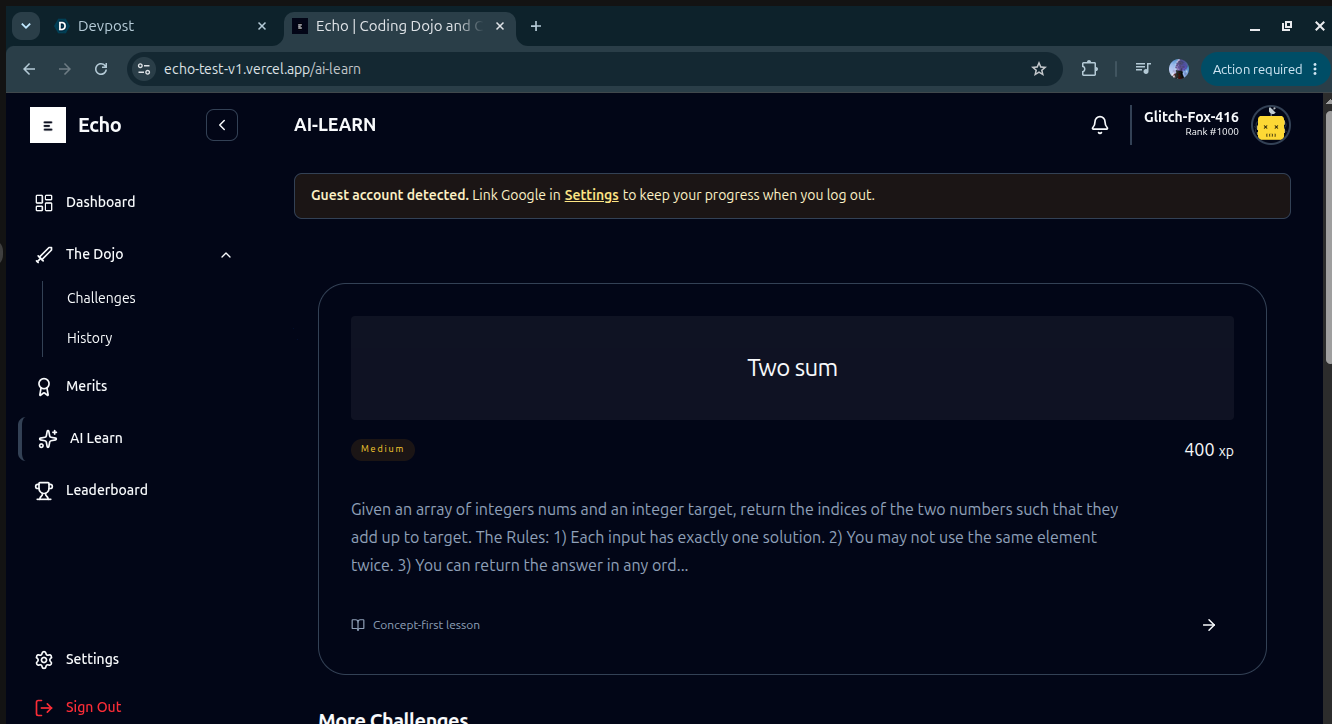
ai-learn
-
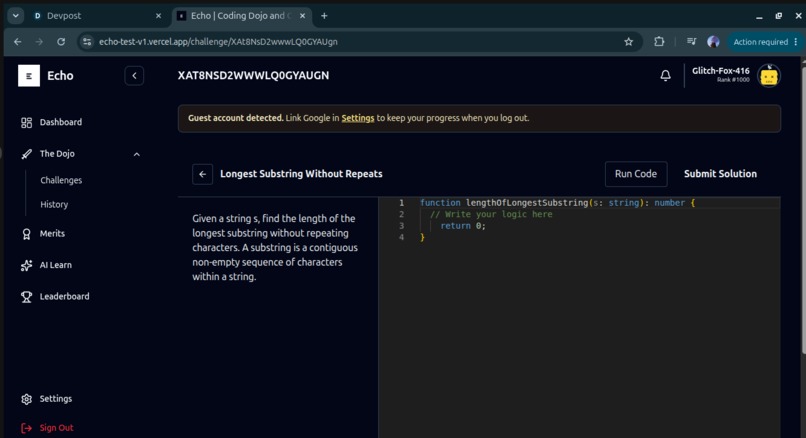
dojo/challenge/palindrome
-
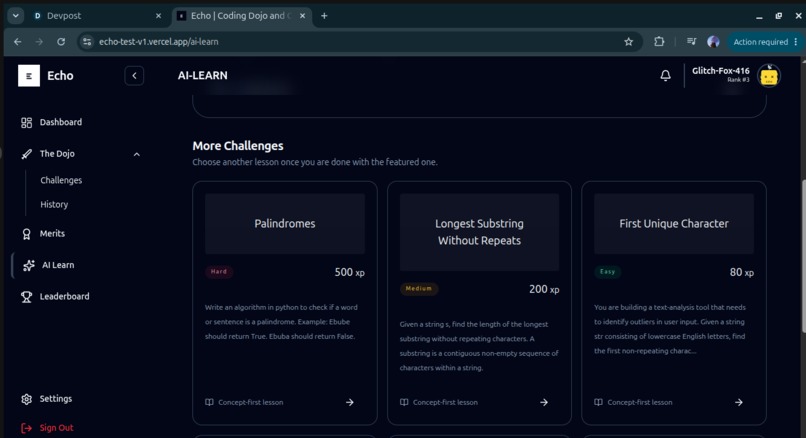
ai-learn
-
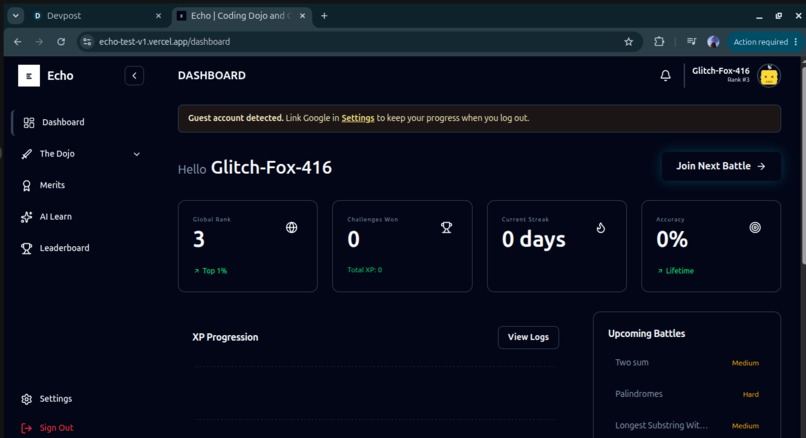
dashboard
-
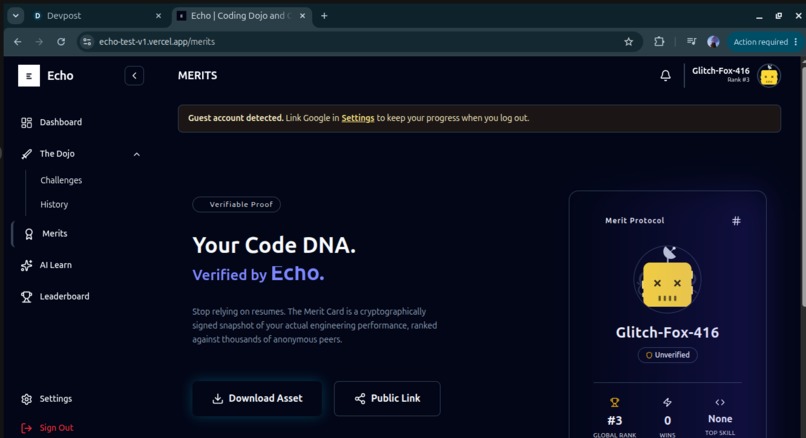
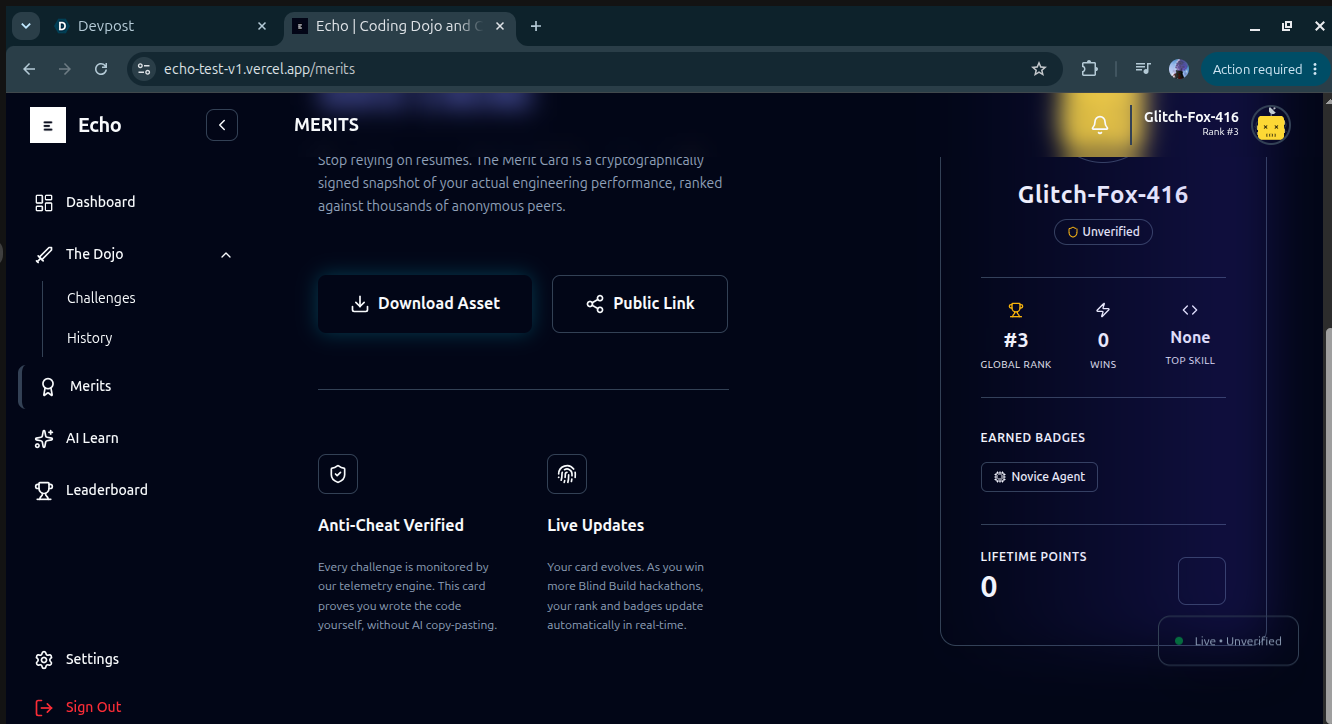
merit
-
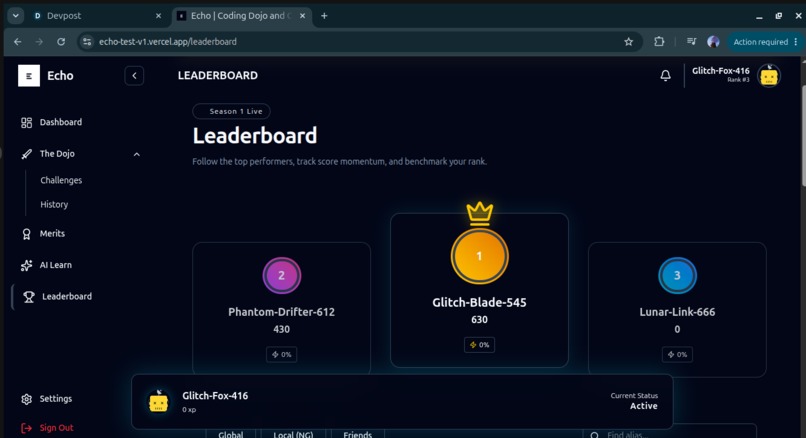
leaderboard
-
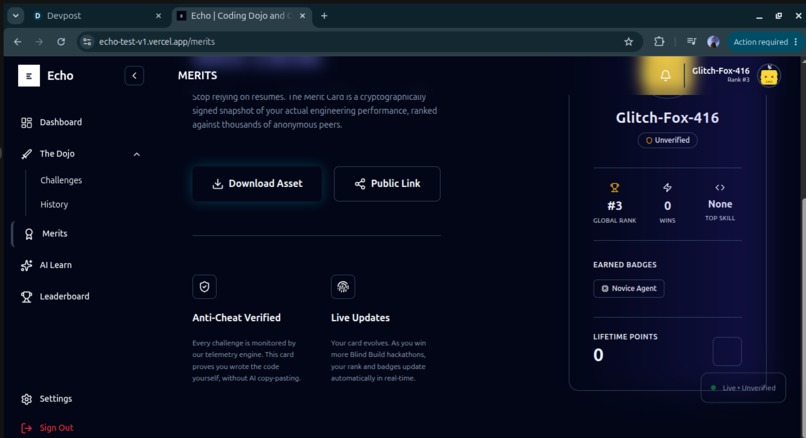
merit
-
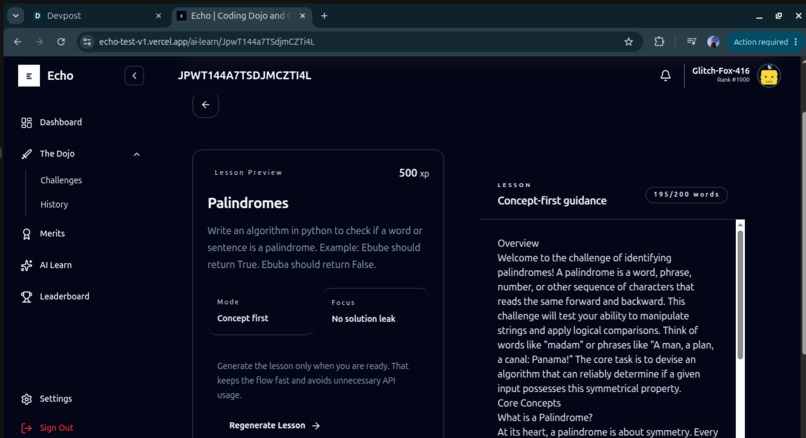
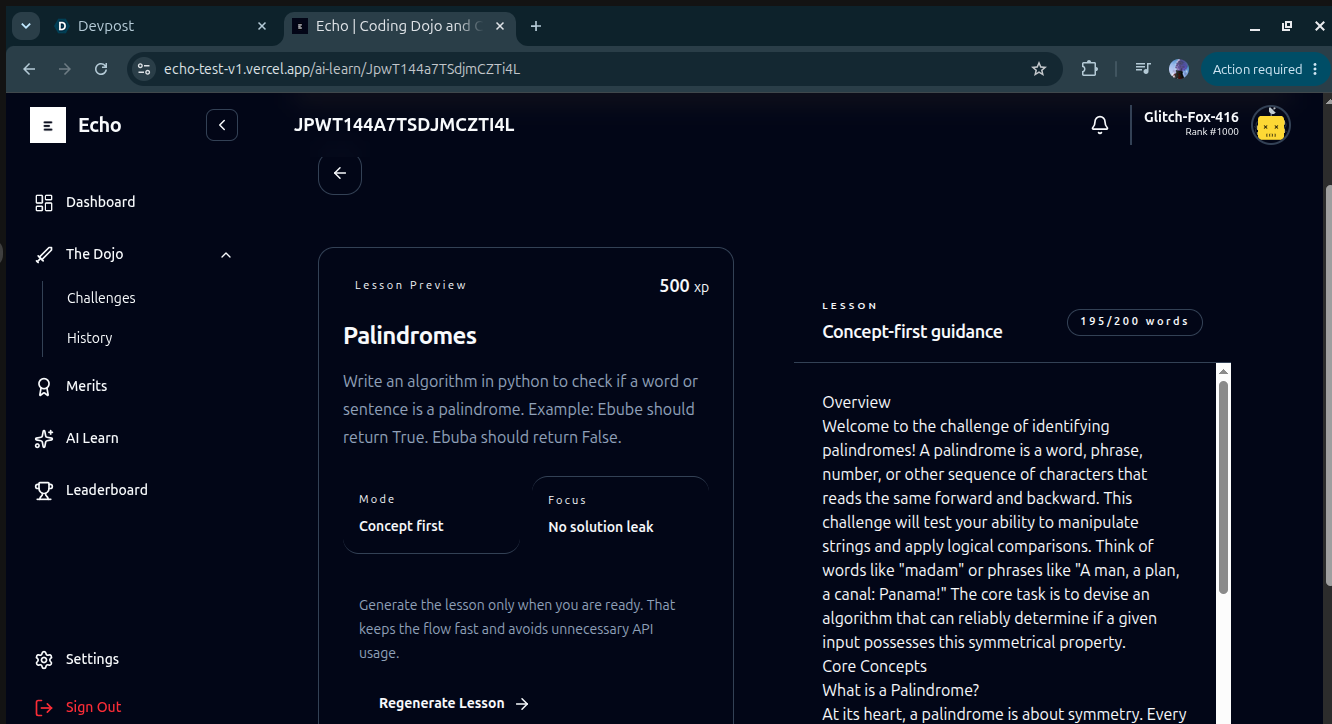
ai-learn/palindrome/lesson
-
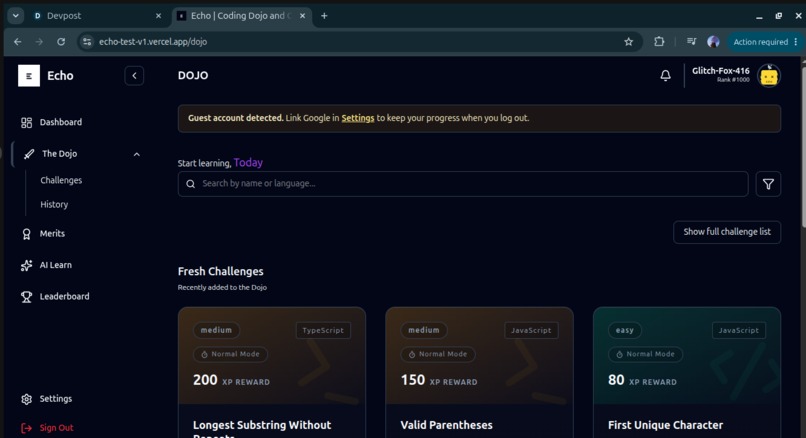
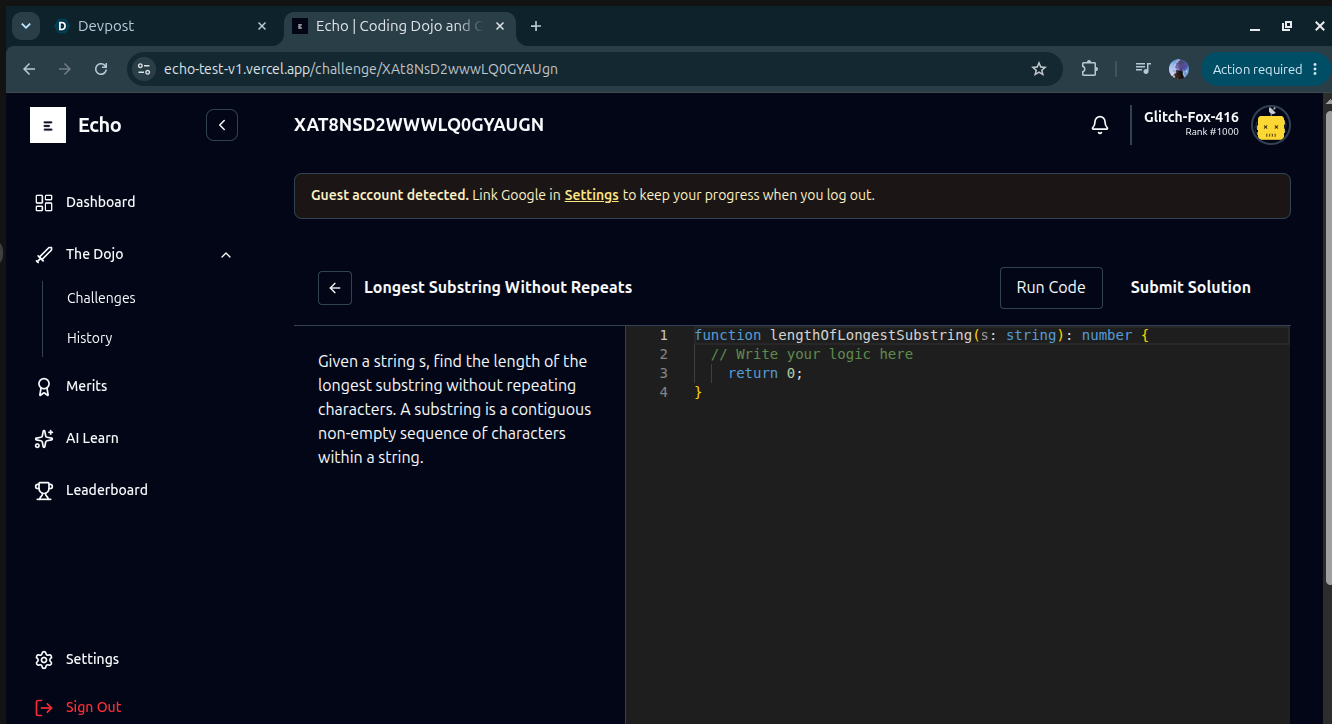
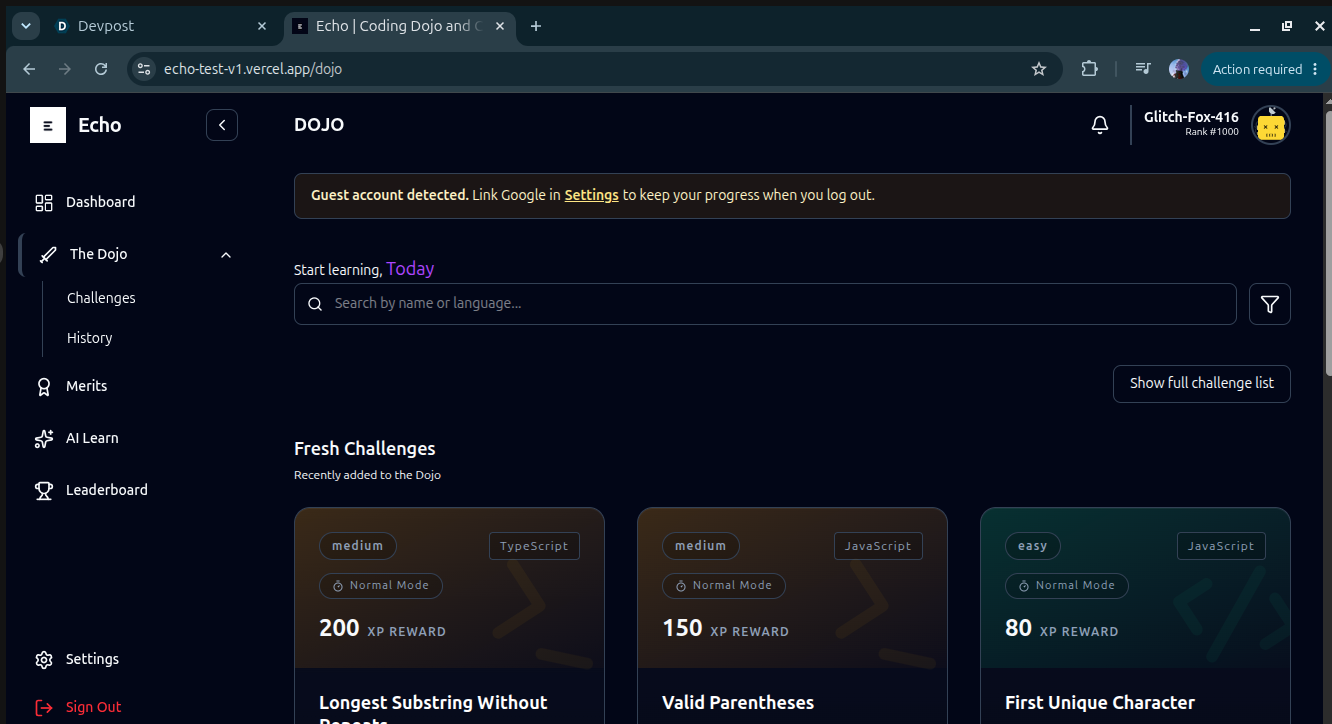
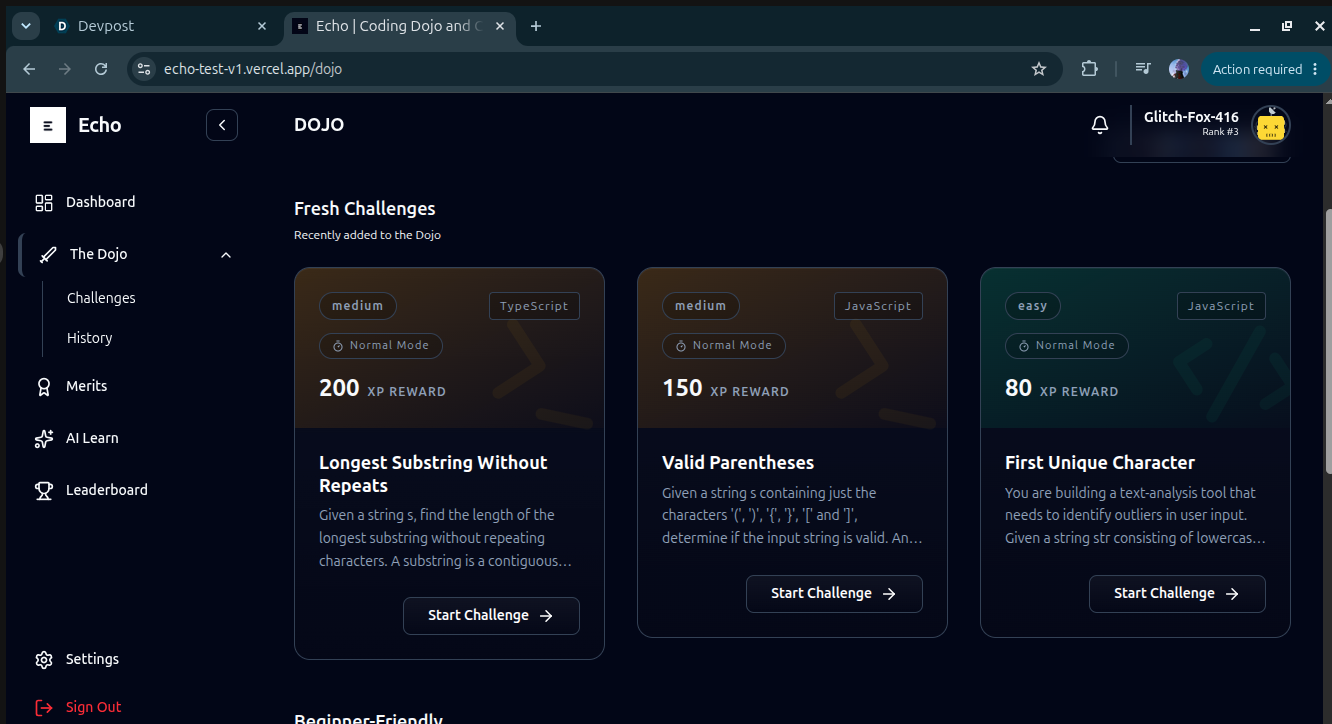
dojo/challenges
-
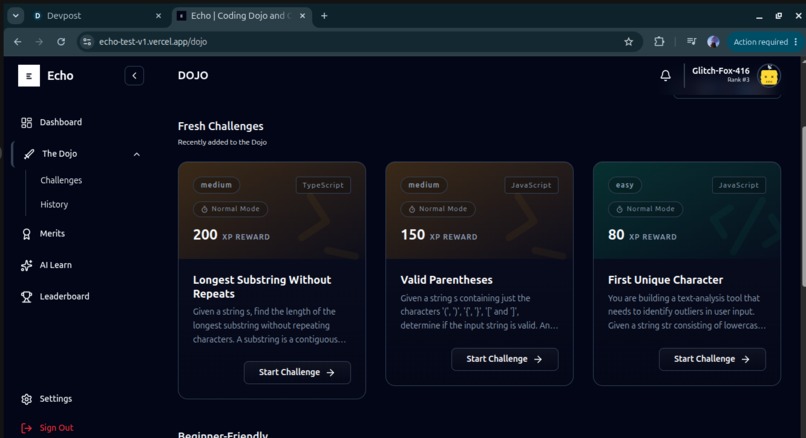
dojo/challenges
Inspiration
The global tech ecosystem is filled with phenomenal talent, but opportunity is rarely distributed as evenly as capability. Countless brilliant developers, designers, and technical writers from under-represented backgrounds remain functionally invisible to international recruiters, open-source projects, and standard hiring pipelines. Echo was born out of a desire to break down these systemic barriers. I wanted to build more than just another standard portfolio site; I set out to create a non-profit visibility accelerator that amplifies local voices, validates their technical prowess, and bounces their signal out to the wider global tech community.
What it does
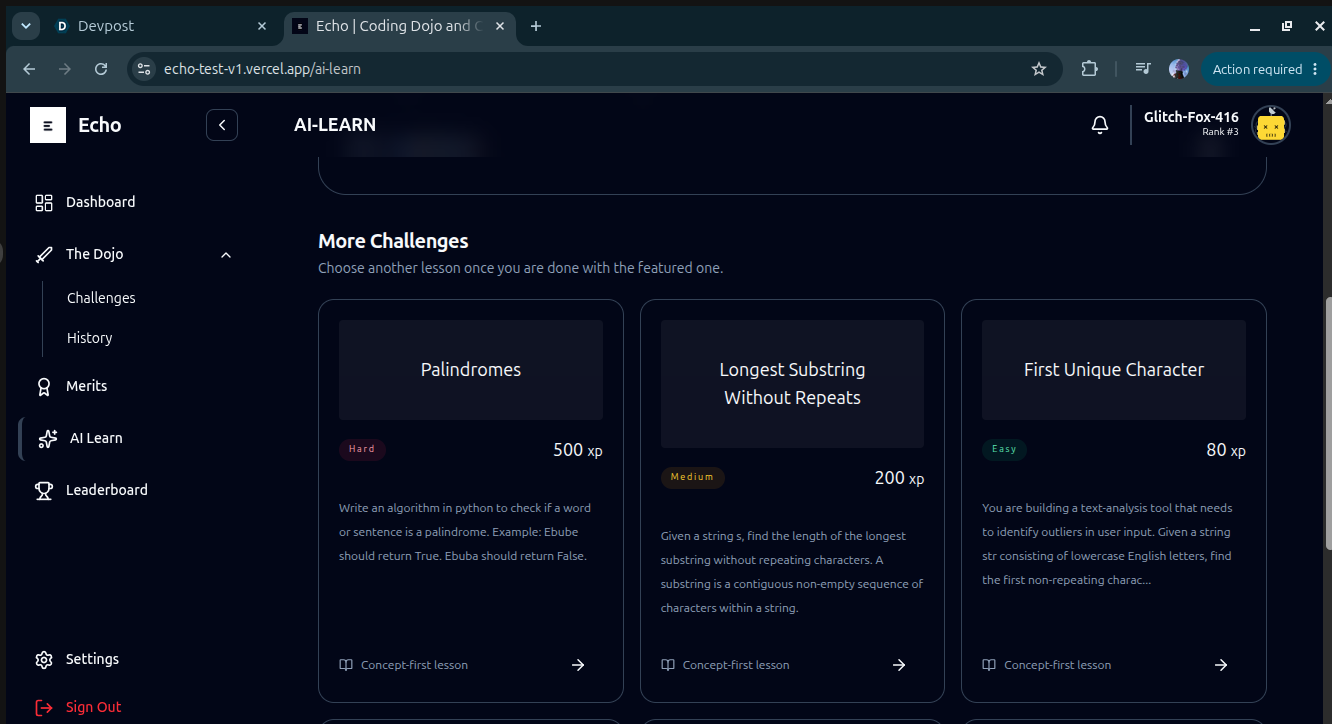
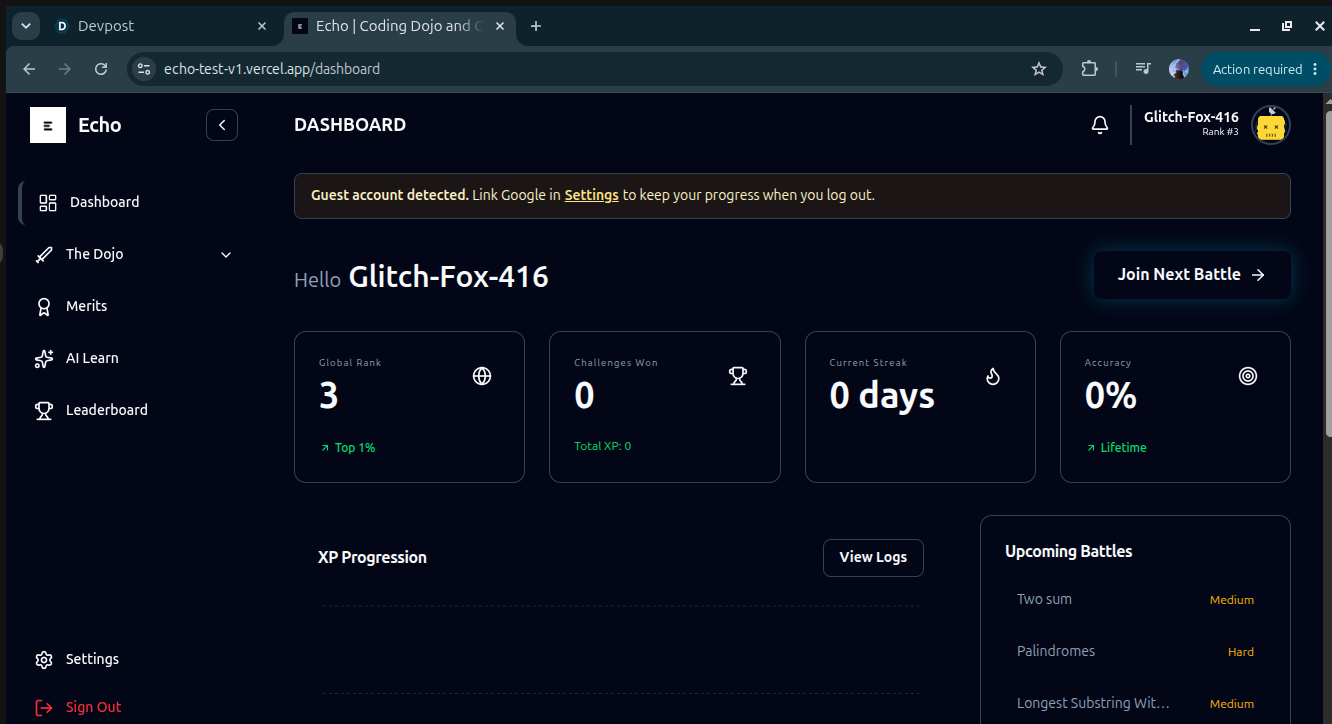
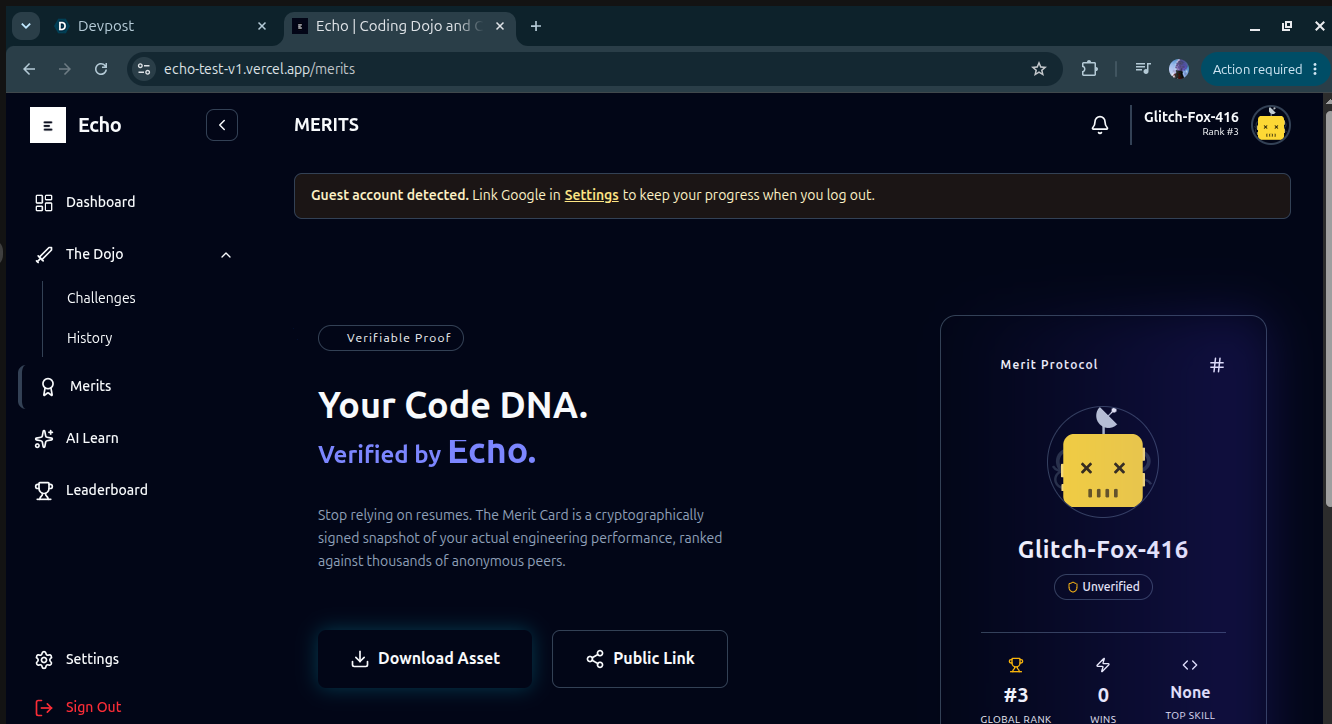
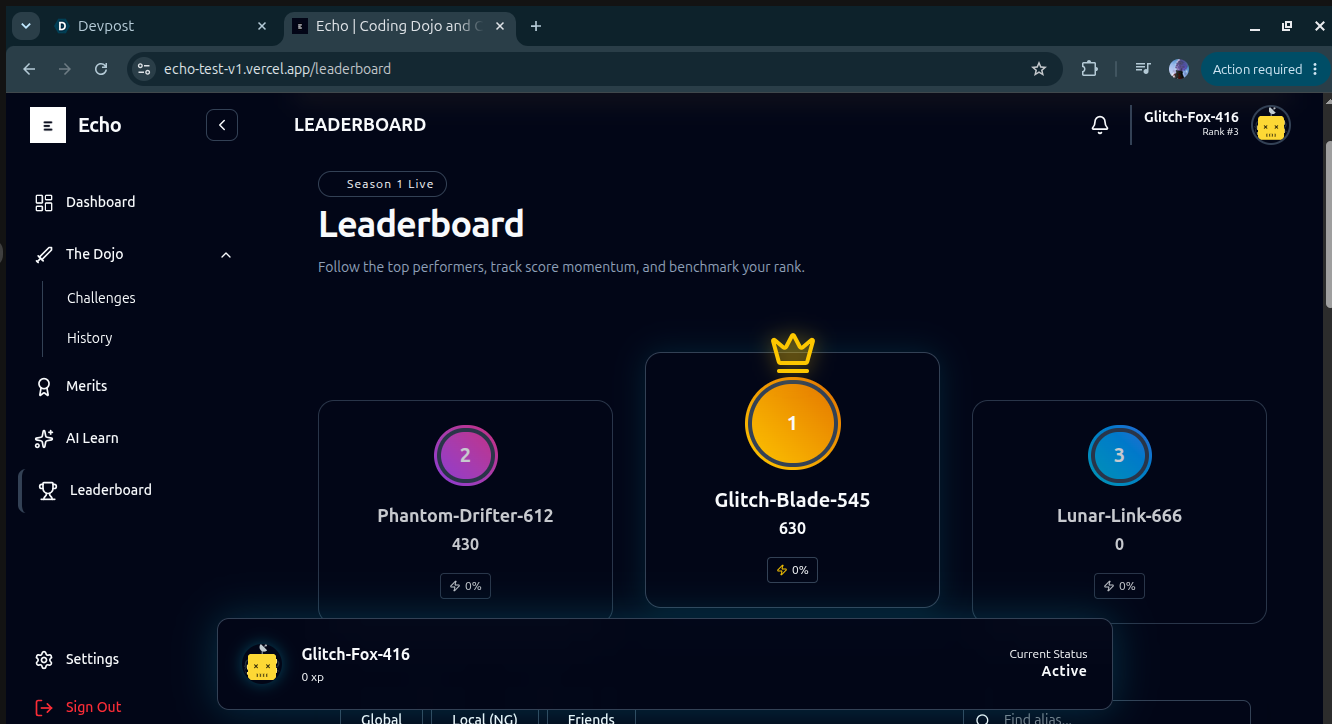
Echo is a coding dojo for engineers to help them practice code and the best part is, the web app includes all experience level challenges for individuals with greater experience. Echo utilizes pistonAPI to run and evaluate code on my platform via cloud functions to minimize browser leaks and XSS attacks. I also introduced GeminiAI for AI-learn feature for understanding the concepts of a challenge before attempting it via my monaco-editor. Echo has a global leaderboard for tracking performance and show visibility to potential recruiters. The web app does use anonymous user names for identity closure so users are judged according to their output and not names. Echo has a merit protocol that accumulates a users achievements and lets them share it via social media and also download a certificate-like document to share or for personal use. Gamified progression (XP & Levels) every successful compilation and optimized solution awards dynamic XP, allowing users to level up their profiles and unlock advanced dojo tiers.
How we built it
We engineered Echo to handle instantaneous code submission evaluations and rapid state updates without breaking a sweat. Frontend: Built with Next.js, TypeScript, and Tailwind CSS to deliver a dark-mode, high-fidelity dashboard that feels like a premium gaming interface. Backend: Powered by firebase store, auth, DB.
Challenges we ran into
1) The trickiest part of building a gamified engine is handling concurrent state changes. When multiple users are spamming submissions, updating a global leaderboard in real-time while calculating scaling XP rewards can easily cause database race conditions or massive request lag. 2) Getting a great online code execution api that is free and also very good and trusted my millons. I had to reach out to EngineerMan via Discord for a personalized key which required me to submit a PRD and SRS and Technical documents for his review. 3) Adding admin functionality which introduced RBAC (Role-Based Access Control) architecture and an overhaul of the entire frontend routing via zustand state store. 4) Writing a great prompt for the ai to not explicitly reveal challenge answers but to give a detailed lesson so they can understand what is meant of them. 5) Daily streak formatting and incrementing was a bit tasking as I had to write different functions to extract and format a date while updating the dashboard via firebase firestore. I ran into a latency where some accounts got incremented while others were not even reading the streak function.
Accomplishments that we're proud of
1) I crafted a UI that strikes the perfect balance between a clean IDE and a highly engaging gaming hub. 2) Asynchronous dashboard updates 3) Cloud-based code execution without browser leaks.
What we learned
We learned a massive amount about state caching strategies and the complexities of building balanced XP progression curves. Designing a gamified backend taught us that smooth background task management isn't just a technical nicety—it's the core driver of keeping users engaged in the game loop without frustrating interface delays.
What's next for Echo
1) 1v1 Dojo Duels: Real-time speed-coding matchmaking where two developers race against the clock to solve the same problem. 2) Guild & Clan Systems: Allowing tech communities or university cohorts to band together, aggregate their XP, and compete against rival squads. 3) AI Arena Masters: Implementing lightweight language models to automatically generate custom, hyper-personalized challenges based on a developer's specific weak points. 4) Gain more users and followers.
Built With
- firebase
- gemini
- nextjs
- pistonapi
- tailwindcss
- typescript

Log in or sign up for Devpost to join the conversation.