Echo - Project Story for Devpost
Inspiration
I've always been someone who journals. Writing helps me process thoughts, understand emotions, and grow both emotionally and spiritually. But I found myself constantly switching between apps, one for journaling, another for mood tracking, a third for tasks, and more. Each app worked in isolation, never learning from the others.
I wanted a unified space where everything I need for personal growth lives together and learns from each other. That's when I realized: what if the incompatibility between these approaches wasn't a limitation, but an opportunity?
What it does
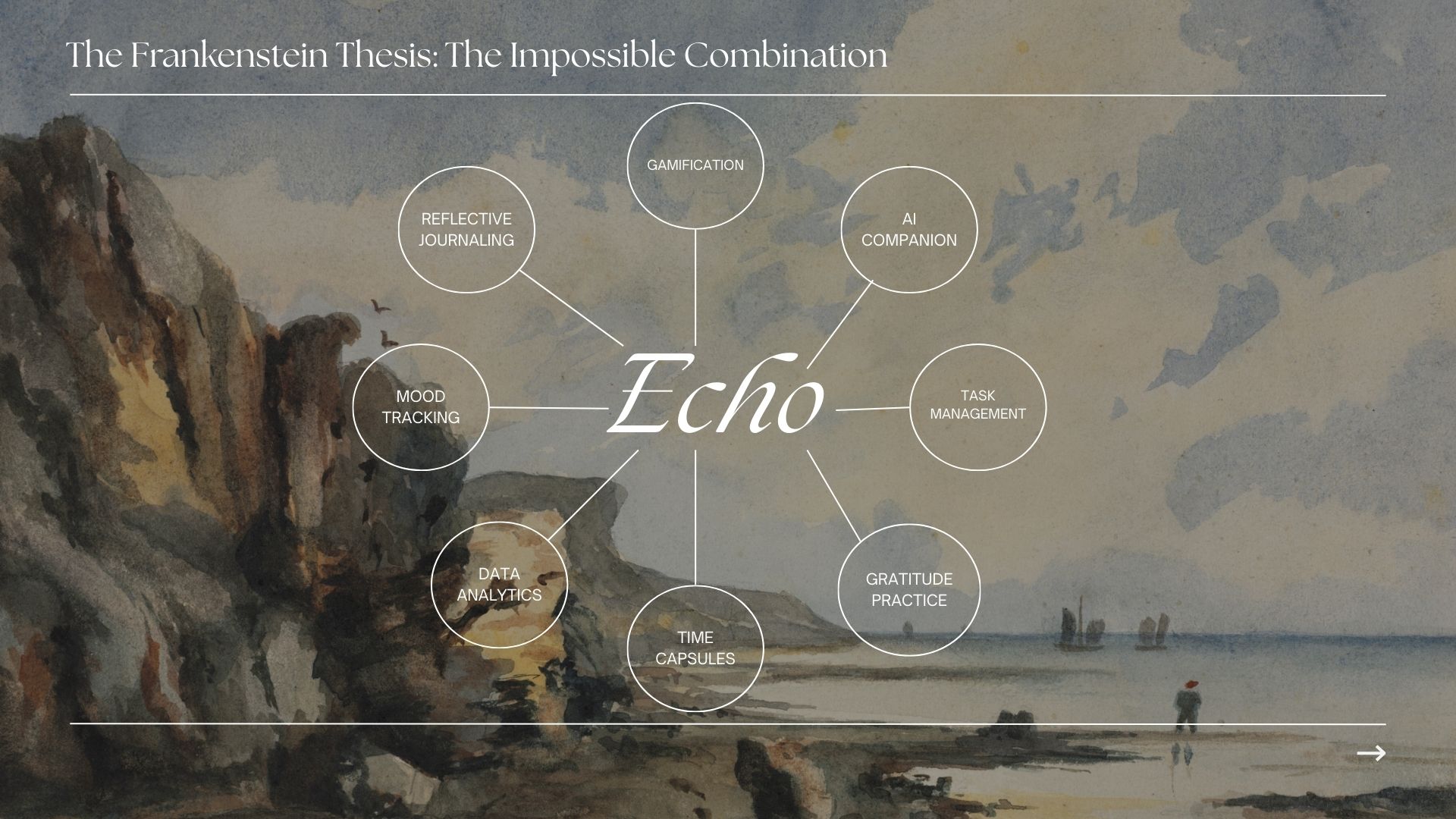
Echo is a personal growth platform that stitches together eight incompatible wellness methodologies into one adaptive ecosystem:
- Reflective Journaling (private, introspective) with ambient BGM and daily reflection prompts
- Gamification (competitive, achievement-driven) with XP, badges, quests, and streaks
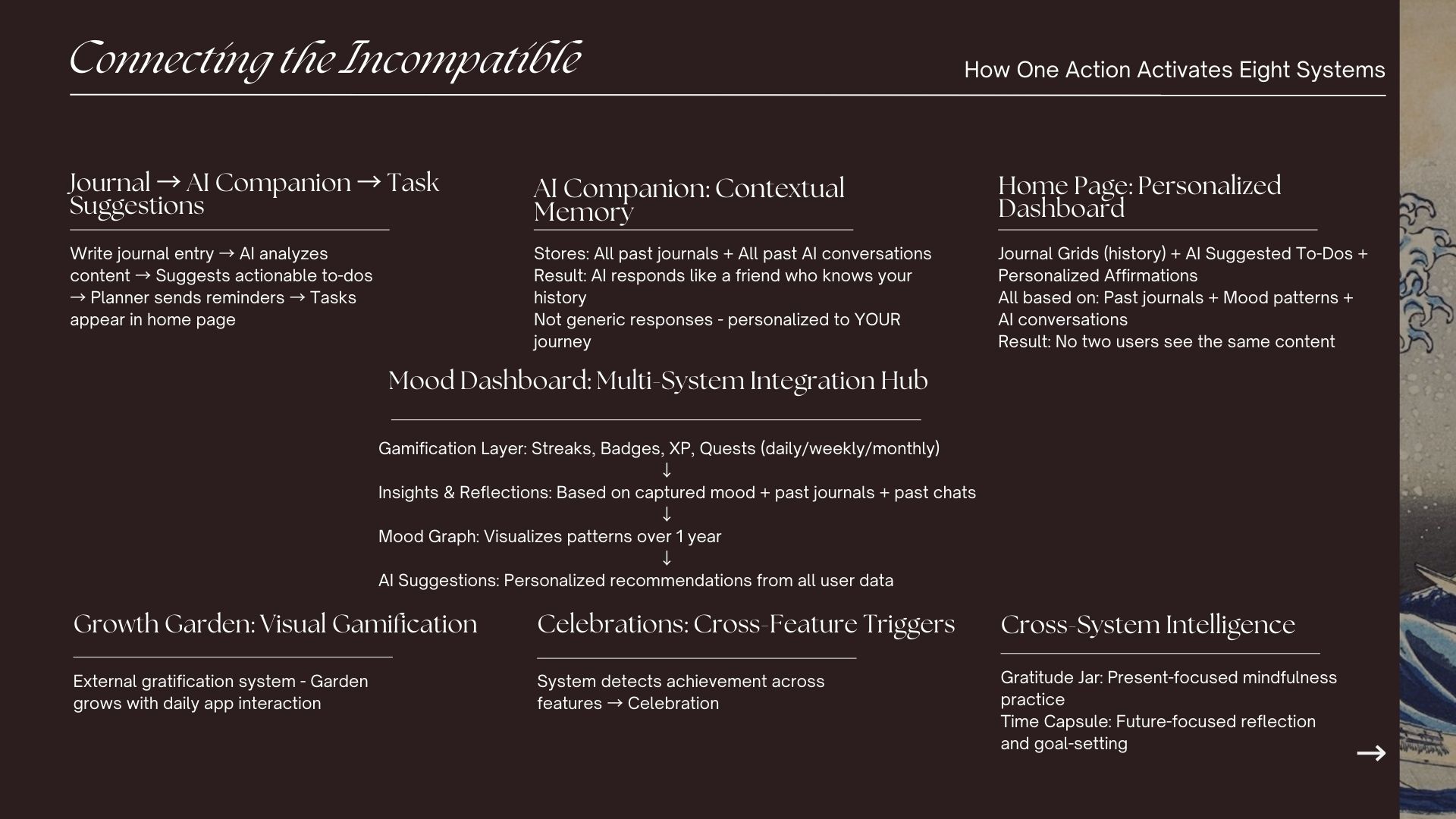
- AI Companion (conversational, supportive) with full context memory of your entire journey
- Task Management (productivity, action-oriented) with AI-generated suggestions from journal entries
- Gratitude Practice (mindfulness, present-focused) with visual jar collection
- Time Capsules (nostalgia, future-focused) for messages to your future self
- Data Analytics (quantitative, pattern-seeking) with mood graphs and insights
- Mood Tracking (diagnostic) with year-long trend analysis
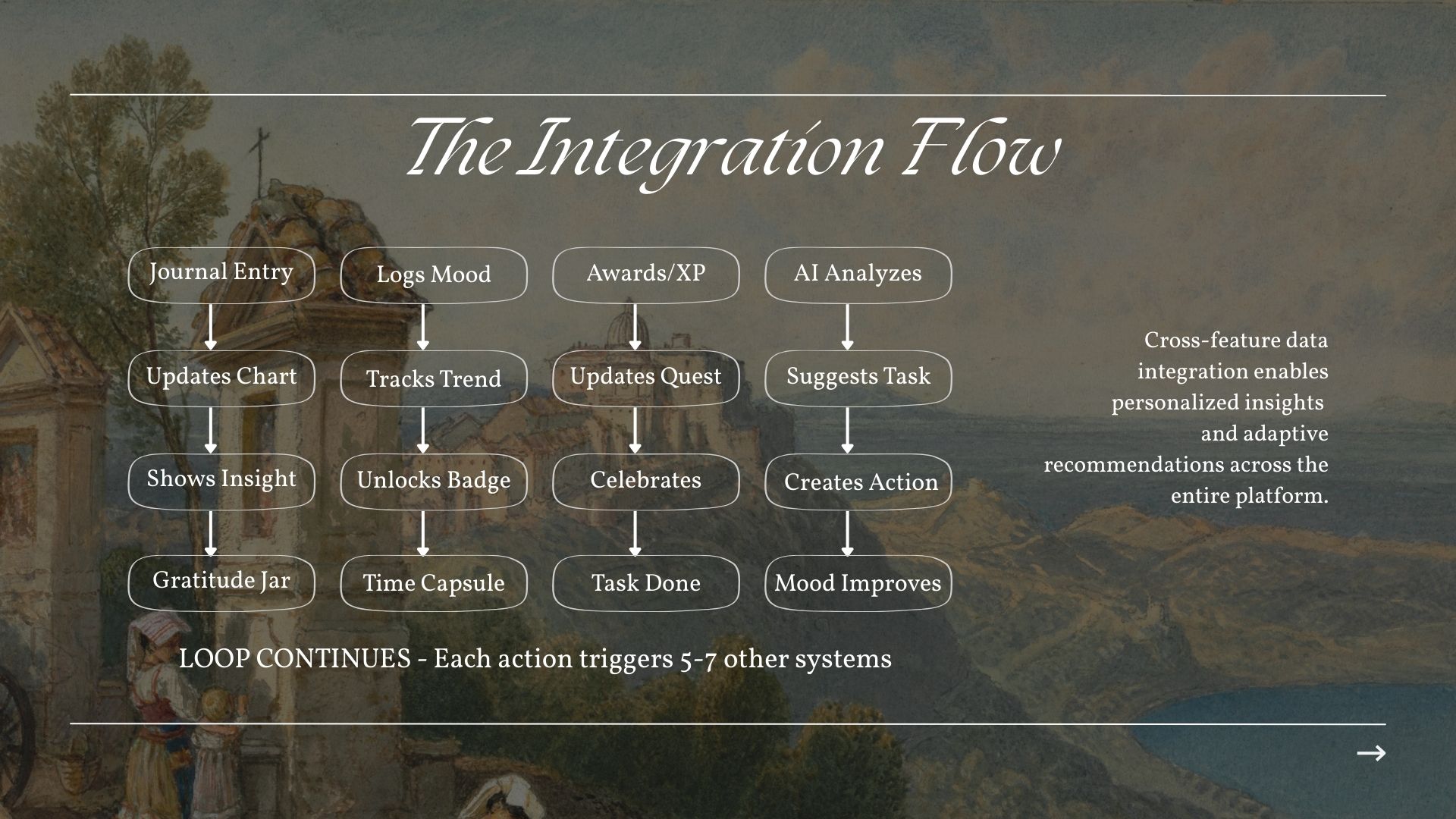
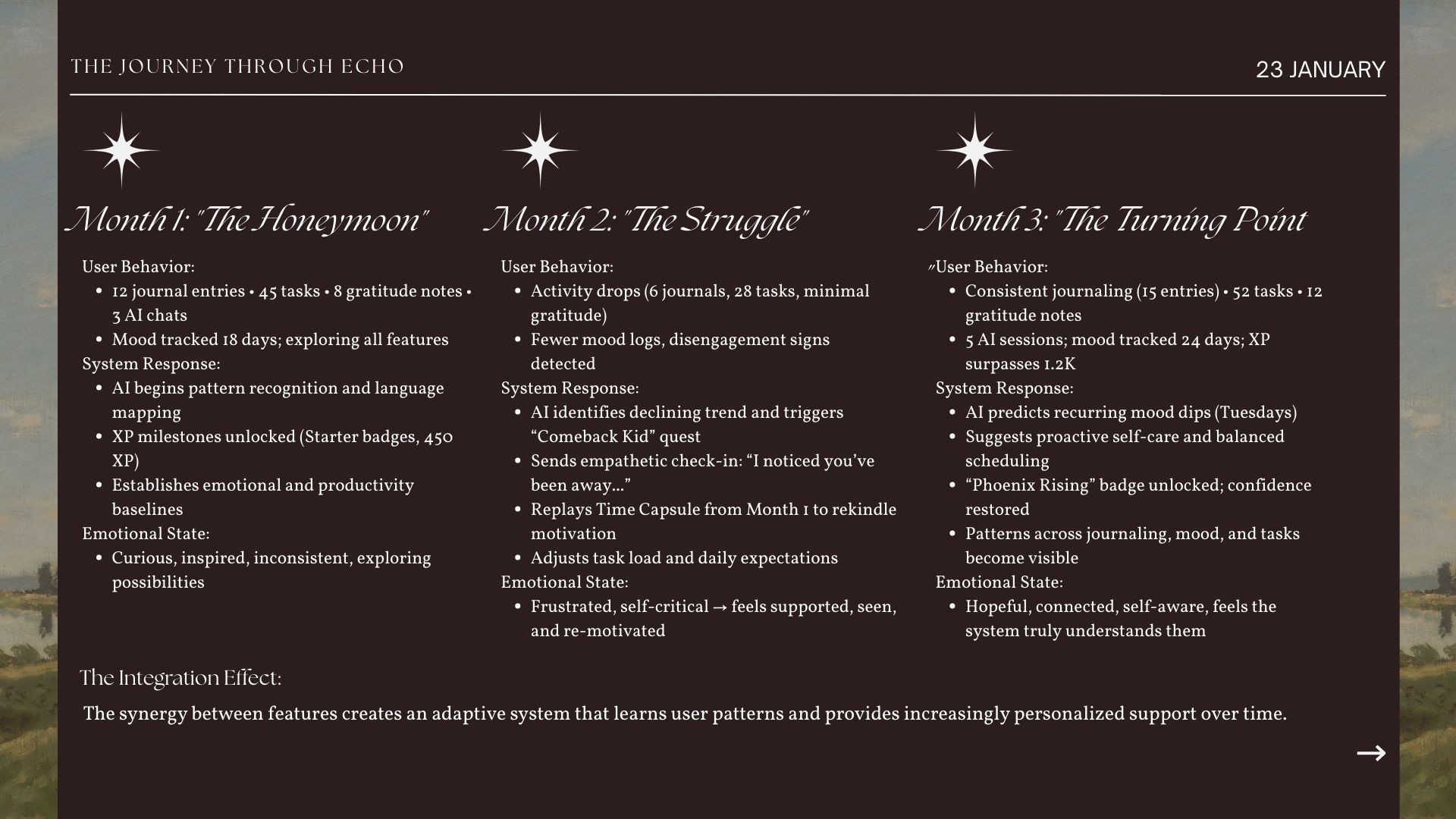
The magic happens when these systems share data. Write a journal entry about feeling overwhelmed, and Echo doesn't just save it, it triggers AI analysis, suggests actionable tasks, awards XP, streaks, badges, updates your mood graph, generates personalized insights, and teaches the AI to know you better. One action activates the entire ecosystem.
Echo isn't the same app for everyone. It learns from your journals, conversations, mood patterns, and task behaviors to curate a completely personalized experience that adapts to your emotional state and evolving needs.
How we built it
Spec-Driven Development with Kiro AI:
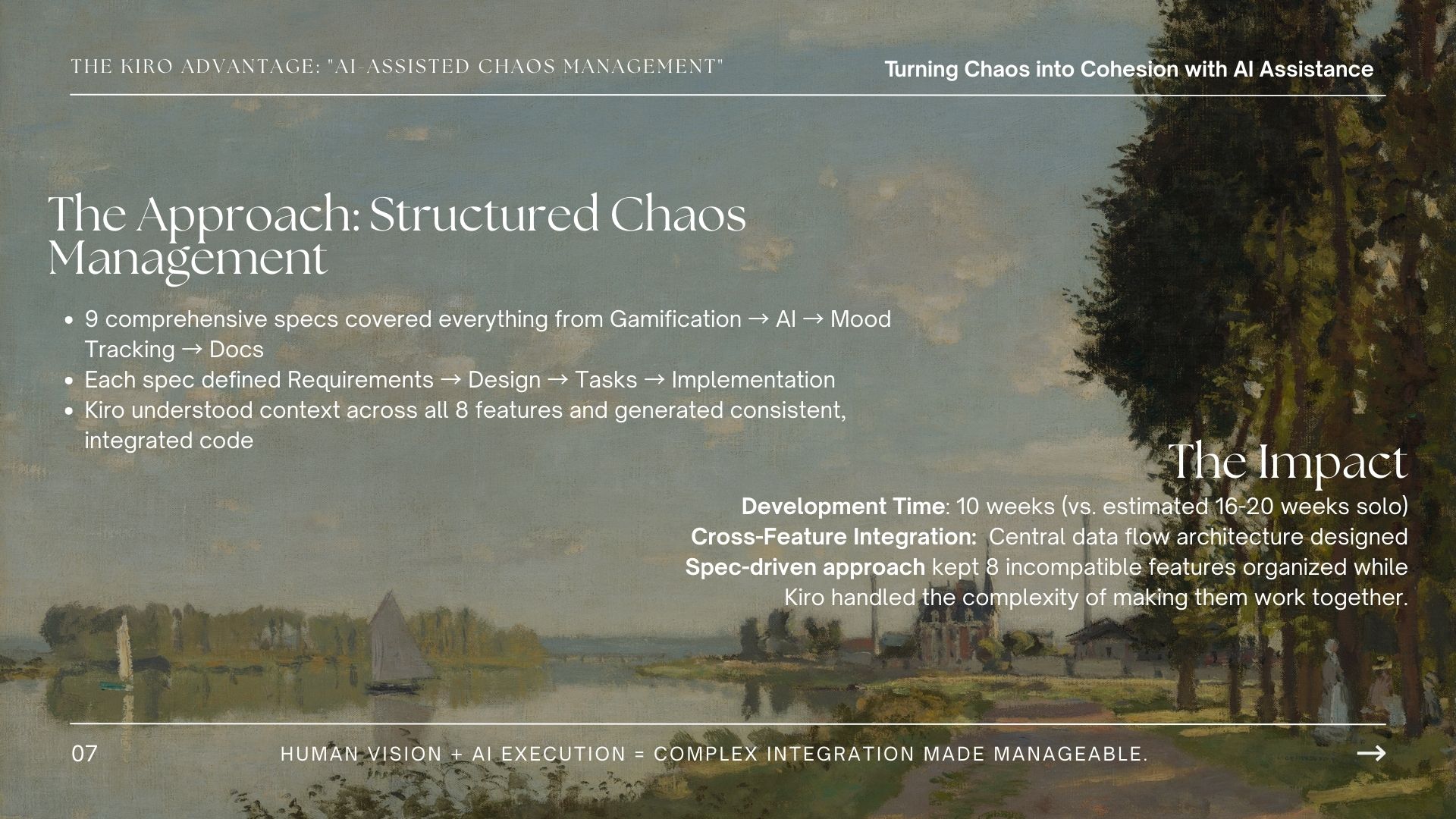
I created 9 comprehensive specs to manage the complexity:
- Gamification System
- AI Assistant Enhancements
- Mood Tracking Enhancements
- Task Integration Features
- Planner Enhancements
- Auth Sync
- Picture of the Day
- AI Assistant UX
- Kiroween Submission
Each spec followed the workflow: Requirements → Design → Tasks → Implementation
Kiro AI accelerated development by:
- Generating 67 React components with consistent patterns
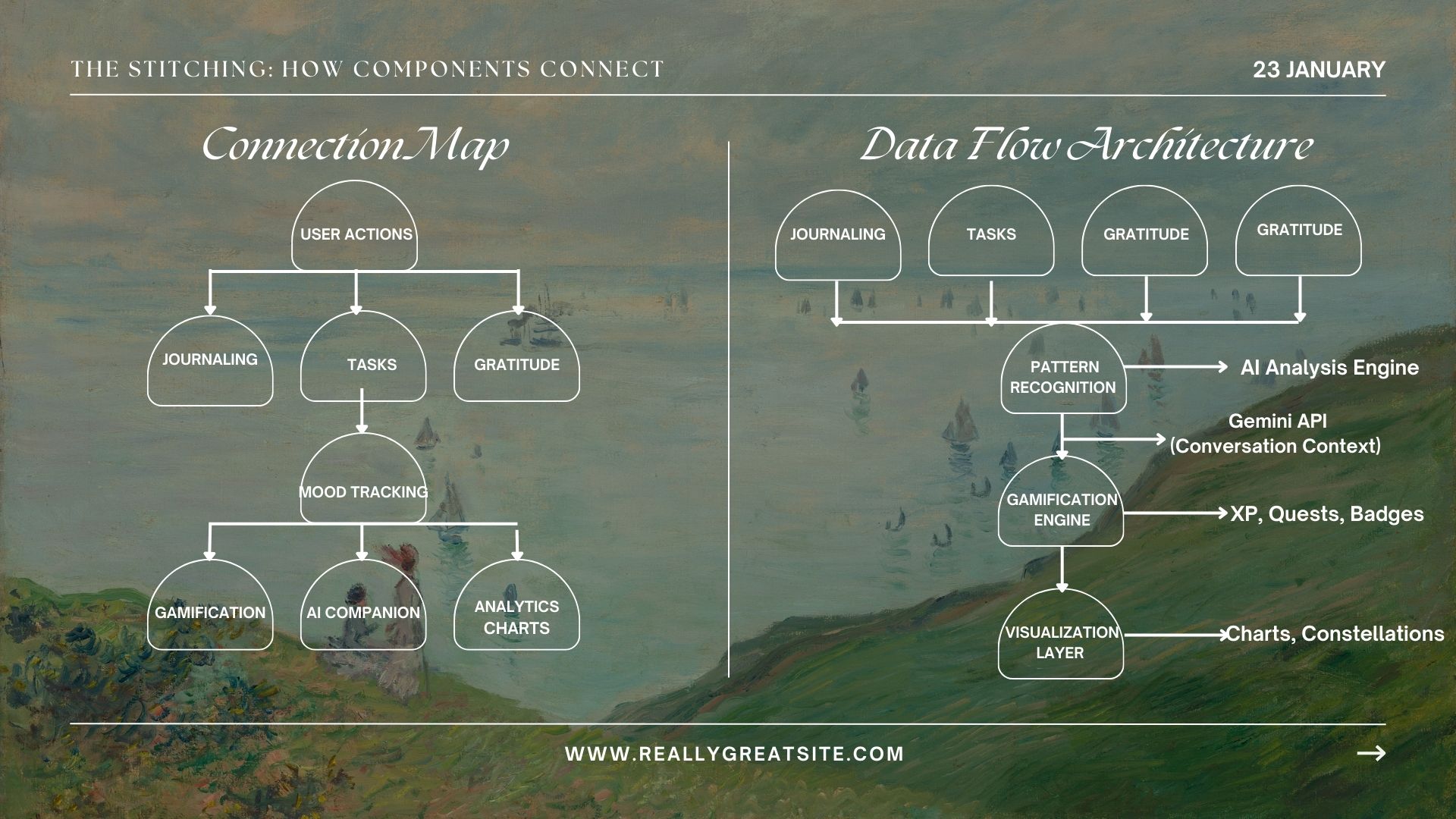
- Building the central data flow architecture that connects all 8 features
- Creating pattern recognition utilities for cross-feature analytics
- Implementing AI conversation memory system
- Designing context-aware XP calculation algorithms
- Handling Firebase integration and state management
Tech Stack:
- Frontend: React 19, React Router, Tailwind CSS, Framer Motion
- Backend: Firebase (Auth + Firestore), Express.js API
- AI: Gemini-2.5-Flash-Lite with custom context aggregation
- Visualizations: Chart.js, custom Canvas API graphics
- State Management: React Context API with unified data layer
Development Time: 10 weeks (estimated 16-20 weeks solo without Kiro)
Challenges we ran into
1. The Integration Nightmare Making 8 philosophically incompatible features talk to each other was the biggest challenge. Reflective journaling is private; gaming is competitive. AI companion is warm; analytics is cold. How do you make them coexist without compromising their core values?
Solution: Built a unified data layer where each feature both contributes data and consumes insights from others. Privacy is preserved (journal content stays private), but metadata and patterns flow between systems.
2. AI Context Memory The AI kept forgetting previous conversations and journal entries, making it feel generic and unhelpful.
Solution: Designed a conversation memory system that stores and retrieves context from all past journals and chats. The AI now references your history naturally, responding like a friend who knows your journey.
3. Gamification Without Trivialization How do you gamify mental health without making it feel manipulative or trivializing serious wellness work?
Solution: Context-aware XP system that rewards genuine effort, not just completion. Completing a task during low mood earns 2x XP. Reflective journal entries earn more than surface-level ones. Badges celebrate emotional milestones, not just streaks.
4. Pattern Recognition Across Features Detecting meaningful patterns when data comes from 8 different sources with different formats and purposes.
Solution: Built correlation algorithms that analyze mood trends, task behaviors, and journal themes simultaneously.
5. Performance with Real-Time Updates With 8 features updating simultaneously, the app could lag.
Solution: Optimized data flow, implemented efficient Firebase listeners, and used React Context strategically to prevent unnecessary re-renders.
Accomplishments that we're proud of
Successfully integrated 8 incompatible systems that actually amplify each other instead of conflicting
Built a truly personalized platform where no two users see the same content—it adapts to individual emotional states and needs
Created an AI companion with genuine context memory that feels like a friend, not a chatbot
Designed a gamification system that motivates without trivializing mental health
Achieved cross-feature pattern recognition that provides insights impossible in isolated apps
Maintained clean, maintainable code despite the complexity, thanks to spec-driven development
Completed in 10 weeks with Kiro's assistance, 40% faster than estimated solo development time
What we learned
Technical Learnings:
- How to architect complex data flows between incompatible systems
- Building AI systems with long-term memory and context awareness
- Creating adaptive UX that changes based on user state
- Balancing real-time updates with performance optimization
- Spec-driven development as a way to manage complexity
Design Learnings:
- Incompatibility can be a feature, not a bug
- Shared data creates compound effects impossible in isolation
- Gamification works for wellness when it rewards genuine effort
- Personalization requires learning from multiple data sources
- Users need both structure (tasks, quests) and freedom (journaling, reflection)
Personal Learnings:
- The power of AI-assisted development (Kiro saved ~260 hours)
- How to break down massive projects into manageable specs
- Building for yourself first creates authentic products
What's next for Echo - Personal Growth Platform
Short-term (Next 3 months):
- Mobile app (React Native) for on-the-go journaling
- Introduce AI voice companion for hands-free emotional check-ins
- More gamification: seasonal quests, limited-time badges
- Multi-language support for global accessibility
Long-term Vision:
- Partner with mental health organizations to validate effectiveness
- Continue “stitching the impossible” , merging emotion AI, data, and human empathy
The Goal: Transform Echo from a hackathon project into a platform that genuinely helps people grow emotionally and spiritually by bringing together the best of all wellness approaches, without compromise.
Built With
- express.js
- firebase-(auth-+-firestore)
- framer
- gemini
- react-19
- react-router
- tailwind-css


Log in or sign up for Devpost to join the conversation.