-
-
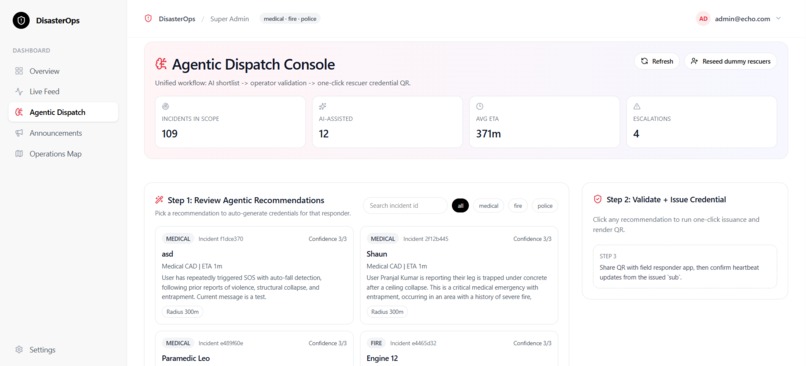
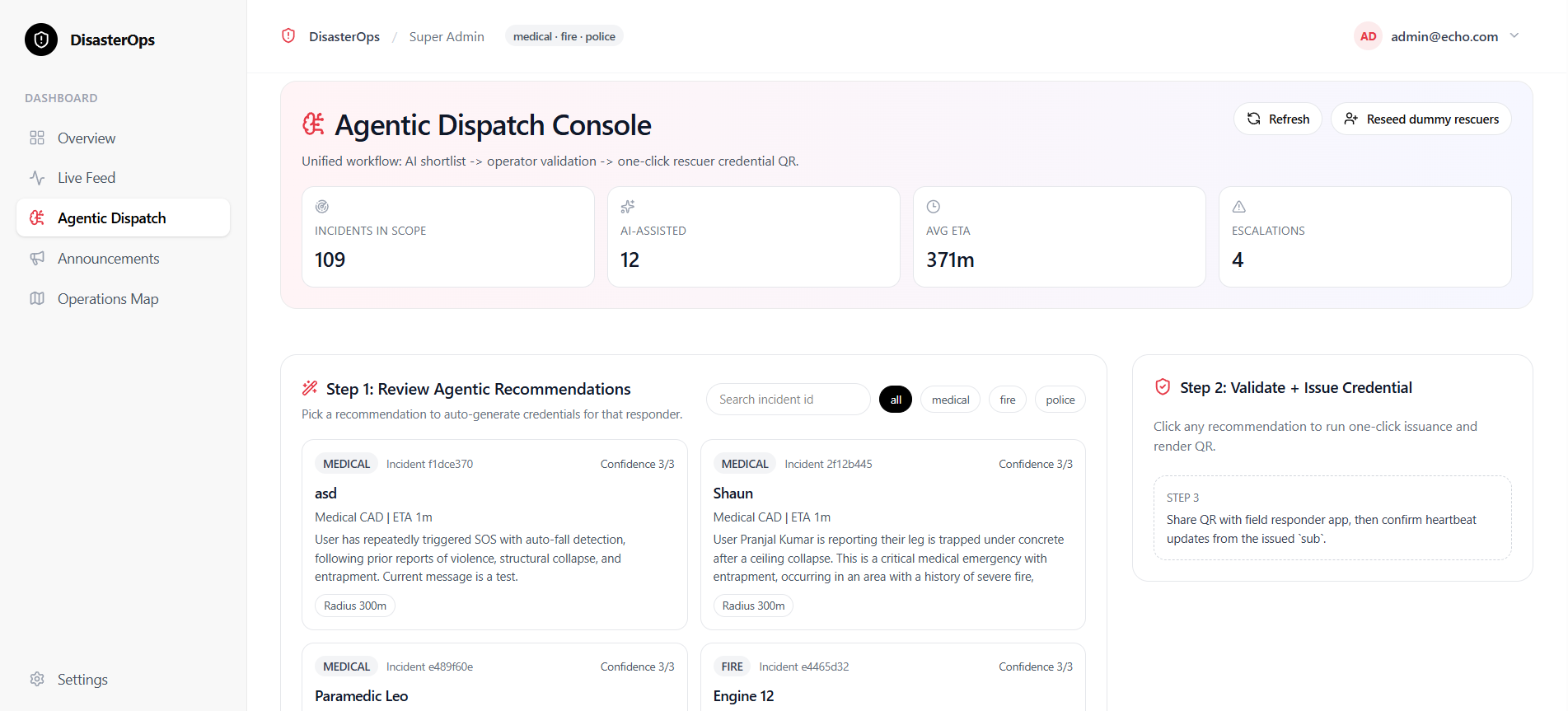
Agentic Dispatch (Auto assign location to agents in deparment)
-
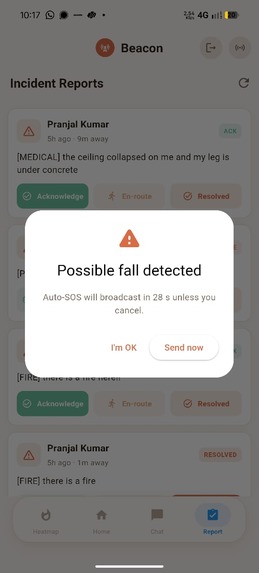
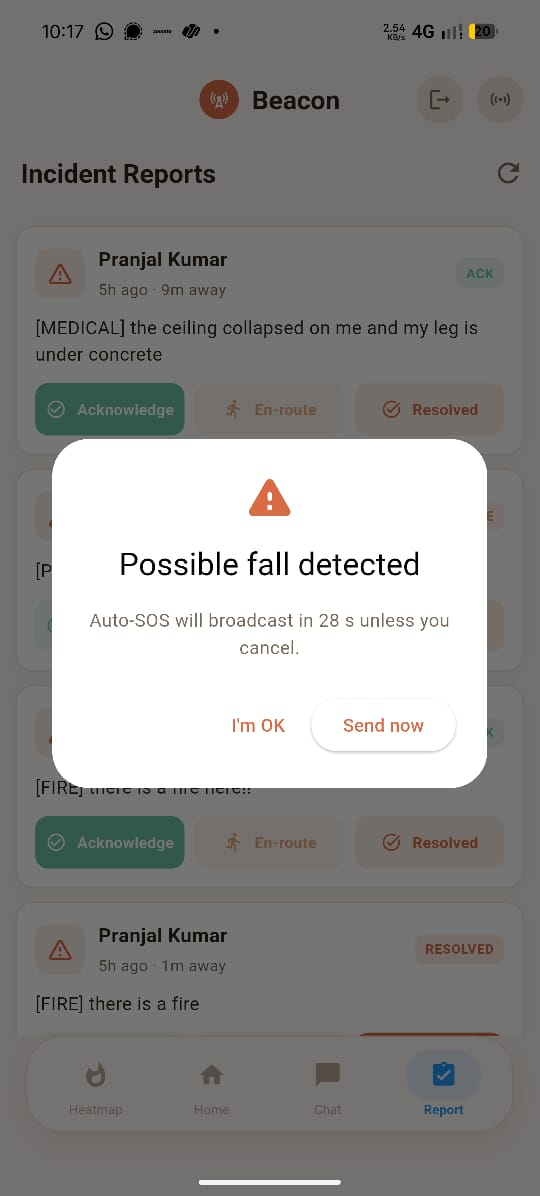
Fall Detection trigger
-
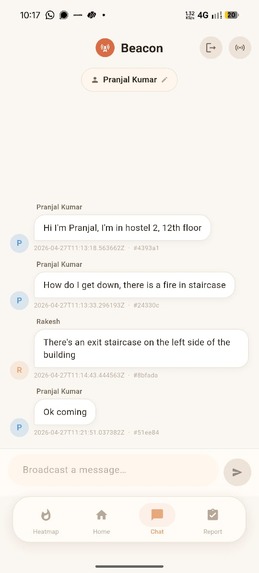
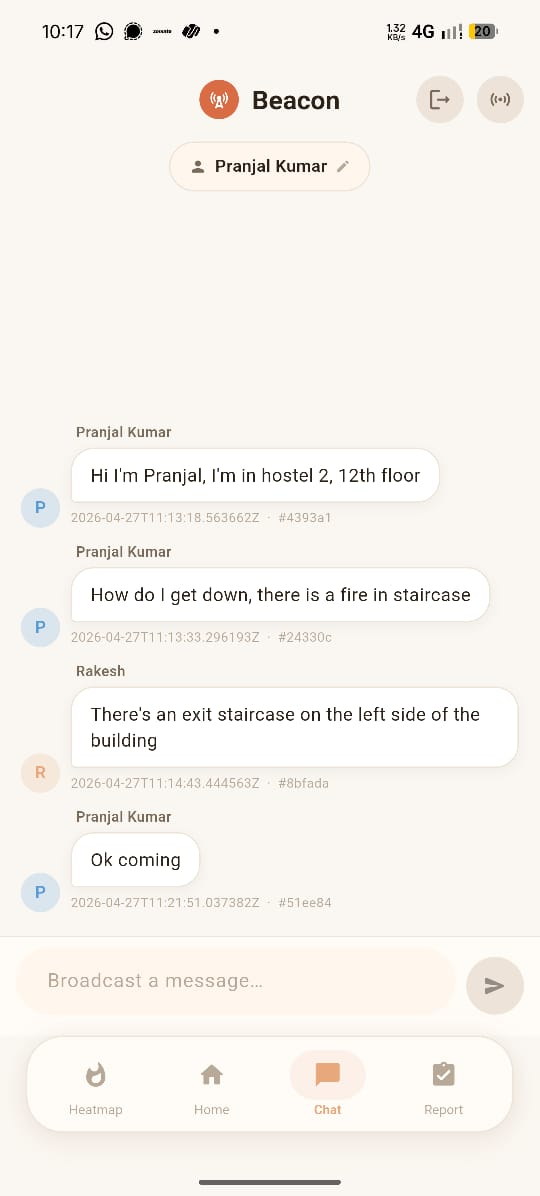
Chat system with nearby peers in the mesh.
-
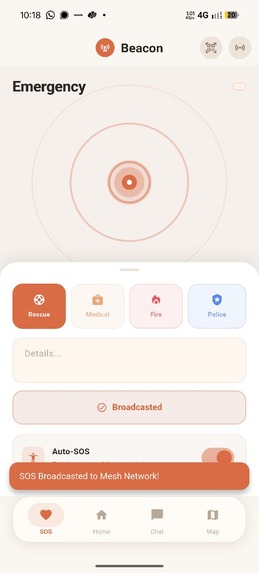
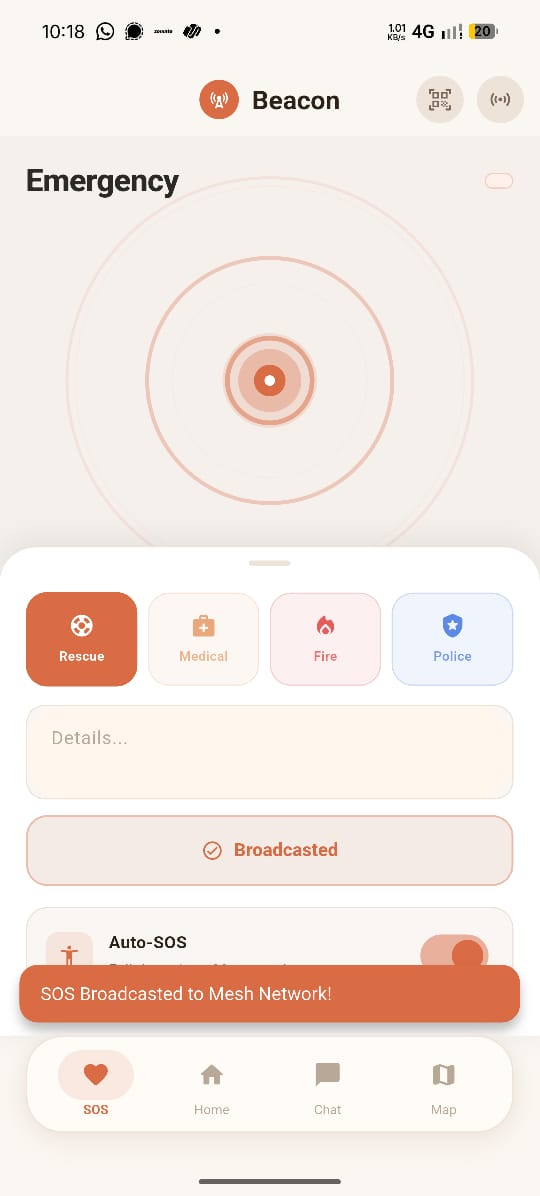
SOS screen
-
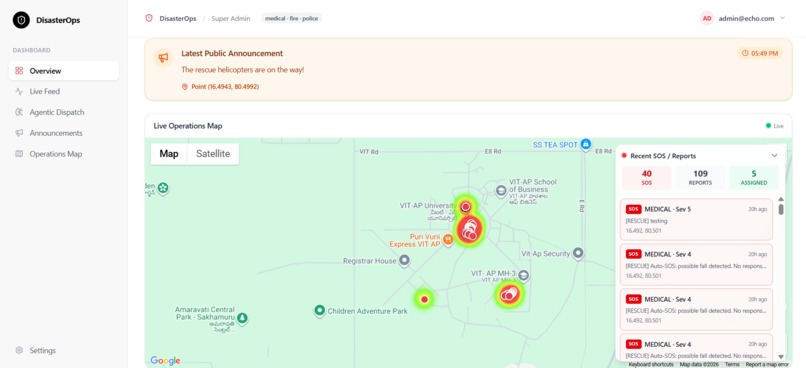
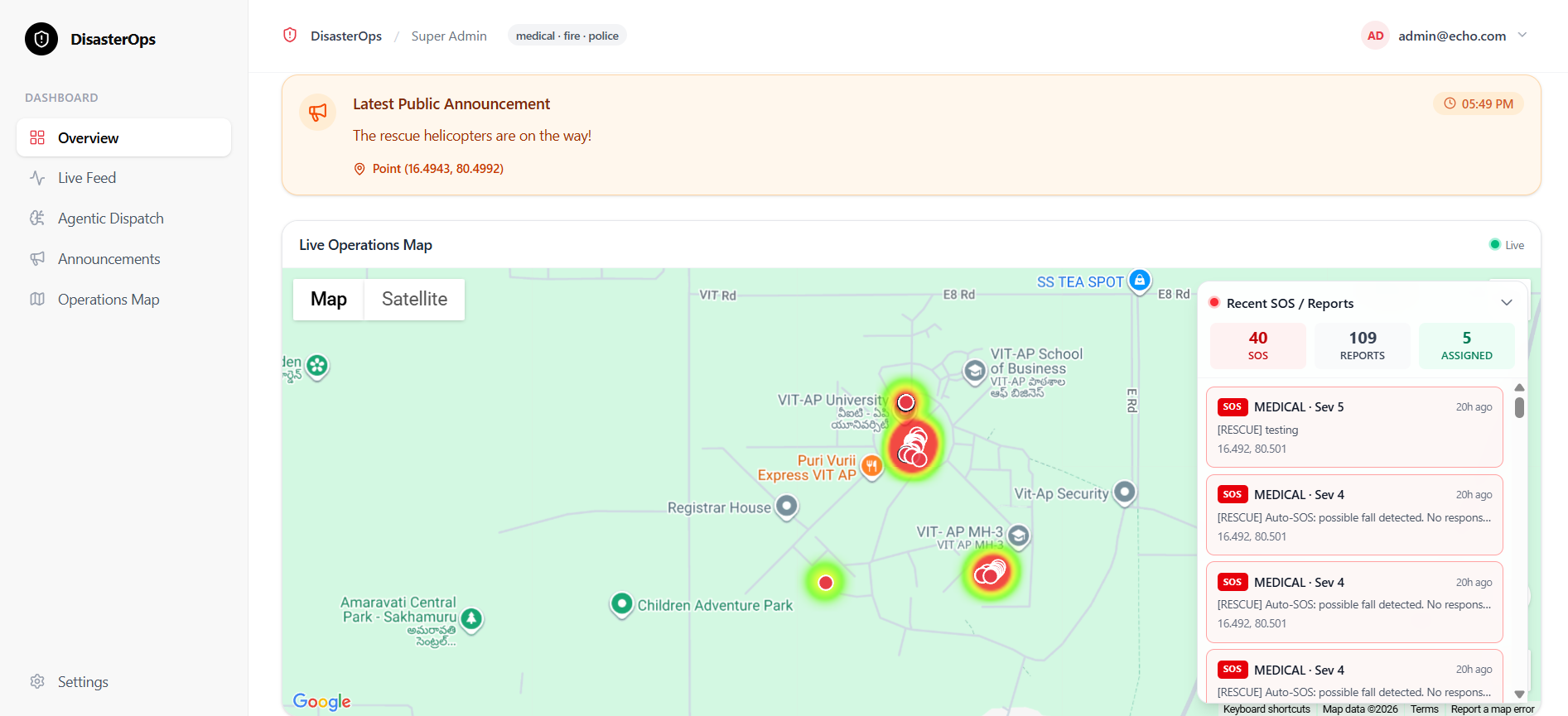
Heatmap for operators
-
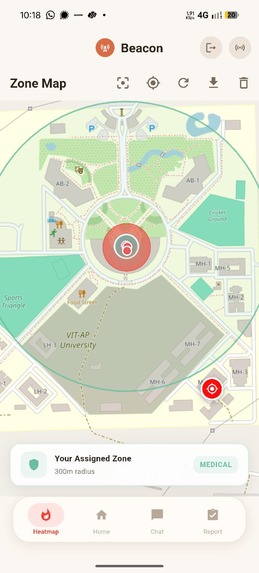
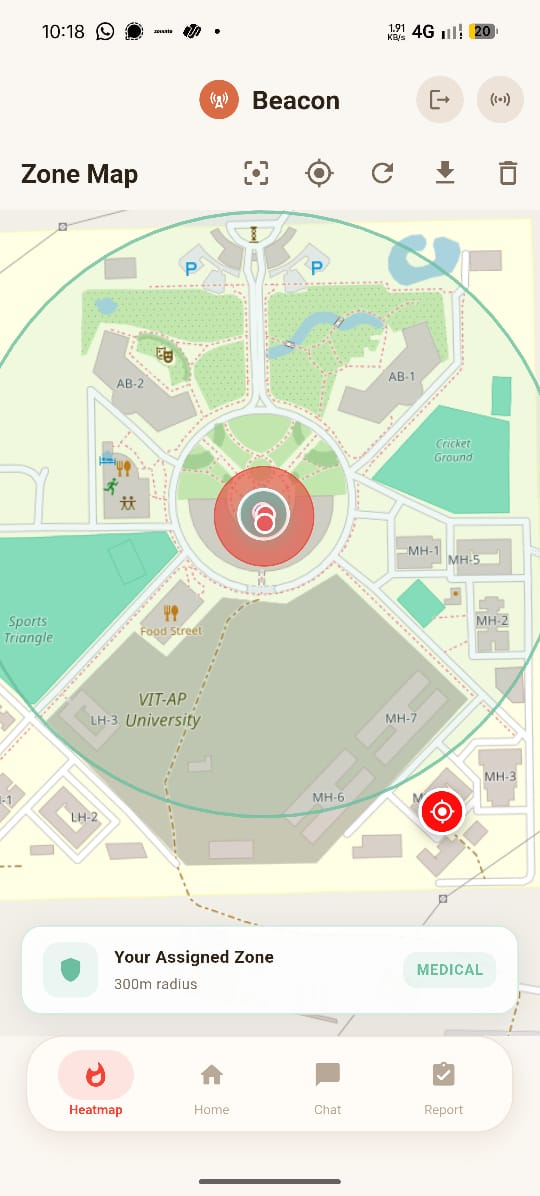
Rescuer's assigned zone
-
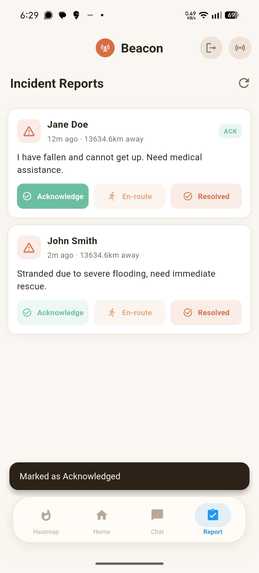
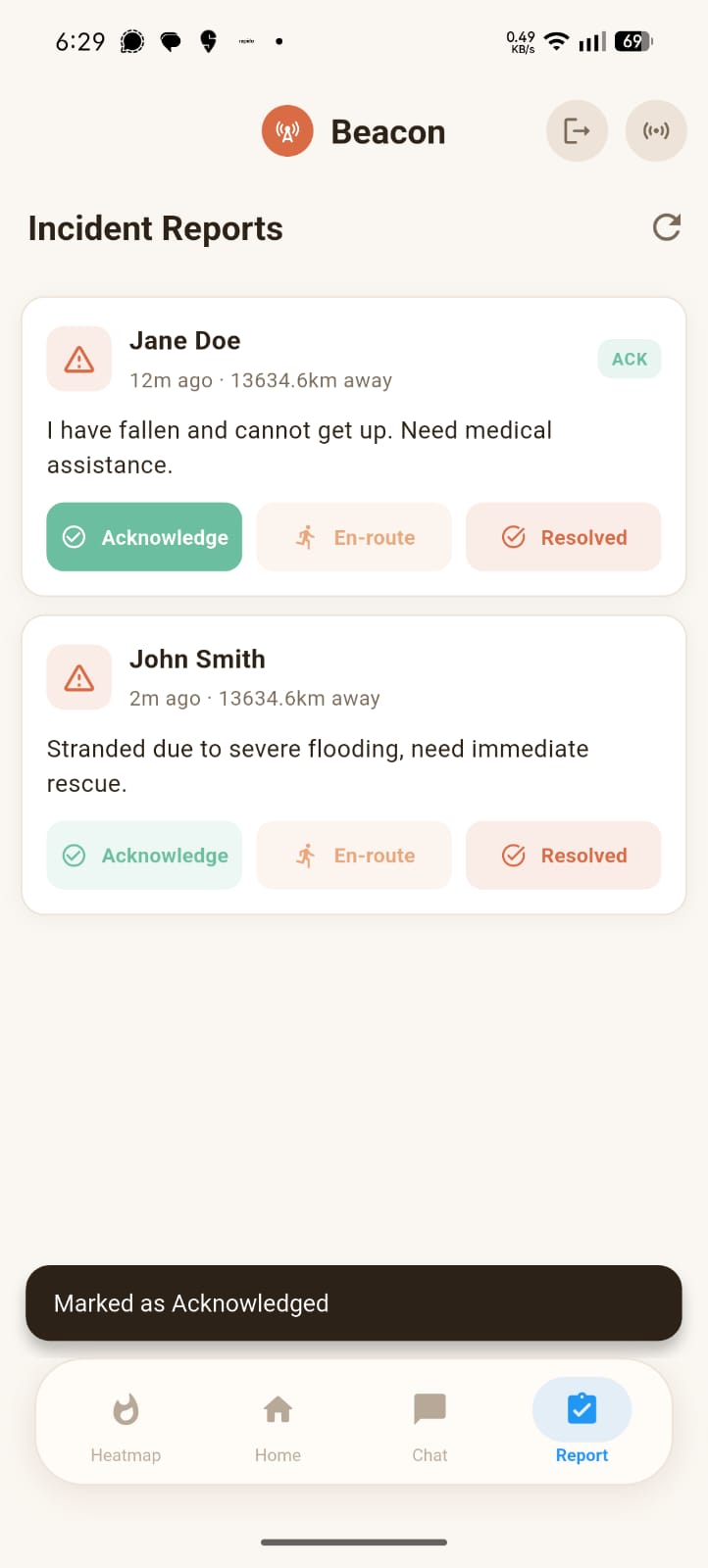
Reports for rescuers' dashboard
-
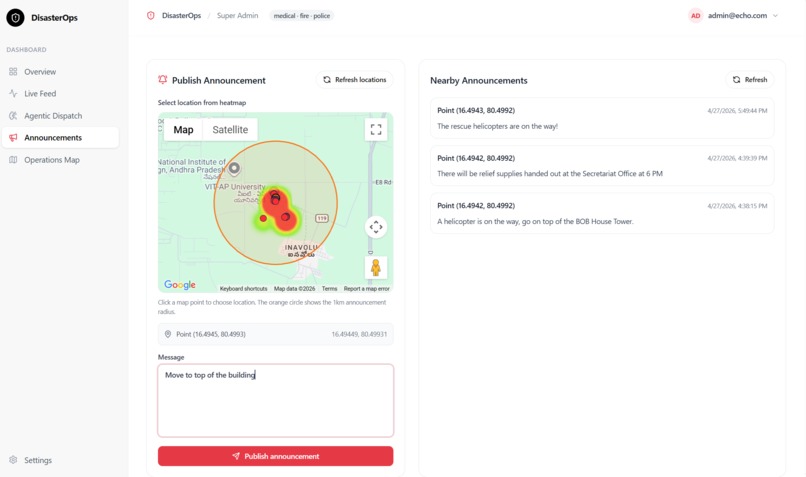
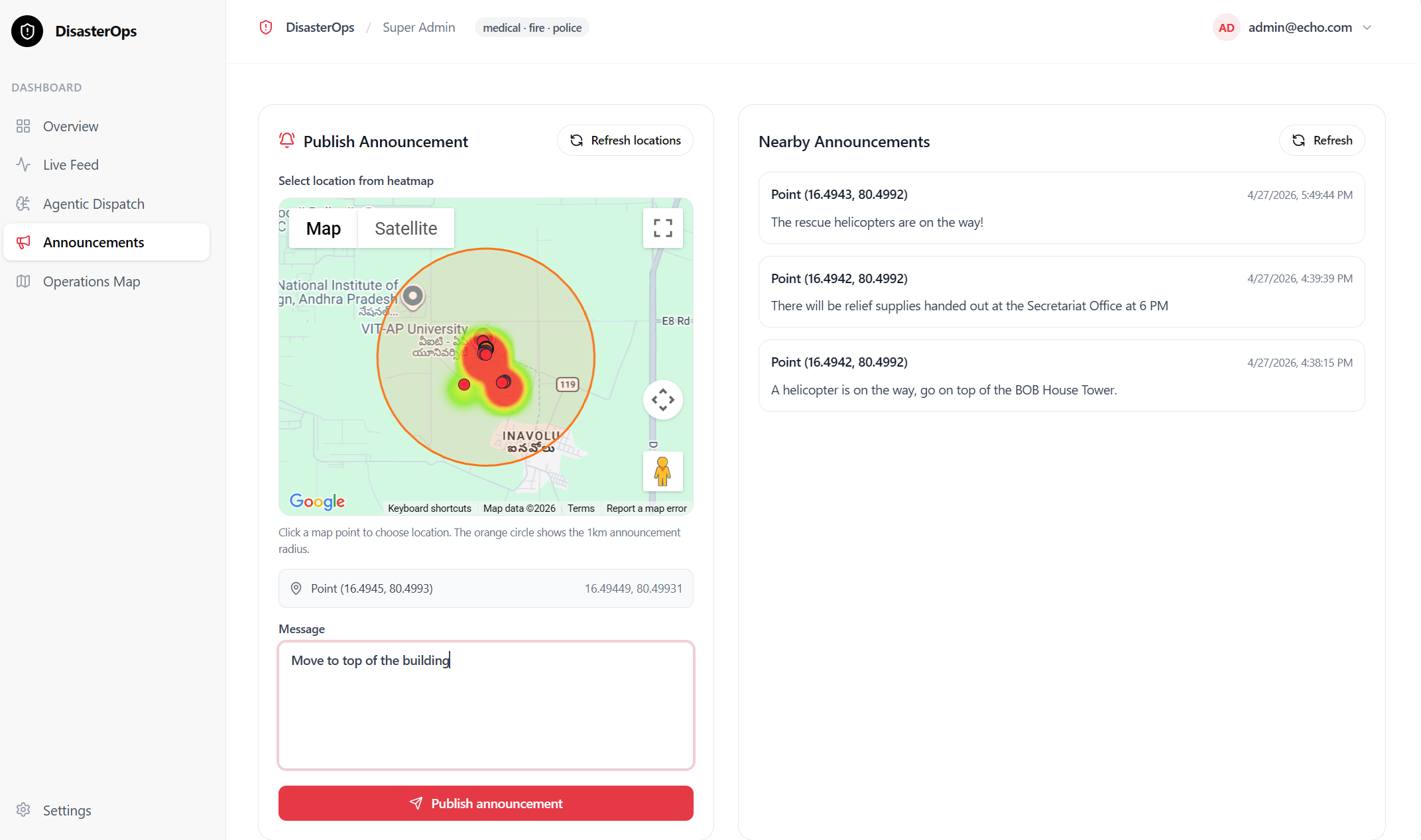
Geofenced announcements page for operator.
Inspiration
In every major disaster, communication infrastructure is one of the first systems to fail. Earthquakes, floods, wildfires, and conflict zones repeatedly expose the same problem: survivors cannot reach rescuers because the network itself is completely gone.
The 2023 Türkiye–Syria earthquake, the Wayanad landslides, and recent wildfire incidents showed how quickly emergency coordination collapses when cellular towers fail. Most existing “emergency apps” still assume active internet connectivity, which quickly becomes their single point of failure.
We wanted to build a system that works precisely when traditional infrastructure does not. That idea became Echo an offline-first emergency communication platform that transforms ordinary smartphones into a decentralized BLE mesh network capable of relaying SOS messages even without cellular service or internet access.
What it does
Echo enables emergency communication during infrastructure outages using an ad-hoc Bluetooth Low Energy (BLE) mesh network.
Every smartphone running Echo acts as both a client and a relay node. Messages propagate hop-by-hop across nearby devices until they eventually reach a node with internet connectivity, which automatically uploads the accumulated backlog to our backend and operator console.
Key Capabilities
- Offline BLE mesh communication: Peer-to-peer data routing without external infrastructure.
- SOS broadcasting: Emergency alerts tagged with specific department requirements (e.g., Medical, Fire, Search & Rescue).
- Store-and-forward relay routing: Nodes save packets locally and broadcast them dynamically.
- End-to-end encryption: Ed25519 packet signing ensures message authenticity offline.
- Offline maps & incident heatmaps: Local visualization of disaster zones and high-density distress signals.
- Automatic fall-detection SOS: Generates automated alerts using device accelerometer data.
- AI-assisted emergency triage: Instant local categorization of message payloads.
- Agentic rescuer dispatch system: Intelligent resource allocation once data hits the command center.
- Automatic synchronization: Instant background syncing the moment internet connectivity returns.
Echo works even when:
- Cellular towers are down or overloaded
- Internet connectivity is entirely unavailable
- Physical infrastructure is partially or fully destroyed
No additional hardware or external radios are required but only standard smartphones.
How we built it
Echo consists of three tightly integrated systems designed for absolute resilience:
| Component | Stack | Purpose |
|---|---|---|
| Mobile App | Flutter + Dart | BLE mesh networking, local storage, and offline user interface |
| Backend API | Node.js + Express + TypeScript | Data synchronization, AI triage, dispatch tracking, and analytics |
| Operator Console | Next.js + React | Real-time disaster response dashboard for command centers |
Mobile Mesh Layer
The mobile application was built using Flutter, leveraging dual BLE roles simultaneously:
- Central mode: Continuously scans for nearby peers to collect pending packets.
- Peripheral mode: Advertises local presence and relays packets to other listeners.
When an SOS is generated, the message is signed using Ed25519, fragmented into BLE-safe payloads, relayed across nearby devices, stored locally using SQLite, and uploaded opportunistically once any node finds a network uplink. The mesh relies on RSSI-prioritized relay logic, packet deduplication, and a strict Time-To-Live (TTL) expiration mechanism.
AI Integration
1. On-Device Triage
A lightweight offline classifier categorizes emergency messages locally within ~500 ms, producing structured metadata before transmission:
{
  "categories": ["Medical", "Trapped"],
  "severity": 5,
  "summary": "Injured individual unable to clear debris"
}
This ensures that even completely offline packets already contain highly usable emergency context before they ever reach human responders.
2. Agentic AI Dispatch System
Once a device reconnects and uploads incidents to the backend, Gemini-powered agents automatically coordinate rescue operations by evaluating incoming incidents, studying SOS density heatmaps, ranking available rescuers, and automatically assigning rescue teams to high-risk regions based on specialized department matching and estimated travel times.
Offline Rescuer Authentication
Rescuers authenticate completely offline using a generated QR code containing an RS256-signed JWT embedded with assigned rescue-region metadata. The mobile app scans and verifies this token locally, allowing responders to immediately initialize rescuer mode during a total network blackout.
Challenges we ran into
- Reliable BLE Mesh Networking: BLE is not designed in flutter, there are not any packages in flutter that support both peripheral and central role on the device, we had to come up with our own implementation and managing things like BLE collision.
- Background Execution: Modern mobile operating systems terminate background processes to save battery. Keeping the mesh active required implementing robust foreground services, precise wake locks, notification persistence, and requesting explicit battery optimization exemptions.
Accomplishments that we're proud of
We successfully built a working, end-to-end disaster communication platform from scratch.
- ** We are one of the first** to implement a success BLE mesh in flutter (android) that successfully routes packets across multiple offline devices.
- Functional multi-hop BLE mesh communication that successfully routes packets across multiple offline devices.
- Working fall-detection SOS system utilizing onboard smartphone hardware sensors.
- AI-driven automatic responder allocation that minimizes human delays in dispatch rooms.
What we learned
Building Echo taught us that resilience engineering requires a completely different mindset than traditional app development.
- We realized just how fragile modern communication infrastructure truly is and how quickly consumer applications fail when the cloud disappears.
- We gained deep technical experience with Bluetooth Low Energy internals, distributed systems concepts, cryptographic verification, and architecting true offline-first workflows.
- Most importantly, we learned that intelligent software can still provide meaningful coordination and save lives even when traditional infrastructure fails completely.
What's next for Echo
We plan to expand Echo significantly beyond the prototype stage:
- Gemini Nano Integration: Bringing fully local LLM capability on-device for nuanced, offline conversational triage.
- Cross-Platform Expansion: Full iOS mesh support using Apple's CoreBluetooth framework.
- LoRa-Based Fallback: Integrating long-distance radio hardware (like LoRaWAN) as an extended transport layer.
- Voice-to-Text SOS: Allowing trapped or injured individuals to dictate emergency messages hands-free.
Long term, our goal is to open-source Echo, turning it into an accessible, self-hosted emergency communication layer that communities, NGOs, and governments anywhere in the world can deploy when the worst happens.
Built With
- express.js
- firebase
- flutter
- gemini
- google-maps
- nextjs
- sqlite
- vercel


Log in or sign up for Devpost to join the conversation.