-
-
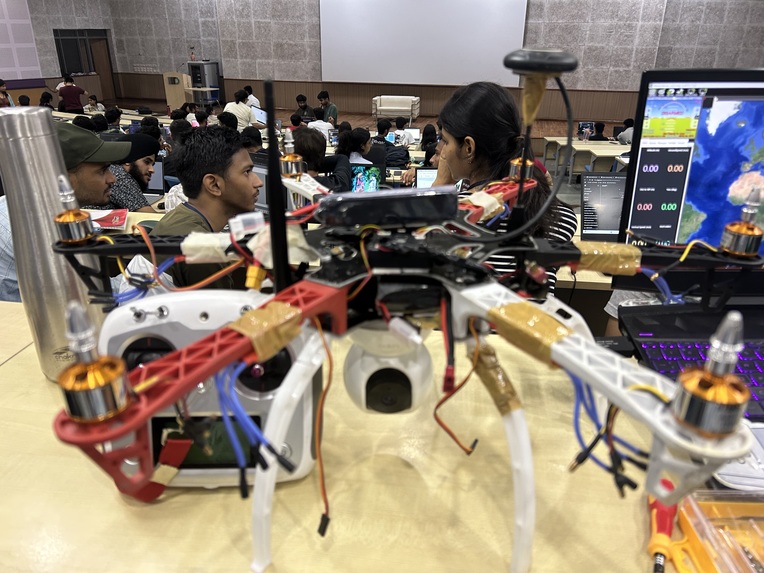
Drone front
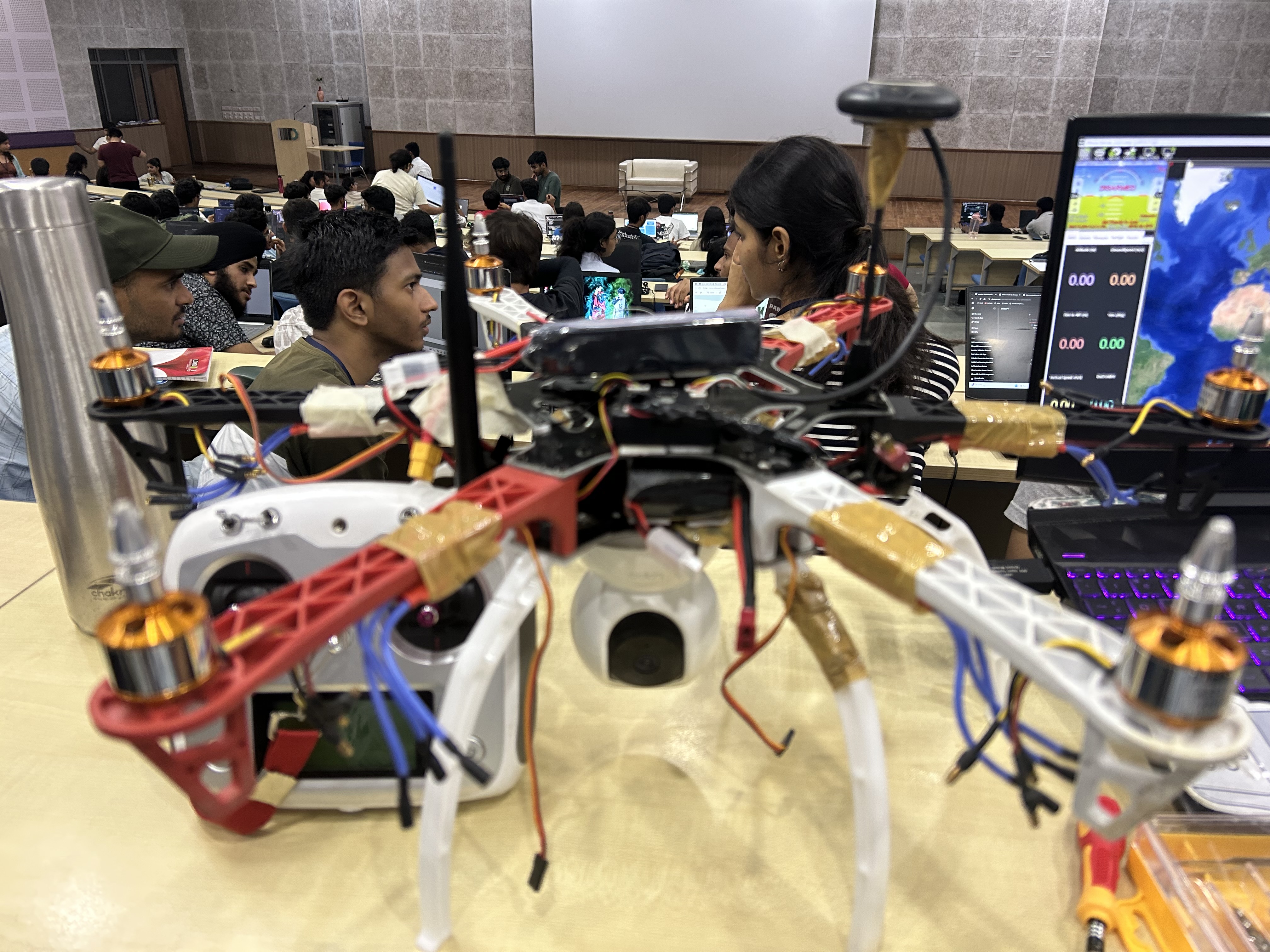
Eco-Guard: The Autonomous Urban Monitoring Drone
Inspiration
Eco-Guard was inspired by the everyday problems I saw around me—garbage piling up on streets, traffic violations going unchecked, and delays in reporting these issues. I wanted to build something that could actively monitor the city like a real inspector, but without human limitations. That idea became the foundation for Eco-Guard.
What it does
Eco-Guard is a drone that flies on its own and keeps watch over urban areas. It detects garbage hotspots, monitors traffic congestion and violations, and sends real-time alerts to authorities. It can also assist during emergencies like road accidents or fire incidents. If garbage is not cleared within a fixed time, it automatically files a complaint so the problem cannot be ignored.
How we built it
We started by assembling a drone with Pixhawk, GPS, a camera, and sensors. Then we used computer vision and AI models with OpenCV to detect garbage, traffic conditions, and license plates. Firebase was added to store complaint data, and Twilio was used to send SMS and call alerts. Finally, we created a dashboard and mobile app to show live drone footage, garbage reports, and traffic violations.
Challenges we ran into
One challenge was keeping the drone stable in outdoor conditions, especially with wind. Training the AI models for accurate garbage and traffic detection also took a lot of effort. Battery life was another limitation since the drone needed frequent recharging. Integrating the hardware, AI models, and cloud services smoothly was a tough task as well.
Accomplishments that we’re proud of
We are proud that Eco-Guard successfully combines drones, AI, and real-time reporting into one system. It addresses real urban problems and shows how technology can directly improve daily life in cities. Building an automated complaint filing system was also a big achievement, as it ensures accountability.
What we learned
Through Eco-Guard, we learned how hardware, software, and cloud technologies can come together in a single project. We also realized how important accuracy is in AI applications and how real-world challenges are very different from lab experiments.
What’s next for Eco-Guard
Next, we plan to improve battery life with solar-powered charging stations. We also want to expand the system to monitor air pollution and noise levels. The long-term goal is to scale Eco-Guard into a network of drones working together to support smart city development.
Built With
- camera
- drone
- iot
- mission-planner
- python

Log in or sign up for Devpost to join the conversation.