-
-
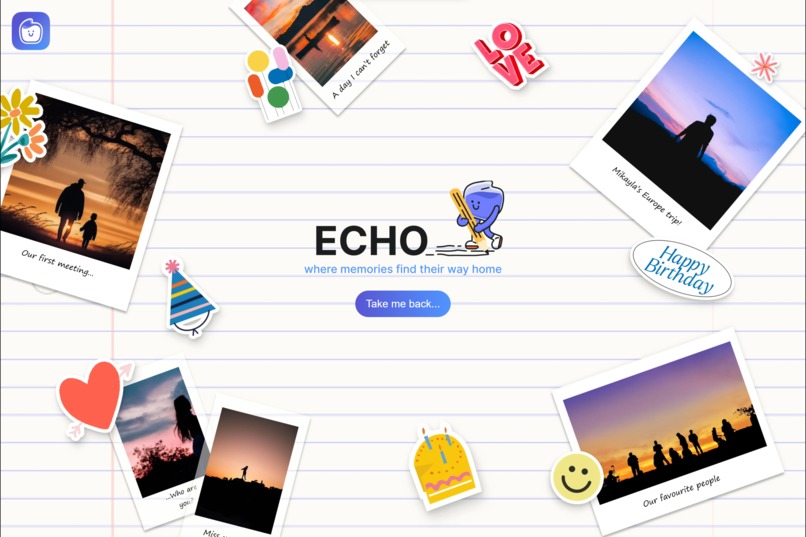
Landing
-
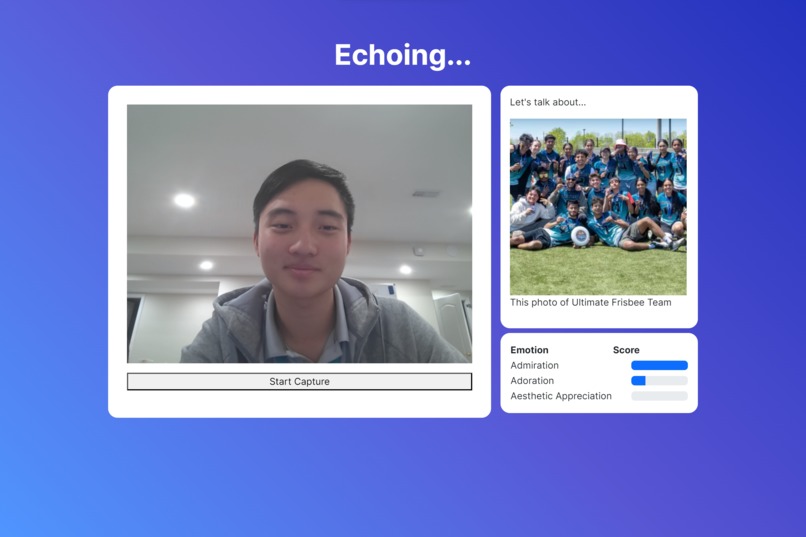
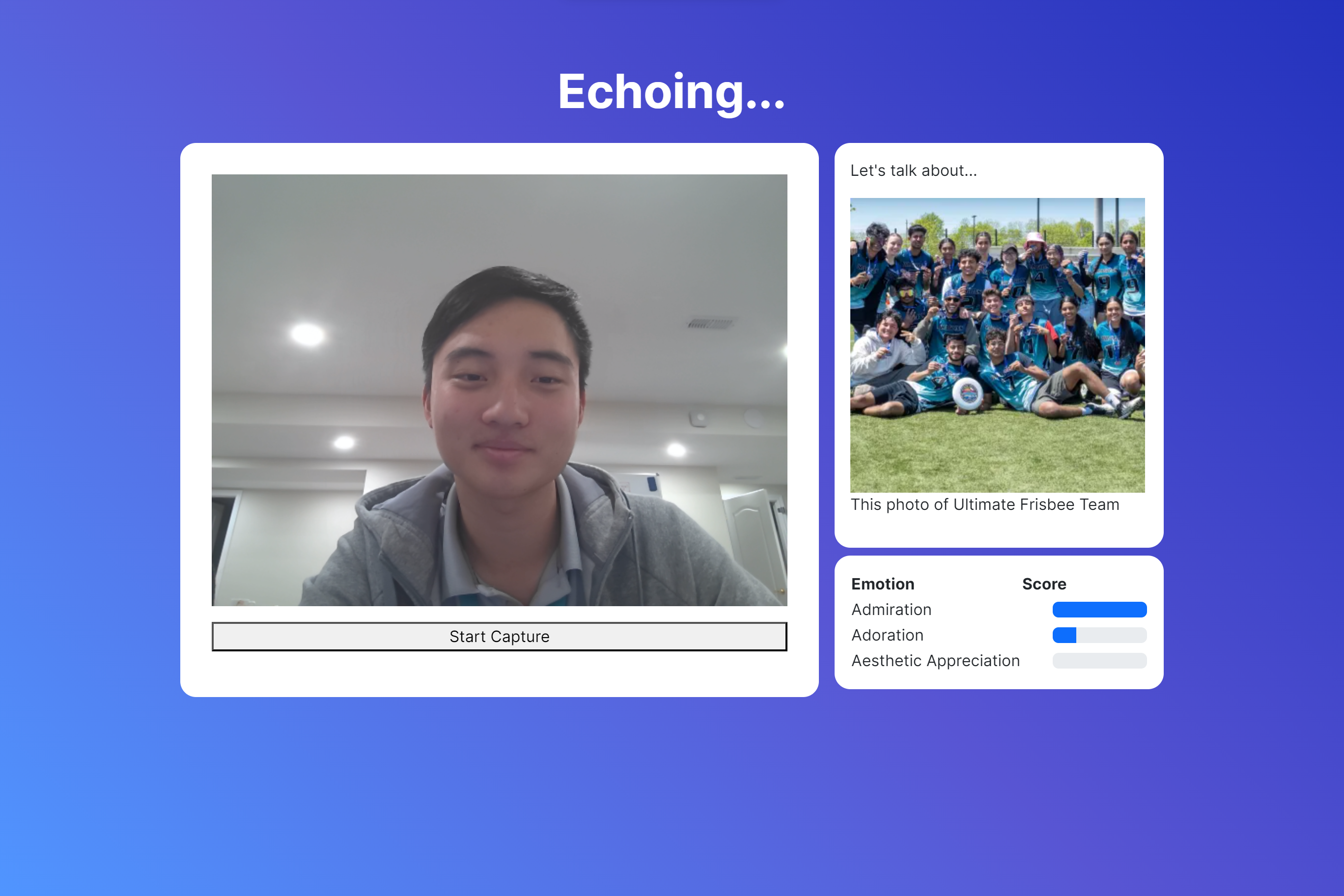
Echoing (Video Upload)
-
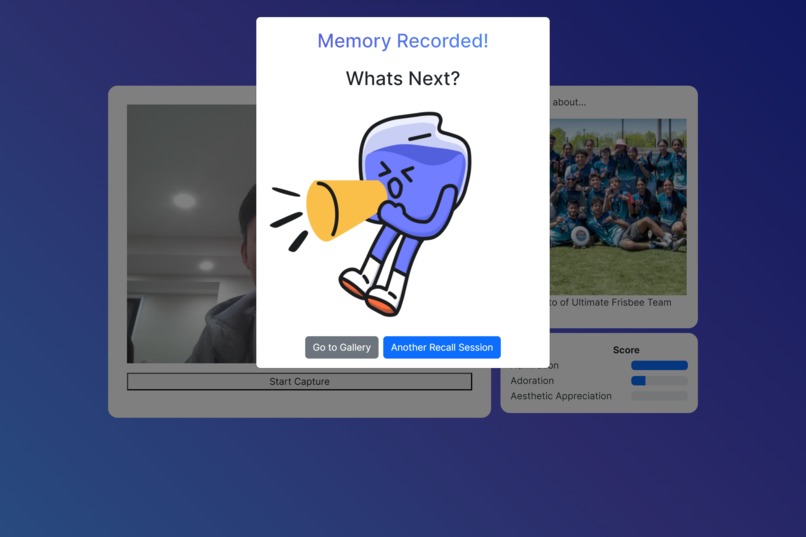
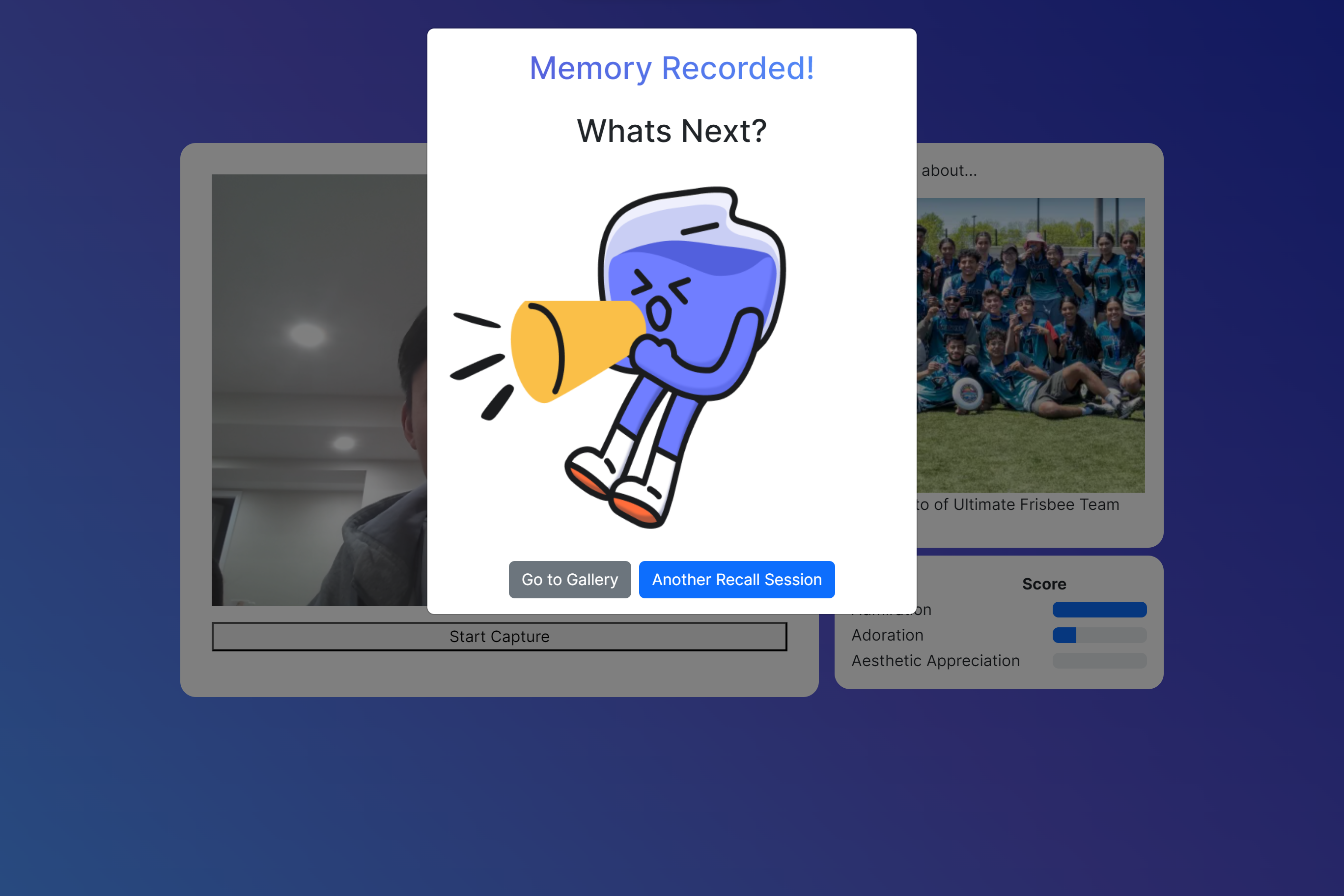
Confirmation
-
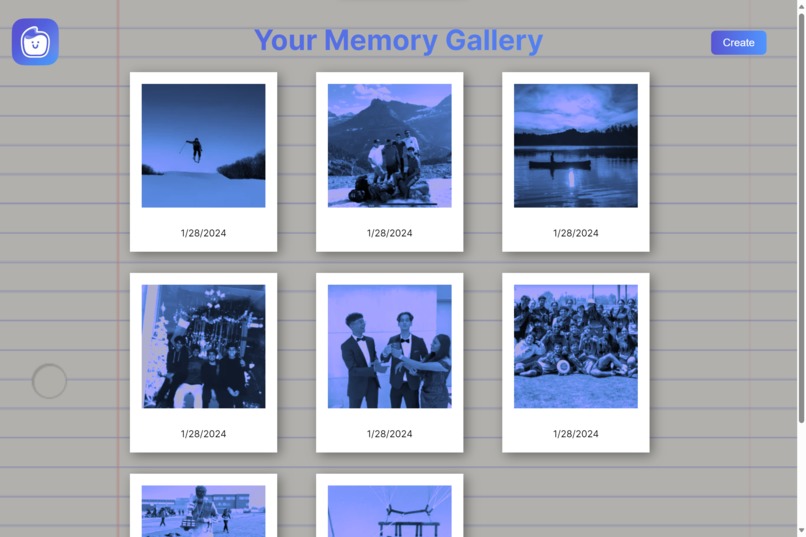
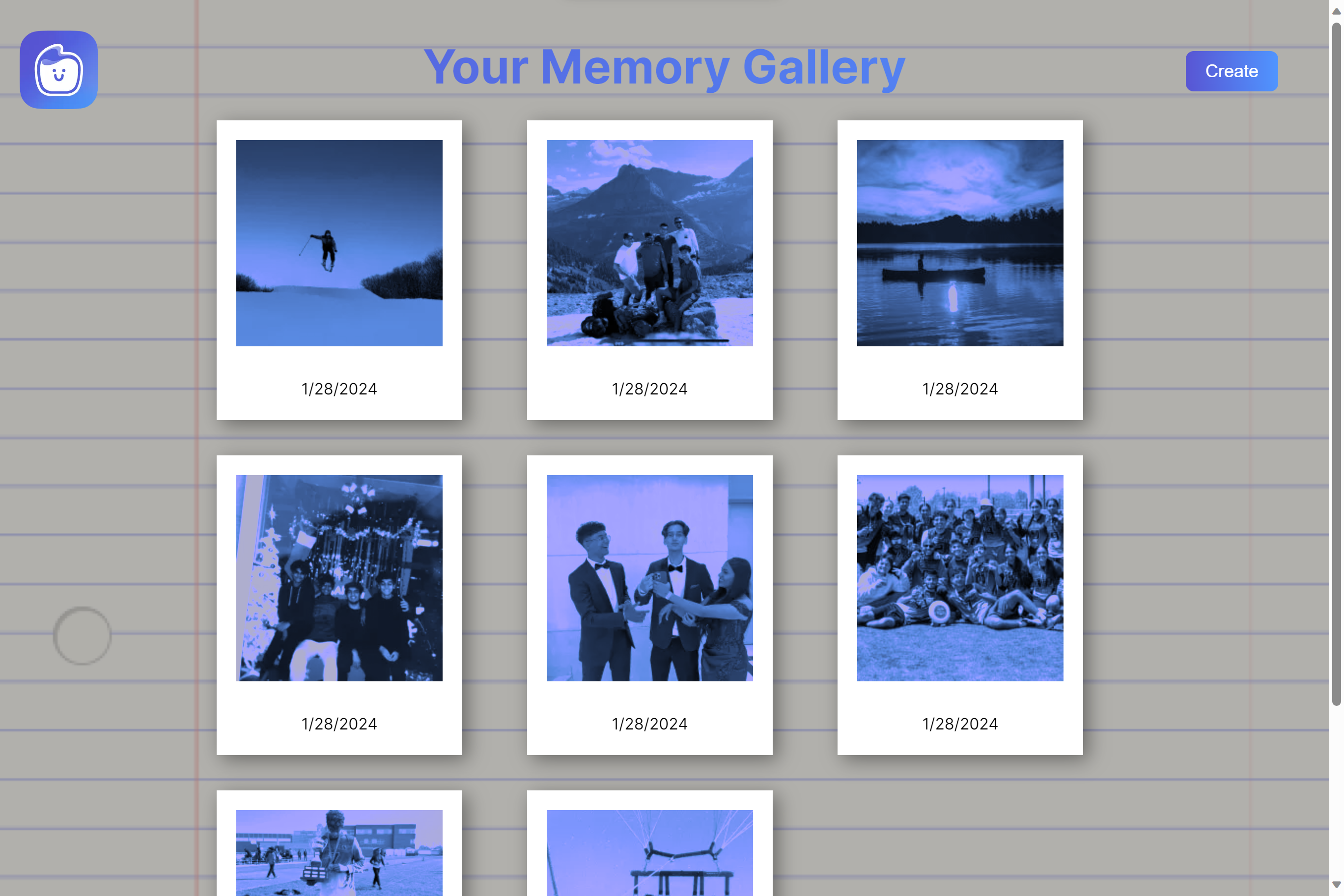
Gallery
-
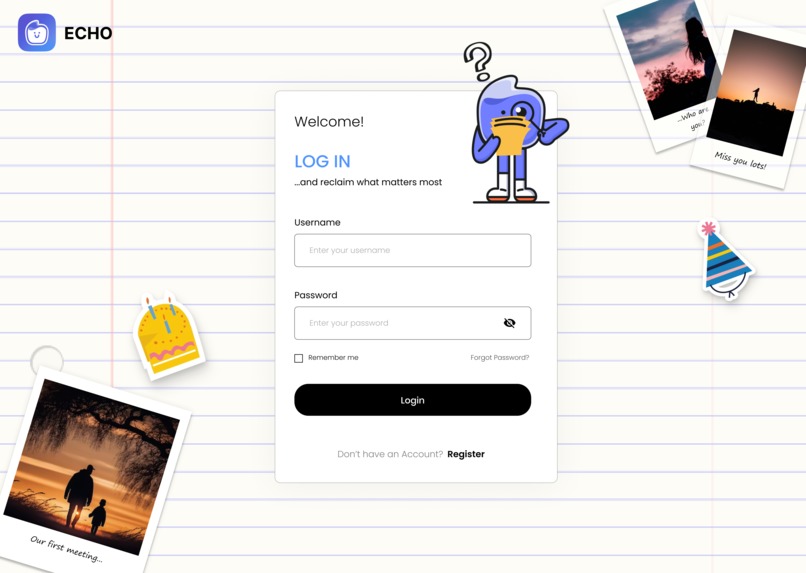
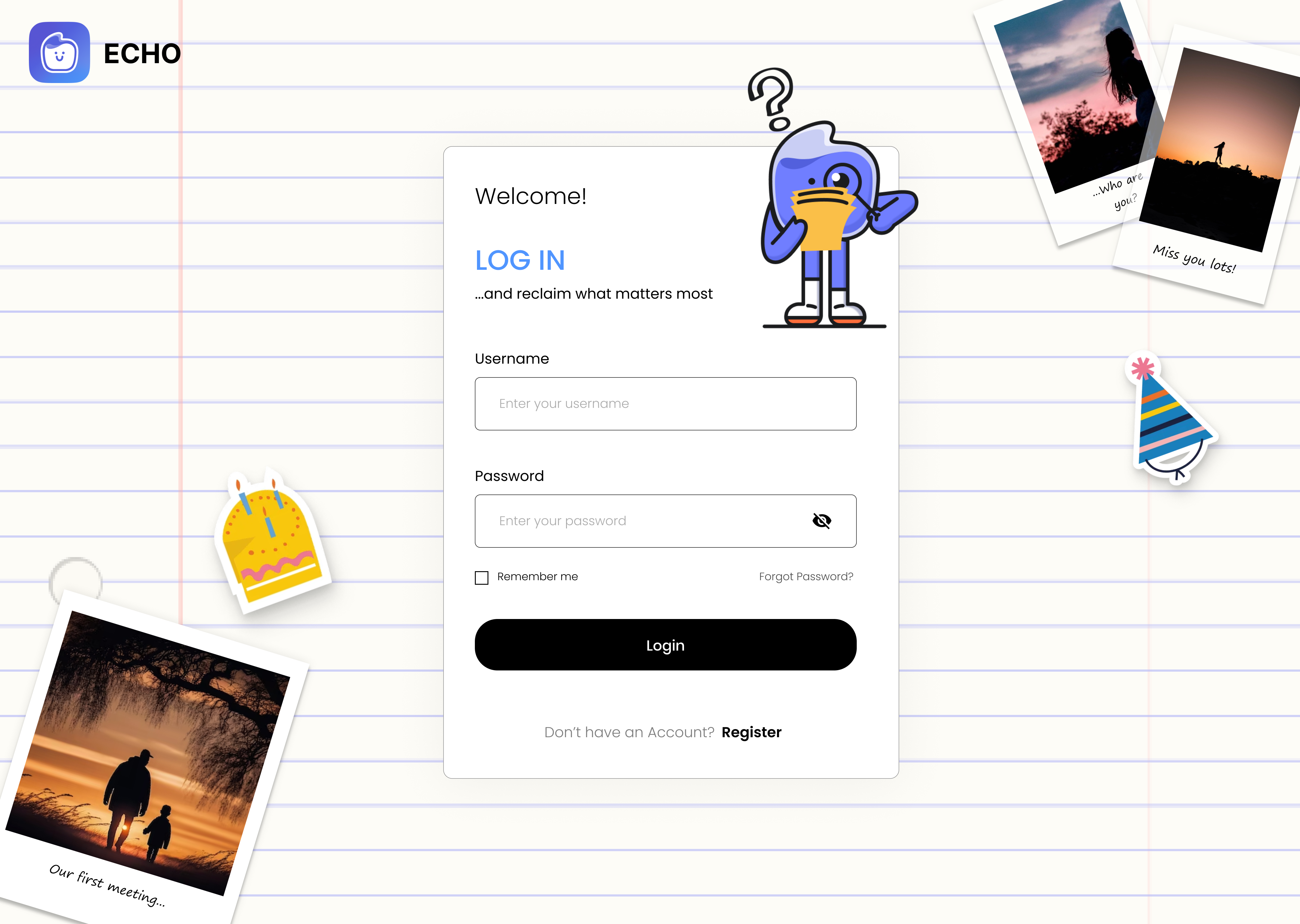
Log In (Mockup)
-
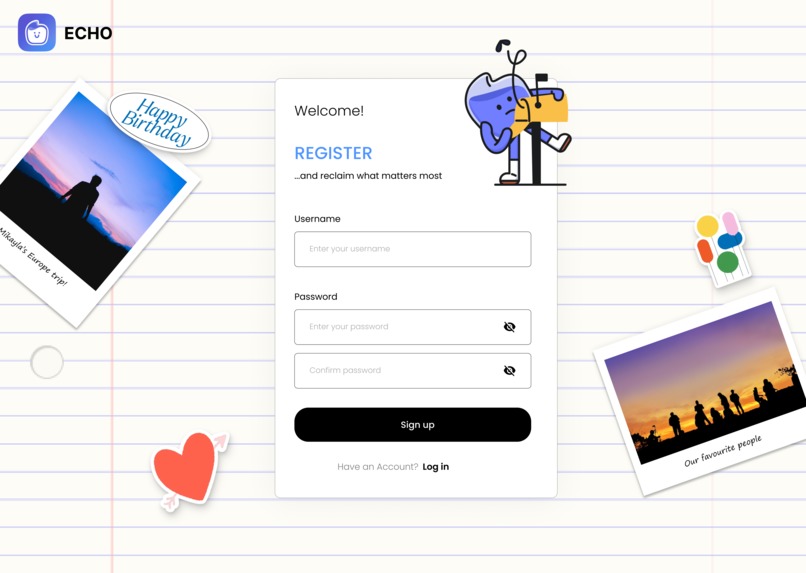
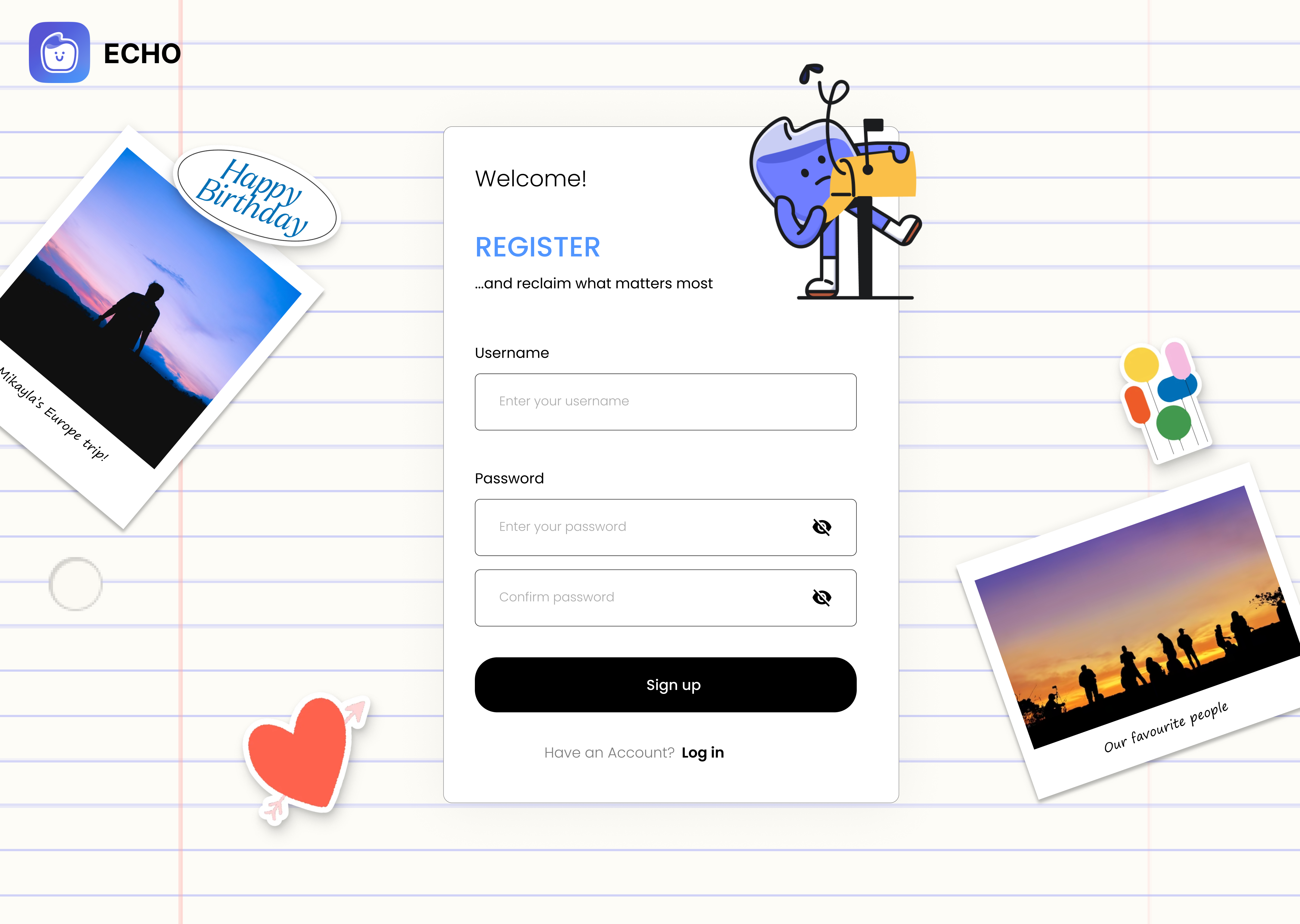
Registration (Mockup)
-
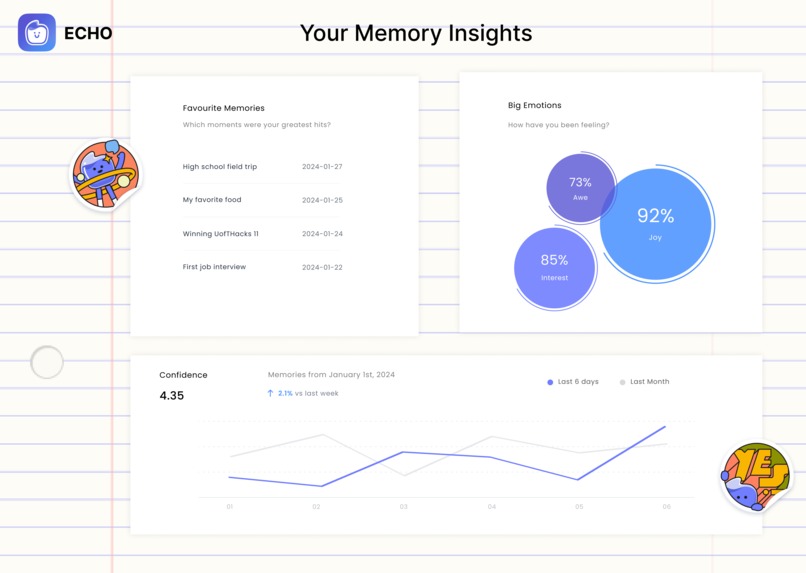
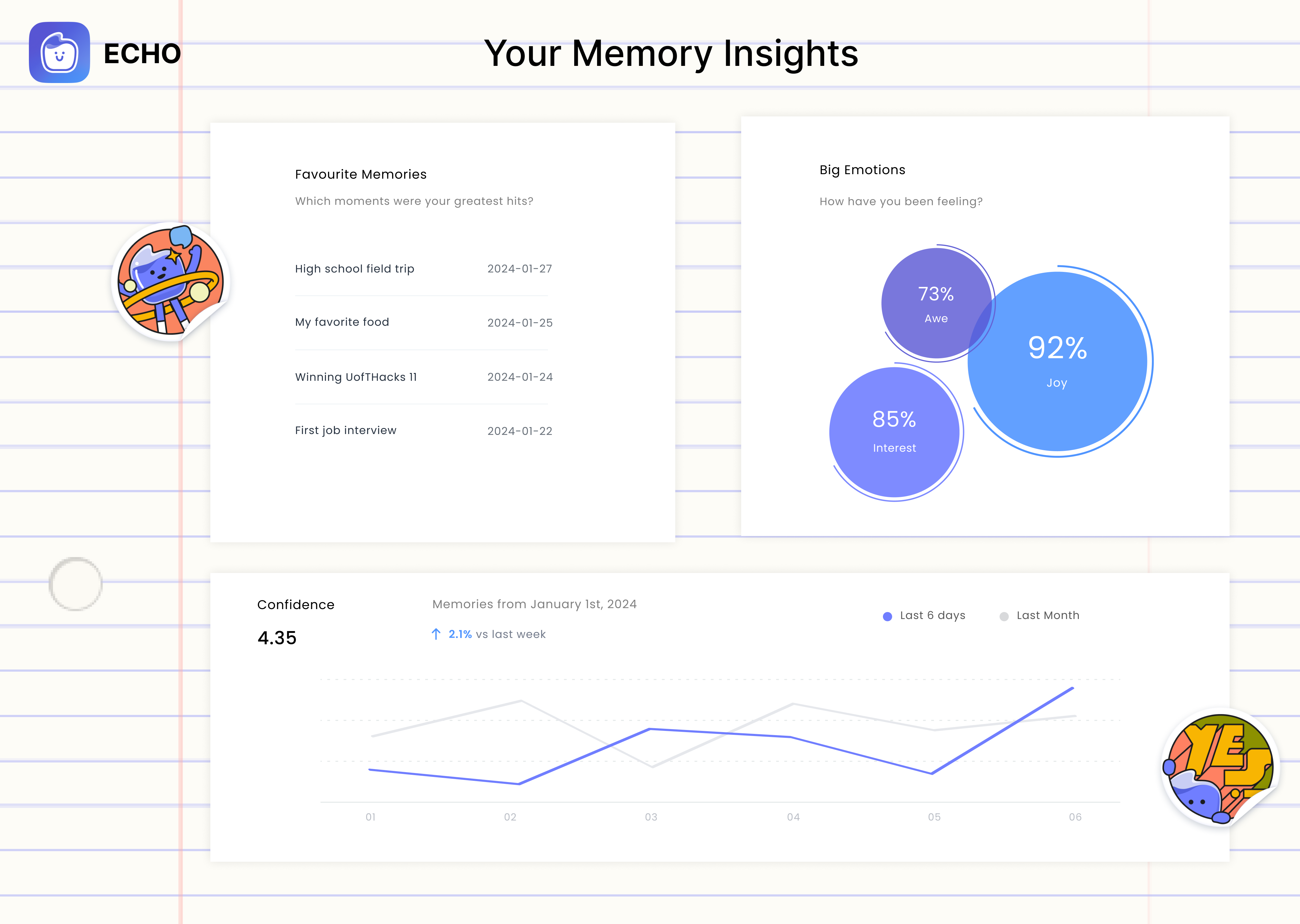
Insights (Mockup)
Friday 7PM: Setting Things into Motion 🚶
Blast to the past - for everyone!
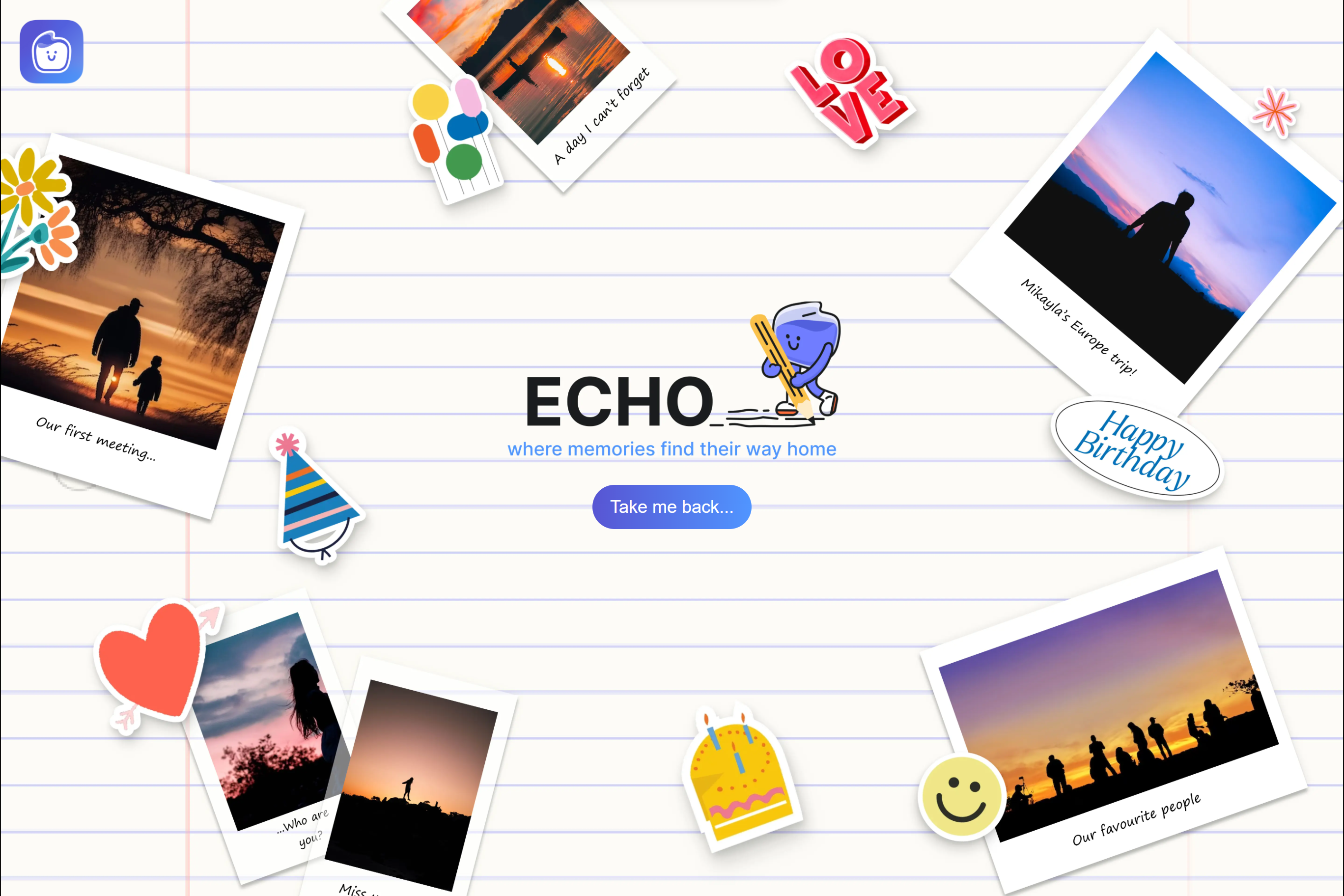
ECHO enriches the lives of those with memory-related issues through reminiscence therapy. By recalling beloved memories from their past, those with dementia, Alzheimer’s and other cognitive conditions can restore their sense of continuity, rebuild neural pathways, and find fulfillment in the comfort of nostalgia. ECHO enables an AI-driven analytical approach to find insights into a patient’s emotions and recall, so that caregivers and family are better-equipped to provide.
Friday 11PM: Making Strides 🏃♂️
The first step, our initial thoughts
When it came to wrangling the frontend, we kept our users in mind and knew our highest priority was creating an application that was intuitive and easy to understand. We designed with the idea that ECHO could be seamlessly integrated into everyday life in mind.
Saturday 9AM: Tripping 🤺
Whoops! Challenges and pitfalls
As with any journey, we faced our fair share of obstacles and roadblocks on the way. While there were no issues finding the right APIs and tools to accomplish what we wanted, we had to scour different forums and tutorials to figure out how we could integrate those features. We built ECHO with Next.js and deployed on Vercel (and in the process, spent quite a few credits spamming a button while the app was frozen..!).
Backend was fairly painless, but frontend was a different story. Our vision came to life on Figma and was implemented with HTML/CSS on the ol’ reliable, VSC. We were perhaps a little too ambitious with the mockup and so removed a couple of the bells and whistles.
Saturday 4PM: Finding Our Way 💪
One foot in front of the other - learning new things
From here on out, we were in entirely uncharted territory and had to read up on documentation. Our AI, the Speech Prosody model from Hume, allowed us to take video input from a user and analyze a user’s tone and face in real-time. We learned how to use websockets for streaming APIs for those quick insights, as opposed to a REST API which (while more familiar to us) would have been more of a handful due to our real-time analysis goals.
Saturday 10PM: What Brand Running Shoes 👟
Our tech stack
Nikes.
Apart from the tools mentioned above, we have to give kudos to the platforms that we used for the safe-keeping of assets. To handle videos, we linked things up to Cloudinary so that users can play back old memories and reminisce, and used Postgres for data storage.
Sunday 7AM: The Final Stretch 🏁
The power of friendship
As a team composed of two UWaterloo CFM majors and a WesternU Engineering major, we had a lot of great ideas between us. When we put our heads together, we combined powers and developed ECHO.
Plus, Ethan very graciously allowed us to marathon this project at his house! Thank you for the dumplings.
Sunday Onward: After Sunrise 🌅
Next horizons
With this journey concluded, ECHO’s next great adventure will come in the form of adding cognitive therapy activities to stimulate the memory in a different way, as well as AI transcript composition (along with word choice analysis) for our recorded videos.
Built With
- cloudinary
- css
- css3
- figma
- html
- html5
- hume
- next.js
- postgresql
- vercel
- websockets

Log in or sign up for Devpost to join the conversation.