-
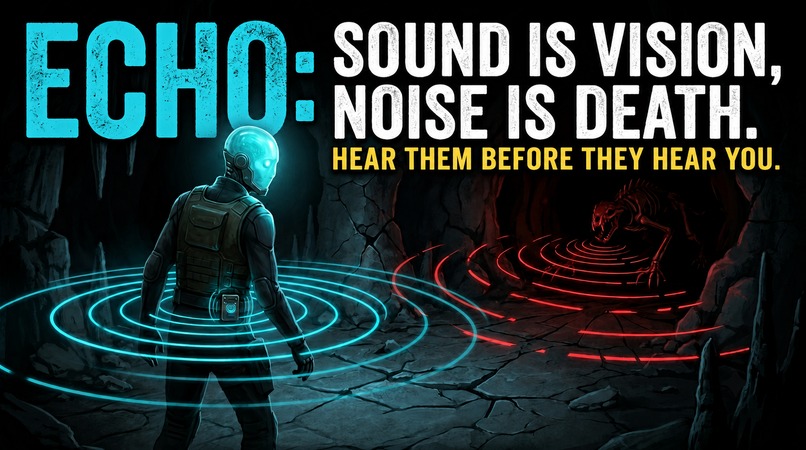
ECHO: Tactical Blindness in a Quiet World
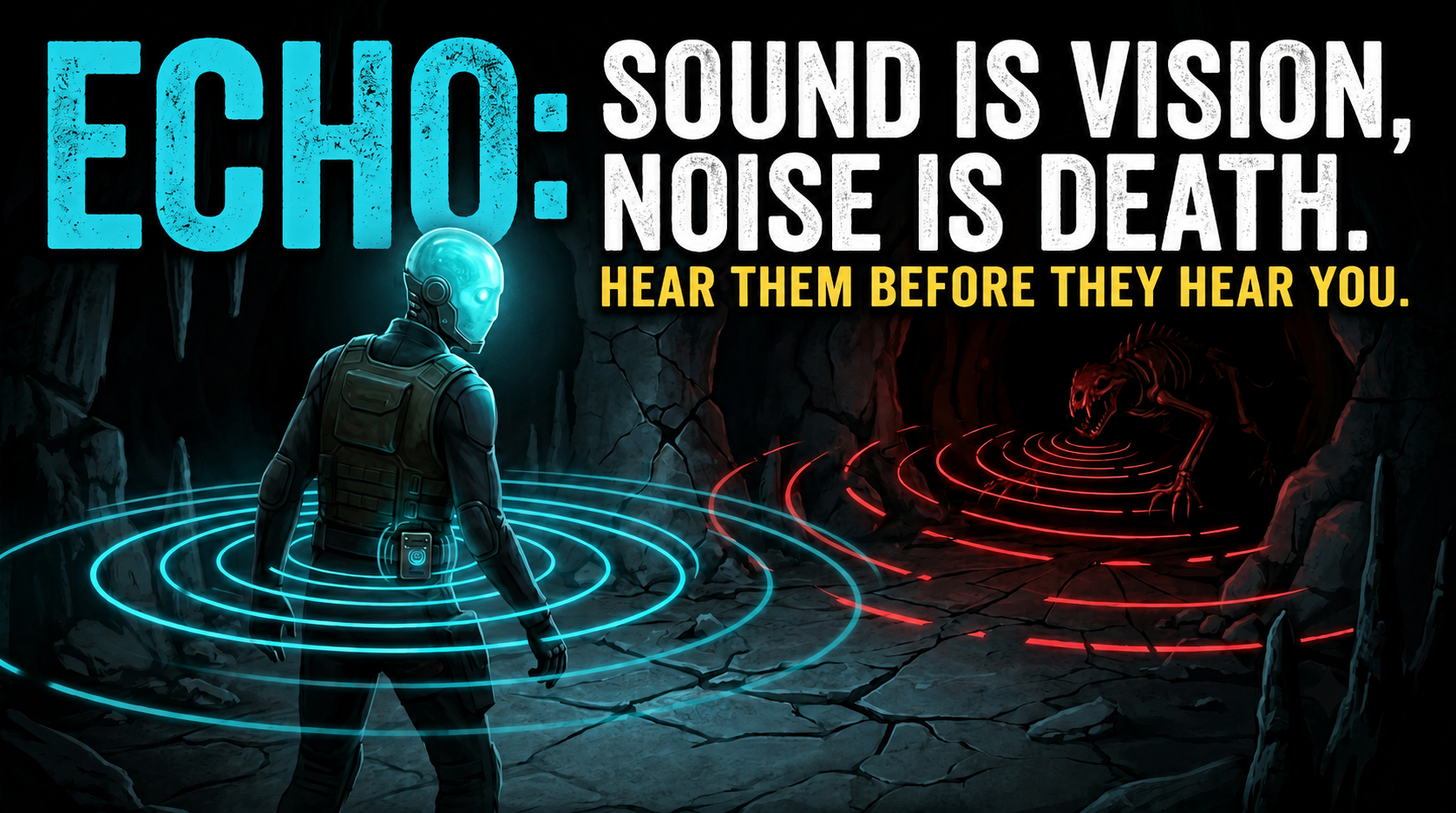
ECHO: Tactical Blindness in a Quiet World
ECHO was born from a desire to flip the traditional survival genre on its head by removing the player’s primary sense: sight. I wanted to explore what happens when the environment itself becomes the enemy, not just the creatures lurking within it. The core inspiration came from reading about how bats navigate complex cave systems using echolocation. The idea of translating that biological mechanism into a tense, mobile-first gameplay loop immediately gripped me. I wanted to build a world where "seeing" is not a passive action, but an active, calculated risk.
Another major influence came from stealth-horror design, specifically the concept of negative space. In most survival games, you listen for the monster. In ECHO, I wanted to challenge the player to listen for the absence of sound. The creation of "The Silence"—an apex predator that absorbs echolocation rings rather than emitting them—came from a desire to create a deep sense of psychological dread. It forces players to retrain their brains to fear the empty spaces on their screens.
What I Learned
I learned that you don't need fancy graphics to terrify a player; you just need a strict sound economy. By stripping away sight, I discovered how to use "sonic architecture" to guide players. More importantly, I realized that building a game entirely around sound accidentally made it 100% accessible to visually impaired gamers. True accessibility doesn't mean watering down the difficulty; it just means opening up a whole new way to experience the thrills
How I Built the Project
The Sound Economy: I linked three key systems—harvesting Acoustic Energy, managing your personal Sound Signature radius, and monitoring the world's ambient noise floor.
The Hard Deadline: I built the core gameplay loop around the "Night Silence Window"—a 15-to-20-minute timer where the world goes dead quiet, and unstoppable apex predators wake up.
Progression Paths: I designed five distinct zones and a tech tree splitting into three playstyles: The Silent Path (stealth), The Resonant Path (misdirection), and The Hunter Path (using predator clicks against them).
Challenges I Faced
The hardest part was balancing fairness with fear. If the echolocation ripples faded too fast, the game was frustrating; if they lasted too long, the tension died. I also had to carefully tune the "escalation chain" of combat. I wanted players to learn the hard way that fighting back is a trap—smacking a small monster creates a noise that pulls in a giant one, teaching you to become a ghost instead of a fighter.
Built With
- adobe
- ai
- chatgptimages


Log in or sign up for Devpost to join the conversation.