Inspiration
Several of our group members have experienced first-hand a loved one’s daily struggle with dementia. The difficulty isn’t just the memory loss, but also the moments of stress and confusion that overwhelmed them. The only times when they seemed calm were when playing songs they recognized from their childhood, music seemed to be the only way to reach them when words could not.
Our Product
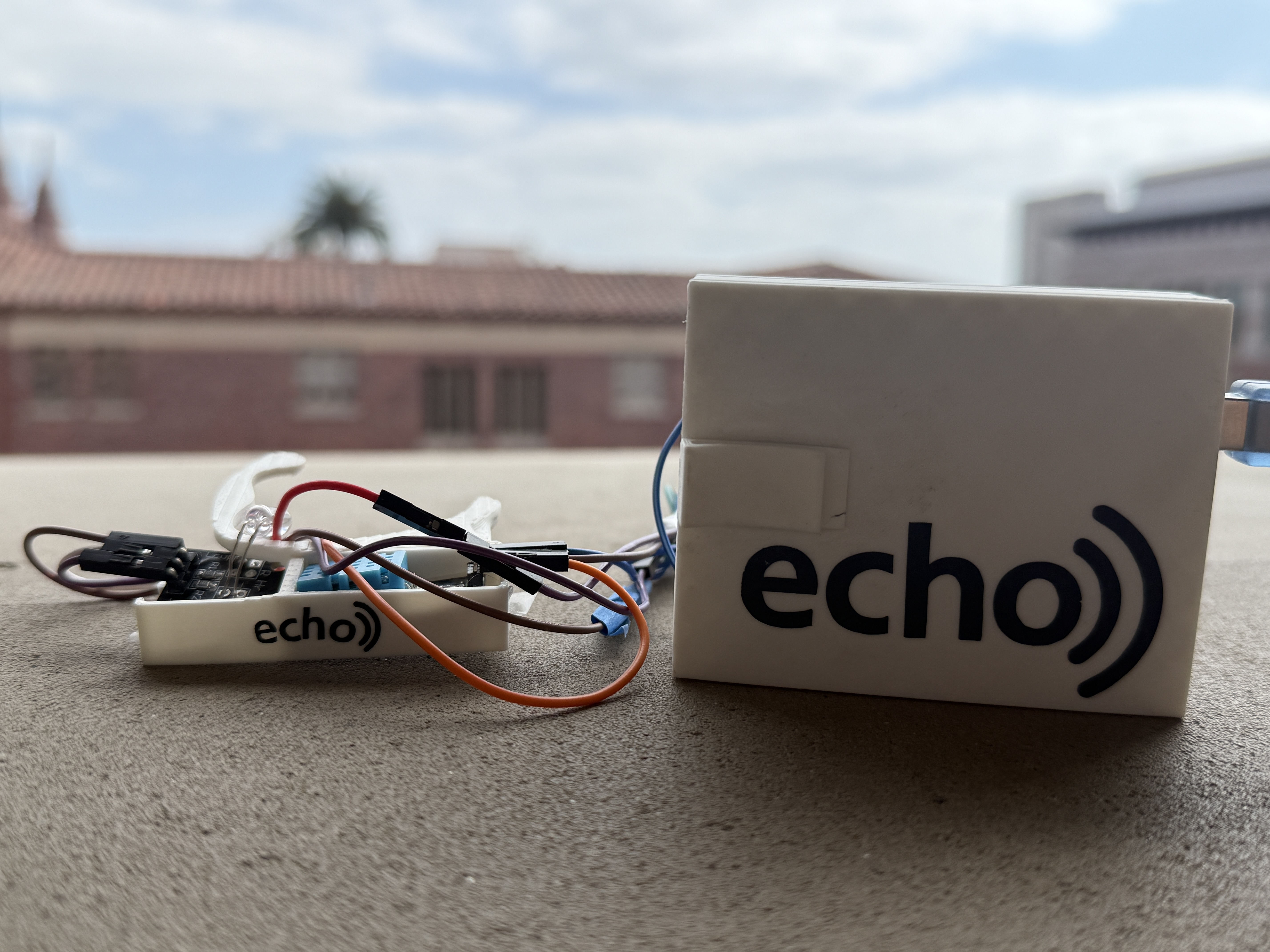
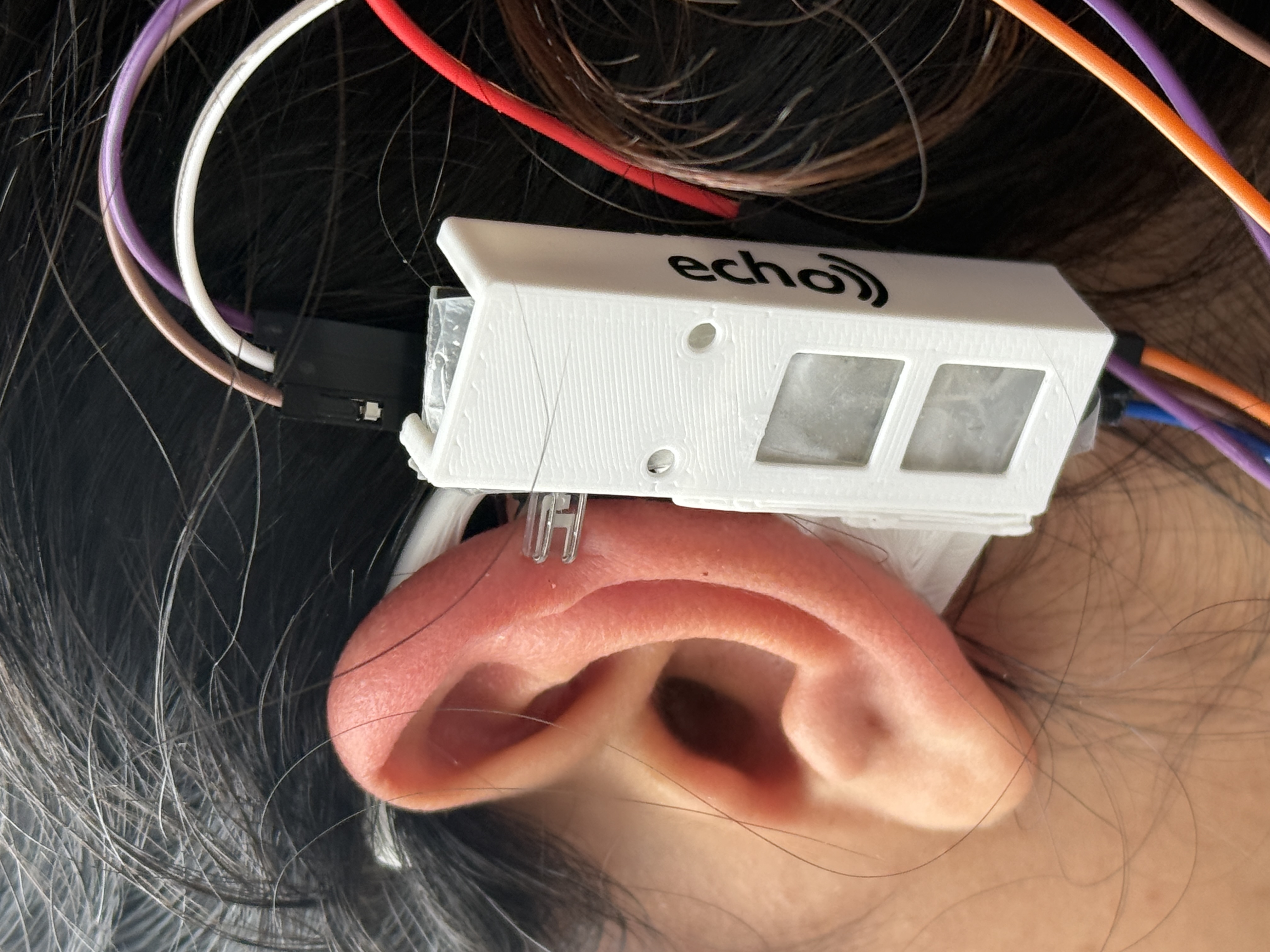
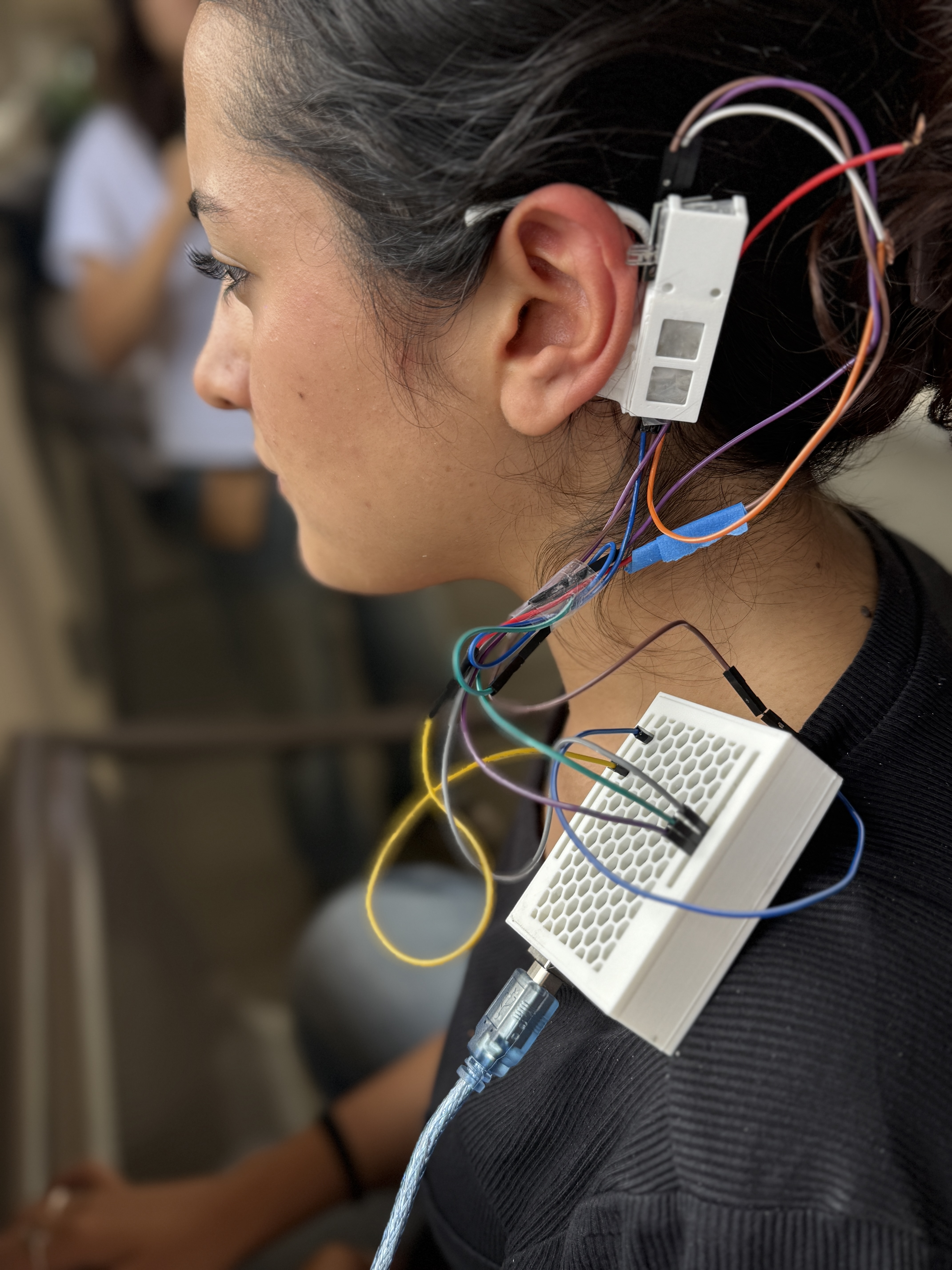
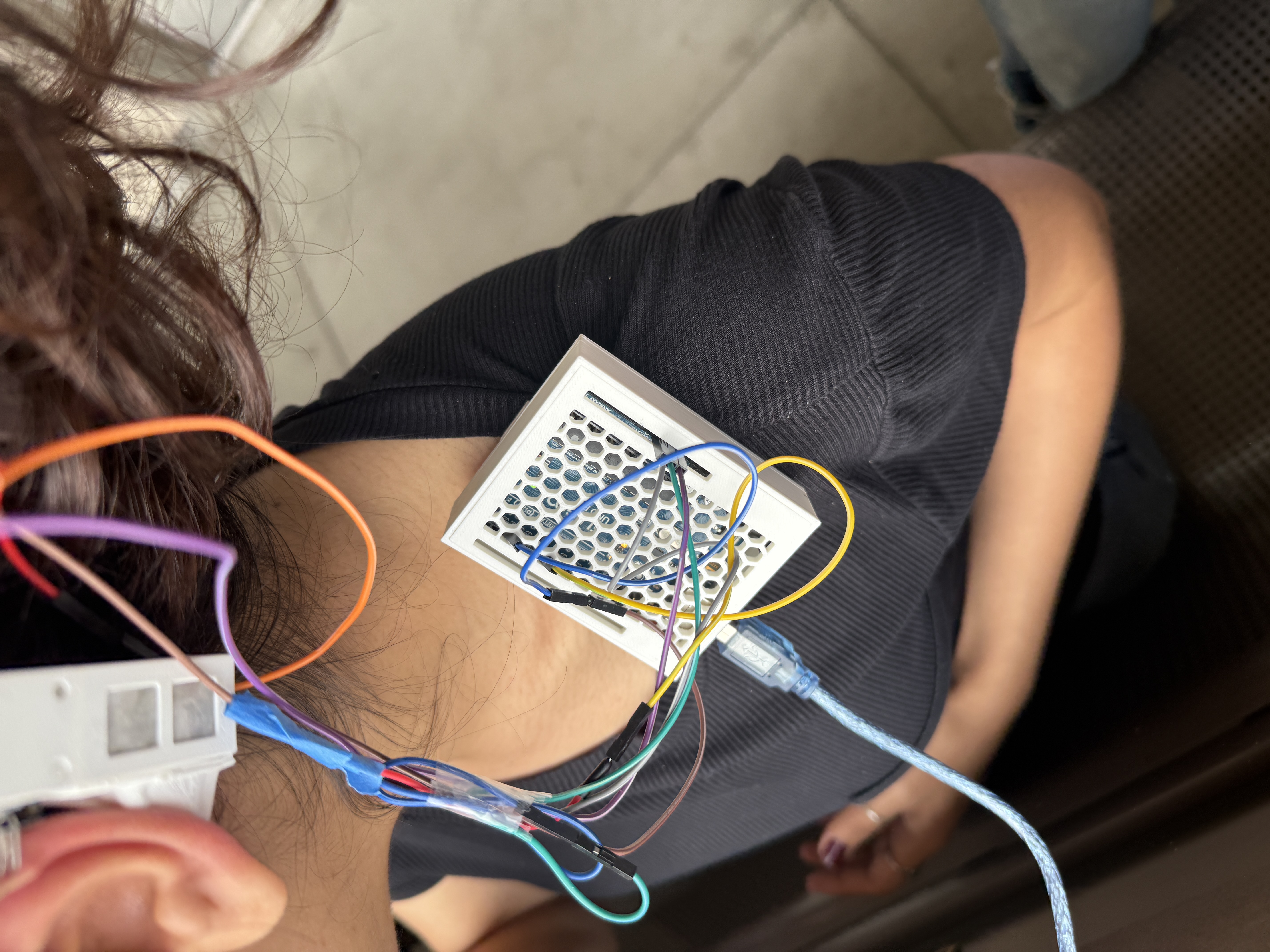
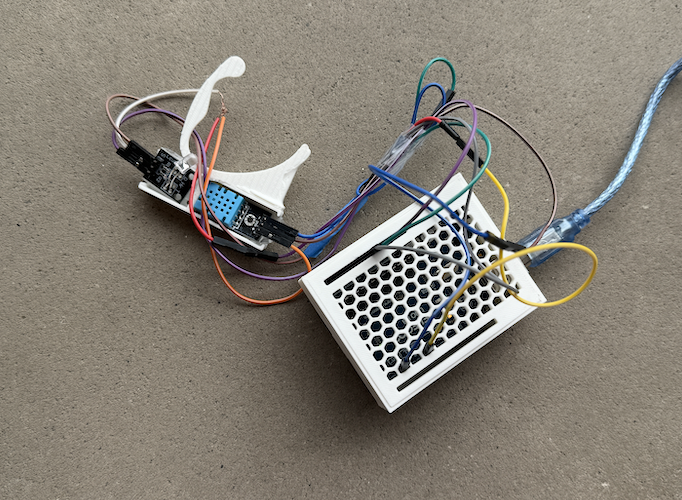
Our experiences led us to create Echo, an ear cuff that tracks heart rate and temperature at the ear, which is one of the most accurate places. In contrast to traditional wearables which only collect data, Echo is responsive and active. When Echo detects stress, it plays calming music and familiar voices, helping to create comfort in moments of fear.
Build Process
We began with a big idea and a list of parts we knew we would need. We initially wanted to use an ESP so we could display live data on a website, but without a data cord we were unable to program it and switched over to the Elegoo Uno R3. We began by figuring out how to use the heart beat and temperature sensors, adjusting the code constantly until we eventually found a program that worked. After soldering the wires and confirming their locations, we began CADing the ear cuff and the box case on Fusion360. Since we only had 2 hours before the 3D printing lab was closed, we were unable to design the Elegoo Uno R3 box and clip from scratch, instead opting to use a pre-made CAD for the sake of time. We used that saved time to design the ear cuff which was more important to get perfect than the case. After measuring the sensors since we couldn’t find the dimensions available online, we added the sensor case to the ear cuff and 3D printed it. After 3D printing, we assembled the box and adjusted the code a bit more since the music only turned on half the time. One of our group members had a Cricut so we used that to add the “Echo” logo to the ear cuff and case before finishing the prototype.
Challenges We Faced
The biggest challenge we faced was coding the device. None of us came in with experience coding sensors, so this was entirely new to us. The temperature sensor kept reporting false numbers, leading to several hours worth of troubleshooting. Luckily, there was plenty of documentation online about how to code the sensors and several mentors who were more than willing to help. After changing the code and getting a new sensor, it worked! The other challenge we faced was 3D printing the ear cuff since by the time we finished it the 3D printer lab was about to close, so we reached out to 20 different friends of ours who lived in different places across campus to ask them if they knew anyone with a 3D printer. Eventually, we found a sophomore who was willing to print the ear cuff for us and explained how the new Bambu 3D printer works!
What We Learned
Break2Make taught us the importance of perseverance and bridging disciplines. Throughout the makeathon, we acquired and grew skills including how to craft a compelling pitch, how to use an arduino, 3D printing, and working with people from different backgrounds to bring our ideas into reality. It’s rewarding to see how we took this idea to life in 24 hours.
Built With
- 3d-printing
- arduino
- autodesk-fusion-360
- c++
- sensors

Log in or sign up for Devpost to join the conversation.