ECHO//FORGE — The Living Tomorrow
The streamer controls the present. Chat builds the future.
Inspiration
Most livestream audiences can watch, react and vote. We wanted to go further: what if the audience could physically reshape the world that a streamer is about to explore?
ECHO//FORGE transforms that idea into a playable fantasy adventure where community decisions have actual gameplay consequences.
What It Does
The player controls a sword-and-buckler Wayfarer exploring connected floating ruins, clearing enemy encounters, collecting an Aether Seal, activating three beacons and confronting a Guardian before reaching the final portal.
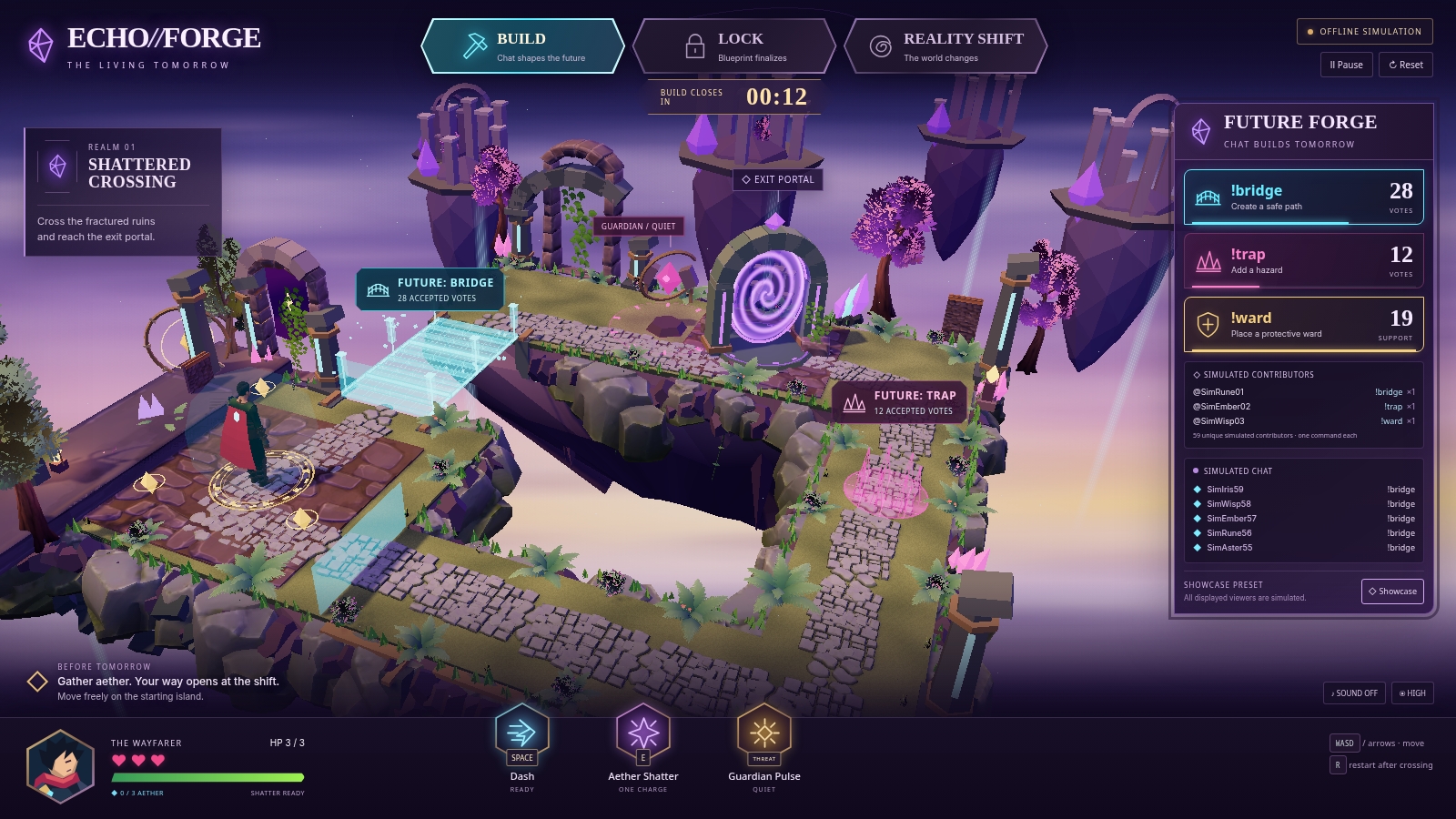
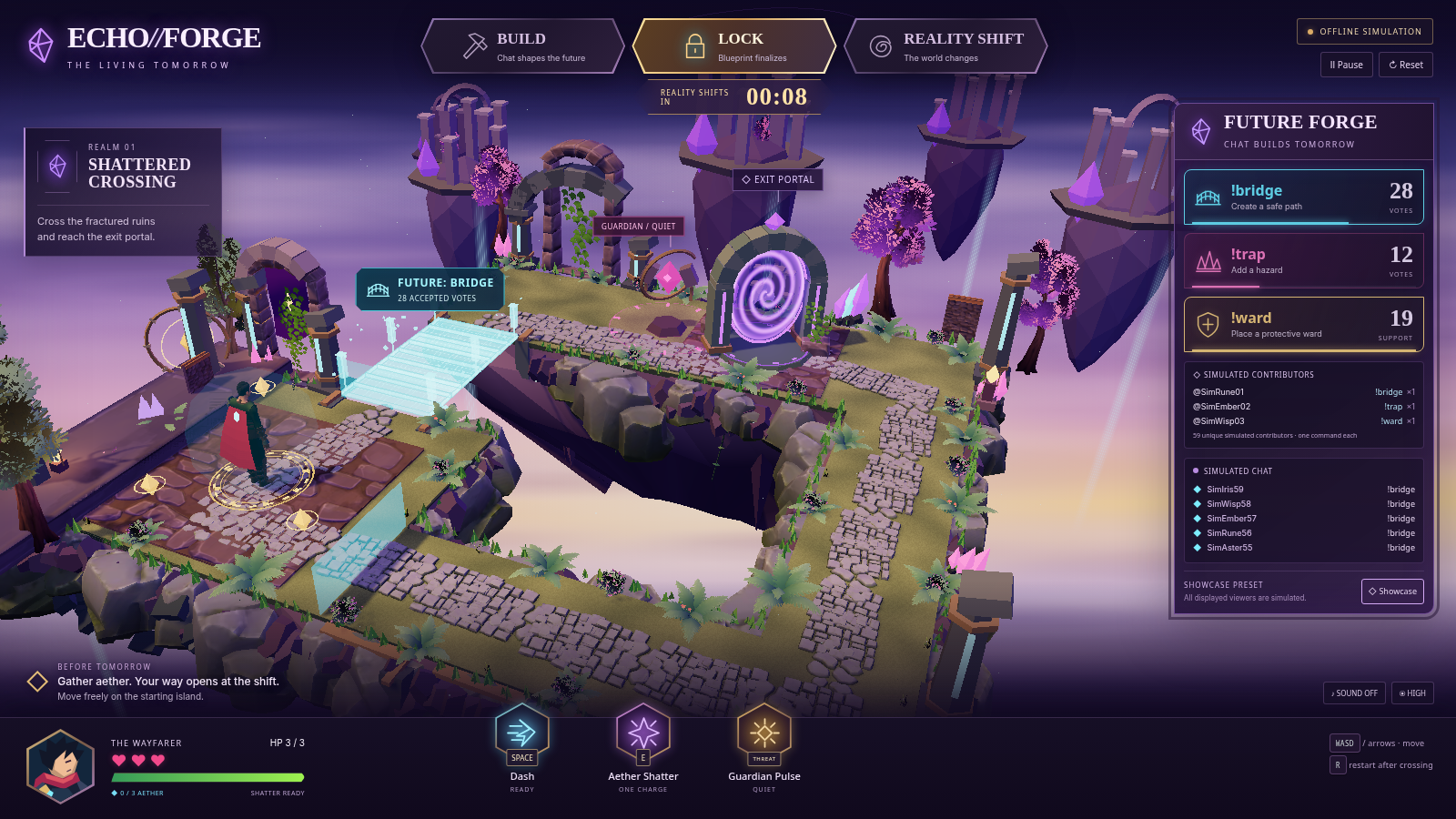
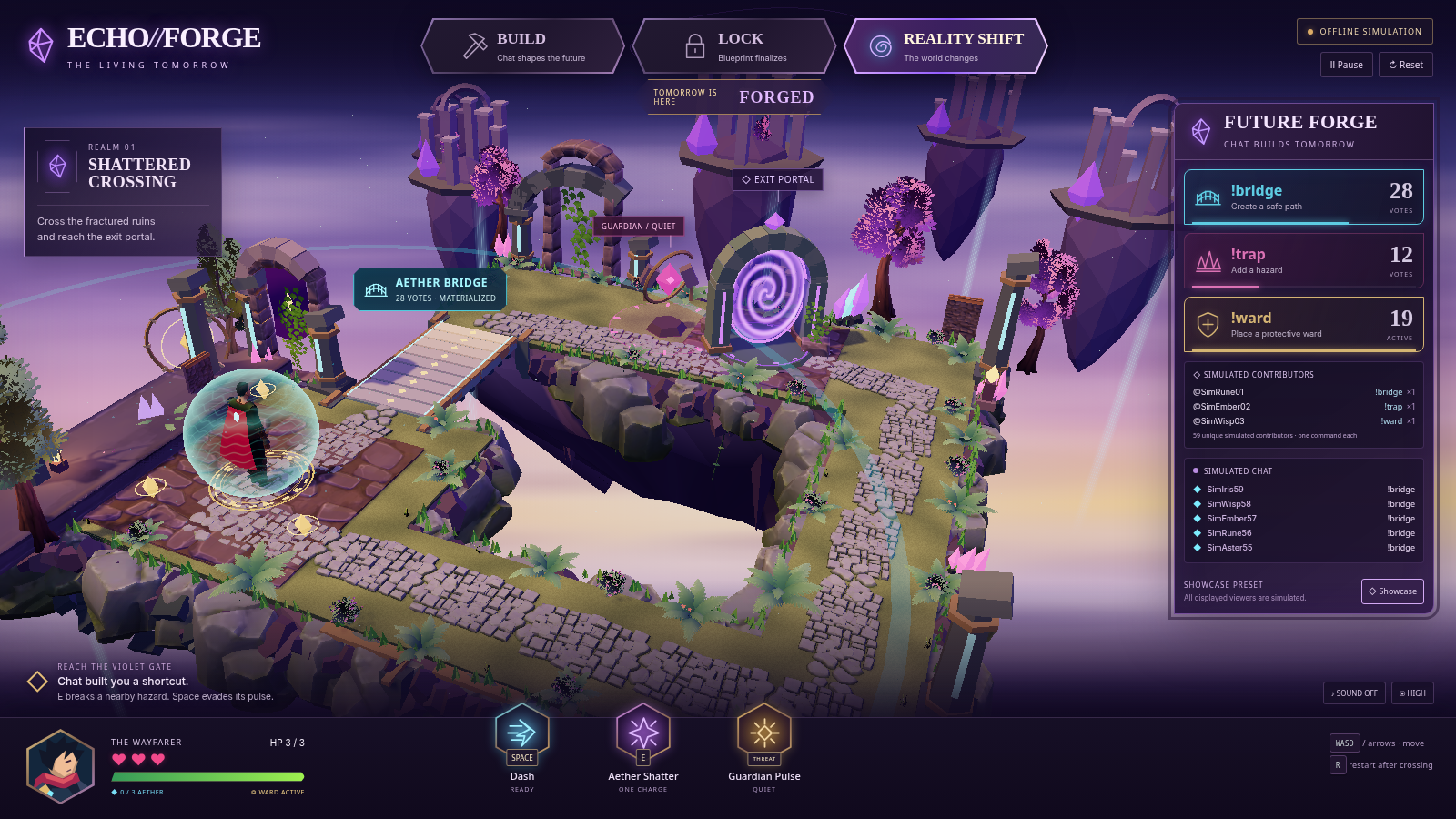
The central mechanic is the Future Forge, built around three phases:
- BUILD: Audience commands such as
!bridge,!trapand!wardcontribute to the upcoming encounter. - LOCK: Accepted votes are committed. The outcome can no longer change.
- REALITY SHIFT: The committed decision physically alters gameplay.
A bridge creates a traversable shortcut. A trap introduces an avoidable hazard. A ward provides one-hit protection. A permanent alternative route remains available.
This isn't merely a cosmetic voting interface: the game's traversal and hazards respond to the selected future.
How We Built It
The browser game uses React, TypeScript, Three.js and Vite, supported by a Node.js/Express backend.
The world combines Blender-authored animated models, selected Quaternius assets, custom fantasy environments, collision-aware traversal, character animation, combat, checkpoints and boss progression.
The Twitch integration uses Public Device Code authentication, EventSub WebSockets, validated chat-command processing and server-sent updates.
We used OpenAI Codex extensively to develop and integrate the gameplay, world systems, animations, combat, Twitch authentication, UI, tests and recording tools.
Challenges and Accomplishments
Key engineering challenges included keeping the sword attached to an animated character rig, synchronizing enemy attacks with damage timing, aligning 3D geometry with collision surfaces and preserving checkpoint progression.
On the Twitch side, we implemented a Public Client authorization flow without requiring a client secret, while retaining host authentication and vote validation.
We completed a playable adventure from its opening area through the final Guardian and portal.
Verification and Limitations
The playable game, automated checks and production build were verified during development.
Real Twitch account authorization and an EventSub subscription were established. However, a genuine incoming chat vote producing a world change remained unverified.
The submitted gameplay demonstration therefore labels its audience votes as OFFLINE SIMULATION, rather than presenting them as verified live Twitch events.
What's Next
Future improvements include richer environments, additional enemy variety, further animation polish and expanded audience-driven encounters.
Our goal is to explore a new kind of participatory livestream: the streamer plays the adventure, but the community helps shape the world.
Built With
- blender
- codex
- express.js
- node.js
- openai
- playwright
- react
- twitch
- typescript
- vite
