-
-
start page
Inspiration
I built Echo Forge: Memory Quest for the Maki Hackathon 2026 because I wanted to create a pixel RPG that was more than just walking around a map. I liked the idea of turning mistakes into something useful, so I designed the game around time loops. Instead of failed attempts disappearing, the player's old runs come back as echo teammates that help solve the puzzle.
What It Does
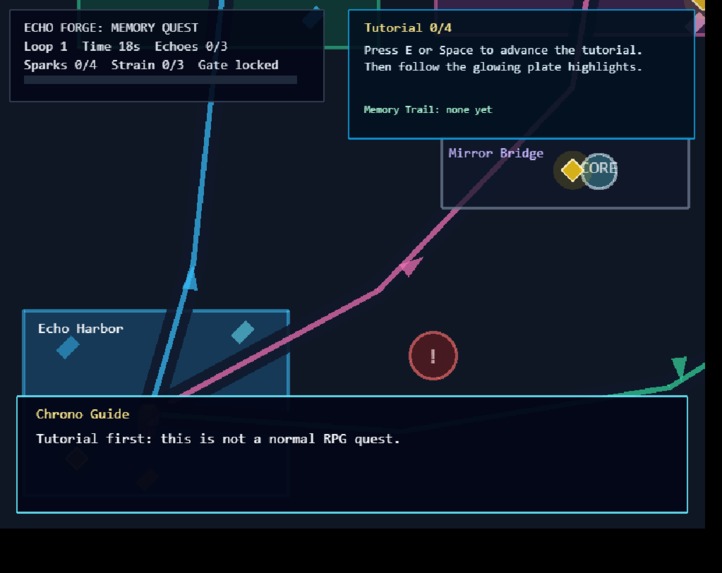
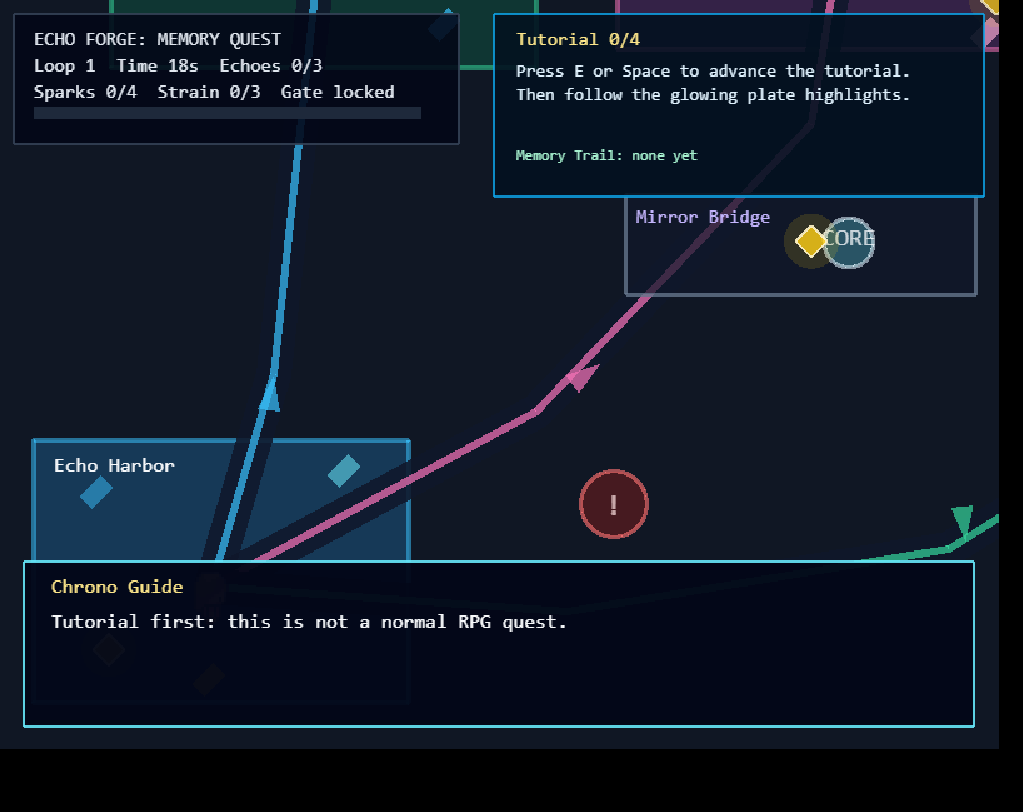
Echo Forge: Memory Quest is a 2D pixel RPG where the player explores a broken timeline, collects memory sparks, avoids paradox rifts, and records routes using the R key. Each recorded route becomes an echo that repeats the player's past movement.
To win, the player must use themselves and their echoes to activate three glowing plates at the same time, awaken the final gate, and answer a memory riddle.
How I Built It
I built the game using JavaScript and the Maki framework. I used Phaser through the Maki setup for movement, sprites, collision-style logic, dialogue, visual effects, and the game scene.
The main systems I built include:
- A larger adventure map with multiple regions
- A tutorial system for new players
- A time-loop echo mechanic
- Memory spark collectibles
- Paradox rift hazards
- Plate syncing puzzle
- Final gate riddle
- Creative win and lose screens
Challenges I Faced
One challenge was making the game easy to understand for first-time players. At first, the player could feel confused about what to do, so I added tutorial messages, highlighted targets, and clearer instructions.
Another challenge was making movement feel fair. I had to stop the player from walking outside the ground, roads, and bridge areas. I also had to remove confusing objects and raw text that appeared on the screen.
The hardest part was designing a mechanic that felt creative but still playable. The echo system needed to feel like a puzzle, not just a visual effect.
What I Learned
I learned how to structure a small game project using Maki and JavaScript. I also learned more about player guidance, game flow, map design, and how important clear instructions are in a puzzle game.
Most importantly, I learned that a good game idea should be easy to understand but still interesting to master.
What's Next
If I continue improving the game, I would like to add more levels, better pixel art, sound effects, more puzzles, and different endings based on how the player solves the timeline.


Log in or sign up for Devpost to join the conversation.