-
-

Start
-
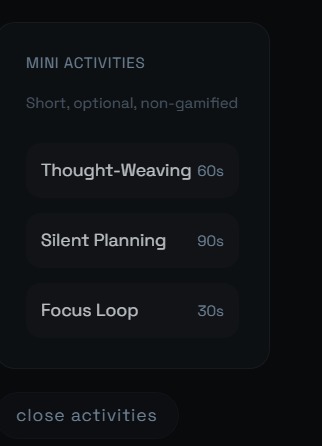
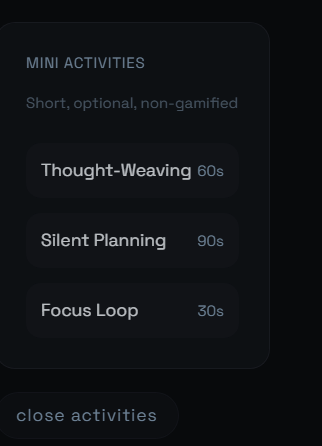
activities
-
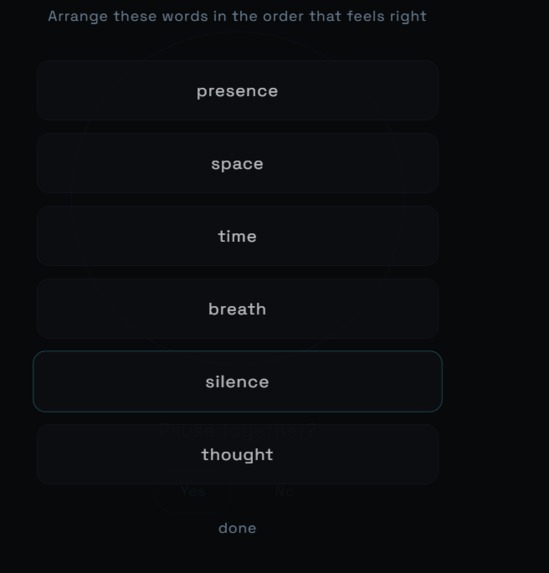
thought weaving
-
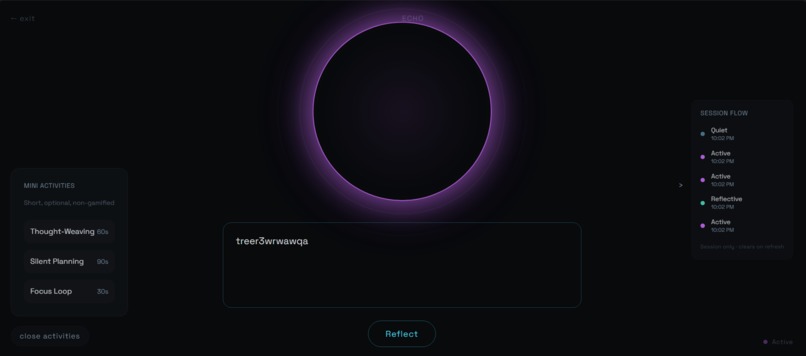
Fully active
-

Nice

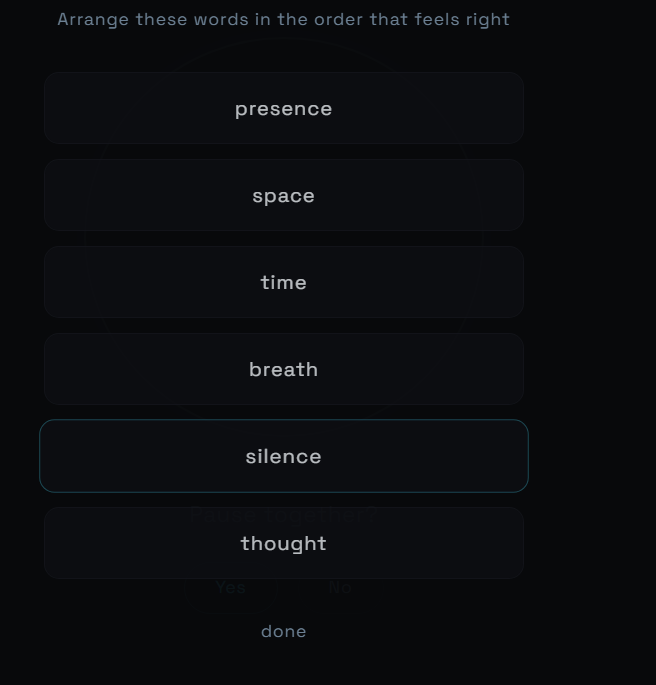
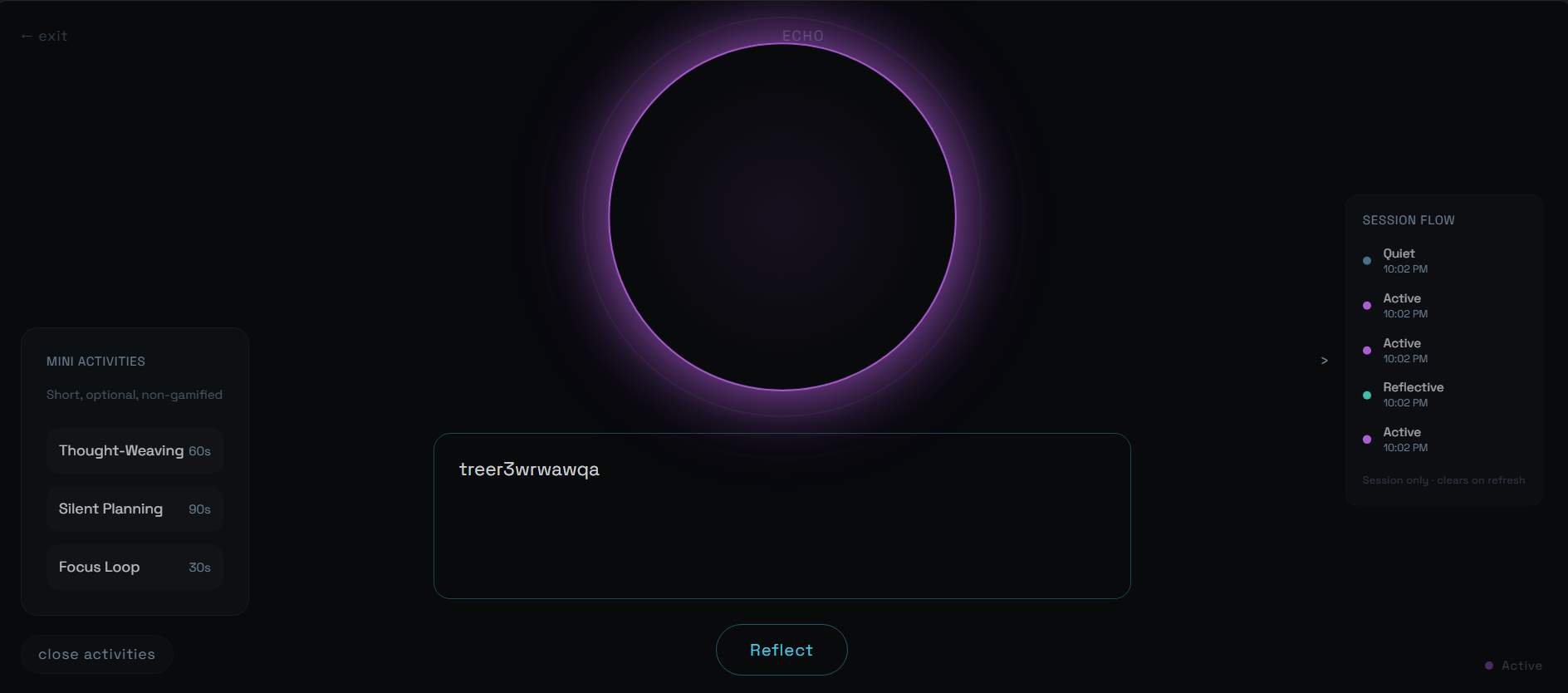

Echo is a human-interaction–first digital experience designed to rethink how people connect through technology. It prioritizes presence, consent, reflection, and silence over speed, automation, and constant response.
Inspiration & Problem Statement
Despite constant connectivity through messaging platforms, AI assistants, and digital systems, meaningful human presence is often missing. Modern interactions are optimized for efficiency, automation, and instant replies, resulting in emotionally shallow communication.
In contrast, real human interaction relies on:
Silence to communicate care
Pauses to create understanding
Reflection to build trust
Most digital systems treat these moments as inefficiencies rather than value.
Problem Identified: Why do digital systems avoid silence when humans depend on it?
Echo was created to explore this gap.
Core Concept
Echo is not a conversational AI. It is an interaction design experiment focused on co-presence rather than control.
Echo:
Co-exists with the user instead of directing them
Respects silence as a valid interaction state
Introduces intentional pauses and reflection delays
Encourages mindful, consent-driven engagement
Echo does not analyze emotions. Echo does not optimize behavior. Echo creates space for human connection.
Key Interaction Principles
Consent-based pauses
Reflection before response
Ambient, non-verbal feedback
Shared silence as interaction
User-controlled pacing
Interactive Demonstration
Users are invited to participate through intentional pauses, such as a shared five-second silence before continuing. This pause is treated as part of the interaction, reinforcing presence over performance.
Technical Implementation
Echo was developed as a lightweight, web-based prototype using:
HTML, CSS, JavaScript – interaction structure
React.js – modular UI and state management
Web APIs – audio input, ambient visuals, gesture interaction
WebSockets – real-time shared presence
The system avoids heavy AI models and instead uses timing, rhythm, and user choice—core elements of human interaction design.
Unique Human-First Features
Invited Silence: Users opt into shared pauses
Reflection Delay: Responses prioritize mirroring over solving
Ambient Modes: Light, sound, and motion respond gently to presence
Language Drift: Consent-based multilingual blending
Absence Affirmation: Non-response is treated as meaningful
These features do not track or measure users. They respect autonomy and presence.
Differentiation
Traditional systems focus on:
Faster responses
Engagement optimization
Behavioral analytics
Echo asks a different question: Should a system respond at all?
This reframing shifts interaction from automation to co-presence.
Challenges
Designing meaningful silence without breaking usability
Avoiding emotion detection and behavioral prediction
Ensuring all interactions are consent-driven
Preventing confusion while maintaining restraint
Silence had to be designed carefully as a functional interaction element.
Key Learnings
Effective interaction design is often invisible
Silence can be a powerful design material
Technology adds value by knowing when to step back
Human-paced systems improve user experience
Echo reframed product design as creating space, not solutions.
Conclusion
Echo is not designed to capture attention. It is designed to protect human presence in digital interaction.
Its success lies not in what it shows—but in what it allows users to experience.
One-Line Philosophy
Echo doesn’t fill the silence. It makes room for it.


Log in or sign up for Devpost to join the conversation.