Inspiration
Speech evaluation is often subjective. Different judges may score the same performance differently, and speakers frequently receive vague feedback without knowing exactly where or why their delivery went wrong. We created ECHO (Evaluative Contrastive Holistic Orations) to make speech evaluation more objective, transparent, and actionable through AI-powered audio analysis.
What it does
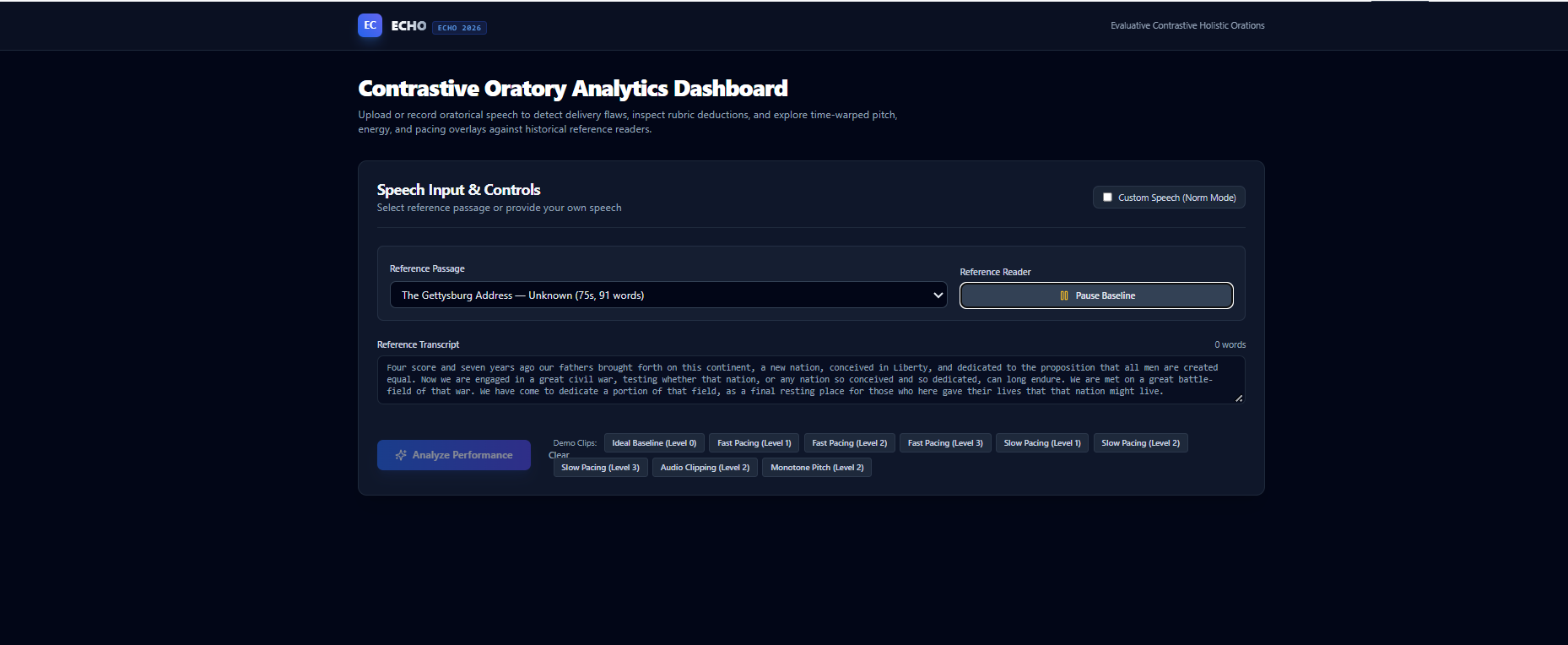
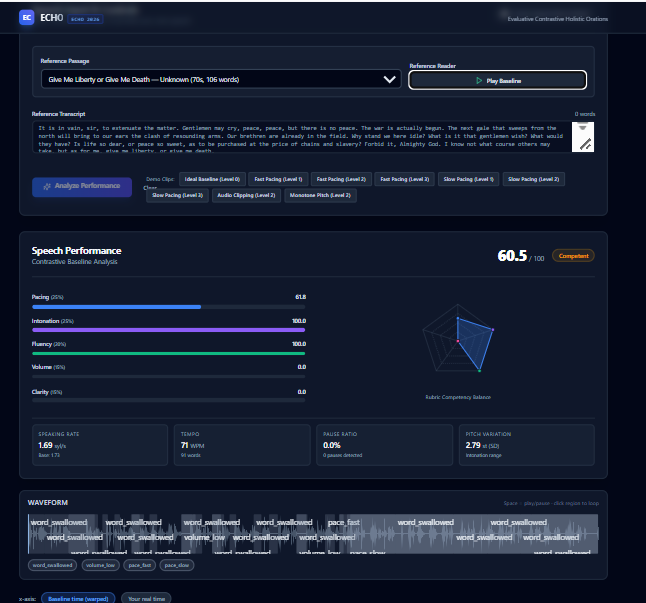
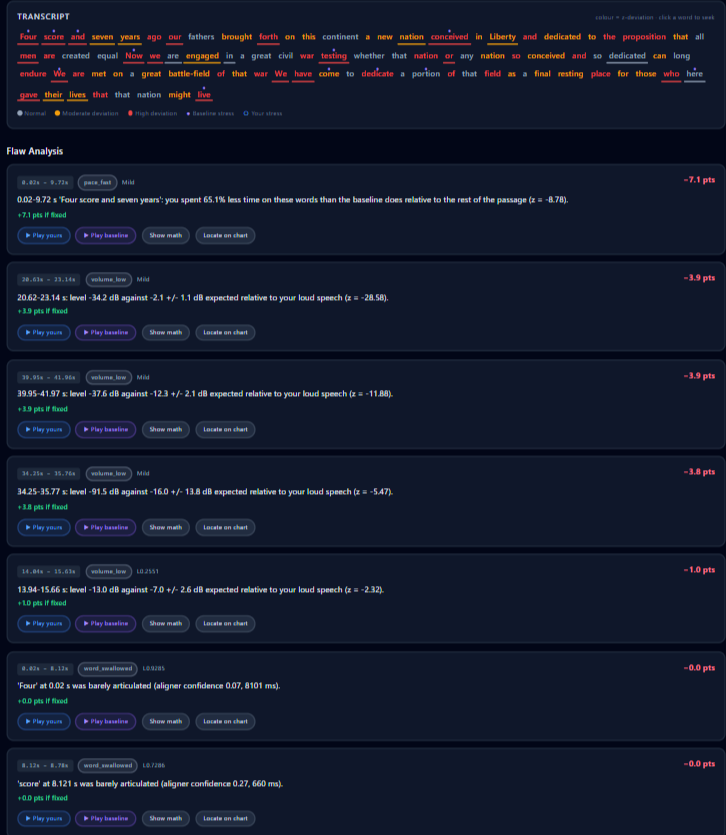
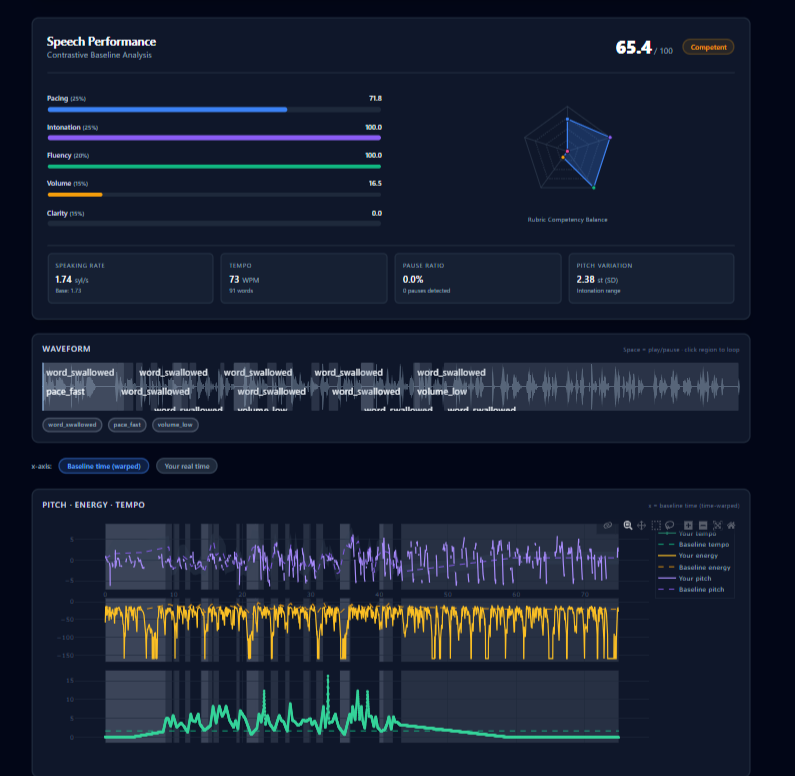
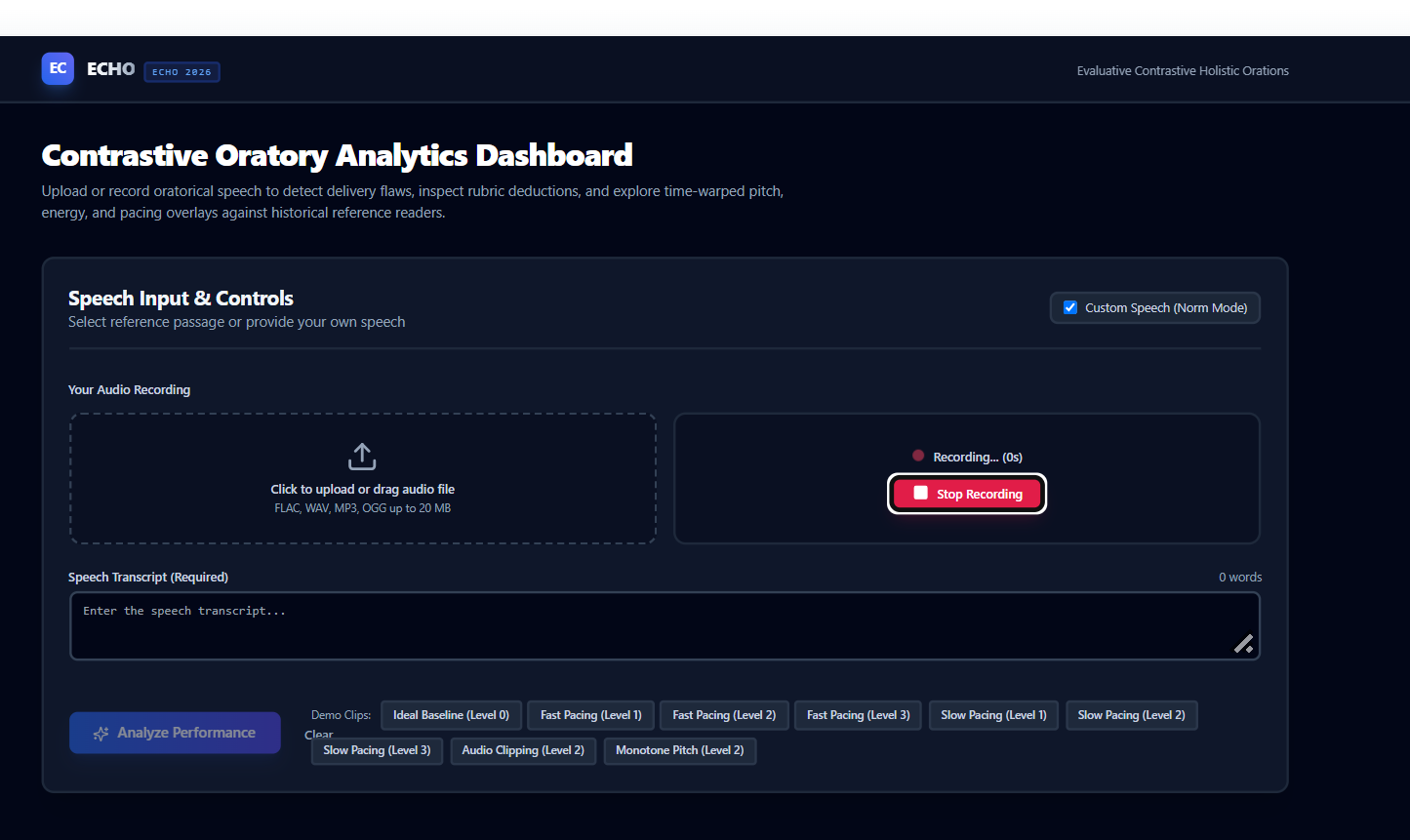
ECHO analyzes speech delivery by comparing a speaker's recording with a reference delivery of the same text. It examines features such as pitch, volume, speech rate, pauses, fluency, and spectral characteristics to identify potential delivery flaws. It aims to pinpoint the exact timestamps of problematic regions, explain the measurable differences behind each flaw, and present rubric-based scores and visual comparisons through an interactive dashboard.
How I built it
I designed ECHO around contrastive speech analysis, combining audio processing, feature extraction, temporal alignment, deviation detection, and explainable scoring. The system processes speech recordings, extracts acoustic features, compares them against reference expectations, and maps detected deviations to specific time regions. A web-based dashboard brings these findings together through visualizations, timestamped feedback, and structured explanations. The project combines Python-based audio analysis with a modern web interface and API-driven architecture.
Challenges I ran into
One of the biggest challenges was distinguishing genuine delivery flaws from natural differences between speakers. Pitch, vocal energy, speaking speed, and articulation vary naturally, so comparisons need to account for these differences. Another challenge was accurately locating flaws in time and translating complex acoustic measurements into explanations that are understandable to users. Building a consistent scoring methodology and creating reliable paired recordings of ideal and flawed delivery also required careful attention.
Accomplishments that I'm proud of
I'm proud of developing an approach that goes beyond simply assigning a score to a speech. ECHO is designed to connect evaluation results with specific audio regions and measurable evidence, helping users understand what went wrong and where improvement is needed. The project brings together signal processing, machine learning concepts, contrastive dataset engineering, explainable analysis, and interactive visualization in one practical application.
What I learned
Through ECHO, I learned how digital signal processing and acoustic features can be used to analyze spoken delivery. I gained a deeper understanding of temporal alignment, contrastive dataset construction, speaker normalization, reproducible evaluation, and explainable scoring. I also learned that an effective AI system should not only produce predictions but should provide understandable evidence that helps users act on its results.
What's next for ECHO (Evaluative Contrastive Holistic Orations)
The next step is to improve ECHO's accuracy and robustness using more diverse speakers, speech styles, and carefully validated contrastive recordings. I want to strengthen temporal flaw detection, evaluate scoring consistency against human judges, and improve the quality of its explanations. Future development could include multilingual support, personalized practice recommendations, progress tracking across repeated recordings, and real-time feedback to help speakers continuously improve their delivery.
Built With
- audio-processing
- data-visualization
- docker
- explainable-ai
- fastapi
- fft
- forced-alignment
- hugging
- librosa
- machine-learning
- mfcc
- next.js
- numpy
- pandas
- plotly
- python
- pytorch
- react
- rest-api
- scipy
- signal-processing
- speech-analysis
- typescript
- wav2vec-2.0
- wavesurfer.js


Log in or sign up for Devpost to join the conversation.