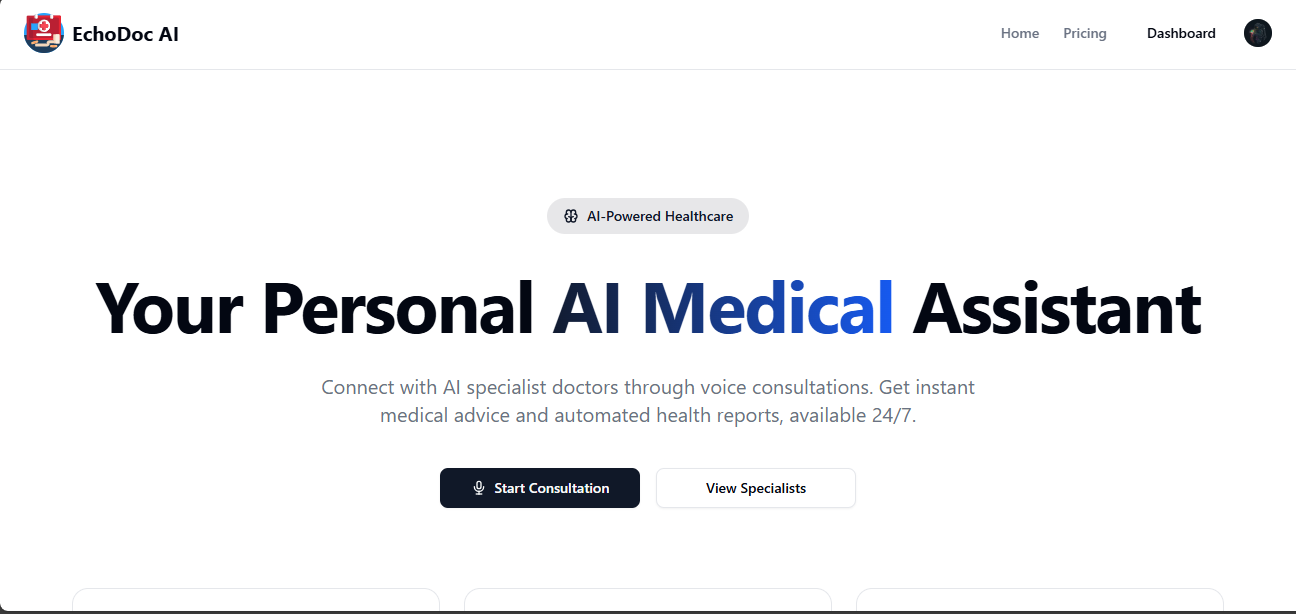
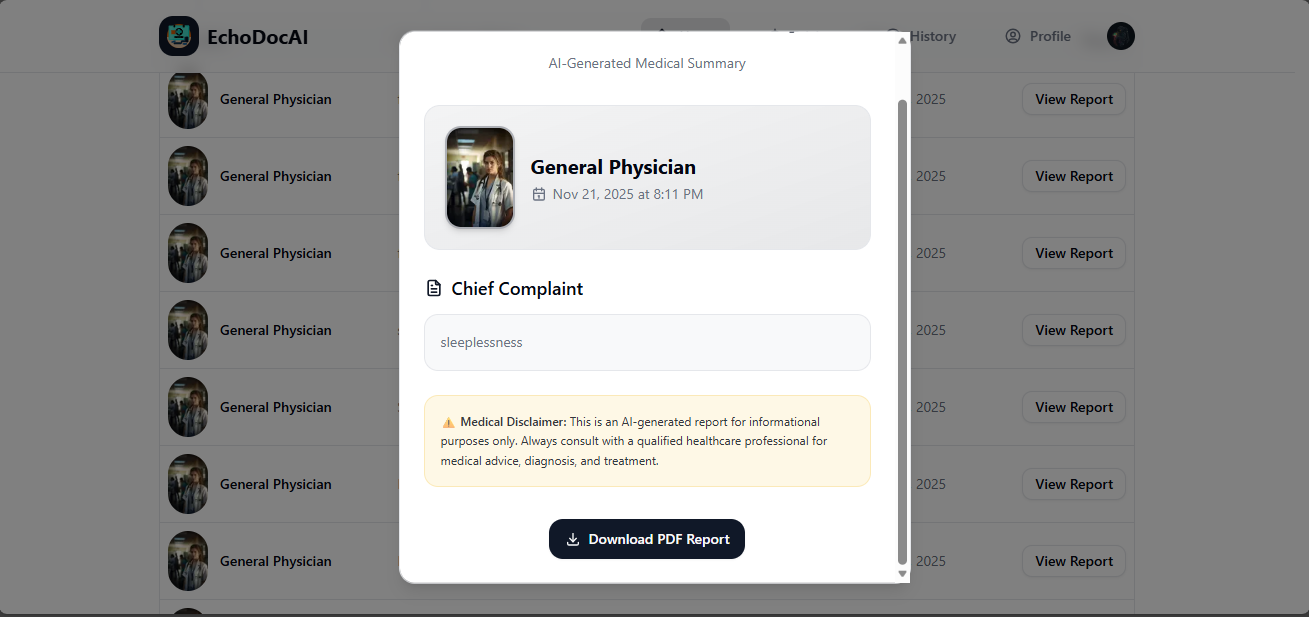
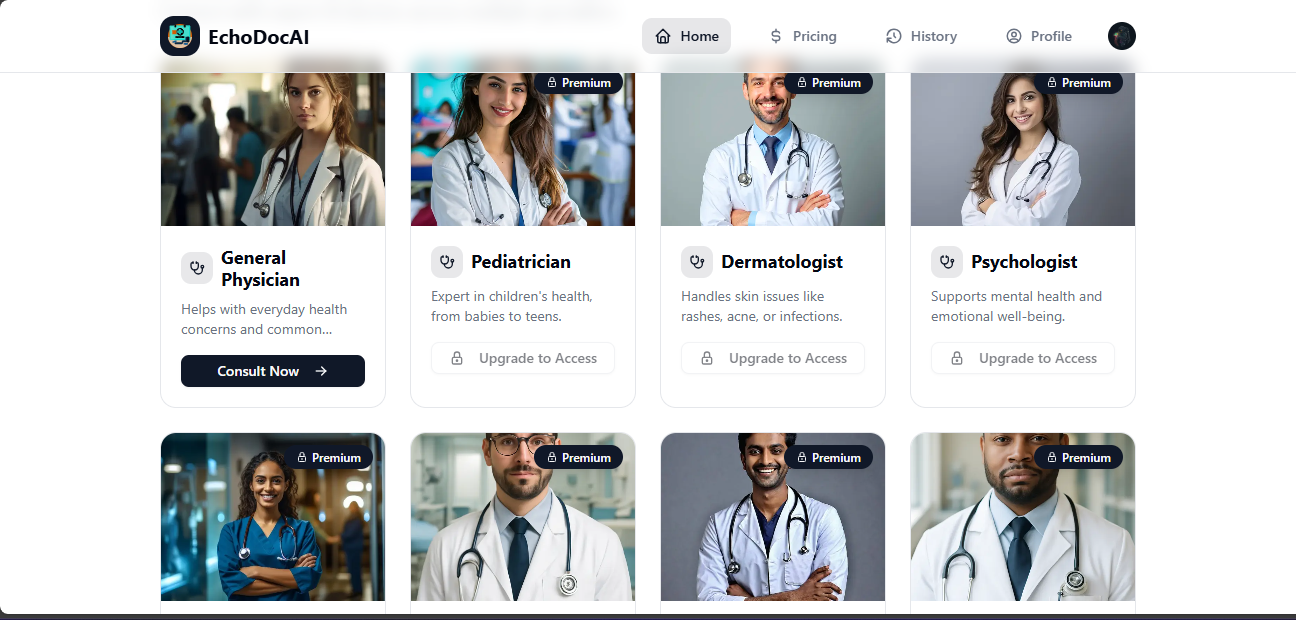
Access to healthcare remains uneven across the world. Millions of people face delays in treatment because they cannot afford consultation fees, lack nearby specialists, or don’t have timely access to medicines. Over 90% of individuals with mental health or substance abuse issues globally do not receive proper care. This inspired us to build a platform that brings instant, reliable, multi-specialty medical guidance to everyone—whether they’re in remote villages, busy cities, or underserved communities. EchoDoc AI was born from the desire to remove barriers like cost, distance, and time.
What it does
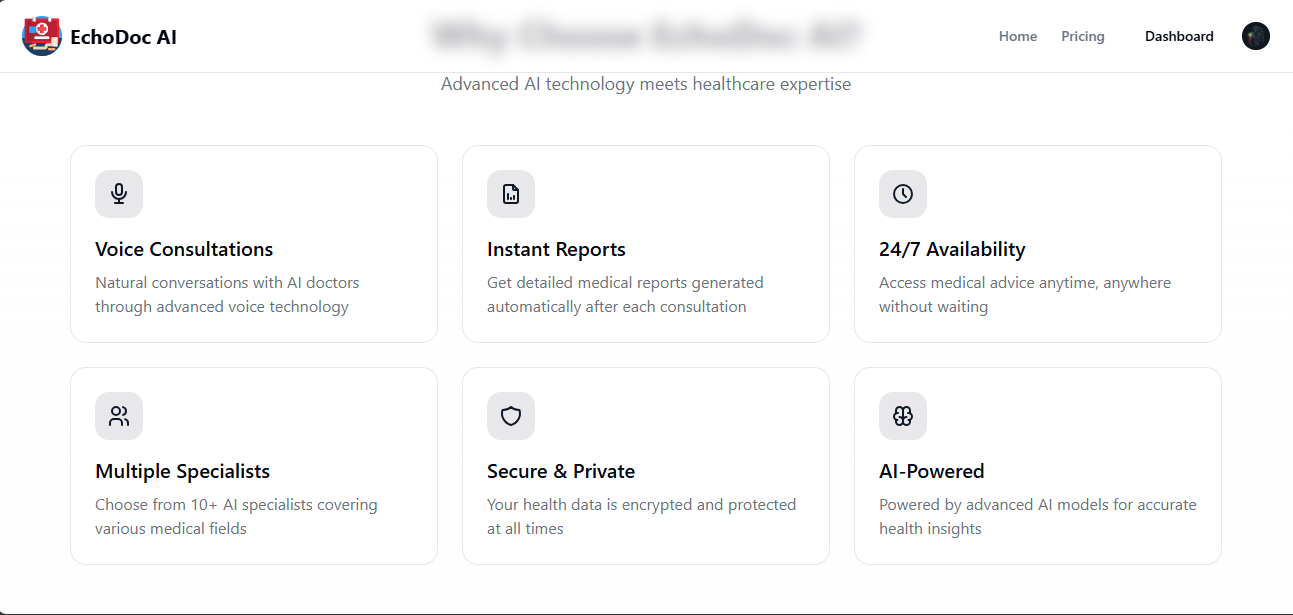
EchoDoc AI is a multi-domain, AI-driven medical consultation system that provides:
✅ Instant medical guidance A smart AI assistant answers queries about symptoms, dosages, therapies, and general healthcare 24/7 ✅ Specialist-level support Users can choose from 10 AI medical domains—General Physician, Pediatrician, Dermatologist, Psychologist, Nutritionist, Cardiologist, ENT, Orthopedic, Gynecologist, Dentist ✅ Smart Symptom Checker If the user doesn’t know whom to consult, the system analyzes symptoms and recommends the right specialist. ✅ Voice-based AI consultation Users talk naturally with AI specialists through interactive voice chat for a more human, accessible experience
How we built it
EchoDoc AI is built using:
- Agentic AI Architecture
We designed domain-specific AI agents trained to mimic real medical specialists, powered by NLP, contextual reasoning, and medical knowledge bases
- Symptom Analysis Engine
A diagnostic model processes user-described symptoms and maps them to probable conditions and the right specialty.
- Voice Interaction System
Integrated real-time voice input/output for smooth, natural conversation with the AI.
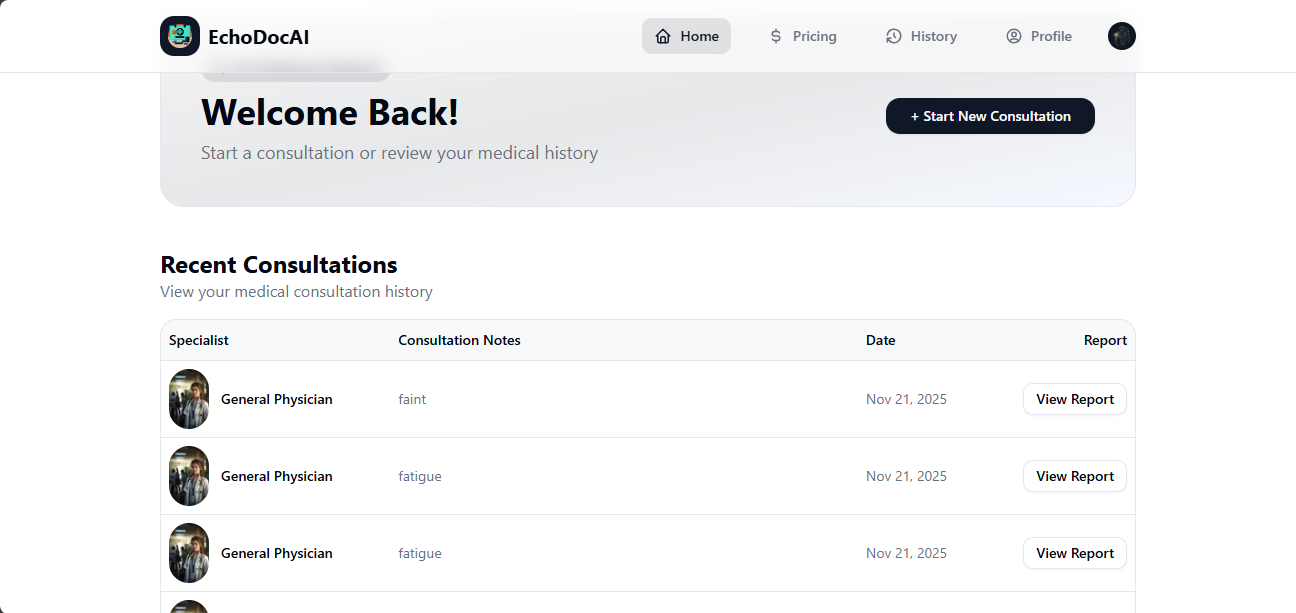
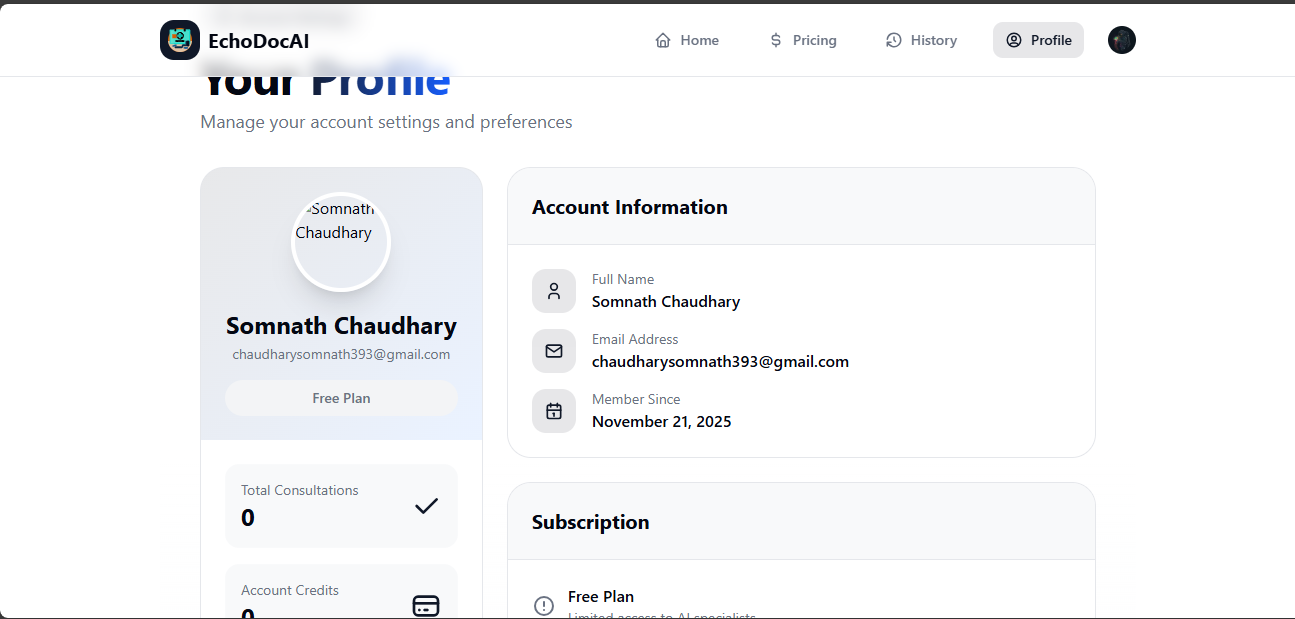
- Multi-User Dashboards
Patients get accessible consultations.
- Scalable Web Platform
Built with web technologies designed to integrate with future mobile apps, healthcare portals, and APIs
Challenges we ran into :
- Ensuring safe, reliable medical guidance
Medical information must be extremely accurate. Balancing AI flexibility with safety constraints was complex.
- Building multi-specialty expertise
Creating 10 domain-specific AI models required extensive research and tuning to reflect real medical behavior
- Designing meaningful symptom triage
The AI had to interpret natural language descriptions of symptoms and correctly identify the right specialist—this demanded deep contextual understanding.
- Integrating logistics + healthcare
Merging a healthcare assistant with real-time medicine tracking introduced architecture challenges around reliability and interoperability
- Accessibility
Ensuring the platform works for people with low digital literacy meant adding voice chat and a simple UI.
Built With
- clerk-authentication
- drizzle-orm
- neon-postgresql
- next.js-15
- openrouter-api-(gemini)
- shadcn/ui
- tailwind-css
- typescript
- vapi
- vercel


Log in or sign up for Devpost to join the conversation.