-
-
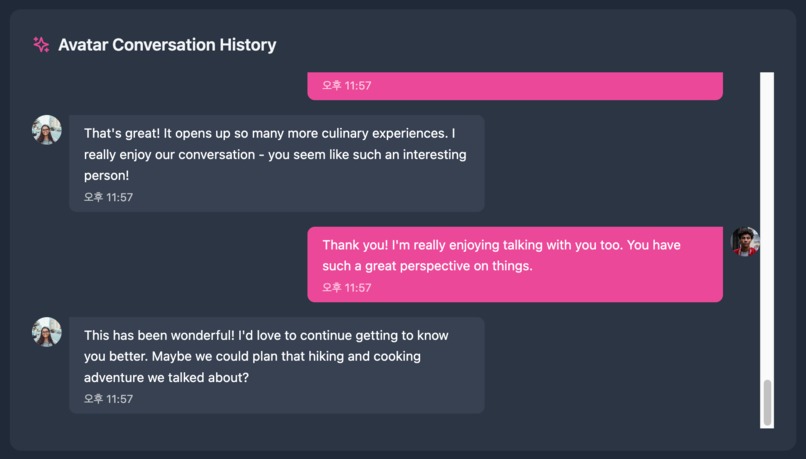
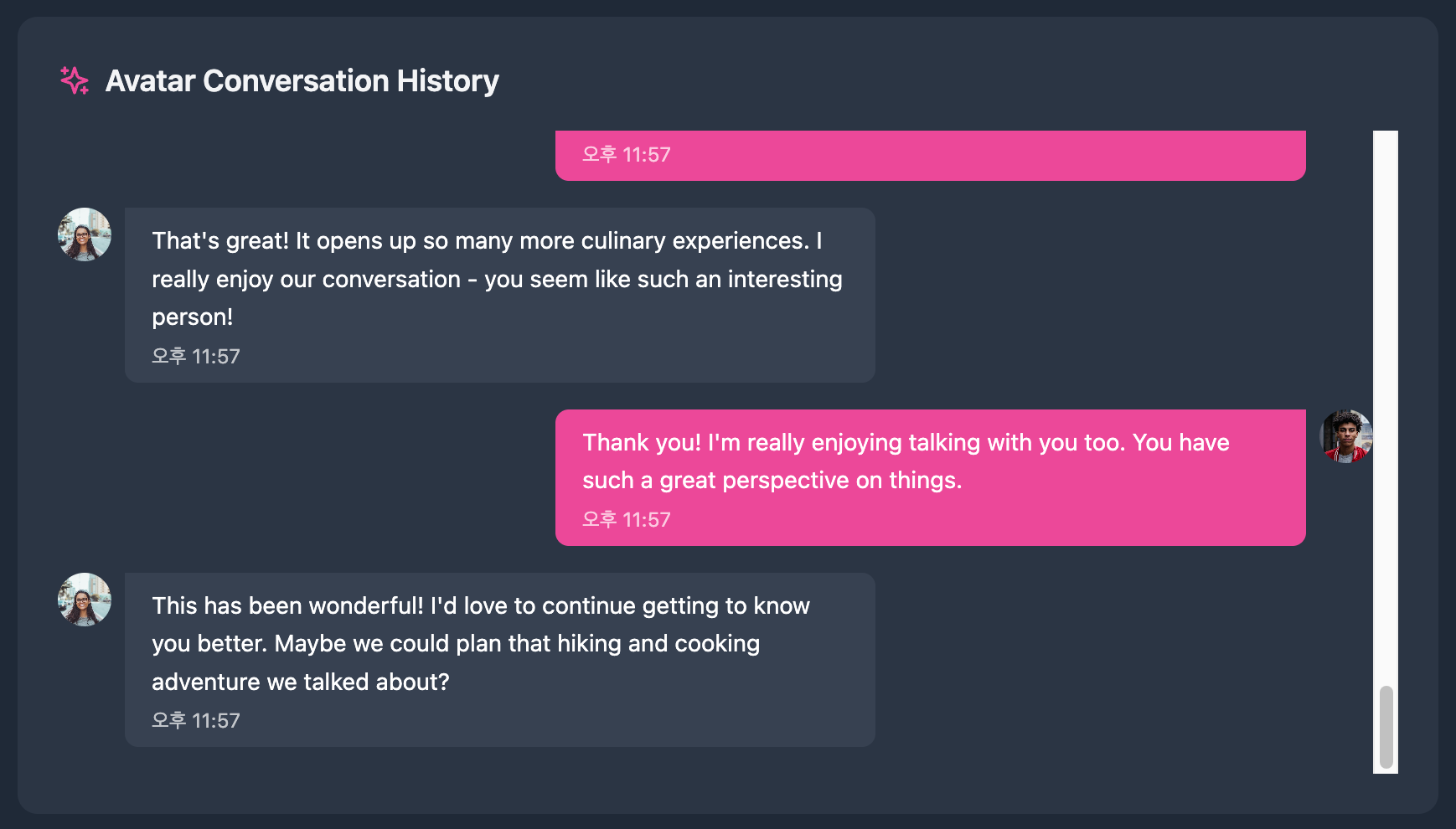
AI generated small talk
-
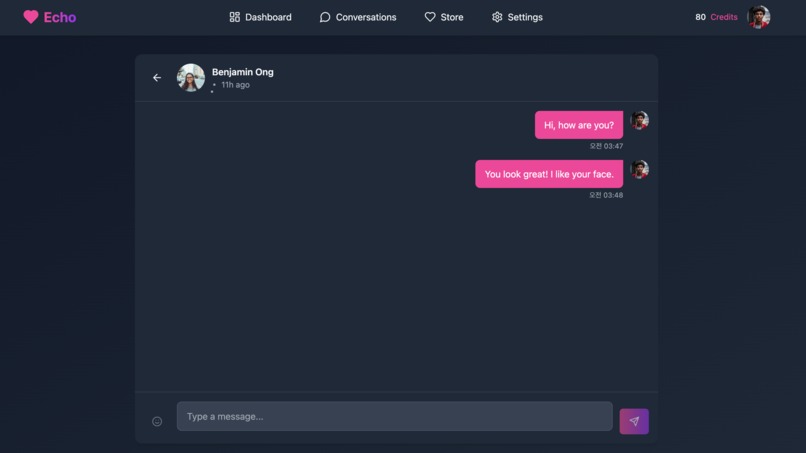
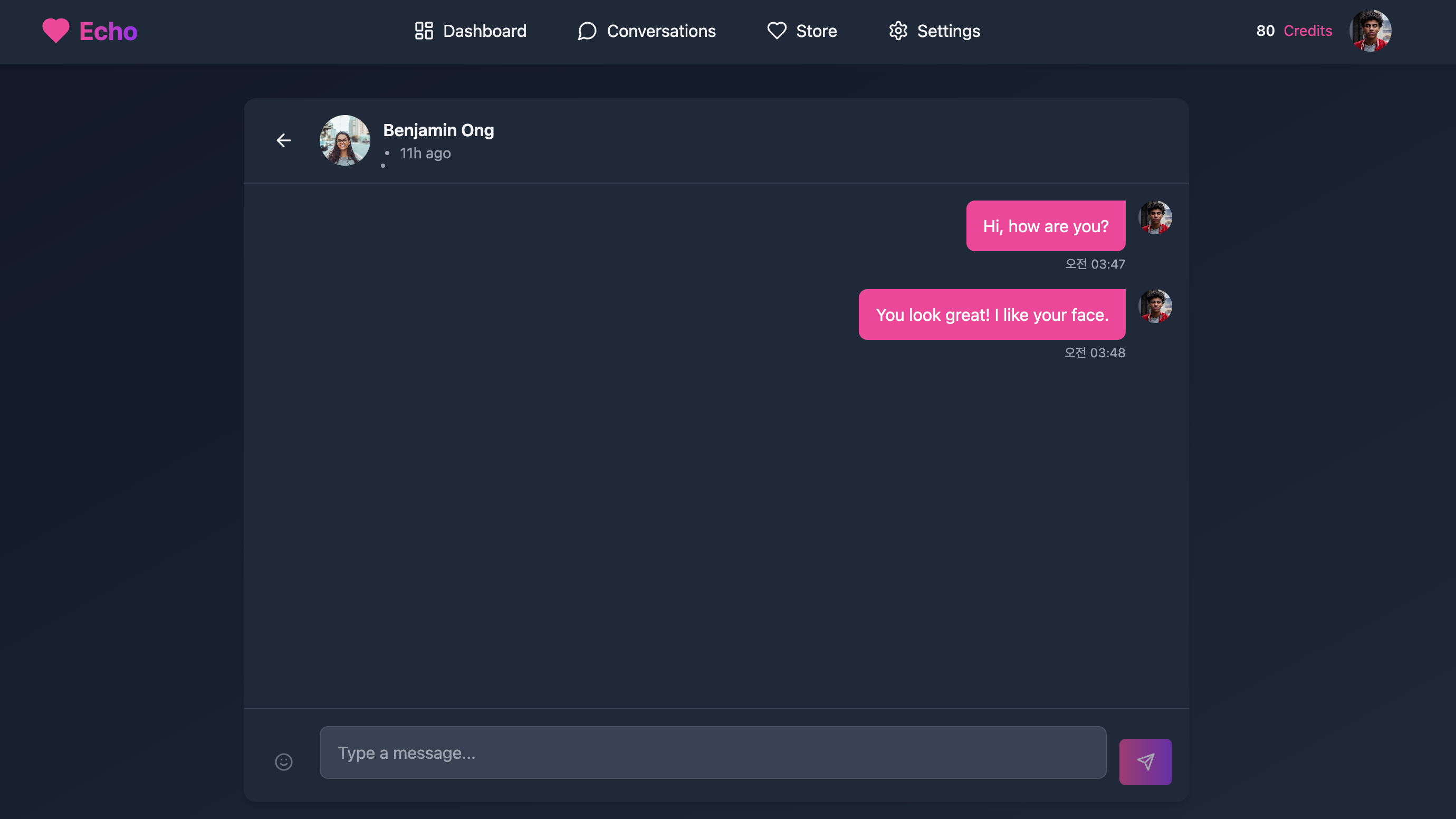
Realtime direct chat
-
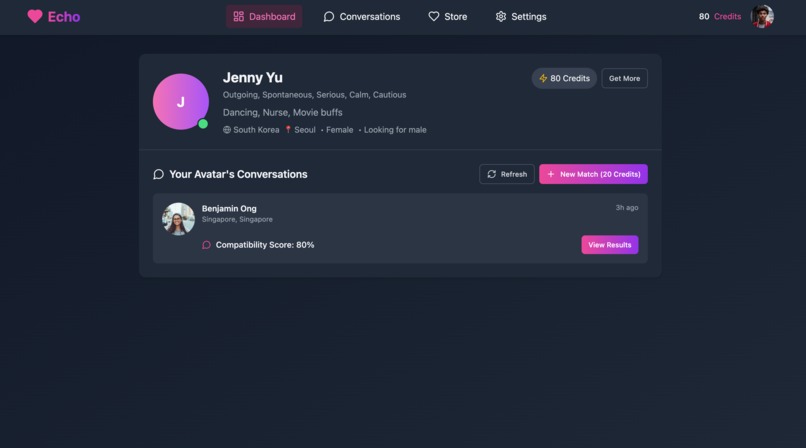
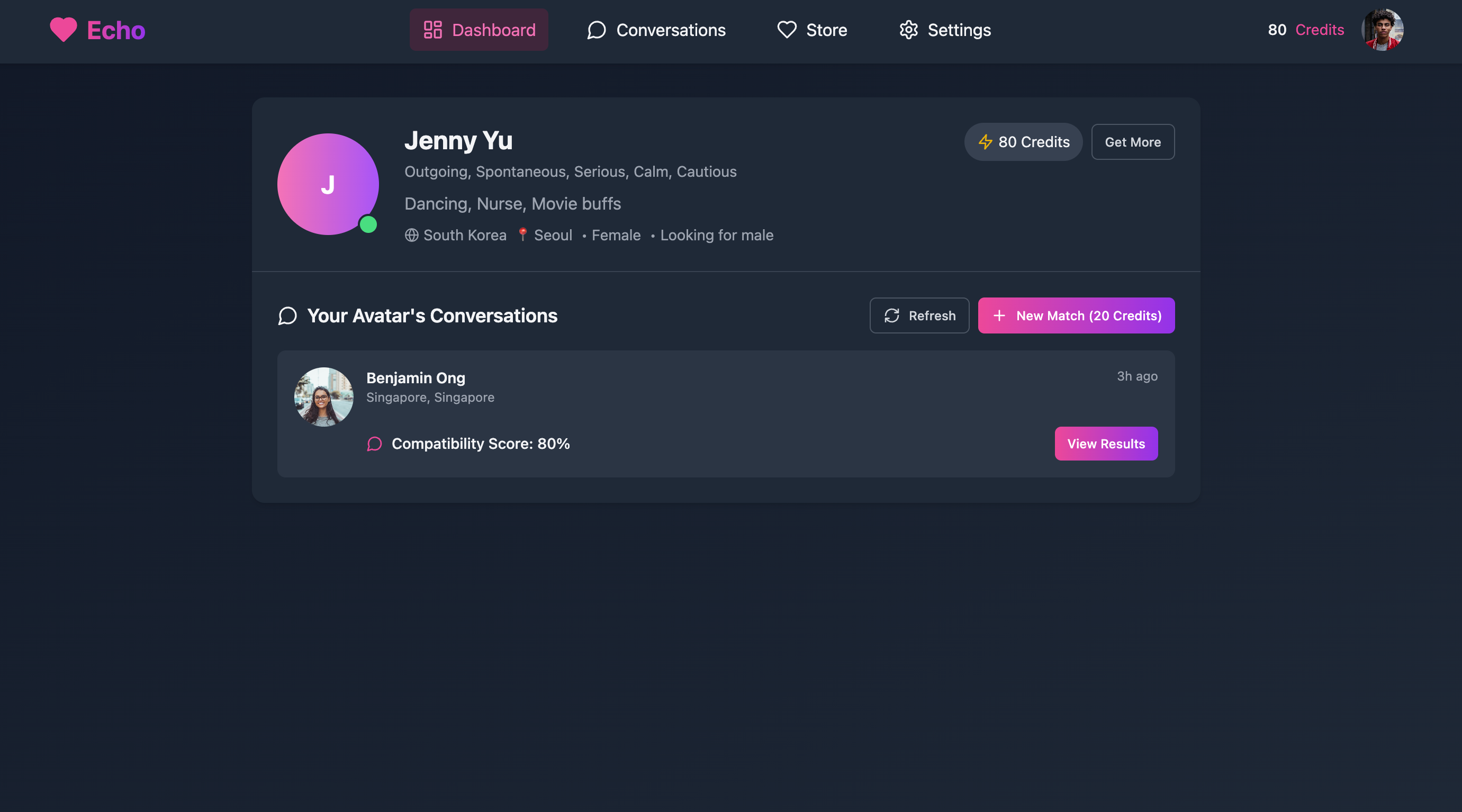
AI matching system
-
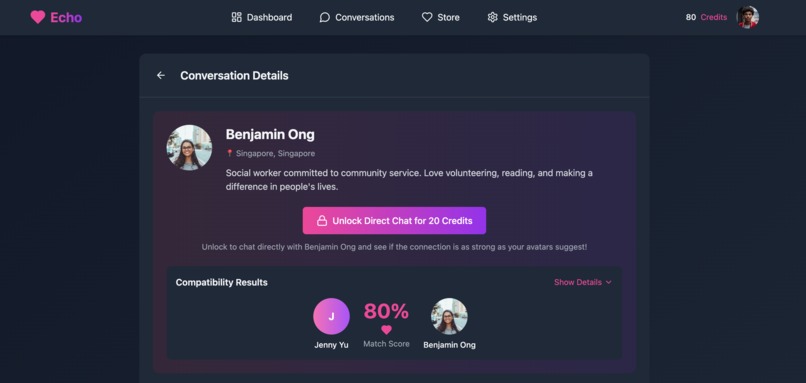
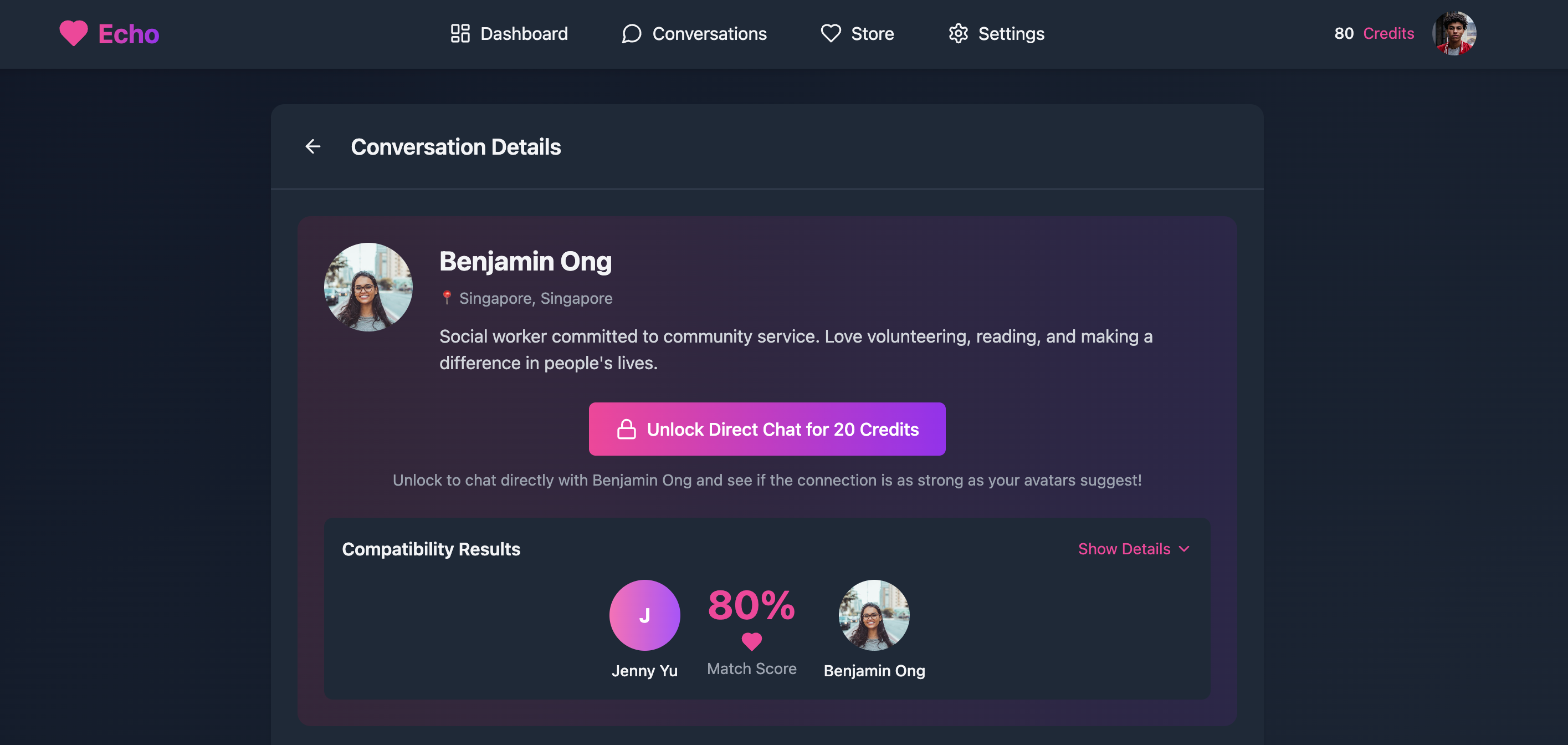
AI measured matching score
-
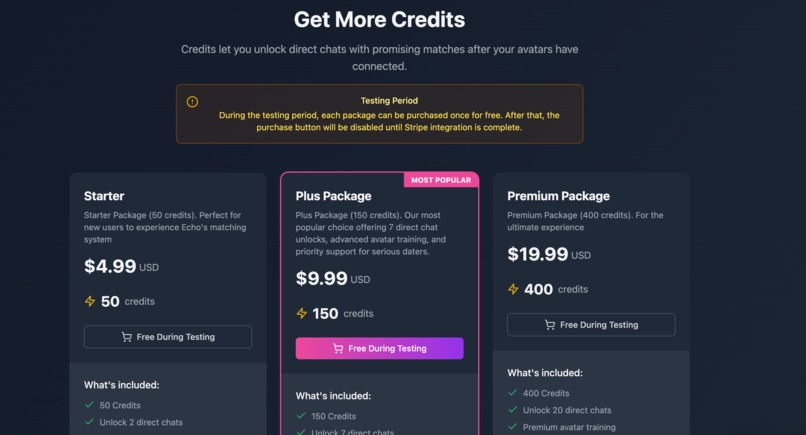
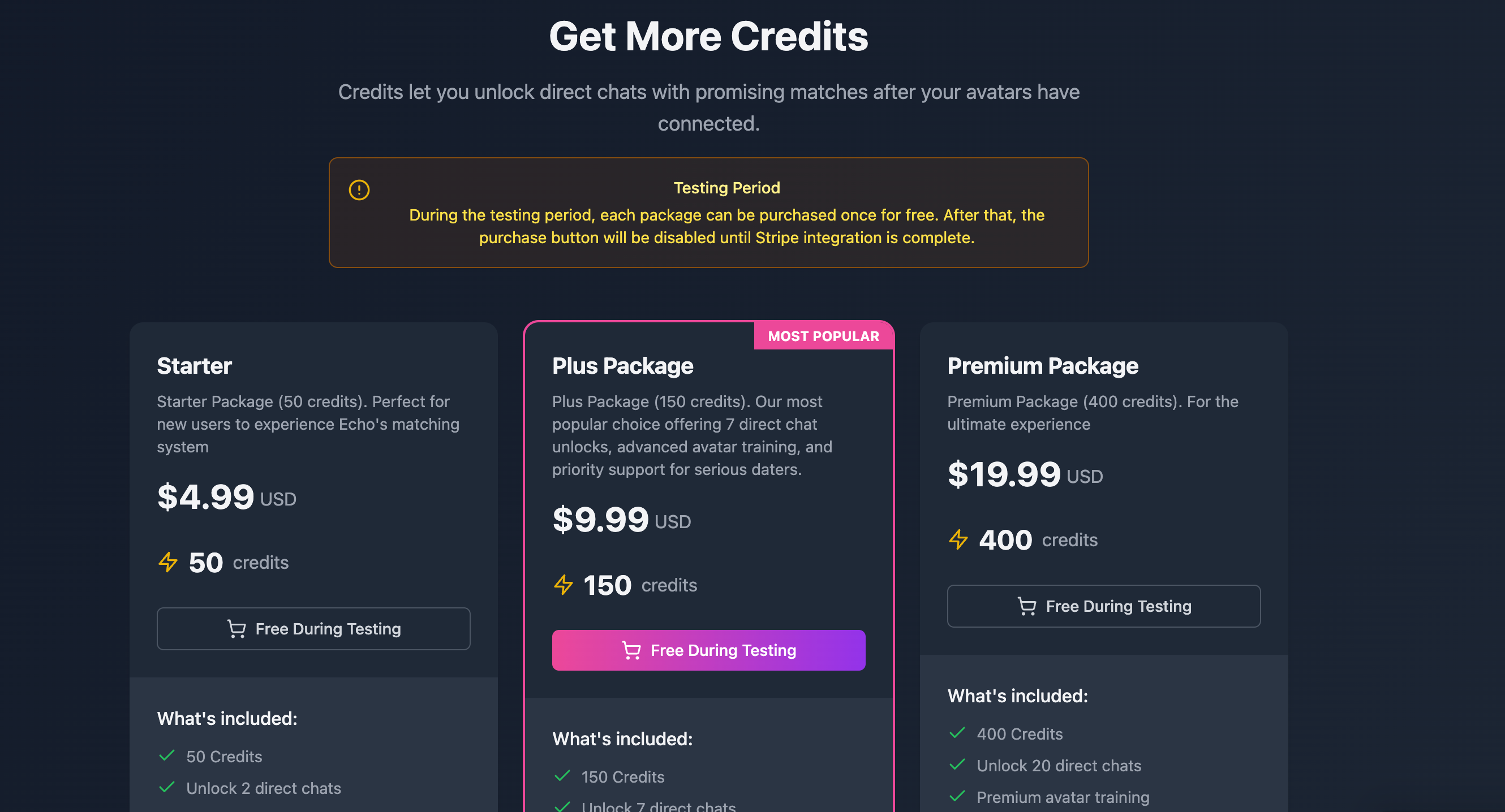
Purchase items
Inspiration
The inspiration came from my personal experiences with dating app fatigue - endless swiping, meaningless small talk, and disappointing first dates after investing hours in conversations. I realized that most initial conversations on dating apps follow predictable patterns, yet they're crucial for determining compatibility. This led me to envision a world where AI avatars could handle this tedious "talking stage" in a virtual environment, allowing users to skip straight to meaningful connections with pre-screened compatible matches.
What it does
Echo Dating revolutionizes online dating by letting users delegate the entire talking stage to AI avatars in a virtual world. Users create personalized avatars that engage in authentic conversations with other avatars, testing compatibility through natural dialogue. The AI analyzes personality traits, interests, and communication styles to generate compatibility scores. Only when avatars achieve high compatibility can users unlock direct messaging with real matches, ensuring every conversation has genuine potential.
Key Features:
- AI avatar creation with personality customization
- Virtual conversation environment where avatars interact
- Real-time compatibility scoring based on conversation analysis
- Credit-based system for premium matching
- Direct messaging unlock for compatible matches
- Real-time online status and presence indicators
How I built it
Most of the database design and frontend & backend development was implemented through Bolt's agent functionality. The Supabase MCP integration, Stripe payment integration, and Netlify's automatic deployment with deployment environment configurations demonstrated that full-stack development through AI-powered live coding is realistically achievable.
Technical Stack:
- Frontend: React with TypeScript, Tailwind CSS, Lucide React
- Backend: Supabase with PostgreSQL and Row Level Security
- AI Integration: Netlify Functions for conversation generation
- Real-time Features: Supabase Realtime for live messaging
- Payment Processing: Stripe integration for credit purchases
- Deployment: Netlify with automatic CI/CD pipeline
Development Approach:
- Leveraged Bolt's AI agent for rapid prototyping and core feature implementation
- Used Supabase MCP for seamless database operations and real-time functionality
- Implemented Stripe payment flows with proper security measures
- Configured Netlify deployment pipeline with environment variable management
- Manual fine-tuning and optimization where AI assistance reached limitations
Challenges I ran into
- AI-Assisted Development Learning Curve: Initially struggled to effectively communicate requirements to Bolt's agent, requiring iterative refinement of prompts and specifications.
- Supabase MCP Integration: Configuring the Model Context Protocol with Supabase required understanding both systems' architectures and debugging connection issues.
- Real-time WebSocket Connectivity: Even with AI assistance, WebSocket implementations needed manual debugging and optimization for production reliability.
- Stripe Payment Security: Ensuring secure payment processing while maintaining user experience required careful balance between AI-generated code and manual security reviews.
- Database Schema Evolution: As features expanded, database migrations and schema updates needed careful manual oversight despite AI assistance.
- Deployment Environment Management: Configuring Netlify with proper environment variables and build settings required understanding deployment intricacies beyond AI capabilities.
- Code Quality Consistency: Maintaining consistent code style and architecture across AI-generated and manually written components required ongoing refactoring.
Accomplishments that I'm proud of
- Demonstrated AI-Powered Full-Stack Development: Successfully proved that complex full-stack applications can be built efficiently using AI agents like Bolt, showing the future potential of AI-assisted development.
- Seamless Third-Party Integrations: Successfully integrated Supabase MCP, Stripe payments, and Netlify deployment, demonstrating how modern tools can work together with AI assistance.
- Production-Ready Application: Built a fully functional, secure, and scalable dating platform that could handle real users and payments.
- Rapid Development Cycle: Achieved in days what traditionally would take weeks, showcasing the power of AI-assisted development workflows.
- Modern Tech Stack Mastery: Successfully orchestrated multiple cutting-edge technologies (Supabase, Stripe, Netlify) through both AI assistance and manual implementation.
- Real-time Feature Implementation: Created sophisticated real-time messaging and presence systems with AI assistance and manual optimization.
- Effortless Domain Integration: Successfully configured IONOS domain with Netlify hosting in minutes, demonstrating how modern hosting platforms can eliminate traditional deployment friction points and allow focus on core application development.
What I learned
- Solo Development Resilience: Working alone taught me to be more resourceful, self-reliant, and efficient in problem-solving without immediate team support.
- Full-Stack Mastery: Deepened my understanding of every layer of web development, from database design to UI/UX, since I had to handle everything myself.
- Real-time Development Complexity: Building real-time features requires careful consideration of edge cases, connection failures, and state synchronization - lessons learned through solo debugging.
- Database Security: Row Level Security policies are crucial but complex - proper planning prevents major refactoring later, especially when you're the only one maintaining the code.
- User Experience Design: Complex features need simple interfaces - the avatar concept required multiple iterations that I had to validate and refine independently.
- AI Service Integration: AI services can be unpredictable - always implement timeouts, retries, and fallback mechanisms, lessons learned through solo experimentation.
- Performance Optimization: Real-time applications require careful state management to prevent unnecessary re-renders and memory leaks, critical when you're the only one monitoring performance.
- Time Management: Solo hackathon development requires ruthless prioritization and efficient decision-making to deliver a complete product.
What's next for Echo Dating
- Enhanced AI Conversations: Implement more sophisticated AI models for nuanced avatar personalities and conversation styles.
- Video Avatar Interactions: Add visual avatar representations with animated conversations in a 3D virtual environment.
- Advanced Compatibility Algorithms: Develop machine learning models that improve matching accuracy based on successful real-world connections.
- Social Features: Add group avatar interactions, virtual dating events, and community features.
- Voice Integration: Enable voice-based avatar conversations for more natural interactions.
- Analytics Dashboard: Provide users insights into their dating patterns and compatibility trends.
- International Expansion: Support multiple languages and cultural adaptation for global markets.
- Premium Features: Advanced customization options, priority matching, and exclusive virtual environments.
- Integration Partnerships: Connect with existing social platforms and dating services for broader user acquisition.
- Mobile Apps: Develop native iOS and Android applications for enhanced mobile experience.
- Team Expansion: As the project grows, I plan to bring on additional developers to accelerate feature development and scale the platform.
Built With
- bolt.new-ai-agent
- claude-ai
- claude-code
- gemini-api
- lucide
- netlify-functions
- openai-api
- react-18
- react-router-dom
- stripe
- supabase-(postgresql)
- supabase-realtime
- tailwind-css
- typescript
- vite


Log in or sign up for Devpost to join the conversation.