-
-
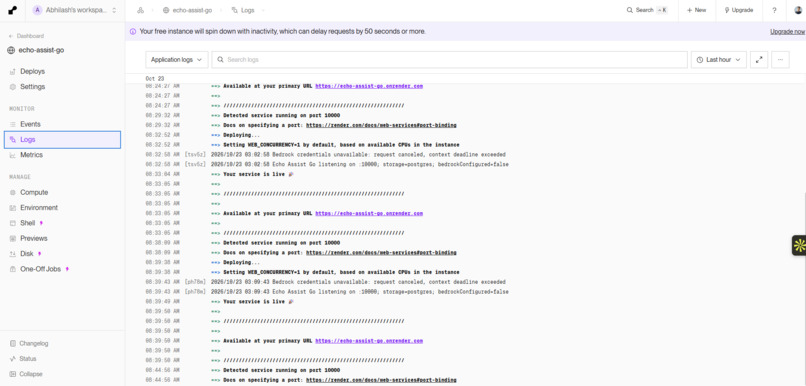
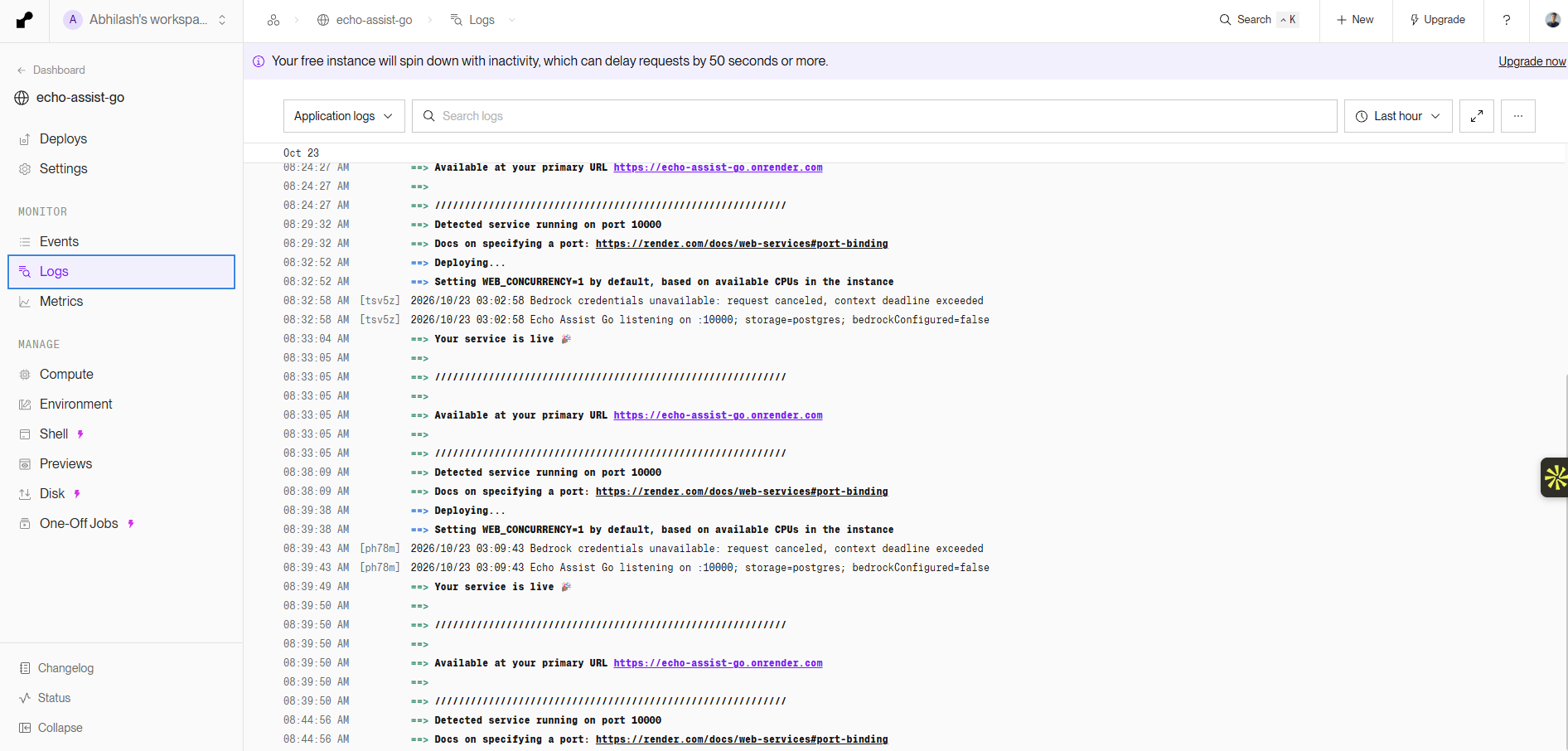
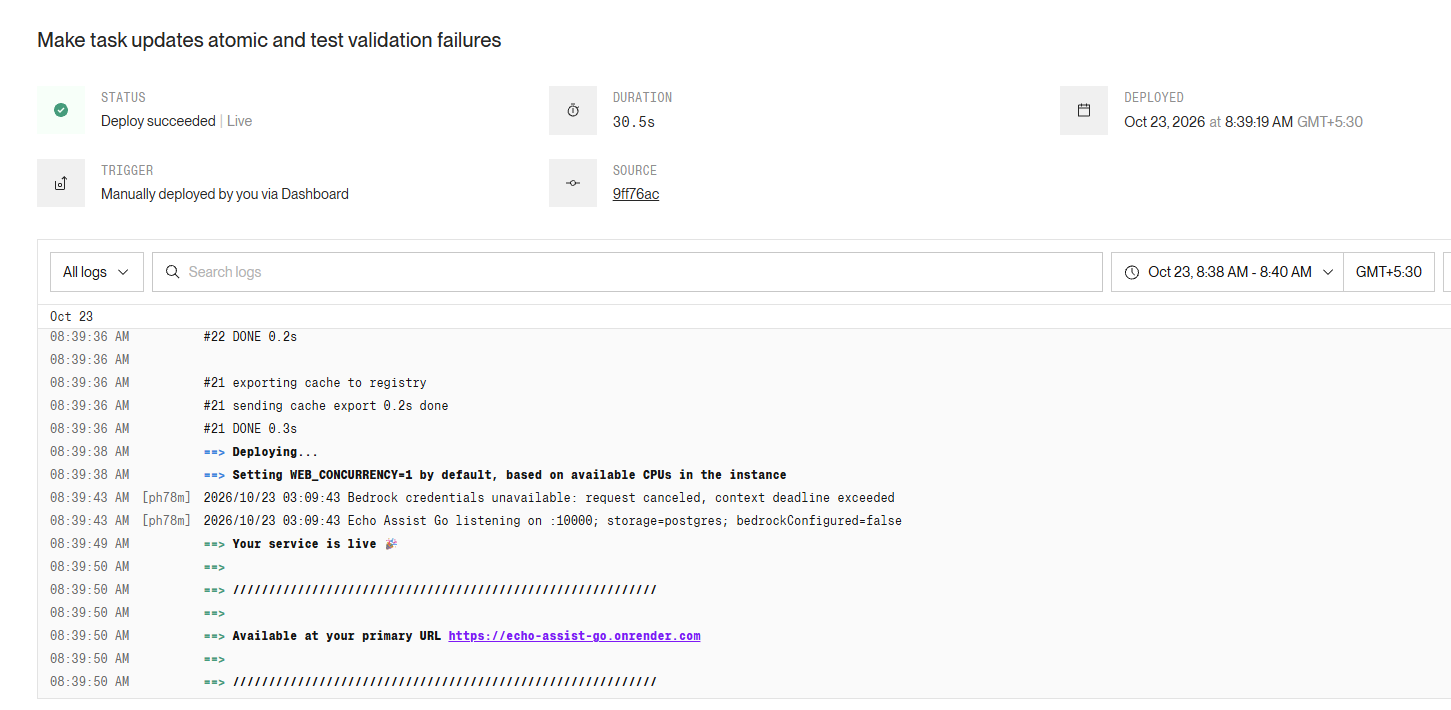
logs
-
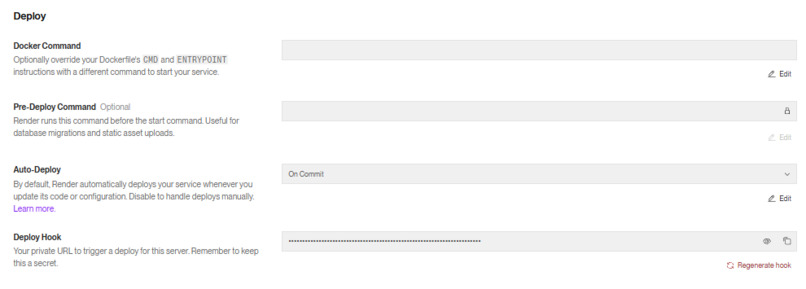
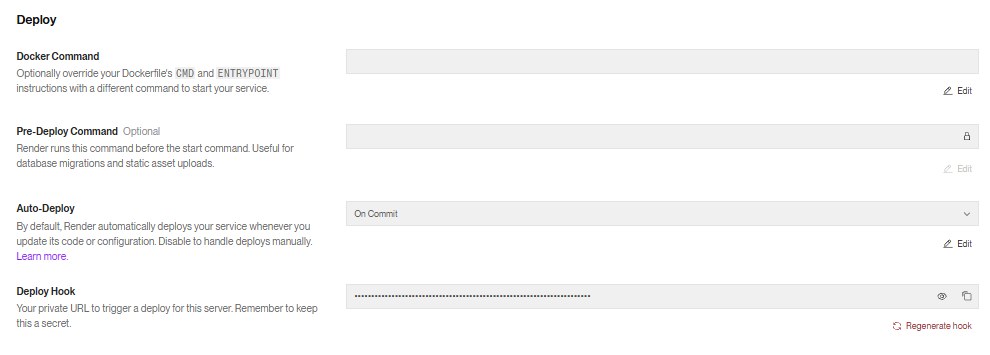
Deploy Credentials
-
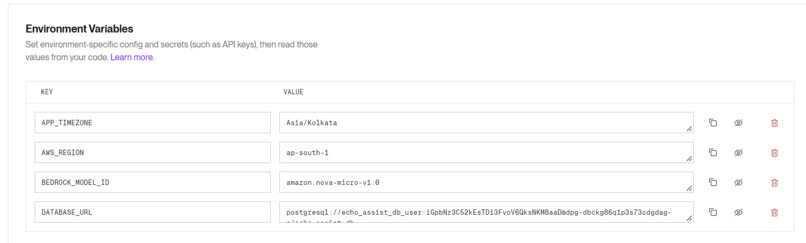
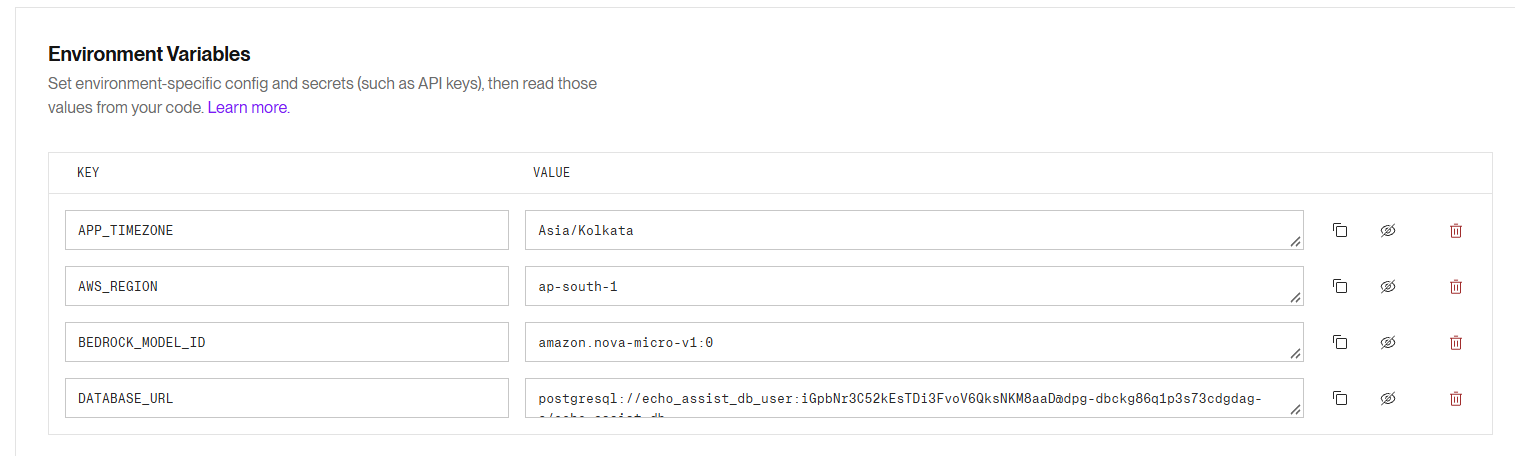
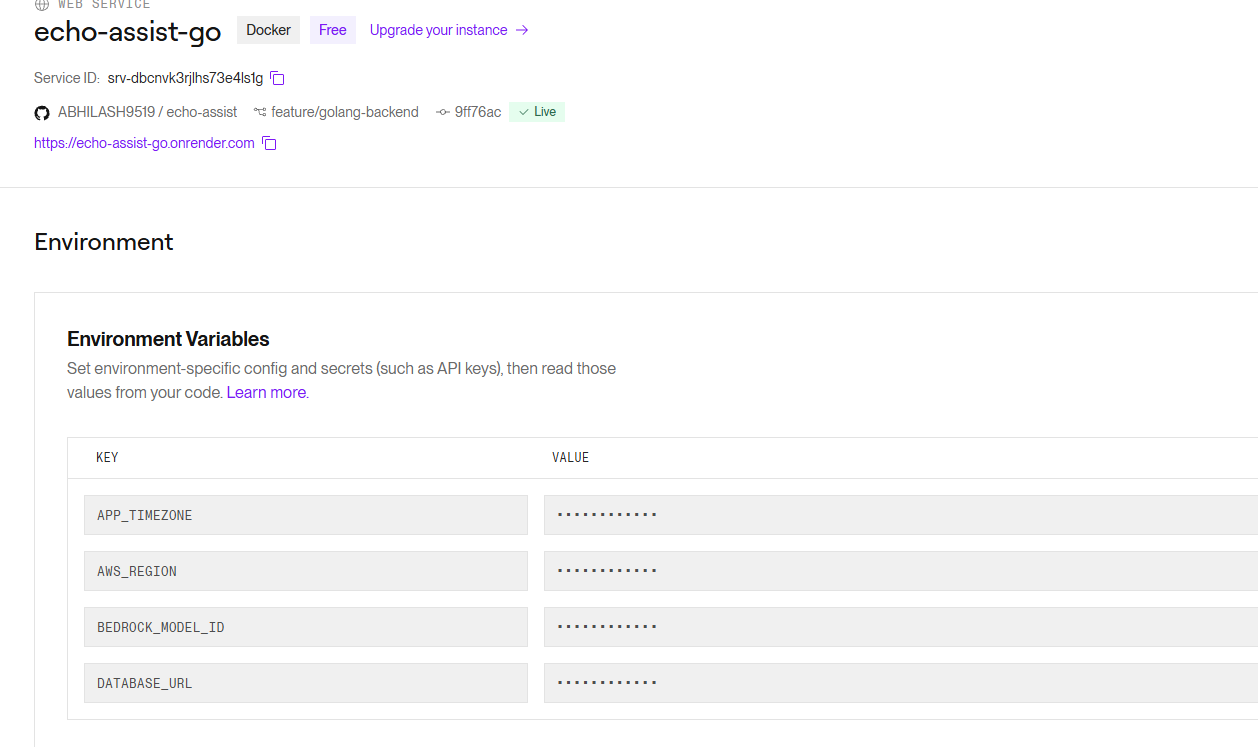
Env Variables
-
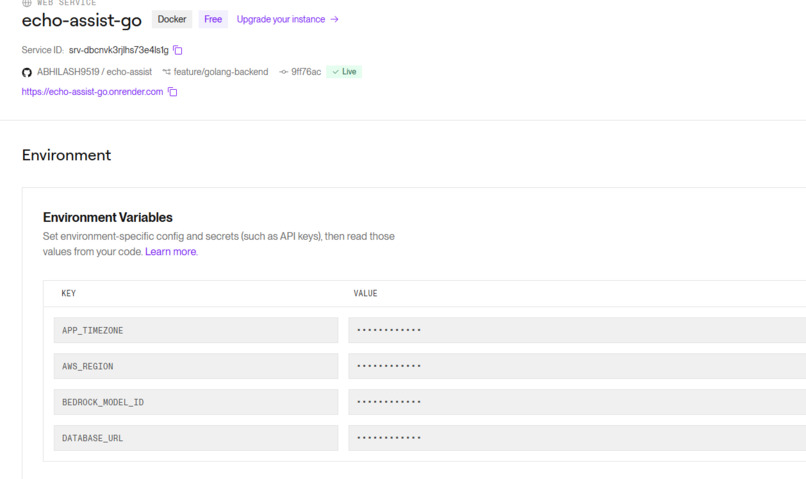
Rolled Credentials
-
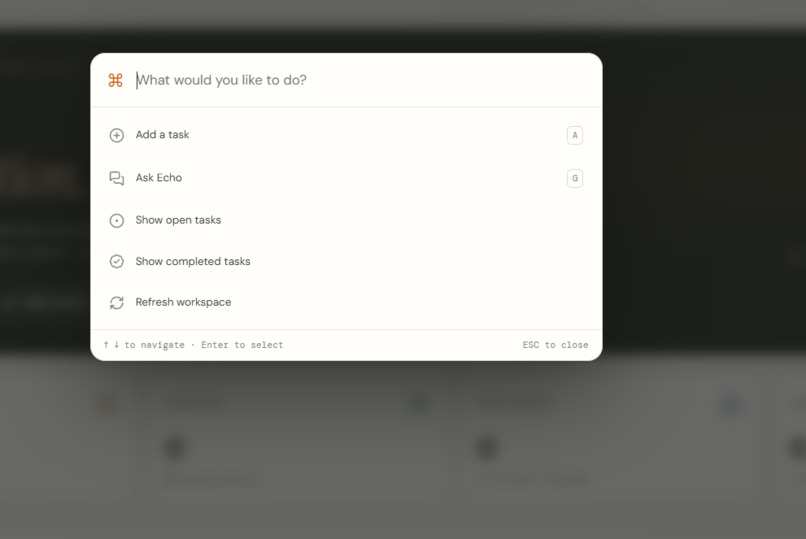
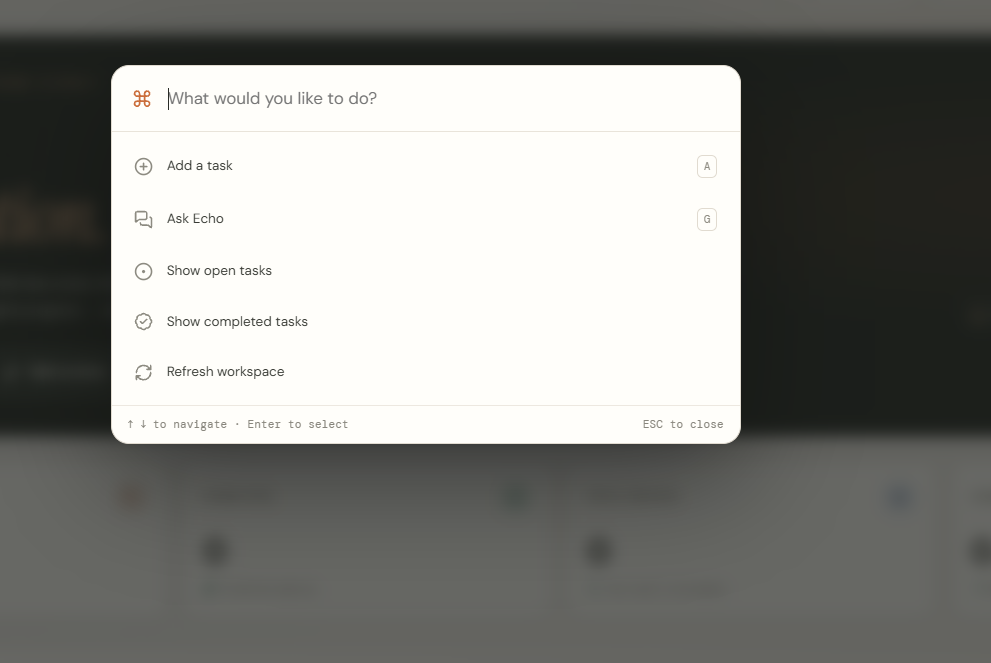
Echo Assist Feature : Quick actions
-
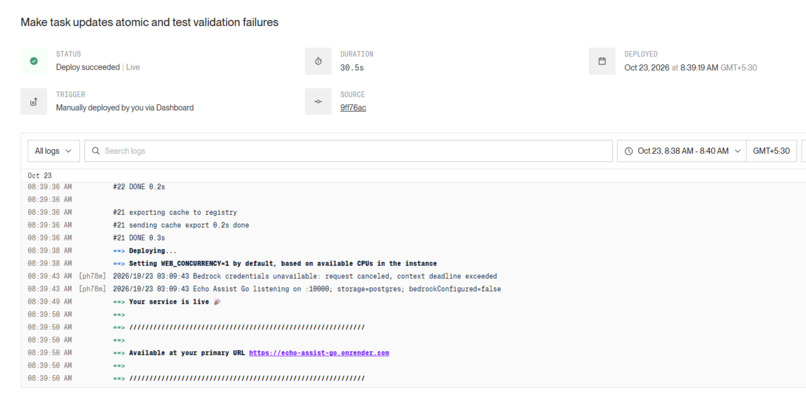
Redeploy
-
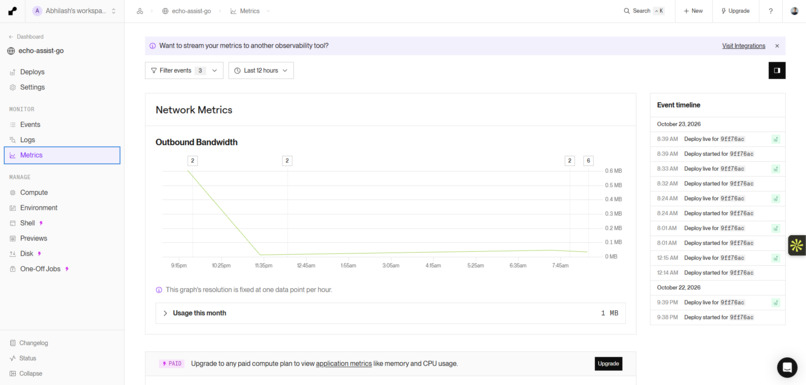
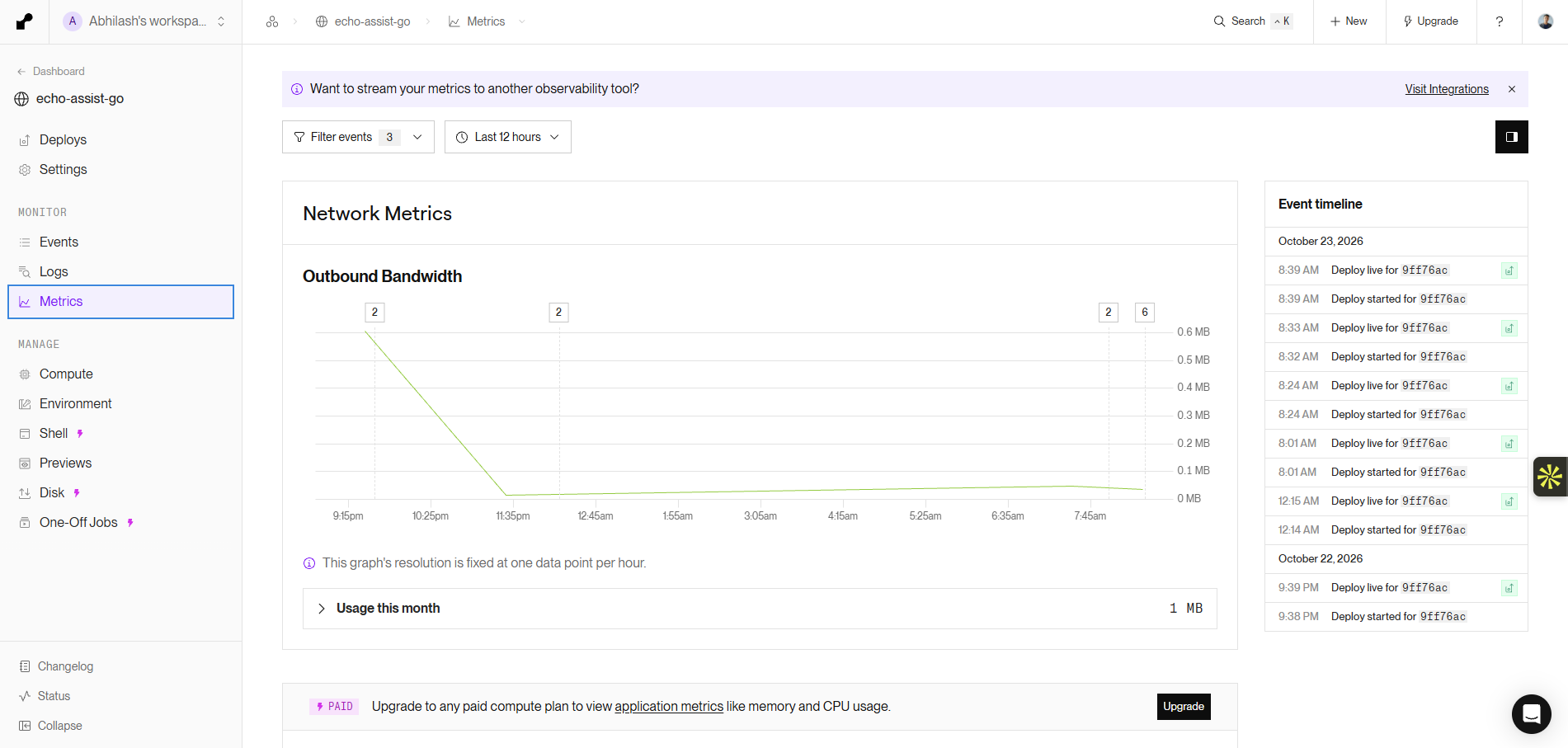
metrics
-
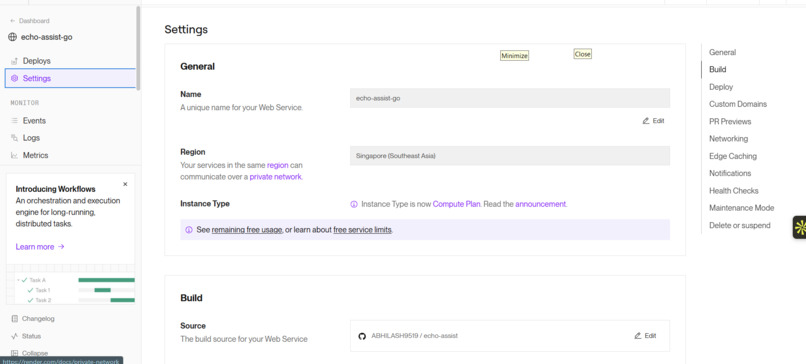
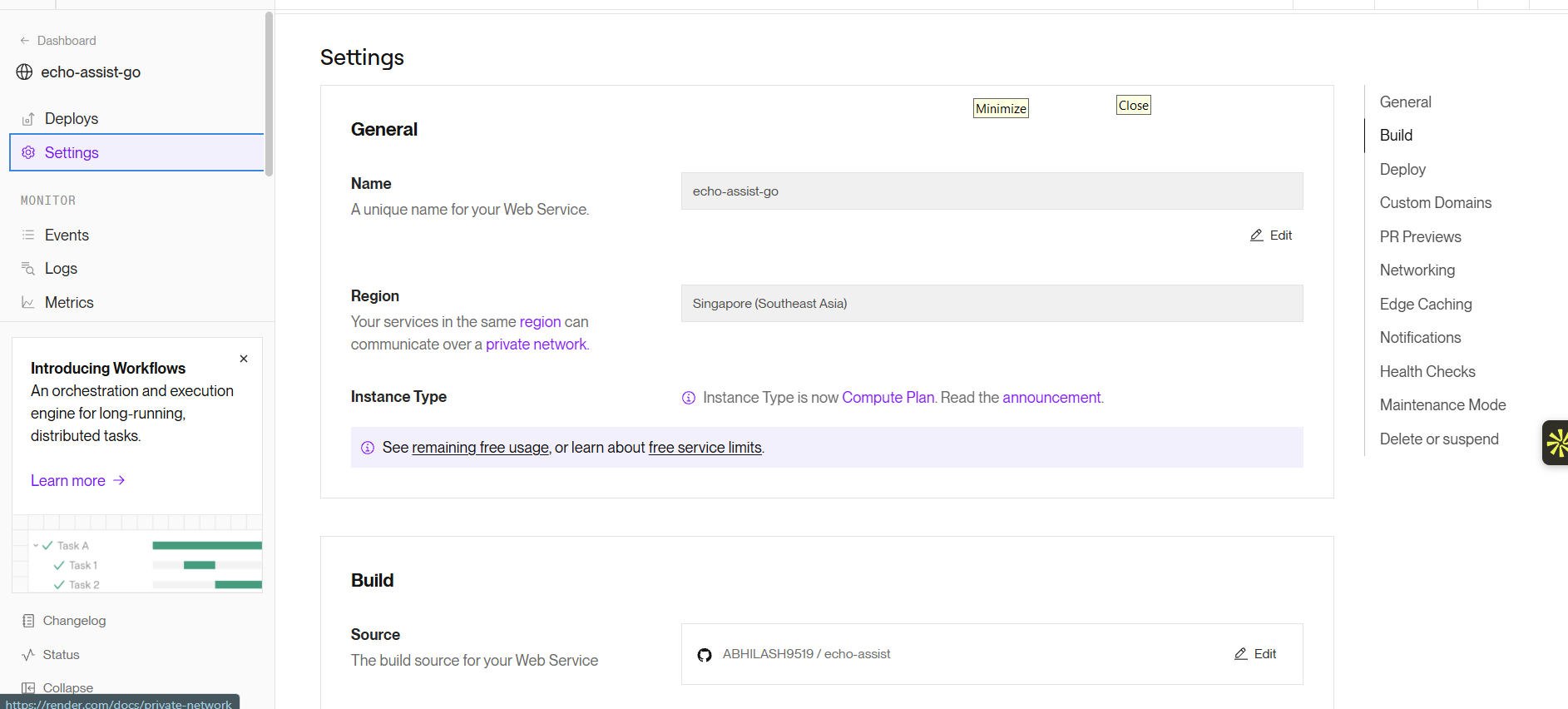
Env setting
-
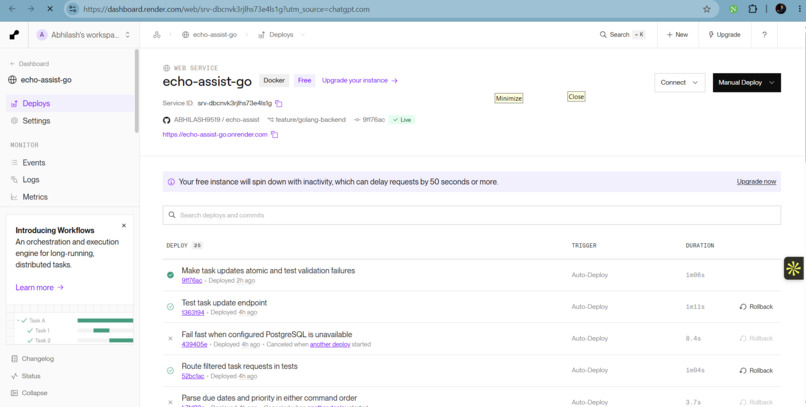
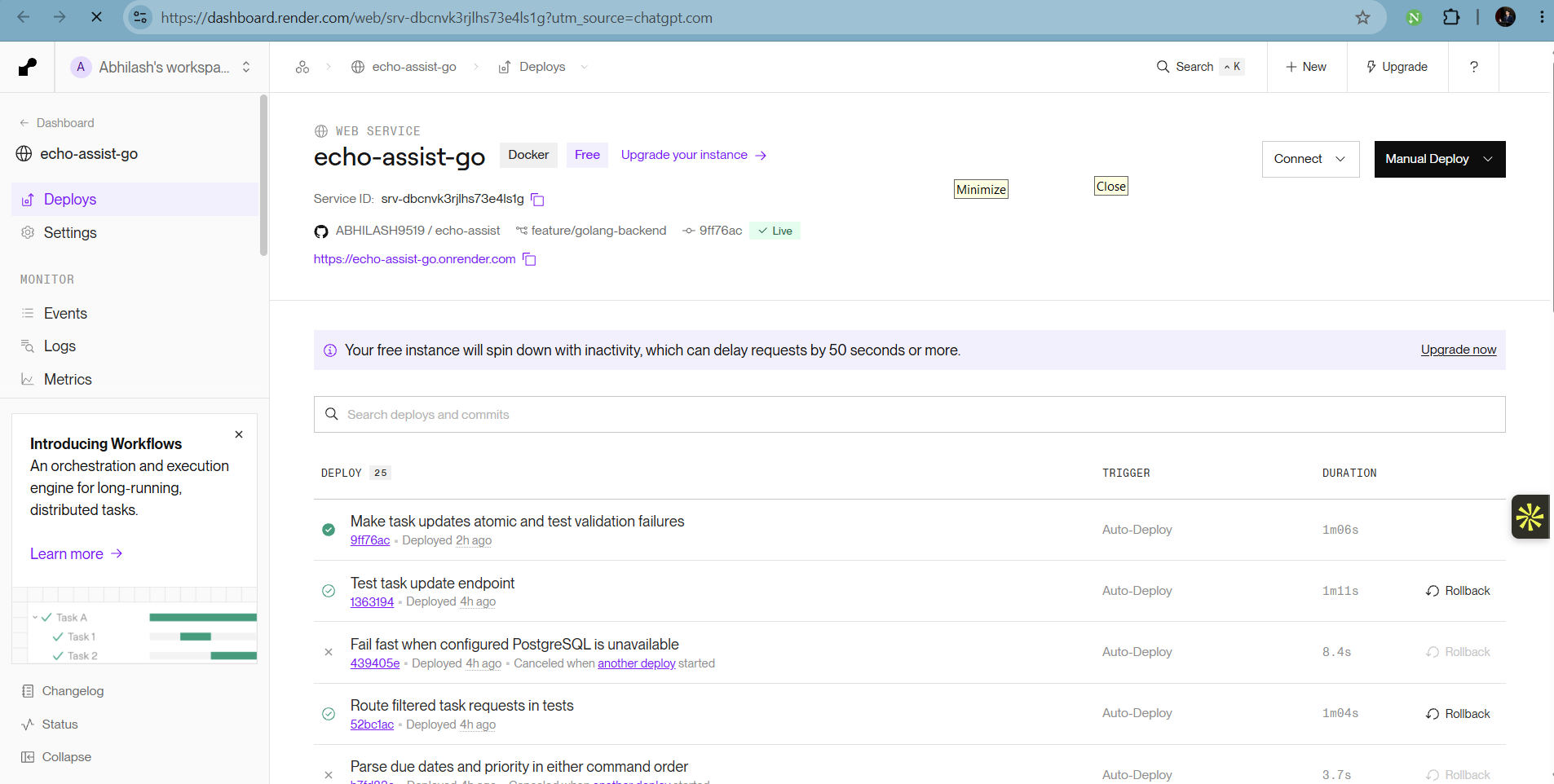
Deploys
-
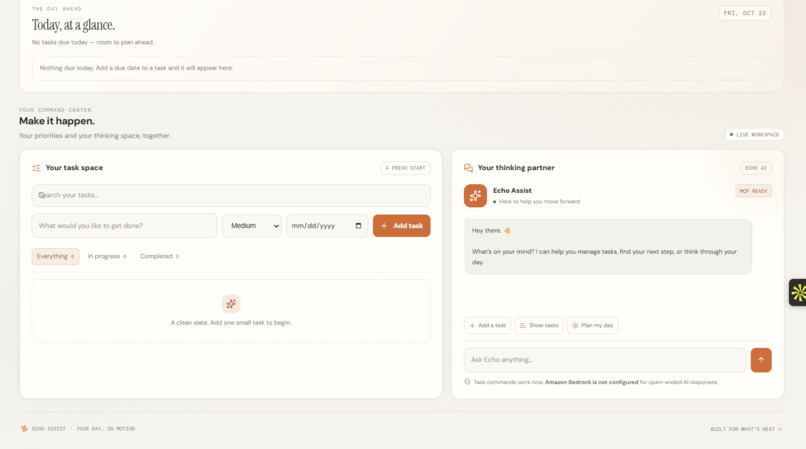
talk to echo assist
-
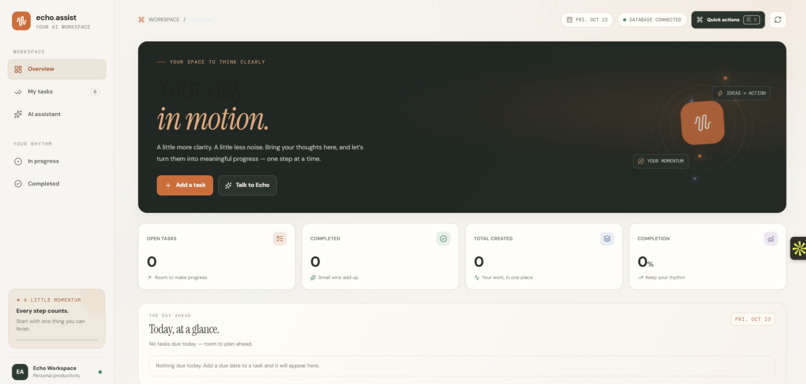
Live Site
Echo Assist — AI Productivity Agent
Inspiration
Every day, we have ideas, reminders, and tasks competing for our attention. The challenge is not always knowing what needs to be done—it is turning those intentions into clear, manageable actions.
We built Echo Assist around a simple idea: productivity tools should feel more like a conversation and less like another list to manage. We wanted to explore how conversational interfaces, AI, and the Model Context Protocol (MCP) could work together to make task management more natural.
What it does
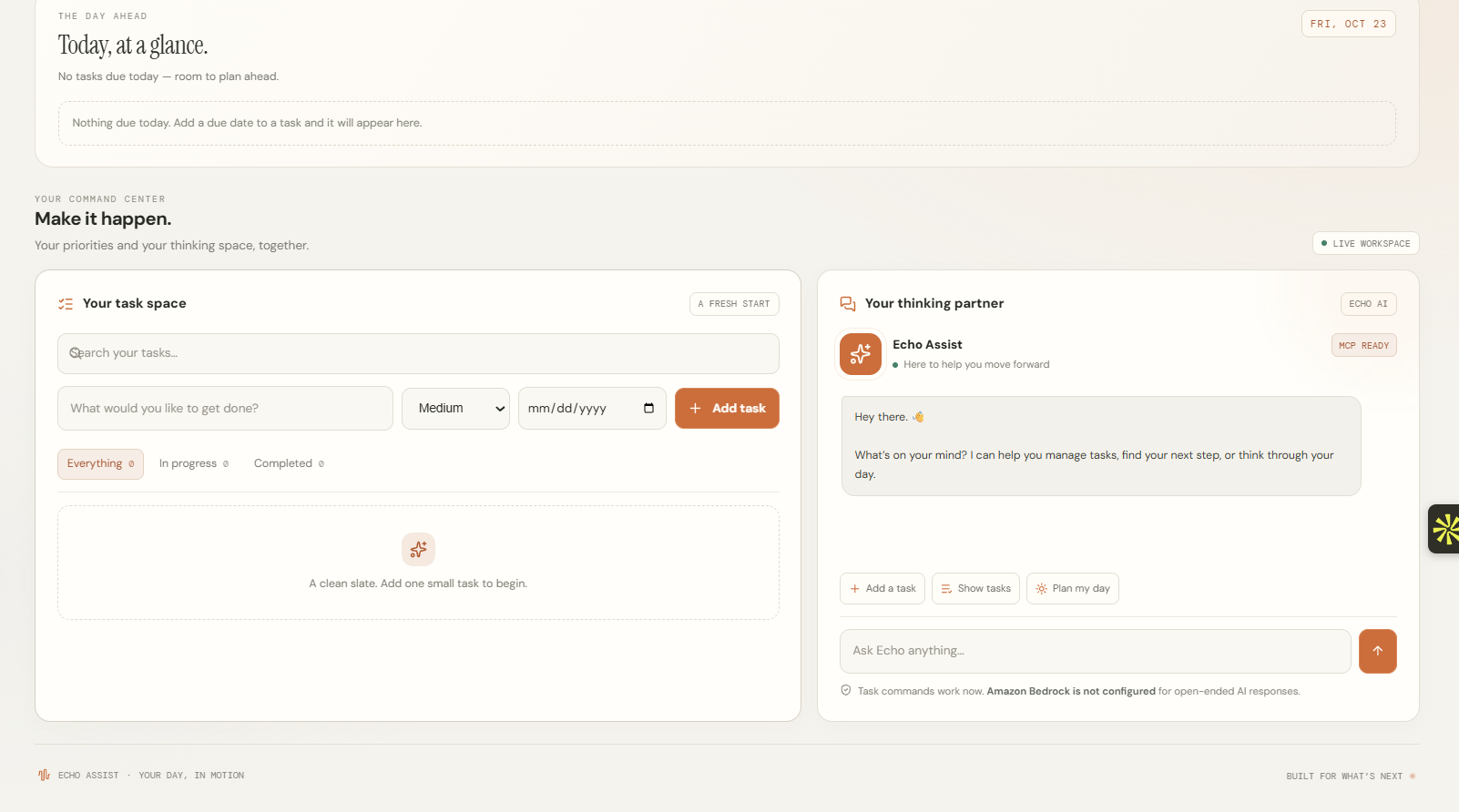
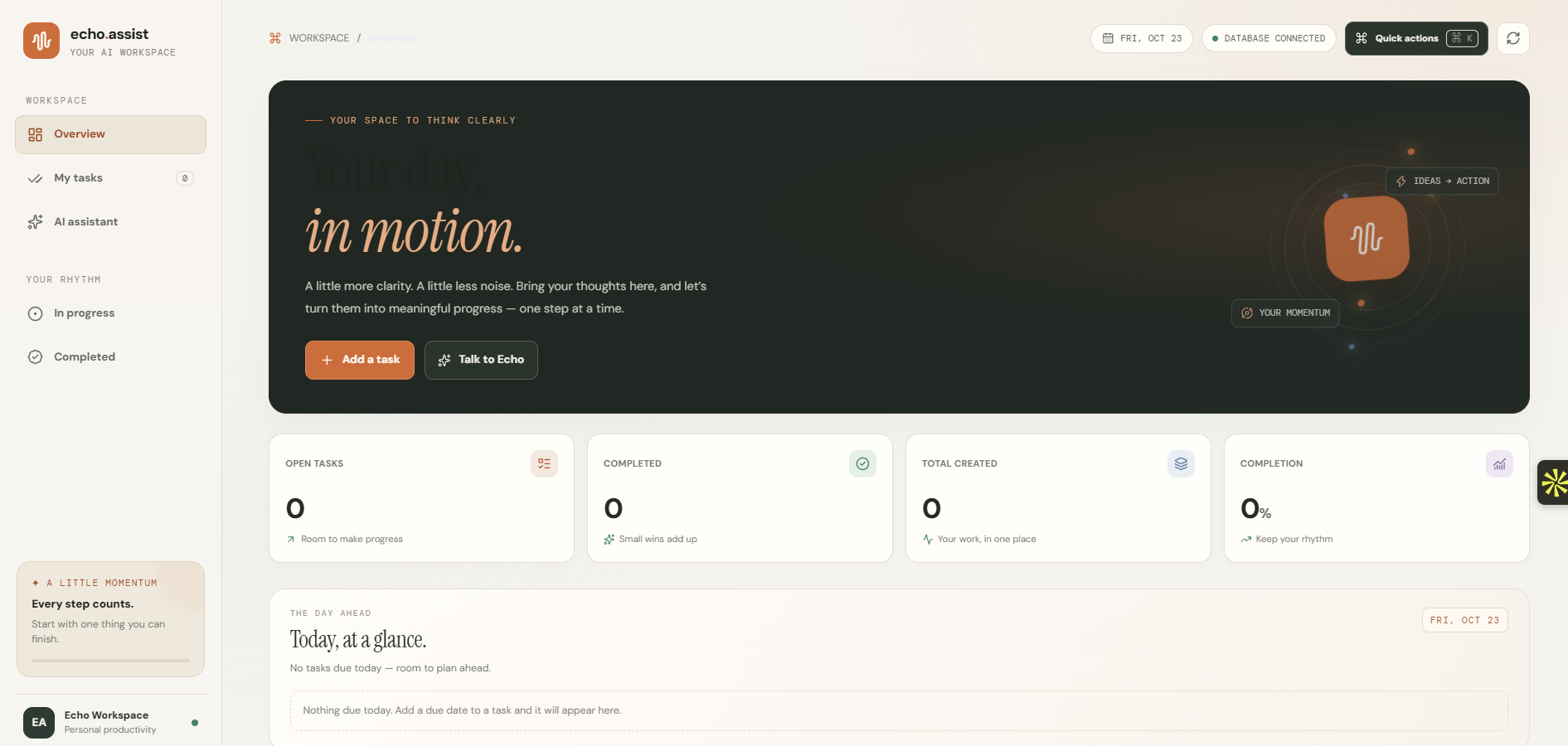
Echo Assist is a conversational productivity prototype that combines a task dashboard with an assistant-style interface.
Users can:
- Create tasks, mark them as completed, filter them by status, and delete them.
- Use natural-language commands such as “Add prepare my project demo,” “List my tasks,” and “Complete prepare my project demo.”
- Manage tasks through a REST API.
- Access task-management tools through an MCP Streamable HTTP endpoint.
- Configure Amazon Bedrock for open-ended AI responses.
The application is designed to provide a foundation for connecting conversational assistants with practical productivity actions.
How we built it
We developed Echo Assist as a web application with a lightweight, modular architecture:
- Frontend: HTML, CSS, and JavaScript for a responsive task dashboard and conversational interface.
- Backend: Node.js and Express for task management, API endpoints, and assistant request handling.
- MCP: The Model Context Protocol SDK exposes tools for adding, listing, and completing tasks.
- AI integration: The AWS SDK for JavaScript supports optional Amazon Bedrock Converse API integration.
- Deployment: The source code is maintained in GitHub and connected to a cloud web-service deployment with automatic deployment from the main branch.
We focused on making the core task-management experience usable independently of an external AI model. This allows the basic task commands to work even before Bedrock credentials and model access are configured.
Challenges we faced
One of the key challenges was bringing together a user-friendly interface, actionable task operations, and an integration architecture that can support external AI systems.
We also had to account for deployment-specific concerns, including runtime compatibility, environment variables, and keeping cloud credentials out of the source code. Another important consideration is persistence: the current prototype uses local JSON-file storage, so a managed database will be needed for more durable, production-grade operation.
These challenges helped us understand that building an AI-powered application involves more than generating responses. The application must connect those responses to reliable operations, expose tools through clear interfaces, and be deployed in an environment that can support them.
What we learned
Building Echo Assist gave us practical experience with full-stack application development, REST APIs, MCP tool design, cloud deployment workflows, and integrating an application with an external model service.
It also reinforced an important principle: an assistant becomes more useful when it can help users take concrete actions, not simply provide text.
What's next
Our next steps are to verify the deployed application end to end, test the MCP endpoint with a compatible client, configure and validate Amazon Bedrock access, and replace local file storage with a persistent database. We also plan to explore more advanced task planning and conversational workflows.
Echo Assist is our starting point toward productivity software that helps people move from “I need to do this” to “It's done.”
Built With
- amazon-bedrock
- amazon-web-services
- cloud
- css
- express.js
- github
- html
- javascript
- model-context-protocol-(mcp)
- node.js
- rest-api

Log in or sign up for Devpost to join the conversation.