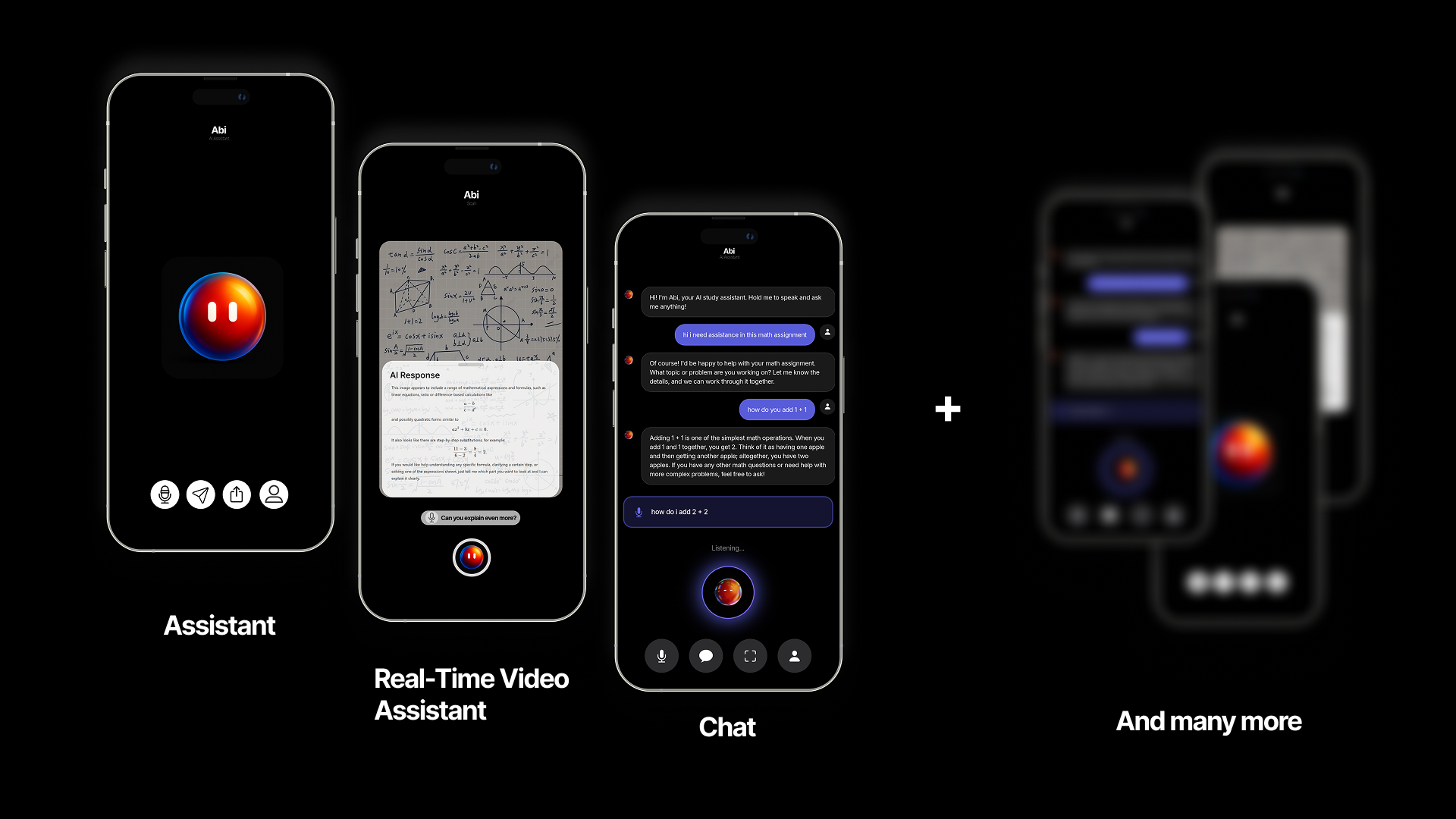
Project Story: EBB – The Dyslexia AI General Assistant
Inspiration
The idea for EBB came from a personal observation: traditional digital tools often fail to accommodate users with dyslexia. Simple tasks like reading, writing, or organizing thoughts can become frustrating. I wanted to create an AI assistant that not only understands natural language but actively adapts to the needs of dyslexic users—making communication smoother, clearer, and more supportive.
What I Learned
Building EBB has been a journey of both technical and human-centered learning. I gained deeper insight into:
- Accessibility design: How font choice, spacing, and layout affect readability for dyslexic users.
- Natural language processing: Tailoring AI responses to be concise, clear, and easier to process.
- User-centered AI: The importance of feedback loops to ensure the AI genuinely supports the user, rather than overwhelming them with complexity.
How We Built It
EBB was developed using a combination of AI language models, accessibility-focused algorithms, and an adaptive interface:
- Core AI Engine: Leveraging modern NLP models fine-tuned for clarity and simplification.
- Adaptive Readability: Implementing text transformations that reduce cognitive load (e.g., simpler sentence structures, highlighting key points, adjusting line spacing).
- User Interaction: Interactive feedback systems allow EBB to learn user preferences over time.
- Integration: Built to work across multiple platforms—desktop, web, and mobile—to provide consistent support wherever the user needs it.
Mathematically, EBB uses a weighted scoring system for text simplification:
[ \text{Clarity Score} = w_1 \cdot \text{Sentence Length}^{-1} + w_2 \cdot \text{Word Familiarity} + w_3 \cdot \text{Syntax Simplicity} ]
where ( w_1, w_2, w_3 ) are tunable parameters to optimize readability.
Challenges Faced
The project was not without hurdles:
- Balancing simplification vs. meaning: Reducing complexity without losing nuance was difficult.
- Personalization: Dyslexia manifests differently for each user, requiring EBB to be highly adaptable.
- Latency: Real-time AI responses with accessibility adjustments required careful optimization to avoid lag.
Despite these challenges, building EBB has been incredibly rewarding. The project has shown that AI can be more than a tool—it can be a true assistant that empowers users with dyslexia to communicate confidently and efficiently.


Log in or sign up for Devpost to join the conversation.