-
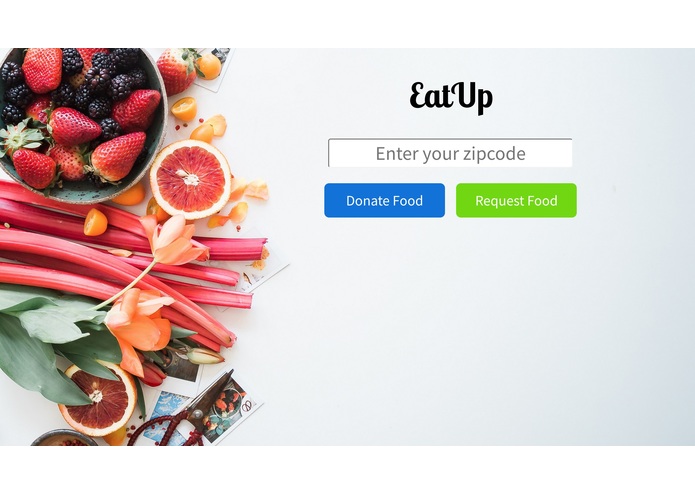
Main Page
-
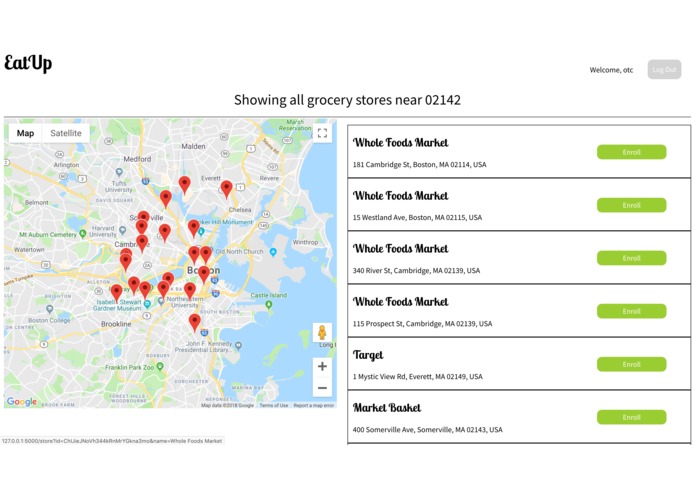
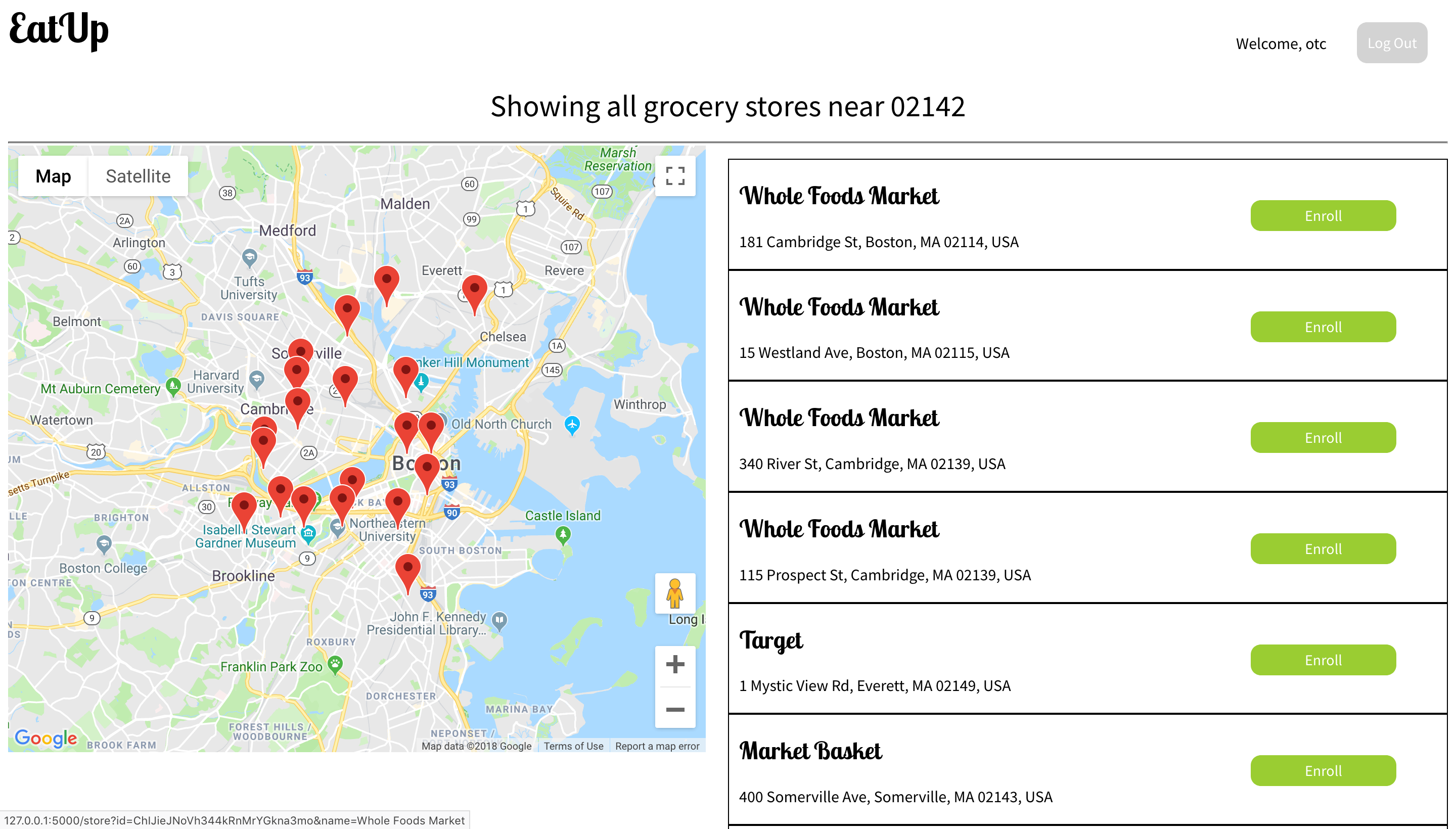
Search page for local donor enrollment
-
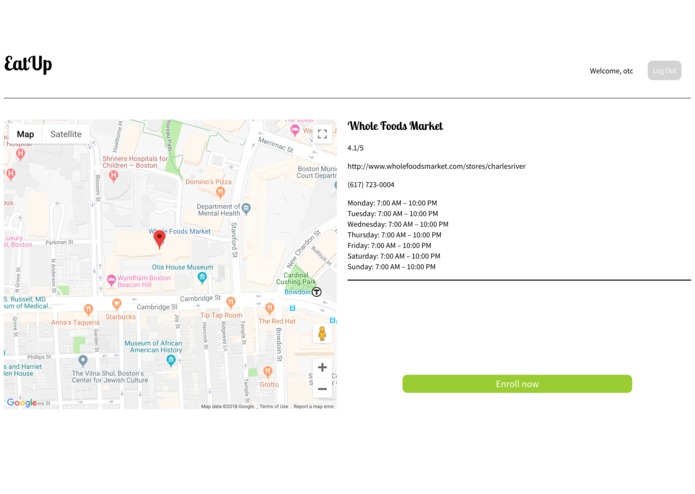
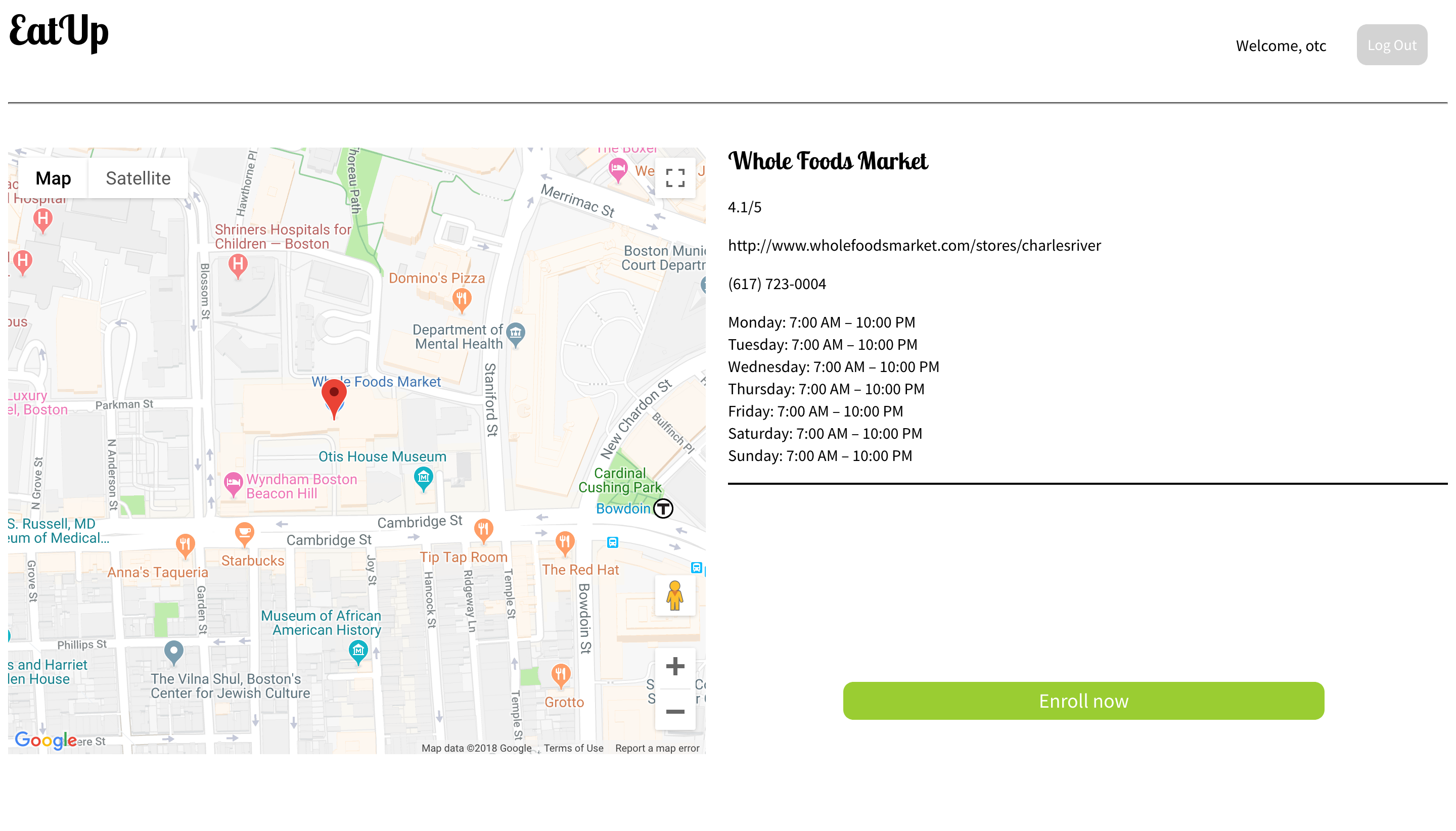
Donor enrollment page
-
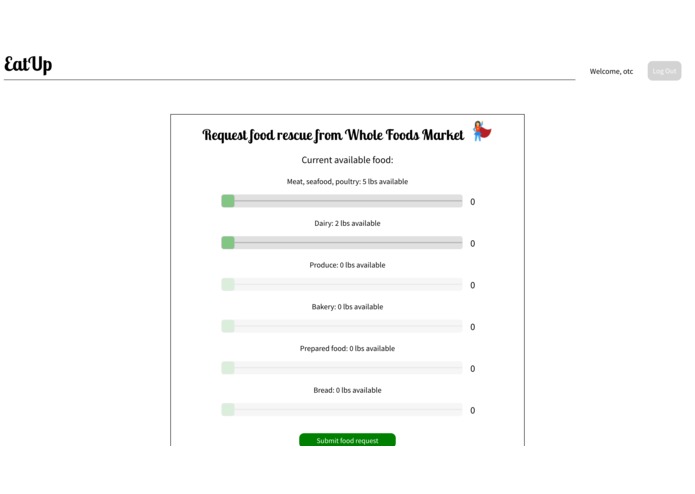
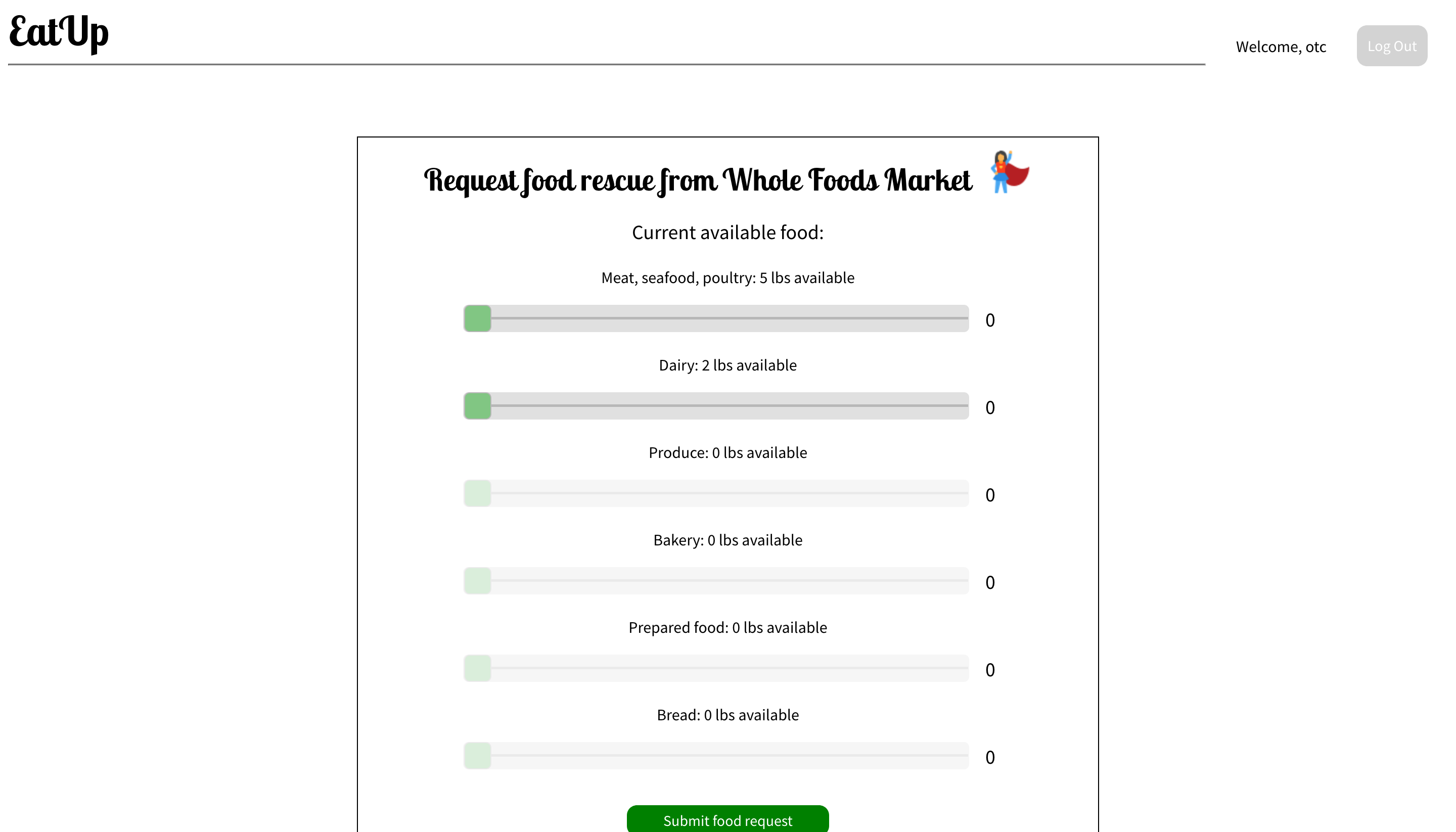
Request submission page for food pantries
-
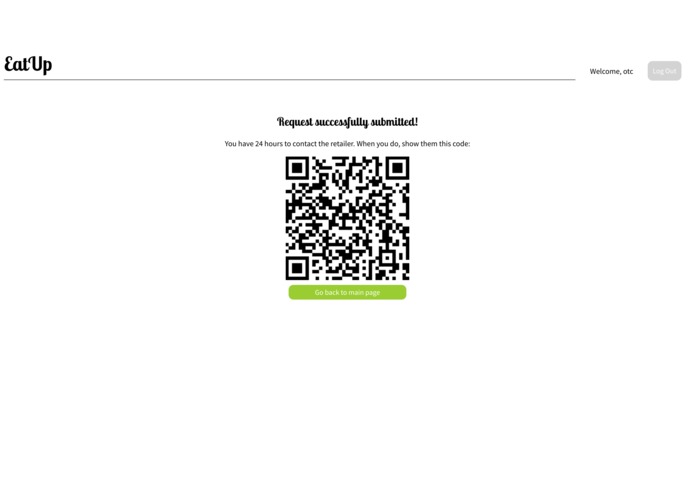
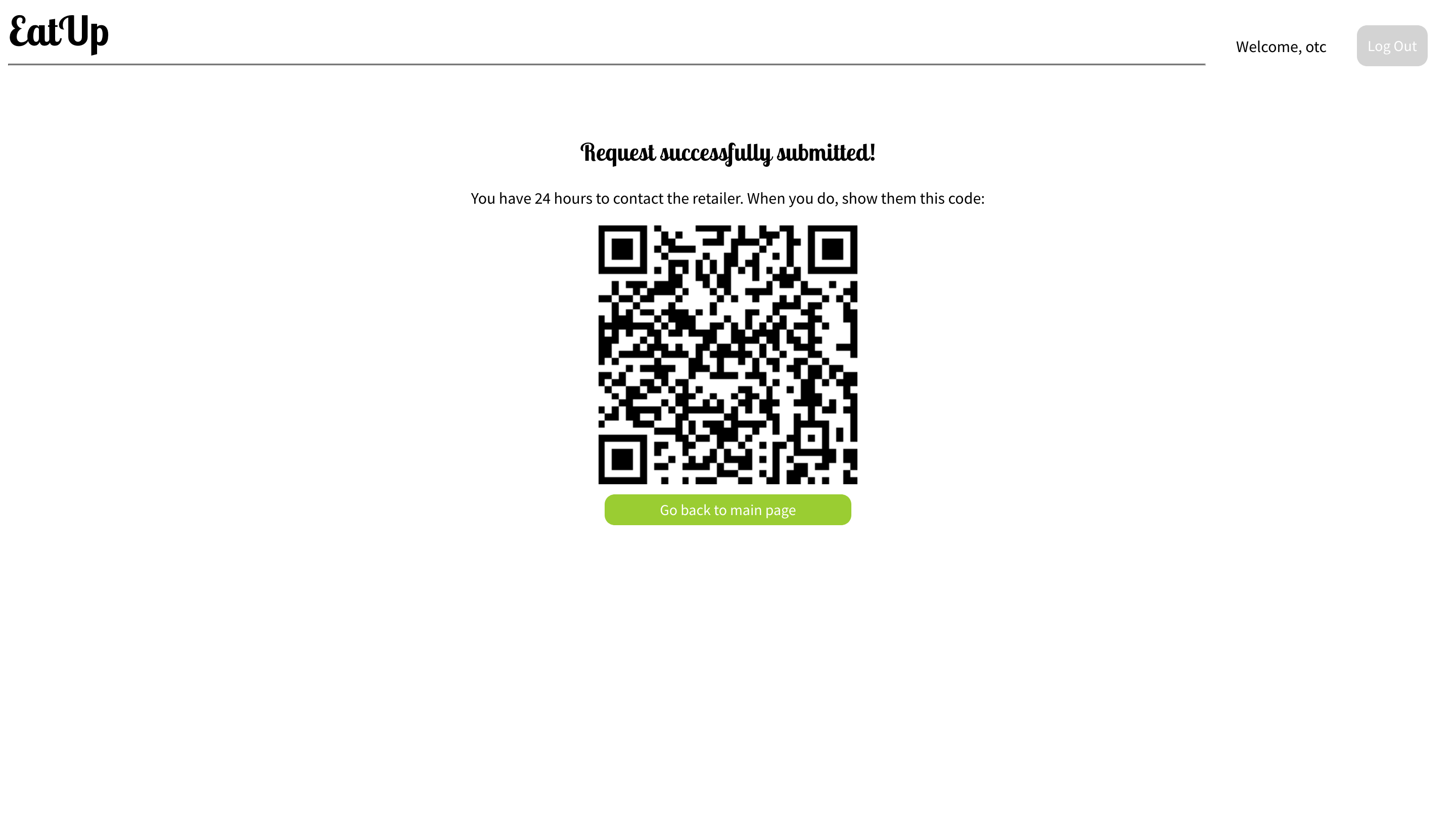
Request confirmation
-
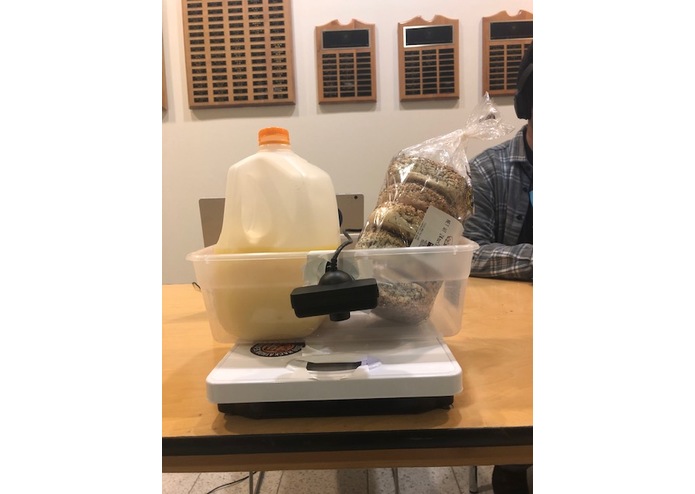
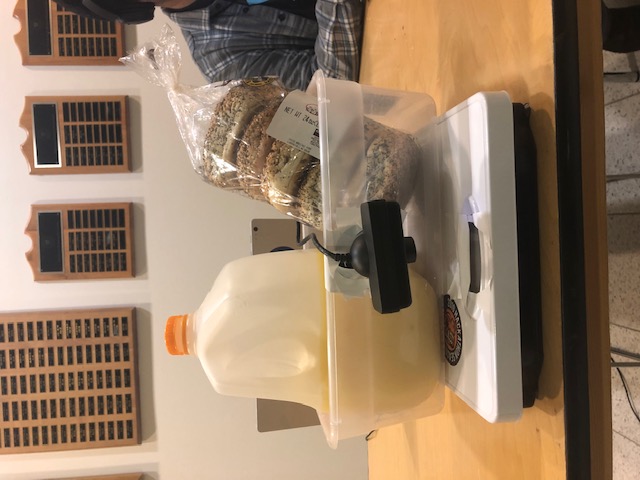
IoT based food waste bin attempt
-
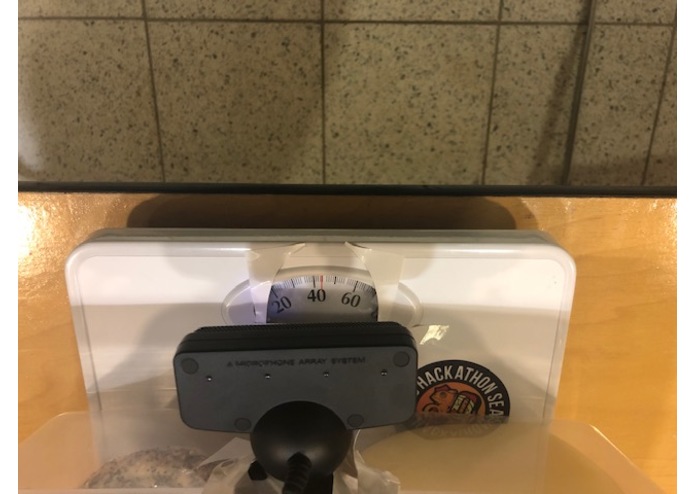
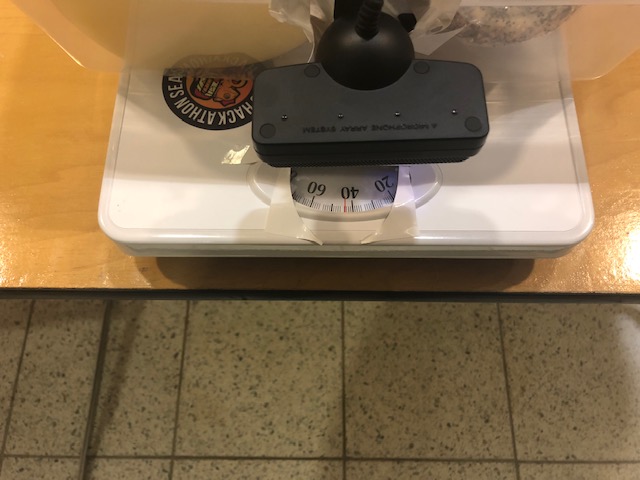
Closeup of the analog scale
-
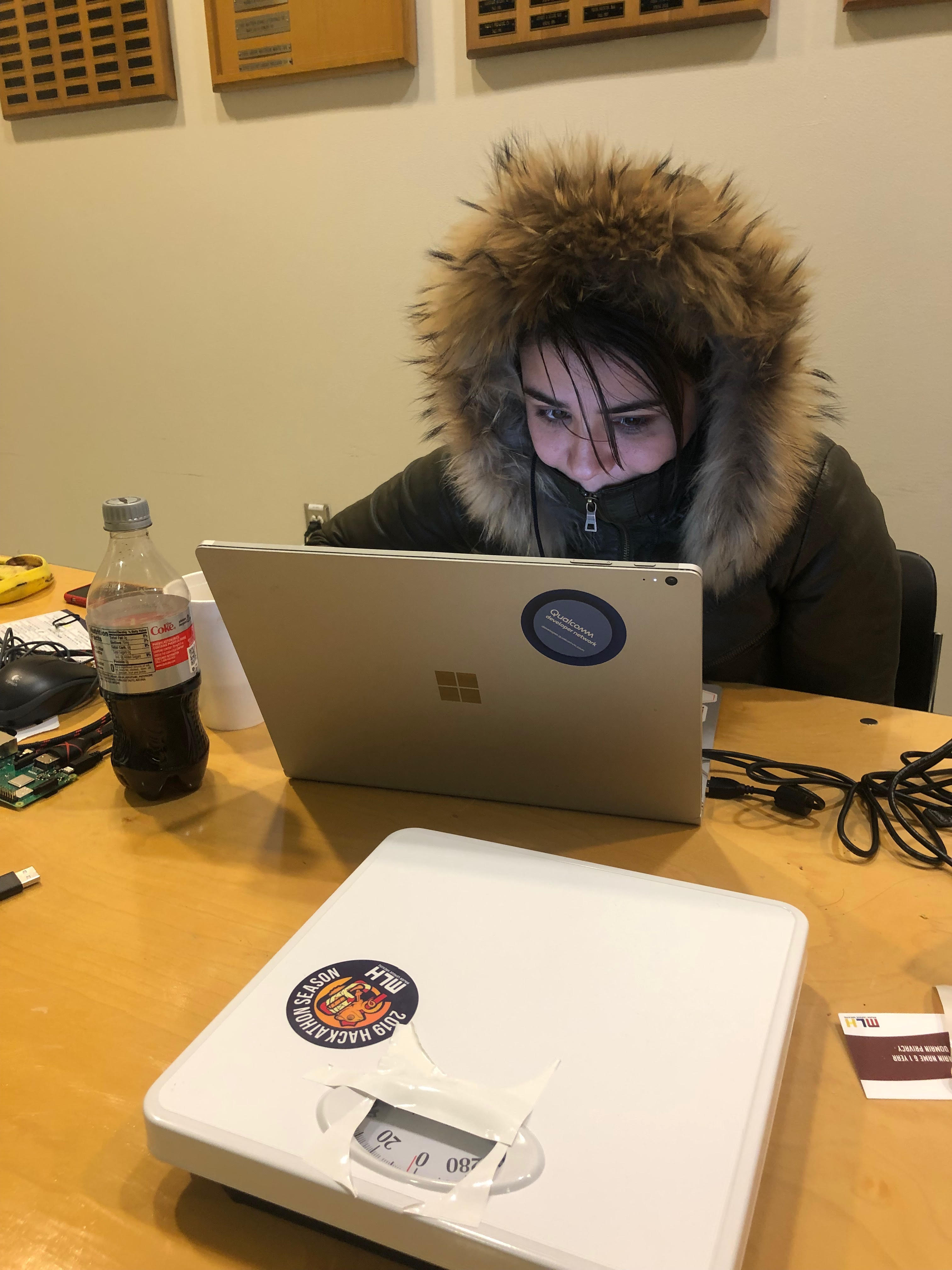
Team Member 1 :)
-
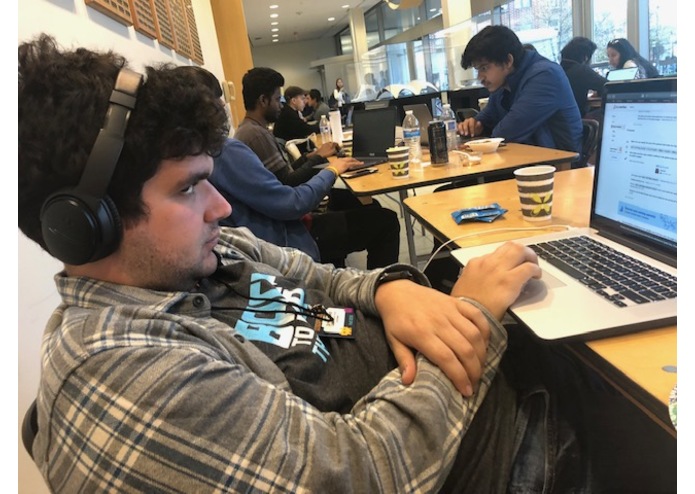
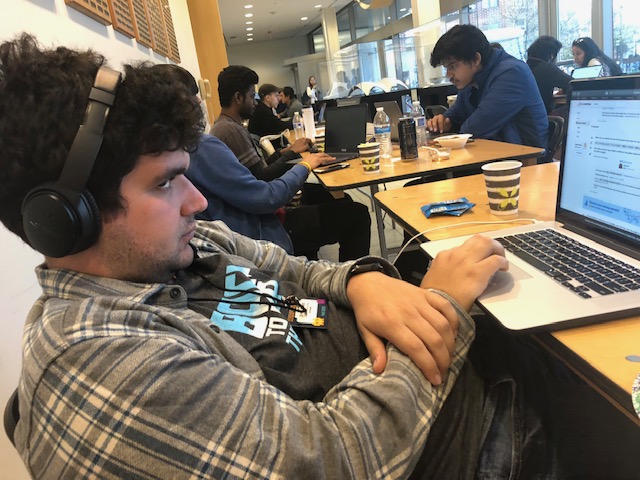
Team Member 2 :)
-
Logo Attempt
-
Unofficial mascot - The superhero tomato
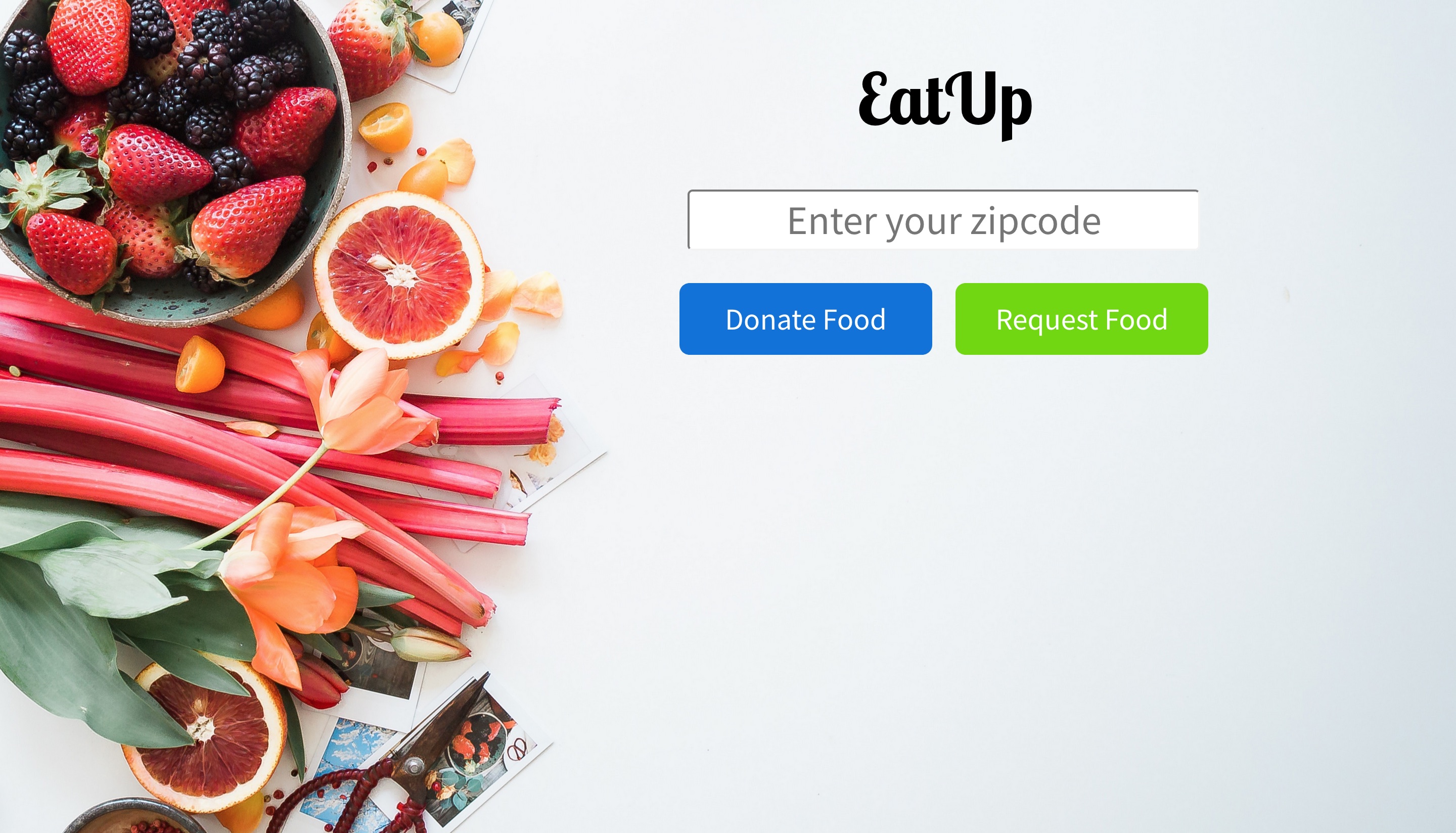
Inspiration
Food waste is a huge problem, especially in the US. It is estimated that 40% of the food supply is thrown away each year in this country. Reducing food losses by just 15% would be enough food to feed more than 25M Americans every year. We have also conducted interviews with various food banks and retailers, and repeatedly heard that even the food intended to be donated goes bad due to lack of coordination between organizations. From these facts, we figured that the hunger problem can be alleviated by utilizing modern technology.
With this in mind, we wanted to look at the problem at the retailer level to increase the efficiency of their donation programs and help food banks recover the edible food. We came up with an idea to build a platform to connect the retailers with the food banks/food pantries. In addition to that, we started to build an IoT based edible food tracking system to increase the automation of the food donation/pick-up flow and decrease the dependency of the process on staff decisions.
What it does
We built a two-part solution to ease the donation/pick-up process. The first part of the solution is the web platform. The platform does the following:
- Enables donors to register and provide information about the food amount that is available for pick-up in their store.
- Enables food pantries to search by zip code and reach the information of the registered retailers in the selected area and the food amount that is available by type. (Produce, meat/seafood/poultry, bread, prepared food etc.)
- Enables food pantries to specify the amount of food (again by type) that they would like to pick-up.
- Enables pick-up of multiple food types.
- Enables food pantries to schedule pickups.
- Shows only the unclaimed food and updates the amount by checking the food requests and the additional donations.
- Overall, aims to fill the gap of miscommunication between parties.
The second part of the solution is the IoT based food tracking bins. This is the part we'd like to work on in the future. We envision to have separate bins for each specified food type. (Produce, meat/seafood/poultry, bread, prepared food etc.)
The IoT system does the following:
- Weighs the amount of food that is placed in the bin.
- The webcam takes a picture of the indicator in the analog weighing scale (or a digital scale with serial output).
- Optical Character Recognition or similar methods detect text in the images.
- The system estimates the weight from the detected text.
- Food amount in the database is updated accordingly.
- Overall, we aim to reduce the process dependency on the staff and increase the automation in the flow.
How we built it
We used the Flask microframework for a quick build. The database uses the Python integration of sqlite3. We tried to follow HTML/CSS best practices as much as possible, but this being a hackathon, some things are admittedly a bit sloppy. We think the database and Python code is solid, though.
The eatup.tech domain is reserved for this project.
Challenges we ran into
We had no previous experience with using the Google Places API, which was required in this project to be able to get all grocery stores within a certain radius. We also needed a method to map zipcodes to single coordinates since that's what the Places API required as input. We solved that problem by discovering the geopy module which provided an effortless integration.
Accomplishments that we're proud of
Figuring out the complicated APIs is something we're proud of. We also like that the website could almost be actually used at this point (store discovery uses real maps data and availability reporting is ready to use). Most of all, we're proud that we worked on a problem that has direct benefits for the wellbeing of millions of people.
What we learned
We learned about many different APIs that provide very useful functionality for webapps. These include the large corporate APIs as well as interfaces and packages written by helpful individuals. Using these, we were able to quickly find solutions to challenging problems. We also learned about the product development cycle.
What's next for EatUp | Food Rescue Platform
As mentioned, we have to work on the second part of our solution, the IoT based food tracking bins.
- We would like to find out more information regarding the production of such bins.
- We would like to adjust our method to reflect real life situations better. (e.g. weighing bread is not a realistic assumption. It should preferably be counted.)
We also look forward to add new features to our platform. Some of the features we envision to have are:
- We would like to add a scheduling feature to our platform. To do this we have to connect with the stakeholders to determine the optimal amount of food pick-up time to hold the requests. Currently, the product holds the food request claim for 24 hours. After 24 hours, the hold can be released.
- We would like to generate a report for the food pantries giving them the final location, food amount and schedule information for pick-up.
- We would like to extend the capability of our platform to include more donors such as restaurants, universities etc.
- We would like to look into the upper levels of the food supply chain. We know that ‘ugly produce’, i.e. the food rejected by retailers because they don’t follow specific aesthetic standards, are wasted in huge amounts too. We would like to be capable of including those products and directing them to relevant organizations.


Log in or sign up for Devpost to join the conversation.