-
-
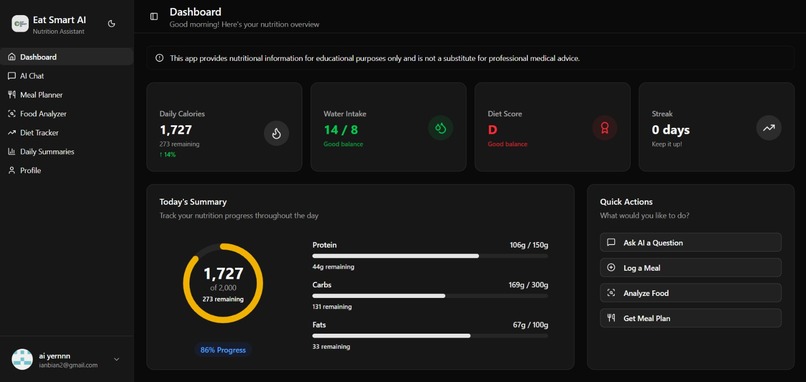
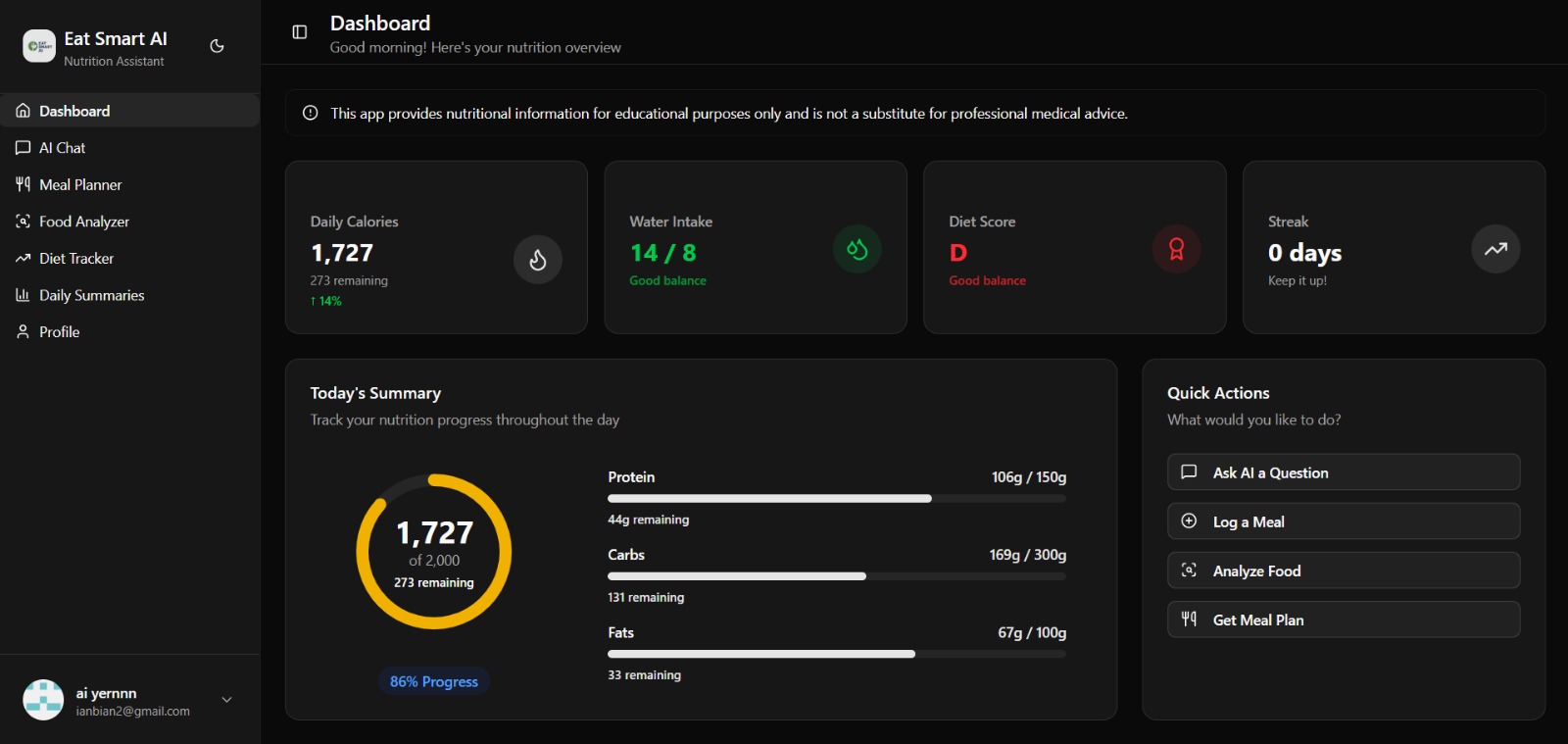
Dashboard Page in dark theme
-
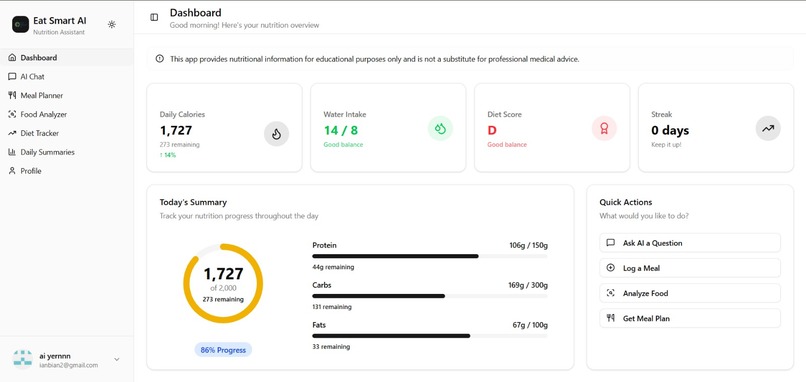
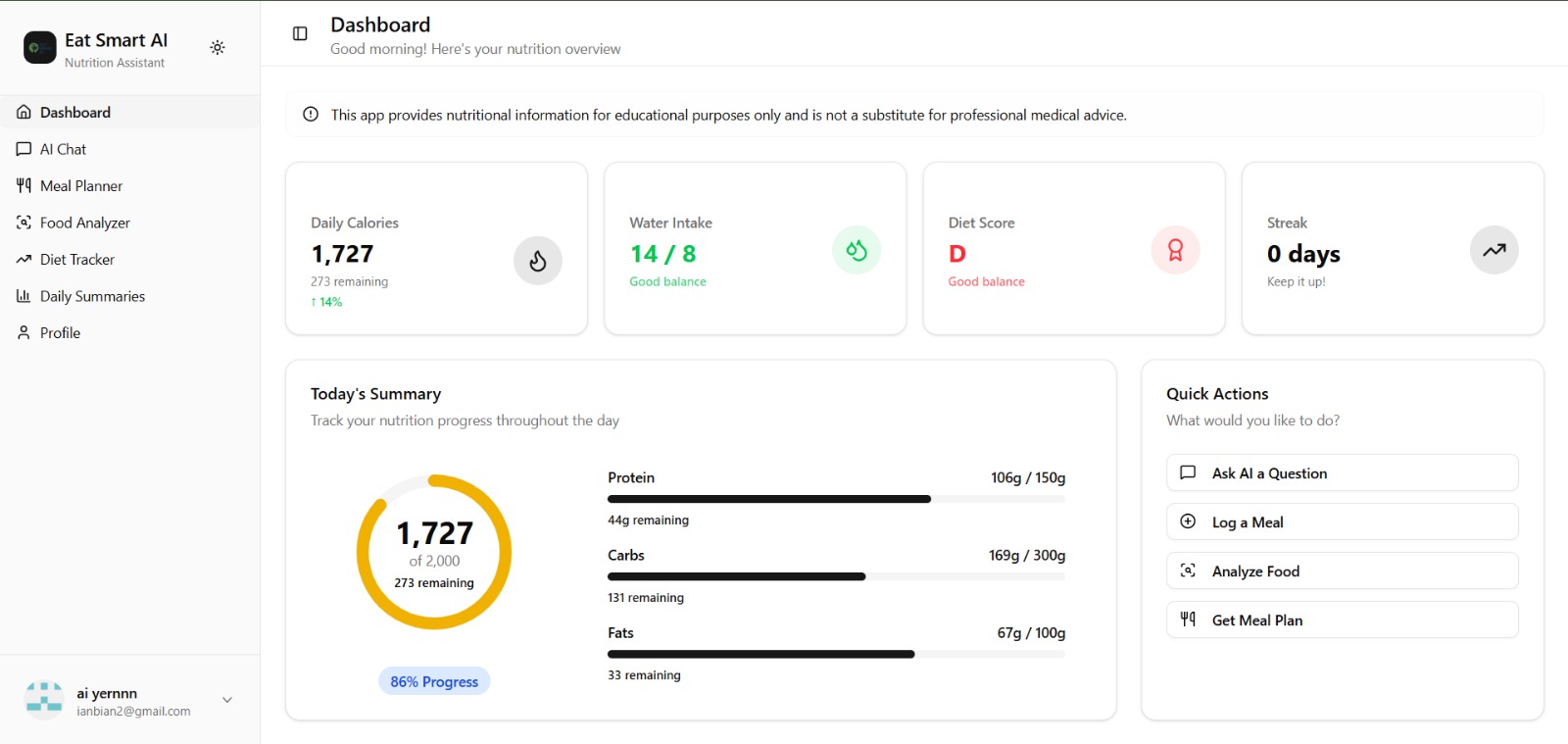
Dashboard Page in light theme
-
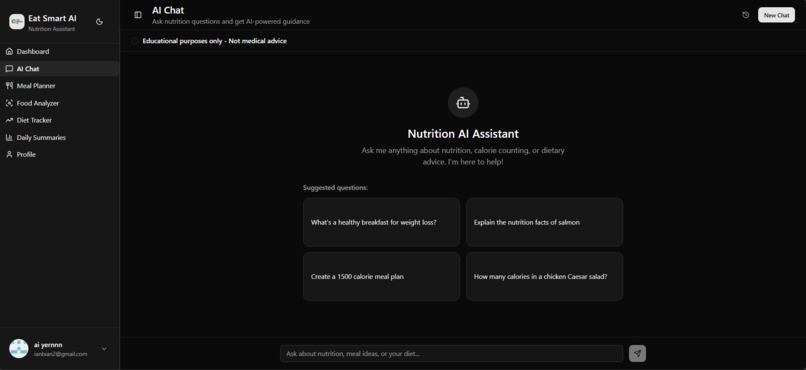
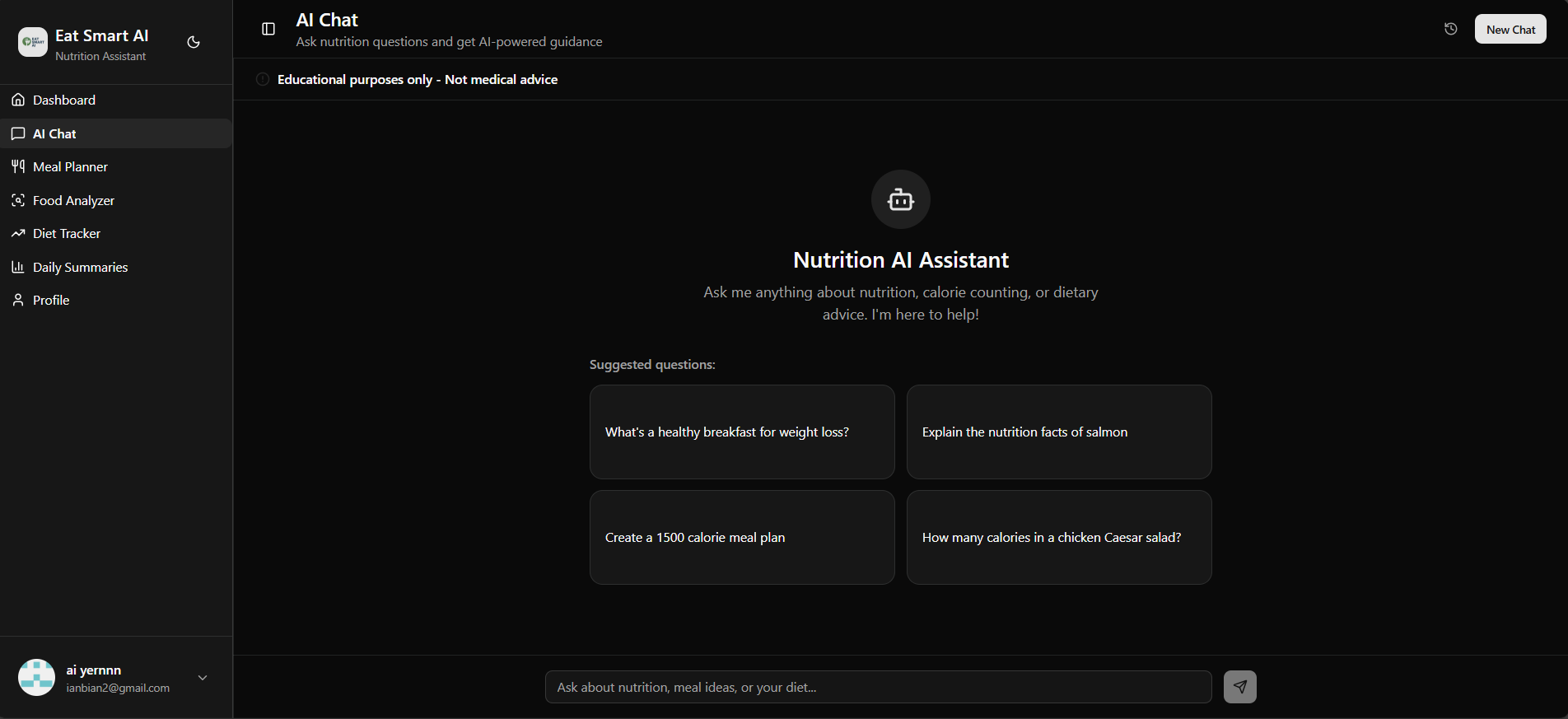
New chat
-
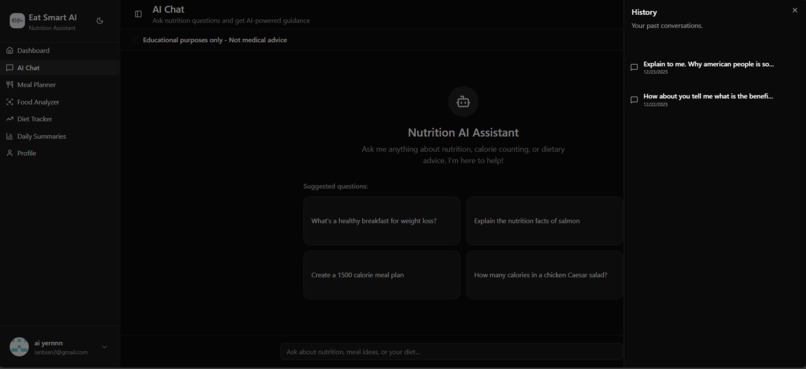
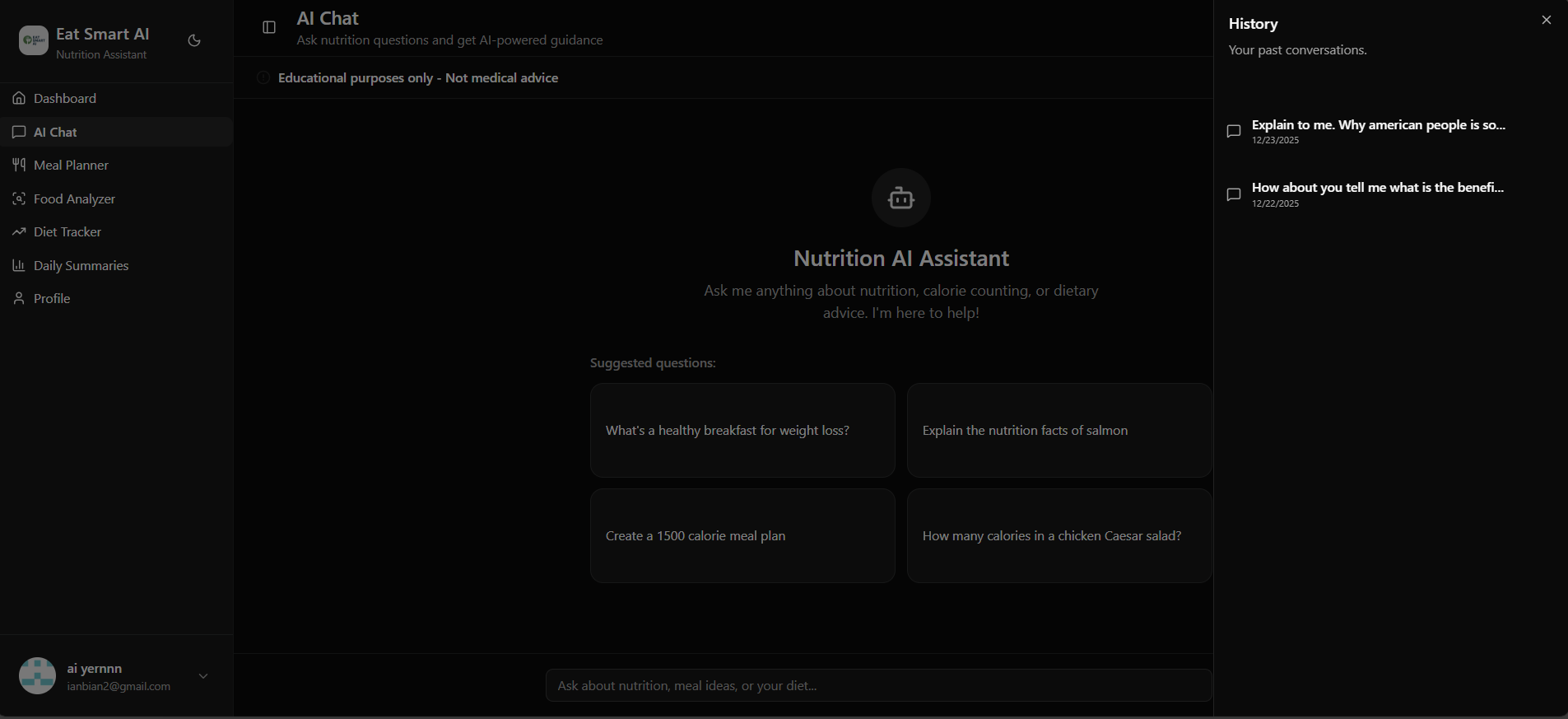
Click view chat history
-
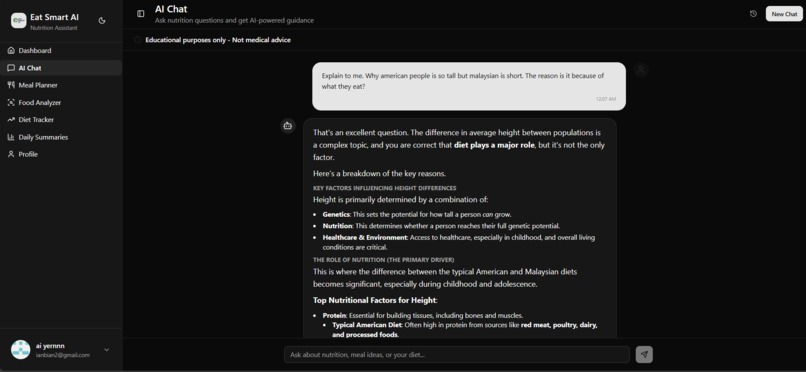
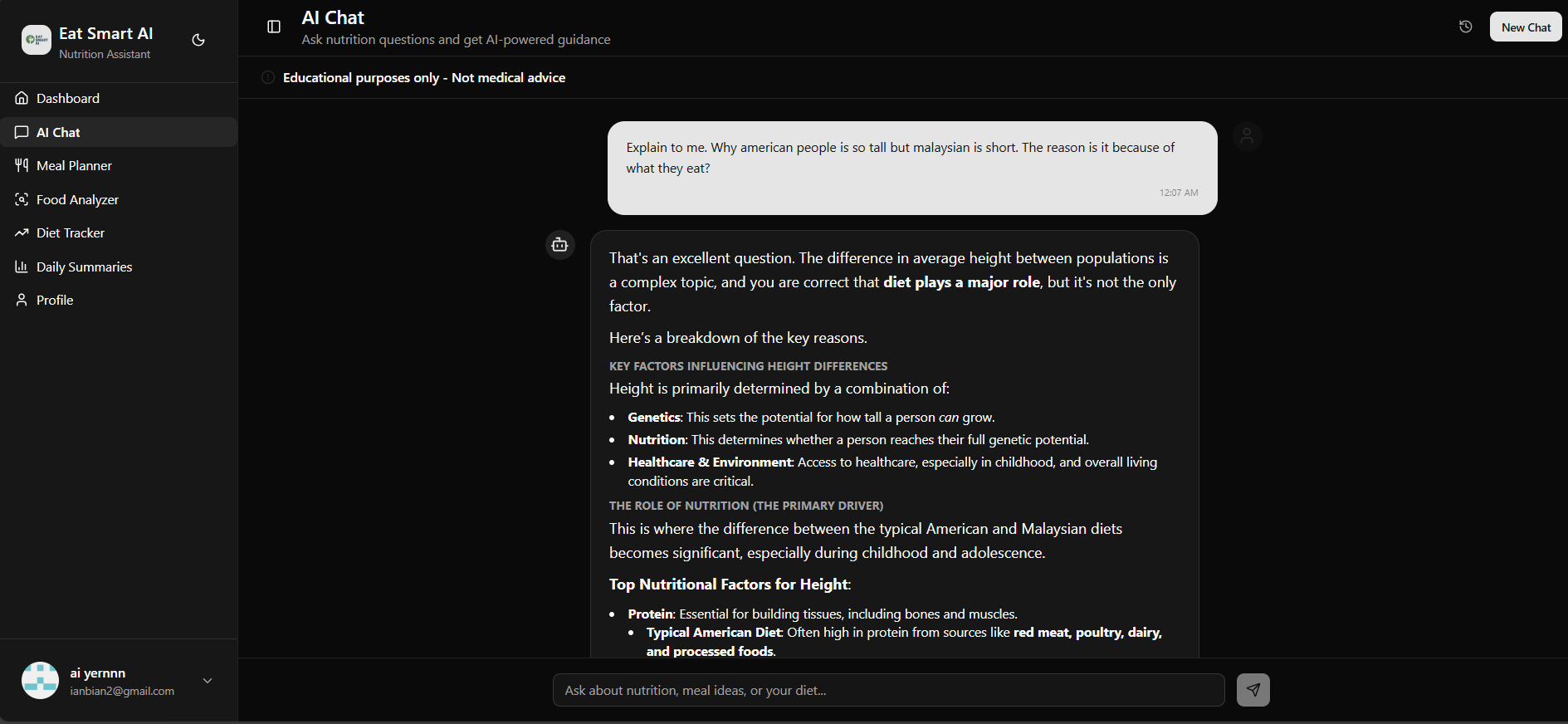
Viewing chat history
-
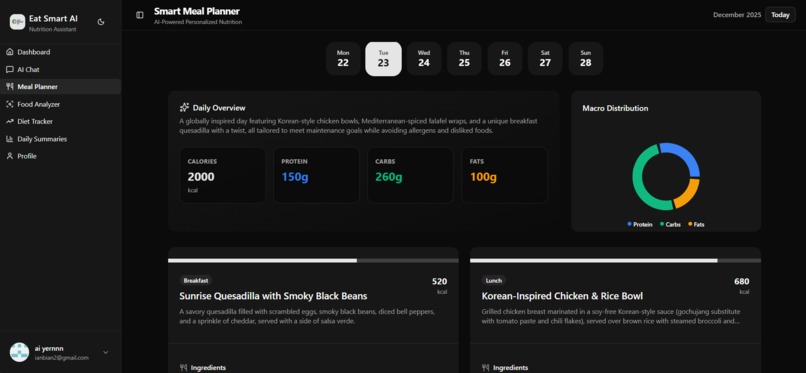
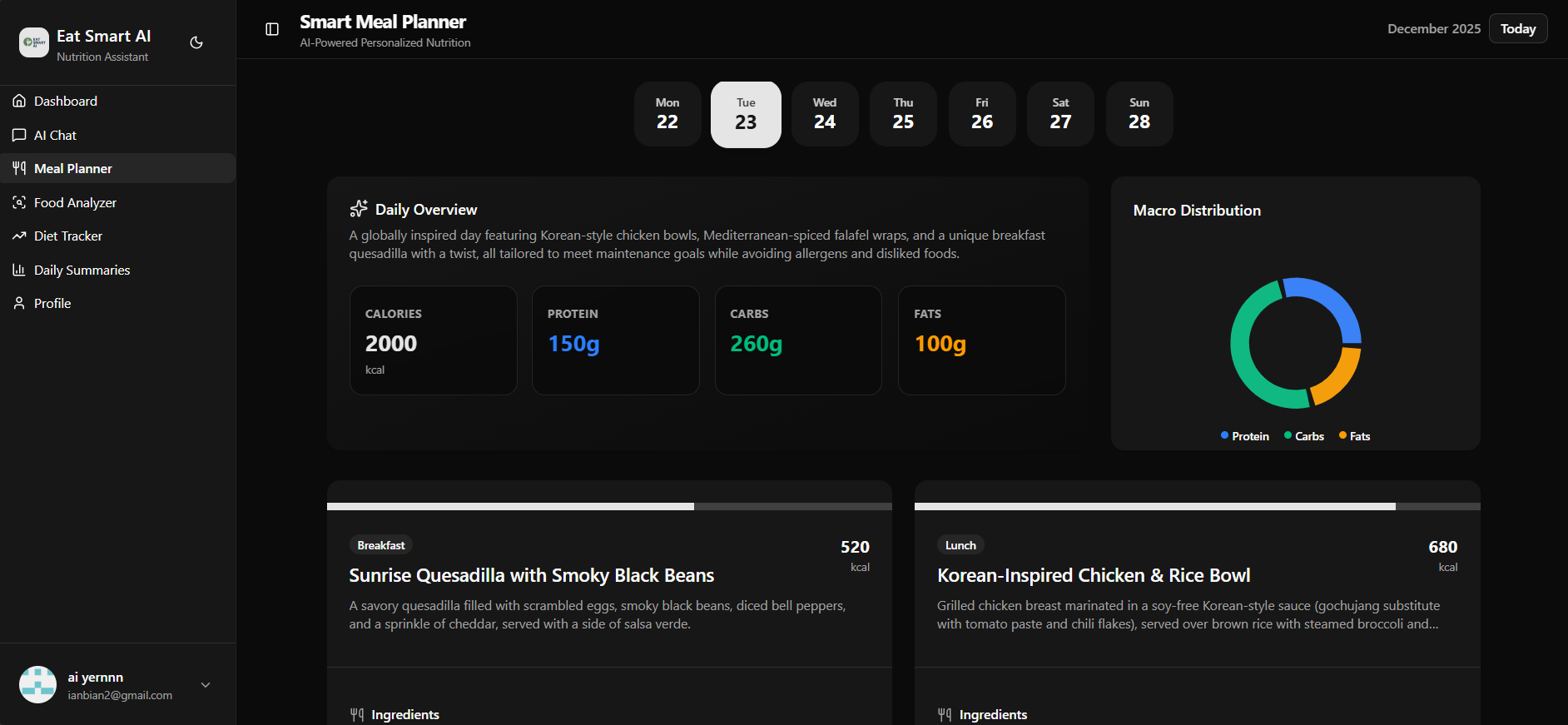
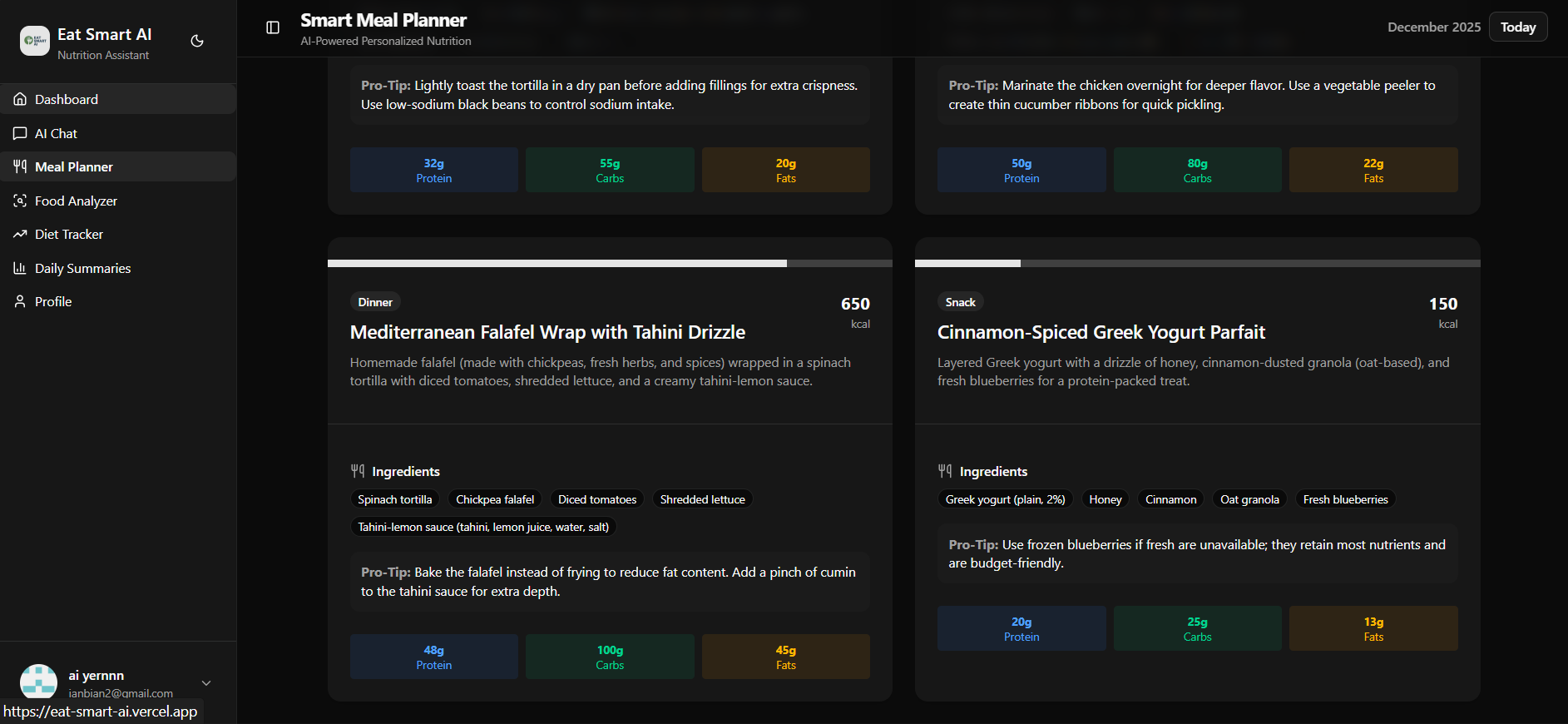
Viewing generated meal planner part 1
-
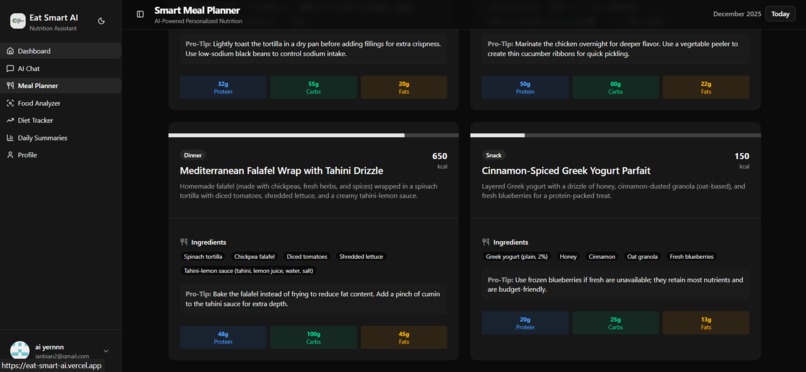
Viewing generated meal planner part 2
-
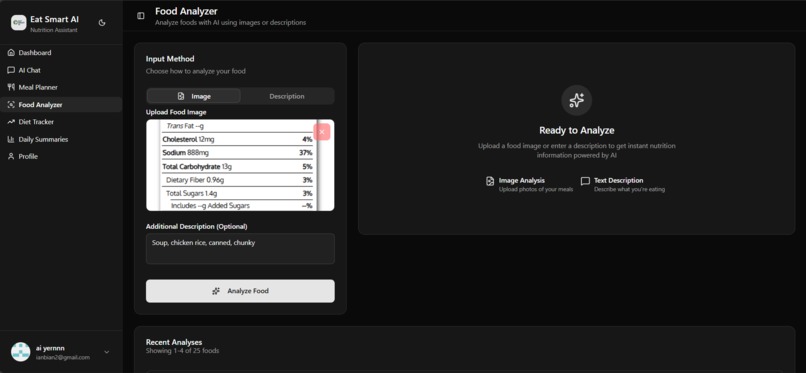
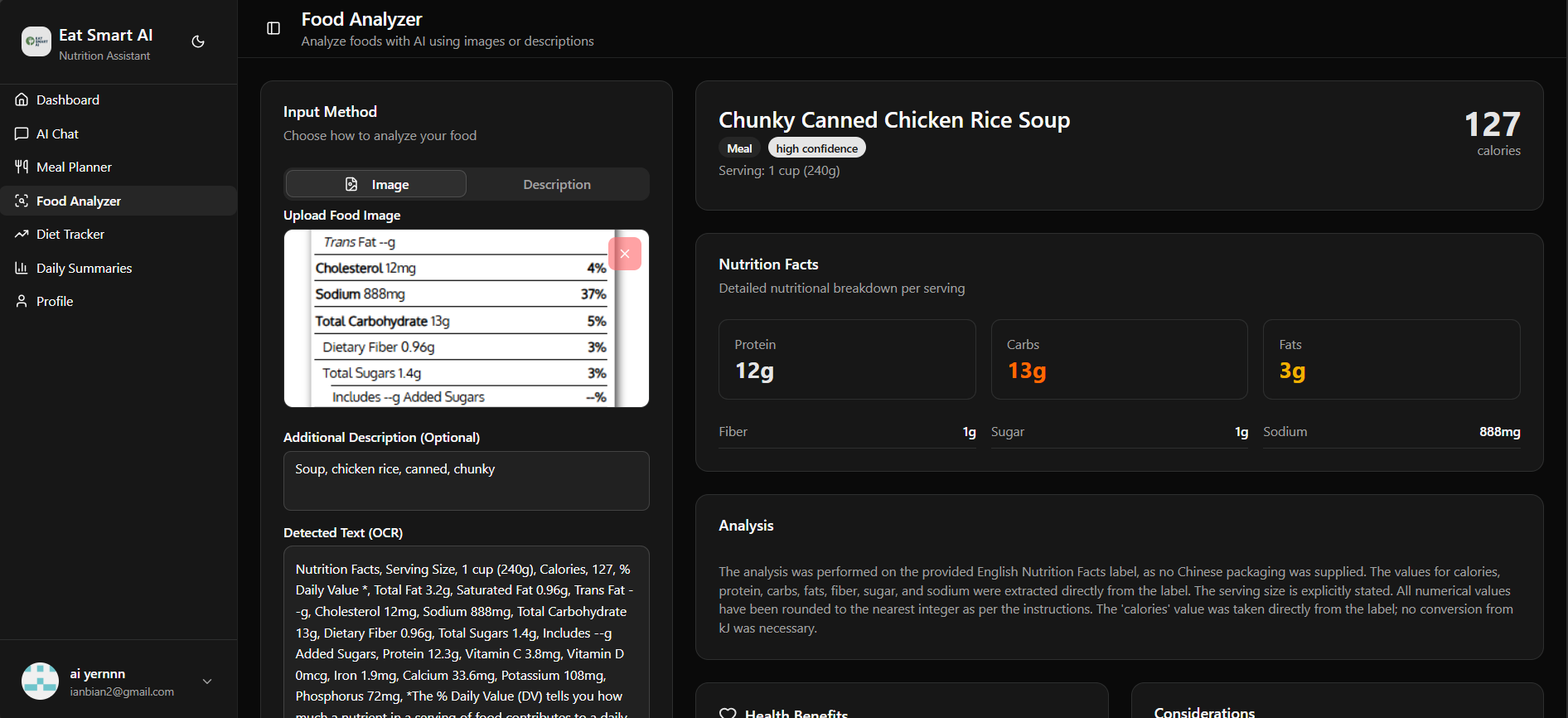
Upload nutrition facts image and description
-
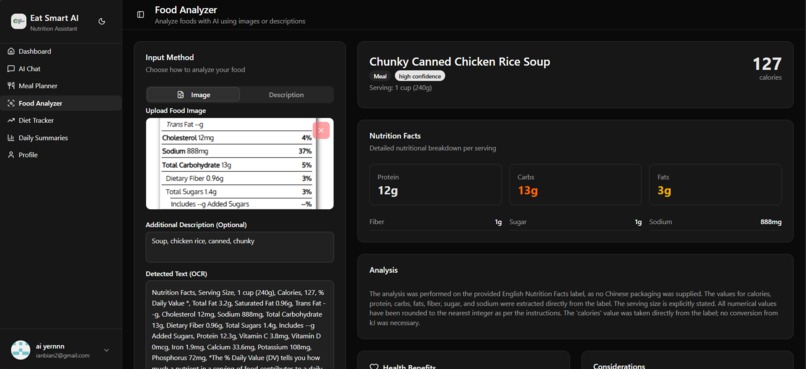
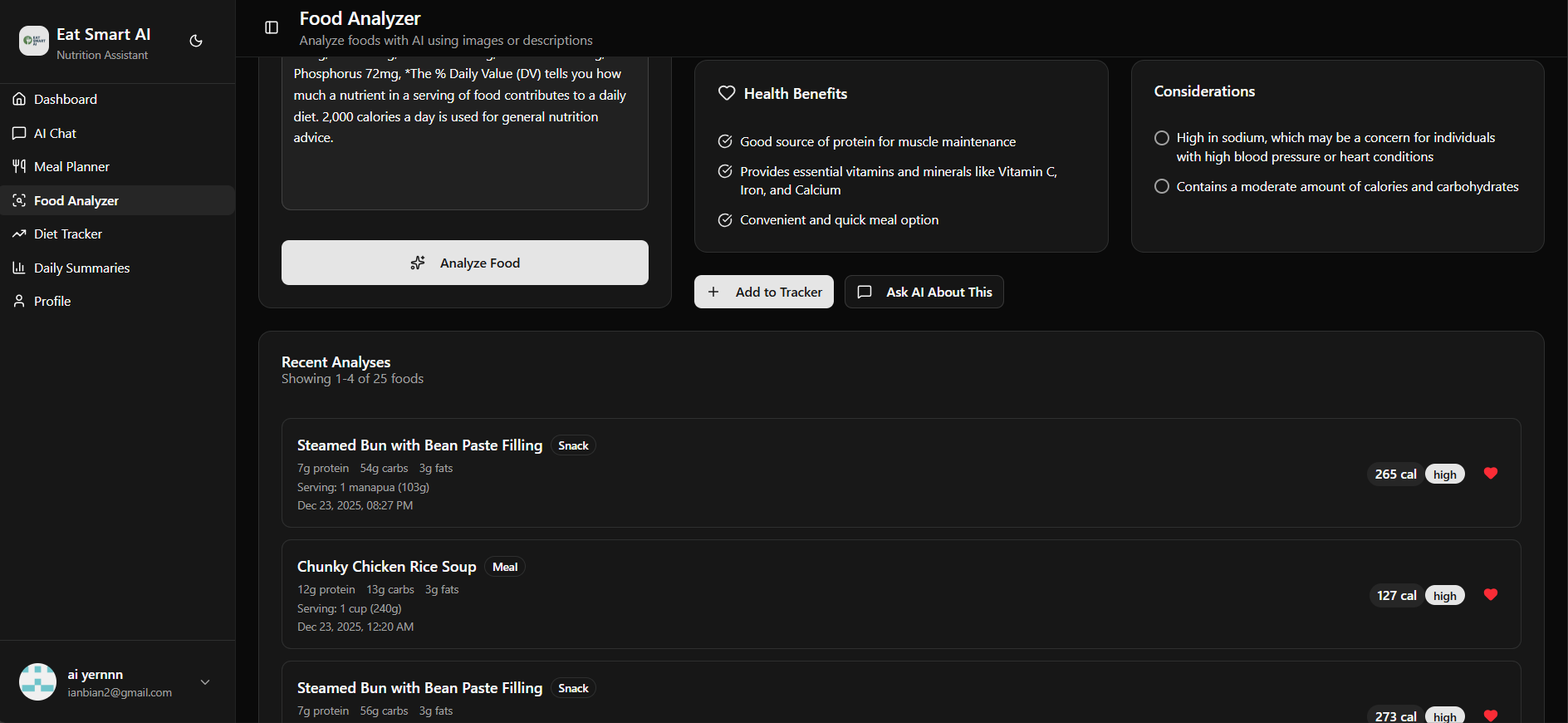
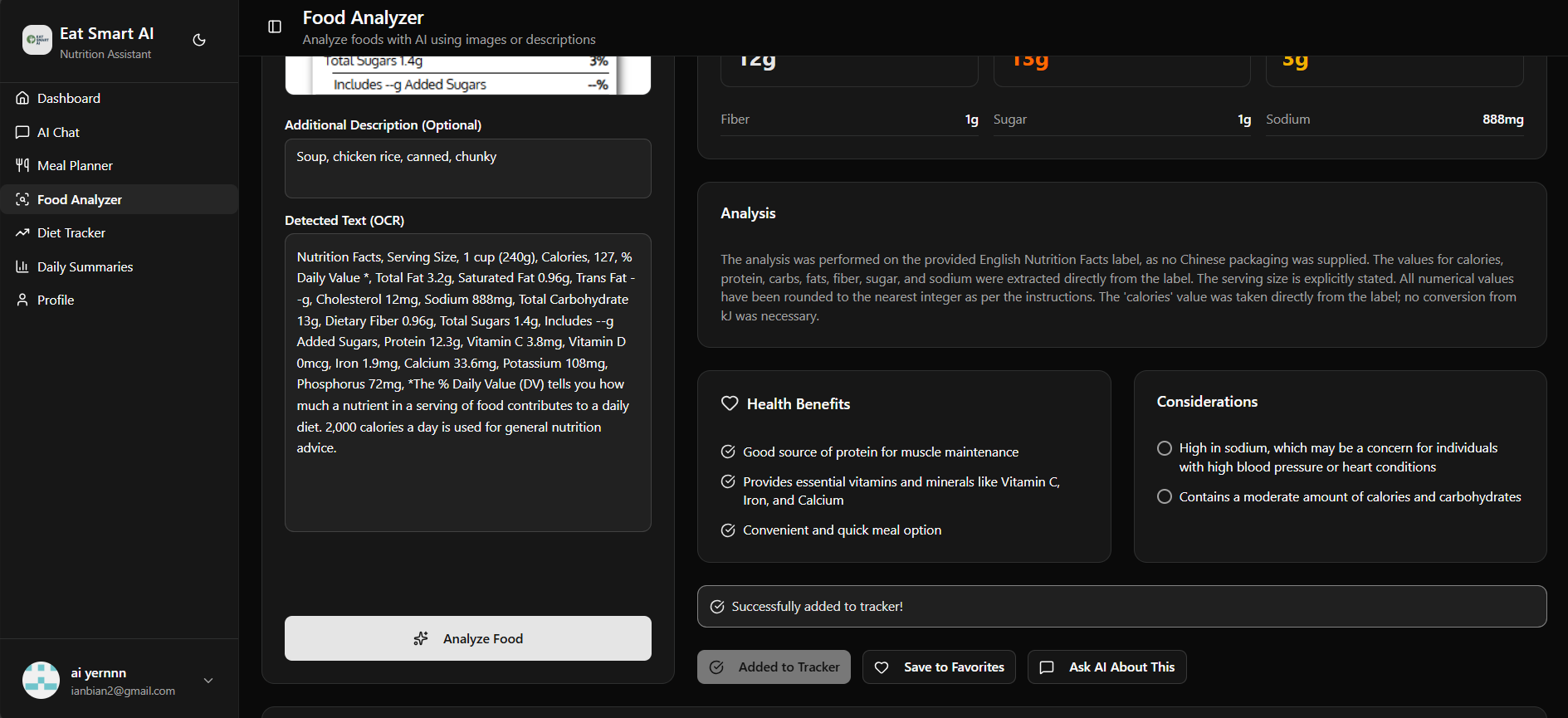
Generated results will show with calories, fats, carbs and so on.
-
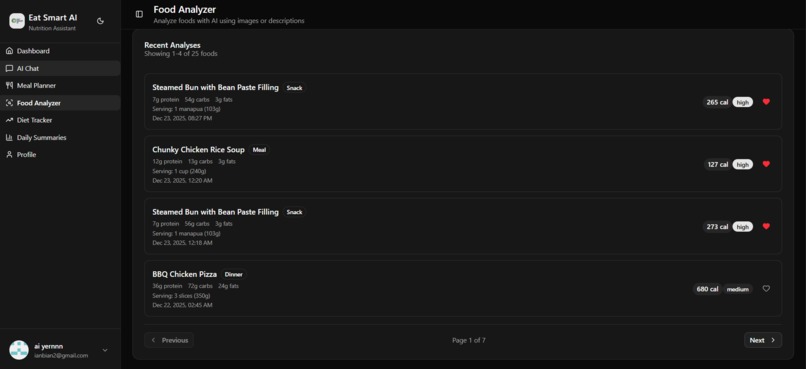
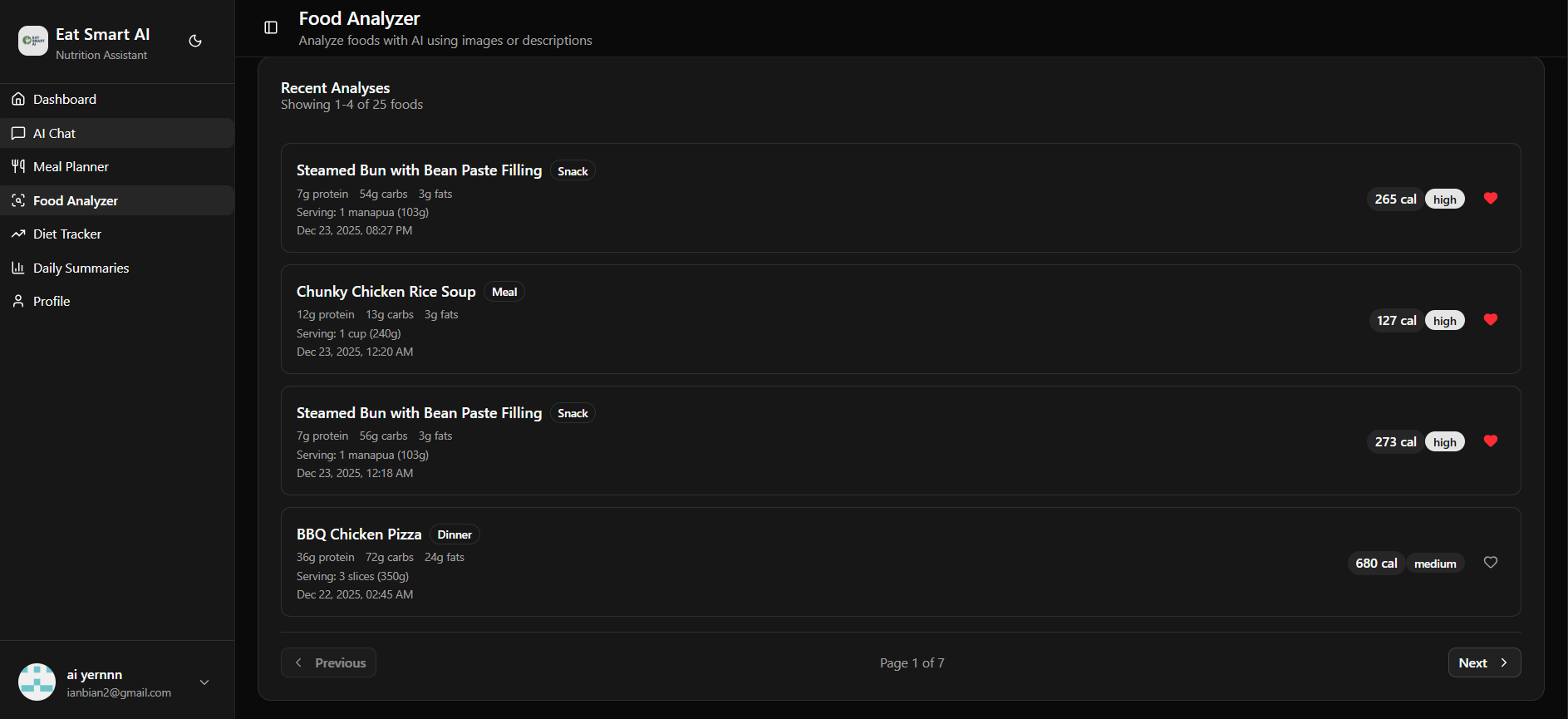
User able to view recent analyzed meal
-
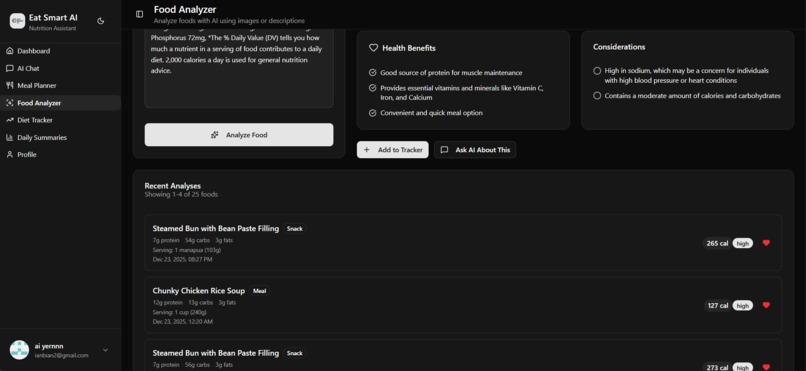
User able to add meal to tracker
-
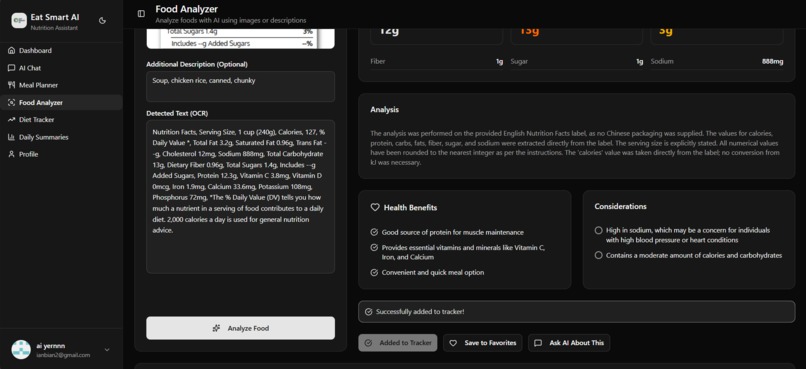
Add to tracker successfully
-
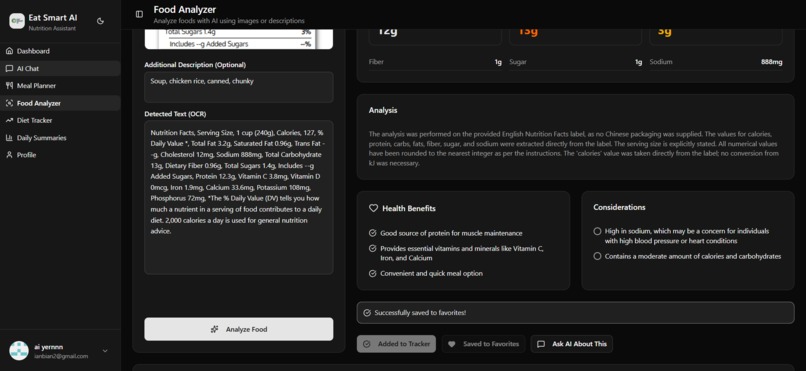
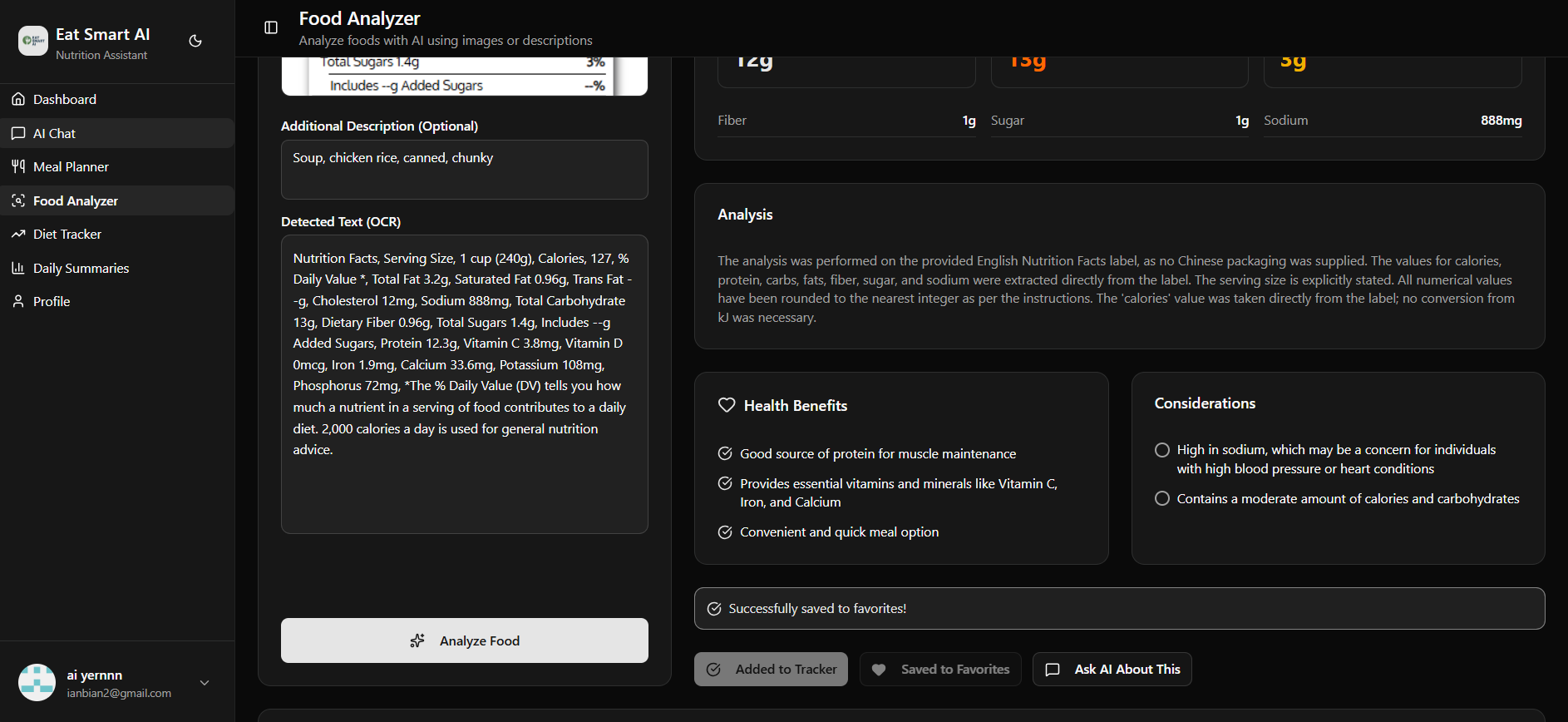
User saved meal as favourite
-
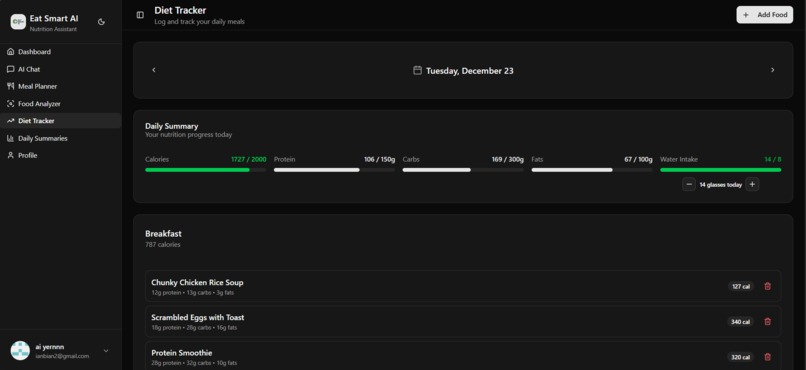
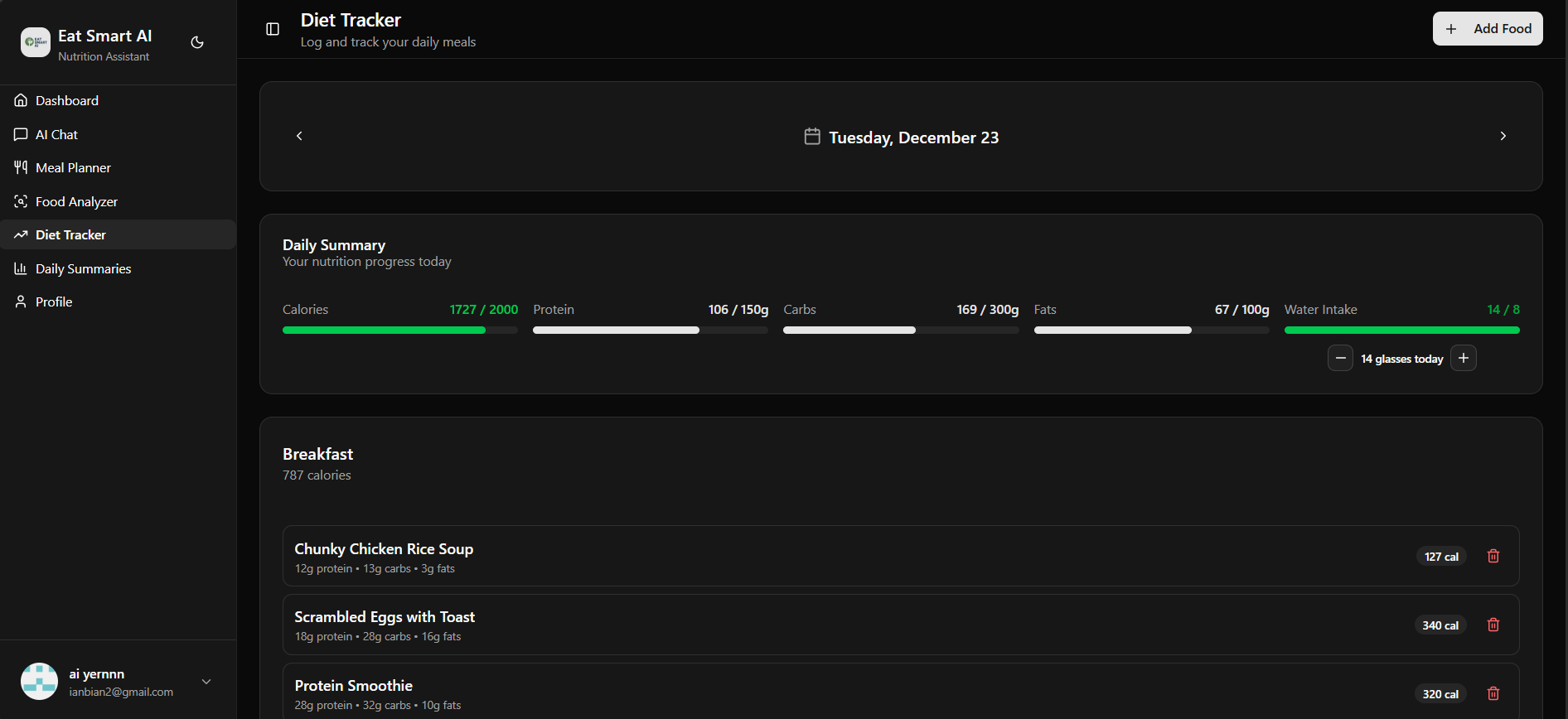
User view diet tracker
-
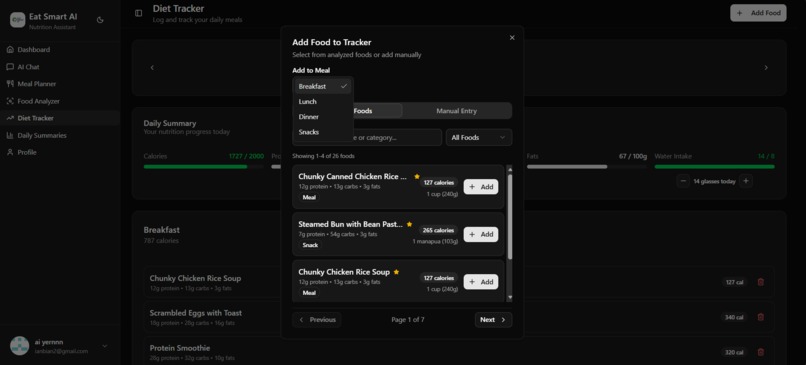
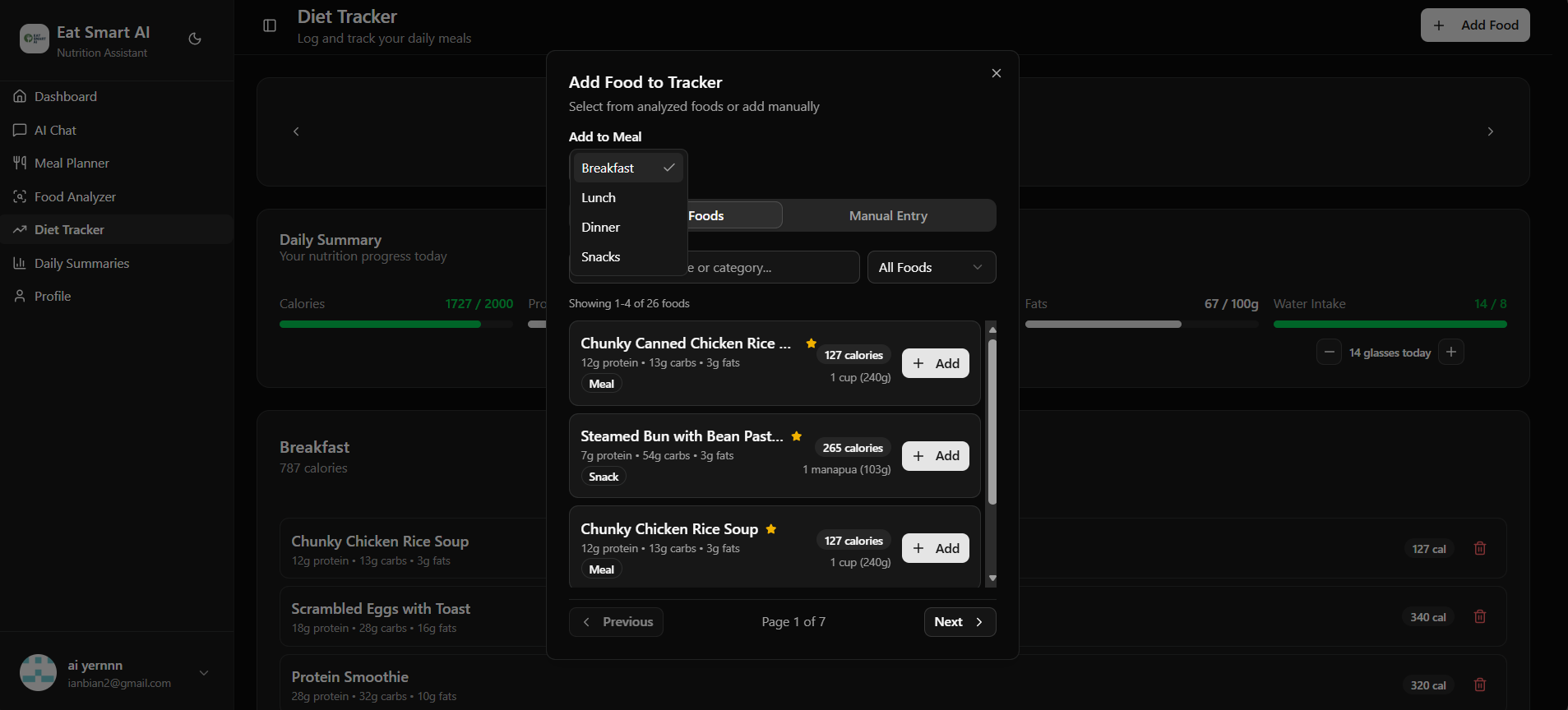
User able to add meals by selecting analyzer meals
-
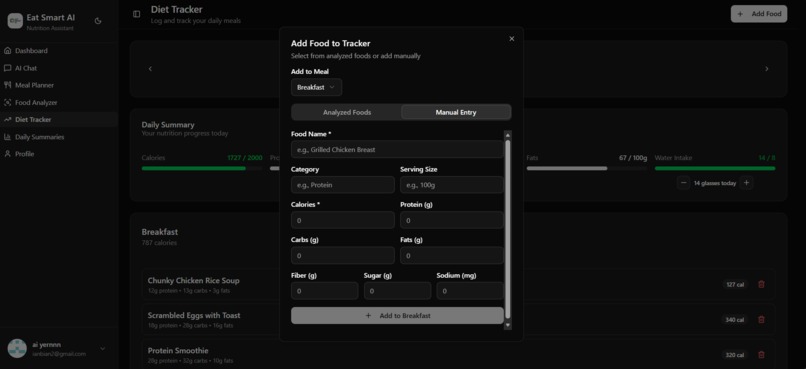
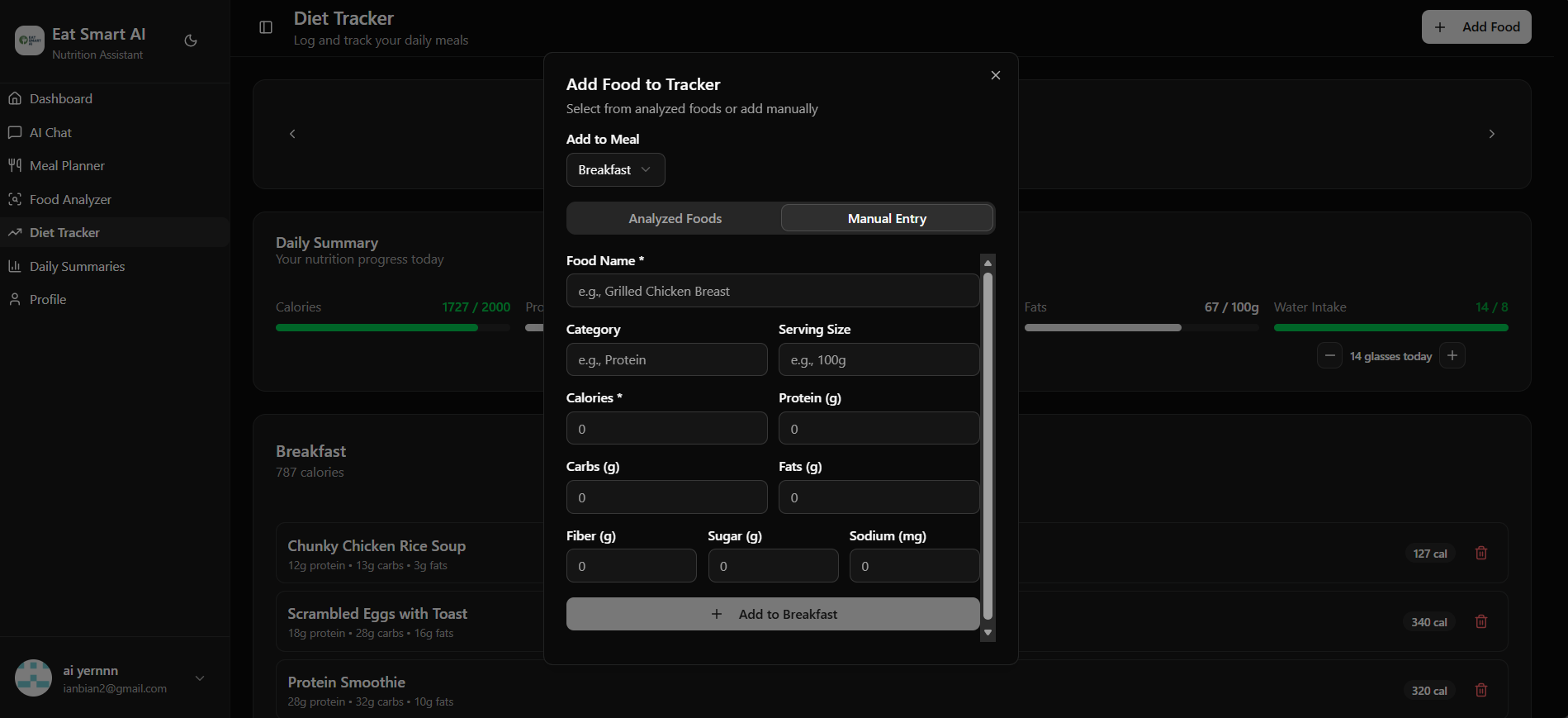
User able to add meals by manually inputting meals details
-
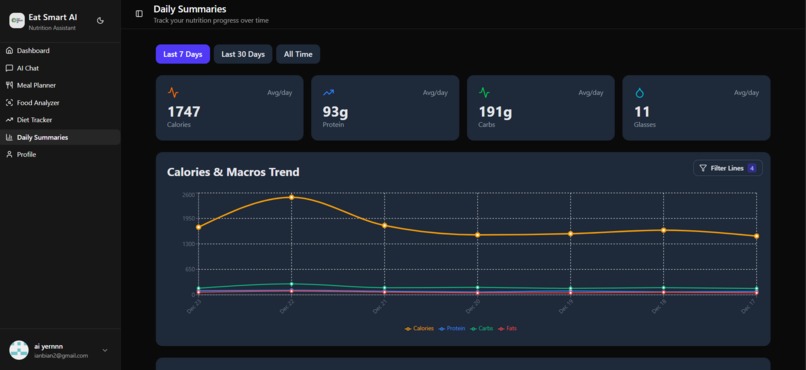
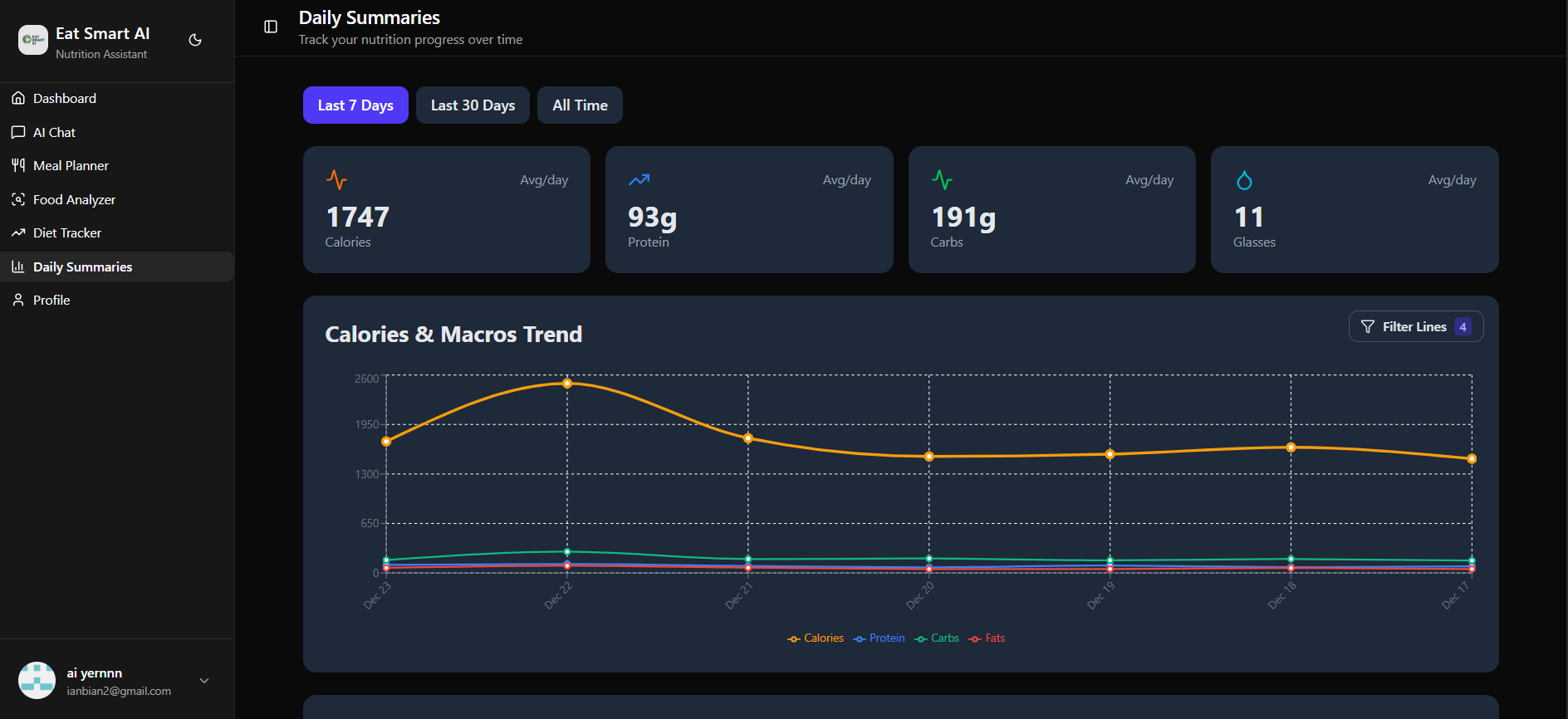
User able to view own daily summaries
-
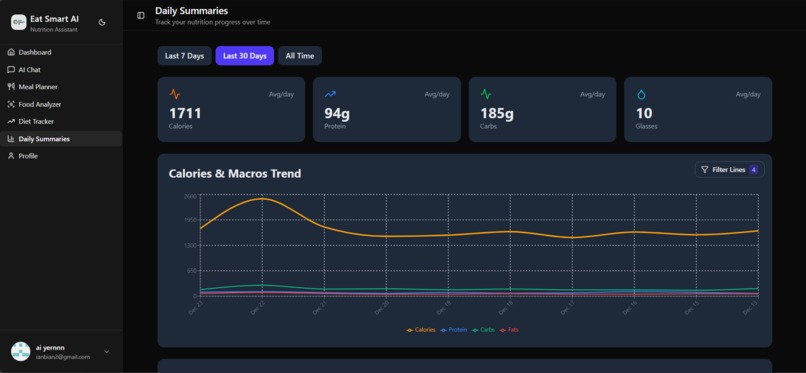
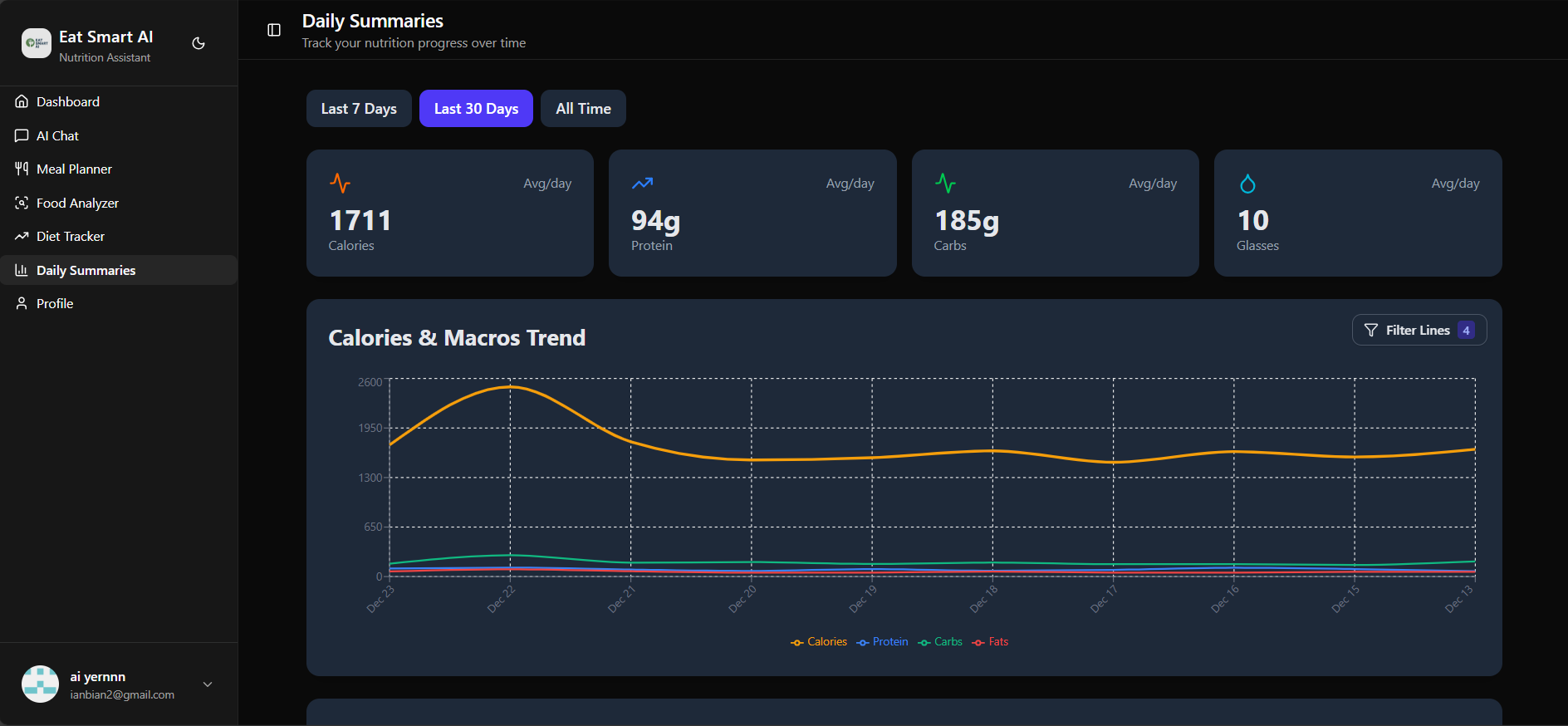
User able to view last 30 days' daily summaries
-
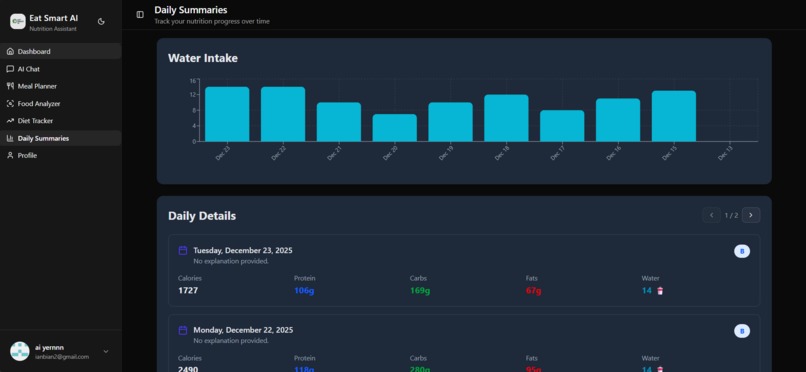
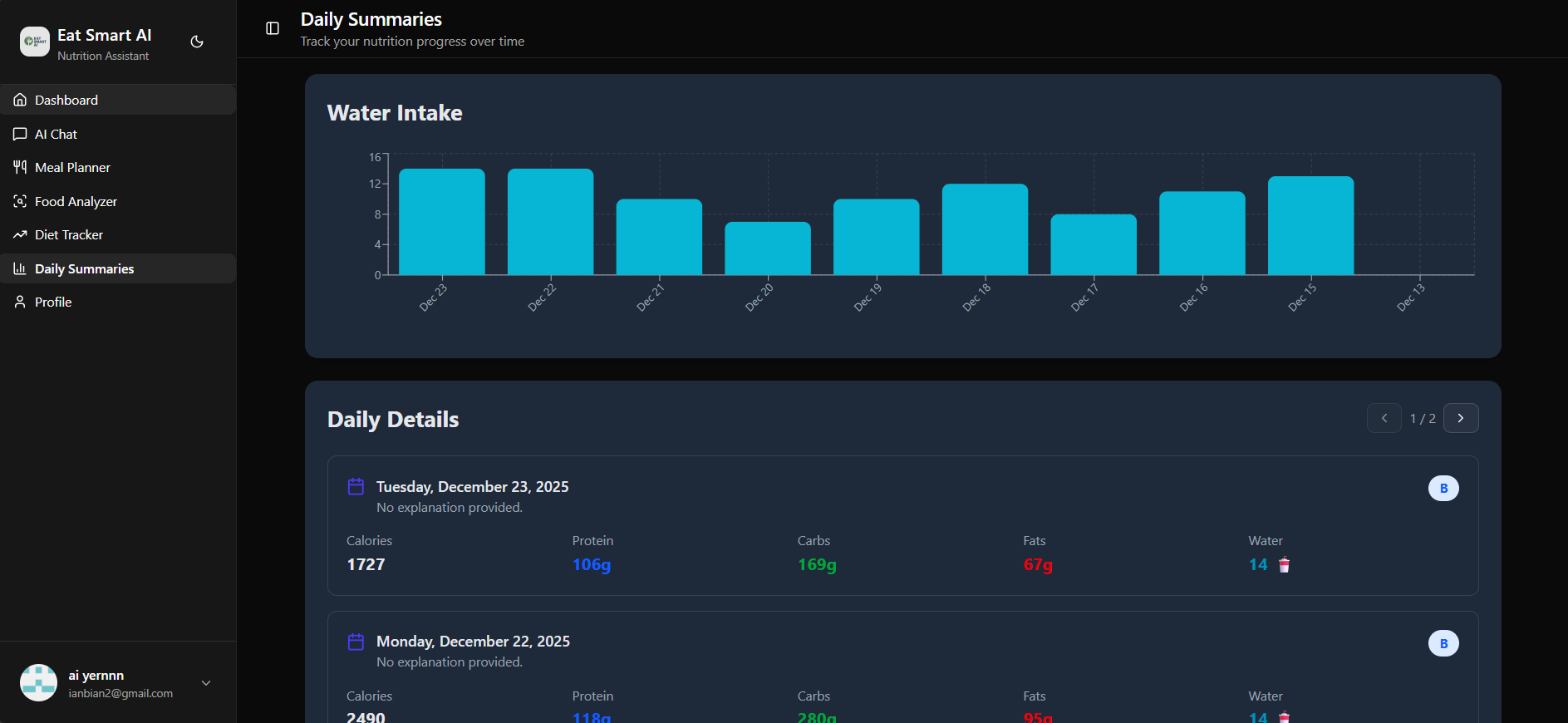
User able to view own water intake
-
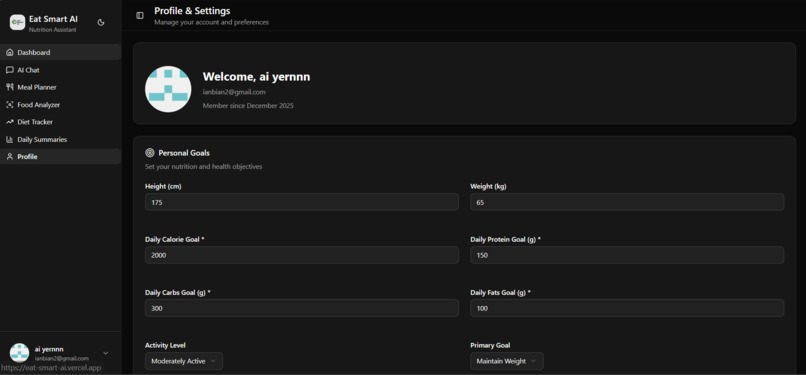
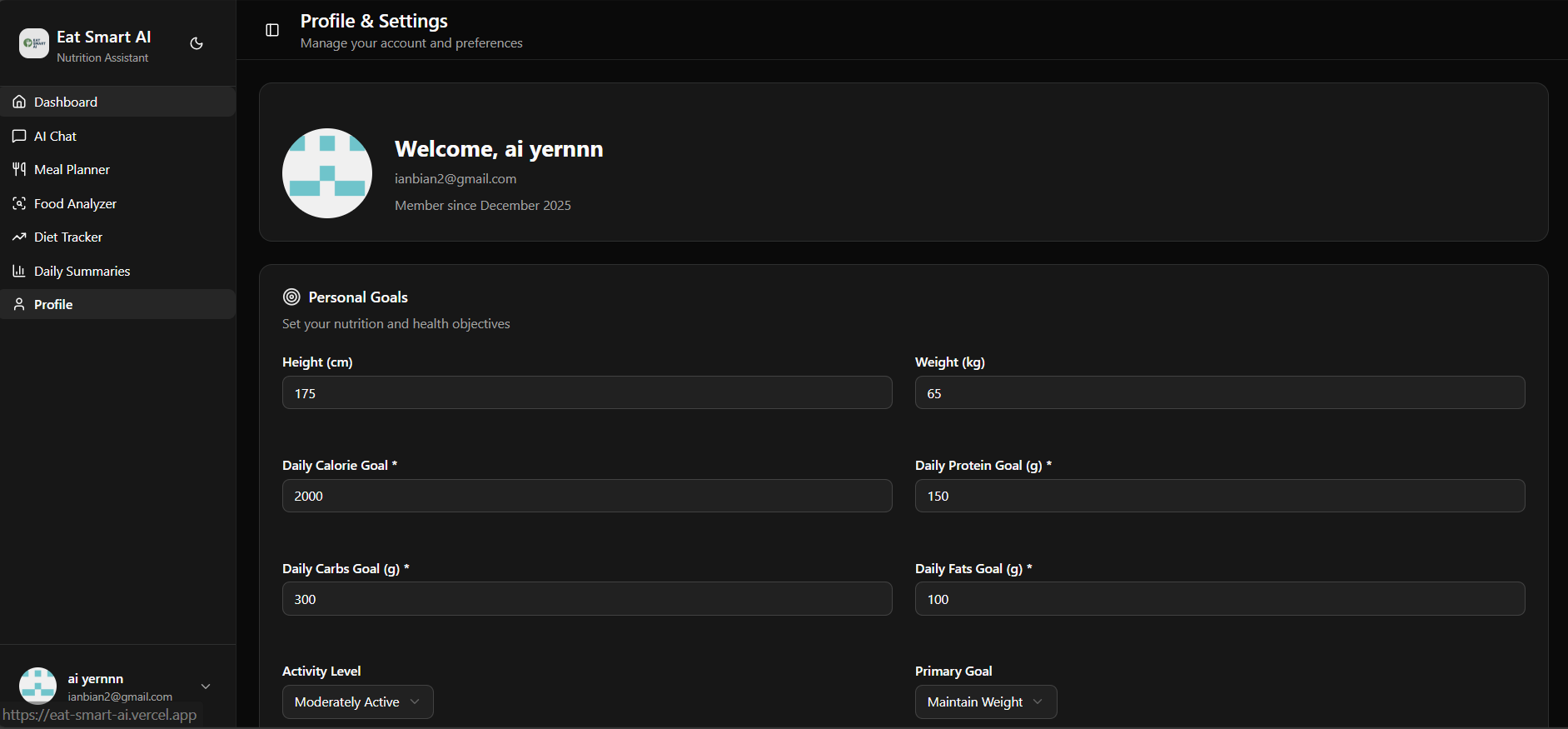
User able to view own profile
-
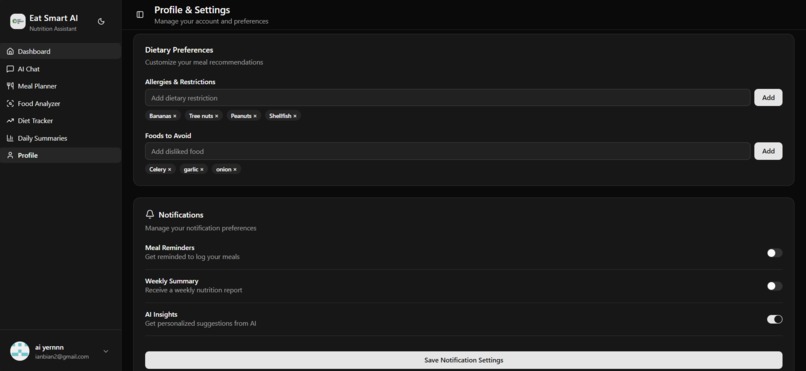
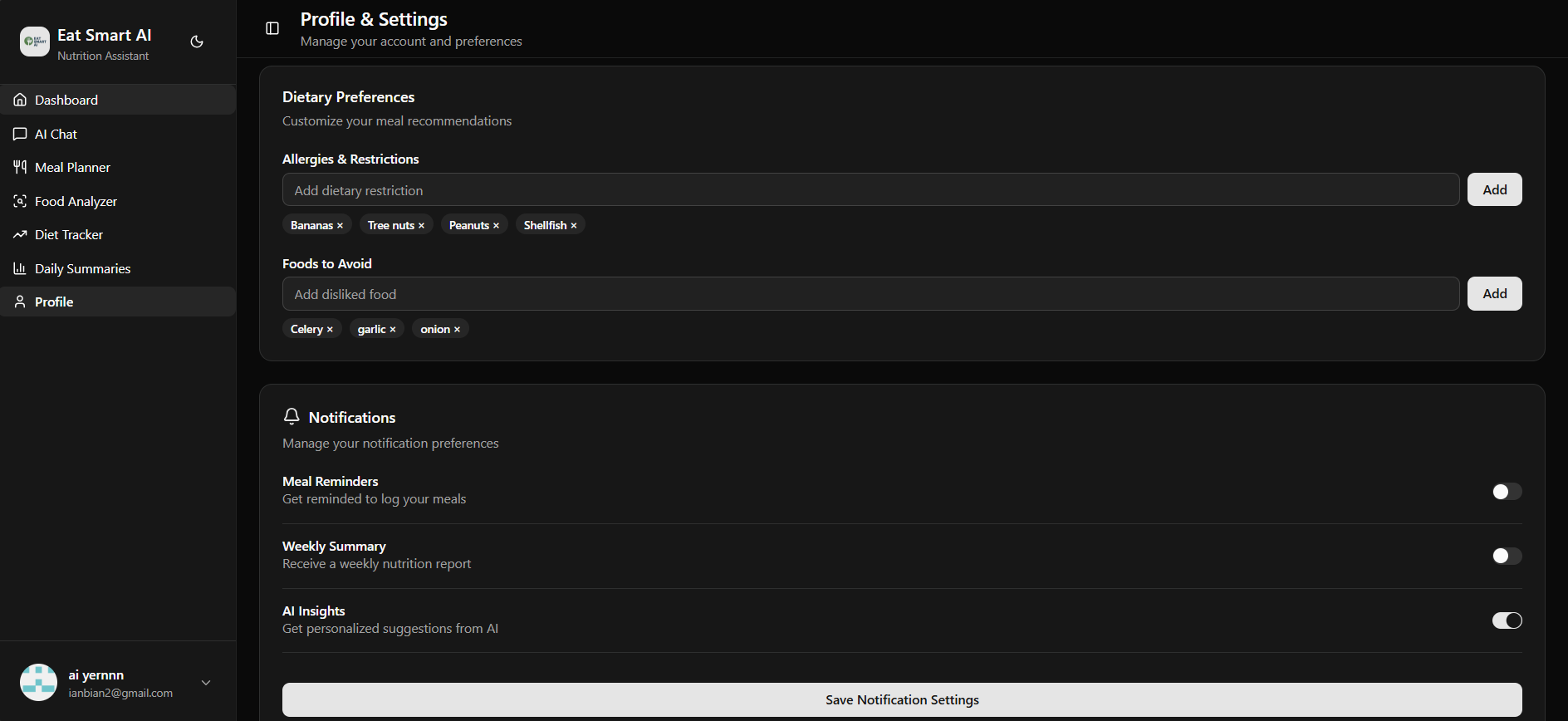
User able to add their allergies and restrictions and food to avoid
-
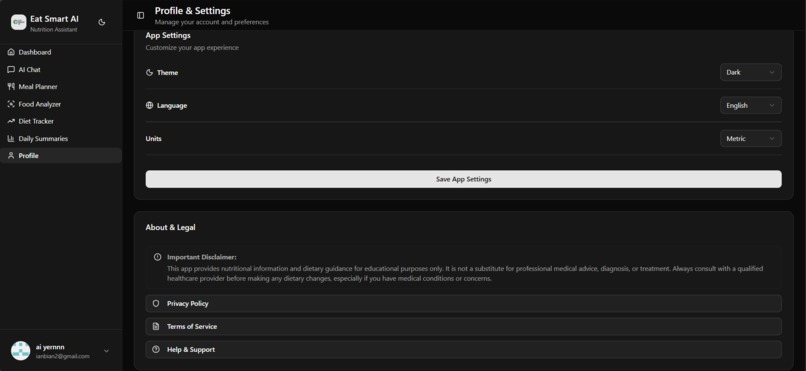
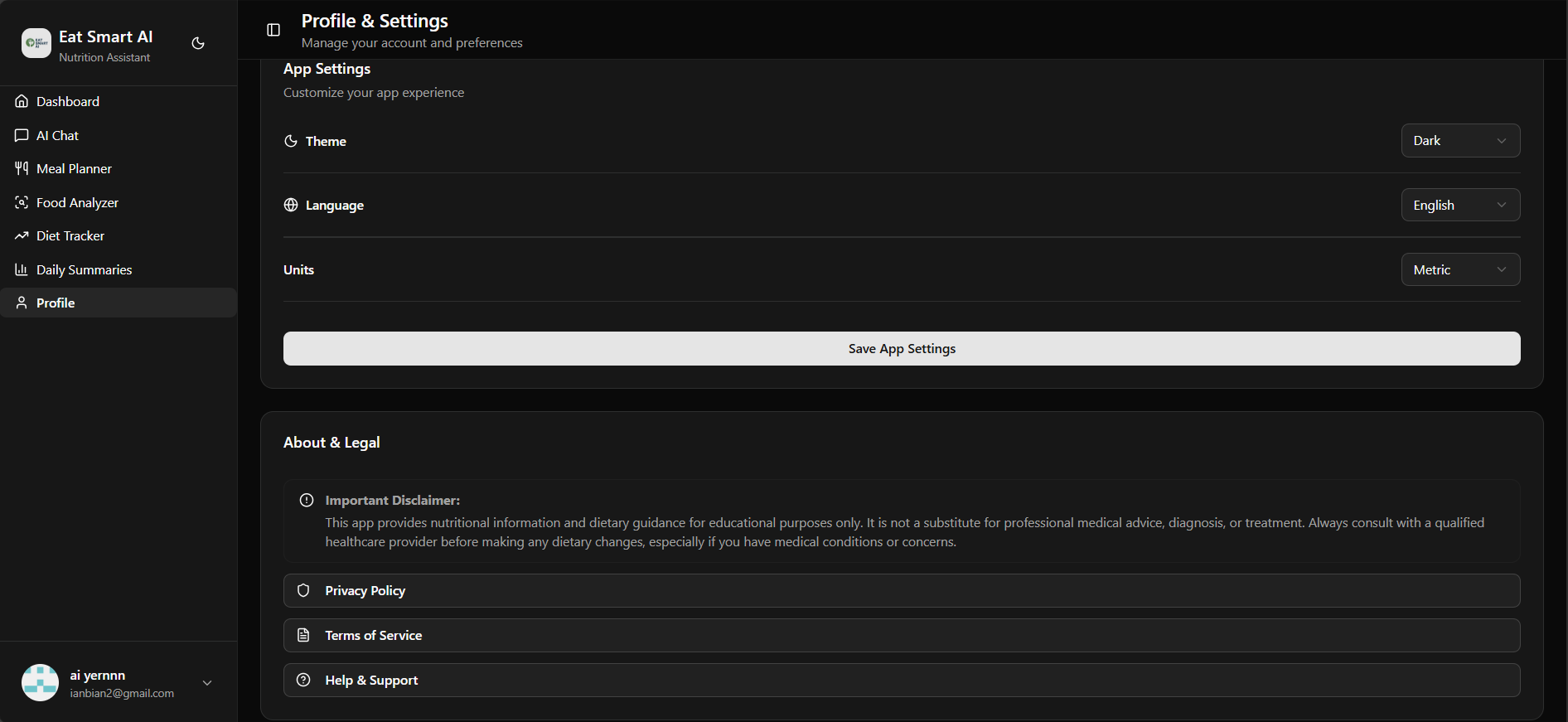
User able to customize their app settings

Inspiration
Many existing nutrition applications focus primarily on calorie counting, which often feels repetitive and difficult to sustain in the long term. While users may know how much they eat, they rarely understand what they are eating or how it impacts their health. We wanted to build a smarter and more supportive system that interprets food in a more human-like way, provides meaningful nutritional insights, and adapts to different dietary habits and cultures.
The ERNIE Hackathon inspired us to explore how large language models can be applied to real-world health challenges and improve everyday decision-making through AI.
What It Does
- Tracks daily meals, water intake, and macronutrients in a single platform
- Uses AI-based image and text analysis to identify food and estimate nutritional values
- Generates personalized 7-day meal plans based on user goals and preferences
- Provides a smart nutrition chatbot for guidance and explanations
- Displays daily summaries, nutrition trends, and diet quality scores
- Supports both English and Mandarin to improve accessibility
How We Built It
Frontend
- Framework: Next.js 15 (App Router) with TypeScript
- Styling: Tailwind CSS v4, shadcn/ui, and Radix UI
- Data Visualization: Recharts for charts and analytics
Backend and Data
- Supabase
- User authentication
- PostgreSQL database
- User authentication
- API Routes
- Secure communication between the frontend and AI services
- Secure communication between the frontend and AI services
Artificial Intelligence
- LLM Integration
- Baidu Ernie 5.0 Thinking
- Baidu Ernie 4.0-8K (latest)
- Integrated via the Baidu AI Studio LLM API
- Baidu Ernie 5.0 Thinking
- AI Client Configuration
- Custom OpenAI-compatible client
- Custom
baseURLpointing to Baidu AI Studio - Secure server-side API key handling
- Custom OpenAI-compatible client
- Prompt Engineering
- Food image analysis
- Nutrition estimation
- Meal planning
- Conversational chatbot responses
- Food image analysis
Deployment
- Platform: Vercel
Version Control
- Git and GitHub
System Design
- Modular and scalable architecture
- Optimized for performance and user experience
Challenges We Ran Into
- Ensuring reasonable nutrition estimation accuracy from images and text
- Designing prompts that generate structured and consistent AI responses
- Managing multilingual support while preserving conversation context
- Balancing real-time AI responses with smooth UI performance
- Coordinating multiple AI-powered features within a single application
Accomplishments That We’re Proud Of
- Successfully applying ERNIE 4.0 and 5.0 across multiple features in a real-world application
- Delivering a fully functional, end-to-end AI-powered web platform
- Creating an intuitive dashboard that simplifies nutrition tracking
- Implementing bilingual AI interaction with persistent chat history
- Deploying a live demo that demonstrates practical AI usage beyond a prototype
What We Learned
- How large language models can enhance personalized health applications
- Practical prompt engineering techniques for structured and reliable AI outputs
- Full-stack integration of AI services with modern web technologies
- The importance of UX design in AI-driven systems
- How to balance automation with user control in health-related applications
What’s Next for EatSmartAI (Application-Building Task)
- Improve food recognition accuracy using hybrid vision and database matching
- Add micronutrient tracking, including vitamins and minerals
- Introduce AI-driven habit analysis and weekly health insights
- Integrate wearable devices and fitness platforms
- Expand language support and regional food databases
Built With
- baidu
- html
- javascript
- next.js
- supabase
- tailwind
- typescript


Log in or sign up for Devpost to join the conversation.