-
-
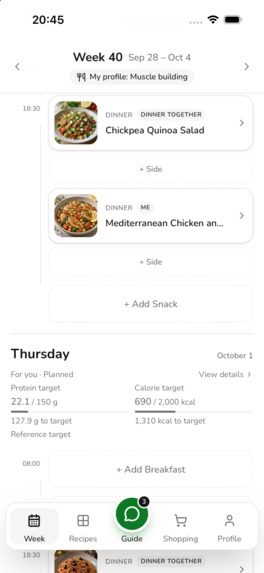
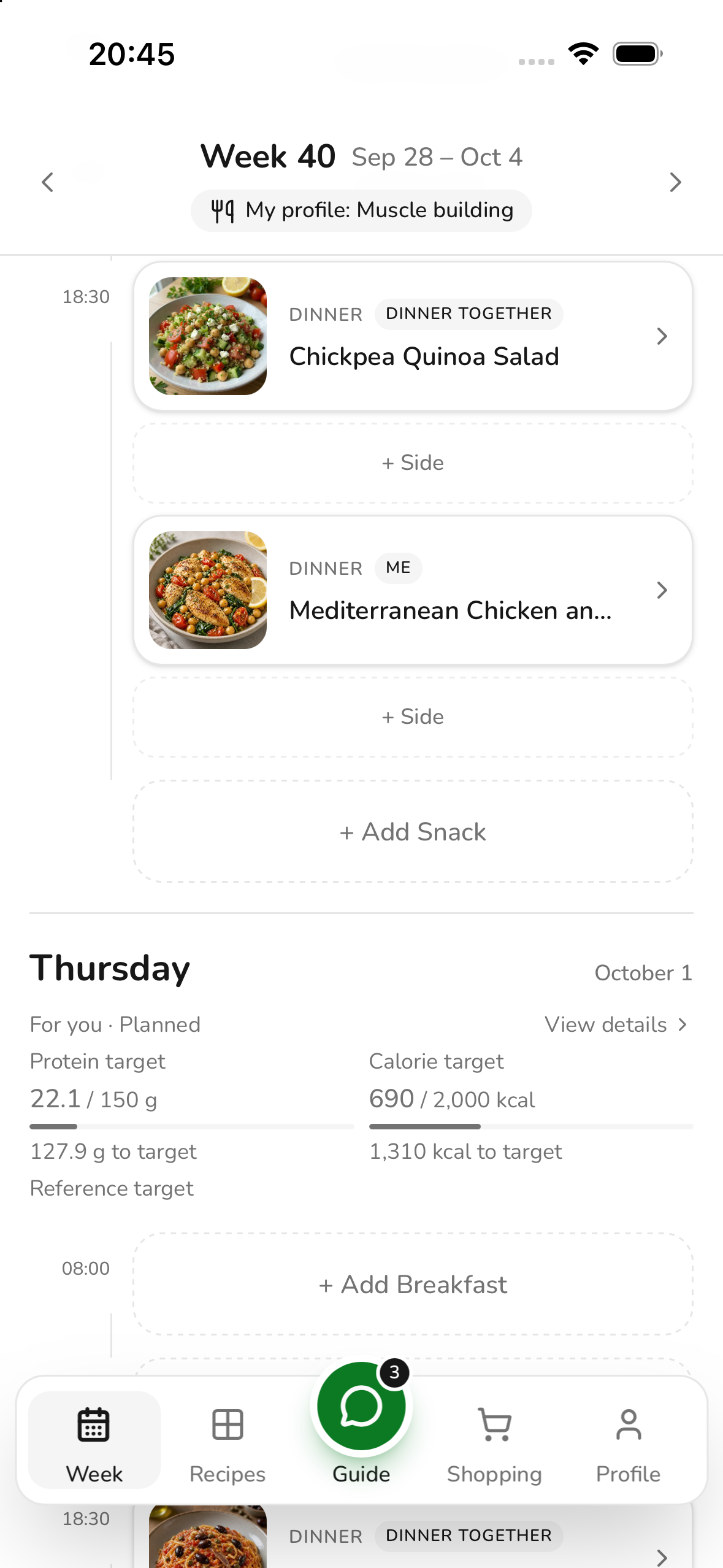
Your goals and your group, in one plan. An active nutrition profile, shared meals and personal entries in one weekly view.
-
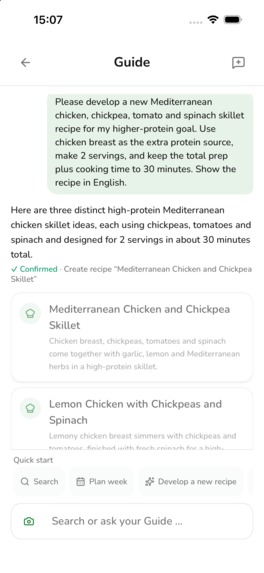
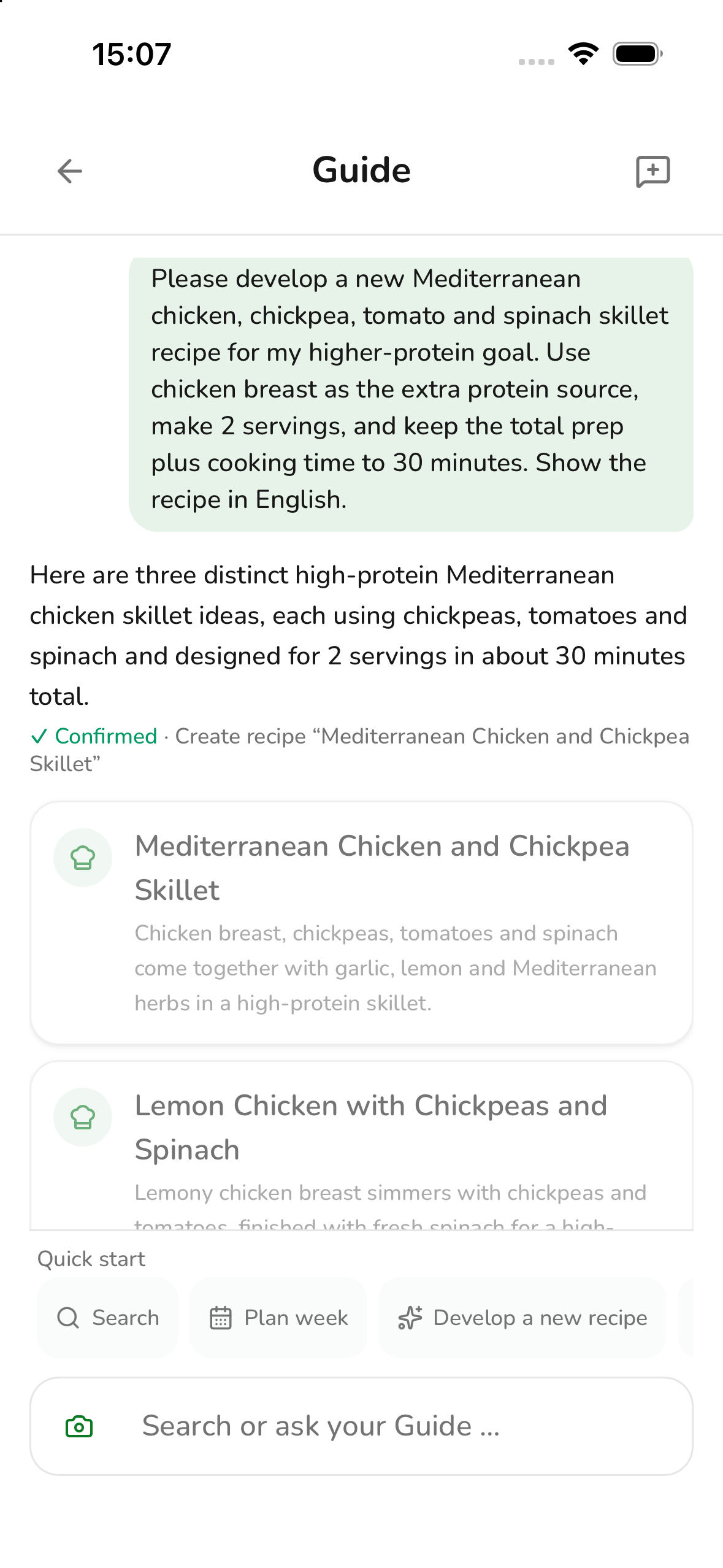
Meal ideas shaped by your goals. A higher-protein recipe request and a confirmed Guide suggestion.
-
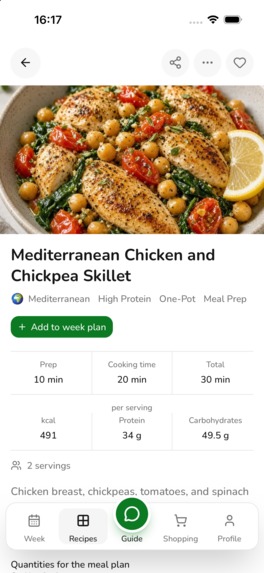
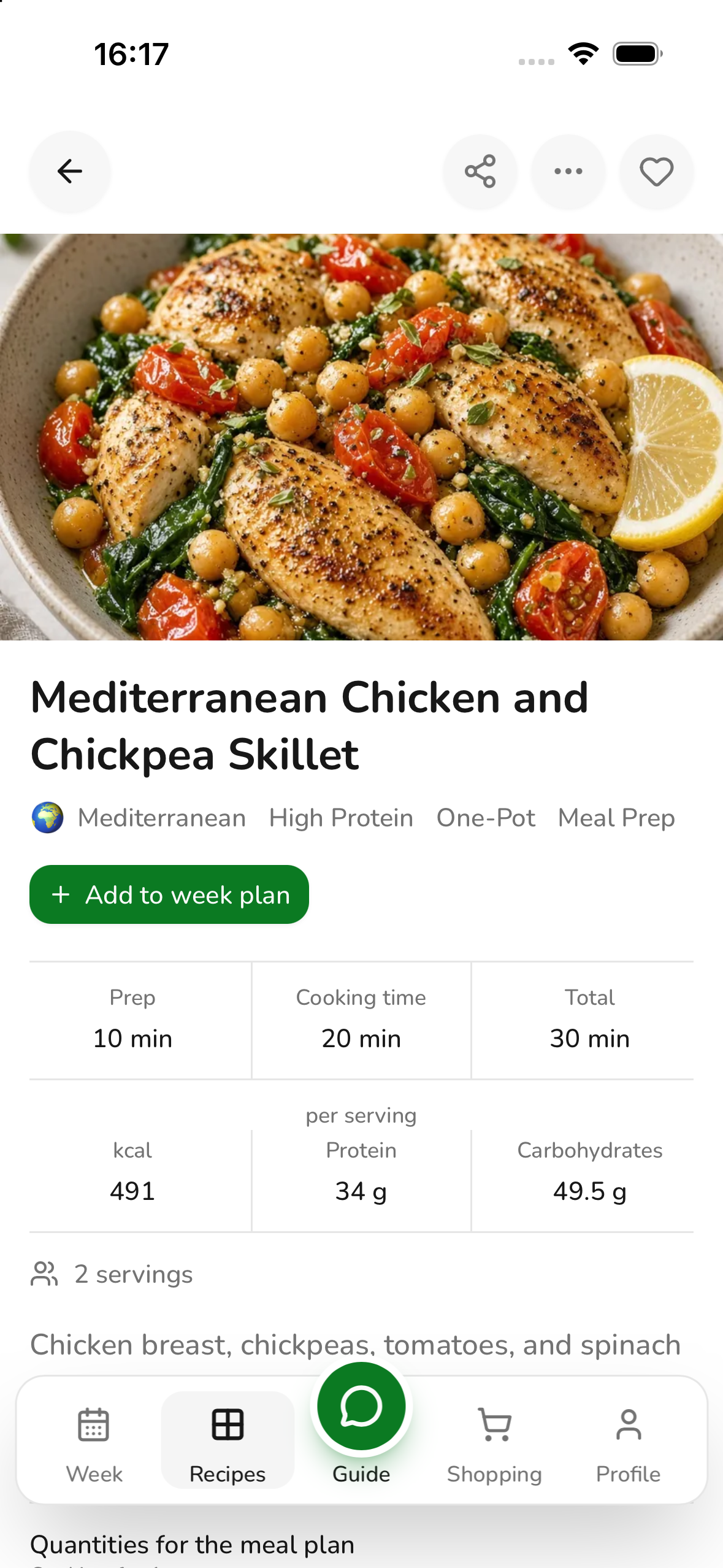
Turn a goal into something you can cook. A saved higher-protein recipe with prep time and nutrition per serving.
-
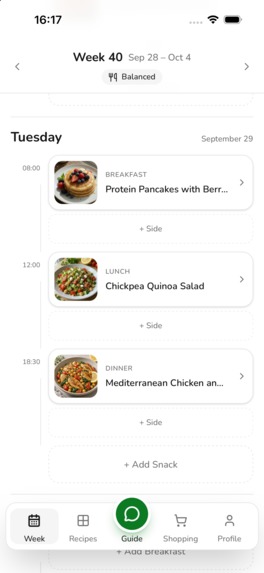
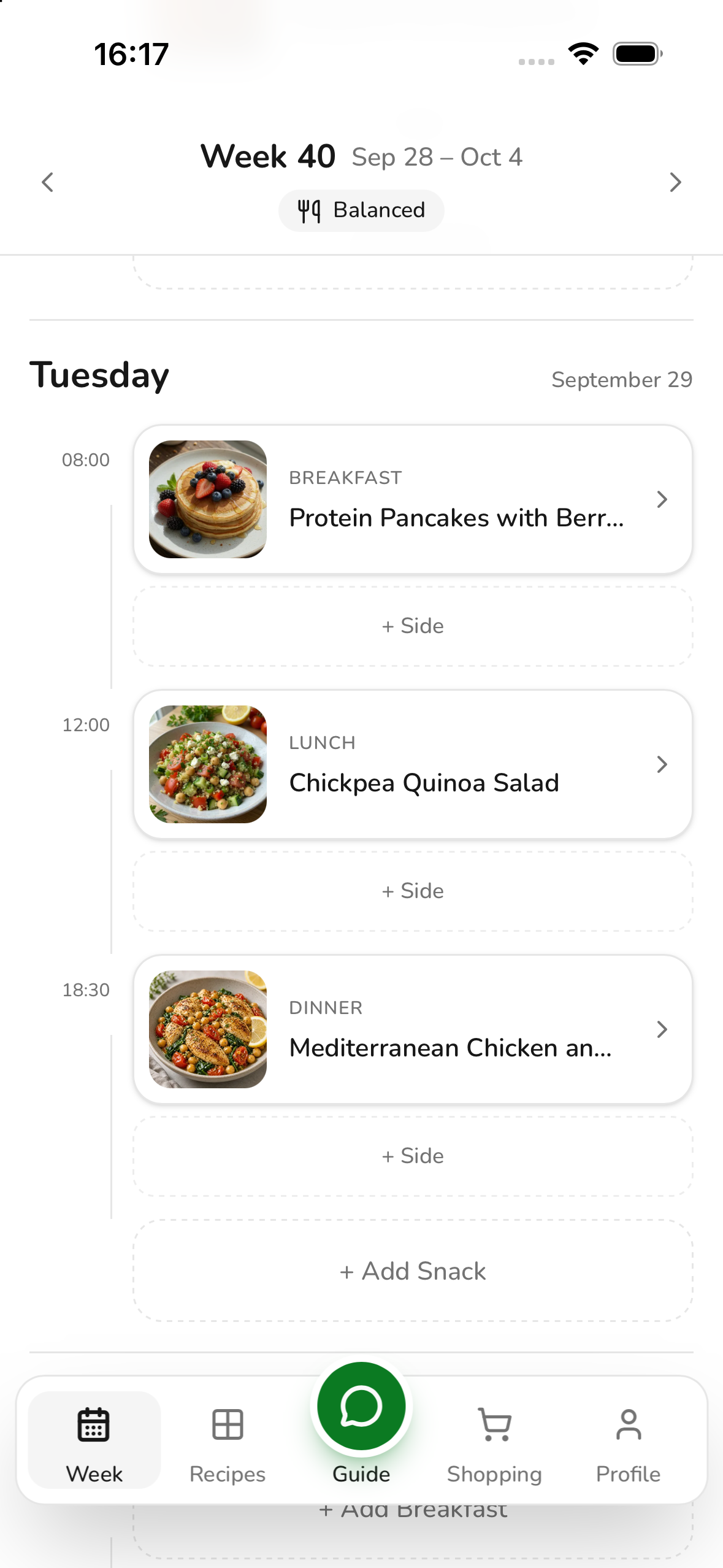
Your meals for the day. Breakfast, chickpea quinoa salad for lunch and a personal dinner in one weekly plan.
-
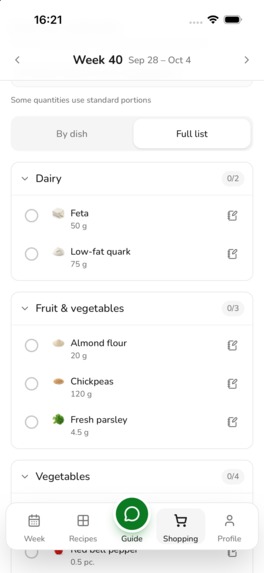
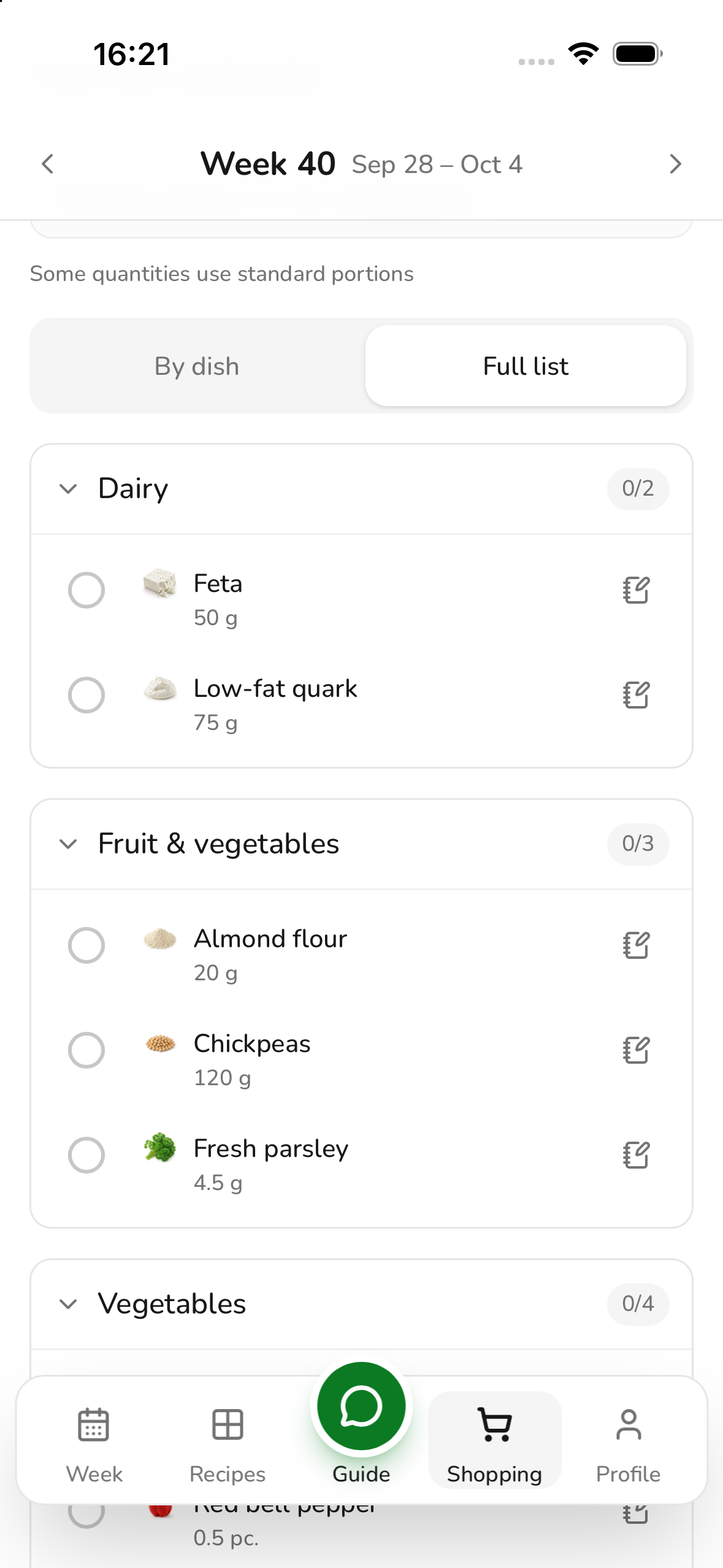
From your plan to your shopping list. Combined ingredients and quantities for planned portions.
-
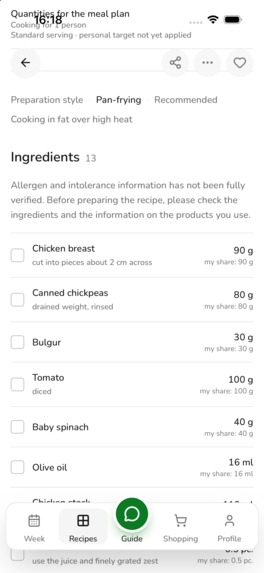
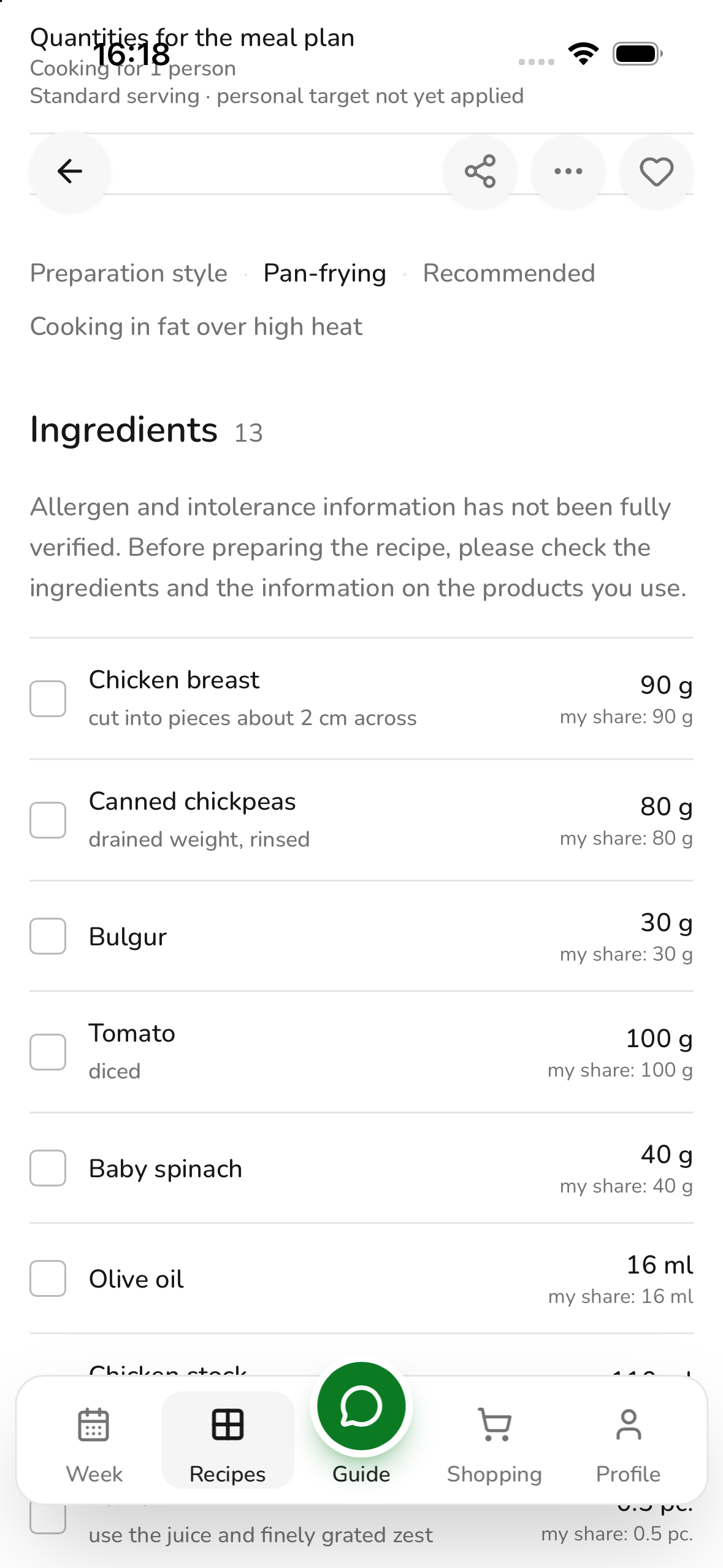
Ingredients and portions for your recipe. English ingredients and quantities for the Mediterranean chicken and chickpea skillet.
-
Eatsboard app icon — original 1024 × 1024 image.
Inspiration
“What should we eat?” gets more complicated when people share meals but have different tastes, routines and nutrition goals. Finding something to cook is only part of the task: someone still needs to coordinate the week and work out what to buy.
I built Eatsboard to make nutrition goals useful in everyday decisions. A personal AI Guide helps you choose suitable meals, bring different preferences together and turn those choices into a plan and shopping list you can use.
What it does
Eatsboard helps you turn nutrition goals into everyday meal choices. Your personal AI Guide connects suitable recipes, meal planning and shopping lists, whether you plan on your own or with a group.
Choose a nutrition profile for goals such as higher protein, lower-carb meals or balanced eating. Your saved profile and preferences guide suggestions, helping you decide what to cook and put on your plan. You review proposed changes before confirming them.
Invite your partner, family or flatmates and find common ground on what to eat. Members’ saved preferences, nutrition profiles and group feedback inform meal suggestions. Keep the meals that suit you and change the ones that do not. Personal meals and group meals can appear in the same weekly view, leaving room for individual choices.
Ask the Guide for meal ideas, describe ingredients you have or develop a personal recipe with quantities and cooking steps. It remembers relevant preferences from conversations and feedback, and you can review or delete its saved memory notes.
Your shared shopping list combines ingredients from planned meals and calculates quantities for the planned portions. View items by dish or in one combined list, and tick off purchases as you shop.
If you want to review what you eat, optional nutrition tracking lets you compare logged calories and nutrients with your personal targets. With your additional permission, the Guide can use your food diary to inform its recommendations. Weight tracking is available too.
Recipe browsing, manual meal planning and shopping lists are free. AI features use an allowance or credits. Eatsboard supports German and English.
How I built it
I built Eatsboard as an iOS app with SvelteKit and Svelte 5 inside Tauri 2. A Bun/Elysia API connects to PostgreSQL through Drizzle ORM, with Supabase authentication.
I designed and built the AI agent harness myself. This custom, provider-neutral foundation powers the Guide, while application services handle planning rules, user preferences, and persistence. Together, they connect conversational suggestions to structured app actions.
A native Swift integration connects RevenueCat and RevenueCatUI to the app. RevenueCat powers Premium subscriptions, credit purchases, and purchase restoration. The backend reconciles purchase state before assigning access and usage balances.
Challenges
Personalization needs both memory and boundaries. In Eatsboard, learning a preference must not silently replace an explicit choice, and a proposed change must remain something the user can review. Shared planning adds another challenge: the plan must accommodate different people while the shopping quantities still reflect participation and portions.
Purchases also need to stay consistent across account changes and interrupted app sessions. The integration ties purchases to the appropriate Eatsboard account and reconciles access with the backend. During iOS release preparation, a native paywall resource issue also led to additional distribution-build checks.
Accomplishments
The central achievement is connecting personal nutrition goals to practical decisions about food. The Guide helps turn a goal and saved preferences into meal ideas, recipes and plans. Shared planning brings different people into that process while leaving room for individual choices, and the shopping list makes the plan actionable. I built this as a solo developer, including the custom AI agent harness and RevenueCat integration.
What I learned
An AI suggestion is only the beginning. The practical work is preserving intent as it becomes a recipe, a plan, and a list of ingredients. Clear confirmations, understandable memory, and reliable purchase state are as important as the generated response.
What's next
The next focus is learning from real use: where people need a follow-up question, which suggestions they keep, and where the path from conversation to cooking becomes confusing. That feedback will guide improvements to the Guide and the workflows around it.
Built With
- drizzle
- elysia
- openai
- postgresql
- revenuecat
- rust
- storekit
- supabase
- svelte
- sveltekit
- swift
- tauri
- typescript
- xai

Log in or sign up for Devpost to join the conversation.