EatWise
Evidence-based ingredient pairings and condition-friendly foods — simple, trustworthy, and actionable.
Inspiration
Too many people get lost in health and nutrition advice. About 54% of U.S. adults have limited health literacy, and low health literacy is linked to ~2× higher hospitalization rates. Each year, an estimated 420,000 people die from unhealthy or unsafe diets. On top of that, ~70% of adults 65+ struggle to access digital health information.
Why is it so hard to trust what to eat? The web is noisy and often contradictory, and guidance rarely accounts for people managing multiple conditions. Many existing apps and AIs are inaccurate or hard for older adults to use, while credible sites read like textbooks.
EatWise is our answer: a trust-first, simple mobile app that shows—at a glance—what to pair and what to avoid for each ingredient or condition, backed by authoritative sources, and turns that guidance into easy, practical recipes.
What it does
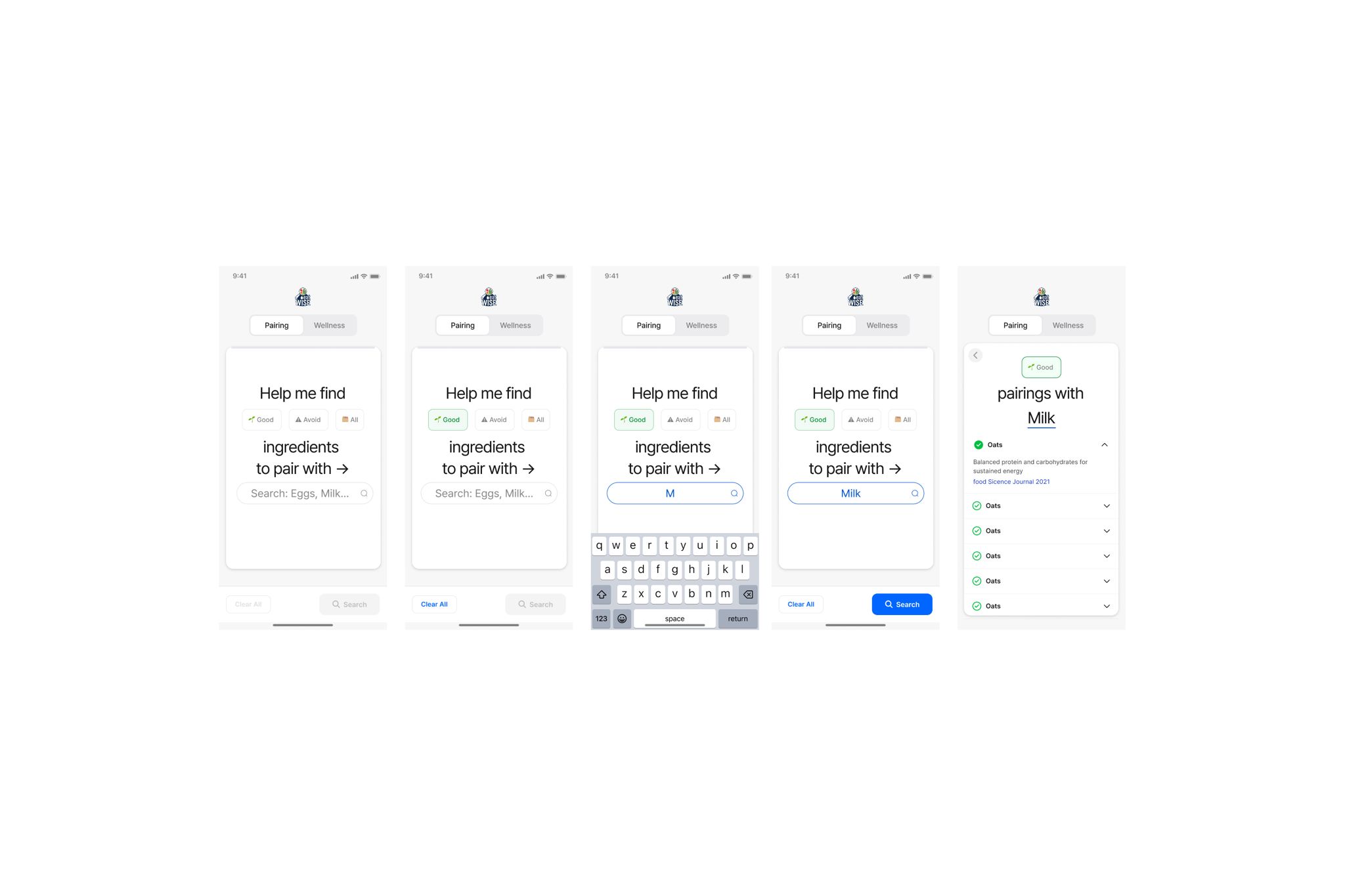
Ingredient → Pair or Avoid
Type any ingredient and instantly see foods that pair well (nutritional synergy) and foods to avoid together (may reduce absorption or worsen outcomes). Every result includes a plain-English one-liner and one authoritative deep link.Condition → Favor or Avoid
Search a chronic condition (e.g., diabetes, hypertension) or a temporary illness (e.g., cold, diarrhea). EatWise lists ingredients to favor and to avoid for that condition, with clear explanations and citations.Extras
Separate views for chronic vs. temporary conditions; multi-condition search (see what to eat/avoid across multiple issues); evidence-first data from government/medical/university sources; recipe suggestions that respect the guidance.
How we built it
- Data model (Prisma/Postgres):
Ingredient,IngredientBenefit,IngredientInteraction,Disease,DiseaseIngredient, andSourcewith composite uniques; each card maps to one deep citation. - Ingestion: whitelist crawl/APIs (e.g., PubMed E-utilities, FDA FoodData Central) → deep pages only → boilerplate removal, canonical URLs, timestamps.
- Extraction (food-level only): rules + classifier to keep explicit food–food / food–condition statements (reject nutrient-only prose).
- Verification: re-ranking, trust classifier (domain/metadata), claim–evidence check (NLI), and human review for edge cases.
- App UX: fast search; All / Benefit / Avoid buckets; “Why?” reveals snippet + link; accessibility defaults (Dynamic Type, contrast, big tap targets, one-hand actions, voice search).
Challenges we ran into — Balancing rigor with effortless UX
Our hardest problem was turning clinical-grade evidence into an interface that even older adults can use in seconds. Early builds read like mini research papers—too many cards, too much text, too many taps. We rebuilt the flow around a single question, “What should I eat next?”
The fix combined plain language (one-line reasons), progressive disclosure (a small “Why?” reveals the citation and snippet), and accessibility by default (larger Dynamic Type, high contrast, big tap targets, bottom actions for one-hand use, voice search, and typo-tolerant inputs). The result is a calm screen with three obvious buckets—All / Benefit / Avoid—so choices are immediate without sacrificing trust or citations.
Accomplishments that we’re proud of — Evidence-first cards
We shipped a working demo where every recommendation is a one-line reason paired with exactly one deep, authoritative link. That constraint forces clarity and keeps claims auditable. In practice: search an ingredient or condition → see Benefit/Avoid cards → tap “Why?” to view the source and evidence snippet → optionally jump to recipe suggestions. Under the hood, a Prisma/Postgres model ensures each card maps to a single Source record, so nothing appears without a verifiable citation.
What we learned
- Editing is the hardest engineering: the biggest gains came from removing anything that didn’t help decide the next bite.
- Clarity beats volume: short, decisive answers with a citation trump long explanations.
- Food-level guidance matters: explicit food–food / food–condition statements make advice instantly actionable.
- Progressive disclosure & accessibility pay off: default screens should decide; details appear only when asked. Bigger type, contrast, one-hand patterns, and voice input help everyone, not just seniors.
What’s next for EatWise
1) More trusted data, wider coverage
Expand the whitelist to WHO, NICE, Cochrane, EFSA, specialty societies (e.g., ADA, AHA), and more university hospitals. Add API connectors (PubMed E-utilities, FDA FDC), enforce deep-link only, and use k-of-n agreement for sensitive claims. Build freshness monitoring (ETag/Last-Modified), link-health checks, and versioned records.
2) Zero-friction personalization (no re-typing conditions)
A private, opt-in Health Profile remembers chronic conditions and dietary preferences so results are auto-tailored. Support multi-condition logic (e.g., diabetes + GERD) with clear Favor/Avoid resolutions. Keep it safe with on-device encryption, explicit consent, and easy pause/clear controls.
3) From hackathon to real users
Launch an MVP to TestFlight/Play Store Early Access with a small pilot (clinics, senior centers). Add a clinician advisory loop for high-impact recommendations. Ship production essentials: accessibility polish, privacy-preserving analytics, support workflow, and a clear medical disclaimer. Explore partner integrations (recipe platforms, grocery lists) to turn guidance into action.
North-star: a daily, trustworthy companion that tells anyone—at a glance—what to pair, what to avoid, and why, backed by a single authoritative link.
We want to be considered for the Best Beginner, United Nations Sustainable Development Goals Enactus Challenge, BluePrint Social Good Track, SEE Sustainable Engineering Track, Best Design, Charles Chang Institute of Entrepreneurship Prize Track
Built With
- chatgpt4
- express.js
- postgresql
- prisma
- react-native
- typescript


Log in or sign up for Devpost to join the conversation.