



Inspiration
As students constantly juggling school, work, clubs, and hobbies, we found that oftentimes we don't have time to dedicate to think about what goes into our bodies. We wanted to provide a way for students to empower themselves in their own nutrition. Since the dawn of social media and smartphones, stopping to take a food pic before eating has become second nature. From that, we thought about creating an app that leverages this behavior and combines it with AI technology to help users make informed choices about their nutrition.
What it does
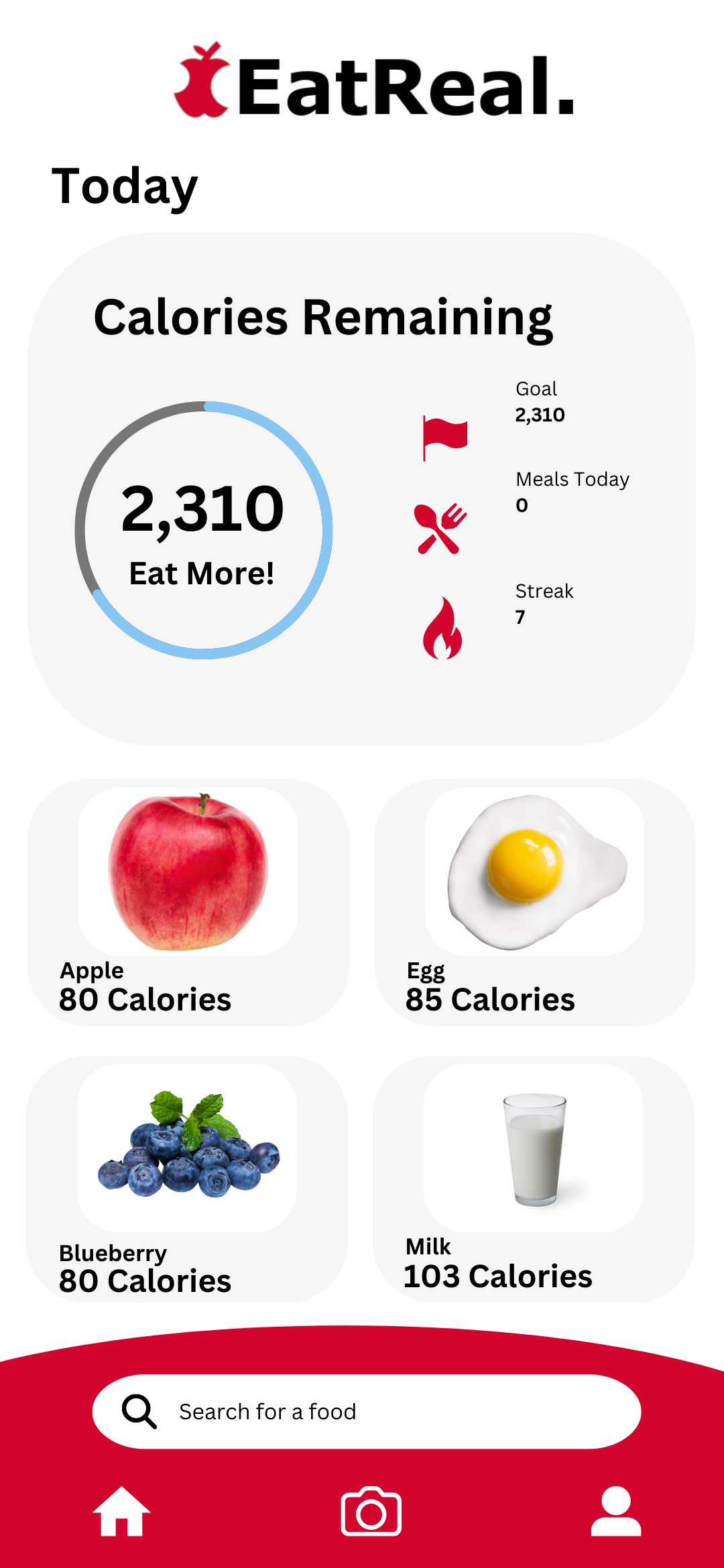
Our app, Eat Real, empowers users to progress toward their caloric goals, share milestones, and motivate friends, all through AI-enabled, photo-search technology. Users can simply snap a picture of their meal, and the app not only recognizes the food but also provides nutritional information and tracks their caloric intake. Additionally, it allows users to set personalized caloric goals, share their progress with friends, and even get AI-driven meal recommendations to help them stay on track.
How we built it
In building the "Eat Real" app, we utilized React for the front-end and Firebase for the back-end. React, known for its flexibility and component-based structure, enabled a dynamic and responsive user interface with efficient state management. Firebase provided secure user authentication, real-time database for data synchronization, cloud functions for server-side logic, and hosting for seamless deployment. This combination of React and Firebase formed a robust foundation, streamlining development and ensuring a smooth user experience.
Challenges we ran into
Developing "Eat Real" brought forth challenges including connecting the front-end to back-end for seamless data exchange, managing successive API calls for services like Google Cloud Vision and Calorie Ninjas, training AI models for accurate food recognition, providing global context for react variables, and optimizing data storage to handle a growing user base. These hurdles drove our team to innovate and refine our technical and logistical strategies for a smoother user experience.
Accomplishments that we're proud of
Our achievements in developing "Eat Real" include successfully bringing our concept to life with fully functional code and demonstrating our ability to work effectively in high-stress environments. We're particularly proud of implementing essential features such as the Google Authentication API for seamless user account linking, integrating Google Cloud Vision and Calorie Ninjas for food recognition and calorie tracking, and creating a robust backend infrastructure. These accomplishments reflect our commitment to creating a robust and user-friendly nutrition app.
What we learned
In developing the "Eat Real" app, we learned to proficiently integrate APIs like Google Cloud Vision and Calorie Ninjas, manage routes with React Router, and prioritize UI/UX design for an appealing and user-friendly experience. Additionally, we realized the power of community and social support in motivating users and enhanced our social features accordingly. Our research emphasized the importance of user privacy and data security, prompting us to learn about safeguards to protect user information in future iterations of the app. These technical and ethical lessons have shaped "Eat Real" into a well-rounded platform that empowers users to make healthier choices while fostering a supportive and secure community.
What's next for Eat Real.
The future of Eat Real is exciting! We plan to further enhance our AI technology to provide even more accurate food recognition and nutritional information. We'll also expand our social features to create a more interactive and supportive community of users. Additionally, we would like to explore partnerships with nutrition experts and dietitians to provide personalized guidance within the app. Our ultimate goal is to continue empowering individuals to make healthier choices and improve their overall well-being.


Log in or sign up for Devpost to join the conversation.