-
-
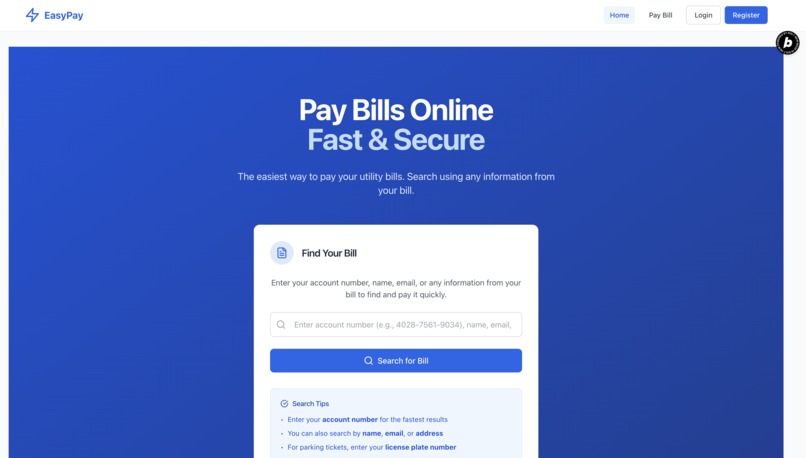
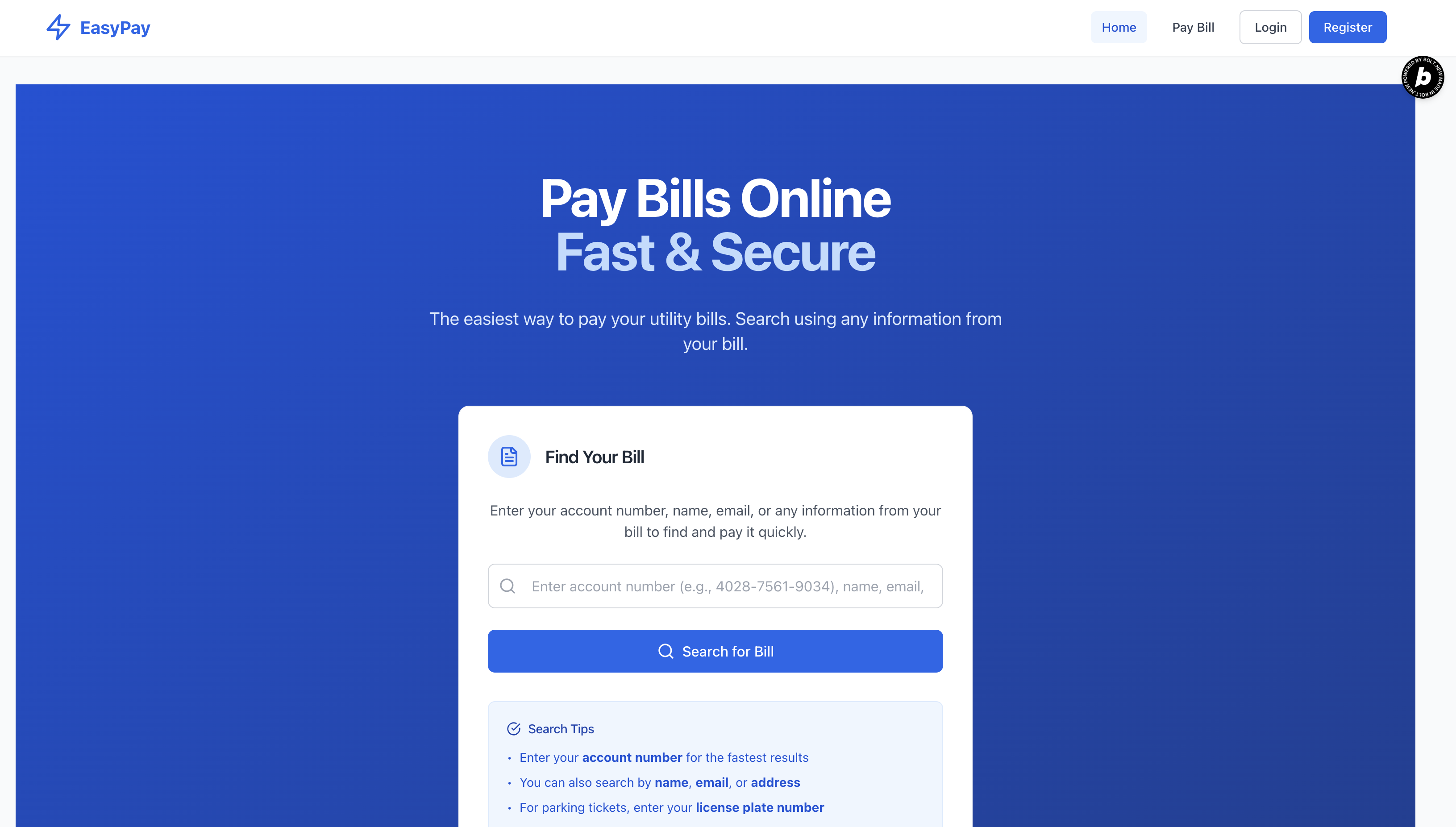
Streamlined version of ePayment service, specifically designed for small and medium cities with limited budgets and technical resources.
Inspiration
We built this WebApp for small cities that can’t afford expensive billing systems or hire developers to build one from scratch. Across the U.S., there are hundreds of small municipalities—like Wilson and Roseland, Louisiana—where the tax base is simply too small to sustain modern software infrastructure.
Thanks to Bolt, we can now take a city's unique billing requirements and build a fully customized demo in just one hour—and deliver a working WebApp in under a week. What used to take 90 days now takes less than 7.
The only thing slower than our development? Waiting for the contract to be signed.
The biggest challenge? Integrating with diverse payment gateways. But with Bolt, even that becomes manageable. This tool has been nothing short of magic for me and my partner.
What it does
EasyPay Utilities is an all-in-one bill payment platform built for small cities and municipalities. It offers powerful tools for users, administrators, and local governments to manage bills, accept payments, and streamline utility payment affordably and securely.
How we built it
I used Bolt.new to rapidly design and customize the front end, enabling fast turnaround for client demos. Supabase powers authentication, data storage, and admin logic, while Stripe handles secure payments. Bolt AI frontend development React + Tailwind CSS (via Bolt) for clean and responsive UI AI prompt engineering (via Bolt’s OpenAI integration) Supabase (db) Netlify LLM (OpenAI API) Stripe the whole project was in Bolt (prompting), database: supabase, Netlify hosting
Challenges we ran into
One of the main challenges was payment gateway integration. Many small cities don’t use Stripe—instead, they rely on providers like First Data, which often come with limited documentation or outdated integration methods. For the hackathon, we used Stripe in demo mode to showcase the end-to-end payment flow. In real deployments, adapting to legacy gateways like First Data requires extra effort and customization.
Accomplishments that we're proud of
Built and deployed a fully functional billing system in under a week, tailored for small municipalities.
Delivered live demos in just 1 hour using real requirements from cities like Wilson and Roseland, Louisiana.
Customized billing types, late fee logic, and user roles without writing code from scratch.
Integrated Stripe for instant payments, showcasing a modern user experience during the hackathon.
Enabled small cities to own a secure, scalable platform without needing to hire developers or spend heavily.
Turned a 90-day development process into a 7-day sprint—changing the game for public sector tech.
What we learned
Speed matters, but clarity matters more—understanding a city's real needs up front saved us days of back-and-forth.
Legacy systems are still the norm in small municipalities, so modern tools must adapt to older workflows.
No-code platforms like Bolt can deliver serious power when paired with a clear vision and strong backend like Supabase.
Payment integration is rarely plug-and-play—each city has its own preferred gateway, and adapting requires flexibility.
Building trust is just as important as building software—our ability to deliver quickly helped city leaders take the leap.
What's next for EasyPAY
Real Payment Gateway Integrations: We’re working on adding support for gateways like First Data, Fiserv, and other city-preferred processors to replace the Stripe demo used in the hackathon. We’re working to automate the flow of data from external billing systems—like utility meters, citation databases, and permit offices—directly into EasyPay. This eliminates manual entry, reduces errors, and ensures that new bills are instantly available for payment.

Log in or sign up for Devpost to join the conversation.