-
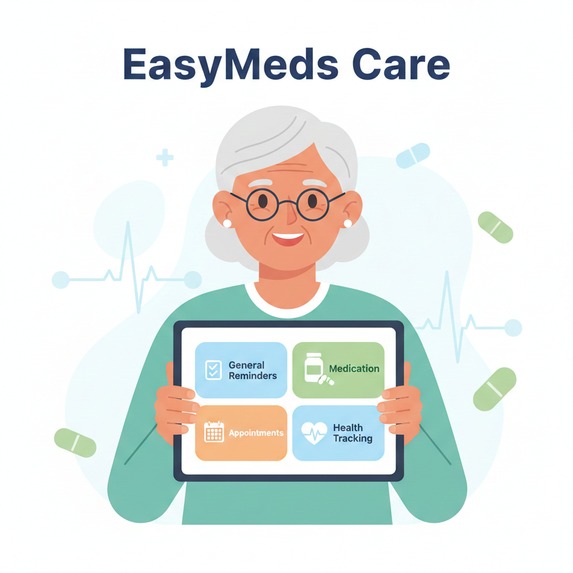
Confidence for seniors, peace of mind for families.
-
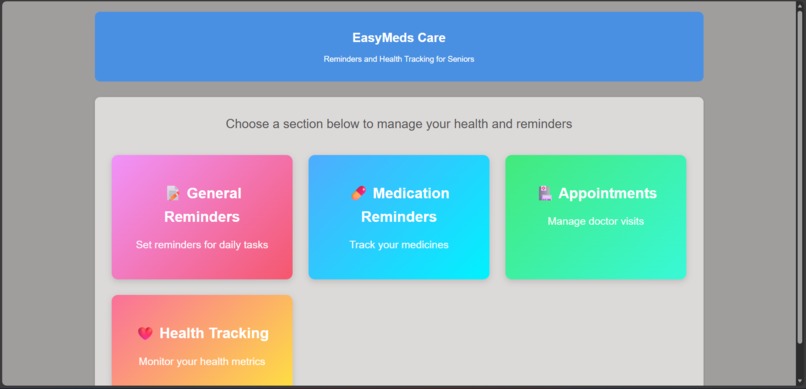
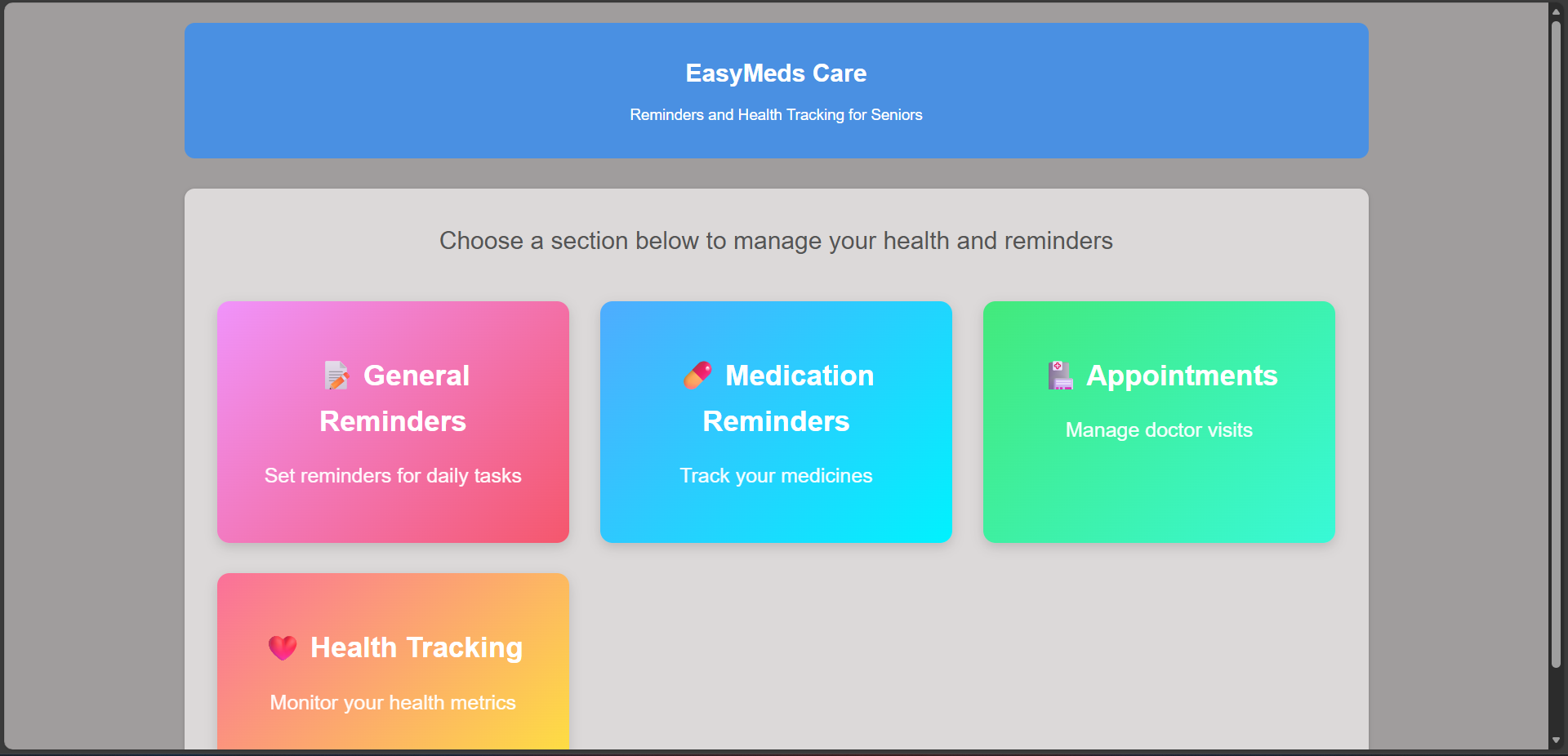
Dashboard
-
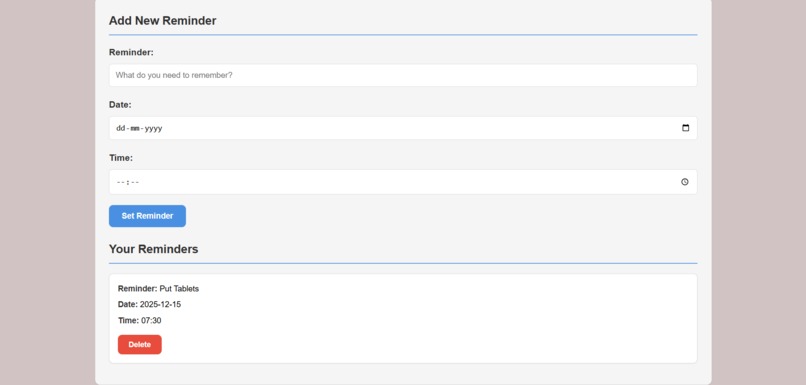
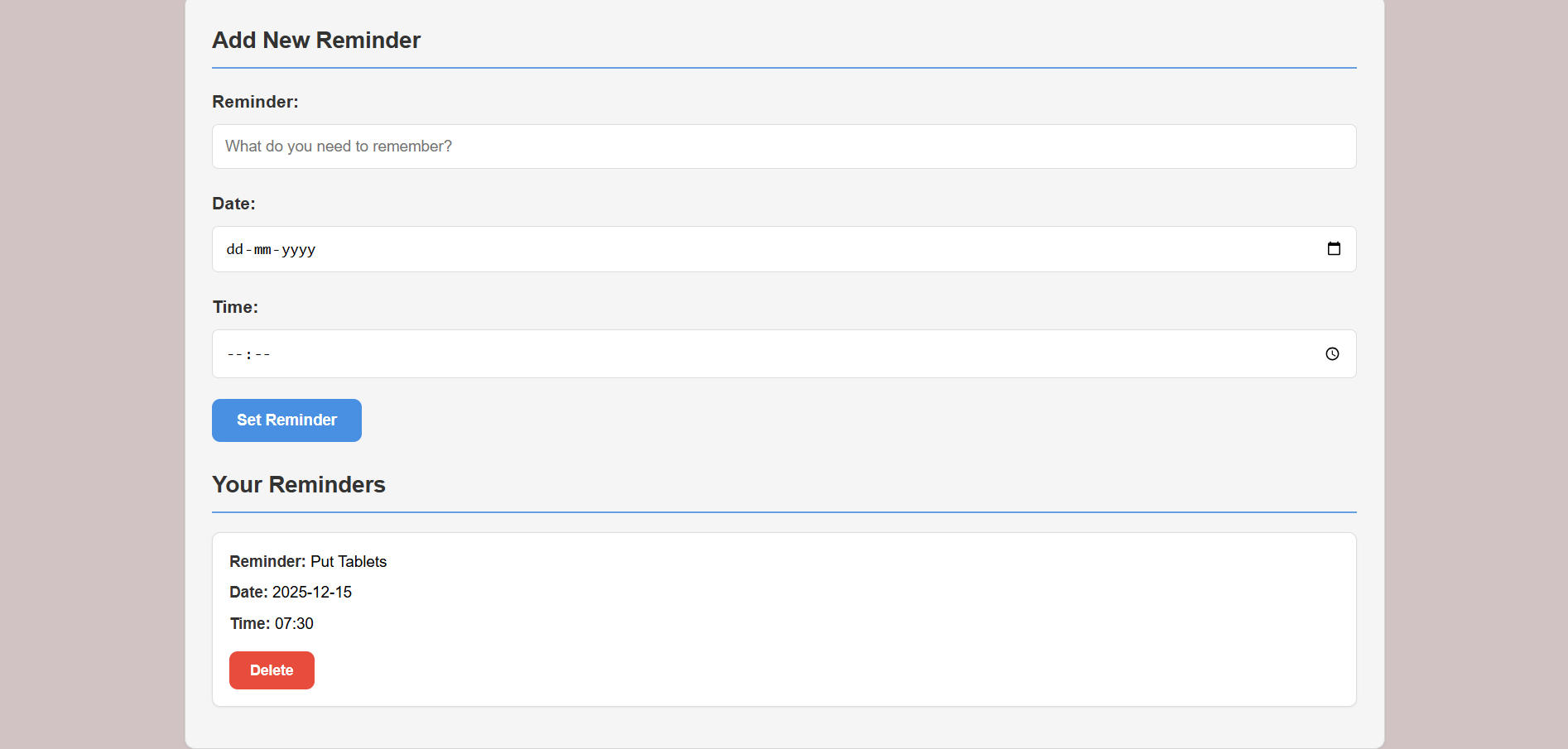
Adding Reminders
-
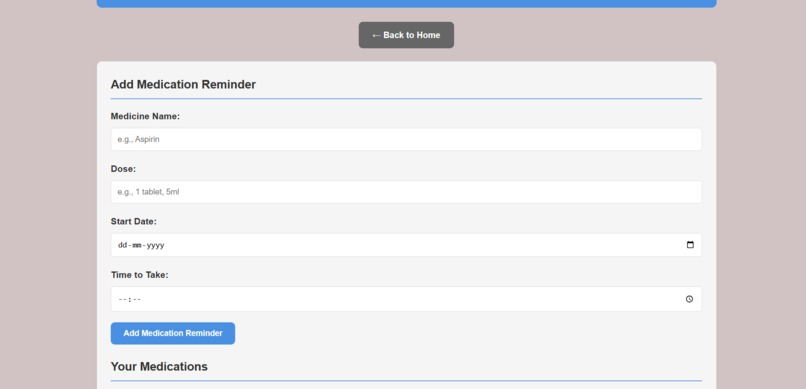
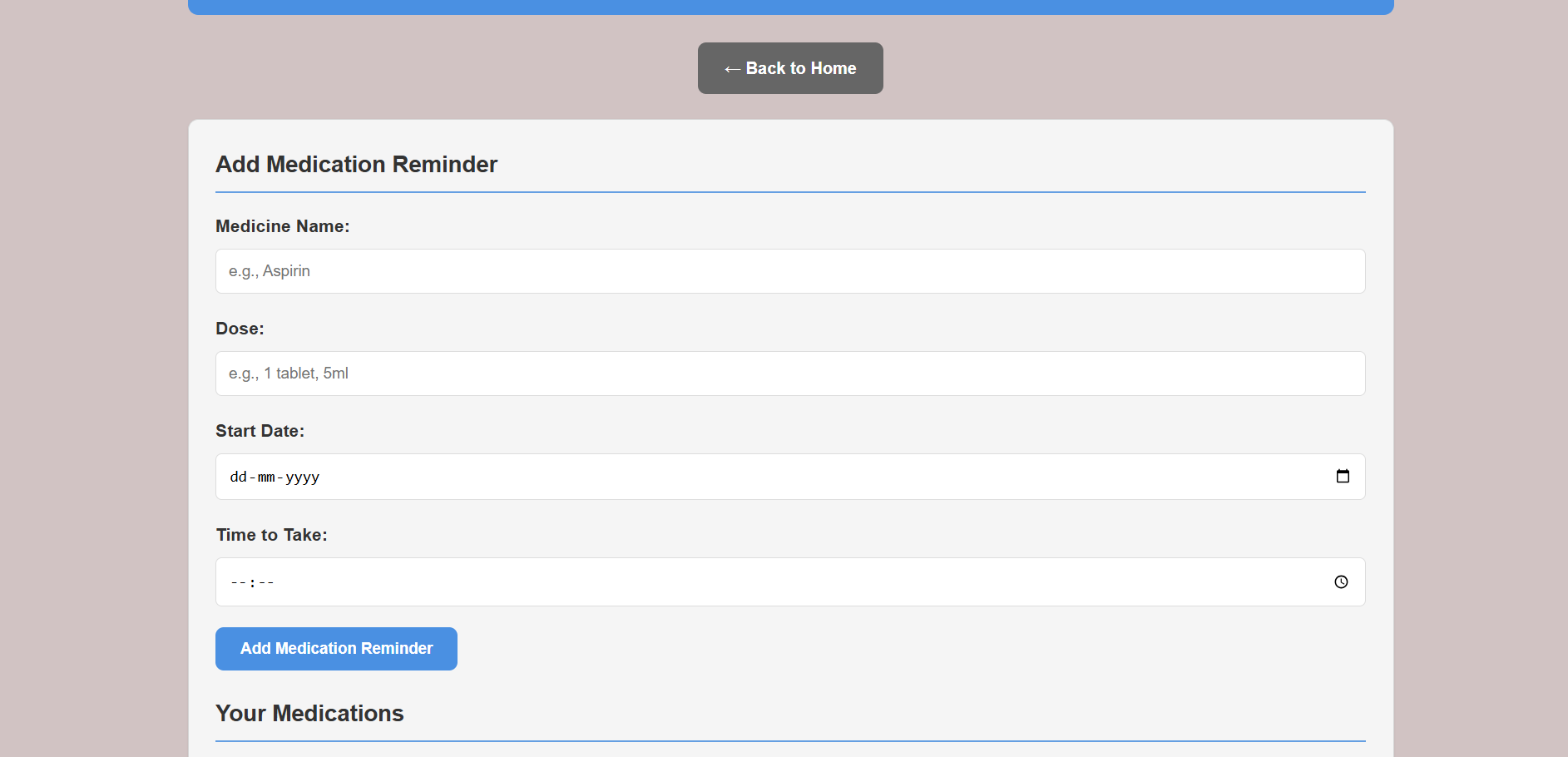
Add Medication Reminder
-
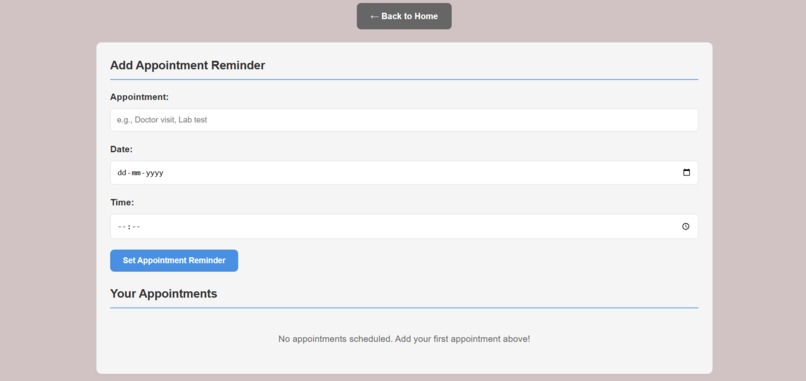
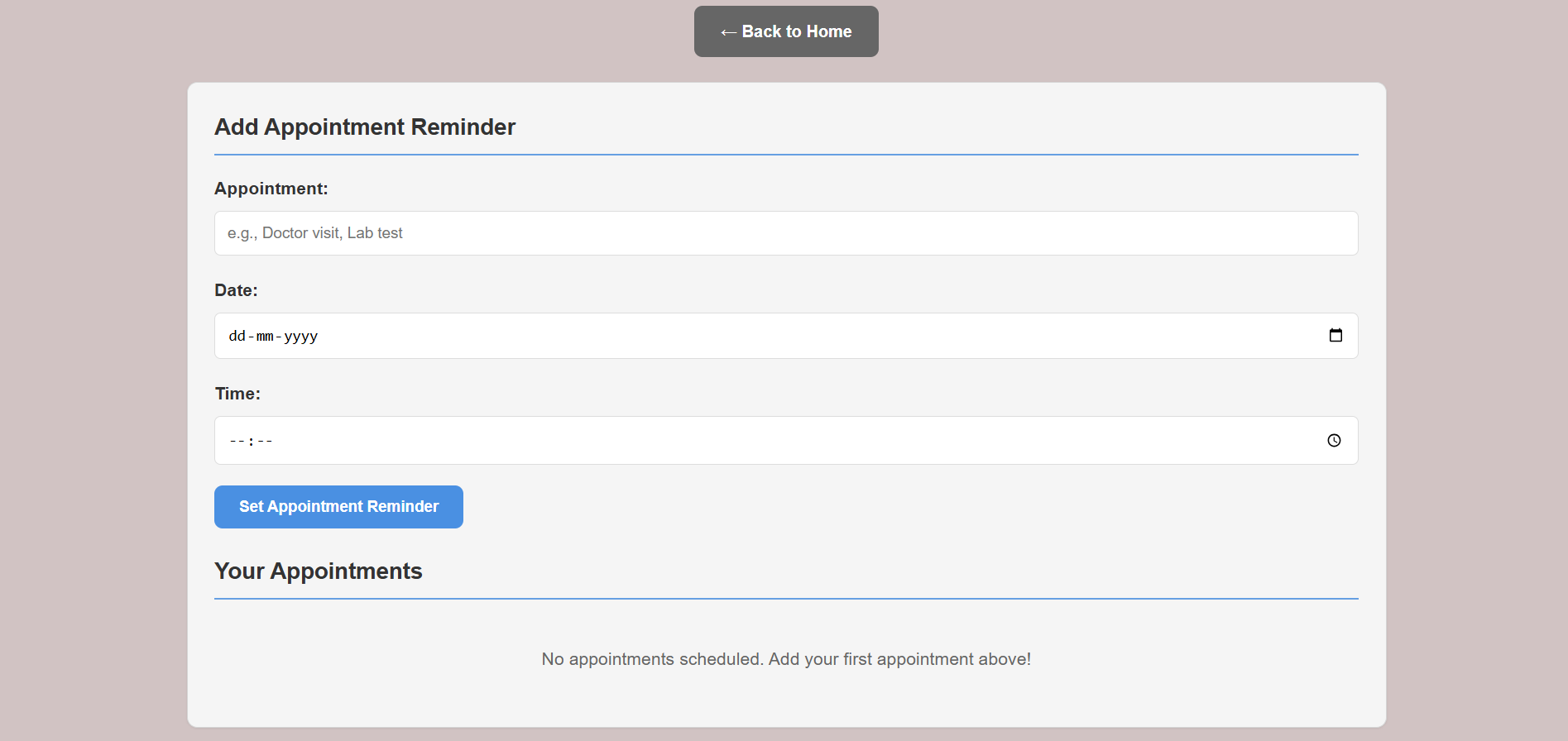
Add Appointment Reminder
-
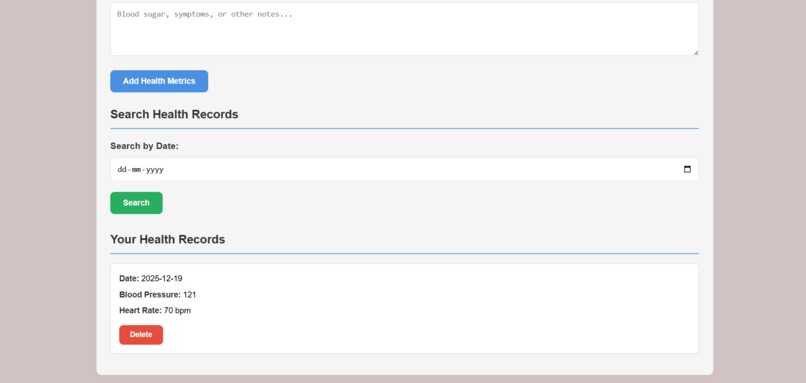
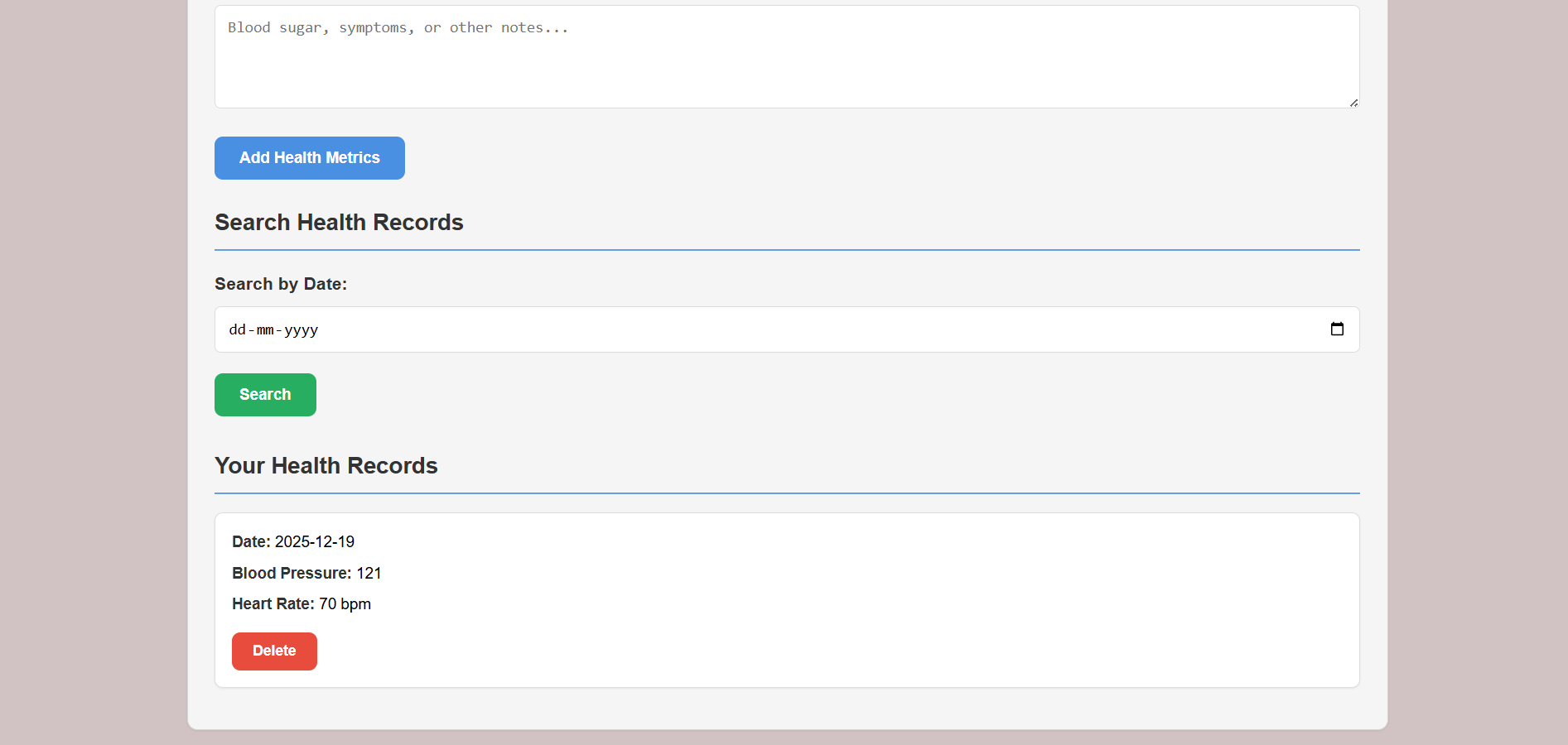
Search Health Records
✨ Inspiration Managing daily medicines, doctor visits, and health readings is hard for many seniors and their families. Missed doses or forgotten appointments can quickly turn into serious health problems, especially for people with chronic diseases. EasyMeds Care was inspired by the idea of giving seniors a simple, non‑confusing tool that keeps their health routine organized while giving their families more peace of mind.
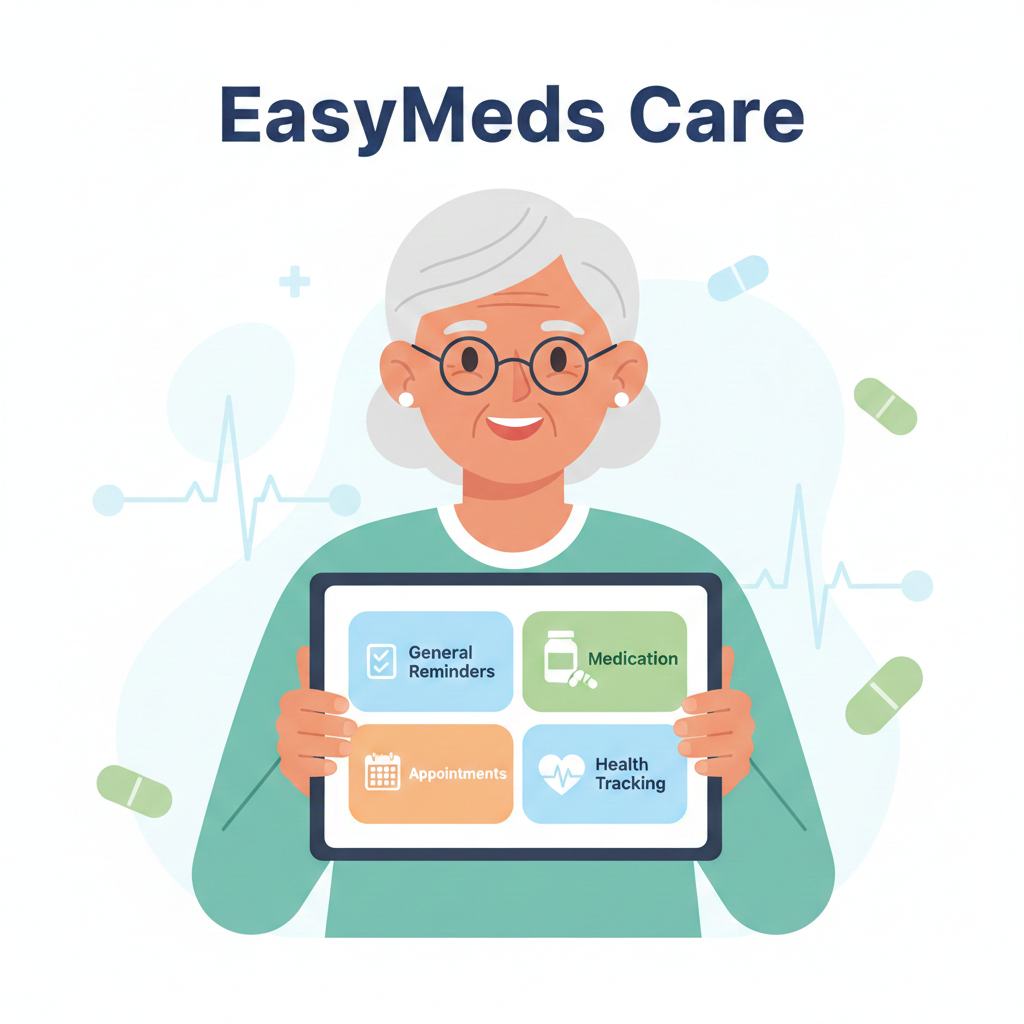
💊 What it does EasyMeds Care is a web app that lets seniors (or their caregivers) manage four things in one place: general reminders for daily tasks, medication reminders with name, dose, date, and time, appointment reminders for doctor visits and lab tests, and health tracking for blood pressure, heart rate, and notes, with search by date. Everything is shown in a clean, elder‑friendly interface with large text, big buttons, and simple navigation.
🛠️ How we built it The backend is built with Python Flask, using Jinja2 templates to render HTML pages for each module (reminders, medications, appointments, health). Data is stored in local JSON files for simplicity, with helper functions handling load, append, and delete operations. The frontend uses semantic HTML and custom CSS embedded in a shared base.html layout to keep the UI consistent and responsive on both desktop and mobile screens.
⚙️ Challenges we ran into One challenge was designing an interface that feels modern but is still comfortable for elderly users—avoiding clutter, heavy gradients, and small fonts. Another challenge was managing JSON storage safely (adding IDs, handling missing files, avoiding crashes on bad data) while keeping the code easy to understand for a small hackathon project. Deploying a Flask app with file‑based storage also required picking hosting options that support persistent disk instead of purely serverless functions.
🏅 Accomplishments that we're proud of We’re proud that EasyMeds Care is a complete, end‑to‑end solution: it has multiple working modules, consistent navigation, input validation, and data persistence, not just a static UI. The app runs locally and can be deployed online, and the layout is clean enough that a non‑technical senior could realistically use it with minimal help. Turning a rough idea (“a meds reminder for seniors”) into a functioning, multi‑page health assistant within hackathon time is a big win.
📚 What we learned We learned how to structure a small but real Flask project with templates, helper functions, and JSON storage, and how to think about UX from an accessibility point of view instead of just aesthetics. We also gained experience preparing a project for deployment (requirements file, gunicorn command, README) and telling a clear story about problem → solution → impact, which is crucial for hackathon judging.
🚀 What's next for EasyMeds Care Next steps include adding Progressive Web App (PWA) features so EasyMeds Care can be installed on phones and work offline, and later enabling web push notifications for time‑based medication and appointment reminders. Over time, we’d like to replace JSON with a proper database, add secure user accounts so each family member has separate data, and explore sharing summaries with doctors or caregivers to improve remote monitoring.

Log in or sign up for Devpost to join the conversation.