Inspiration
Most AI tutors give one explanation and stop. If it doesn't click, you're stuck rereading the same words — and nothing ever checks whether you actually understood it, only whether you read it. I wanted to build something that adapts to how a person learns and then proves understanding, not just exposure.
What it does
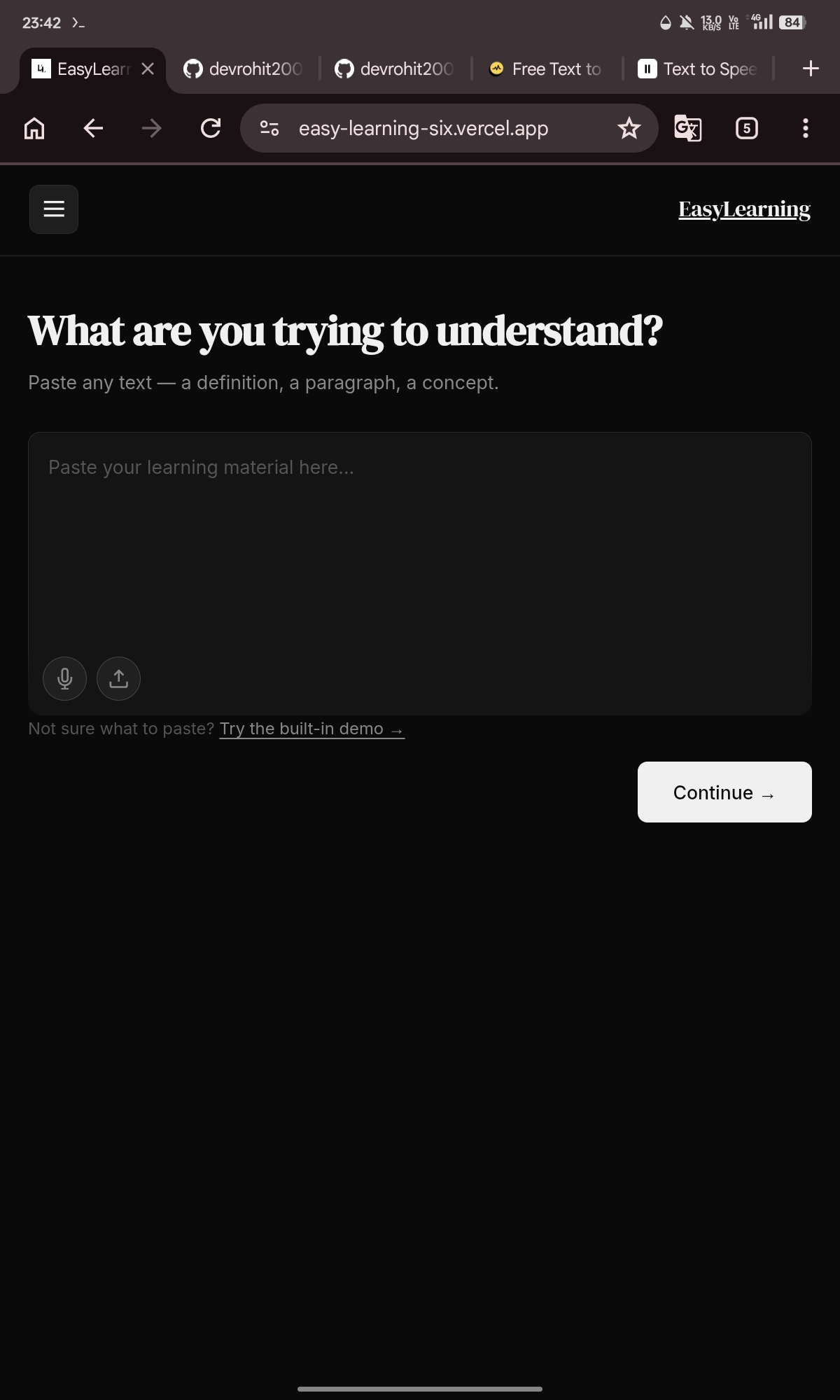
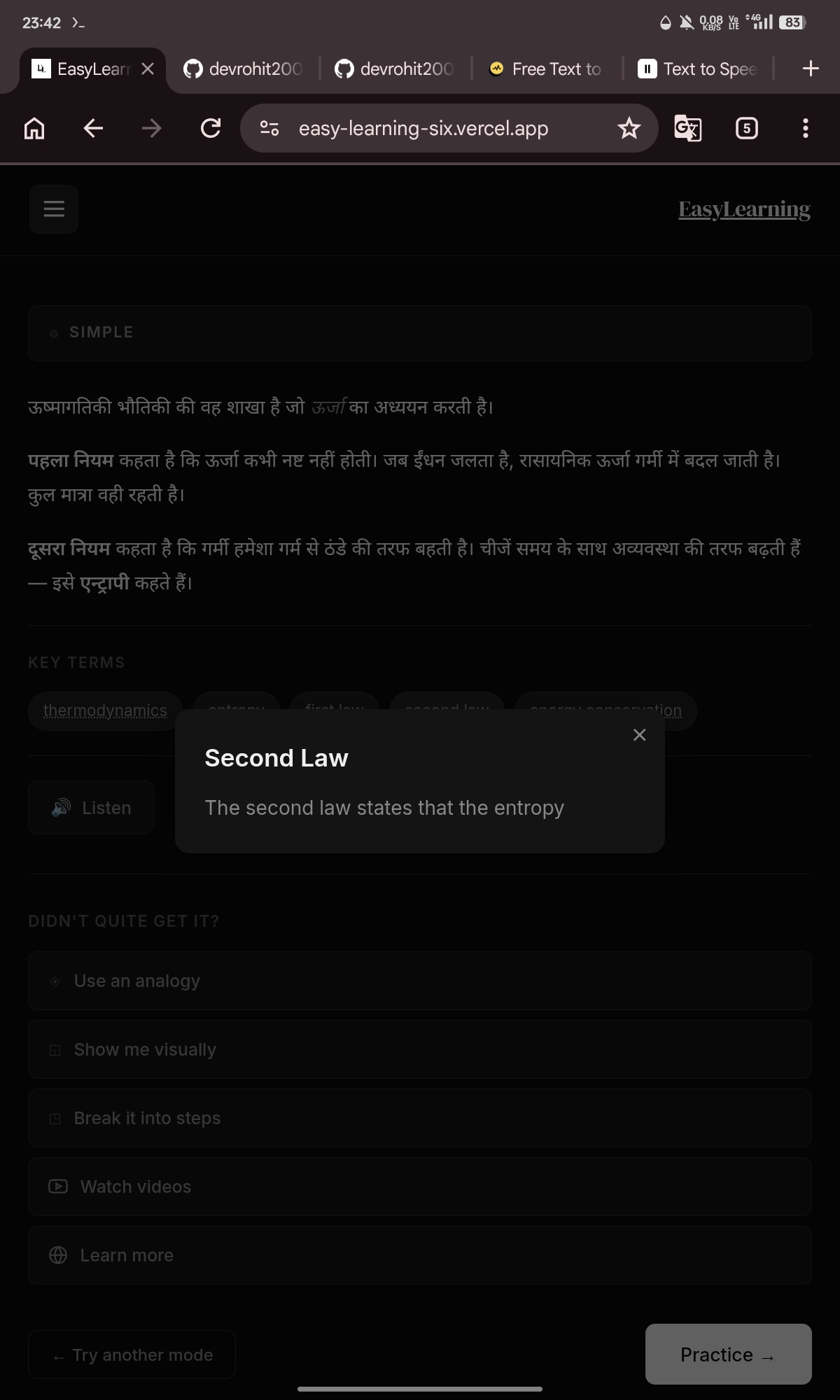
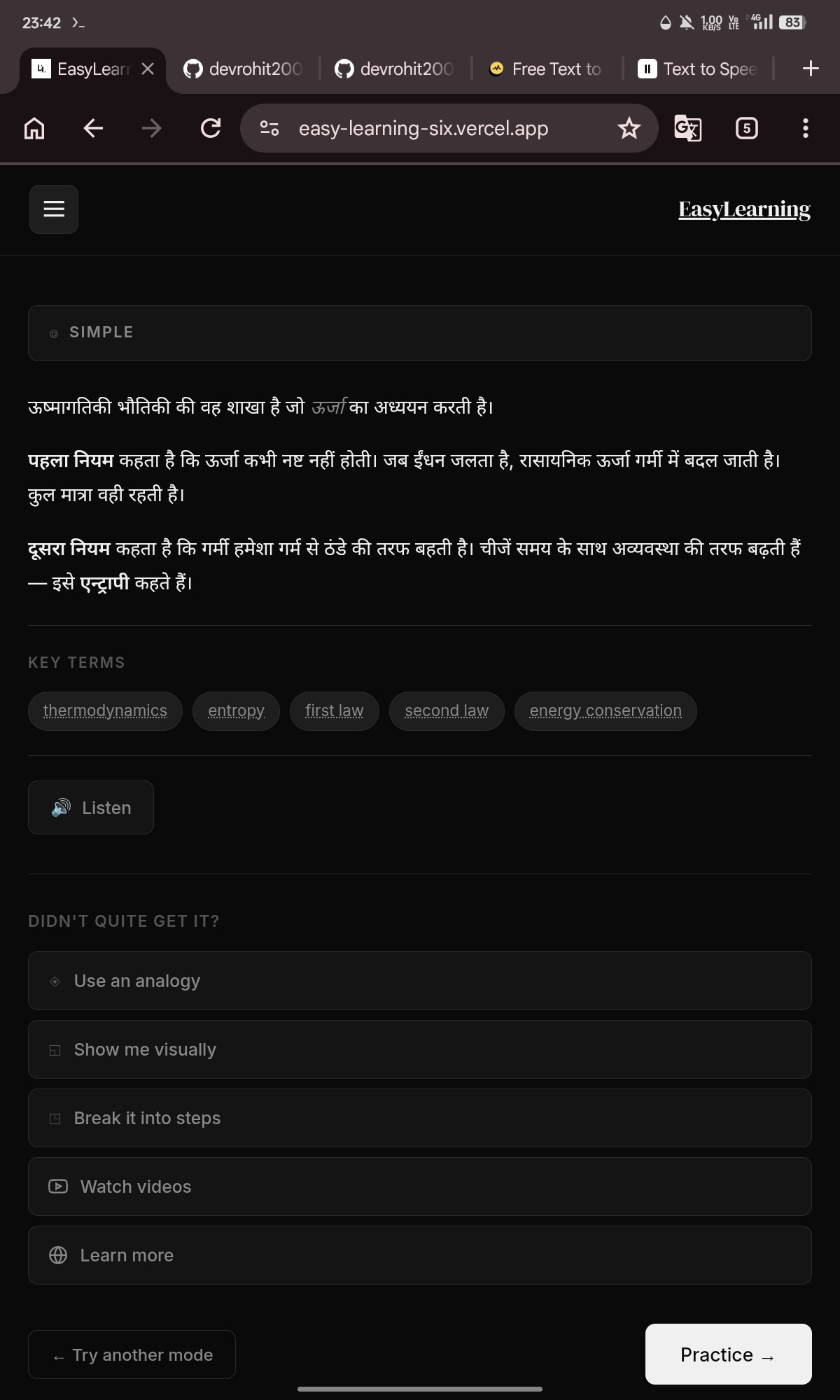
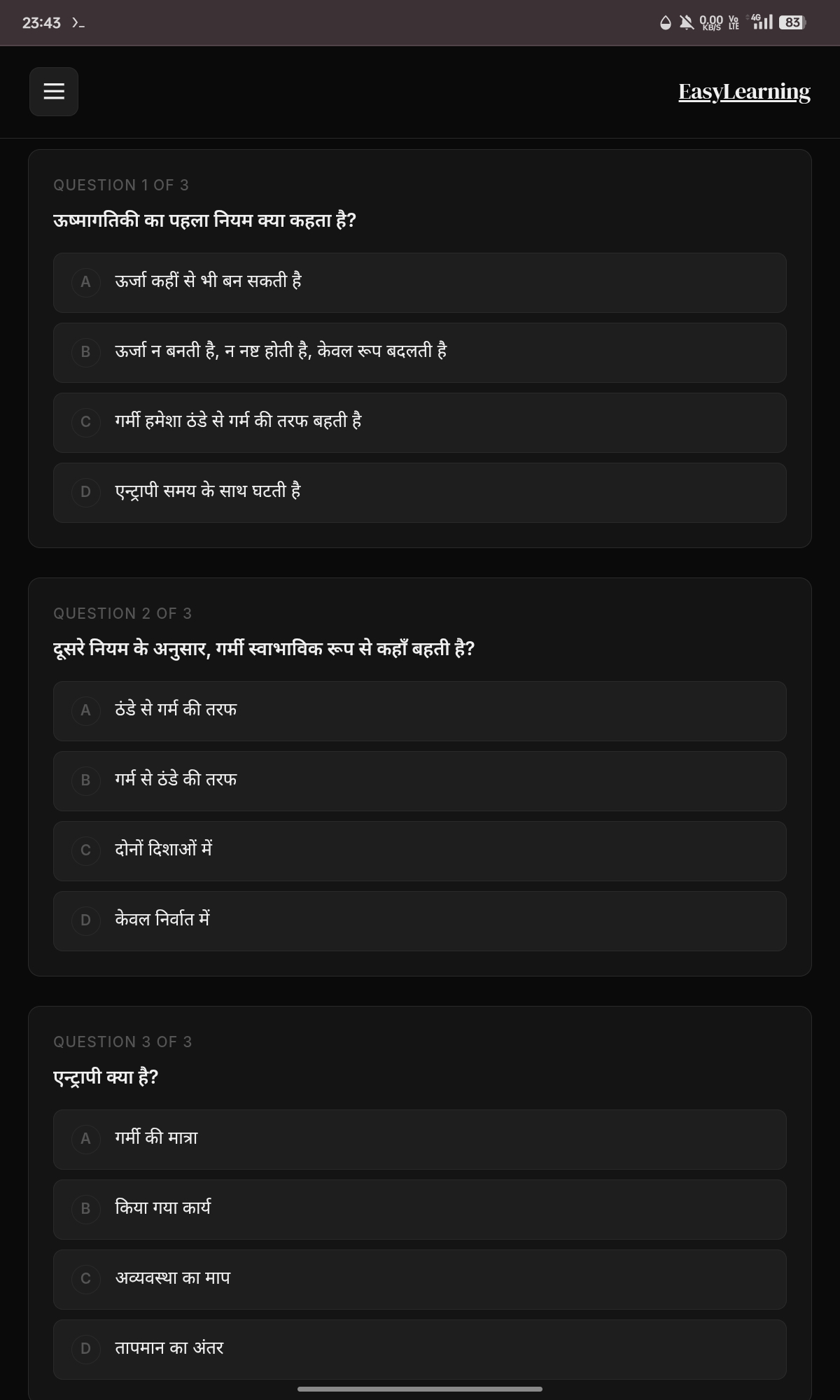
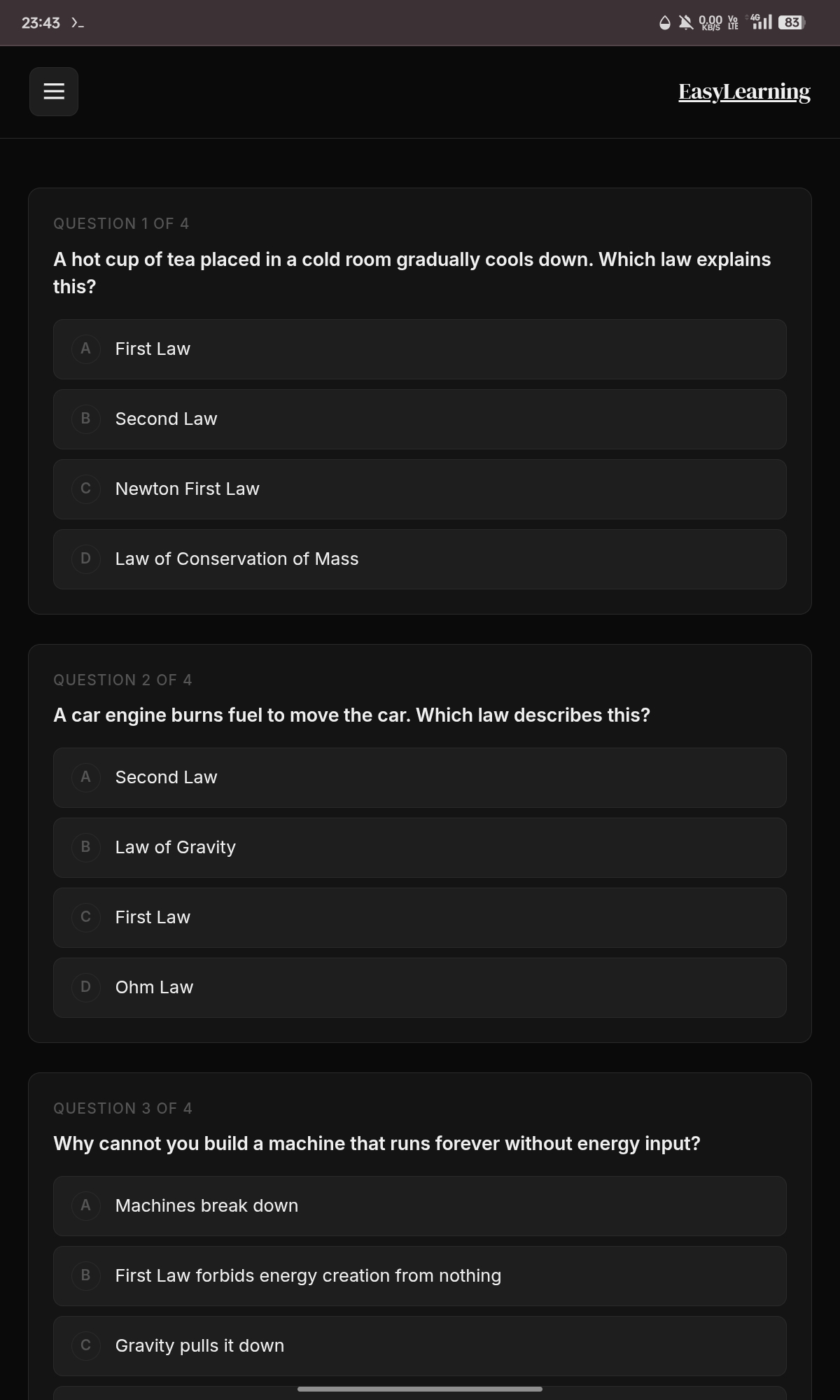
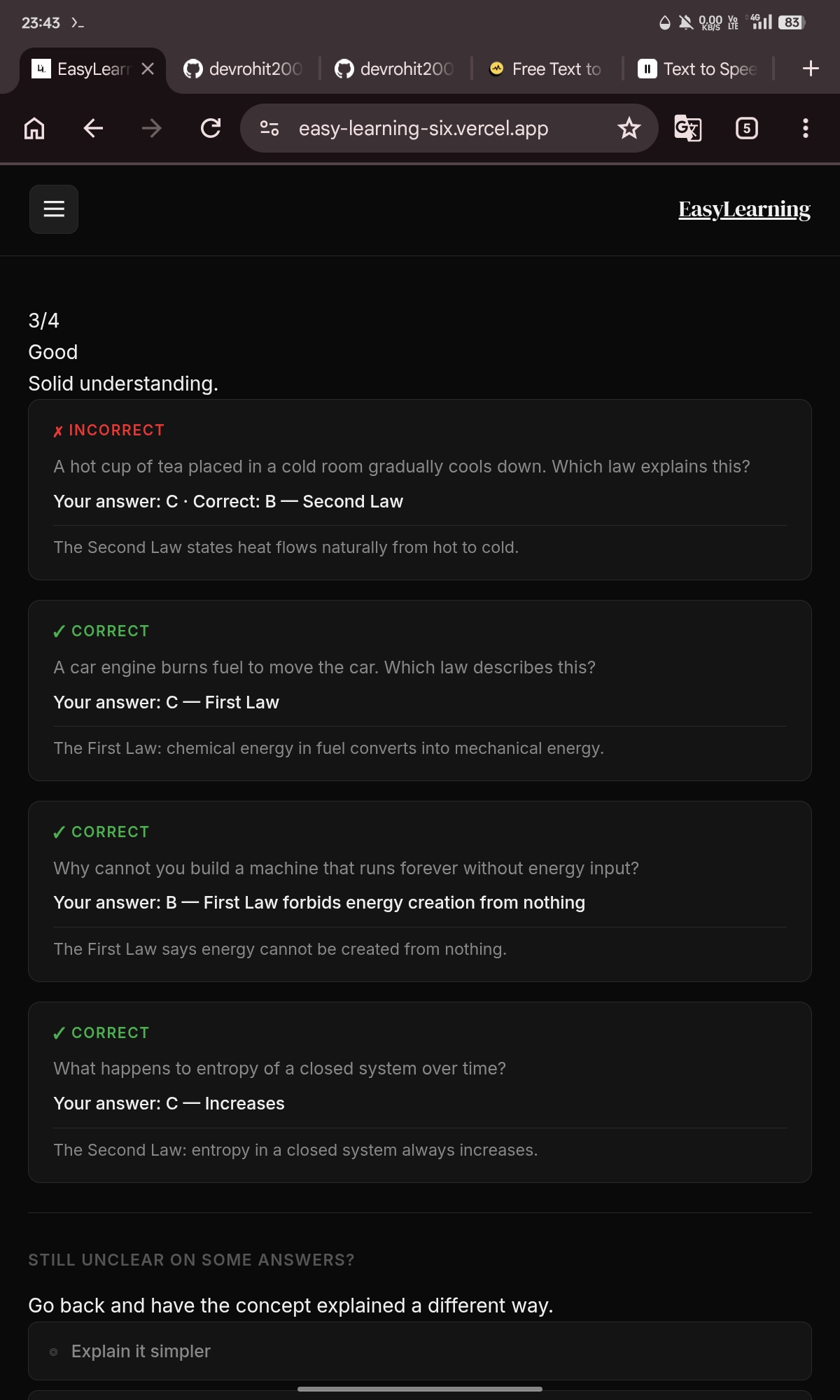
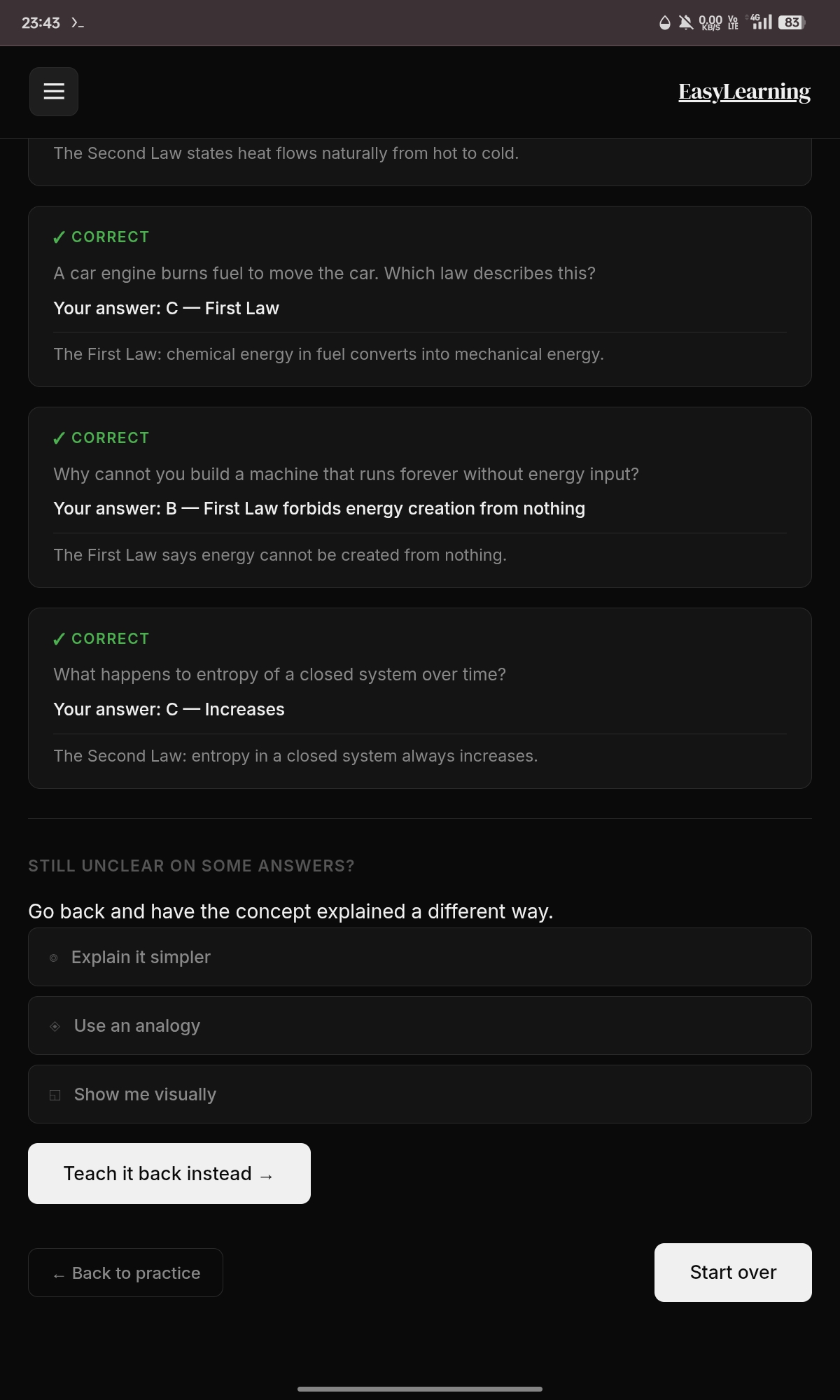
EasyLearning lets you paste, speak, or upload (PDF/photo) anything you're trying to understand. Pick your level (Kid/Student/Expert), your language (English/Hindi/Tamil), and your explanation style (Simple/Analogy/Visual/Step-by-step). Practice questions warm you up, then a quiz tests you for real. If you struggle, EasyLearning asks you to teach the concept back in your own words — an AI scores your explanation and tells you exactly what you got right and what you missed. Tap any term for an instant AI definition, or pull real YouTube videos or a Wikipedia summary on the exact topic in one tap.
How we built it
Node.js/Express backend, vanilla HTML/CSS/JS frontend, deployed on Vercel — built entirely on Android via Termux, no PC or Android Studio. Different tasks route to different AI models based on what each is good at: Gemini for fast explanations and scoring, NVIDIA Nemotron 3 Ultra for harder reasoning and quiz generation, NVIDIA Llama Vision for reading PDFs/photos, and Qwen via Featherless AI for term definitions.
Challenges we ran into
Multi-page PDF extraction kept failing until I realized it needed real PDF parsing, not a vision model. A Teach-it-Back scoring call was silently taking 90+ seconds because it was routed through the wrong model. I also hit several tricky JavaScript scoping bugs where new buttons shared event listeners with unrelated ones — every one took real debugging to trace and fix.
Accomplishments that we're proud of
Getting Teach-it-Back to work end-to-end — it's not just another explanation mode, it's a genuine test of understanding. Also proud that every feature was tested and fixed for real, not left half-working for the demo.
What we learned
That "it works on my machine" and "it works reliably for a stranger clicking fast" are very different bars — and that testing every real path end-to-end matters more than adding more features.
What's next for EasyLearning
Fixing the last known gap — handwriting/scanned image extraction is slower than typed PDFs. Beyond that: more languages, a progress dashboard showing concepts mastered over time, and letting Teach-it-Back adapt its follow-up questions based on exactly what a learner got wrong.
Built With
- css3
- express.js
- featherless-ai
- gemini
- html5
- javascript
- node.js
- nvidia-nemotron
- qwen
- vercel
- wikipedia-api
- youtube

Log in or sign up for Devpost to join the conversation.