-
-
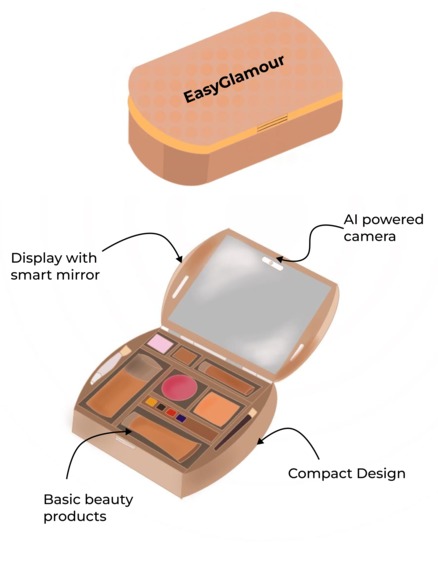
EasyGlamour smart make up kit
Inspiration
Ariana Mark had always been someone who took pride in her appearance. She loved applying makeup, experimenting with different colors and products, and feeling confident and beautiful. But everything changed one day when she started to lose her vision.
At first, Ariana tried to ignore the problem, hoping it would go away. But as the days and weeks went by, it became increasingly difficult for her to apply her makeup. She would spend hours in front of the mirror, trying to get everything just right, but no matter how hard she tried, she just couldn't seem to get it right.
Ariana's story is very personal to me as she is a high school friend whom I have known for many years. I observed firsthand the struggles that Ariana faced when applying makeup. This hackathon has provided me with a unique opportunity to tackle an issue that is very personal to me - the challenges faced by individuals like my friend Ariana, who experience vision loss and have difficulty applying makeup.
What it does
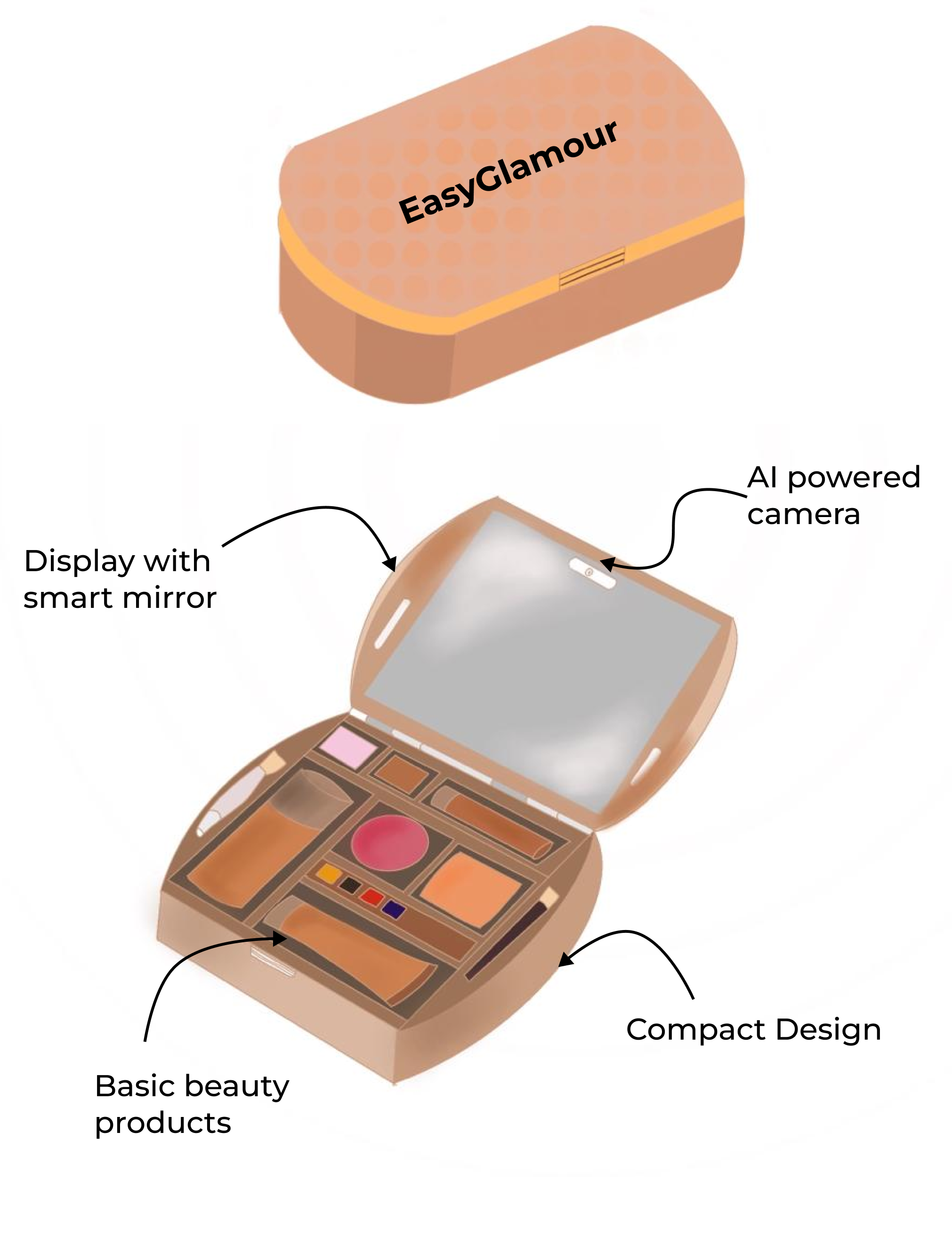
The Smart Beauty Assistant Kit is a truly groundbreaking solution that has the potential to revolutionize the beauty industry and make it more inclusive for individuals with disabilities. This kit is designed to address the accessibility challenges faced by people with disabilities when it comes to applying makeup and purchasing beauty products.
The kit includes a range of tailored beauty products that are designed to meet the specific needs of individuals with disabilities. This inclusive beauty provides an AI-powered assistance through a smart camera, microphone, and speaker. The smart camera can detect and identify specific products, as well as provide real-time feedback on application techniques. The microphone and speaker allow for hands-free operation, enabling users to easily follow the instructions and guidance provided by the AI-powered assistant. They no longer have to rely on touch and memory alone, but can instead leverage the power of modern technology to achieve the look they desire.
The Smart Beauty Assistant Kit also enables users to purchase beauty products directly from the kit itself. This means that individuals with disabilities no longer have to rely on a sighted person to assist them with shopping for beauty products or place orders on their behalf.
How we built it
During our research on products for the visually impaired, we delved deep into the existing products available in the market. We analyzed the various features and functionalities of these products and studied the user feedback and reviews to gain insights into the user experience. We also looked into the latest developments and advancements in the field of assistive technology.
However, while exploring potential product ideas, we found that some ideas were not feasible for development due to various reasons such as technical limitations, high development costs, and lack of market demand. This led us to further refine our product development strategy and explore other ideas that were more viable.
To generate new and innovative ideas, we employed a range of ideation techniques such as brainstorming, sketching, user persona development, and SWOT analysis. We conducted brainstorming sessions with team members and experts in the field to generate a wide range of potential ideas. We also created user personas to understand the needs and preferences of our target users and developed SWOT analyses to identify potential strengths, weaknesses, opportunities, and threats.
After month of research and ideation, our team finally hit upon an idea that we were all excited about - a makeup kit that was specifically designed for individuals with disabilities. We knew that there were already some products on the market that were designed for this purpose, but we also knew that there was a lot of room for improvement.
Challenges we ran into
We began by studying the existing products on the market, researching what had worked well and what hadn't, and identifying the gaps in the market. But we quickly realized that simply improving upon the existing products was not enough. We needed to come up with something truly innovative, something that had never been done before. And so, we began a process of ideation, brainstorming, and collaboration.
Of course, there were many challenges to overcome. We needed to find the right materials and technologies to make our vision a reality. Developing assistive technology products for the visually impaired requires a deep understanding of their needs and preferences, as well as a high level of technical expertise. This can be challenging, as many technologies are not designed with accessibility in mind, and adapting them to meet the needs of visually impaired individuals can be complex.
Developing affordable products for the visually impaired is also a challenge, as the cost of developing and manufacturing such products can be high. This can limit the availability of such products, making it difficult for those who need them to access them. Another challenge we faced was ensuring that our products were well-received by visually impaired users. This required us to thoroughly understand our products with users to ensure that they were intuitive and easy to use, and to incorporate user feedback into the design and development process.
Accomplishments that we're proud of
To develop a team, that includes people from diverse fields and expertise to develop truly innovative solutions. Strong collaboration within a team is critical to the success of any product development project, particularly in a complex field such as developing products for the visually impaired. Collaboration can help ensure that team members are aligned on the project goals, can share knowledge and expertise, and can work together to overcome challenges and develop innovative solutions.
We needed to do extensive user research to ensure that our products were truly accessible and easy to use. But despite these challenges, we were all excited and motivated to bring our makeup kit to life. We knew that we were working on something that could truly make a difference in the lives of individuals with disabilities, and that was a driving force for us. We couldn't wait to see our ideas come to fruition and make a real impact in the world.
We are happy that we have developed a product idea that is truly inclusive as it addresses the need of all individuals and is even feasible for the company to develop.
What we learned
As a team, we learned several valuable lessons throughout the process of researching and ideating our accessible makeup kit. By developing detailed user personas, we were able to truly understand the needs and desires of our target audience. This allowed us to design a product that was truly tailored to their needs. We worked closely with experts in the field of AI and technology, as well as individuals with disabilities, to ensure that our product was truly innovative and accessible. Collaboration allowed us to bring diverse perspectives and expertise to the table, and to create a product that truly met our users' needs. We had to generate a large number of ideas and concepts before we found one that we were truly excited about. It was important to keep an open mind, and to persist through the challenges and setbacks that we encountered along the way.
What's next for EasyGlamour
Use the prototype to test the key features and functionality of the makeup kit. This should be a rough version of the final product that allows us to test its functionality and usability. This can be done through user testing with individuals with disabilities, or through internal testing within our team. Use the final prototype to conduct additional testing and refine the design further as needed.
After we have developed our accessible makeup kit, our next step is to bring it to market and to make it widely available to individuals with disabilities. We will need to develop a comprehensive marketing strategy that highlights the unique features and benefits of our product, and that reaches our target audience effectively.
We will also need to develop partnerships with retailers, advocacy groups, and other organizations that can help us to promote and distribute our product effectively. By building strong partnerships and relationships within the disability community, we can ensure that our product reaches the individuals who need it most.

Log in or sign up for Devpost to join the conversation.