Inspiration
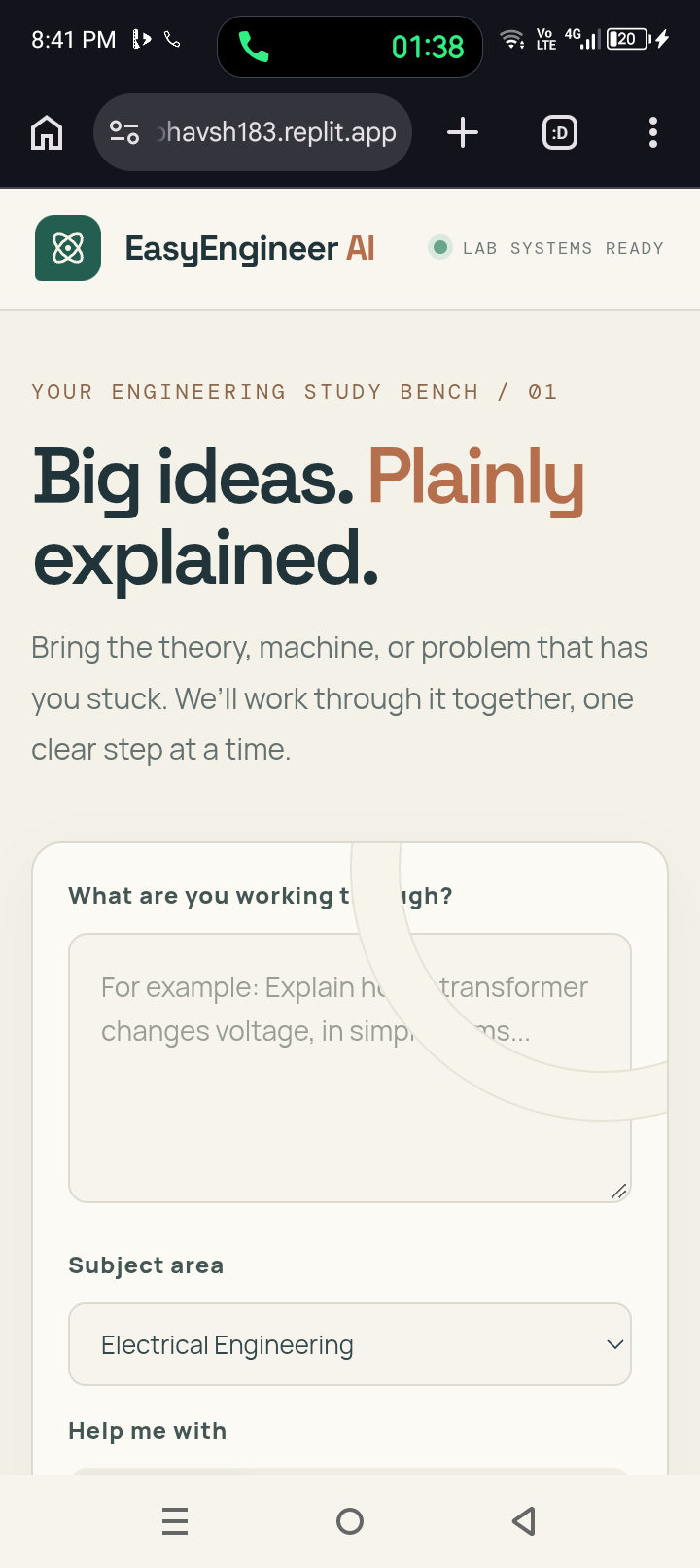
Engineering students often understand a concept in class but struggle when they encounter complicated explanations, formulas, or machine working principles. I wanted to create a tool that explains engineering topics in a way that feels simple, visual, and practical.
That idea became EasyEngineer AI — an AI-powered learning assistant designed around the question: "How can we make difficult engineering concepts easier to understand?"
What it does
EasyEngineer AI helps students understand:
- Engineering concepts in simple language
- Numerical problems step by step
- Machines and their working principles
- Equations, symbols, and practical applications
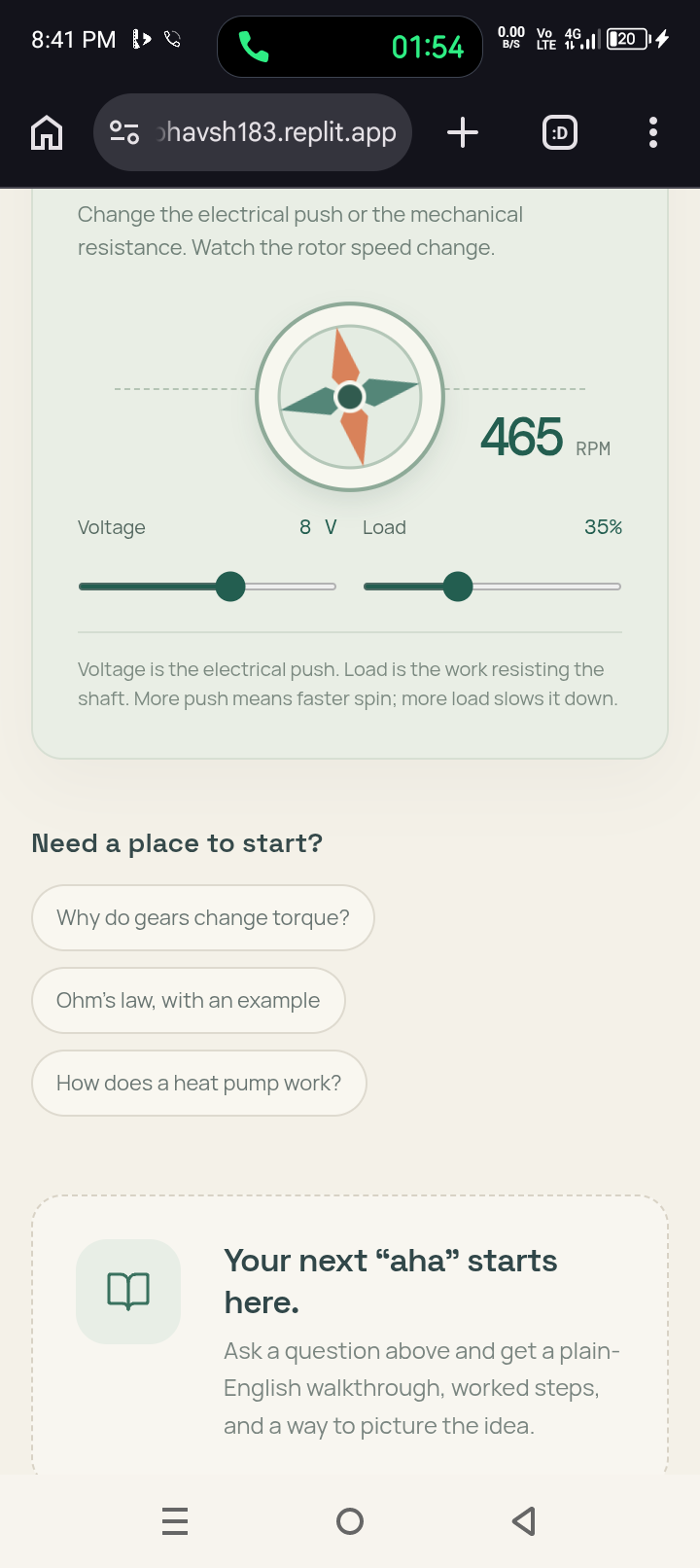
- Interactive engineering demonstrations
The goal is not simply to give an answer, but to help the learner understand why the answer works.
How we built it
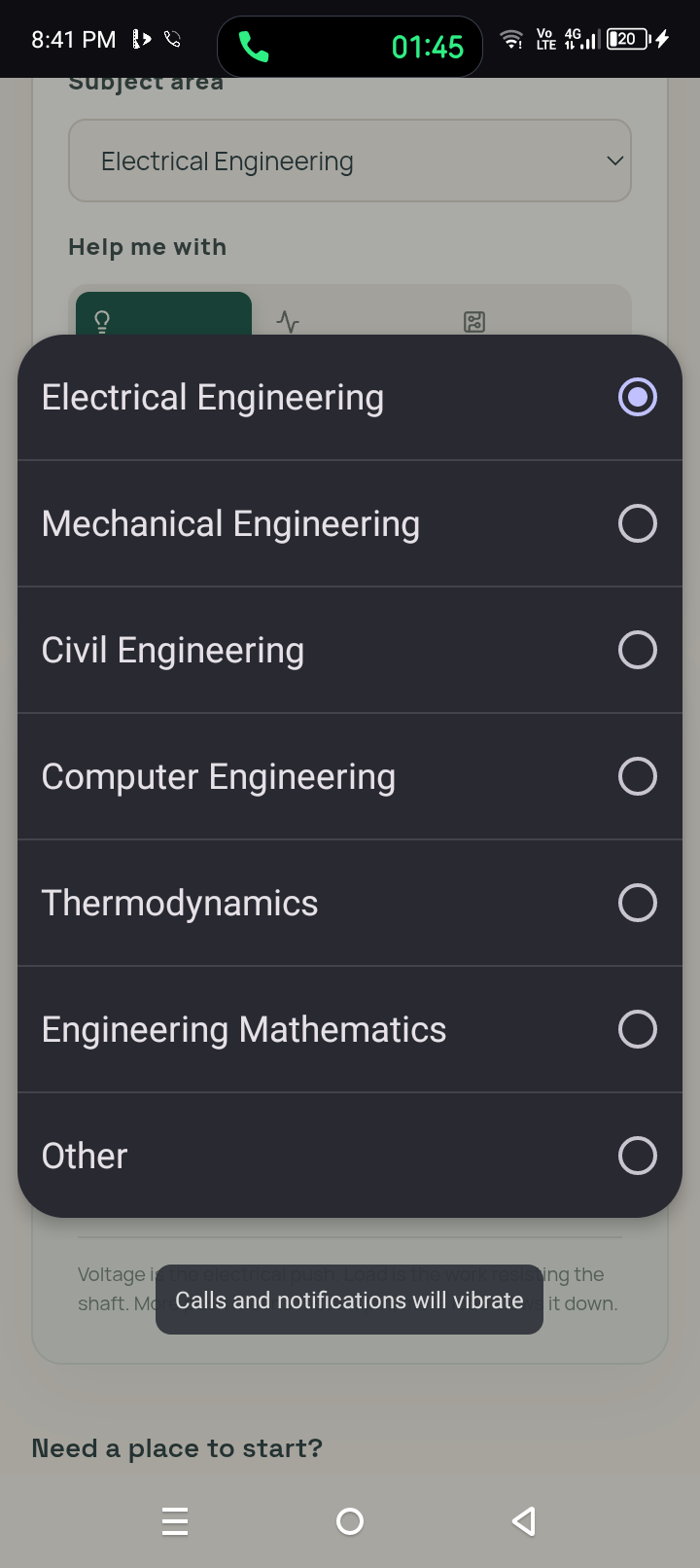
The project uses a web-based interface with AI-powered explanation capabilities. The interface is designed to work well on mobile devices and provides different learning modes for concepts, numericals, and machines.
We focused on keeping the experience simple: ask a question, choose the appropriate mode, and receive an explanation structured around understanding rather than memorization.
Challenges
One challenge was finding the right balance between technical detail and simplicity. Engineering explanations can easily become too complicated for beginners.
Another challenge was designing the experience so that an AI explanation becomes useful for actual learning rather than just producing a long response.
What I learned
Building EasyEngineer AI helped me understand how AI can be combined with education and engineering workflows. I also learned more about designing user-focused interfaces, structuring AI responses, and turning an idea into a working web application.
Future plans
Future versions can include verified video explanations, interactive simulations, diagrams, personalized learning paths, and better support for engineering numericals.
Built With
- ai
- css
- generative-ai
- html
- javascript
- react
- replit
- rest
- web-development

Log in or sign up for Devpost to join the conversation.