-
-
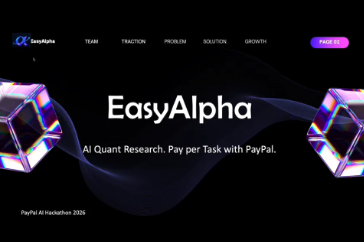
Easy Alpha
-
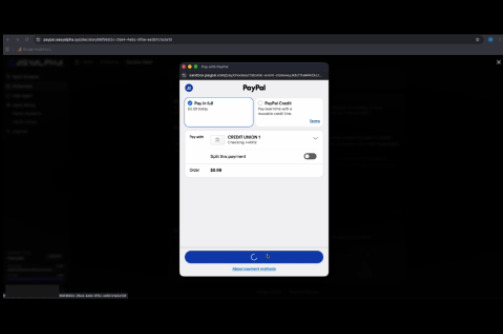
Pay per Task with PayPal
-
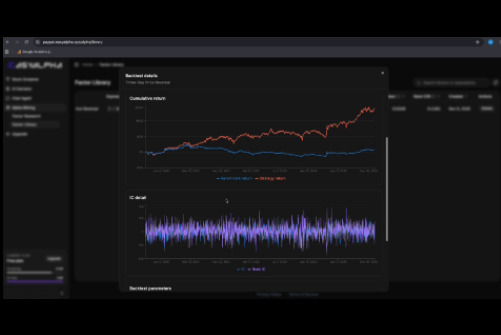
AI factor mining research
-
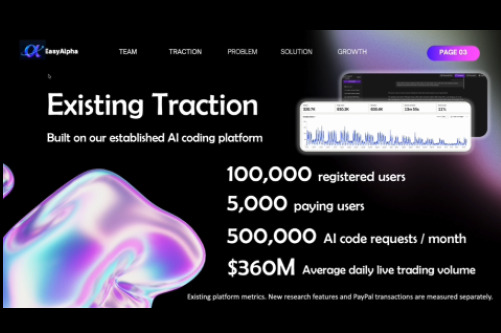
Traction of previous platform
Inspiration
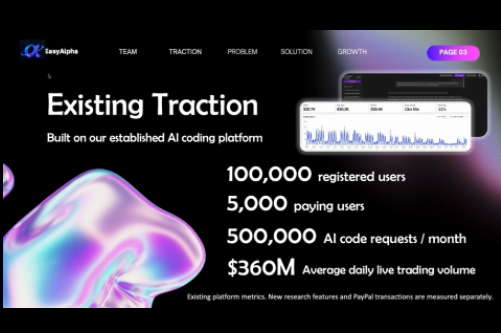
Our AI-powered quantitative code generation platform has grown to:
- 100,000+ registered users
- 5,000+ paying users
- 500,000+ AI code generation requests per month
- Approximately $360 million in daily live trading volume supported through our users’ strategies
Before moving into live trading, users must work through three essential research stages: market screening, in-depth analysis, and strategy development and validation. Previously, EasyAlpha focused on lowering the programming barrier through AI-generated quantitative code, leaving the earlier research and decision-making stages largely unaddressed.
- Market screening: Traditional screeners struggle to interpret complex conditions expressed in natural language, while general-purpose AI tools often lack the data access and computational capabilities needed to screen an entire market.
- In-depth analysis: Users must cross-reference market prices, order book data, financial statements, and breaking news. This information is fragmented, making manual verification time-consuming.
- Development and validation: Turning a research hypothesis into factors and strategies requires programming skills, costly experimentation, and the ability to interpret validation results.
We also found that fixed subscriptions do not always fit the intermittent demand and widely varying costs of AI research. An occasional user may need just one report but have to purchase an entire month of access. Meanwhile, intensive factor research can consume far more computing resources than a routine task. A single subscription tier struggles to accommodate both users’ willingness to pay and the platform’s underlying costs.
For this hackathon, we added AI-powered market-wide screening, in-depth market analysis, and factor discovery. We also began exploring a shift from fixed AI SaaS subscriptions to pay-per-task AI agent services: transparent quotes based on task complexity and estimated resource requirements, with free previews before users decide whether to purchase the full results.
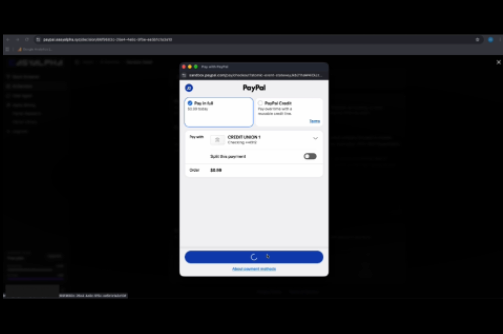
PayPal connects this model into a complete transaction flow: users confirm the price and pay, our backend verifies the completed payment, and the corresponding research content is unlocked. Users can start with a single screening task or analysis and purchase additional research as needed, without committing to an ongoing subscription. The platform can price services individually while using PayPal to support both first-time purchases and repeat transactions.
What it does
EasyAlpha integrates PayPal across market screening, in-depth analysis, and research validation, connecting each module’s pricing, payment confirmation, and access to complete results. Users choose a service, explore a free preview, and pay through PayPal to unlock the corresponding content.
1. Market screening: AI-powered screening, transparent pricing, and pay-per-task purchases through PayPal
Users describe conditions in natural language, such as moving-average patterns, valuation ranges, or unusual price and volume movements. AI translates these requests into screening rules and identifies matching instruments.
The system generates a quote based on screening scope, rule complexity, and estimated resource requirements. Users review a limited preview, confirm the purchase, and pay through PayPal to unlock the complete shortlist, selection criteria, indicator values, and data timestamps.
2. In-depth analysis: Multidimensional AI research, free previews, and full reports unlocked through PayPal
Users select or enter an instrument. Depending on the asset type, AI combines market data, technical indicators, and applicable financial and news data into a structured research report.
Pricing reflects the number of instruments, analytical dimensions, and research depth. Users can preview part of the report for free, then pay through PayPal to access the complete analysis, supporting evidence, potential risks, sources, and hypotheses for further investigation.
3. Research validation: AI factor discovery, task-based pricing, and results unlocked through PayPal
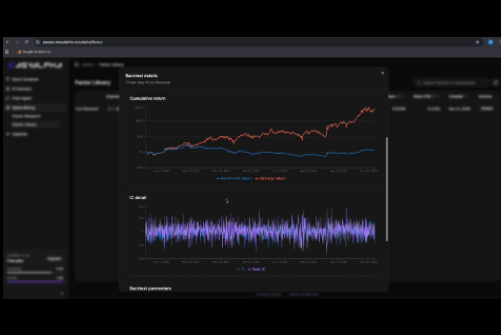
Users describe a research objective. AI generates candidate factors and calculation code, evaluates their historical performance, and organizes the validation metrics and findings.
Quotes account for the historical data period, number of candidate factors, and validation workload. After reviewing a preview and paying through PayPal, users receive the complete factor definitions, code, validation results, and limitations to inform further strategy development.
4. PayPal across the research journey: From pricing and payment to delivery
PayPal provides a convenient purchasing option for users in the countries and regions it supports. Users can buy screening results, analysis reports, and factor research as needed without first purchasing a fixed subscription.
Each PayPal order is linked to the relevant user and research results. Once the server confirms that payment has been captured successfully, it grants access to the full content, turning each stage of AI research into a digital service that can be individually priced, purchased, and delivered.
How we built it
We built on EasyAlpha’s existing AI quantitative code generation capabilities. During this hackathon, we added market-wide screening, in-depth market analysis, and factor discovery, with dynamic pricing, PayPal payments, and access controls for each module.
- AI-powered market-wide screening: AI translates natural-language requests into executable screening rules, scans instruments across the selected market, and produces a shortlist with selection criteria, indicator values, and data timestamps. Users can view a free preview and unlock the complete results through PayPal.
- AI-powered in-depth market analysis: The system combines market data, technical indicators, and applicable financial and news data based on the asset type. It generates reports with supporting evidence, potential risks, and sources. A free preview is displayed, while backend access controls protect the complete report.
- AI factor discovery and validation: AI generates candidate factors and code from the user’s research request, calculates and evaluates them using historical data, and packages the definitions, validation metrics, and limitations as independently purchasable research results.
- AI-assisted dynamic pricing and order creation: AI assesses task complexity and estimated resource requirements, while a separate pricing engine calculates the fee using predefined rules. After user confirmation, the server creates a PayPal order linked to the quote, user, and corresponding research results.
- PayPal payments and result access: We demonstrate transactions through PayPal Sandbox. Users approve payment through Checkout, and our backend captures and verifies the payment. Verified webhook notifications synchronize payment status, with duplicate events handled safely. Full content becomes accessible once successful capture is confirmed.
Challenges we ran into
- Expanding from code generation to an end-to-end quantitative research offering: Adding market-wide screening, in-depth analysis, and factor discovery required handling different data structures and computational workflows, then turning their outputs into evidence-backed, understandable research.
- Building an Agent-to-Payment-to-Delivery flow with explainable pricing: Resource consumption varies significantly across AI tasks. We needed to combine AI-based complexity estimates with deterministic pricing rules so users could understand both the price and the deliverables before paying through PayPal.
- Keeping PayPal payment status and result permissions consistent: User approval, successful payment capture, and content access are separate states. We needed to verify transactions, validate and deduplicate webhook events, and handle network retries so each completed payment reliably unlocked the correct results.
What we've learned
- Commercializing AI means turning capabilities into purchasable services: Market-wide screening, in-depth analysis, and factor discovery have different cost structures and deliverables. Defining each as a clearly scoped, independently priced service revealed a practical path toward pay-per-task AI agent commerce alongside traditional subscriptions.
- AI estimation and rule-based pricing need distinct responsibilities: AI assesses task complexity and expected resource requirements, the pricing engine calculates the fee, and the user confirms the price and purchase scope. This makes quotes more explainable and gives users greater control over research spending.
- PayPal payments and digital delivery must be designed together: Payment approval does not mean that funds have been captured. Backend verification, webhook deduplication, and access controls must remain consistent to ensure that every completed payment grants access to the correct research results. That consistency is essential to a reliable digital service purchasing experience.
Accomplishments that we're proud of
- Completing the journey from AI research to paid delivery through PayPal: We added market-wide screening, in-depth analysis, and factor discovery, and connected AI-assisted pricing, free previews, PayPal Sandbox payments, backend verification, and full-result access. This turns research capabilities into independently purchasable digital services.
- Creating a path to recurring AI service transactions through PayPal: Users can begin with a single screening purchase and return for analysis reports or factor research as their needs evolve. PayPal’s payment capabilities in supported countries and regions provide a foundation for international expansion and a path from first-time purchases to repeat transactions.
- Building on an established user base: Our existing 100,000+ registered users, 5,000+ paying users, and 500,000 monthly code generation requests provide a potential audience for the new services. These figures reflect the pre-existing platform; adoption and payment performance for the hackathon features will be measured separately.
What's next
Our go-to-market strategy combines existing-user adoption, a progression from introductory to advanced research services, and ecosystem partnerships.
- Activate existing users: We will introduce market-wide screening, in-depth analysis, and factor discovery to our existing 100,000+ registered users and 5,000+ paying users. We will start with a small pilot to validate pricing, previews, PayPal payments, and full-result access before expanding availability.
- Develop a repeat-purchase journey: We will share research examples through financial forums, social media, search engine optimization, and generative engine optimization. Free previews will help users evaluate their first purchase, while relevant research services will create opportunities for subsequent purchases through PayPal.
- Expand ecosystem partnerships: We will build on promotional relationships our team has developed with Alpaca, QuantConnect, and AlgoGene to explore joint promotion and modular integrations that reach more quantitative researchers.
- Improve pricing and the payment experience: We will track quote acceptance, PayPal payment conversion, successful result access, repeat purchases, and cost per task. These metrics will guide improvements to pricing rules, order visibility, and exception handling.
Over time, we plan to explore bundled research purchases and connections between modules, helping users move more easily through their research while purchasing transparently priced AI services with traceable delivery through PayPal.
Built With
- agent
- ai
- fastapi
- html
- i18next
- llm
- paypal
- postgresql
- qlib
- radix
- react
- recharts
- supabase
- tailwind
- typescript
- vite

Log in or sign up for Devpost to join the conversation.