

Easy-Novel-writer
Inspiration
We noticed a paradox: as AI assistants grow smarter, users feel lonelier. Most products lock people into single-player chat windows, pulling them away from each other rather than together. We wanted to flip this, making AI the stage designer for human interaction rather than a replacement for it.
What it does
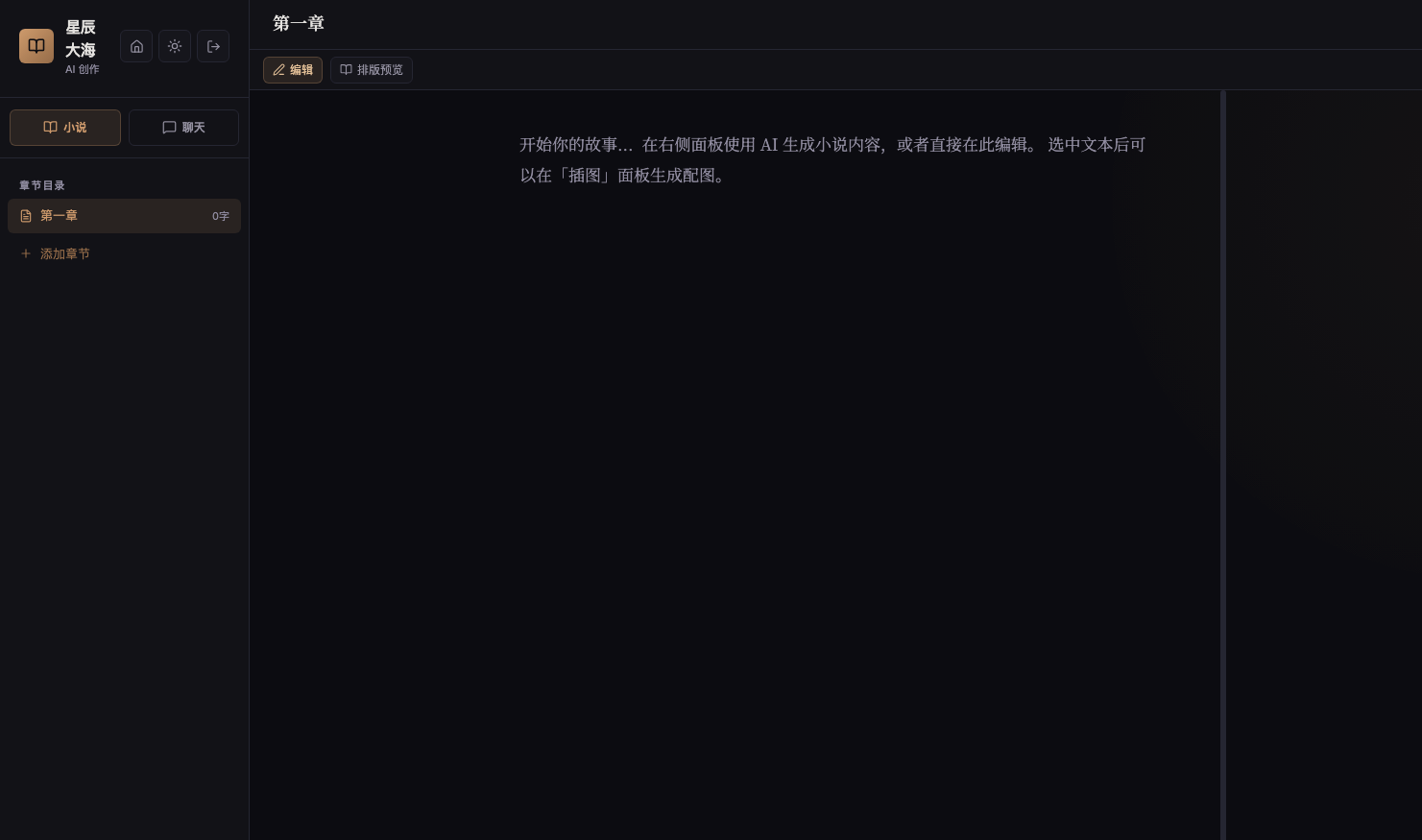
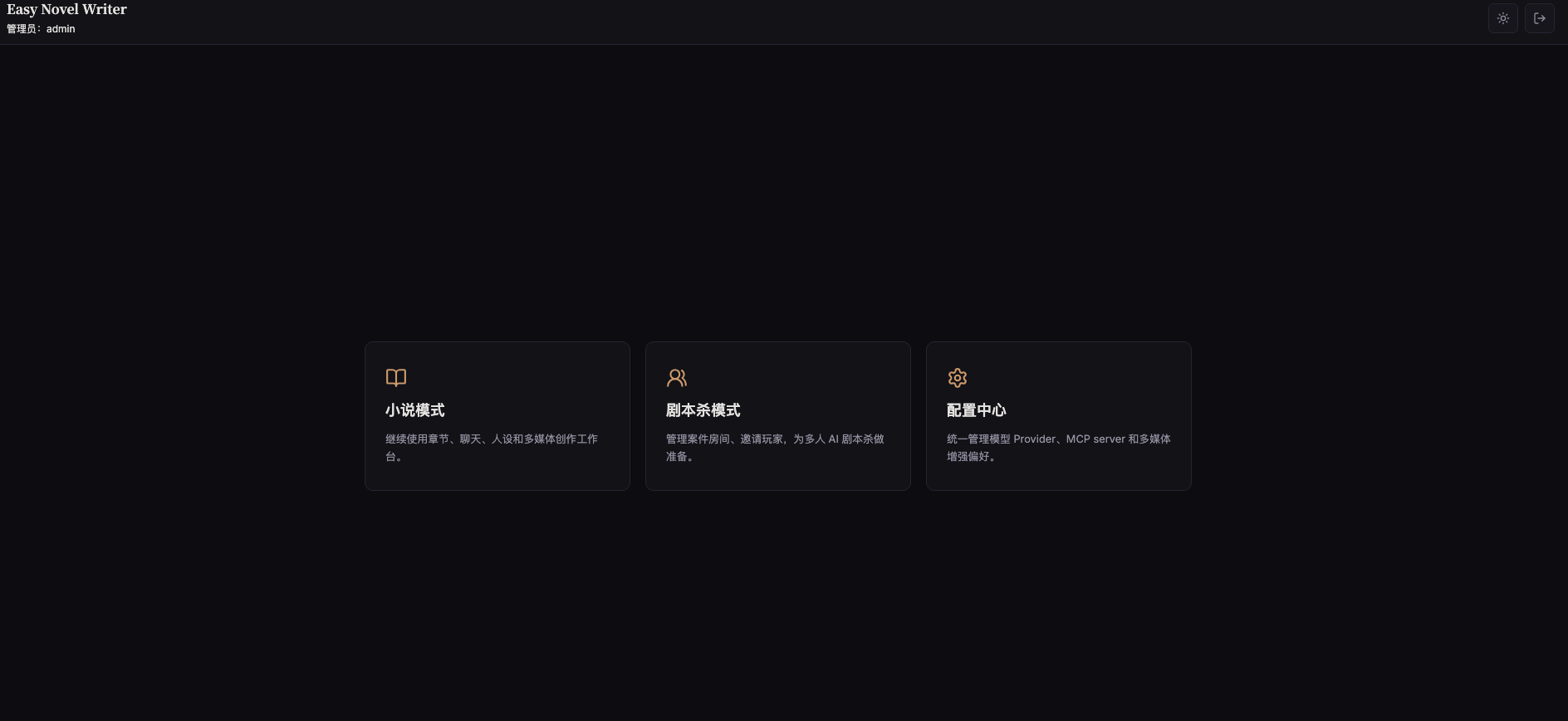
Easy-Novel-writer is a web-based social entertainment platform with two scenarios. Co-Narrate lets friends co-author a novel online, each steering a subplot while AI handles continuity and stylistic bridging. Co-Perform is an AI-driven script murder game where two to eight human players investigate, question, and vote, while AI agents serve as DM host, NPC cast, media director, and narrator.
How we built it
We separate experience from rules. A FastAPI backend with SQLAlchemy async and SQLite holds the authoritative state machine for truth, phase, permissions, and win-loss, while the LLM only rewrites how things are said, never what is revealed. Case generation runs as a LangGraph multi-agent pipeline—story blueprint, character pack, clue pack, truth state, consistency review, player scripts—with A2A audit traces. The frontend uses Next.js 16, React 19, and Tailwind 4, styled in a "dark night reasoning" visual language with amber gold accents, serif titles, and organic asymmetric corners.
Challenges we ran into
DeepSeek frequently truncated JSON output in the Case Builder, causing silent fallbacks. The root cause was insufficient max_tokens for large structured cases, which we resolved by raising the limit from 8192 to 16384. We also fought persistent information leakage, where the LLM would name the culprit directly in clues, forcing us to add a backend guard that hard-validates non-culprit secrets against the culprit's method, tools, timing, and route.
Accomplishments that we're proud of
We took the full-flow end-to-end pass rate from 88.9% to 100% on DeepSeek, with a generated case passing all judges without repair. The "backend governs rules, AI governs experience" principle held firm: no matter how the LLM phrased things, the state machine ensured players could never see data they were not authorized to see.
What we learned
Long structured outputs need generous token budgets, fallbacks can mask real failures, and data contracts between backend and UI must be explicit—player scripts stored at the wrong JSON path simply vanish from the interface. Most importantly, AI creativity belongs in the experience layer, while rules belong in deterministic code.
What's next for Easy-Novel-writer
We plan to extend the same MCP toolchain and LangGraph orchestration to new scenarios such as AI tabletop RPGs and AI improv theater, add voice and illustration agents for richer immersion, and explore a hosted public demo so reviewers can experience a full case without local setup.
Built With
- codex
- mcp
- next.js
- oepnai
- python

Log in or sign up for Devpost to join the conversation.