-
-

Homepage
-
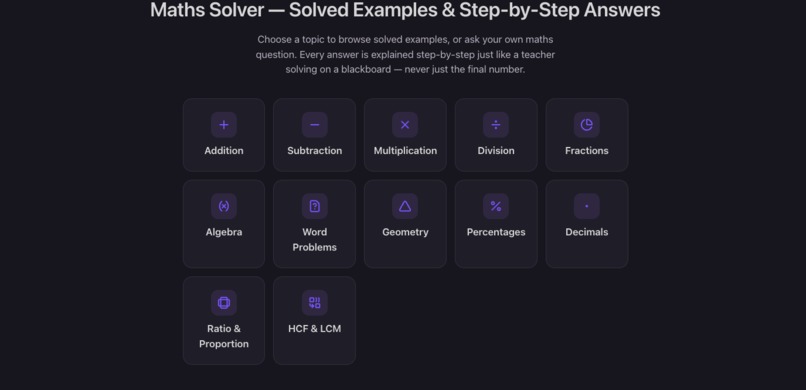
Maths category
-
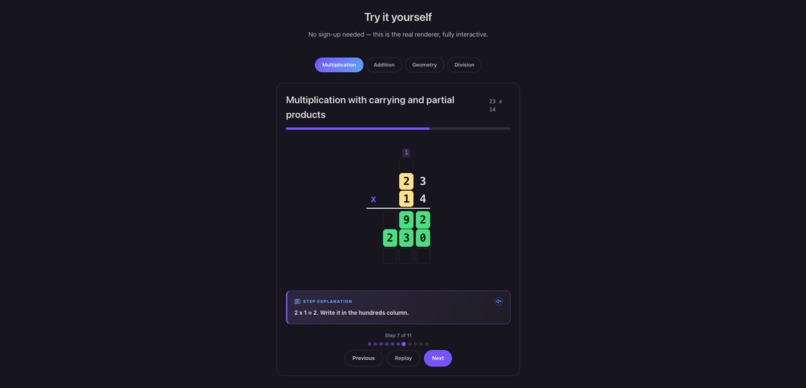
Addition explanation
-

Geometry explanation
-
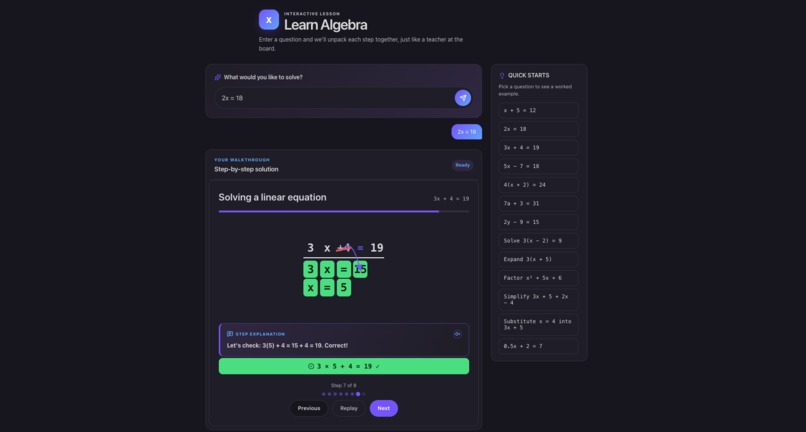
Algebra Explanation
-

Word problem explanation
-

Interactive fraction learning
-
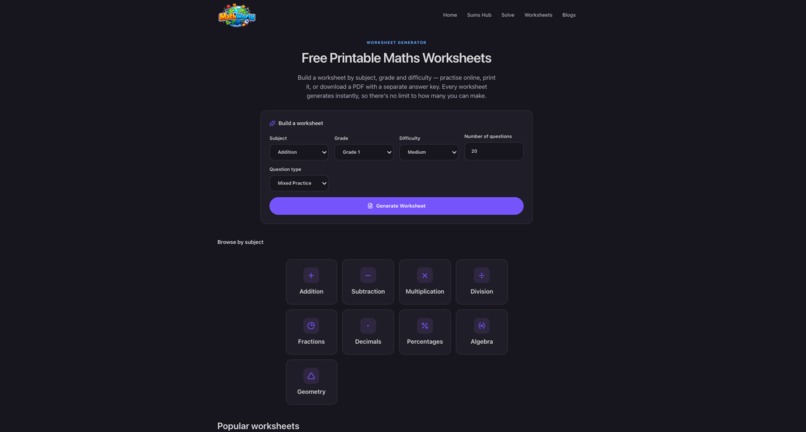
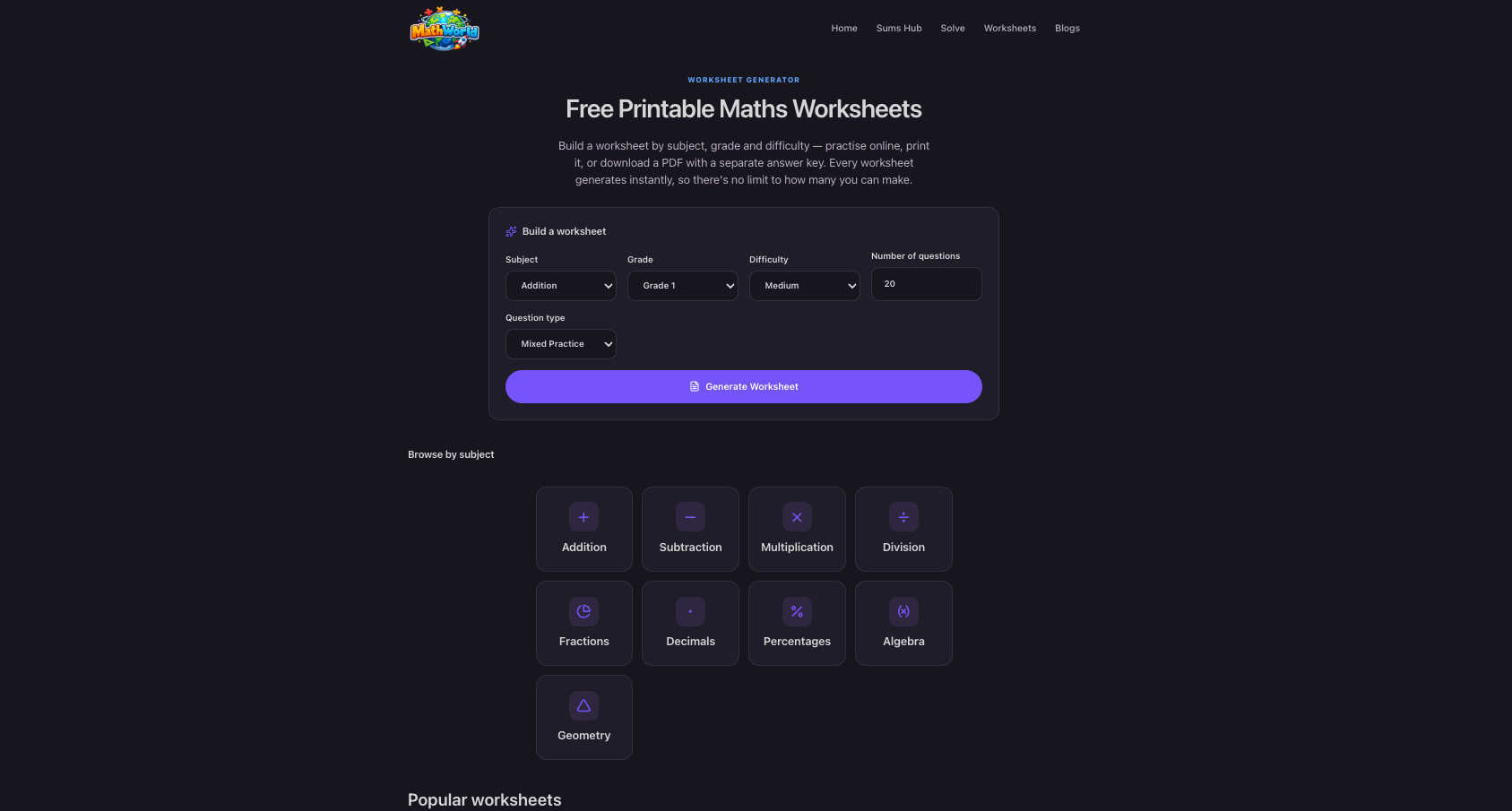
Downloadable worksheets
-
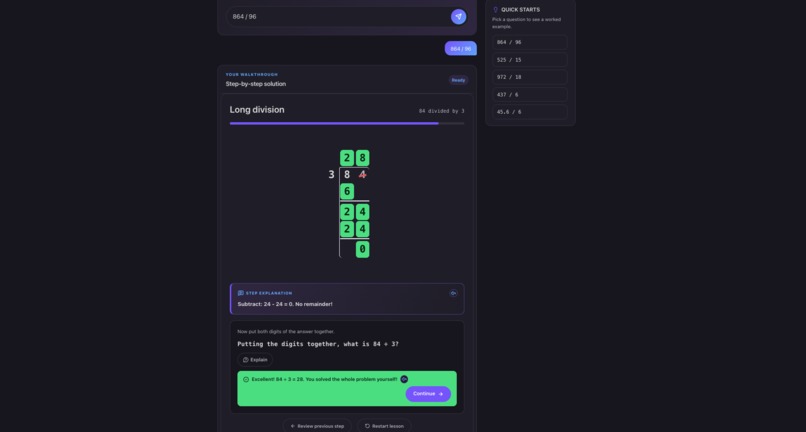
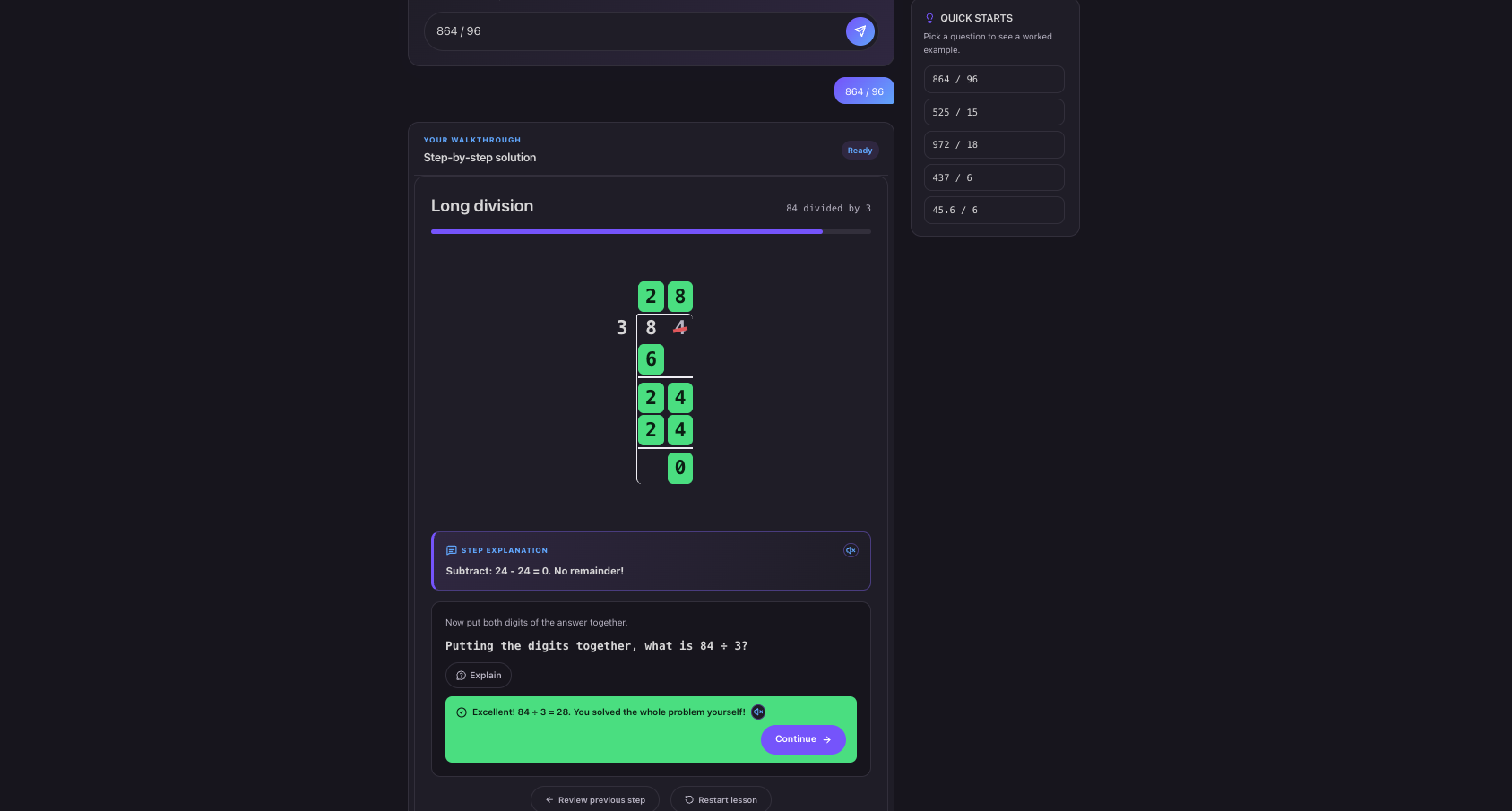
Long division Explanation
-

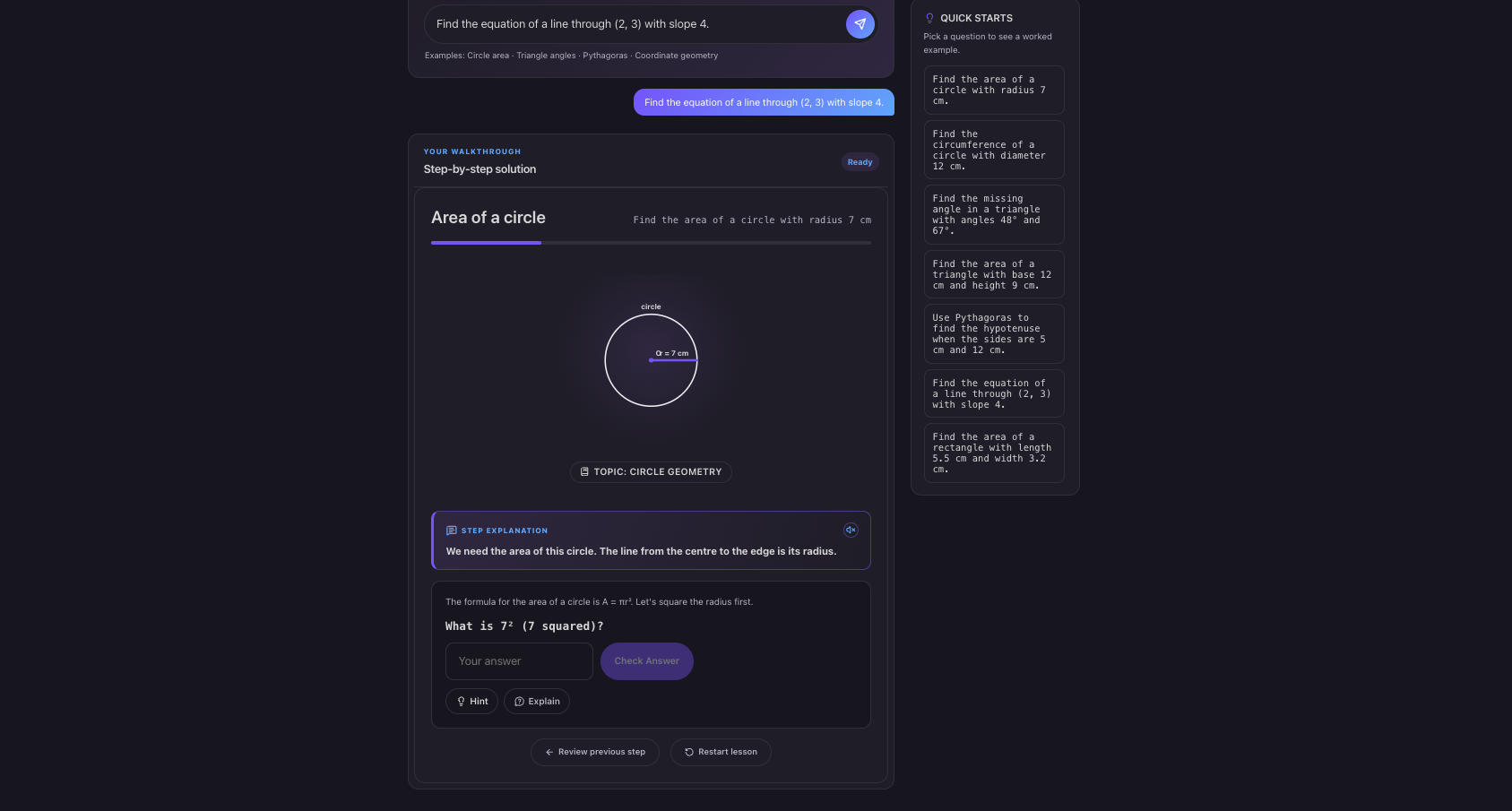
Interactive Geometry learning
-
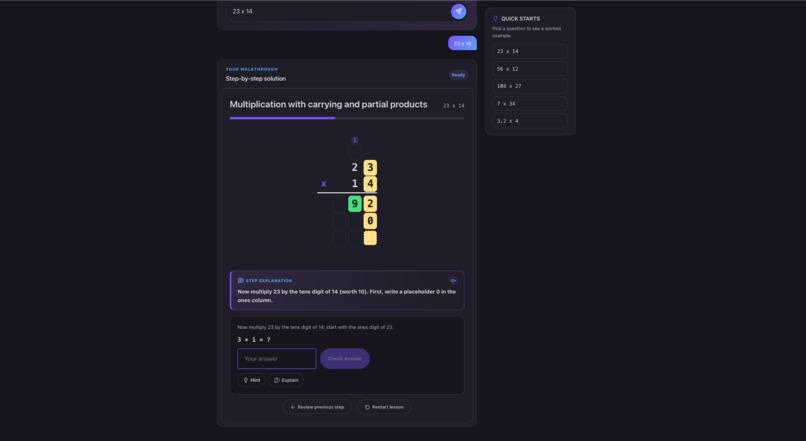
Interactive Multiplication learning
-

Interactive Algebra learning
-

Interactive substraction learning

The Inspiration
For many students, the difficult part of maths is not just getting the correct answer. It is understanding how to reach the answer.
A student can enter:
$$345 + 278$$
into a calculator or maths solver and instantly receive:
$$623$$
But receiving the correct answer does not always mean the student understands the process. Where did the carried number come from? Why was a digit written in a particular place? What should happen in the next step?
This inspired us to build MathWorld AI.
We wanted to create something different from a traditional maths solver. Instead of simply giving students the answer, MathWorld AI is designed to guide them through the process step by step, like a patient tutor.
The student is encouraged to think, participate, make mistakes, receive guidance, and try again.
Our goal is simple:
Teach students how to solve, not just what the answer is.
What We Built
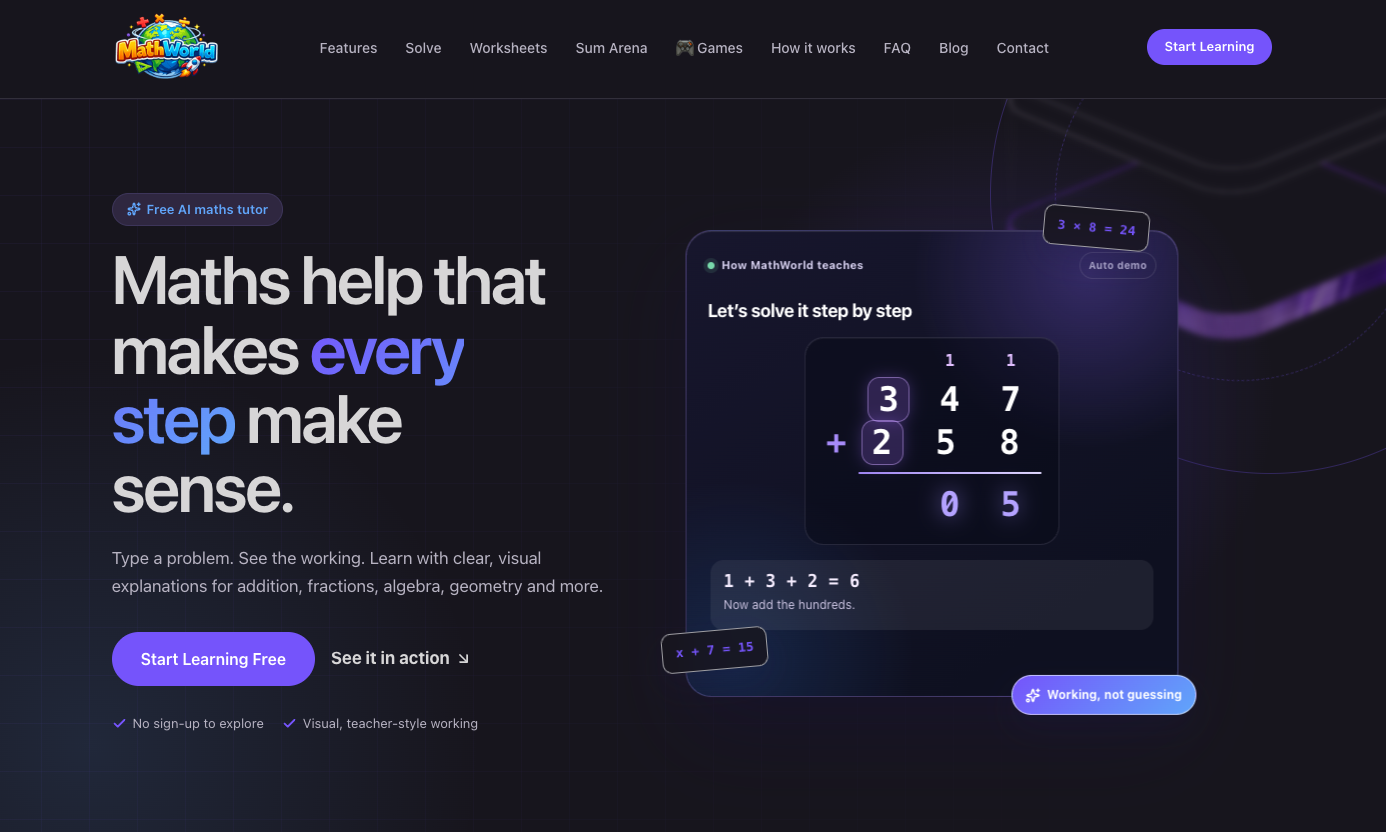
MathWorld AI is an interactive AI-powered maths learning platform.
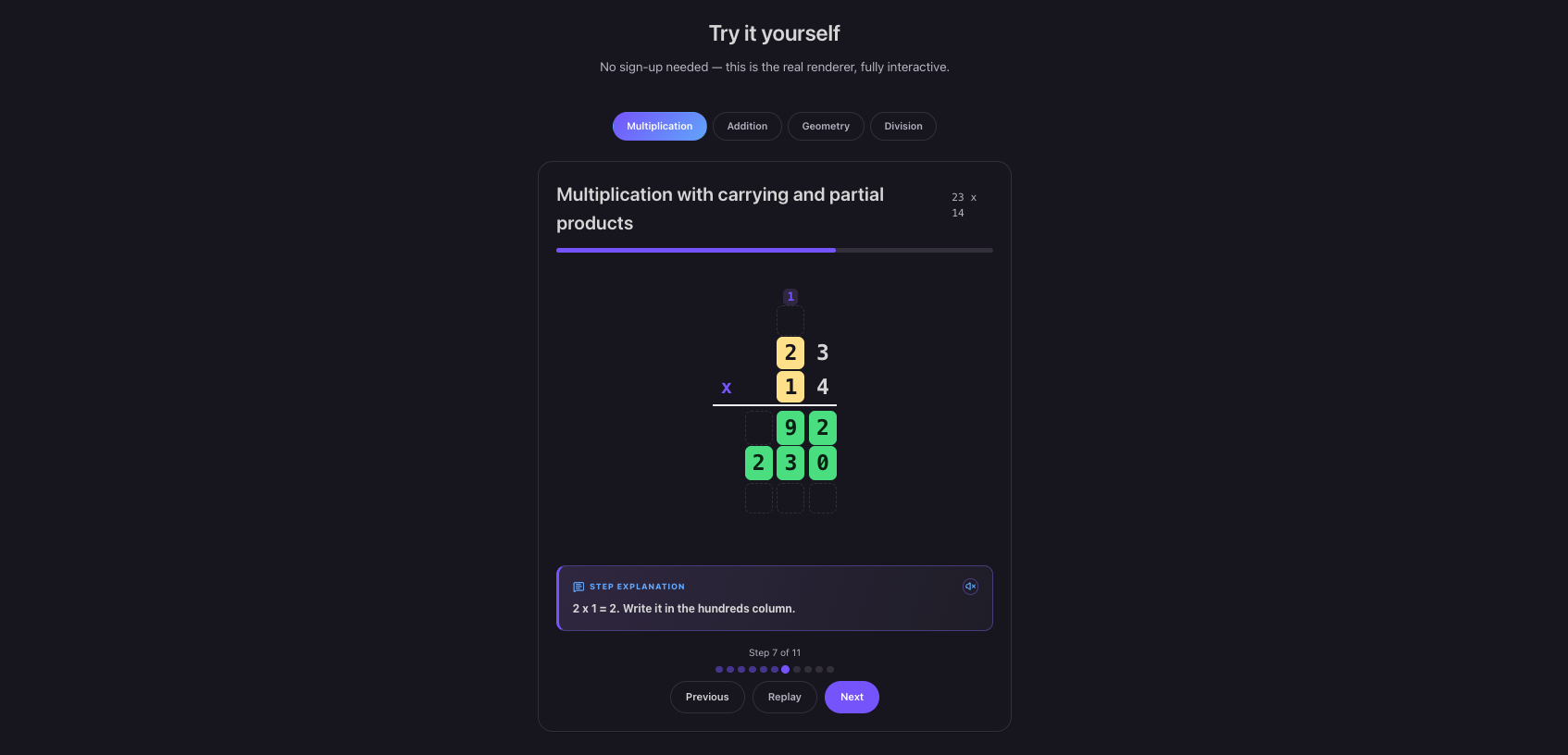
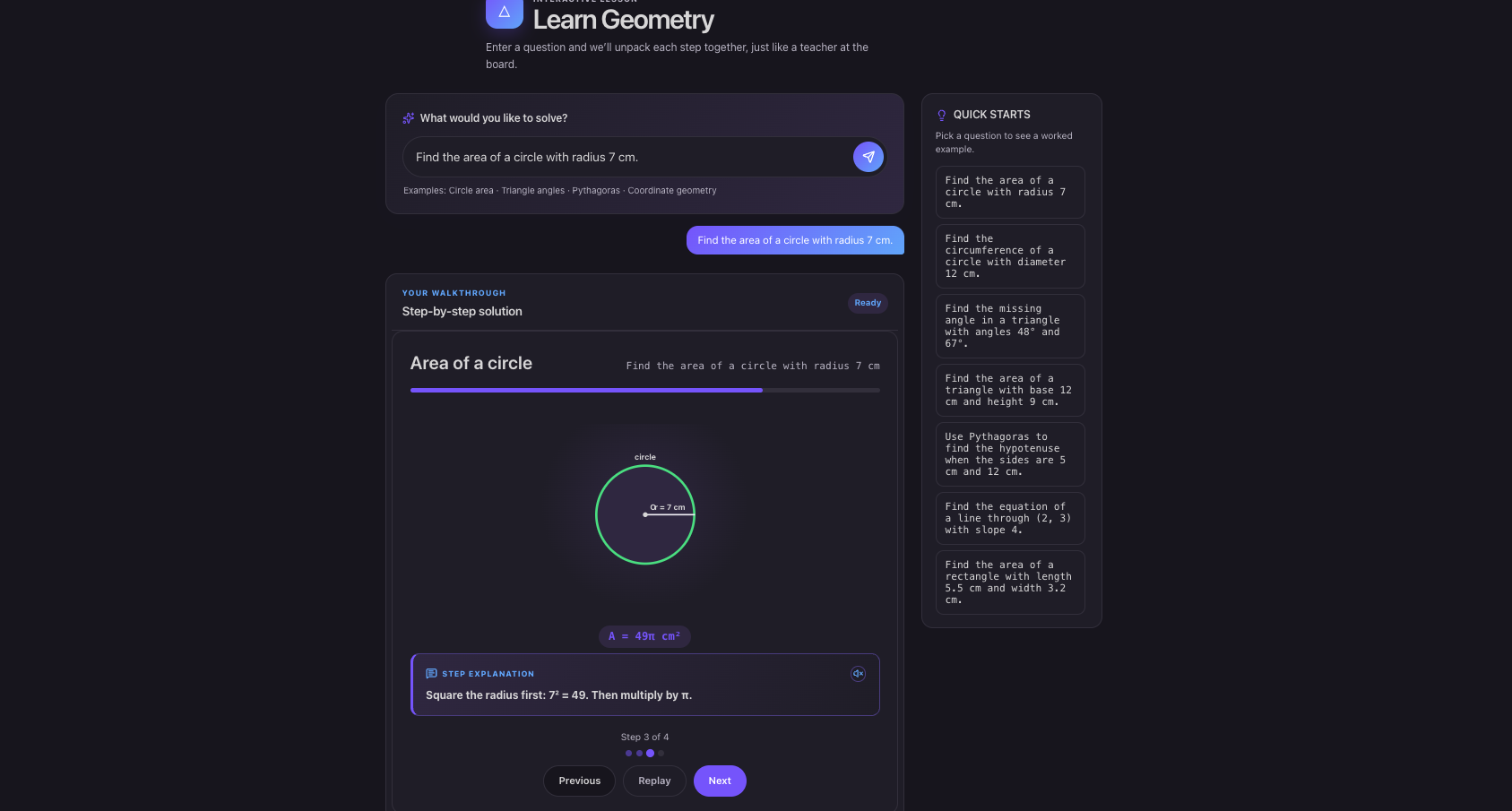
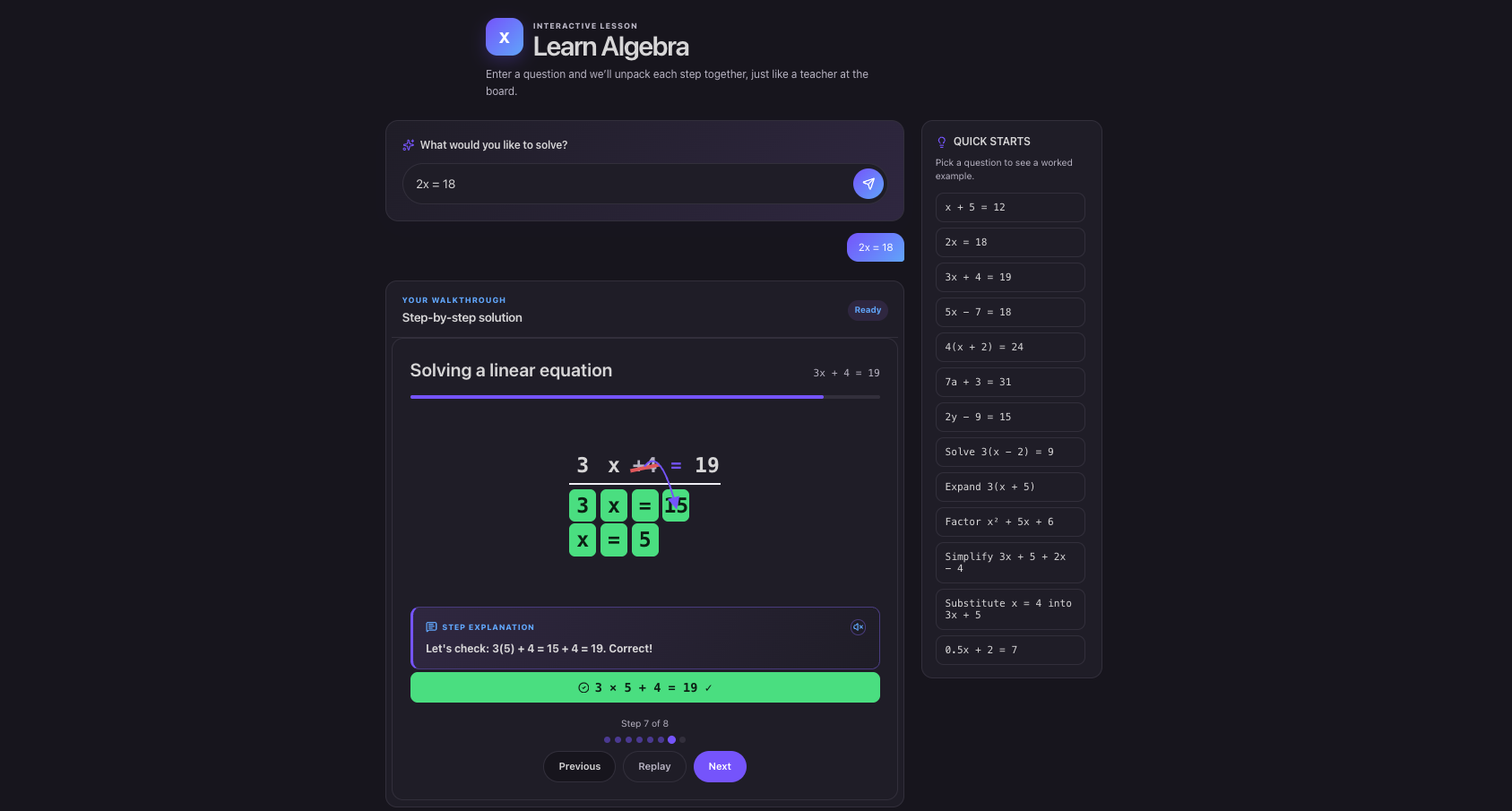
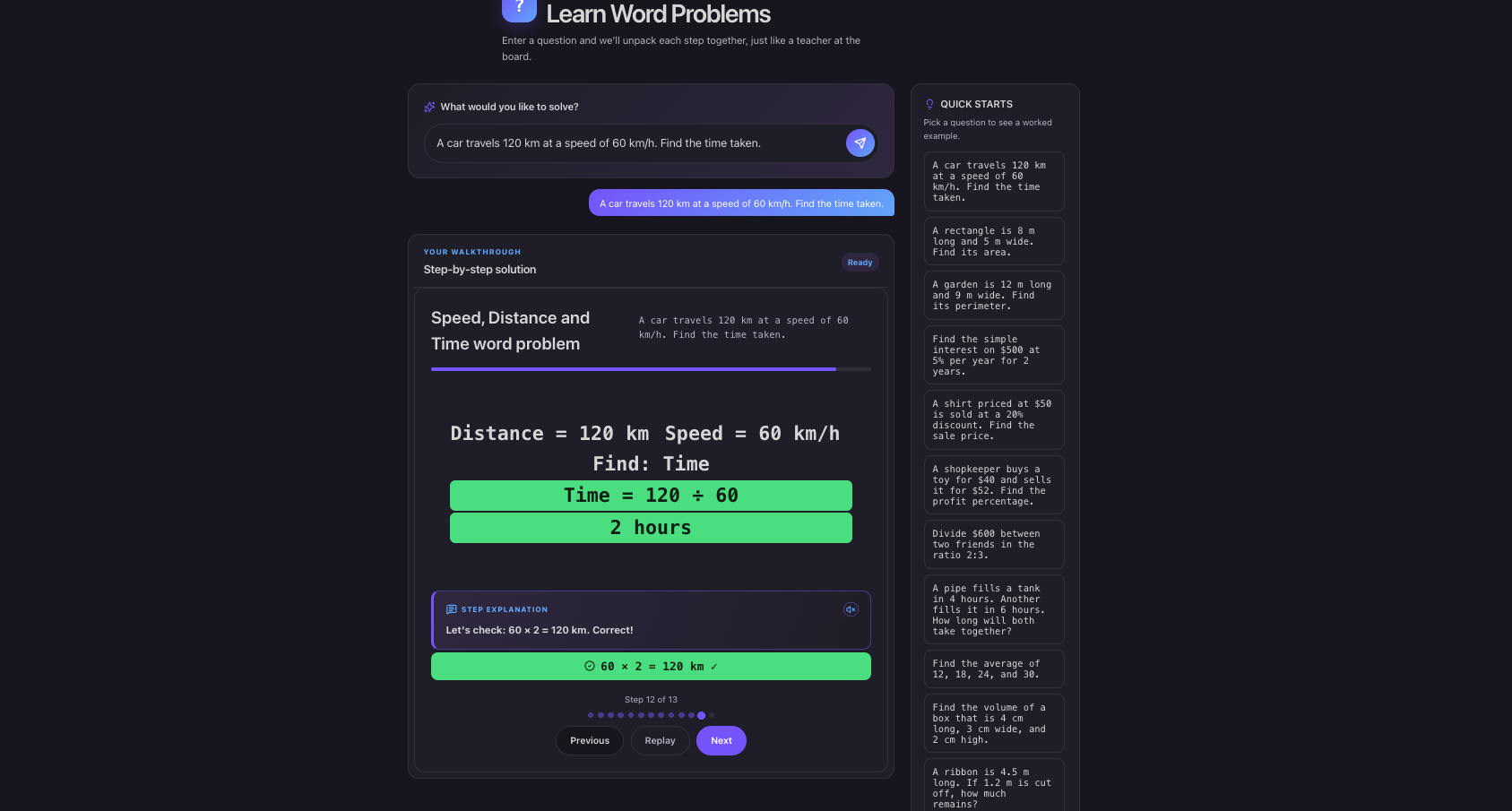
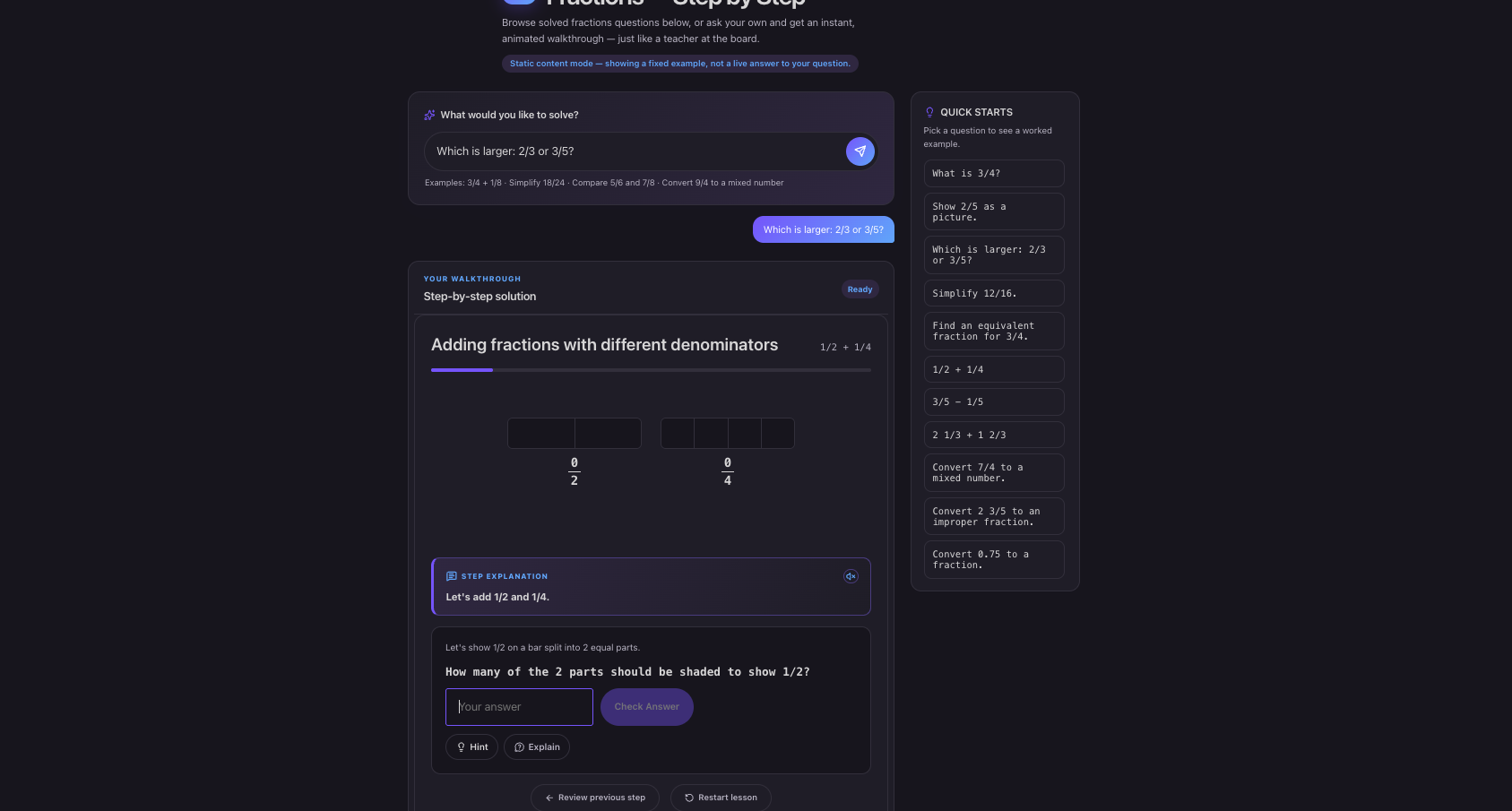
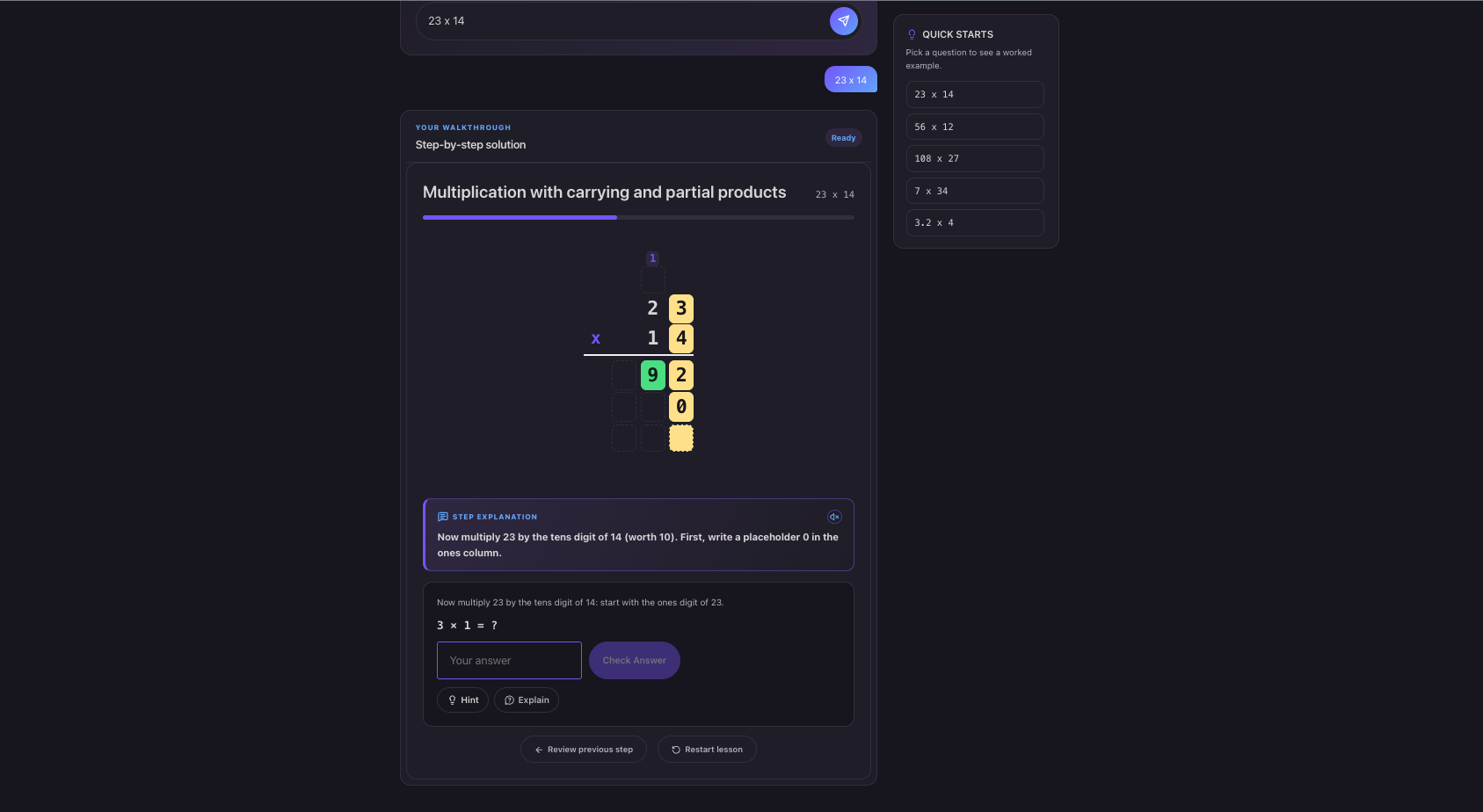
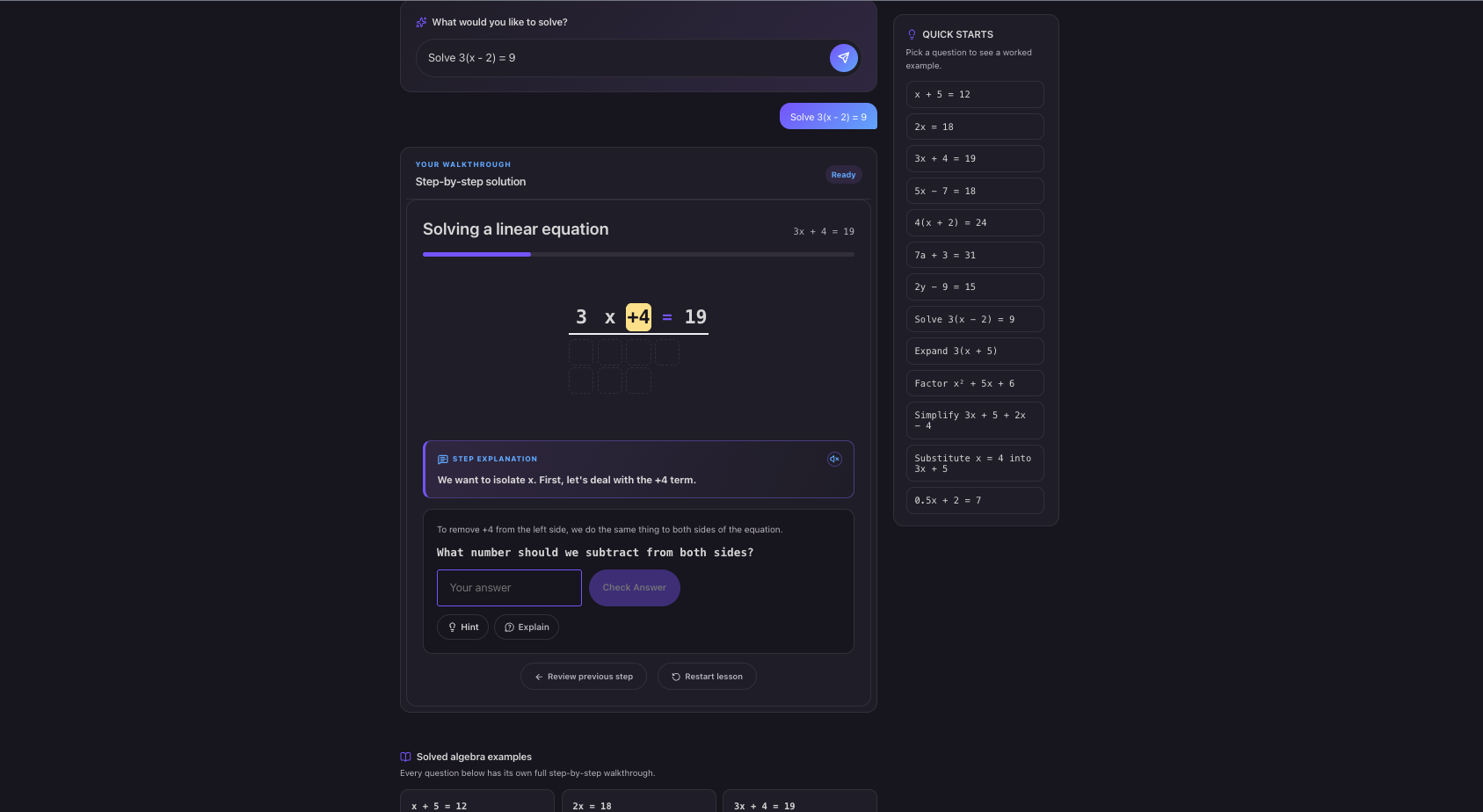
A student can enter a maths problem and receive an interactive, step-by-step learning experience rather than only a final answer.
For example:
$$345 + 278$$
The problem can be broken into smaller steps. Students can:
- Enter answers for intermediate steps.
- Check whether their answer is correct.
- Request hints when they get stuck.
- Understand why an answer is incorrect.
- See explanations for the correct approach.
- Continue through the solution step by step.
- Practice and improve their understanding.
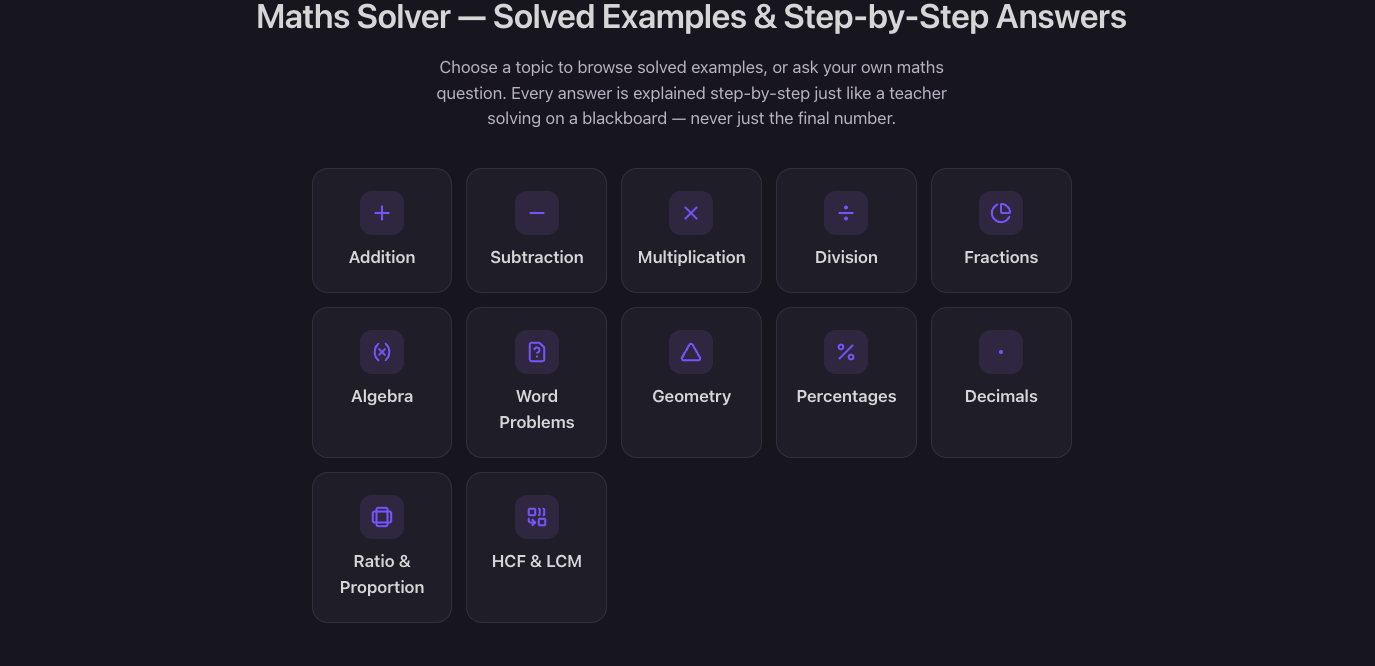
MathWorld AI currently explores maths topics including:
- Addition
- Subtraction
- Multiplication
- Division
- Decimals
- Fractions
- Ratios
- LCM
- HCF
- Algebra and formula-based problems
The experience is designed to keep students actively involved instead of allowing them to simply copy an answer.
How We Built It
MathWorld AI is built using React, TypeScript, Vite, Tailwind CSS, and Framer Motion.
The core AI experience is powered by Google Gemini through the Gemini API and Google AI Studio.
Instead of asking Gemini to simply return a final answer, we designed the system to generate structured mathematical explanations that can be transformed into an interactive learning experience.
The flow is:
Student
   ↓
Math Question
   ↓
Gemini API
   ↓
Structured Maths Explanation
   ↓
MathWorld AI Interactive Renderer
   ↓
Student Solves Step by Step
Gemini helps process mathematical problems and generate step-by-step explanations, hints, and learning guidance. MathWorld AI then transforms this structured information into an interactive interface where students can work through the solution.
The application is hosted and deployed using Google Cloud Platform, allowing MathWorld AI to operate as a live web application accessible to users.
What We Learned
One of the biggest lessons we learned is that using AI in education is not just about generating the correct answer.
The way the answer is presented can be just as important as the answer itself.
A student can receive an answer from AI in seconds. But that does not guarantee understanding.
While building MathWorld AI, we focused on creating opportunities for students to think through a problem, solve intermediate steps, make mistakes, receive hints, and try again.
This changed our approach to the project.
We were no longer trying to build just another AI maths solver. We wanted to build an interactive learning experience powered by AI.
We also learned the importance of structured AI output. Generative AI can produce different responses each time, but an interactive application needs information that can be reliably transformed into steps, inputs, hints, explanations, and actions.
Connecting Gemini's generative capabilities with a structured and interactive user interface became one of the most important parts of the project.
Challenges We Faced
One of our biggest challenges was making AI-generated explanations consistent enough to work inside an interactive learning experience.
A normal AI response can vary in wording and structure. This works well for conversations, but it creates challenges when the response needs to drive an interface.
Different maths topics also require different ways of teaching.
For example:
- Addition can involve carrying numbers.
- Subtraction can involve borrowing.
- Multiplication can involve multiple intermediate calculations.
- Division requires step-by-step reasoning.
- Fractions may involve simplifying or finding common denominators.
- Ratios require understanding relationships between quantities.
- LCM and HCF require different methods and reasoning.
- Algebra introduces variables, equations, and formulas.
To address this challenge, we designed the application around structured AI responses and reusable interactive learning patterns.
Another challenge was making sure students remained active participants.
We did not want the experience to be:
Question → AI generates answer → Student copies answer
Instead, we designed the learning journey around:
Try → Think → Make a mistake → Get guidance → Try again → Understand
What's Next
MathWorld AI will continue expanding across mathematics, including more advanced fractions, ratios, LCM, HCF, algebra, geometry, formulas, and word problems.
Our longer-term vision is to create a more personalized AI maths learning experience that can help identify where students struggle and provide targeted explanations and practice.
The ultimate goal is not to build an AI that solves maths problems for students.
It is to build an AI-powered learning experience that helps students become capable of solving those problems themselves.
MathWorld AI — Learn how to solve. Not just what the answer is.
Built With
- antigravity
- framermotion
- gemini-api
- geminiaistudio
- react
- typescript


Log in or sign up for Devpost to join the conversation.