EarthView AI: Climate Impact Platform
Inspiration
The inspiration for EarthView AI stems from the growing need for reliable, real-time environmental data and predictions in addressing the global climate crisis. The environmental challenges of deforestation, climate change, and urbanization prompted us to create a solution that combines cutting-edge AI with satellite imagery to provide actionable insights. We wanted to empower individuals, governments, and organizations to make informed decisions about environmental conservation, disaster management, and sustainability.
What it does
EarthView AI is an innovative platform that leverages artificial intelligence to analyze and predict environmental changes using satellite imagery. It processes large datasets from both official sources like NOAA and citizen-collected data (e.g., TARTLE) to deliver accurate climate forecasts, environmental monitoring, and real-time predictions. Key features include:
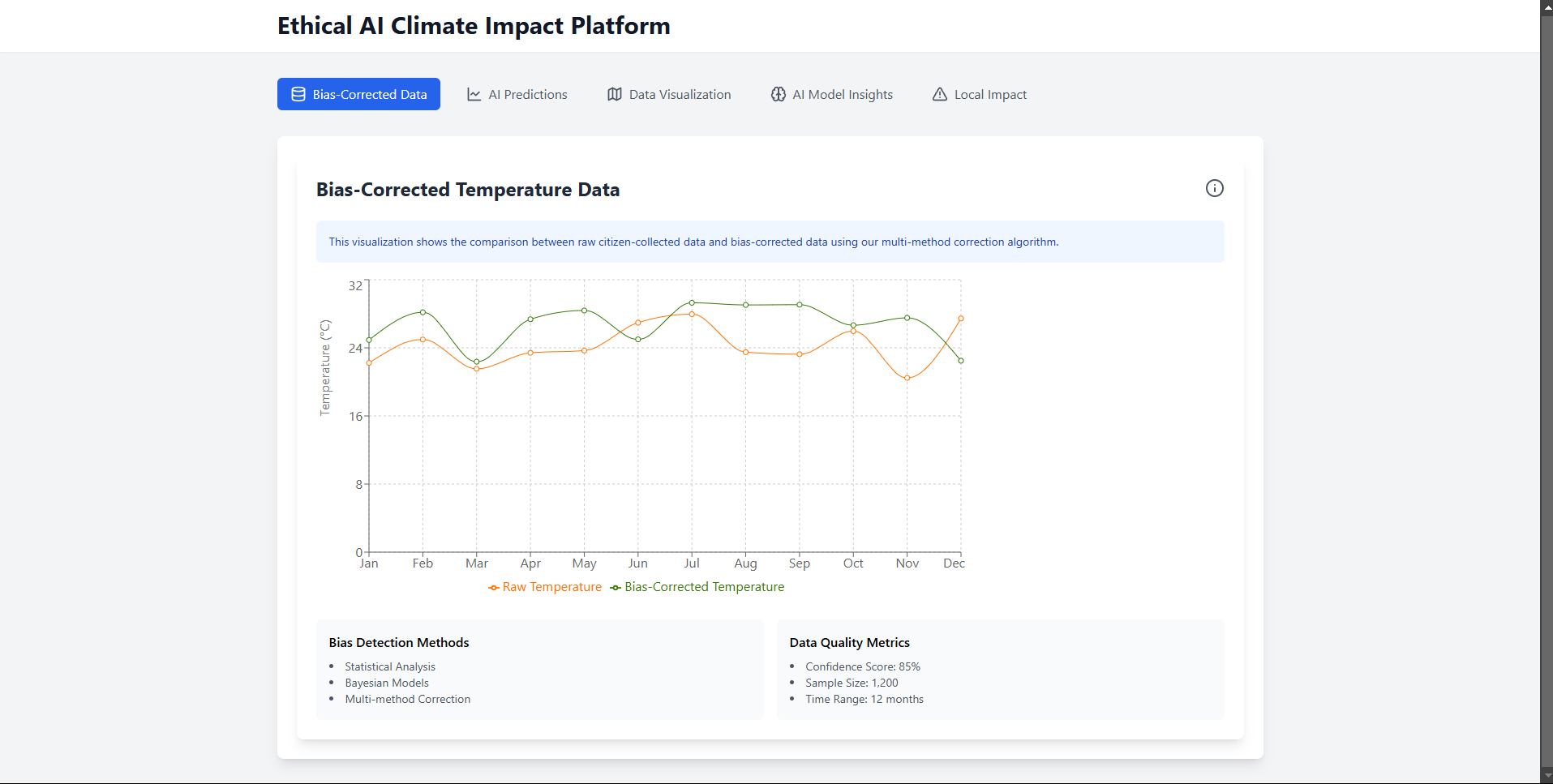
- Bias-Corrected Data Explorer: Displays temperature data from citizen and official sources, implementing bias detection and correction algorithms.
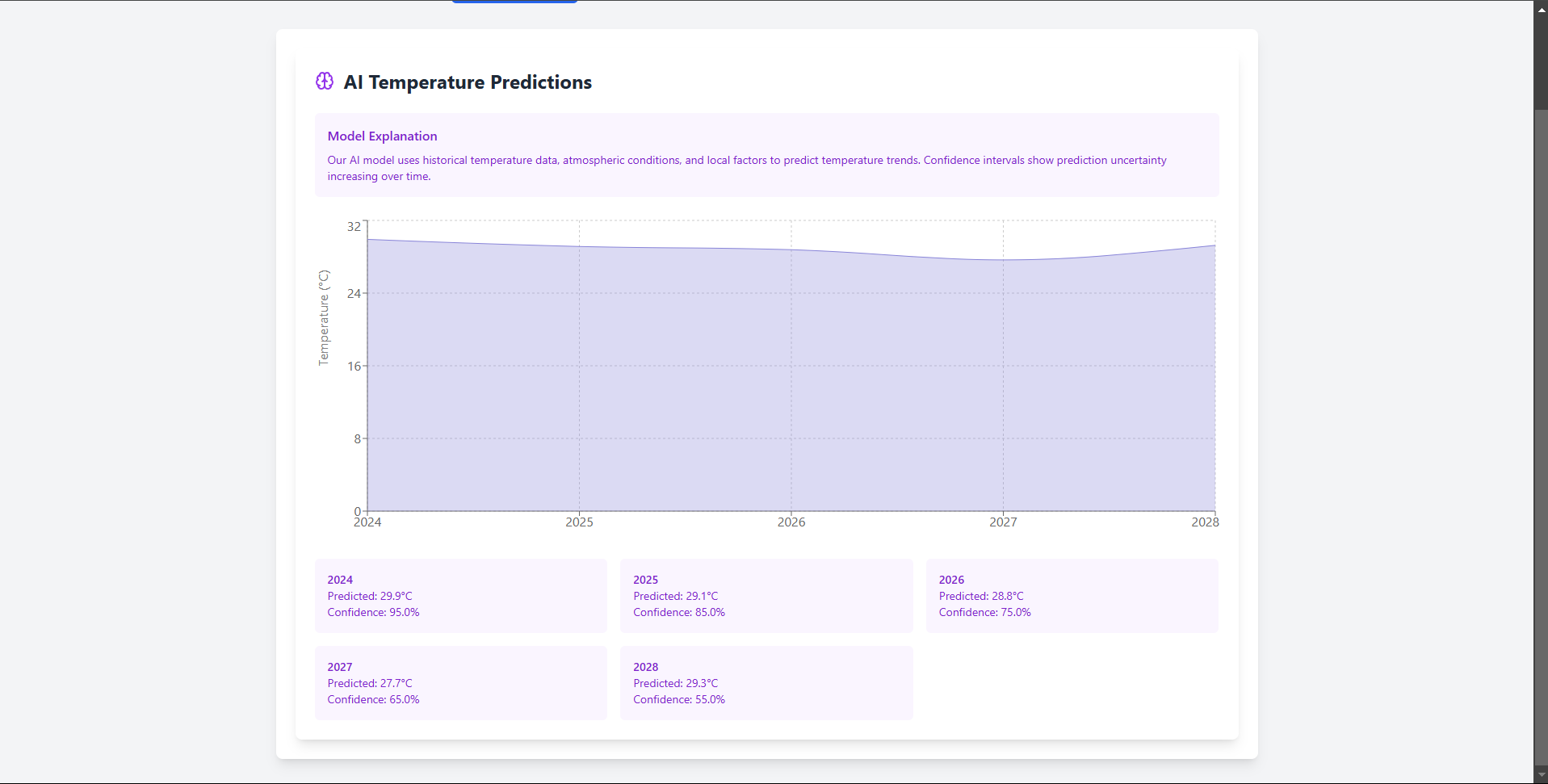
- AI Predictions Viewer: Provides future climate predictions, confidence intervals, and transparent explanation of factors influencing predictions.
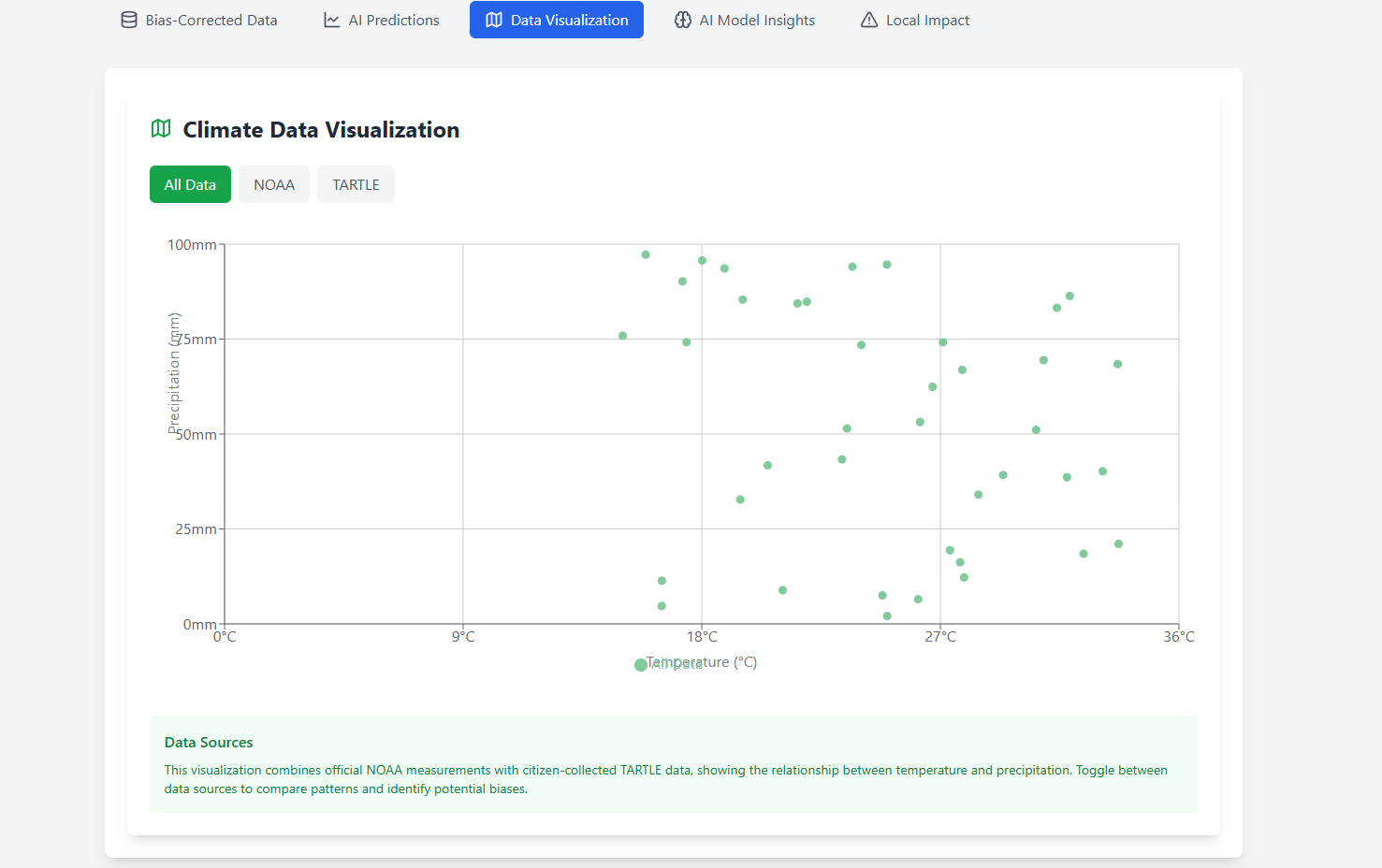
- Interactive Climate Visualization: Combines diverse data sources into interactive charts, showcasing temperature and precipitation patterns.
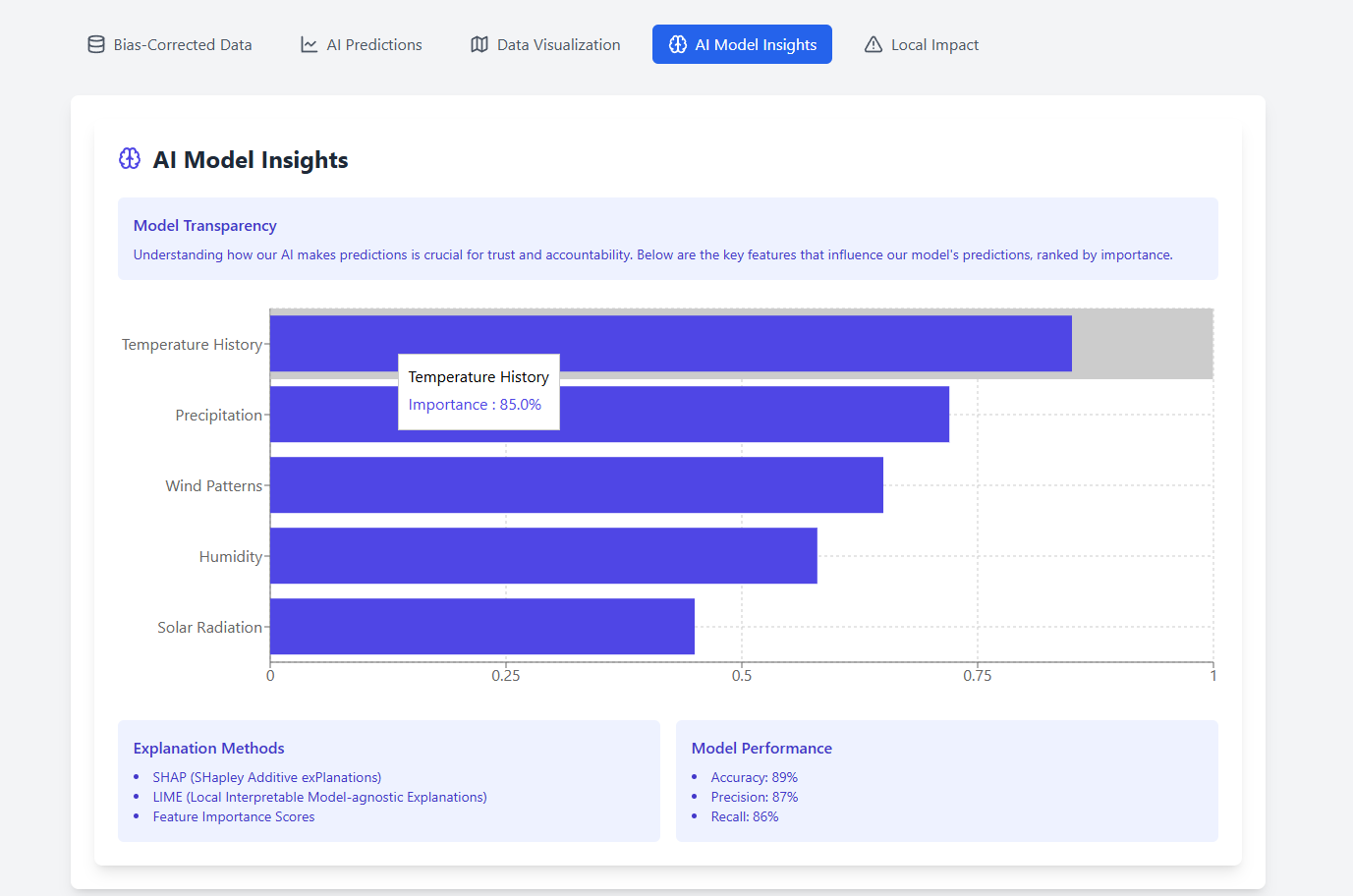
- AI Model Insights: Explains how the AI models work, providing transparency on feature importance and decision-making.
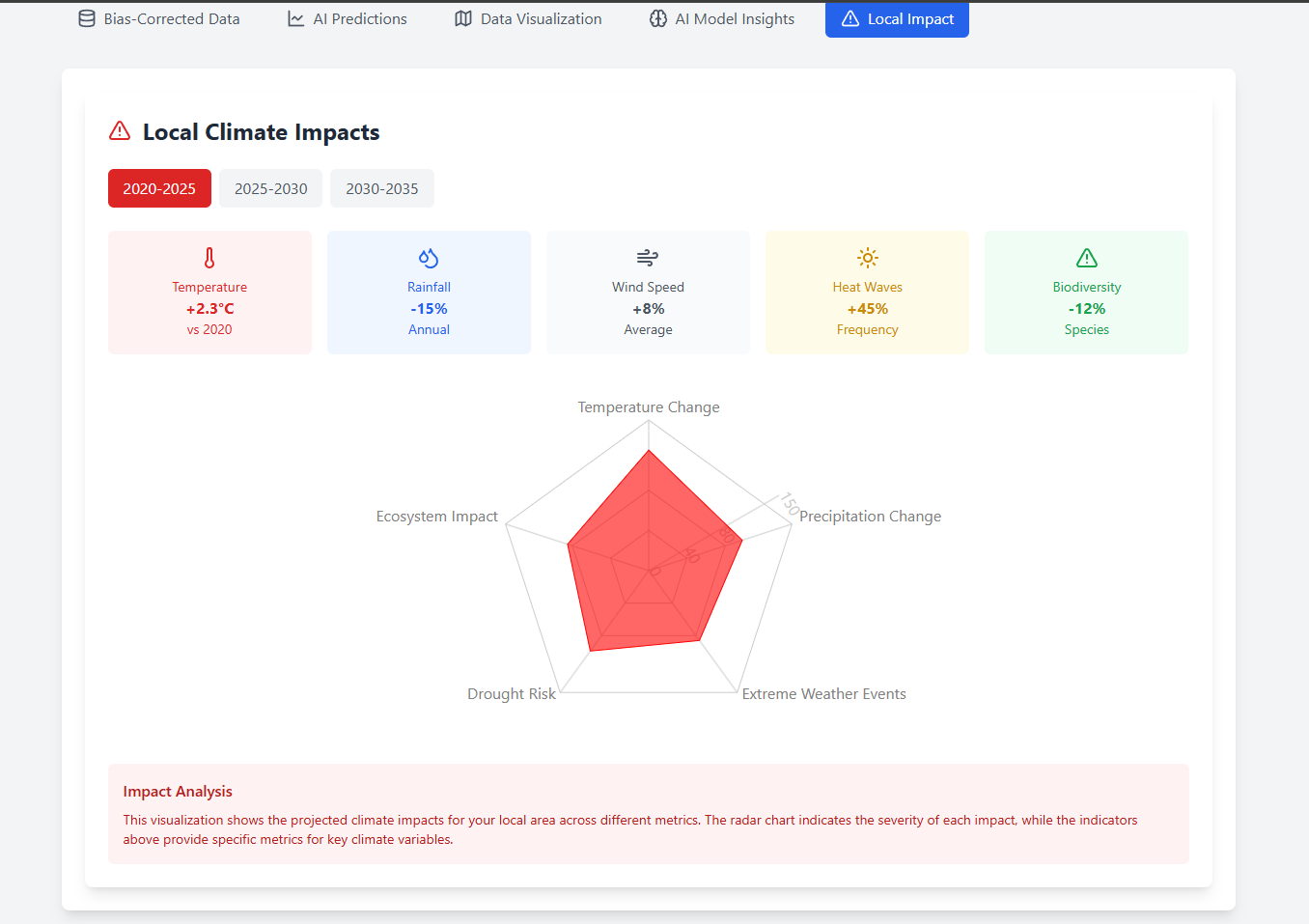
- Local Climate Impact Viewer: Displays local climate metrics and projected changes, visualized through radar charts.
How we built it
EarthView AI was developed using a combination of modern web technologies, machine learning models, and cloud infrastructure:
- Satellite Image Integration: We used high-resolution satellite imagery from trusted providers to gather environmental data for analysis.
- Artificial Intelligence: TensorFlow.js was employed to build and train AI models capable of detecting and predicting environmental changes. These models use neural networks and advanced algorithms to ensure accuracy and scalability.
- Data Visualization: We integrated D3.js and Recharts for visualizing complex climate data in an easy-to-understand format. Users can interact with the data through graphs, maps, and charts.
- Bias Detection and Correction: The platform incorporates statistical algorithms to detect and correct biases in citizen-collected data, ensuring that the predictions are based on accurate and balanced information.
- Cloud Infrastructure: The platform is hosted on scalable cloud services, such as AWS, to manage large datasets and provide real-time data processing capabilities.
- React & TypeScript Frontend: The user interface was developed using React and TypeScript, with Tailwind CSS for styling. This allows for a responsive, dynamic experience for users.
Challenges we ran into
- Data Quality and Bias: Ensuring that citizen-collected data was free of biases and inaccuracies proved to be one of the most challenging aspects. We implemented bias detection and correction mechanisms to improve the reliability of the data.
- Real-Time Processing: The need to process large datasets in real-time to provide up-to-date predictions was a challenge. Optimizing the platform’s cloud architecture and leveraging distributed computing was key to overcoming this issue.
- Model Accuracy: Achieving high accuracy in detecting subtle environmental changes, like small-scale deforestation or gradual shifts in urbanization, required extensive model training and testing.
- Scalability: As the platform grew, maintaining its ability to scale while handling large volumes of data from multiple sources, including satellite and citizen-collected data, required careful engineering.
Accomplishments that we're proud of
- Bias-Corrected Predictions: We successfully developed algorithms that correct biases in citizen-collected data, resulting in more accurate predictions and a higher level of trust from users.
- AI Model Development: Our machine learning models are able to make highly accurate predictions about climate trends and environmental shifts, providing a reliable tool for stakeholders.
- Interactive Dashboard: The user interface, which integrates diverse datasets into interactive visualizations, makes complex climate data accessible to both experts and non-experts.
- Collaboration with Environmental Groups: Partnering with environmental NGOs and governmental organizations has helped validate our platform’s efficacy and impact, ensuring that EarthView AI meets the needs of real-world climate monitoring.
- Raising Awareness: By providing clear and actionable insights into climate data, we have increased awareness and provided tools for governments, businesses, and individuals to address environmental challenges.
What we learned
Throughout the development of EarthView AI, we learned valuable lessons about both technology and the environment. The primary lessons include:
- The Importance of Bias Detection: Handling bias in data, especially in citizen-collected sources, is crucial for ensuring the accuracy of climate predictions.
- Machine Learning for Climate Prediction: We learned the power of AI in addressing climate change and the potential it has in providing actionable, data-driven solutions.
- The Complexity of Real-Time Data Processing: Processing large amounts of data in real-time requires advanced cloud infrastructure and efficient algorithms to ensure that predictions are both timely and reliable.
- Collaboration is Key: Working closely with environmental organizations has helped us understand the real-world needs of climate data consumers and the role technology can play in addressing these needs.
- User-Centered Design: The success of the platform relies on creating an interface that allows users, regardless of their expertise, to interact with the data in an intuitive way.
What's next for EarthView AI
The future of EarthView AI is filled with exciting possibilities. Some of the next steps for the platform include:
- Global Expansion: We aim to expand the platform’s coverage to include more regions and additional environmental indicators such as air quality, water levels, and biodiversity.
- Enhanced AI Models: We plan to refine our machine learning models by incorporating more data sources and improving predictive accuracy, as well as adding more sophisticated climate indicators like ocean currents or greenhouse gas emissions.
- Mobile Application: A mobile version of EarthView AI is in the works, allowing users to track climate changes on-the-go and make informed decisions from anywhere.
- Further Partnerships: We will continue to collaborate with governments, NGOs, and private sectors to ensure the platform’s continued growth and integration into large-scale environmental monitoring systems.
- Sustainability Tools: We aim to add more tools for users to take actionable steps based on the insights from the platform, such as providing recommendations for sustainable practices and policies.
Built With
- d3.js
- github
- javascript
- lucide
- noaa
- react
- recharts
- tailwind
- tartle
- tensorflow.js
- typescript


Log in or sign up for Devpost to join the conversation.