-
-
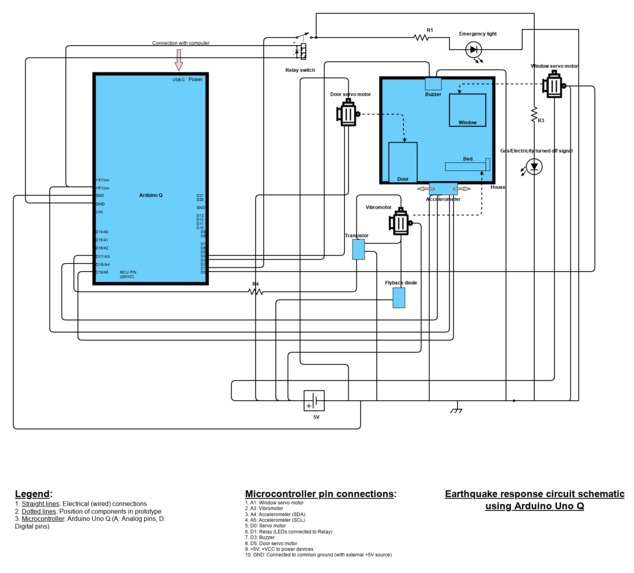
Electronics schematics
-
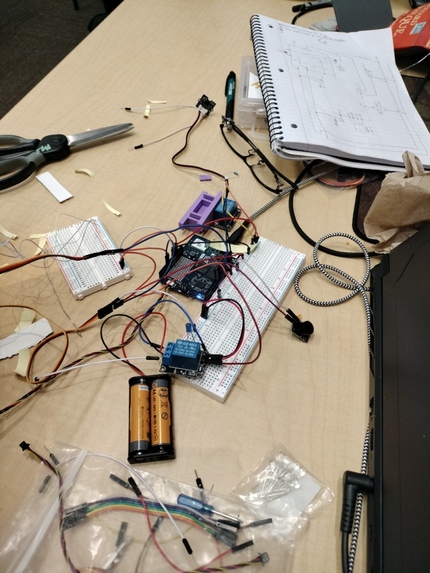
Electronics
-
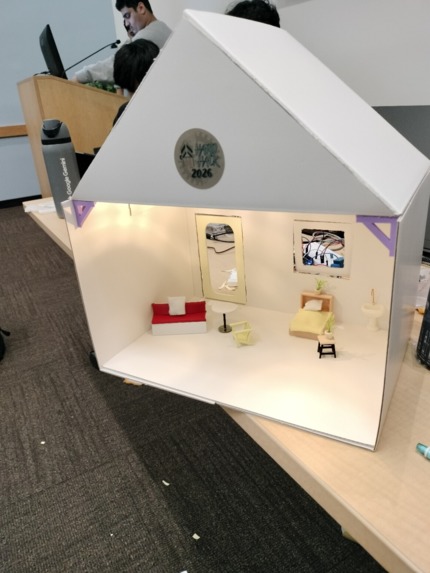
Front View
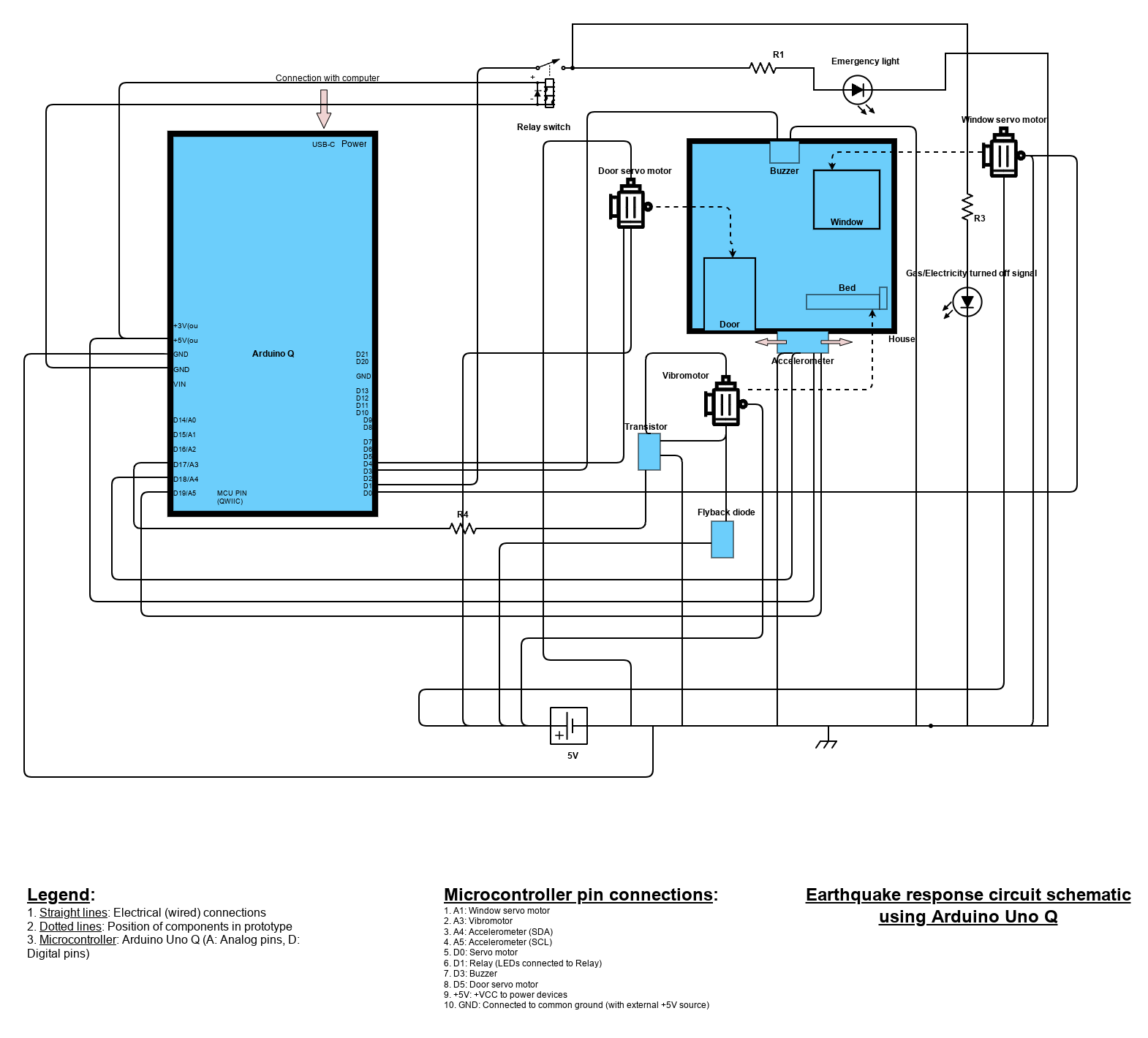
Inspiration
In 1999 September 21, a level 7.3 earthquake occurred in the middle of Taiwan, killing thousands of people in the middle of the night. The earthquake killed many, but more people died because they couldn't escape the building in time or were killed by fire caused by gas leakage. In 1906, San Francisco, the fire after the earthquake destroyed about 28,000 buildings and 500 blocks, which is nearly ¼ of San Francisco. Earthquakes don't simply end after it stops shaking, and we are trying to end this.
What it does
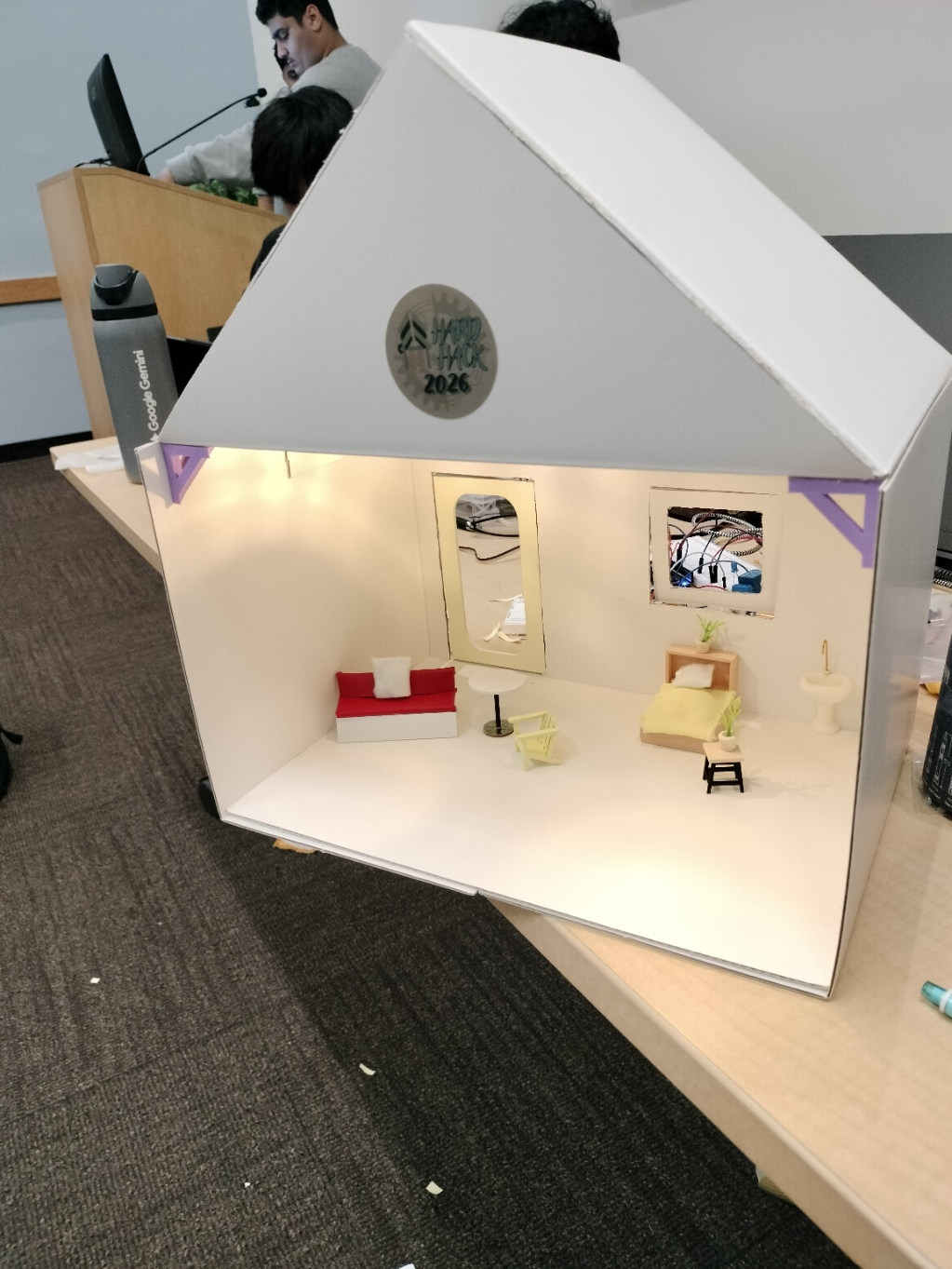
Upon detecting a significant earthquake, our system automatically turns off the gas and main electricity (represented by the room LEDs), turns on a separate emergency lighting system, and opens the windows and doors to allow the person to escape. Doors and windows might deform under significant force, and in a large-magnitude earthquake, being unable to open the doors to escape is very dangerous. A vibration motor (mounted under the bed) and a buzzer will notify the person of an earthquake, even if they are sleeping, ensuring they can wake up and escape.
How we built it
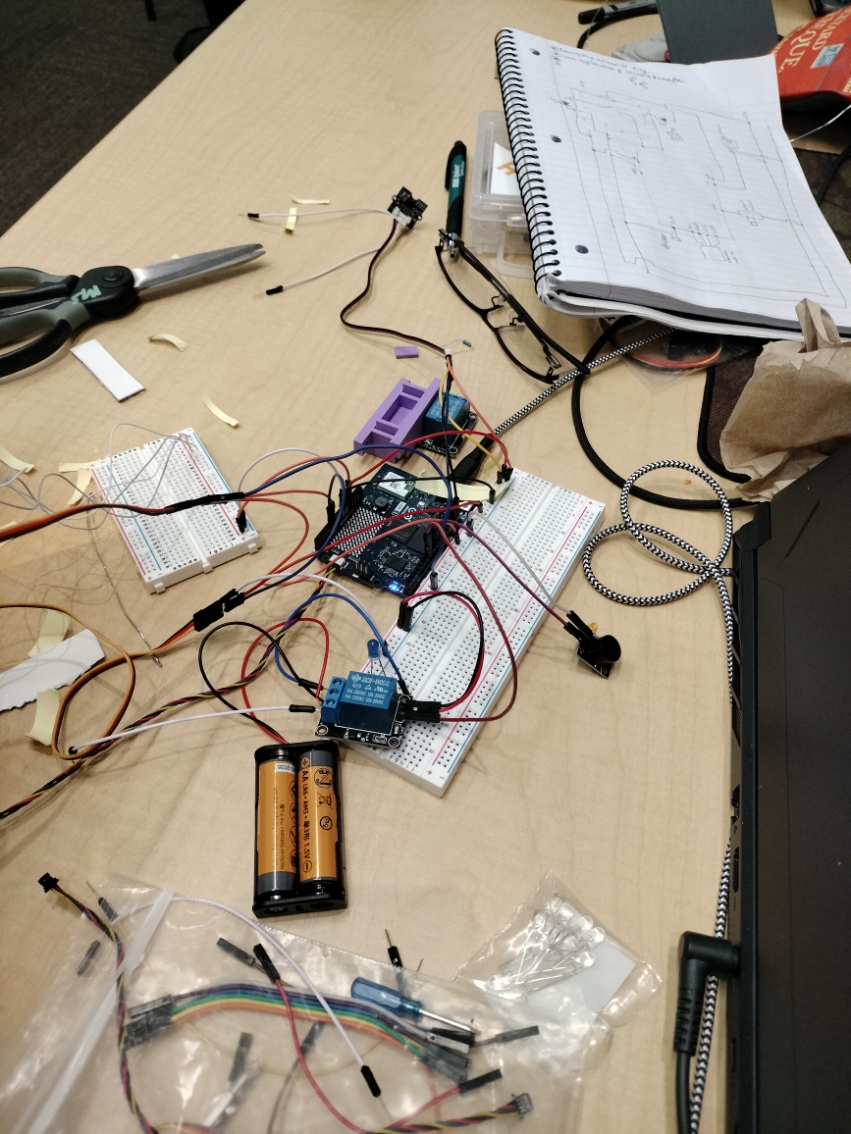
We use an accelerometer for earthquake detection and an Arduino Uno Q to calculate the earthquake's magnitude. Once the magnitude reaches the threshold, the Uno Q activates the buzzer, vibrator, and servo motors. In addition, the Uno also activates the relay and switches off the room LEDs' power while turning on the emergency battery-powered LEDs for escape use.
Challenges we ran into
One major challenge we encountered was working with a newly released Arduino product and its accompanying App Lab environment. Because the product was so new, there was very limited documentation available, which made troubleshooting and understanding certain features difficult. In addition, the App Lab's functionality was unstable and did not always behave as expected, slowing down our development process. After experimenting and evaluating our options, we decided to switch back to the original Arduino IDE, which provided better reliability and community support.
Accomplishments that we're proud of
We are really proud that we were able to complete the project within the given time and that we managed to overcome the challenges we faced.
What we learned
We learned to leverage teamwork and offload each team member's workload, and this experience helped us better understand the trade-offs between emerging tools and mature ecosystems, and reinforced the importance of flexibility, adaptability, and informed decision-making when developing under time constraints.
Also, sleeping is very important; don't do all-nighters.
What's next for Earthquake Response
We can use LLMs to predict earthquakes and respond before the most destructive wave comes, giving people more time to respond to the earthquakes.
Built With
- accelerometer-mma7660-1.0.0
- arduino
- arduino-modulino-0.7.0
- arduino-routerbridge-0.3.0
- arduino-zephyr-boards-0.52.0
- servo-1.3.0
- wire.h

Log in or sign up for Devpost to join the conversation.