Inspiration
Environmental issues are all around us, but information about pollution, climate change and vegetation is often scattered across different platforms. Even when data is available, it can be difficult for people to understand it or know what steps they can take.
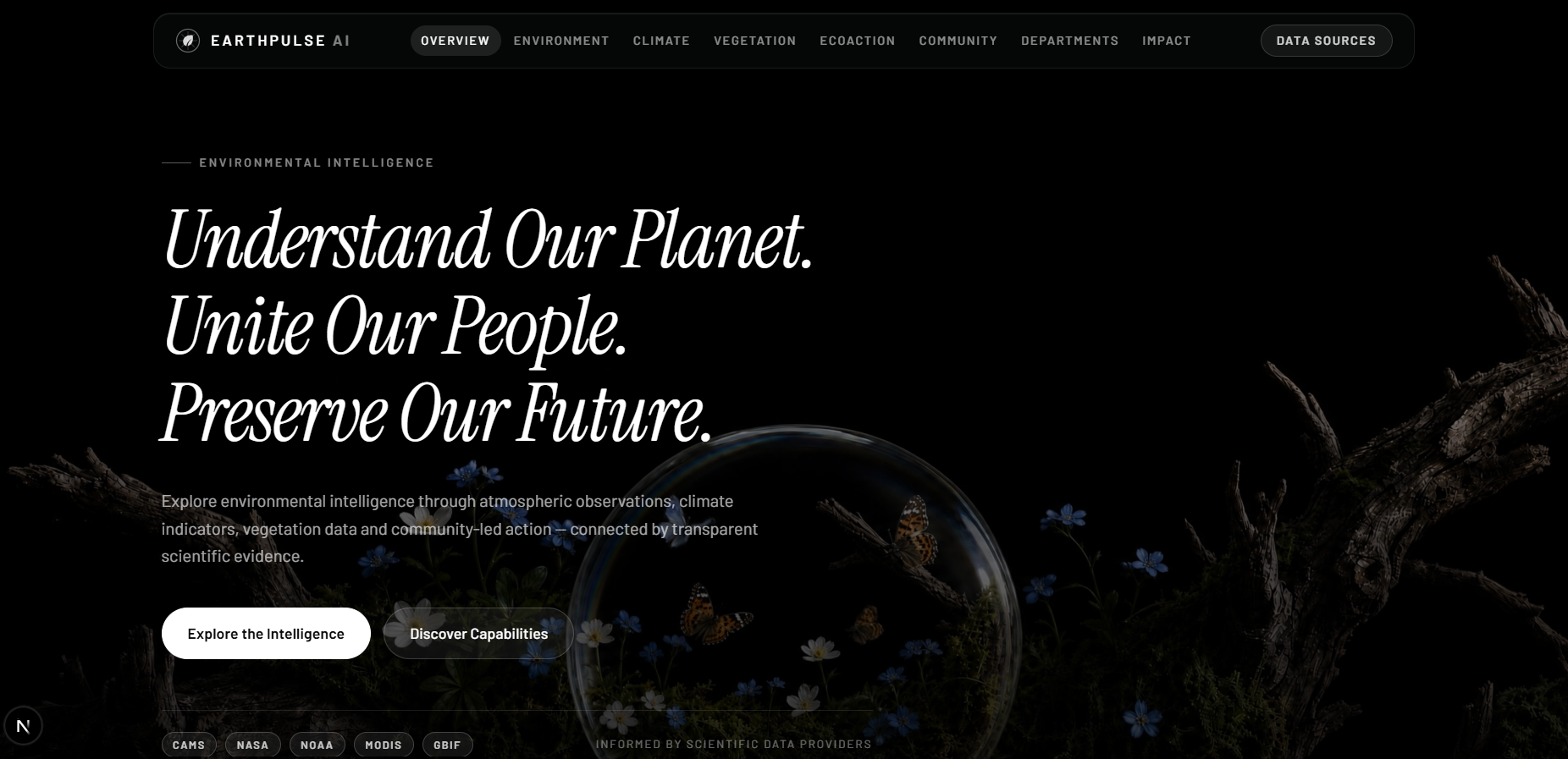
That gave me the idea for EarthPulse AI. I wanted to create one platform where people could explore environmental conditions, understand changes and find ways to take action.
What it does
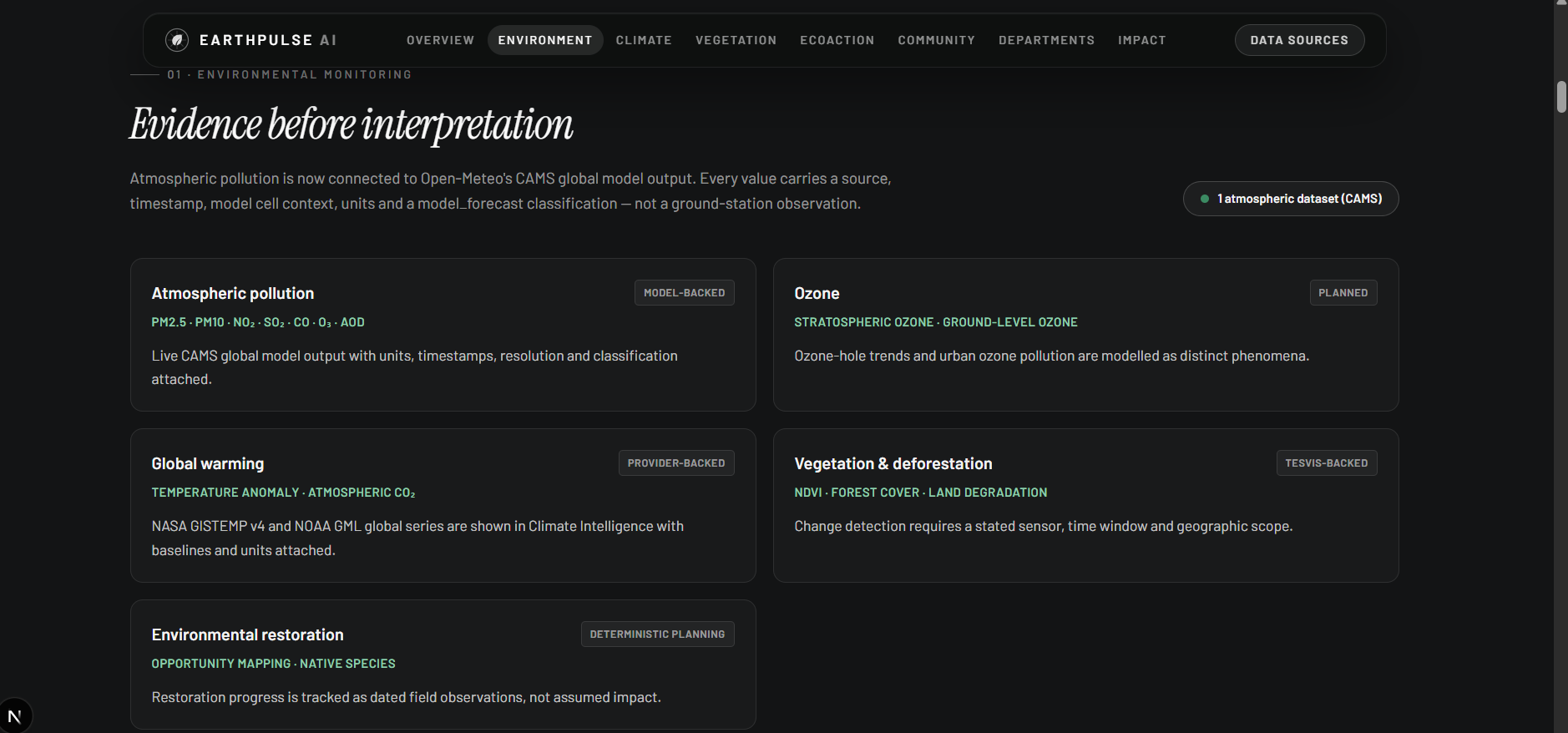
EarthPulse AI brings different parts of environmental monitoring and action together in one place.
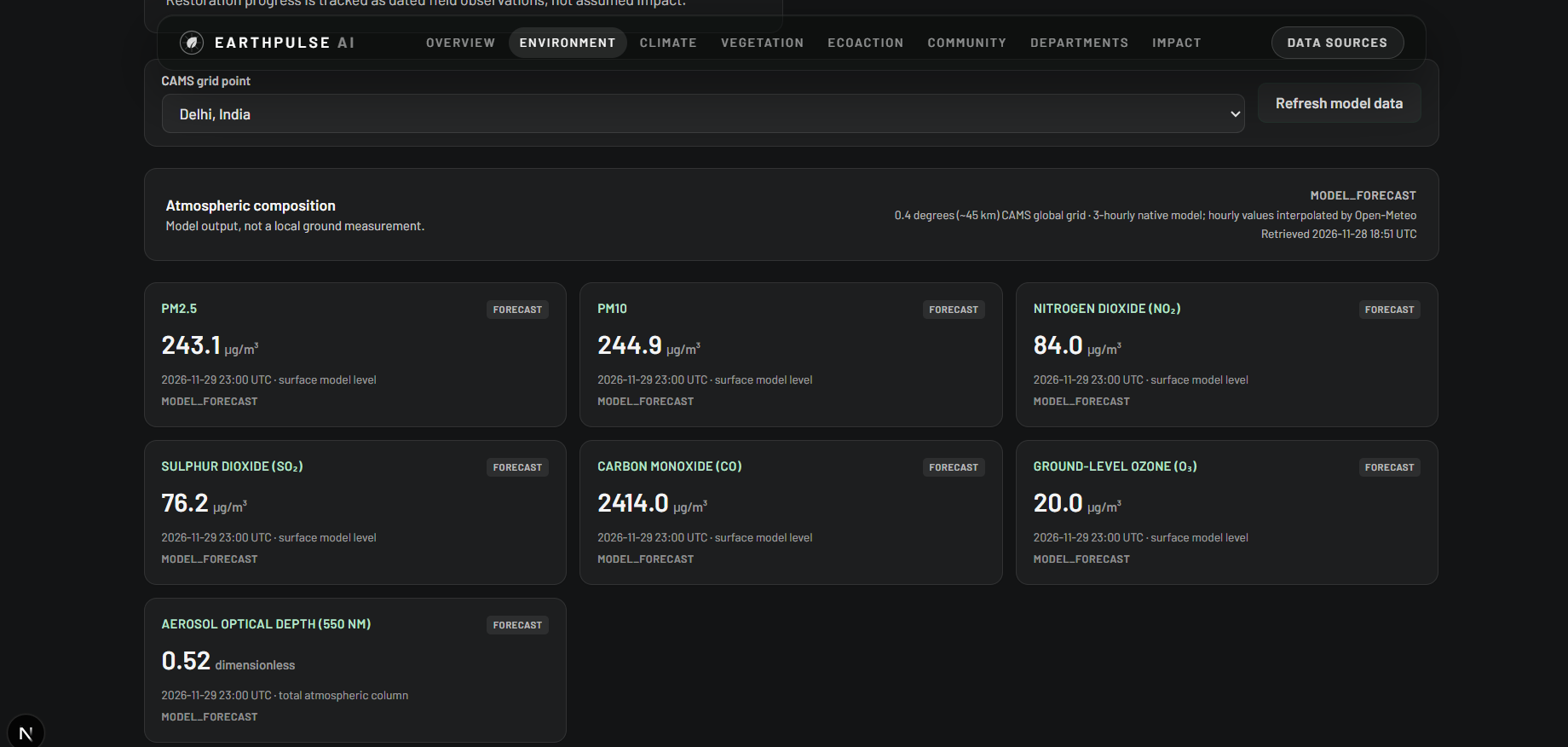
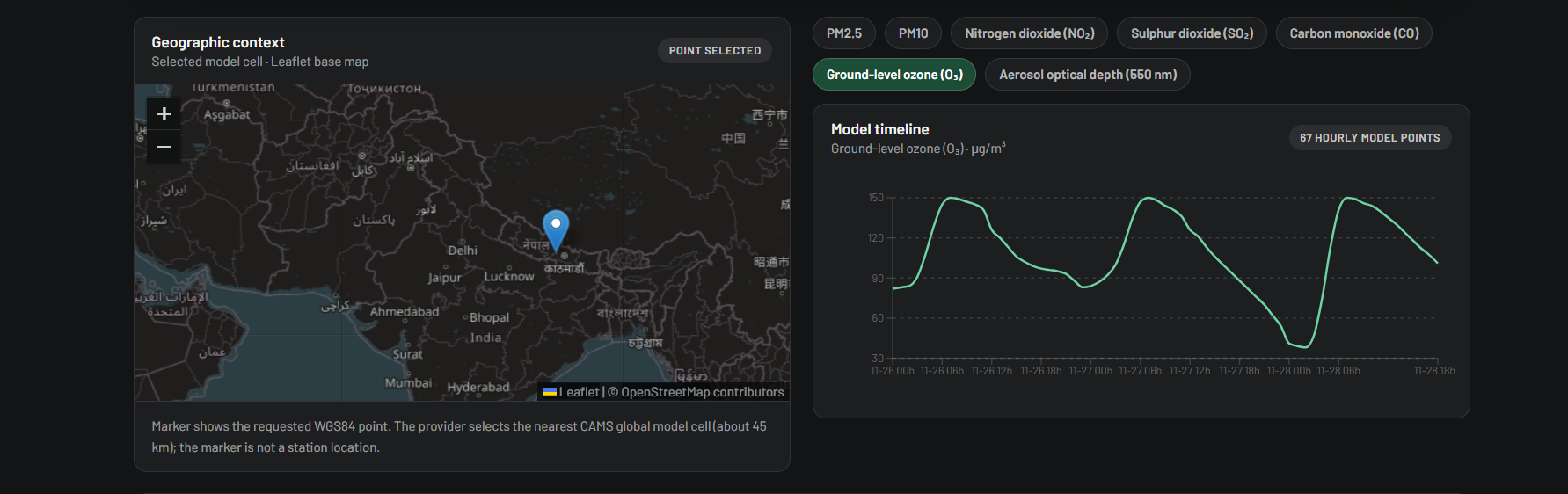
- Air Quality Monitoring: Displays pollution indicators such as PM2.5, PM10, NO₂, CO and O₃ using environmental data sources.
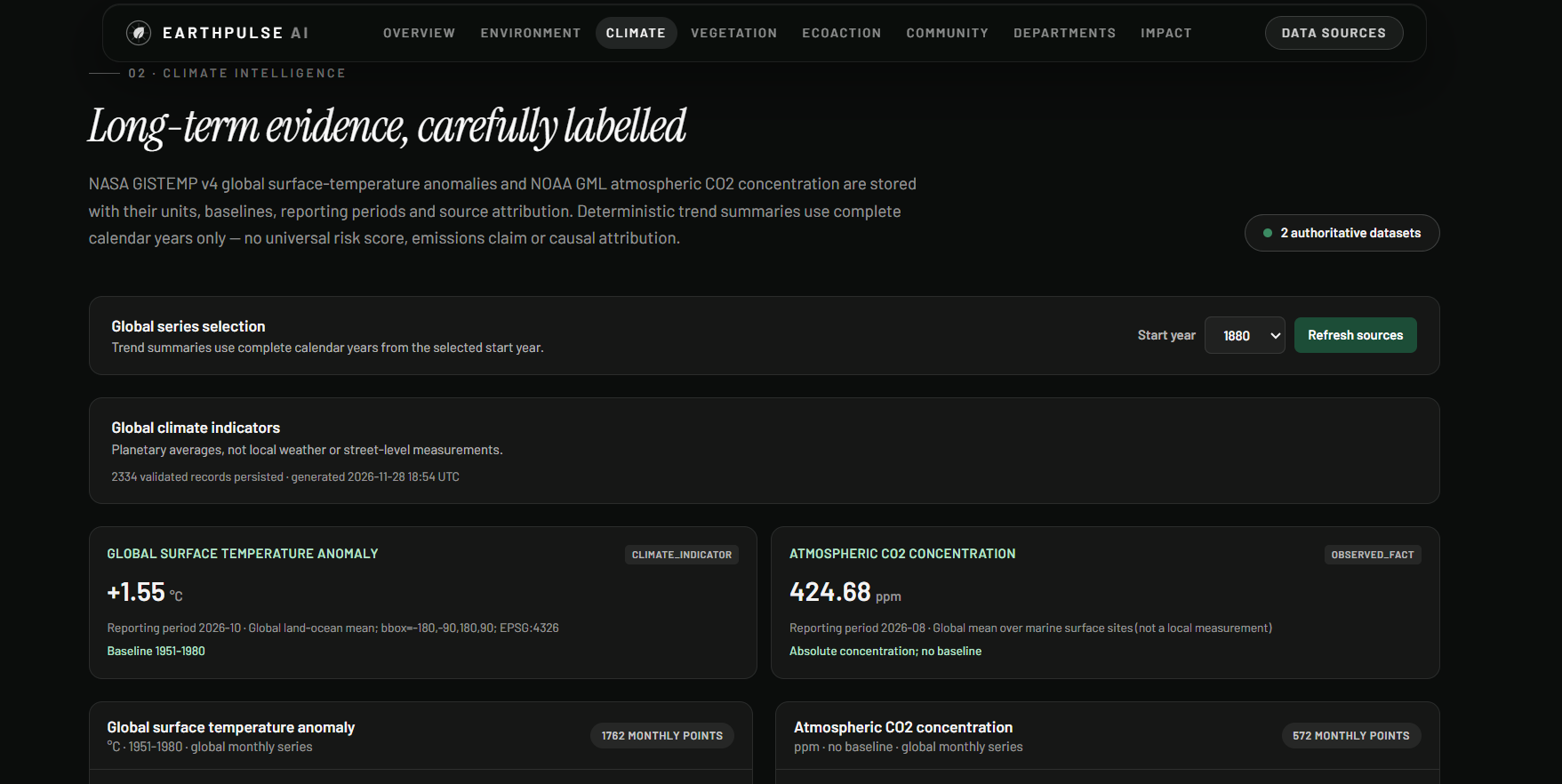
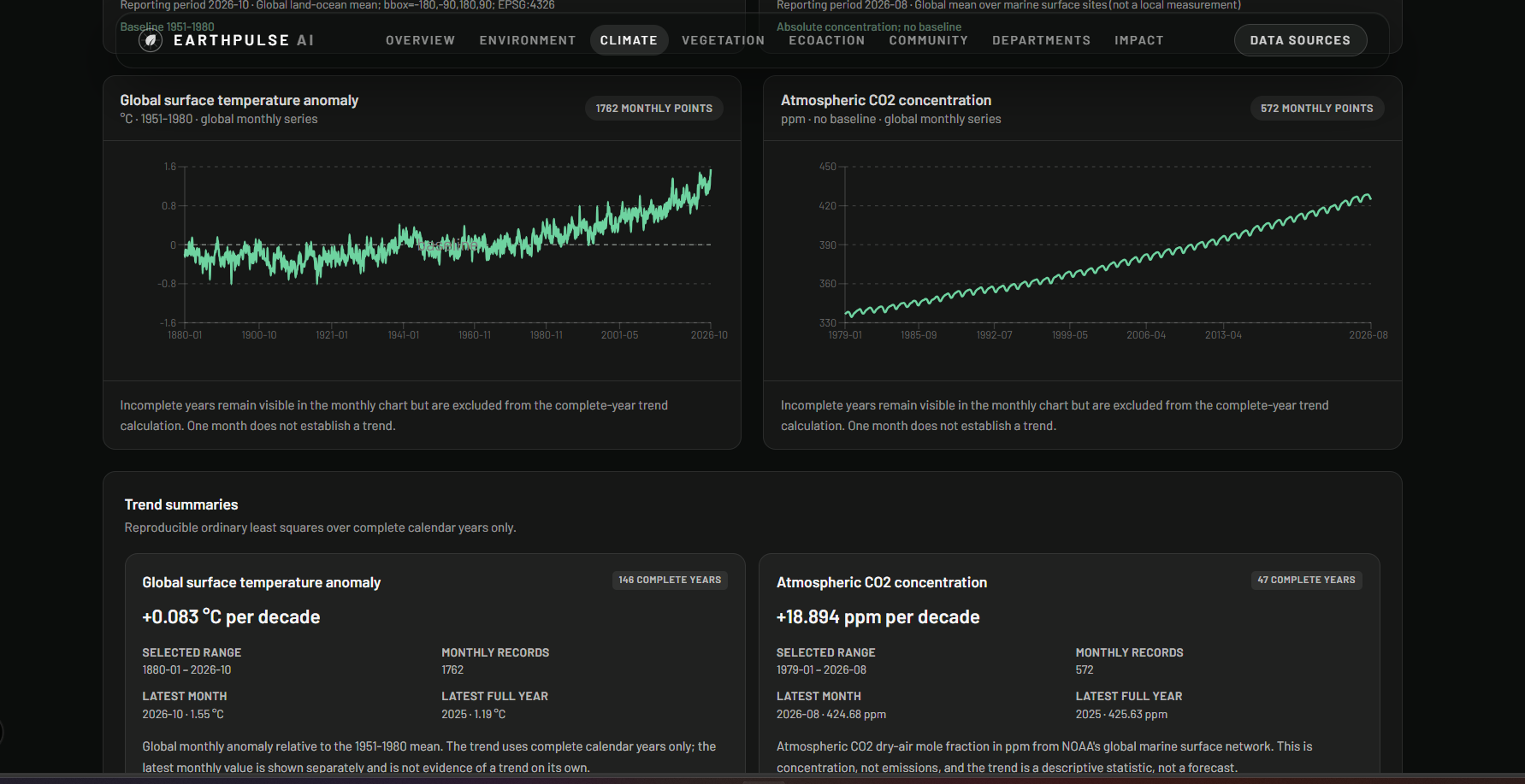
- Climate Intelligence: Helps users explore climate trends and related information.
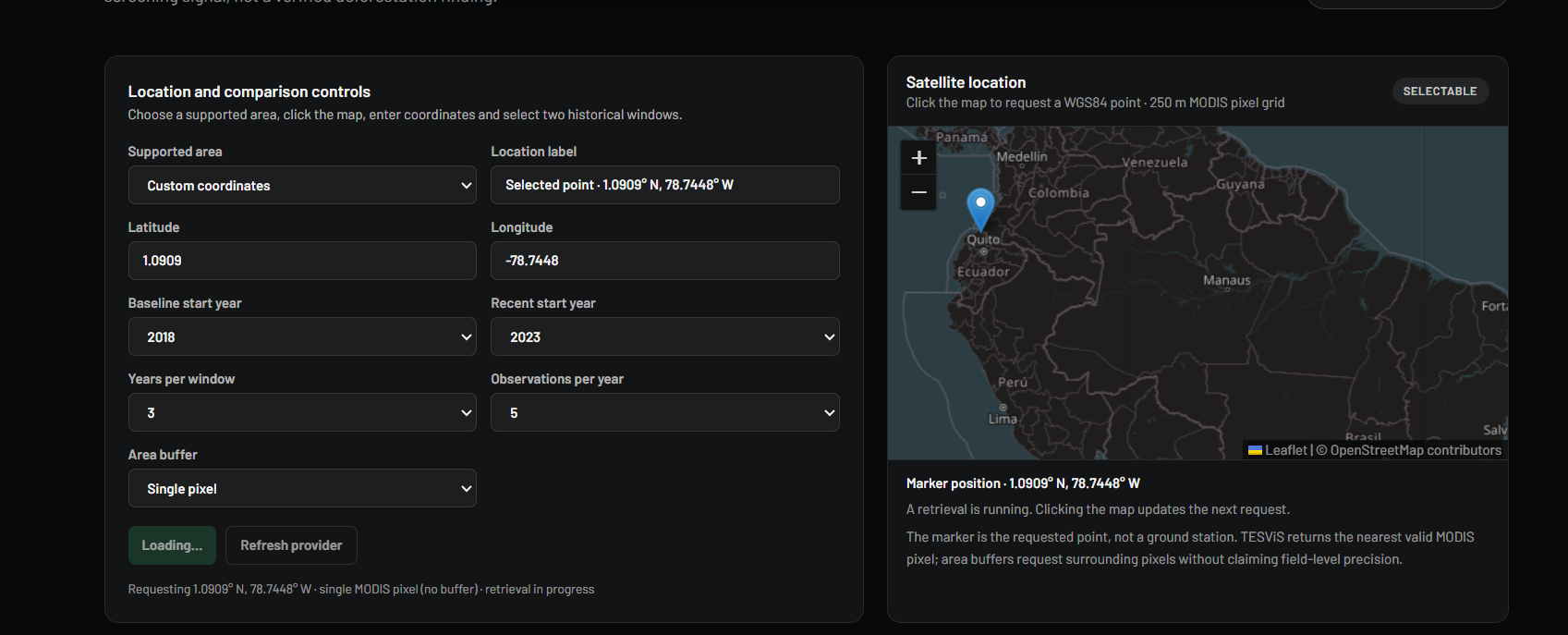
- Vegetation Intelligence: Provides location-based vegetation analysis and screening signals.
- EcoAction: Supports restoration planning, assessments and species screening.
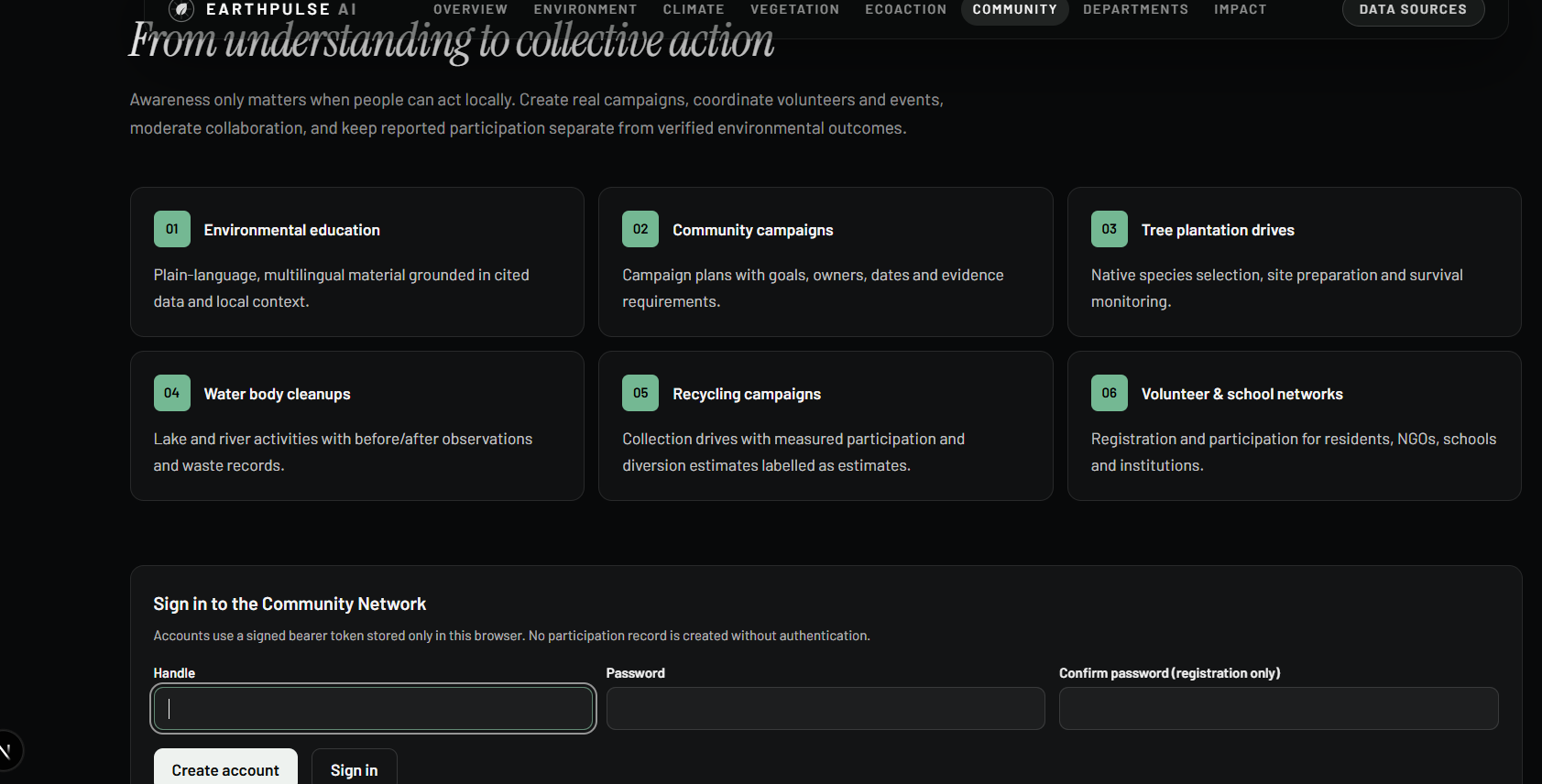
- Community: Provides features for environmental campaigns, events and contributions.
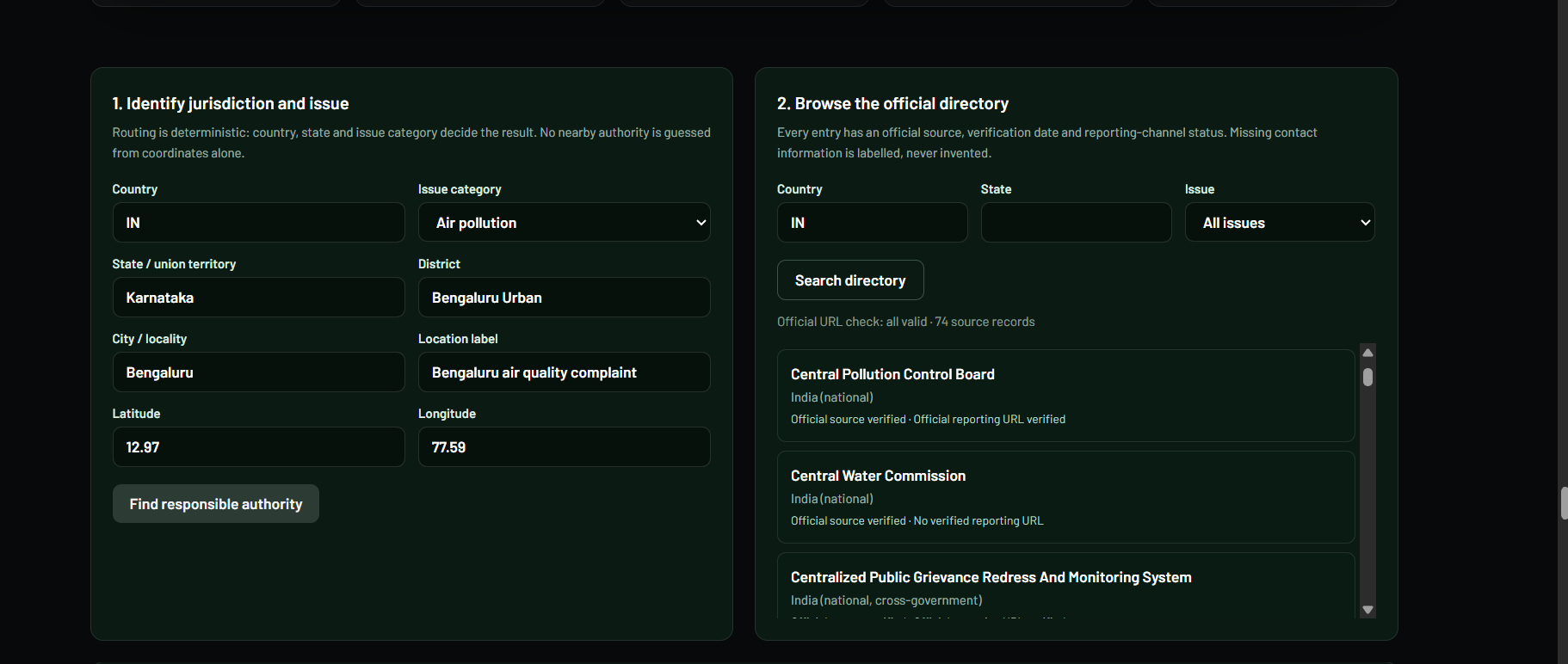
- Department Connect: Helps prepare evidence-based environmental reports and complaint drafts.
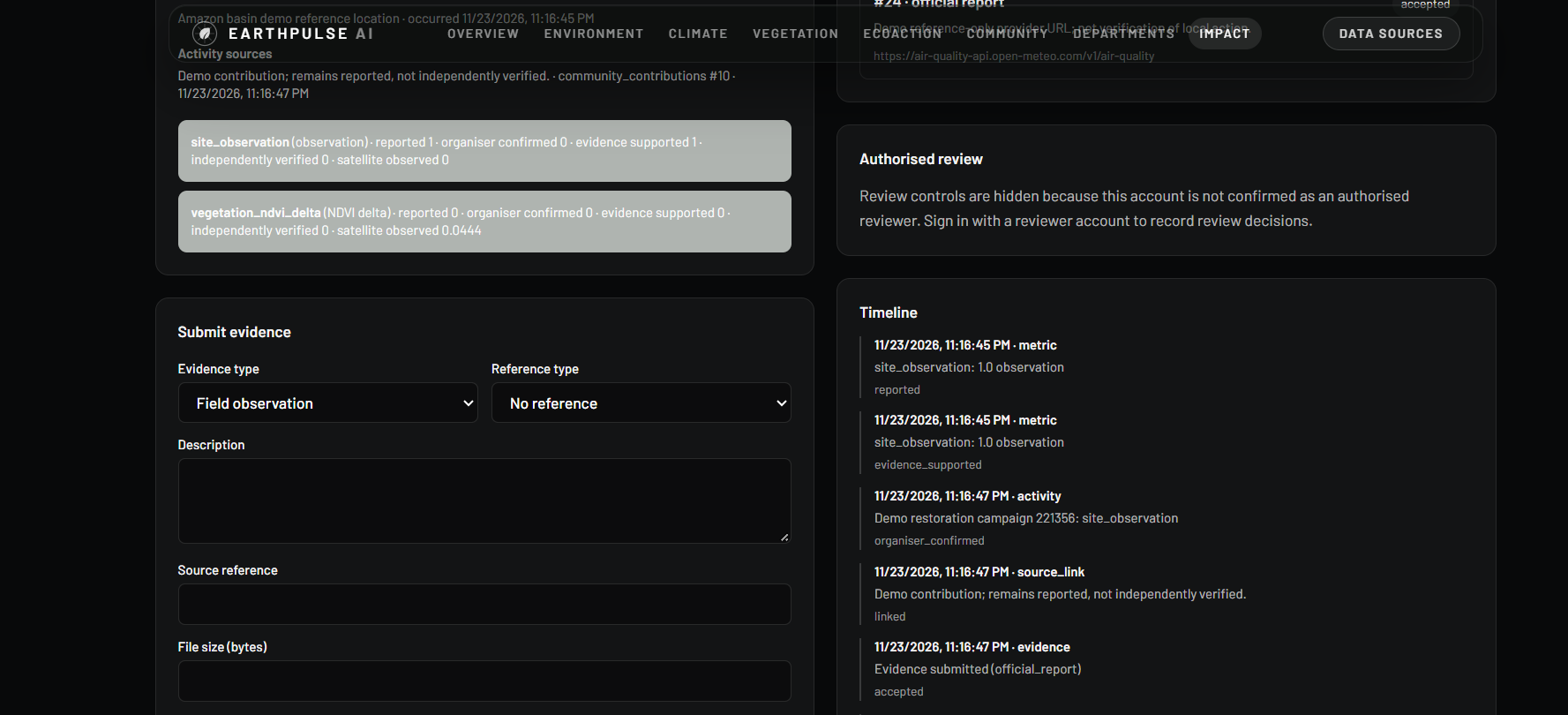
- Impact Intelligence: Organises environmental reports and related evidence for review.
- Data Transparency: Helps users understand where the information comes from and its limitations.
The idea is to make environmental information easier to explore and connect it with practical steps.
How we built it
I built EarthPulse AI using Next.js, React and TypeScript for the frontend, with Python and FastAPI handling backend services. SQLite is used for application data.
I connected environmental data sources for air quality, climate information and vegetation analysis. I also worked on integrating the different modules, improving data handling, and making the workflows more consistent.
During the hackathon, I focused on improving the existing application, including authentication-related workflows, evidence and report handling, vegetation analysis and reliability testing.
AI tools were used to assist with development, debugging and reviewing code. Their suggestions were checked against the actual code and test results before being retained.
The application has an optional Gemini integration, but the current demonstration uses deterministic fallback processing rather than a live Gemini API connection.
Challenges we ran into
One of the biggest challenges was working with environmental data from different providers. Each source has its own format, coverage and update frequency. Some providers can also be slow or temporarily unavailable.
Another challenge was making sure that the different modules worked together without affecting existing functionality. Authentication, database handling and evidence-related workflows required careful testing.
I also had to be careful about how environmental results were presented. For example, a vegetation signal should not be treated as proof of successful restoration, and a model-based pollution forecast should not be presented as a ground-level monitoring station reading.
Accomplishments that we're proud of
I am proud that EarthPulse AI brings several environmental workflows into one application instead of focusing on only one environmental issue.
Some things I am particularly happy with are:
- Bringing air quality, climate and vegetation information together.
- Building restoration planning and species screening features.
- Connecting community participation with environmental reporting workflows.
- Adding source information and transparency around environmental data.
- Improving the application's reliability through testing and debugging.
Most importantly, I was able to take an idea about environmental awareness and develop it into a working application with multiple connected modules.
What we learned
This project taught me that building an application is not just about adding features. Handling real-world data, understanding its limitations, testing different workflows and making information understandable are equally important.
I learned more about integrating external APIs, developing backend services, managing application data and debugging full-stack applications.
I also learned to be more careful when using AI tools: generated suggestions need to be reviewed, tested and understood rather than accepted blindly.
What's next for EarthPulse AI
There is still a lot I would like to improve.
Some of the next steps are:
- Improve the coverage and reliability of environmental data.
- Expand location-based vegetation monitoring.
- Develop more complete ozone monitoring.
- Improve restoration recommendations using better ecological data.
- Add more ways for communities to participate and track activities.
- Explore a more useful AI-assisted environmental analysis workflow.
- Work towards connecting verified environmental reports with relevant authorities through supported channels.
I see EarthPulse AI as a project that can continue growing. The long-term goal is to make environmental information more accessible and help communities make better-informed decisions.
Built With
- ai
- cams
- data-visualization
- environmental-data
- fastapi
- gbif
- modis
- nasa
- next.js
- open-meteo
- python
- react
- sqlite
- typescript
