-
-
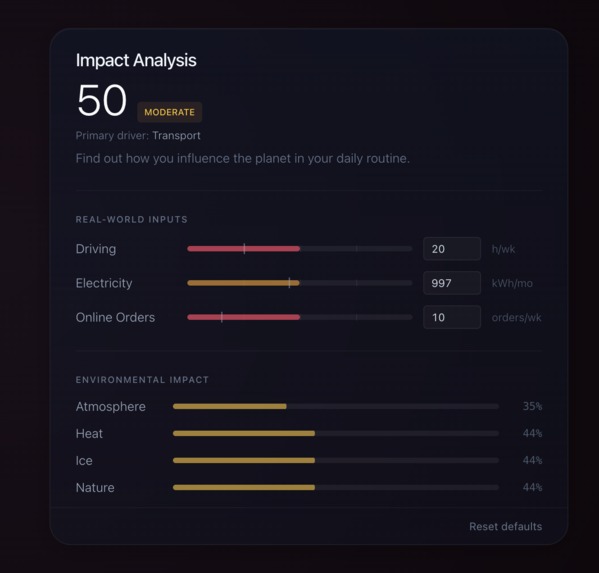
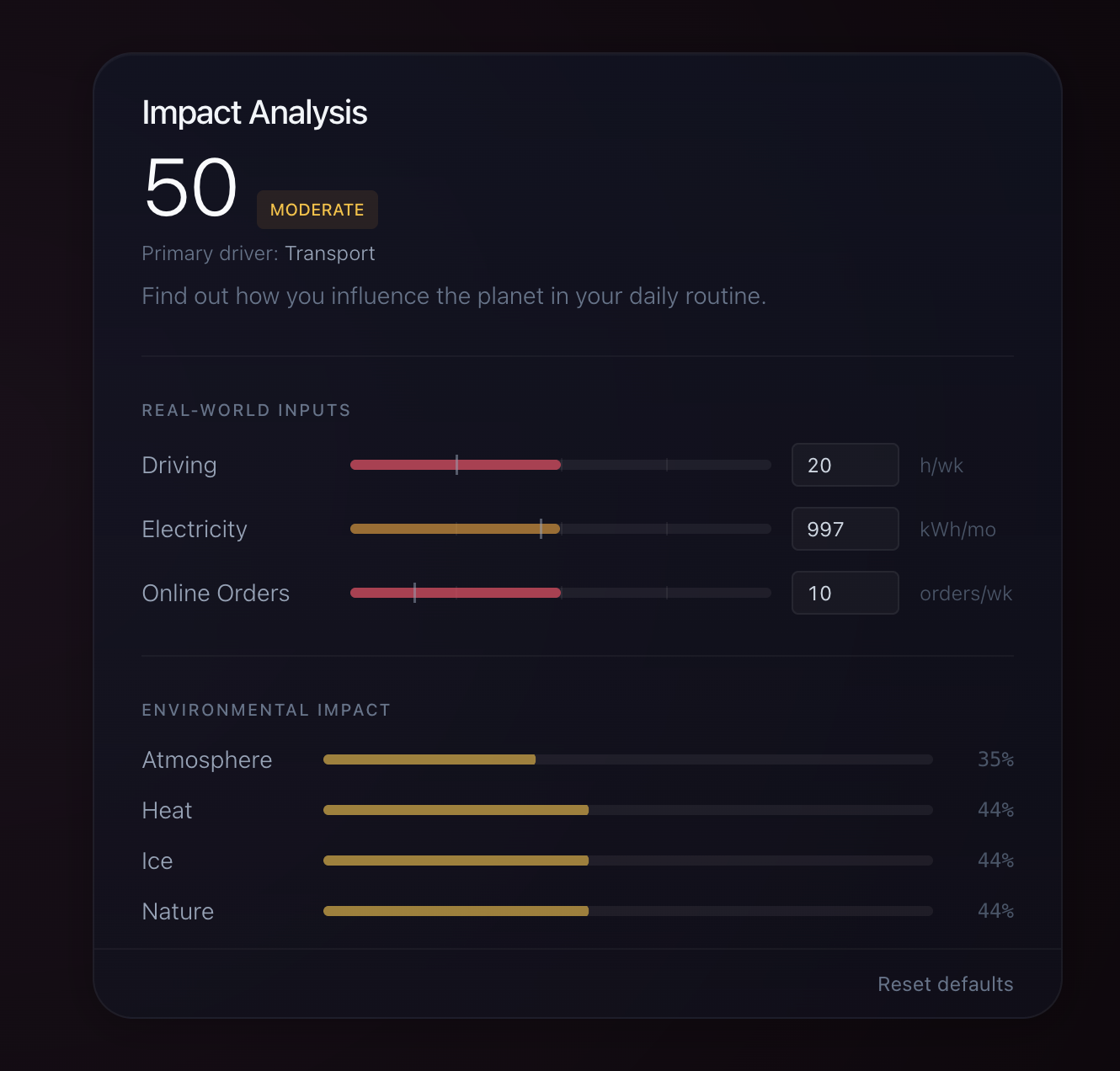
User input related to their habits and daily routines
-
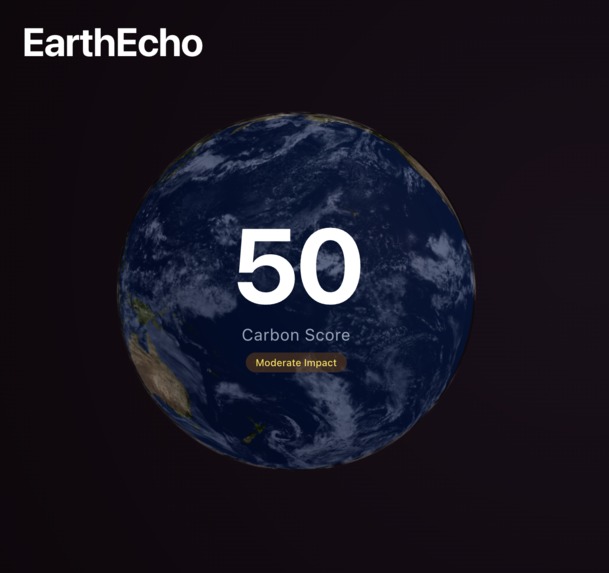
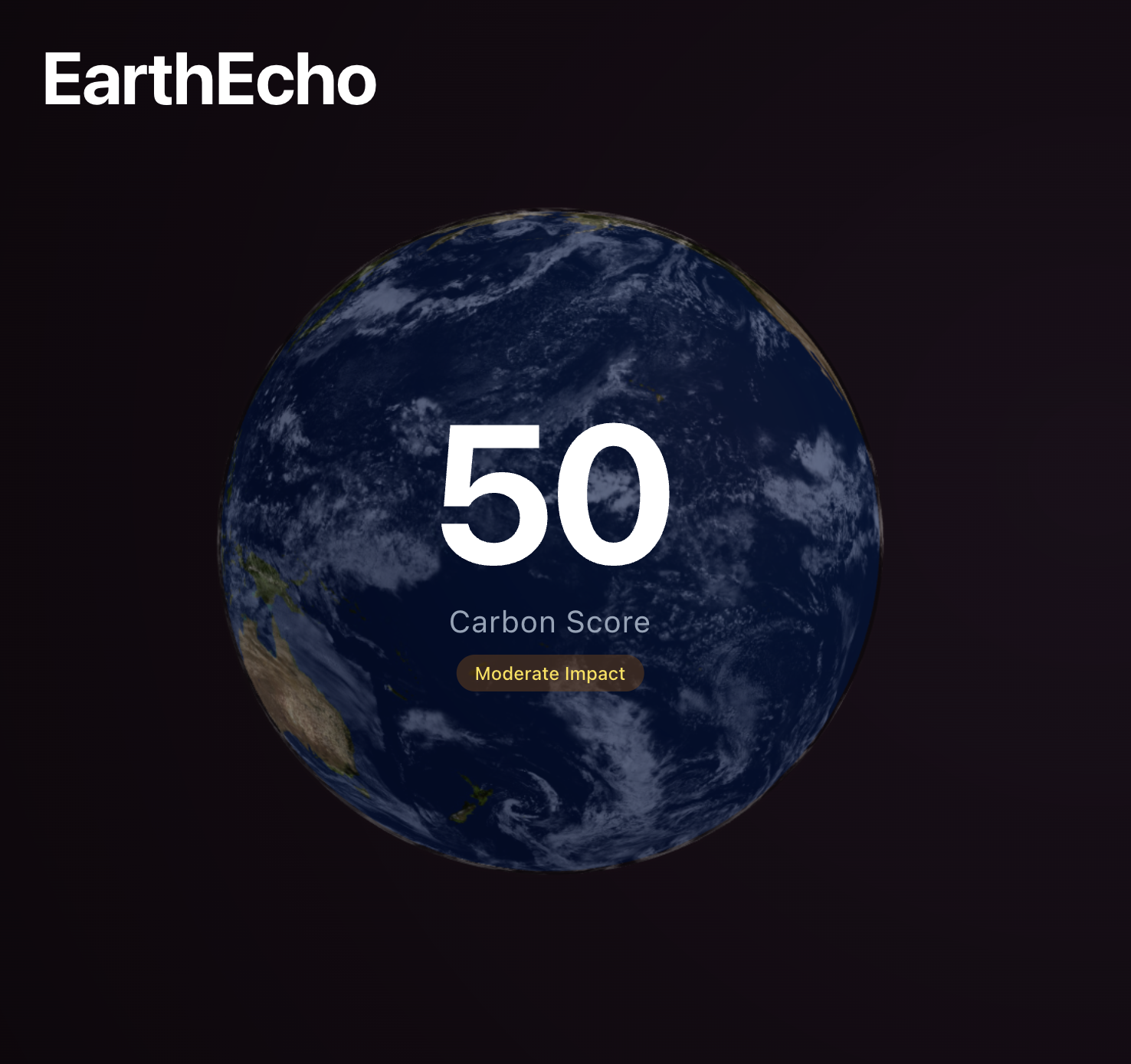
Advanced Earth visial
-
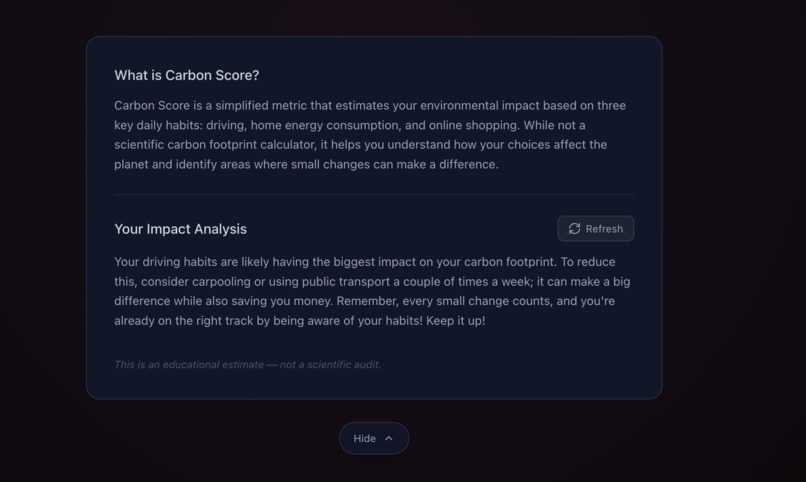
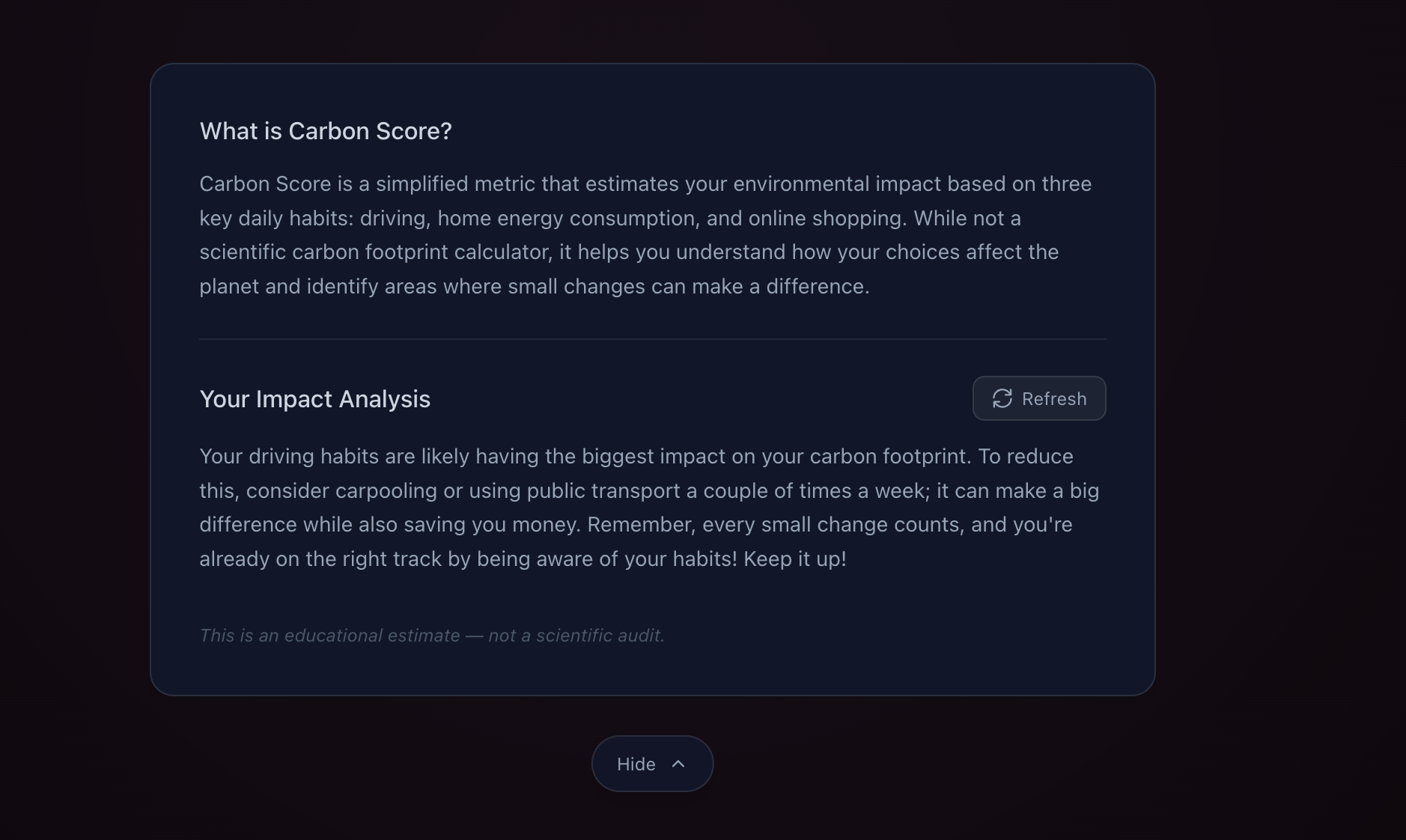
Learn more section + personal feedback
-
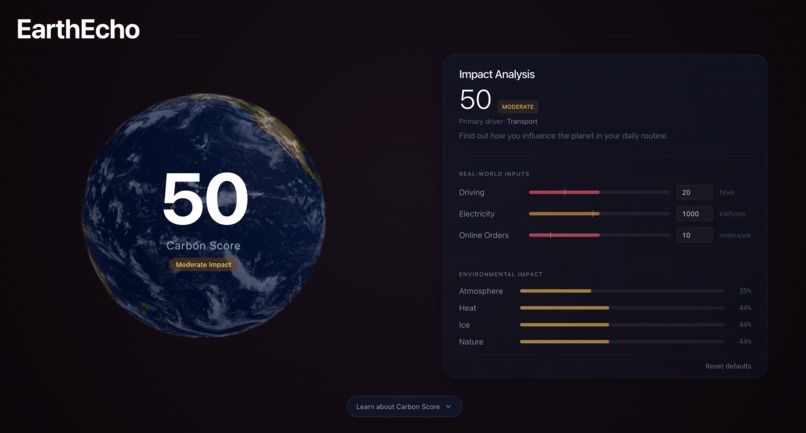
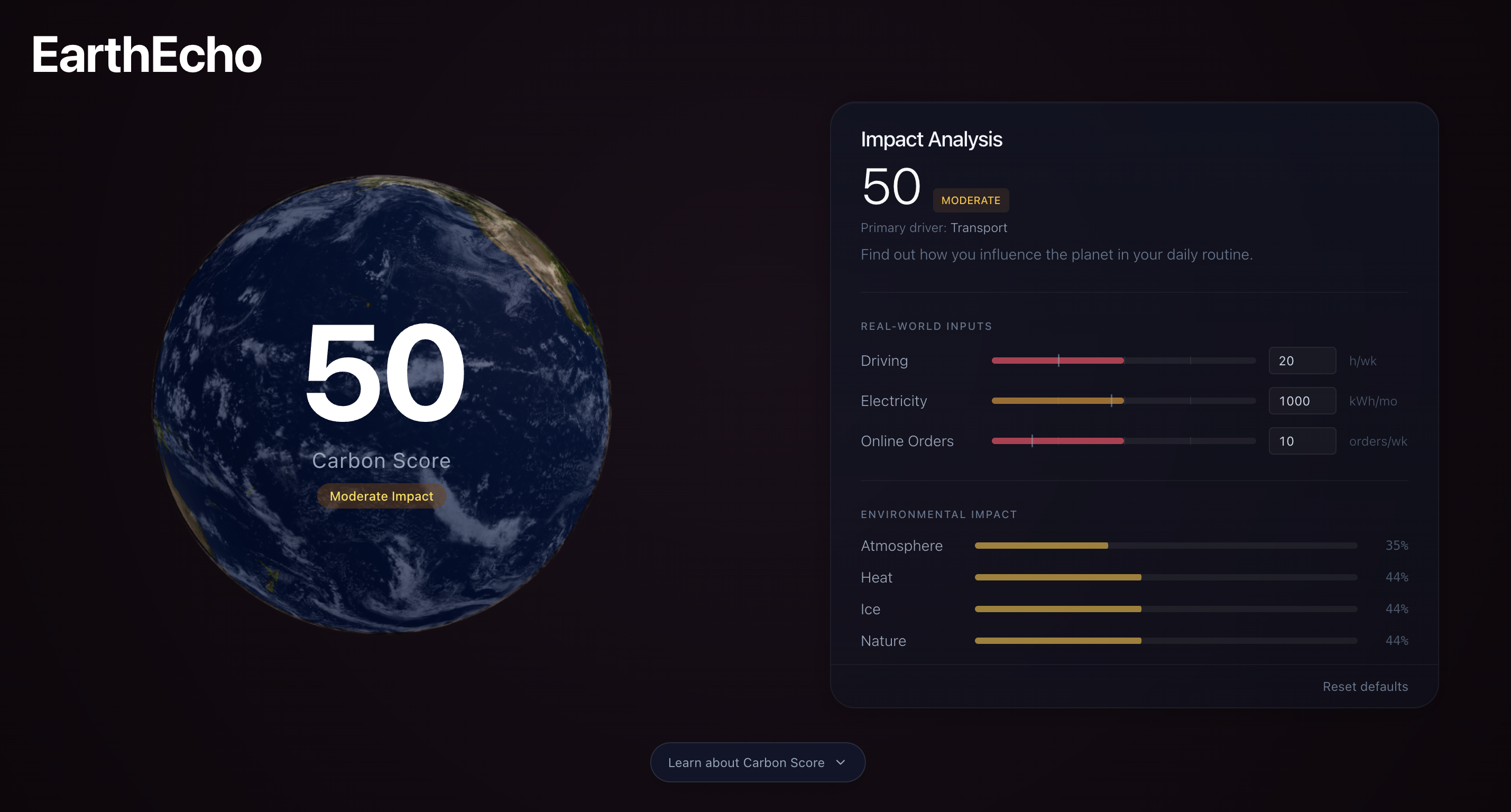
Full webpage view
Inspiration
People in America consume more and create more waste on average than in many parts of Europe, but most people feel their habits are “fine” and never actually see how much their routines affect the planet. I used this hackathon to build a Carbon Mirror — EarthEcho — so users can instantly visualize how their daily habits compare to typical behavior and how they influence the environment. The goal is simple: make the impact feel real, so people might change one or two things over time.
What it does
EarthEcho is a web app that lets users enter (or adjust) everyday inputs like:
- Driving (hours/week)
- Electricity (kWh/month)
- Online/Delivery orders (orders/week)
It converts these into a Carbon Score and shows how different parts of the environment respond:
- Atmosphere
- Heat
- Ice
- Nature
Users get immediate feedback as they change values, helping them understand what drives their score and how small changes can reduce impact.
How we built it
- Built as a modern web app with a premium UI
- Implemented real-time state updates so inputs and sliders stay synced both ways
- Added a realistic Earth visualization using textures and atmospheric layers
- Designed the right-side “Impact Controls” panel to communicate data clearly with minimal clutter
Challenges we ran into
- Overcomplicating the UI early caused lag, glitches, and layout issues. I had to simplify and rebuild parts to keep it smooth and stable.
- Time was the biggest constraint. I’m a student-athlete and spent Thursday–Saturday traveling to Charleston, West Virginia, so I worked late nights and on the bus to ship something meaningful.
- Getting the environmental metrics to behave independently and consistently required iteration on the calculation logic and normalization.
Accomplishments that we're proud of
- A clean, responsive UI that feels product-grade, not game-like
- A realistic globe visualization integrated into the experience
- Real-world inputs that update the model instantly and make the impact feel personal
- A stable build despite tight time and travel constraints
What we learned
- Frontend polish matters — spacing, hierarchy, and restraint completely change how professional an app feels.
- Overengineering quickly creates performance problems and hurts UX.
- Sustainability modeling requires balance: it must be understandable, consistent, and educational without becoming overly complex.
What's next for EarthEcho
- Continue refining the model for clarity and transparency
- Add personalized feedback and practical guidance based on the user’s biggest impact driver, offering clear suggestions on what to adjust and why it matters
- Introduce lightweight, high-value features that enhance engagement without overloading the interface (e.g., smart presets, improved comparisons, and shareable impact snapshots)
- Develop a companion experience where users can log habits daily and track their evolving Carbon Score over time — similar to a credit score — encouraging long-term behavioral awareness and measurable progress
Built With
- next.js
- react
- tailwindcss
- typescript
- vercel

Log in or sign up for Devpost to join the conversation.