-
-
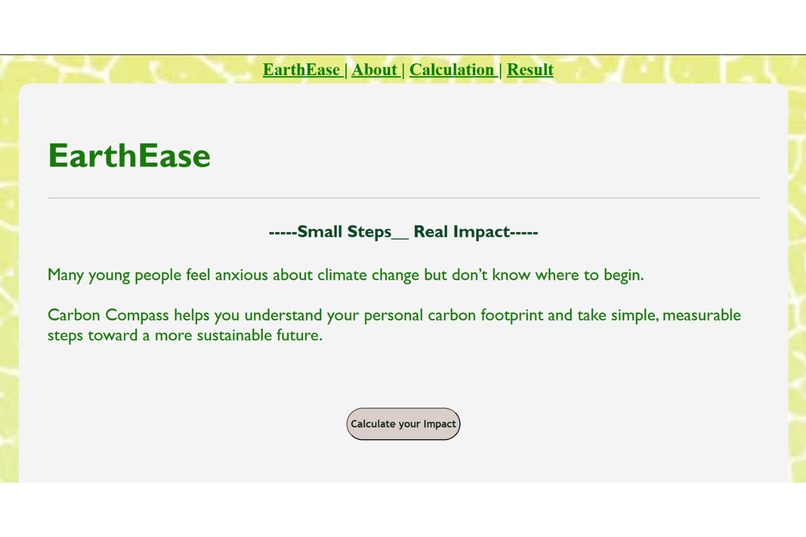
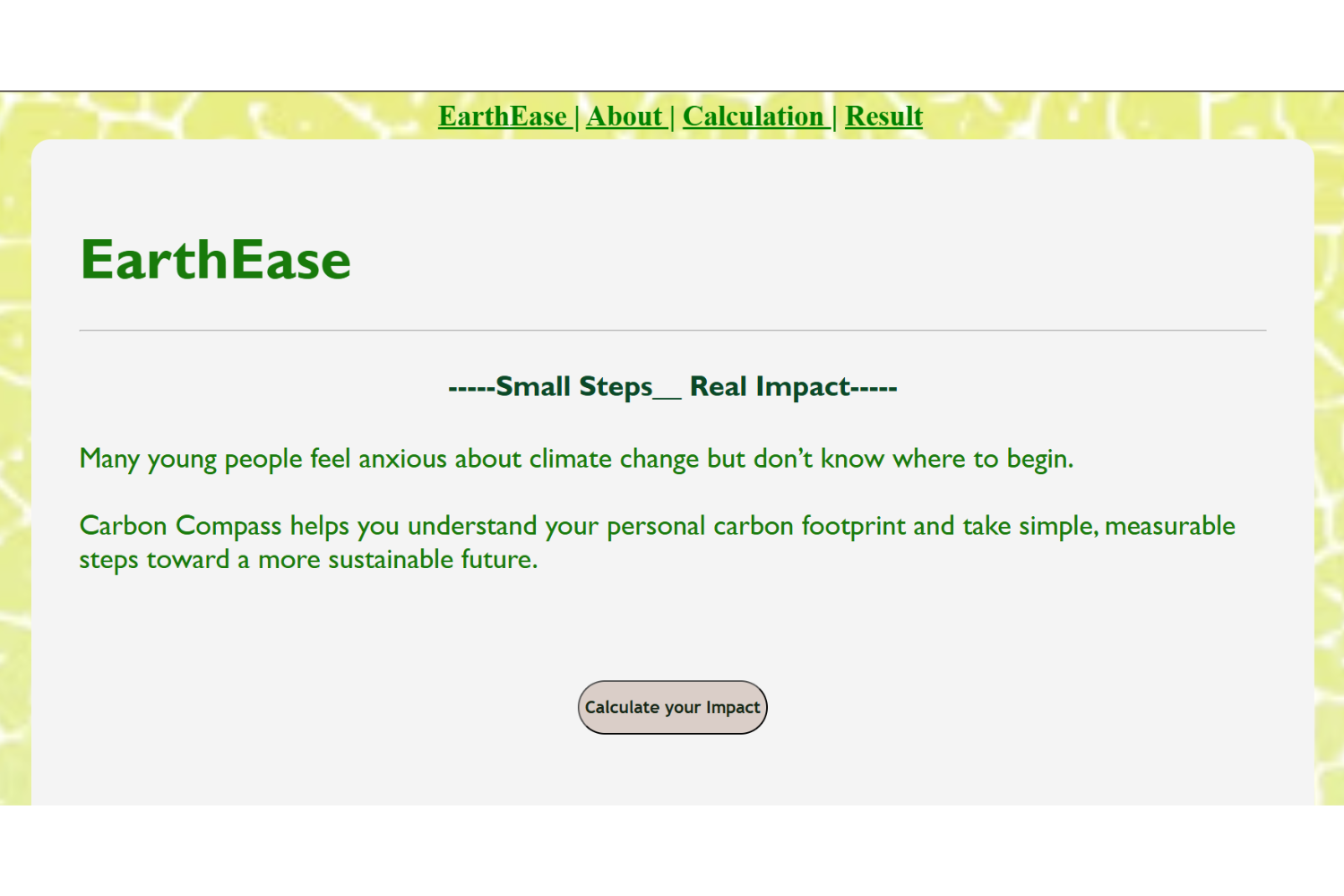
EarthEase introduces climate awareness and guides users to calculate their personal carbon footprint easily.
-
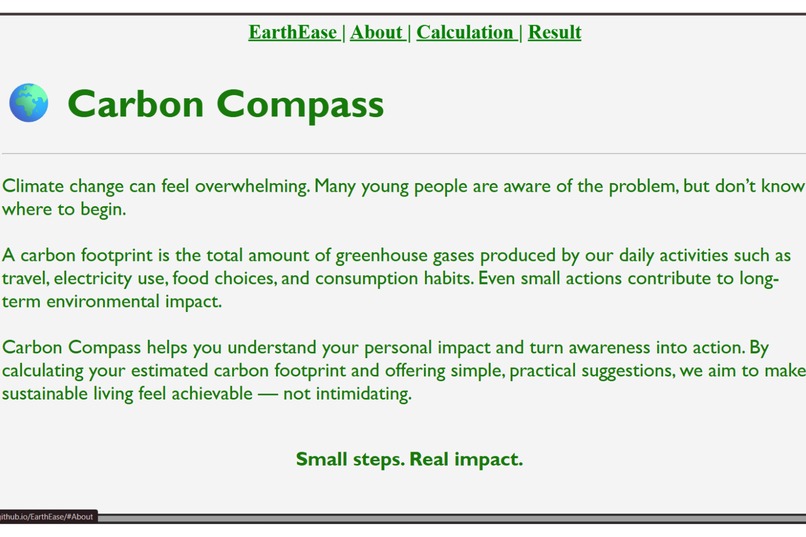
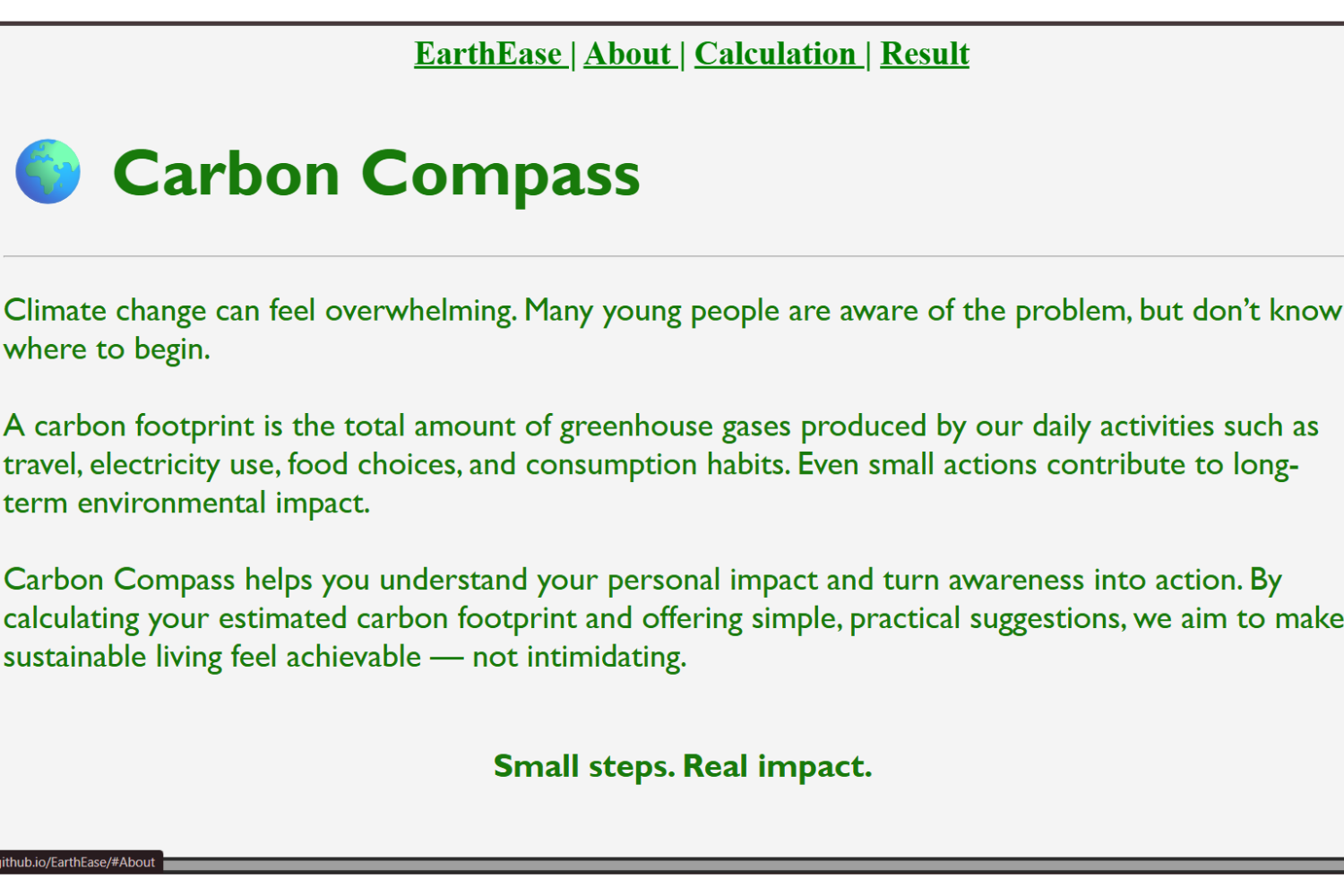
Explains what a carbon footprint is and how daily habits like travel and electricity affect the environment.
-
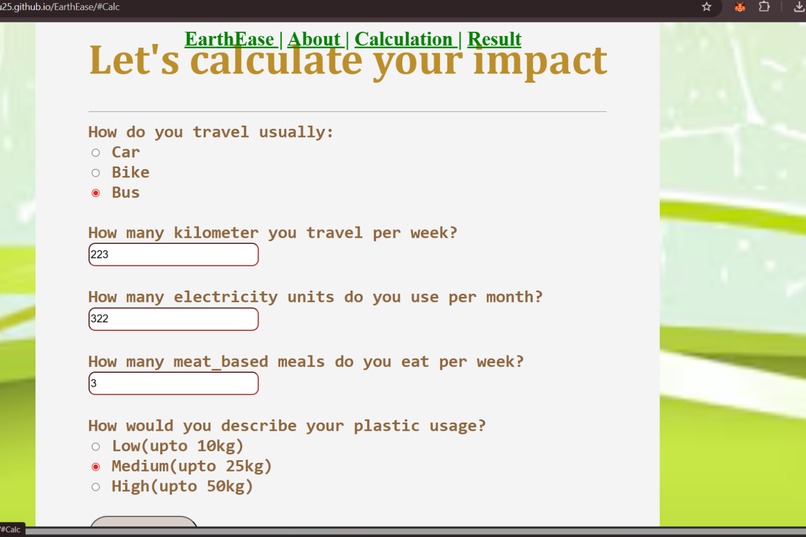
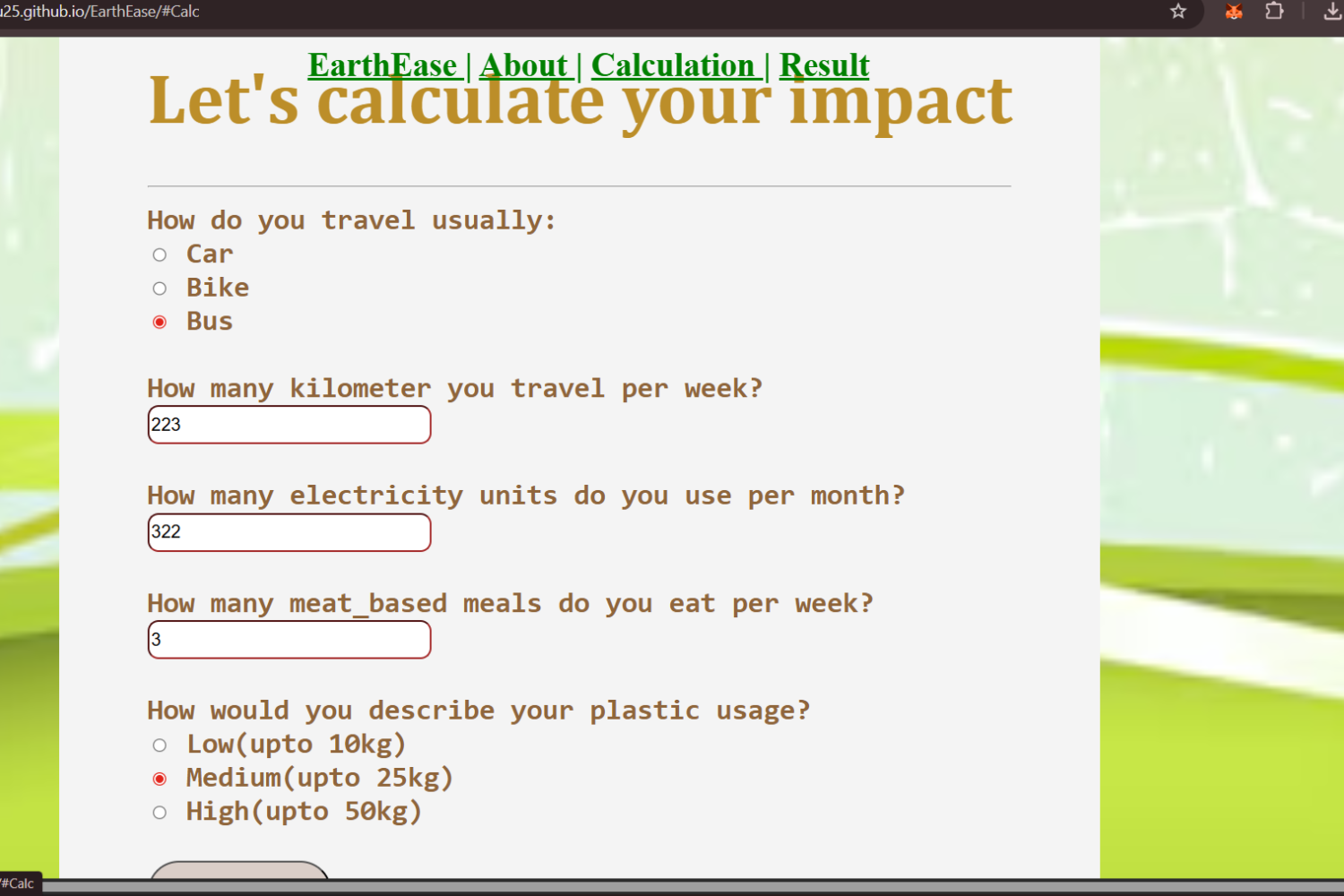
Collects user lifestyle data and estimates annual carbon emissions using simple logic.
-
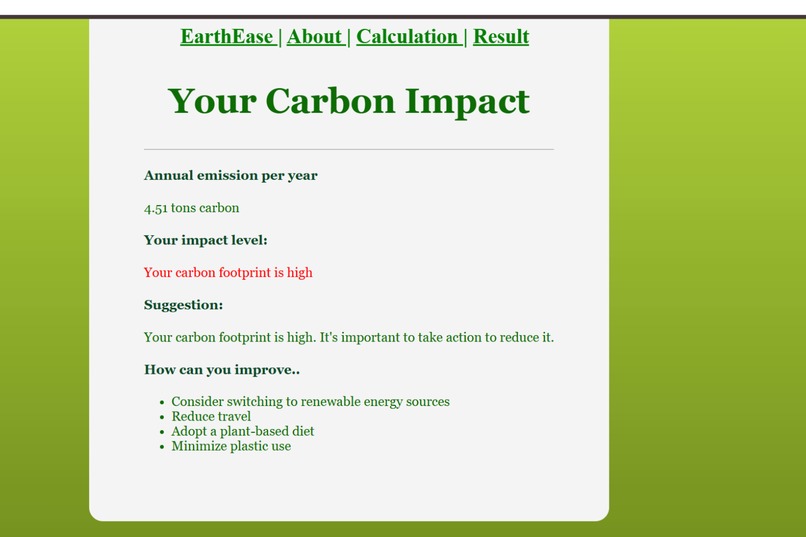
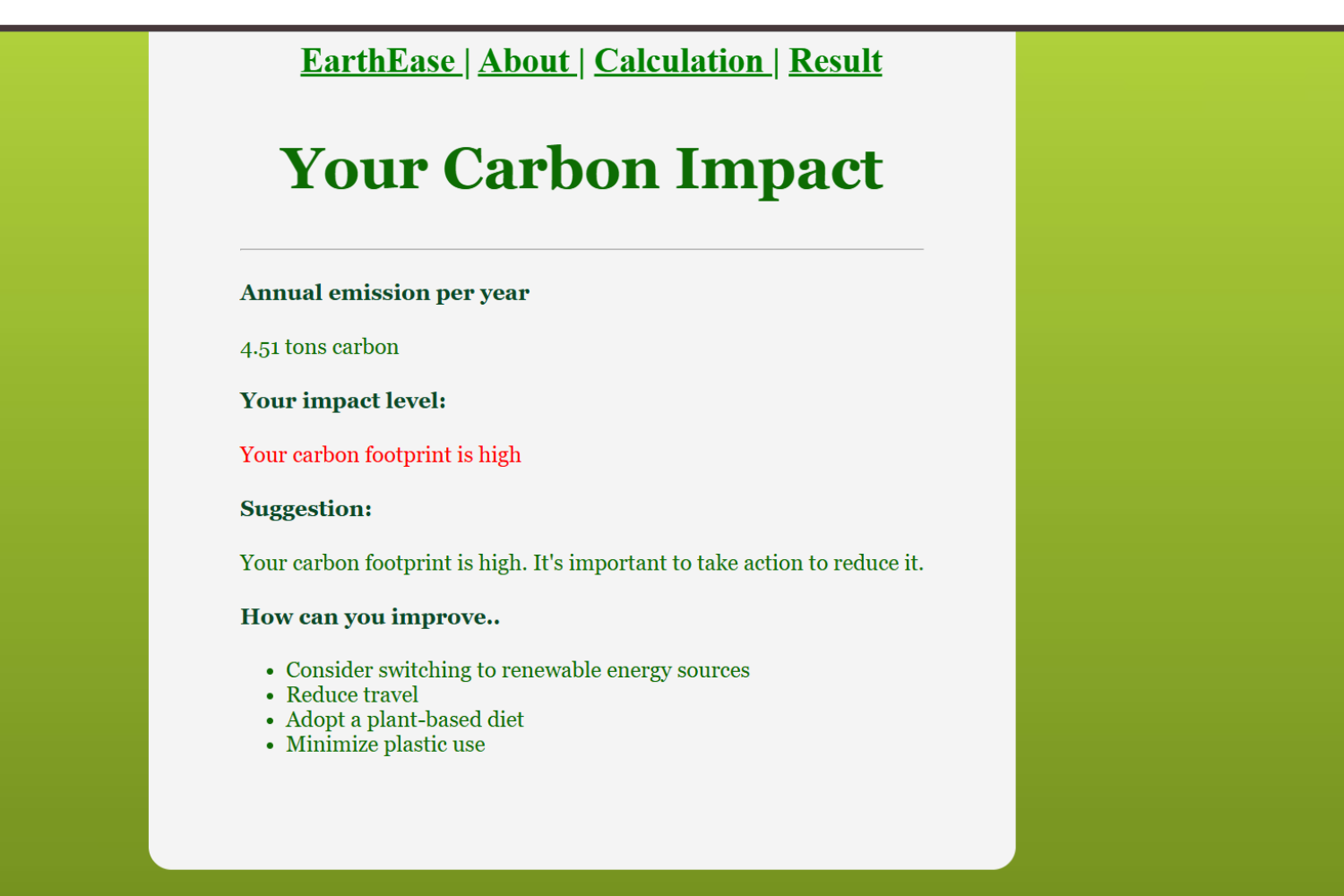
Displays total emissions, impact level, and practical tips to reduce carbon footprint.
Inspiration
Climate change often feels overwhelming, especially for young people. We hear about rising temperatures, pollution, and environmental destruction, but we don’t always know how our individual actions contribute to the problem.I wanted to create something simple that turns climate anxiety into awareness and small, measurable action. That idea led to EarthEase – Carbon Compass, a web tool that helps users estimate their personal carbon footprint and understand how everyday habits impact the planet.
What it does
EarthEase calculates a user's estimated yearly carbon emissions based on: Travel habits Electricity consumption Meat consumption Plastic usage The total emission is estimated using a simplified formula: Total CO2= transportemission+ currentemission+ meatcemission+ plasticemission Each component is calculated based on user input and emission factors. Emission factors (approx values) Car → 0.21 kg CO₂ per km Bike → 0.10 kg CO₂ per km Bus → 0.05 kg CO₂ per km Formula: transportemission=Weekly Distance×52×Emission Factor This converts weekly travel into yearly CO₂.
For India, average grid emission ≈ 0.82 kg CO₂ per kWh Formula: cueentemission=Monthly kWh×12×0.82
1 meat meal ≈ 2.5 kg CO₂ Formula: meatcemission=Meat Meals per Week×52×2.5
plasticemission: Low → 20 kg CO₂/year Medium → 50 kg CO₂/year High → 100 kg CO₂/year The platform then: Displays the total carbon footprint (in tons per year) Classifies the impact level (Low, Moderate, High) Provides practical suggestions to reduce emissions The goal is not just to show a number, but to motivate change.
How we built it
I built EarthEase using: HTML for structure CSS for styling and responsive design JavaScript for logic and dynamic calculations The calculator uses conditional statements to determine emissions based on selected options. I used DOM manipulation to: Collect form inputs Perform calculations Dynamically update the results section Smoothly scroll to the results after submission I also worked on making the layout responsive so it works on both mobile and desktop devices.
Challenges we ran into
One of the biggest challenges was debugging JavaScript errors, especially: Handling null values Connecting the script file correctly Fixing event listener issues Validating form inputs properly Another challenge was making the design responsive. The layout looked different on mobile and laptop screens, so I had to adjust padding, spacing, and structure carefully. These debugging experiences significantly improved my problem-solving skills.
Accomplishments that we're proud of
Building a fully functional carbon footprint calculator independently Creating a clean, minimal user interface Successfully connecting HTML, CSS, and JavaScript Transforming a complex environmental issue into something understandable Most importantly, I turned an abstract problem into an interactive learning tool.
What we learned
Through this project, I learned: How to structure and organize web projects properly How to use JavaScript for real-world logic implementation How DOM manipulation works The importance of clean UI/UX design How small environmental decisions accumulate into measurable impact
What's next for EarthEase
Future improvements could include: More accurate emission datasets Data visualization with charts Storing progress using local storage Personalized AI-based recommendations EarthEase is just the beginning. The long-term vision is to help people move from awareness to action ,one small step at a time.
Built With
- css
- html5
- javascript
- vscode


Log in or sign up for Devpost to join the conversation.