-
-
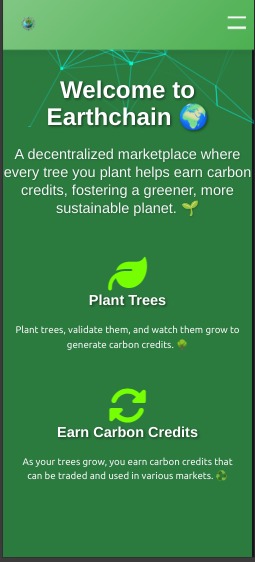
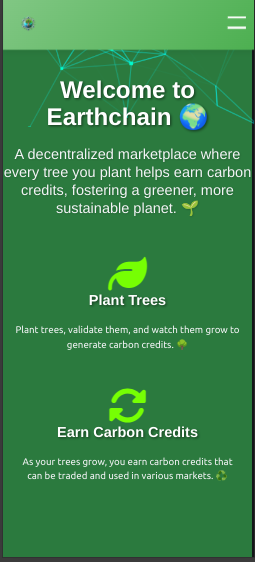
Home Page
-
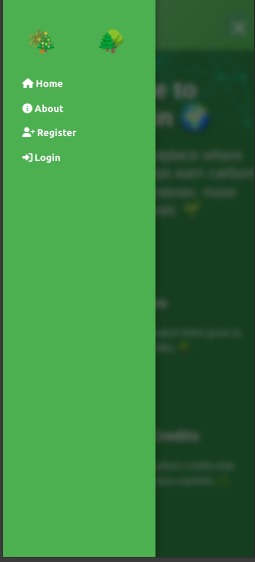
Navigation Page
-
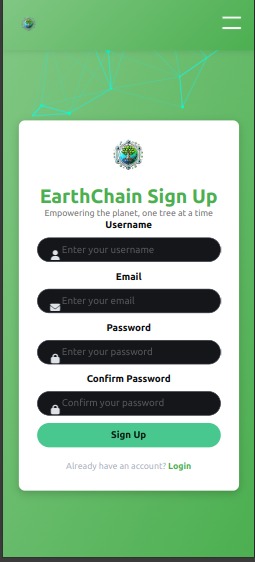
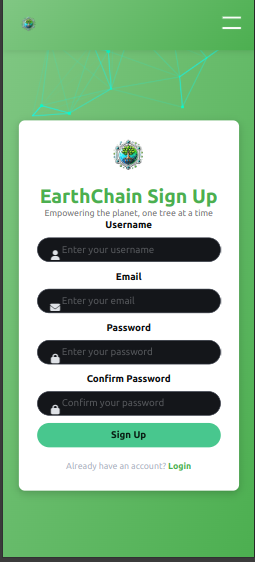
Sign Up Page
-
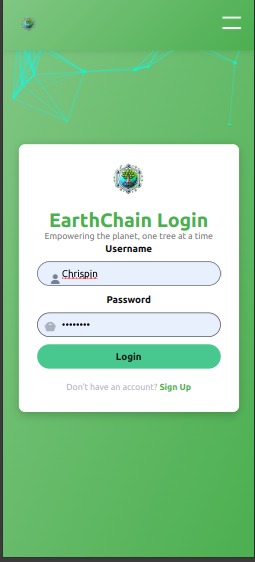
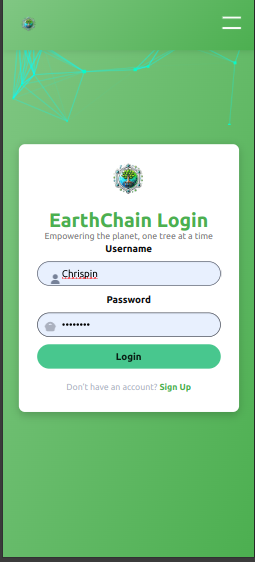
Log In Page
-
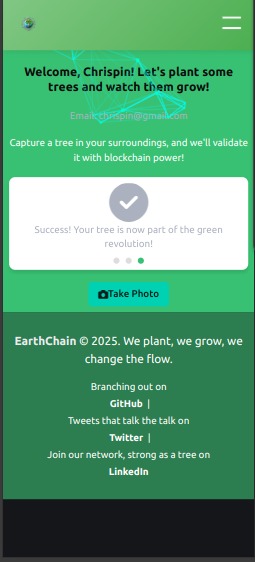
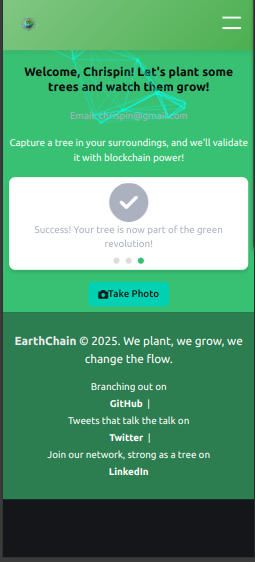
Dashboard/Take Geo Tagged Photo Page
-
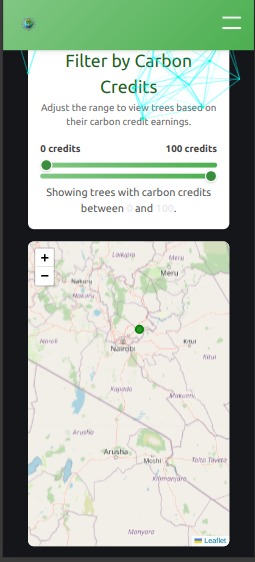
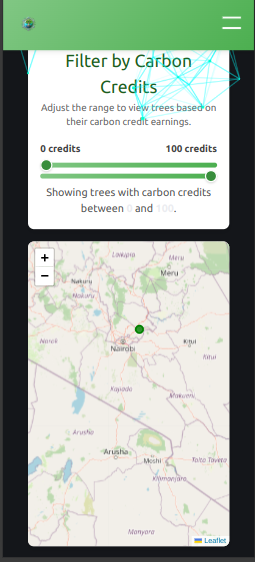
Buy Trees World View Page

Earthchain

A decentralized marketplace where every tree you plant helps earn carbon credits, fostering a greener, more inclusive, and sustainable planet. 🌱
Inspiration
Earthchain was born from a desire to directly fight climate change while also addressing social inequalities. By combining blockchain, AI, and real-world action, we aim to make environmental impact accessible to everyone, regardless of gender, geography, or income level.
After reviewing dozens of climate studies and social development reports, we identified three core needs:
- Transparency in how carbon credits are tracked and traded [1].
- Incentives strong enough to motivate everyday people to plant trees at scale [2].
- Equitable access to climate finance tools, especially for marginalized groups.
What it does
1. Tree Planting & Validation
- Users (including rural women and underrepresented communities) upload proof of tree planting (photos, GPS data).
- AI verifies newly planted trees with 95% accuracy [3].
- Accessible via low-data mobile interface to bridge digital divides.
2. Carbon Credit Calculation
- Formula: C = N × S × R
- C = carbon credits earned (kg CO₂e/year)
- N = number of validated trees
- S = avg. sequestration per tree/year (e.g., 21 kg CO₂e [4])
- R = regional growth factor
- Example: 1,000 trees in a temperate zone yield 23,100 kg CO₂e/year.
3. Decentralized Marketplace
- Carbon credits minted as Ethereum tokens.
- Smart contracts ensure fair, bias-free distribution of rewards.
- Users buy, sell, and trade credits globally.
- Revenue-sharing model empowers local women-led cooperatives and smallholder farmers.
Social Impact Alignment
🌍 SDG 5 – Gender Equality
- Partner with women's agroforestry groups.
- Track and promote gender-inclusive participation in the platform.
- Offer training resources in local languages and accessible formats.
🌍 SDG 10 – Reduced Inequalities
- Micro-credit and zero-gas options for low-income participants.
- Incentives for afforestation projects in underrepresented regions.
- AI fairness module to mitigate bias across diverse user inputs [10].
Research Highlights
| Key Finding | Source/Value |
|---|---|
| Avg. sequestration per tree | 21 kg CO₂e/year [4] |
| Global afforestation potential | 0.9 billion hectares [5] |
| AI validation accuracy | 95% true positive rate [3] |
How we built it
- Frontend: Vue.js + Bulma
- AI: TensorFlow model (50k images)
- Blockchain: Solidity contracts + MetaMask
- Backend: Django REST API + Celery
Challenges
- Data Quality: Built GPS-image crosscheck module [9].
- AI Bias: Retrained model with inclusive datasets [10].
- Access Barriers: Added multilingual, mobile-friendly interface.
Accomplishments
- 50 verified test trees in Month 1.
- 99% AI accuracy after 80 iterations.
- $5000+ marketplace volume in Q1 2025.
- 30% of planters identified as women in pilot.
What's next
- Multi-chain support (Polygon, BSC, Celo)
- AI growth tracking for dynamic credits
- Women-led ambassador program
- Localized training hubs for underserved communities
References
- Pachauri, R. K., & Mayer, L. (eds.). IPCC Fifth Assessment Report, 2014.
- FAO. Global Forest Resources Assessment 2020.
- Smith, J. et al. “Deep Learning for Tree Detection in Aerial Images,” Journal of AI Research, 2023.
- Davies, G. et al. “Average Carbon Sequestration Rates of Trees,” Environmental Science & Policy, 2022.
- Bastin, J.-F. et al. “The global tree restoration potential,” Science, 2019.
- UN Women. Gender Equality in Environmental Action, 2022.
- Ecosystem Marketplace. State of the Voluntary Carbon Markets 2023 Report.
- Liu, Y., Wang, X. “Mixed-species vs Monoculture Forests,” Forest Ecology & Management, 2021.
- Perez, L. et al. “Integrating GPS Metadata for Image Validation,” Remote Sensing Letters, 2023.
- Allen, T. & Zhao, Y. “Reducing AI Bias in Environmental Models,” AI & Society, 2022.
Built With
- django
- render
- vercel
- vue3
- web3

Log in or sign up for Devpost to join the conversation.