-
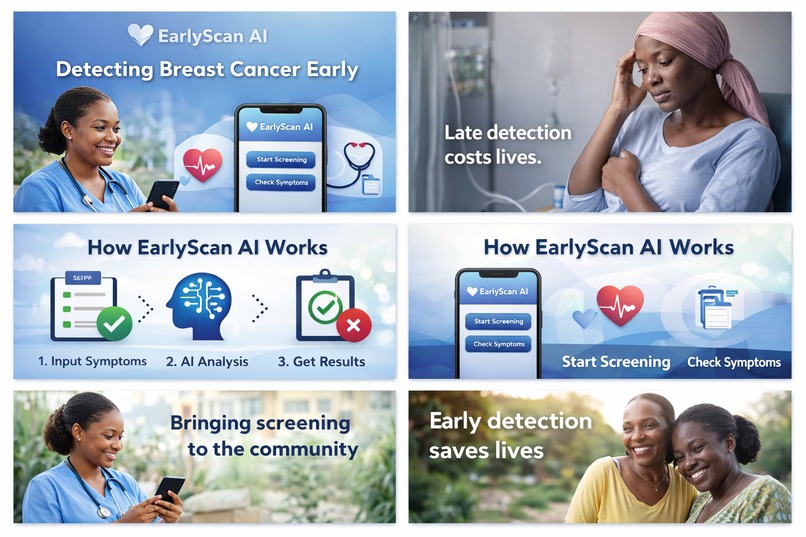
EarlyScan AI aims to reduce late-stage cancer detection by making early screening accessible, affordable, and community-driven.
Inspiration
I built this project by first identifying the real problem in my community and then designing a practical solution that could work in low-resource settings. I developed a concept model of the system, including how users interact with the app and how the screening process works. I also designed a basic prototype of the mobile application interface and mapped out how AI, specifically Machine Learning, would be used to analyze user data and provide risk assessments. The focus was on creating a solution that is simple, realistic, and impactful.In my community, I have observed that many people only discover Breast cancer at a late stage. This is often not because they neglect their health, but because early screening services are expensive, not easily accessible, or require visiting distant hospitals. This situation inspired me to think about how early detection could be brought closer to the community. I wanted to create a solution that makes screening simple, affordable, and available to more people, especially in underserved areas.
What it does
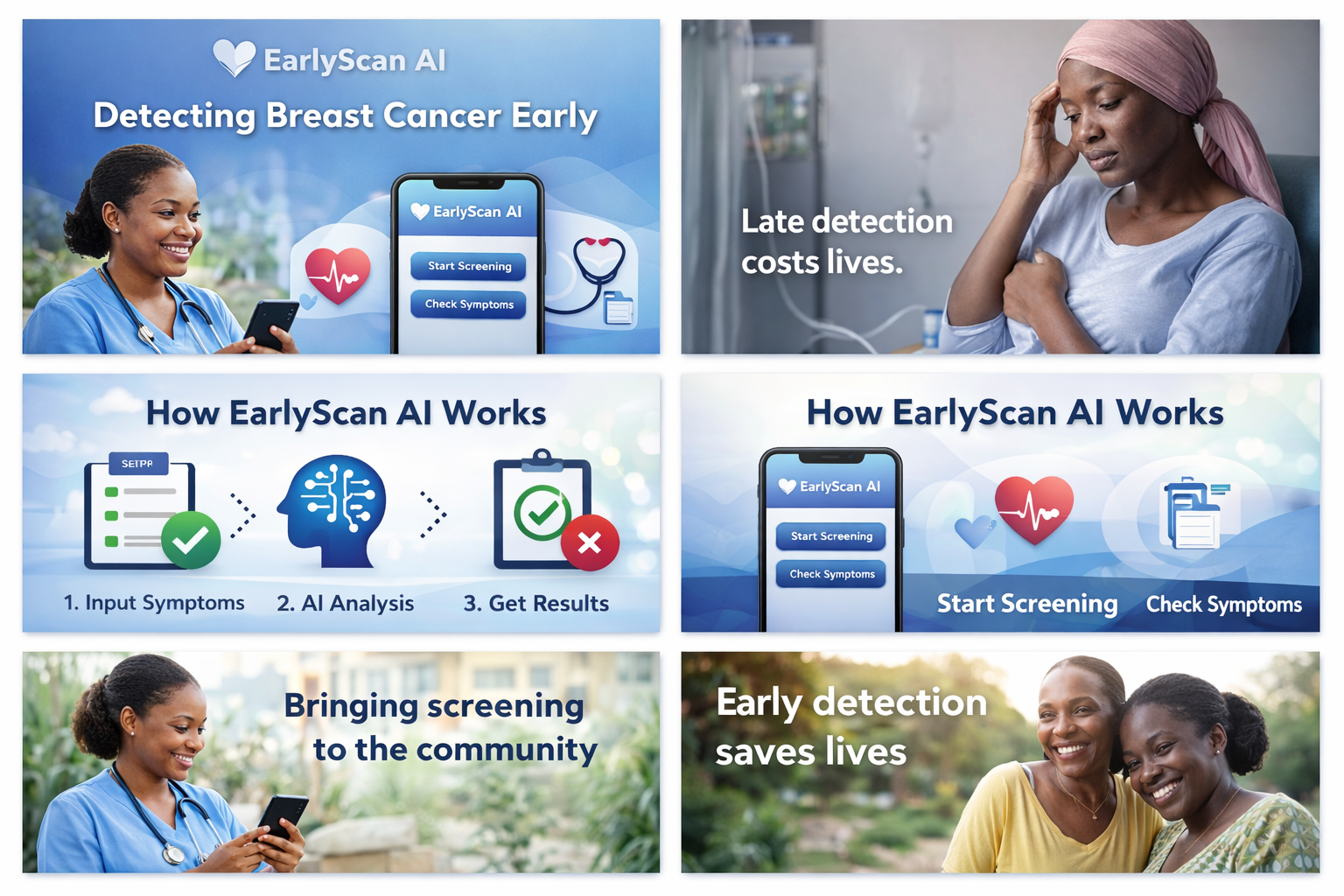
EarlyScan AI is a low-cost, AI-powered early screening system designed to help detect the risk of breast cancer at an early stage. It uses a mobile application where community health workers or users can input symptoms and follow guided screening steps. The system then uses AI to analyze the data and classify the risk level as low, medium, or high. Based on the results, users are advised on the next steps, including seeking medical attention when necessary. The tool is designed for early screening and referral, not diagnosis.
How we built it
I built this project by first identifying the real problem in my community and then designing a practical solution that could work in low-resource settings. I developed a concept model of the system, including how users interact with the app and how the screening process works. I also designed a basic prototype of the mobile application interface and mapped out how AI, specifically Machine Learning, would be used to analyze user data and provide risk assessments. The focus was on creating a solution that is simple, realistic, and impactful.
Challenges we ran into
One of the main challenges was balancing innovation with practicality. Initially, I considered developing a complex medical device, but I realized that such solutions are expensive and difficult to implement in my community. This led me to shift toward a more accessible approach. Another challenge was ensuring that the solution is ethical and safe, especially since it involves health-related information. I had to clearly define that the system is for screening and not for diagnosis. Additionally, designing a solution that works in low-resource environments required careful consideration of cost and usability
Accomplishments that we're proud of
I am proud of developing a solution that directly addresses a real problem in my community. EarlyScan AI focuses on accessibility and has the potential to help reduce late-stage cancer detection. I am also proud of transforming an initial complex idea into a realistic and practical solution that can be used by community health workers. Creating a clear concept and prototype for such an impactful problem is an important step toward real-world implementation.
What we learned
Through this project, I learned that effective innovation is not just about advanced technology, but about solving real problems in a practical way. I gained a better understanding of how AI can be applied responsibly in healthcare and the importance of designing solutions that fit the user’s environment. I also learned the value of simplicity, user-centered design, and critical thinking when developing ideas that aim to create meaningful impact.
What's next for EarlyScan AI
Next, EarlyScan AI will move from concept to a working prototype. The first step is to build a simple mobile application that allows basic symptom input and demonstrates how the risk screening process works. After that, I plan to develop and train a basic machine learning model that can analyze sample data and simulate early risk detection for Breast cancer screening. The next stage will also involve testing the idea with real users, such as community health workers, to understand how it fits into real-world use. Based on feedback, the system will be improved to make it more accurate, simple, and accessible. In the long term, the goal is to collaborate with healthcare institutions to pilot the tool in local communities and potentially expand it to other types of diseases beyond breast cancer.
Built With
- canvas
- figma
- tensol

Log in or sign up for Devpost to join the conversation.