-
-
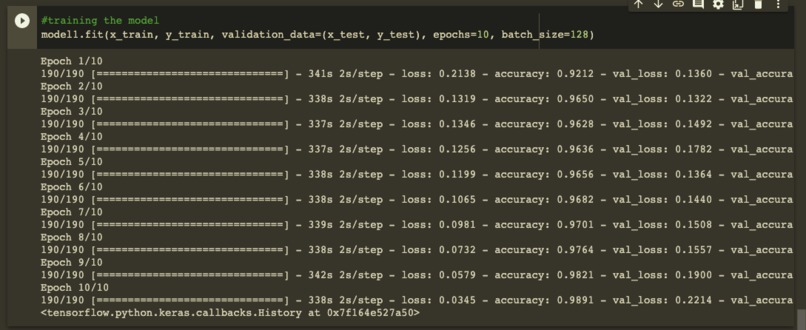
training
-
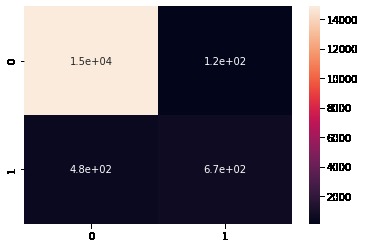
result heat map
Inspiration
We are inspired by the increasing need for a platform that can help Early clinical recognition of sepsis can be challenging. With the advancement of machine learning, promising real-time models to predict sepsis have emerged. We assessed their performance by carrying out a systematic review and meta-analysis. Therefore, we decided to participate in the HachDTU challenge, and we built a program that helps for the prediction of sepsis.
What it does
Automatic comparative data analysis is done between the biomarkers read through sensors, user input data with sepsis disease symptoms dataset to extract accurate information for predicting disease. This hidden information in the healthcare dataset can be used for affective decision making to calculate the probability of sepsis. The accuracy of disease prediction is 84.5% and the system is able to give the risk associated with disease which is lower risk of sepsis or higher.
How we built it
The Proposed system is to design a clinical kit identify the symptoms of sepsis in the late first stage or in the early second stage of the disease In this project, we used eICU Collaborative Research Database. The eICU Collaborative Research Database is a large multi-center critical care database made available by Philips Healthcare in partnership with the MIT Laboratory for Computational Physiology.
Challenges we ran into
Training of data takes too much of time and process
Accomplishments that we're proud of
get the results with 0.922 accuracy
What we learned
Keras Tensorflow and other modules
What's next for EARLY PREDICTION OF SEPSIS
Build UI and Dijano need to used to predict the on time patient data


Log in or sign up for Devpost to join the conversation.