-
-
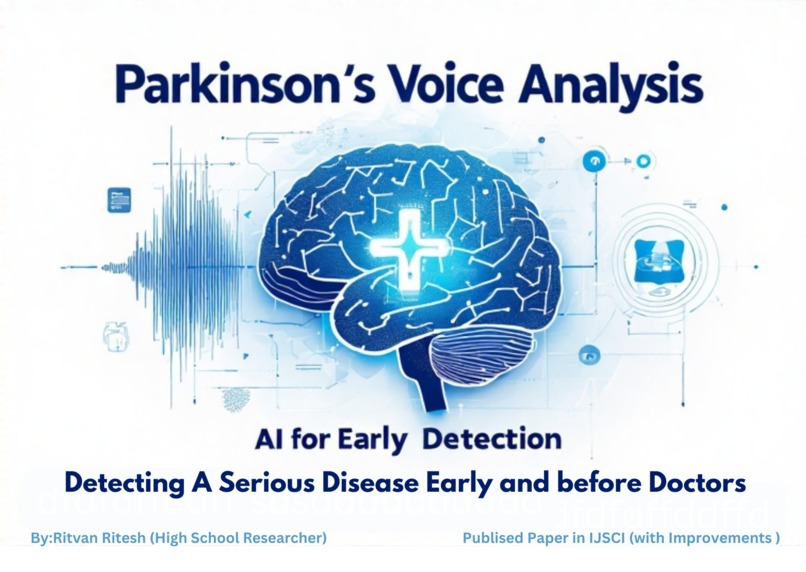
Thumbnail
-
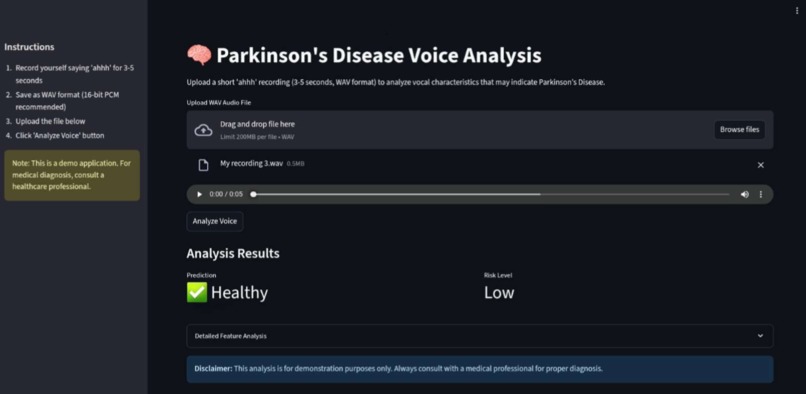
demo
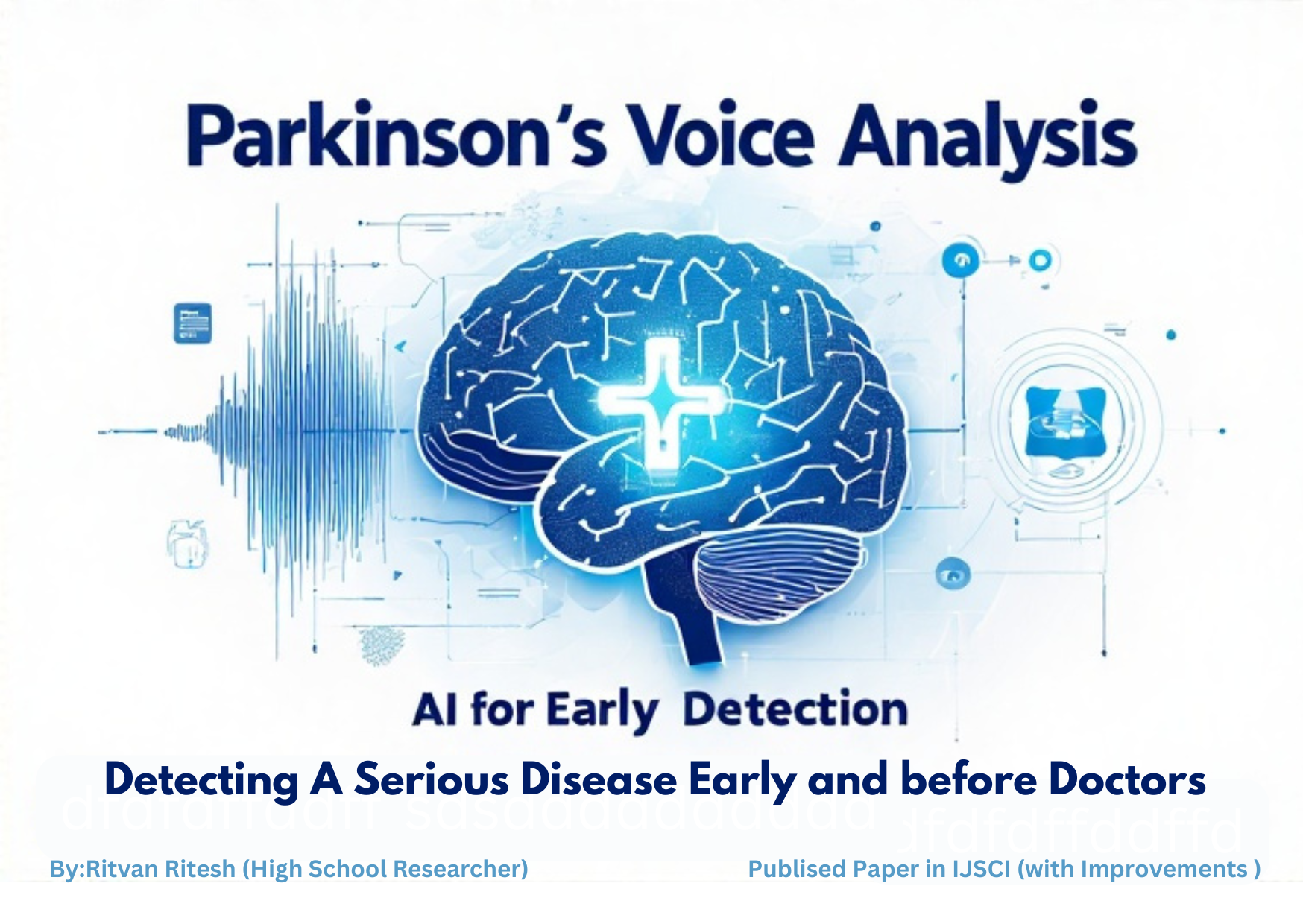
Inspiration
The project was inspired by the urgent need for early and accessible detection methods for Parkinson’s Disease. After learning that subtle changes in voice can be early indicators of Parkinson’s, I was motivated to explore how artificial intelligence could analyze vocal patterns to assist in early diagnosis. This concept combined my interests in healthcare, machine learning, and impactful innovation.
What it does
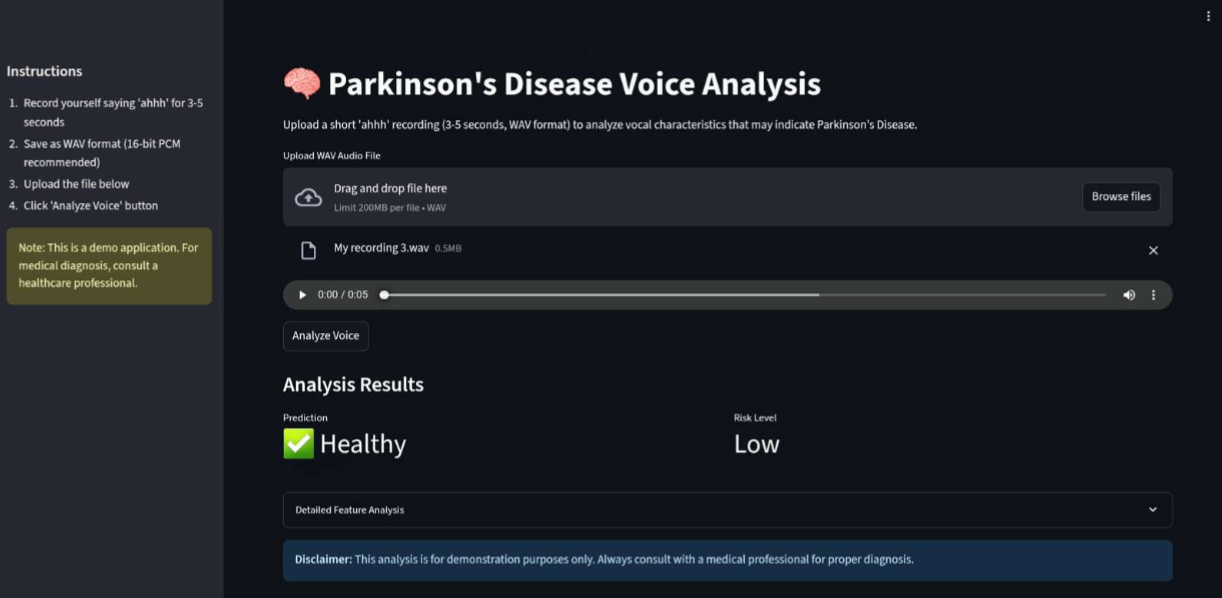
Early Parkinson’s Detection Using Voice Analysis with ML is a web-based tool that analyzes short voice recordings to detect early signs of Parkinson’s Disease. It extracts 22 key vocal features and uses a trained XGBoost classifier to predict the likelihood of Parkinson’s—offering a fast, non-invasive, and accessible screening method.
How we built it
The project was built using Python, Streamlit for the web interface, and the XGBoost algorithm for classification. I used a dataset of voice recordings from individuals with and without Parkinson’s to train the model. The system processes .wav audio files, extracts relevant vocal features using librosa and scipy, and feeds them into the model to generate predictions. The app was deployed and tested in various environments to ensure accessibility.
Challenges we ran into
Finding high-quality, balanced medical datasets was a challenge. Extracting meaningful vocal features required deep research into signal processing. Ensuring the model didn’t overfit due to the limited size of the dataset. Making the UI user-friendly while maintaining scientific rigor.
Accomplishments that we're proud of
Published in the International Journal of Science and Innovation Technology (Vol. 2, Issue 7, July 2025). Presented at school and local science fairs, raising awareness about AI in healthcare. Created a fully functional web app using real patient data with high accuracy. Received positive feedback from educators, peers, and healthcare professionals.
Improvements after Publication
UI/UX Enhancements for Accessibility, Community Awareness, Collecting More Data For Training,Live Voice Recording,Audio Visuals and A PDF report.
What we learned
How to process and extract features from audio signals using librosa. Practical implementation of machine learning (XGBoost) for biomedical applications. The importance of user experience when designing educational and medical tools. Insights into ethical challenges and limitations of AI in healthcare.
What's next for Early Parkinsons Detection Using Voice Analysis with ML
Expanding the dataset with more diverse voice samples to improve accuracy. Collaborating with medical professionals for validation and feedback. Integrating real-time voice recording features within the app. Conducting workshops and awareness drives in schools and communities. Exploring multilingual and age-diverse voice recognition capabilities.
Built With
- librosa
- machine-learning
- parselmouth
- python
- scikit-learn
- streamlit
- xgboost

Log in or sign up for Devpost to join the conversation.