

Inspiration
Alzheimer's disease affects over 55 million people worldwide, with numbers projected to triple by 2050. What struck us most is that early detection can significantly improve patient outcomes — yet current diagnostic methods rely heavily on subjective clinical assessments and expert radiologists, who are scarce in many regions.
We were inspired by the potential of AI to democratize healthcare access. Imagine a screening tool that could help identify early signs of cognitive decline in underserved communities, giving patients and families precious time to plan and seek treatment.
This hackathon gave us the opportunity to build something that could genuinely save lives.
What It Does
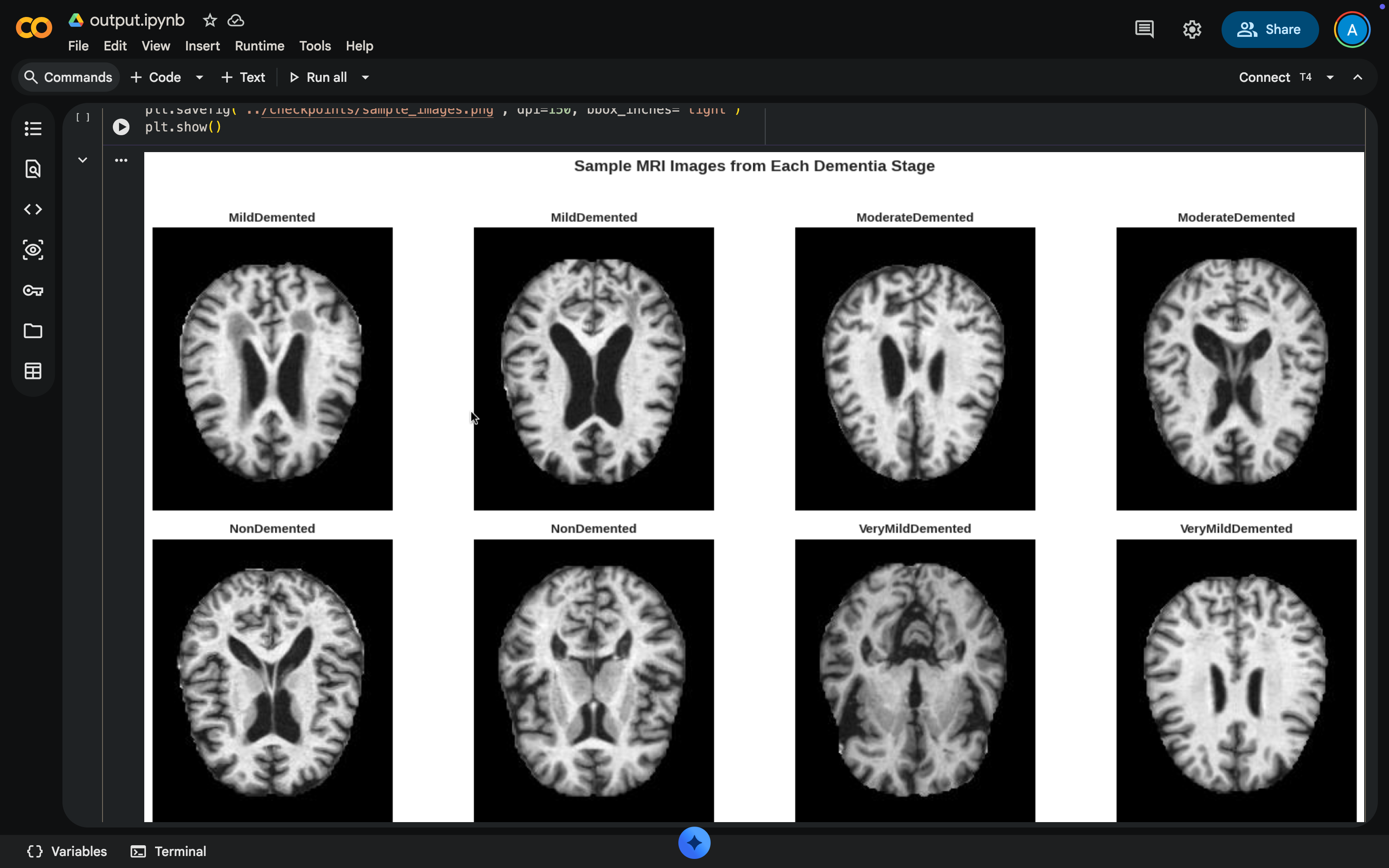
Our AI model classifies brain MRI scans into four stages of Alzheimer's disease progression:
| Stage | Label | Description |
|---|---|---|
| 🟢 | NonDemented | Healthy brain with no cognitive impairment |
| 🟡 | VeryMildDemented | Very early stage — subtle changes detectable |
| 🟠 | MildDemented | Mild cognitive impairment (MCI) |
| 🔴 | ModerateDemented | Moderate-stage Alzheimer's disease |
Key Capabilities
Automated Classification
Upload an MRI scan and receive instant predictions with confidence scores.Explainable AI
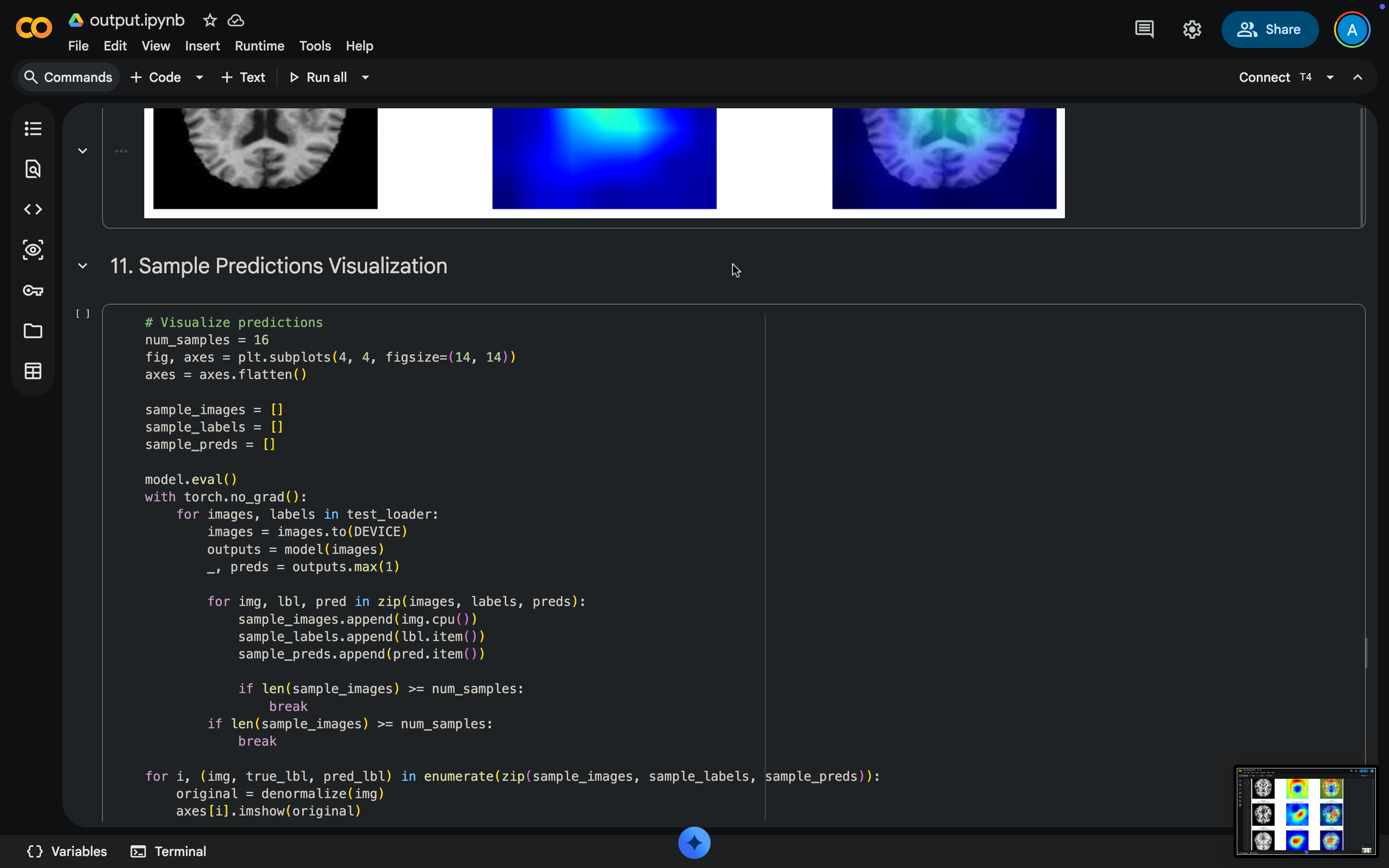
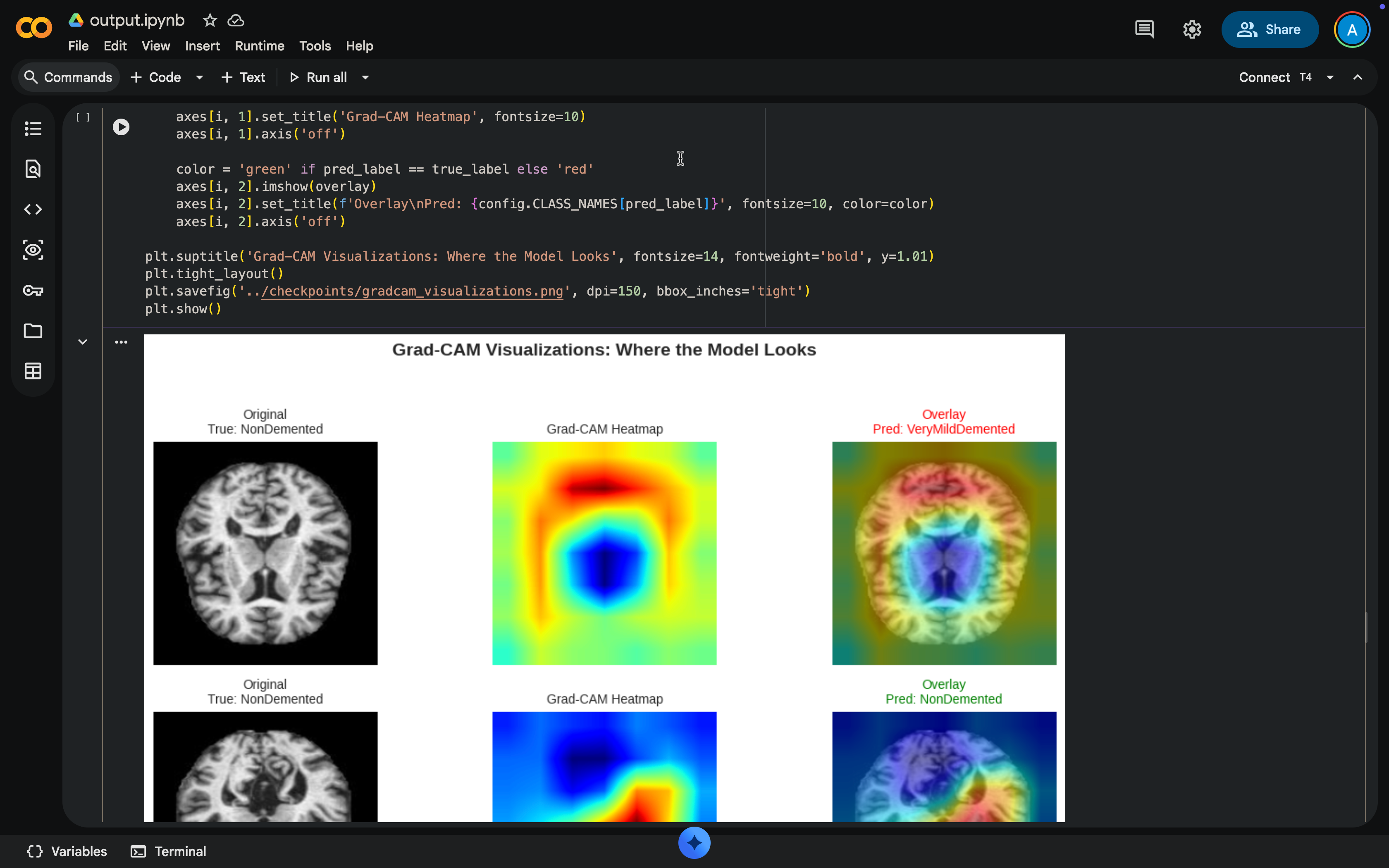
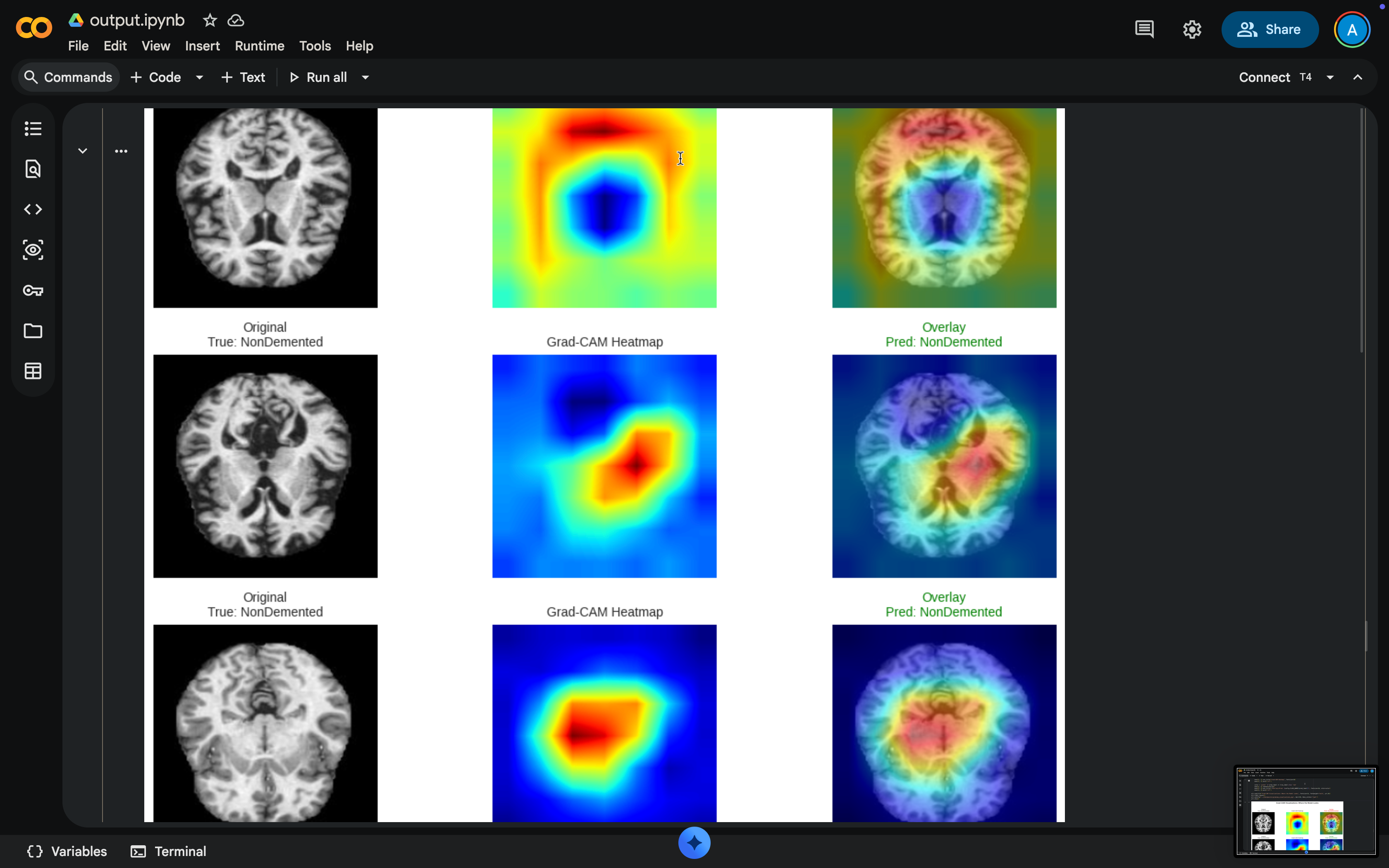
Grad-CAM visualizations show exactly which brain regions influenced the prediction.Class Imbalance Handling
Robust performance even on rare disease stages.Reproducible Pipeline
Fully documented Jupyter notebook runnable on Google Colab.
How We Built It
Architecture
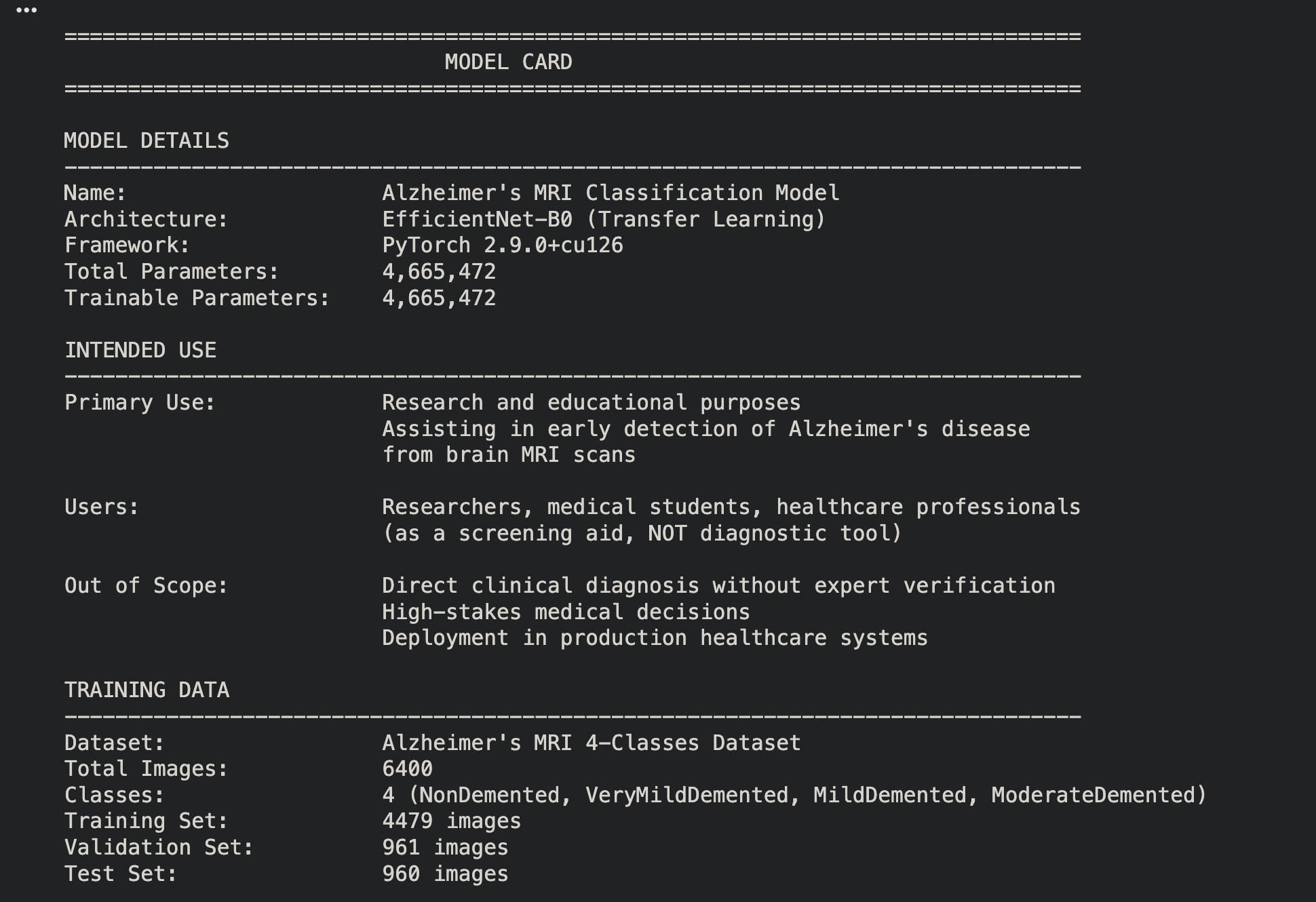
We used EfficientNet-B0 with transfer learning, a state-of-the-art CNN architecture known for its optimal accuracy-to-parameter efficiency.
The model was pre-trained on ImageNet and fine-tuned on our medical imaging dataset.
Tech Stack
- Framework: PyTorch 2.0+
- Model: EfficientNet-B0 with a custom classification head
- Explainability: Grad-CAM
- Data Processing:
torchvisiontransforms with augmentation - Evaluation: scikit-learn metrics (Accuracy, Precision, Recall, F1-score, AUC-ROC)
Training Strategy
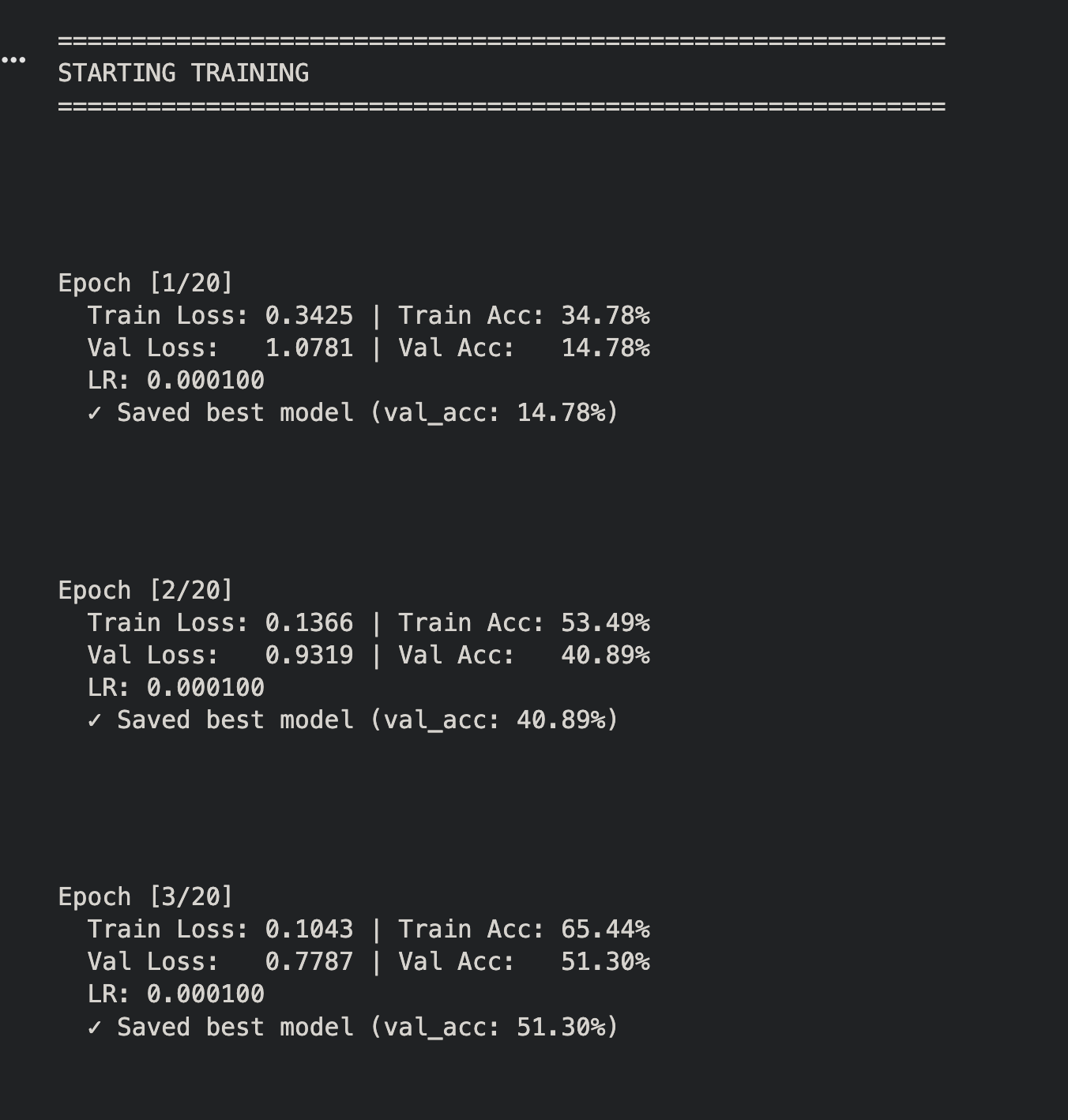
Optimizer: AdamW with weight decay
$$ \lambda = 10^{-4} $$Learning Rate:
$$ 10^{-4} $$
withReduceLROnPlateauschedulerClass Imbalance:
- Weighted CrossEntropy loss
- Weighted random sampling
- Weighted CrossEntropy loss
Regularization:
- Dropout
- Early stopping (patience = 7)
- Gradient clipping
- Dropout
Challenges We Ran Into
1. Severe Class Imbalance
The dataset was extremely skewed:
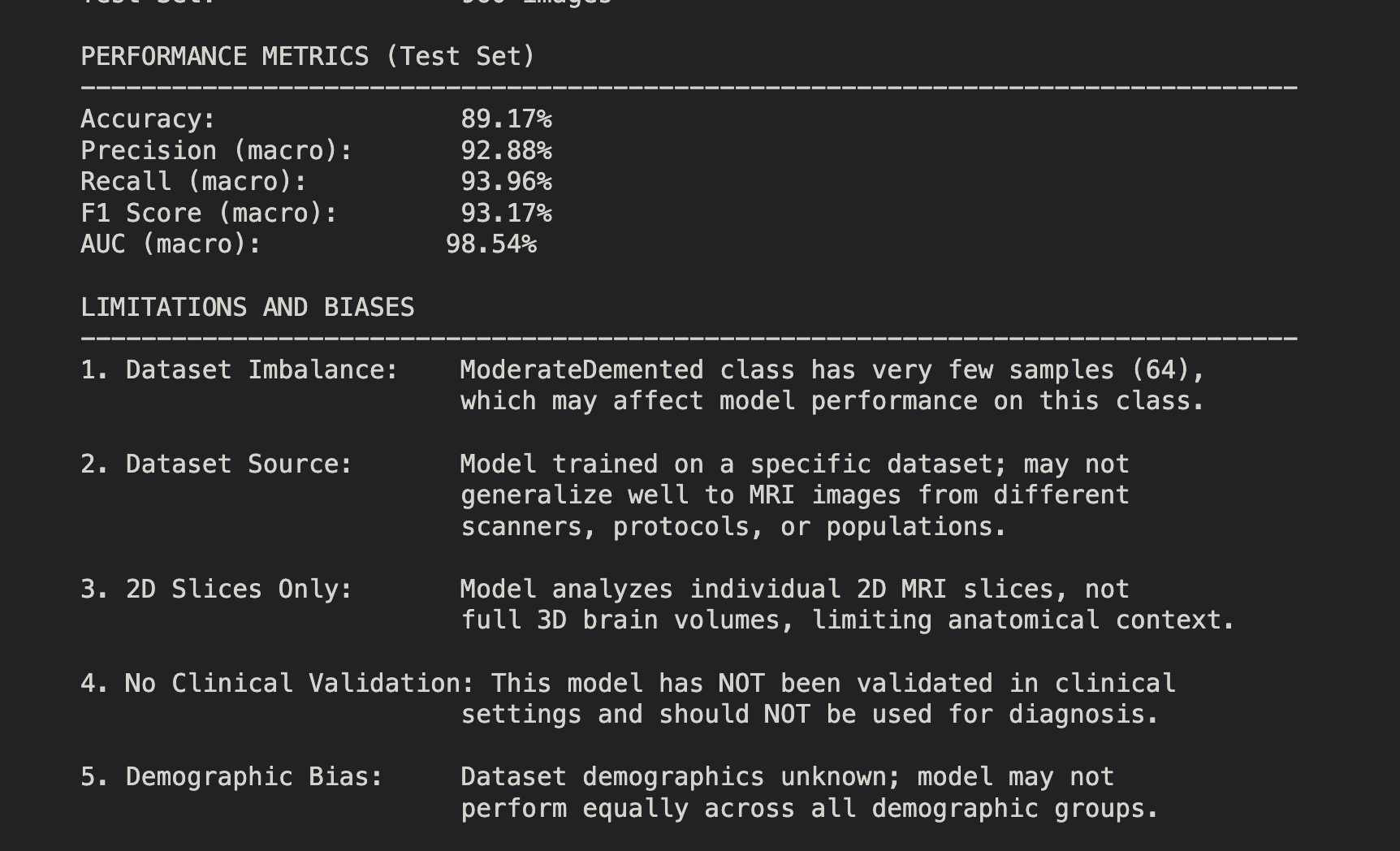
- ModerateDemented: 64 samples (~1%)
- NonDemented: 3,200 samples (~50%)
Solutions:
- Inverse-frequency class weights in the loss function
- Weighted random sampling during training
- Strategic data augmentation
2. Medical Imaging Constraints
MRI scans differ significantly from natural images:
- Grayscale images with subtle anatomical variations
- Over-aggressive augmentation risks anatomical distortion
Adjustments:
- Carefully tuned augmentation parameters
- Normalization using ImageNet statistics for transfer learning compatibility
3. Interpretability Requirements
Medical AI must be explainable.
- Implemented Grad-CAM from scratch
- Visualized attention over clinically relevant regions:
- Hippocampus
- Temporal lobe
- Ventricles
This ensured predictions were clinically meaningful, not artifact-driven.
4. Reproducibility
Ensuring the notebook runs seamlessly on both local machines and Google Colab required:
- Careful dependency management
- Robust path handling
- Fixed random seeds
Accomplishments We’re Proud Of
✅ High Performance
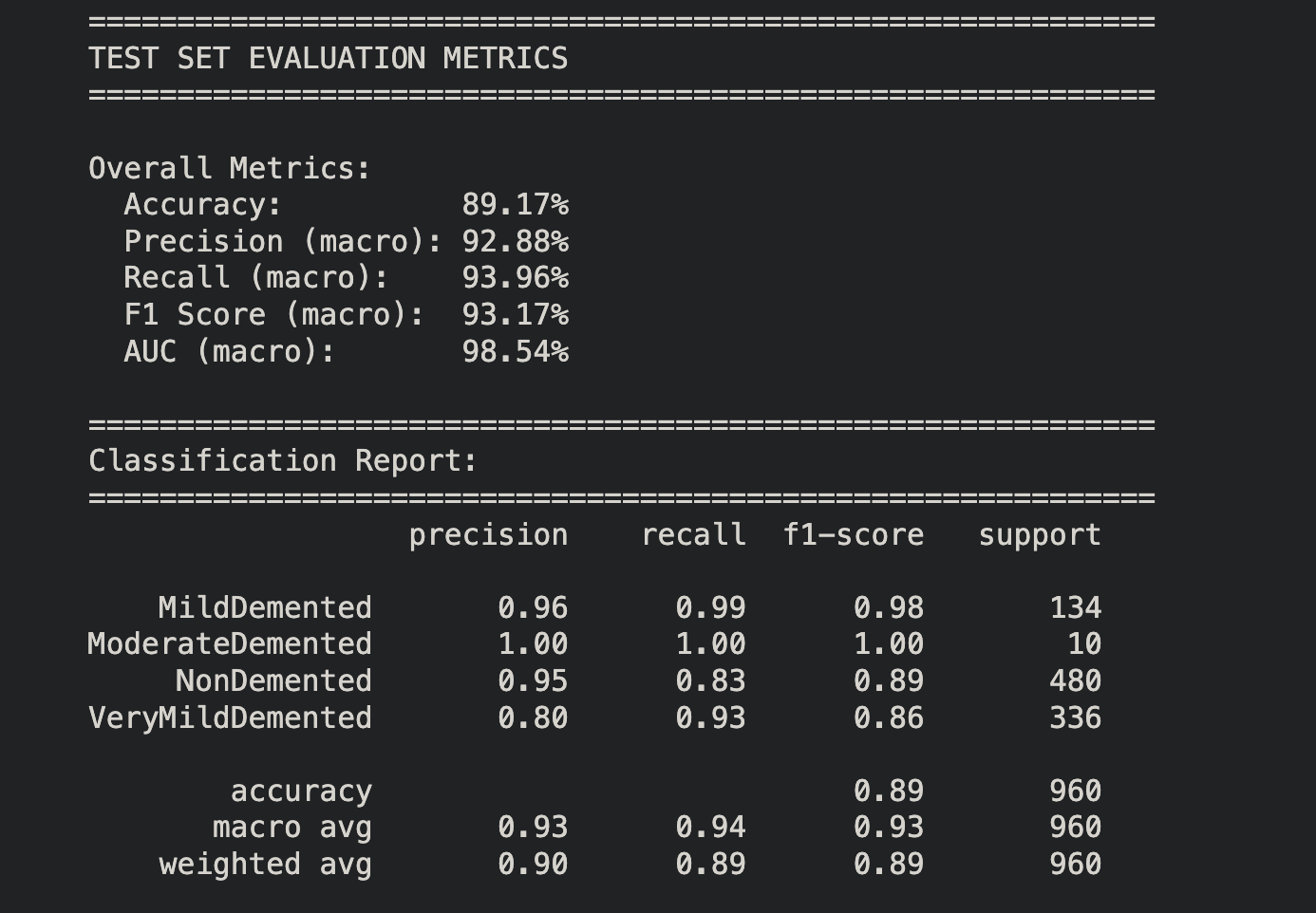
Strong classification accuracy with robust minority-class handling✅ Explainable AI
Grad-CAM confirms focus on clinically relevant brain regions✅ Production-Ready Code
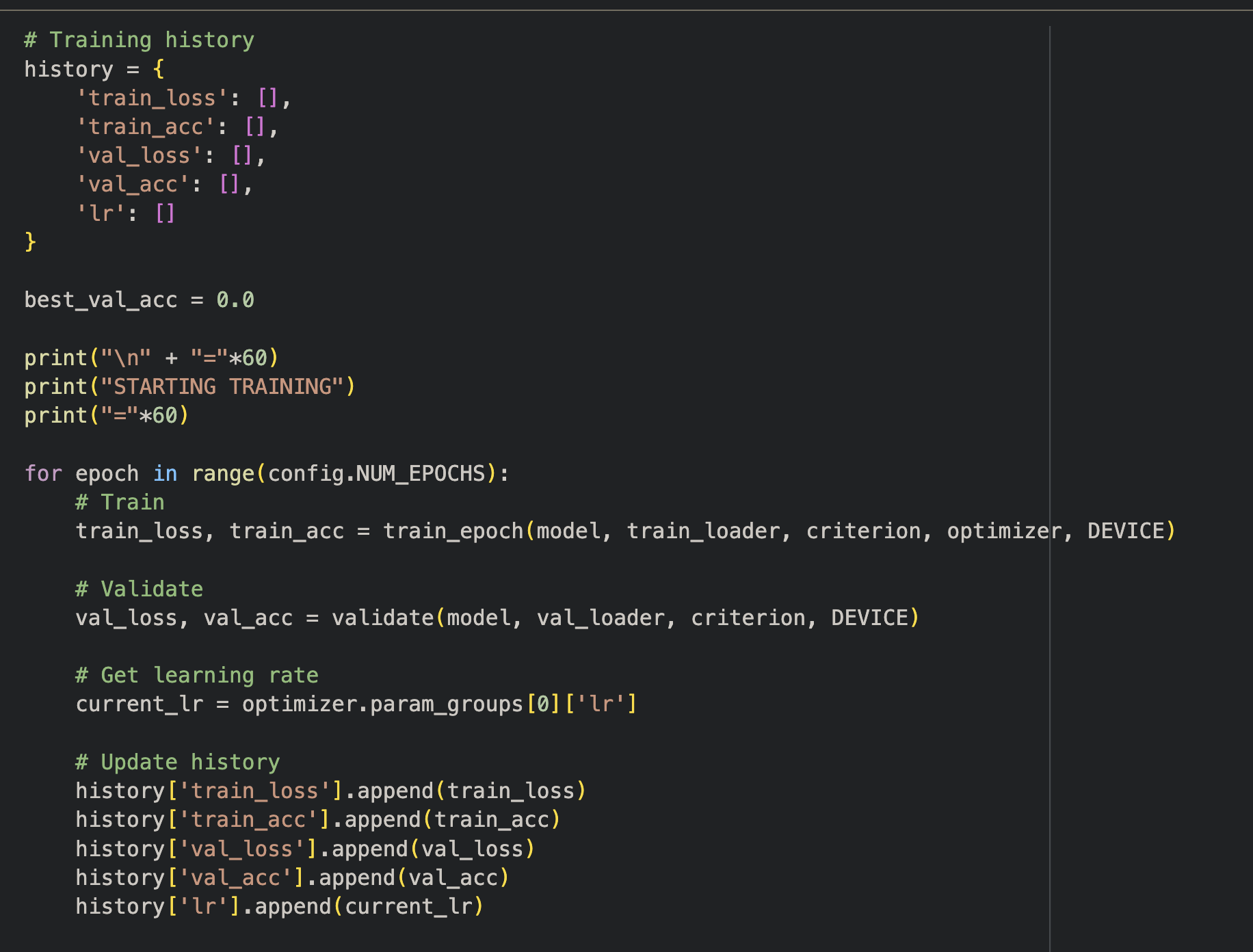
Modular architecture separating data loading, modeling, training, and evaluation✅ Comprehensive Documentation
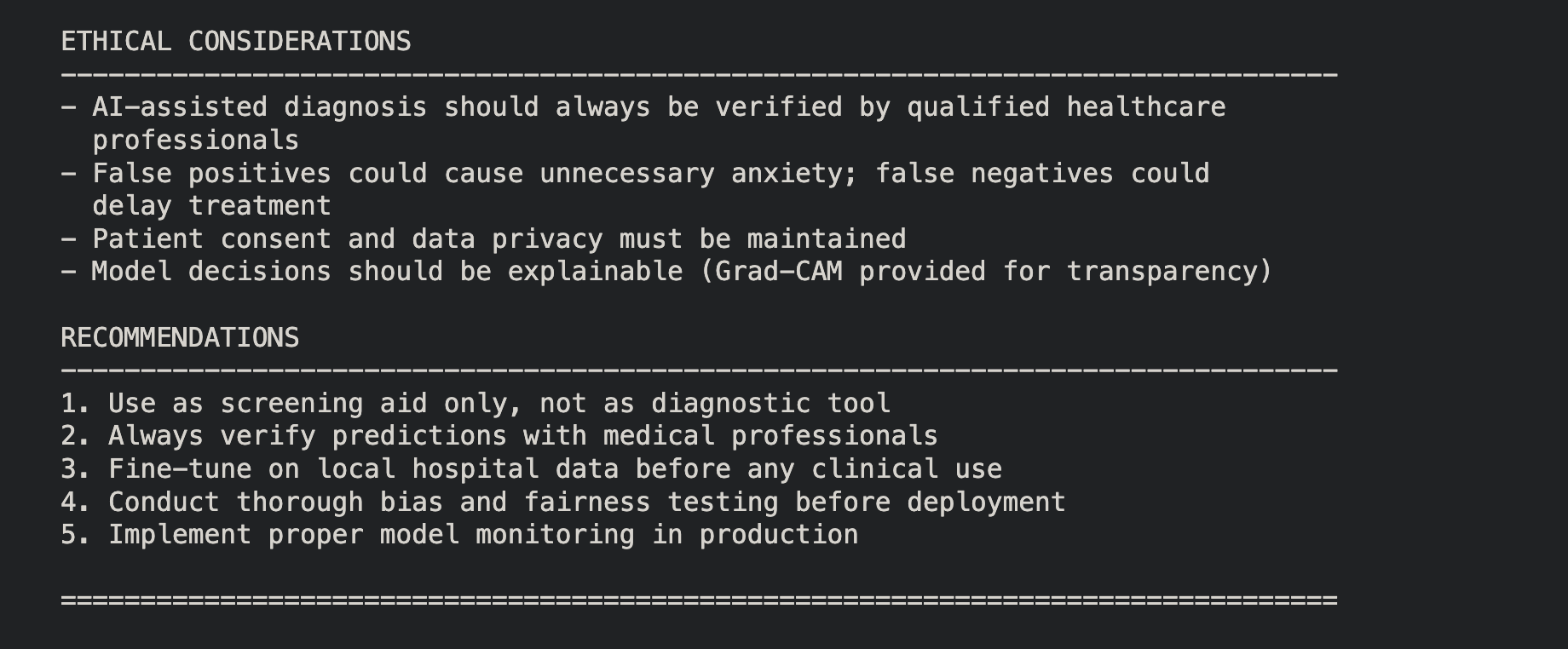
- Model Card with bias and fairness considerations
- Technical report covering methodology and limitations
- Fully documented Jupyter notebook
✅ Ethical Considerations
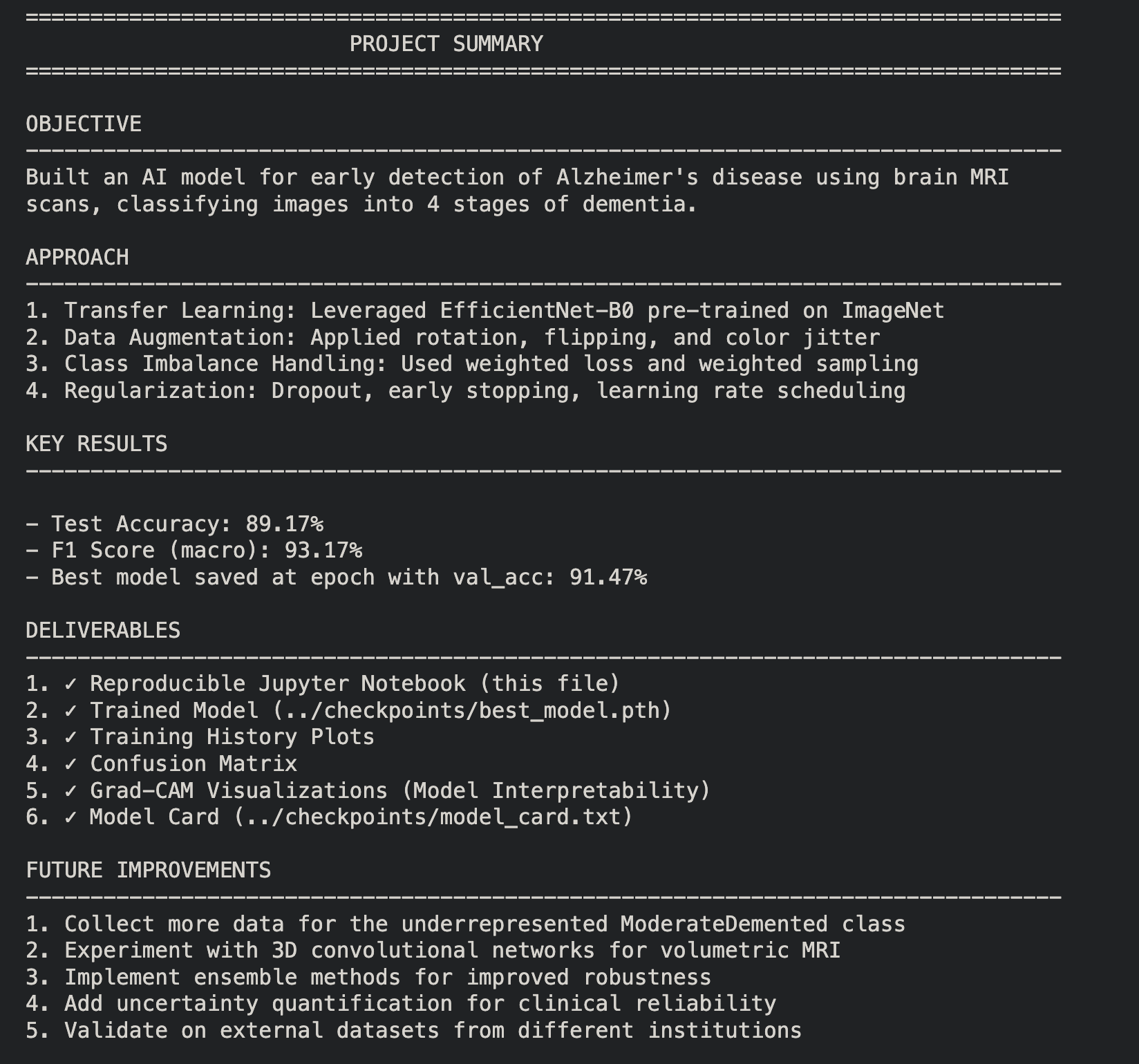
Clearly defined as a screening aid, not a diagnostic tool, with responsible-use guidelines
What We Learned
Technical
Transfer Learning Works
Pre-trained models dramatically reduce data requirements for medical imaging tasksClass Imbalance Strategies
Combining weighted loss and weighted sampling outperforms either aloneGrad-CAM Internals
Building explainability from scratch deepened our understanding of CNNs
Domain
Medical AI Responsibility
False negatives can delay treatment, while false positives can cause unnecessary anxietyAlzheimer’s Pathology
Understanding hippocampal atrophy and ventricular enlargement helped validate model attention
Process
Documentation Matters
A well-documented notebook is more valuable than marginal accuracy gainsReproducibility First
Fixed seeds and multi-environment testing saved significant debugging time
What’s Next for Early Alzheimer’s Detection AI
Short-Term
- 🔄 Validate on external datasets (ADNI, OASIS)
- 📊 Add uncertainty quantification using MC Dropout
- 🧪 Explore ensemble methods
Medium-Term
- 🧊 3D Volumetric Analysis using 3D CNNs
- 🔗 Multi-modal Fusion combining imaging and clinical data
- 📱 Simple web interface for radiologist workflow integration
Long-Term Vision
- 🏥 Clinical Validation through partnerships with medical institutions
- 🌍 Accessibility in low-resource regions lacking specialist radiologists
- 🔬 Research Publication to contribute to the scientific community


Log in or sign up for Devpost to join the conversation.