-
-
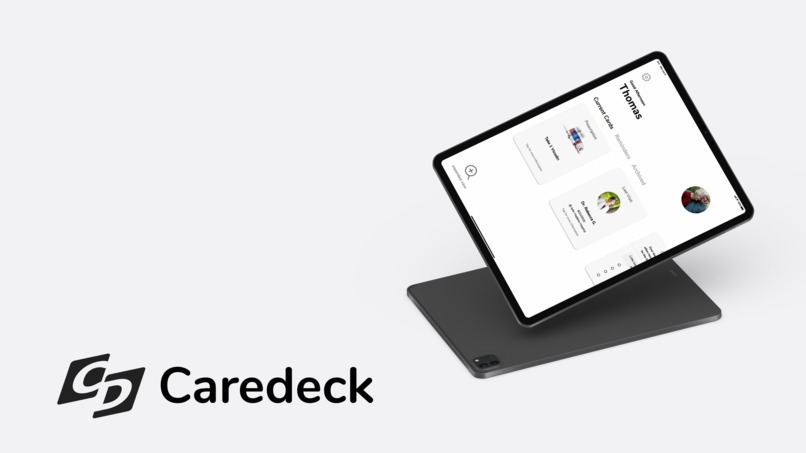
Dashboard with intuitive card management UI
-
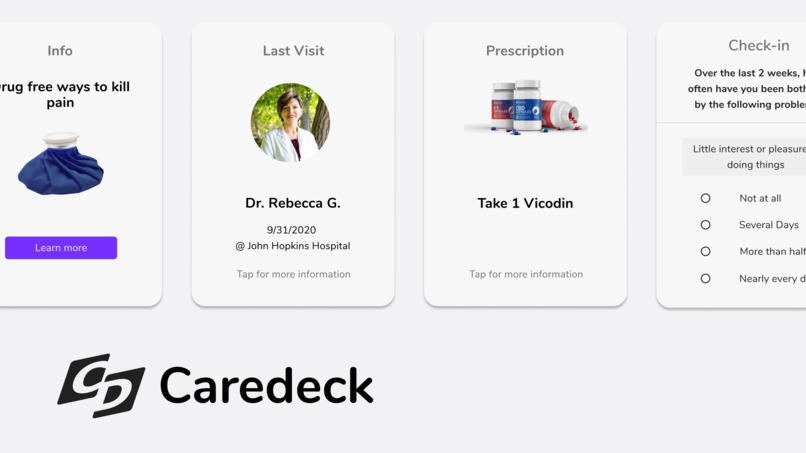
Customizable cards for post-visit patient clarity
Inspiration
Currently, a big problem for Aging in Place is the transparency between providers and elderly aging-in-place patients and their caretakers. During a visit, a skilled operator may be able to successfully emphasize specific instructions to the patient, but this may not be the case every time- there may be instances where the patient is overwhelmed and forgets certain procedures and instructions. Clinics try to solve this by issuing handfuls of leaflets and paper documentation and though they may have the required information, it may result in a lot of reading and research and won't foster the best patient experience.
What it does
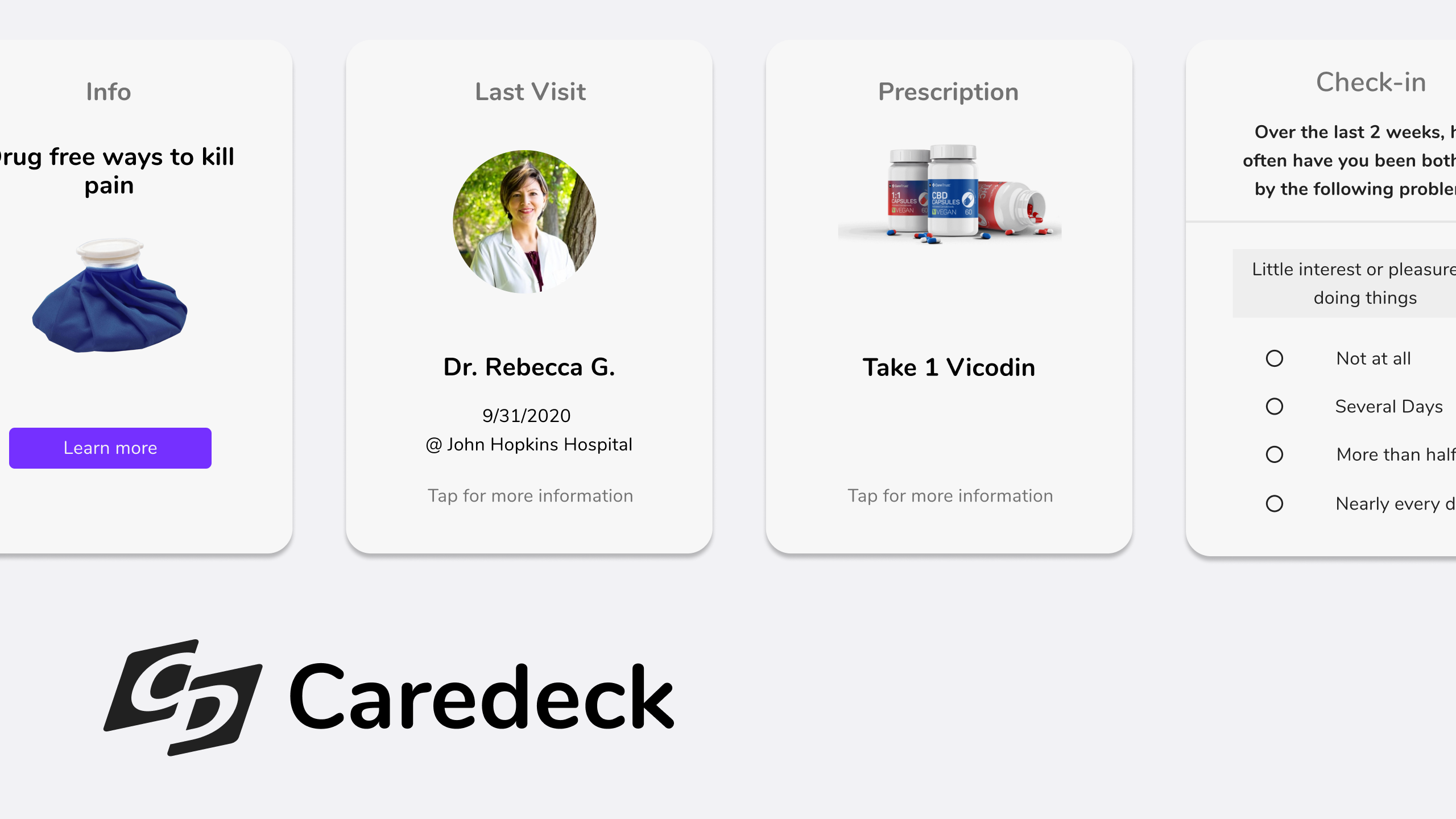
Our solution is Caredeck - an application featuring “Carecards” for providers to fully customize the patient’s post-visit experience. These cards provide digestible information and can link any necessary resources efficiently including the next Telehealth visits, prescription instructions, and notes from previous visits.
A typical use case may be a prescription medicine. In an optimal integrated situation, the provider facing workflow would include entering data of the prescribed medicine for a specific patient and populating Carecards automatically. Then Carecards will then show up on the patient's dashboard that they will be able to interact with to find out more about the prescription. These cards will indicate a description of the medication (color, size, the color of the container), as well as the amount to be taken, and frequency. The provider could set up "safety nets" for certain prescriptions that would provide communicative measures for the patient in case an instance such as allergies to the medication or forgotten dosages would occur as secondary measures may be necessary.
This application does not only pertain to prescription medicine, but workflows could be set up to send mini push surveys to screen and collect mental health data as questionnaires could be pulled from preexisting workflows such as PHQ-2 screenings.
The customization of these cards on the patient end is extremely flexible leaving a lasting advantage for those who struggle to keep up with their daily routines, and medical care.
How it’s built
Our team built the prototype on Figma, but if implemented, this project will be an app for IOS which will be coded in Objective-C.
This application is intended to be an application provided by a single healthcare provider since it requires that patient data be stored and accessed. If a healthcare provider lacks the database infrastructure to house this data, HIPAA compliant cloud services such as AWS or OCI can be used. Then this information can be transferred securely using a secure network protocol like SSL.
Both the doctor and the patient will have separate interfaces. The patient interface is what we demonstrate in this project. The doctor interface may be used to update and create items to check in on patients.
Challenges we ran into
The biggest challenge that we faced was coming up with a system and design that would make it simple and useful for elderly patients to use. We know that those that are older are not as familiar with technology, and may also have disabilities that prevent them from having the same experience as others. We put significant thought into making an interface that would be easy to understand and use, yet effective and robust.
What we learned
We learned a lot about healthcare and it’s complexities. As a UX designer and software engineer, we knew little to none about the problems that healthcare professionals face. So learning about them and then hearing about the ways that we can use our skills to contribute and help such an important field was very eye-opening. We are excited to learn more!
What's next for EarlGrey
We would love for this project to be implemented! We would need support from a hospital or a healthcare provider, but this application would greatly help the patients and doctors alike, and we would love to be a part of this adventure.
Built With
- figma
- notion


Log in or sign up for Devpost to join the conversation.