-
-
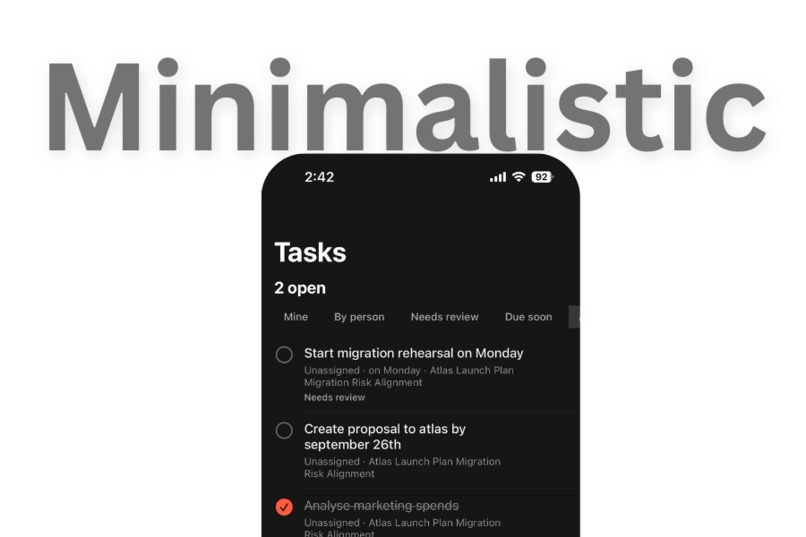
minimalistic design and apple native ui
-
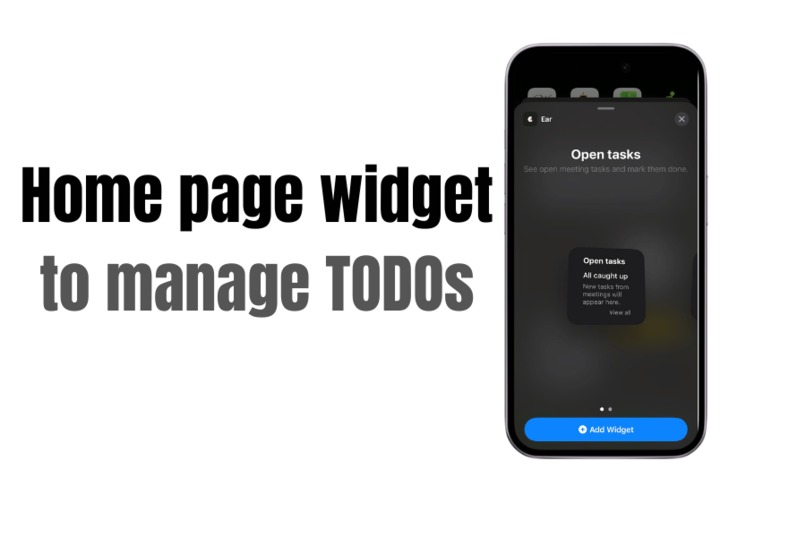
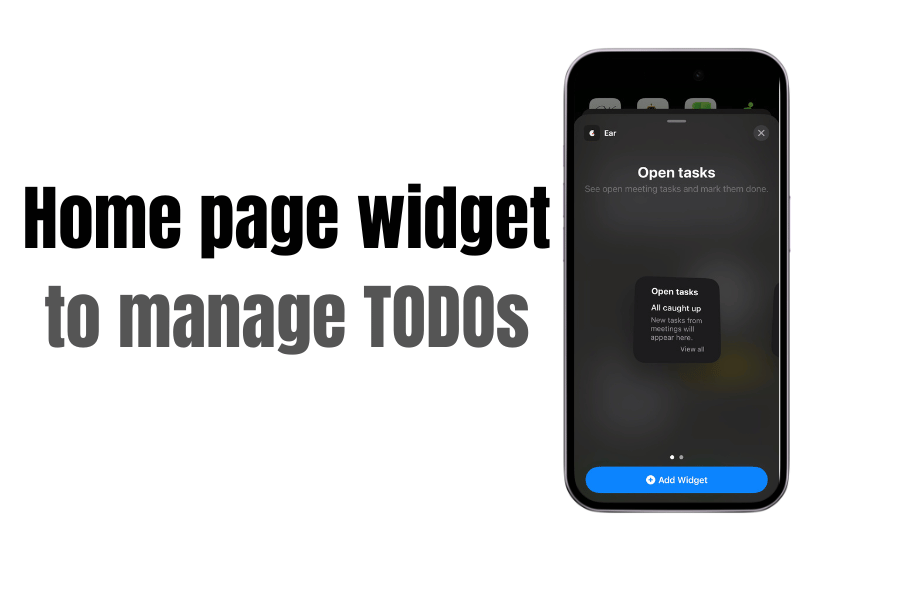
Home page widgets
-
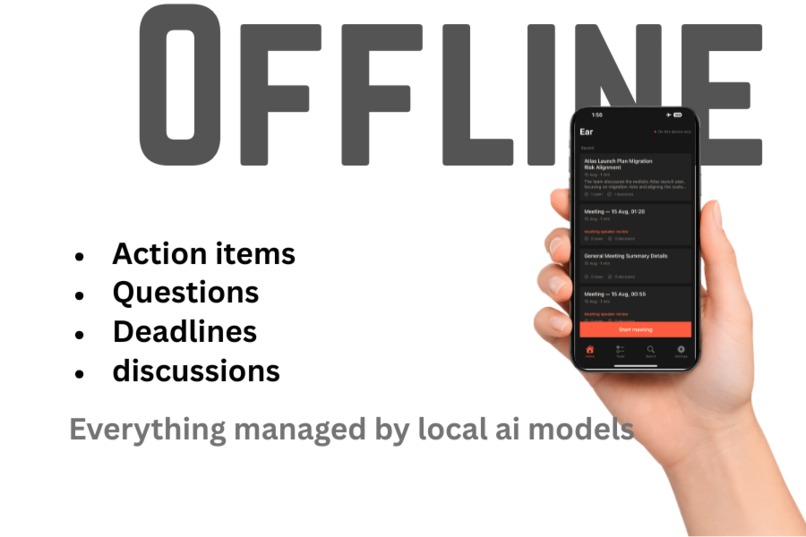
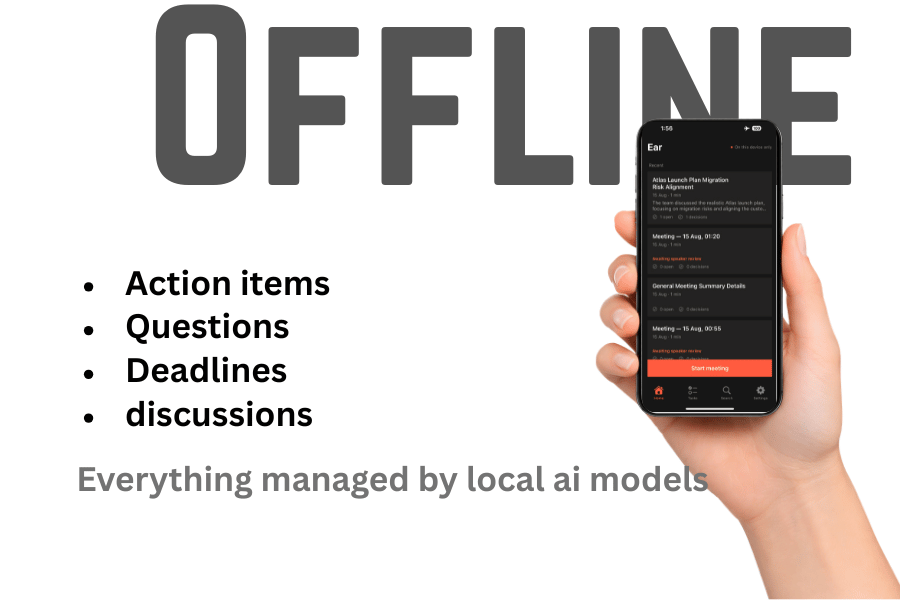
completely offline
-

perfect for meetings
-

perfect for planning


Ear — Hackathon Submission
Track: Track 3 — Mobile AI
Demo: YouTube
Source: github.com/jashwanth0712/ear
Inspiration
Important meeting context is often lost between the conversation and the follow-up. We wanted a private, mobile-first assistant that turns spoken decisions into useful next steps—without sending a meeting to a cloud bot.
What it does
Ear records a meeting on iPhone, creates an on-device transcript, separates speakers, and produces a searchable summary, decisions, open questions, and action items. Every output is reviewable against the original conversation.
How we built it
Ear is a native SwiftUI app for Arm-powered iPhones. AVFoundation captures audio; Apple Speech handles on-device transcription; a Core ML CAM++ embedding model and local clustering identify speakers; and quantized Gemma models run through llama.cpp with Metal for structured meeting notes. SwiftData keeps the meeting record on-device.
Challenges we ran into
Making a full meeting-AI workflow work reliably on a phone required careful resource management. We handled speech-recognition request limits with rolling windows, optimized diarization for short audio chunks, added RAM and thermal guards around local LLM inference, and retained a grounded heuristic-notes fallback when the model is unavailable.
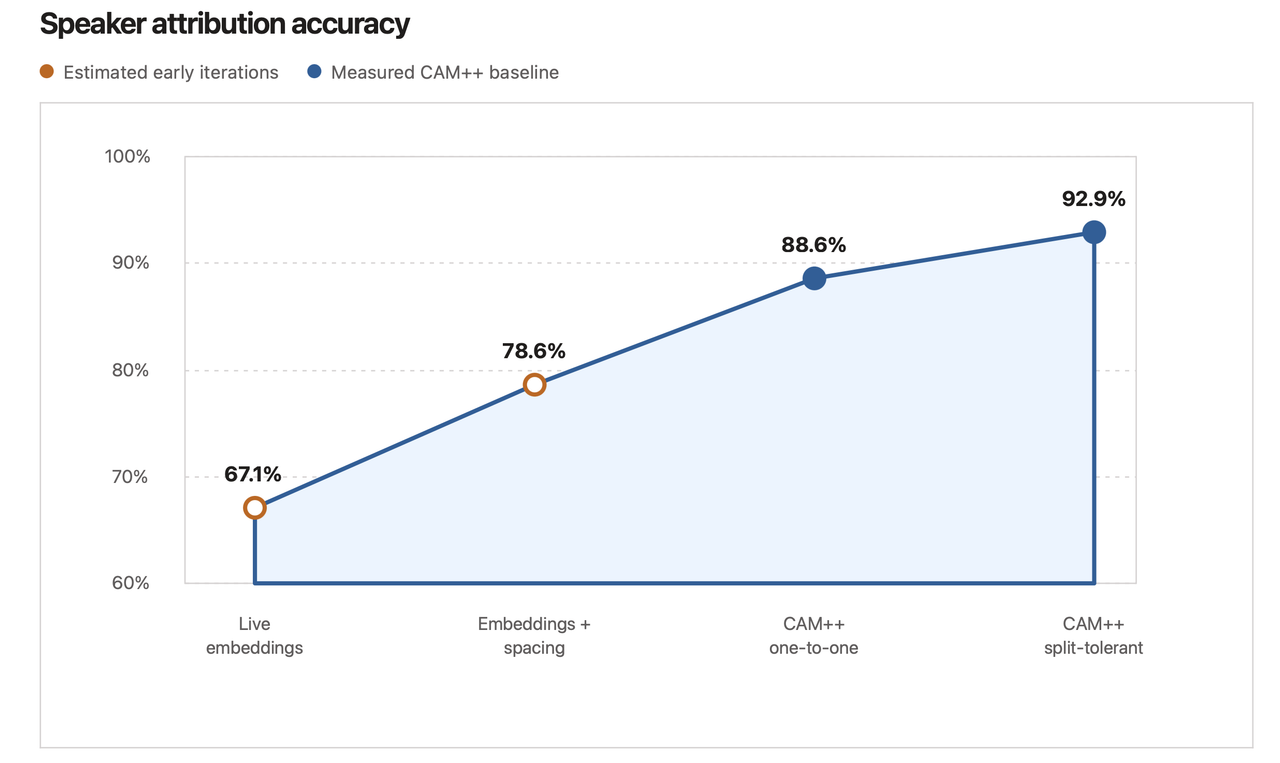
Diarization optimization
- Started with real-time speaker embeddings; short windows caused unstable speaker labels.
- Added speaker-turn timing/spacing signals to improve clustering stability.
- Added completed-recording post-processing for more audio context.
- Final approach: Core ML CAM++ embeddings plus post-processing and re-diarization.
- Result: more consistent speaker grouping on-device, with fewer incorrect speaker splits.
Accomplishments that we're proud of
- Delivered an end-to-end local-first meeting workflow instead of a cloud-dependent demo.
- Ran the app successfully on physical iPhone 15 and iPhone 16 devices.
- Added reproducible benchmark tooling, device evidence, and a reviewer-ready Track 3 proof-artifact trail.
- Made AI outputs practical with editable, evidence-linked tasks, decisions, and questions.
What we learned
On-device AI is a systems problem: model quality matters, but memory, thermals, audio segmentation, structured outputs, and a graceful fallback matter just as much. We also learned that transparent, evidence-linked results earn more trust than a polished but opaque summary.
What's next for Ear
We plan to expand benchmark coverage across more Arm devices and longer meetings, improve speaker-label correction and offline language support, and refine model-selection controls so users can balance quality, speed, and battery use for each meeting.
Built With
- coreml
- gemma
- swift

Log in or sign up for Devpost to join the conversation.