-
-
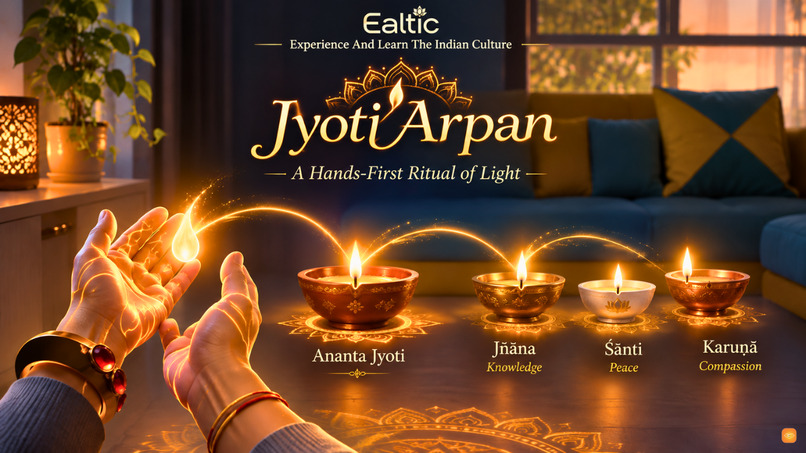
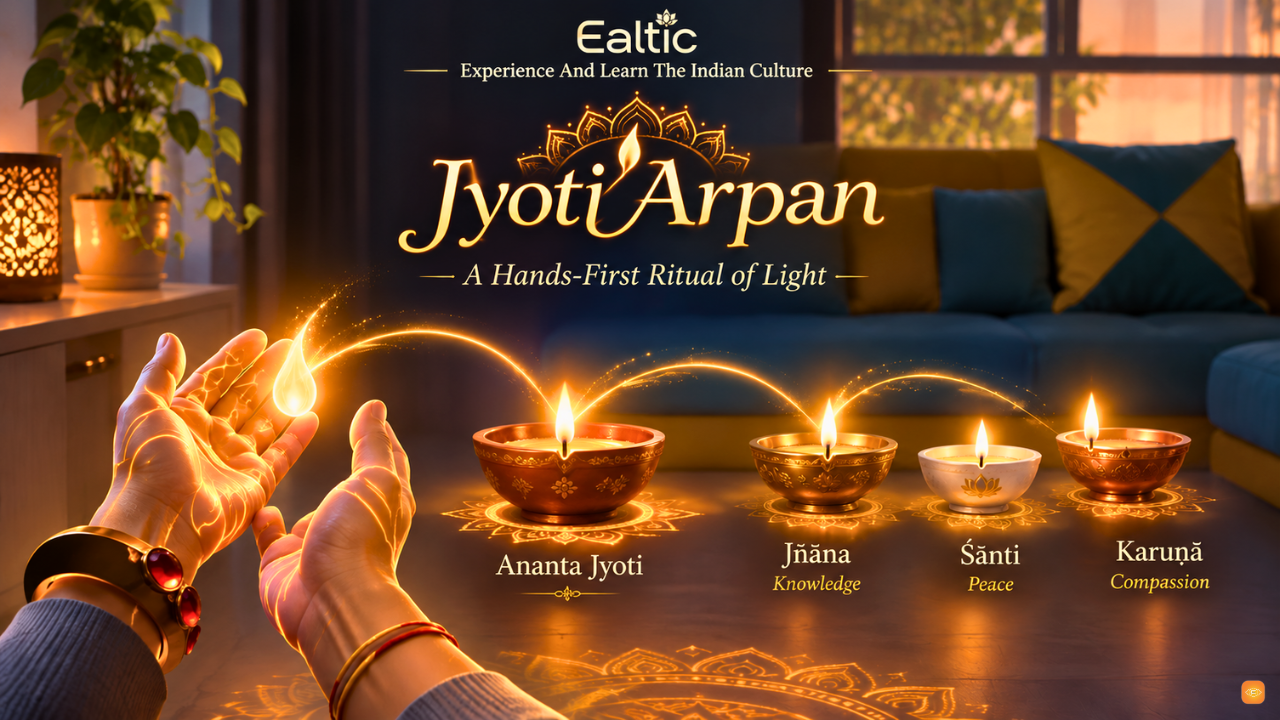
Jyoti Arpan Cover
-
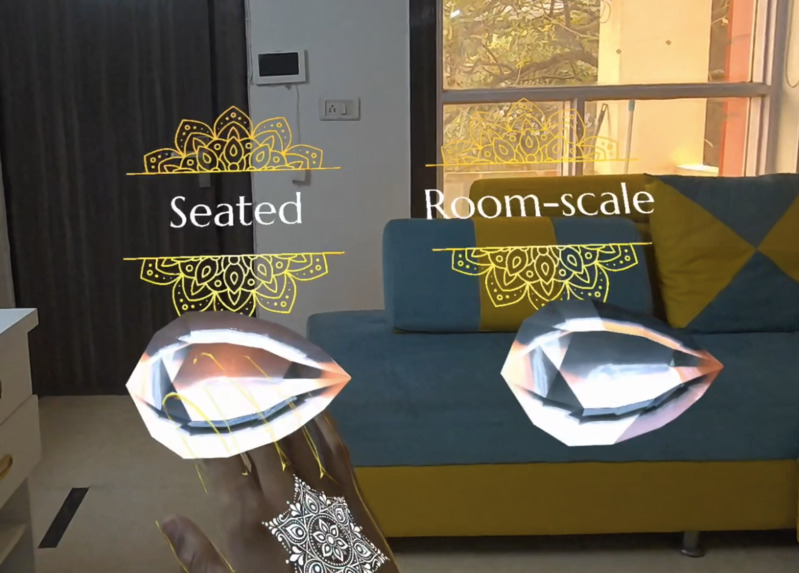
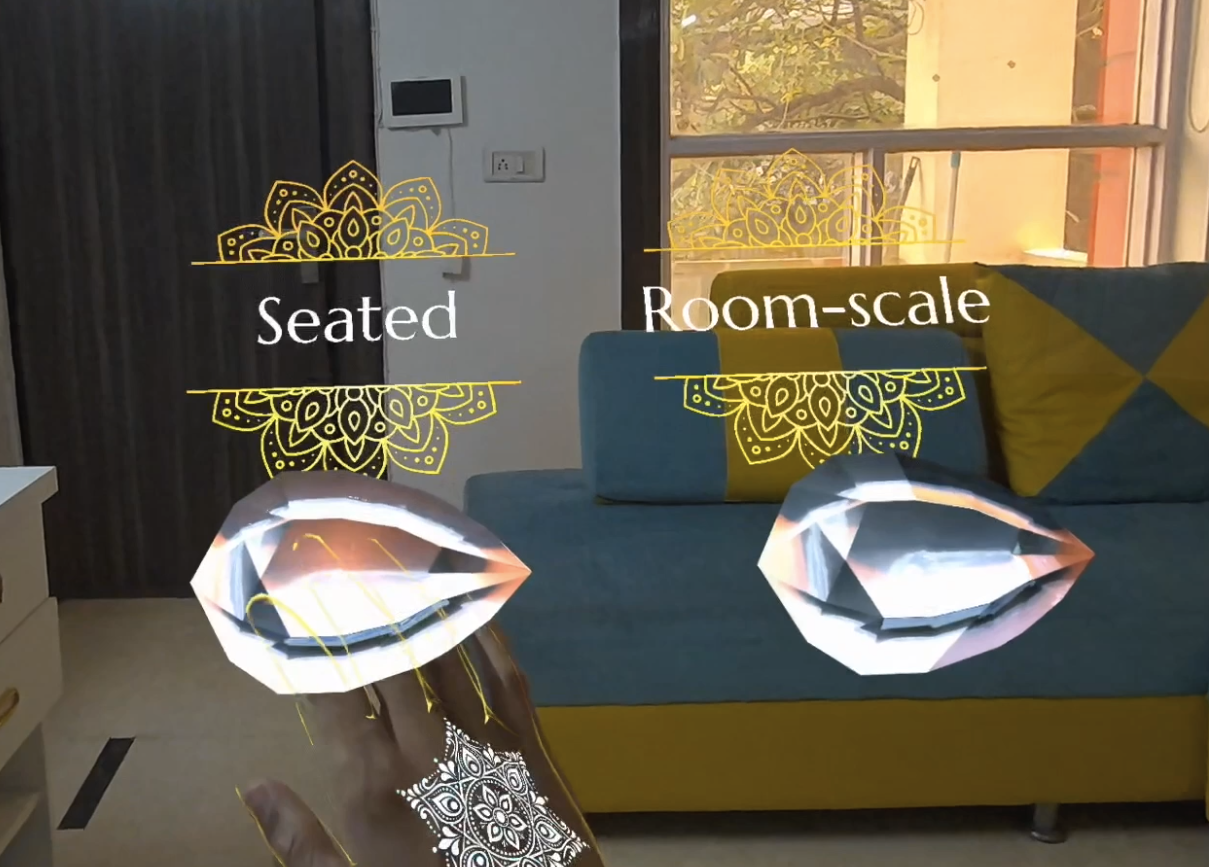
Seated and Room Scale Gems
-

Deer
-
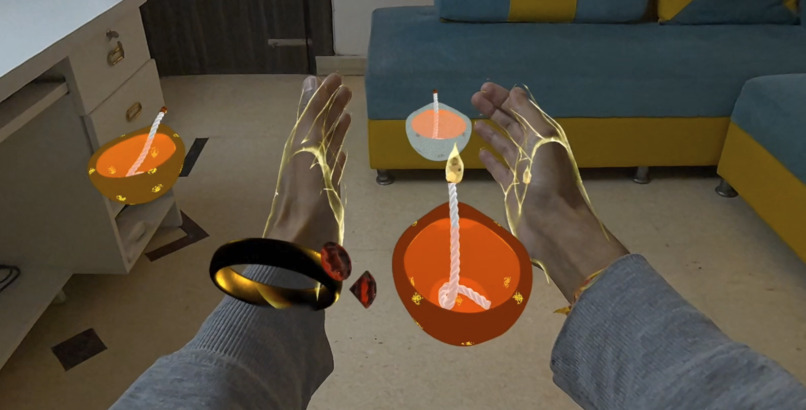
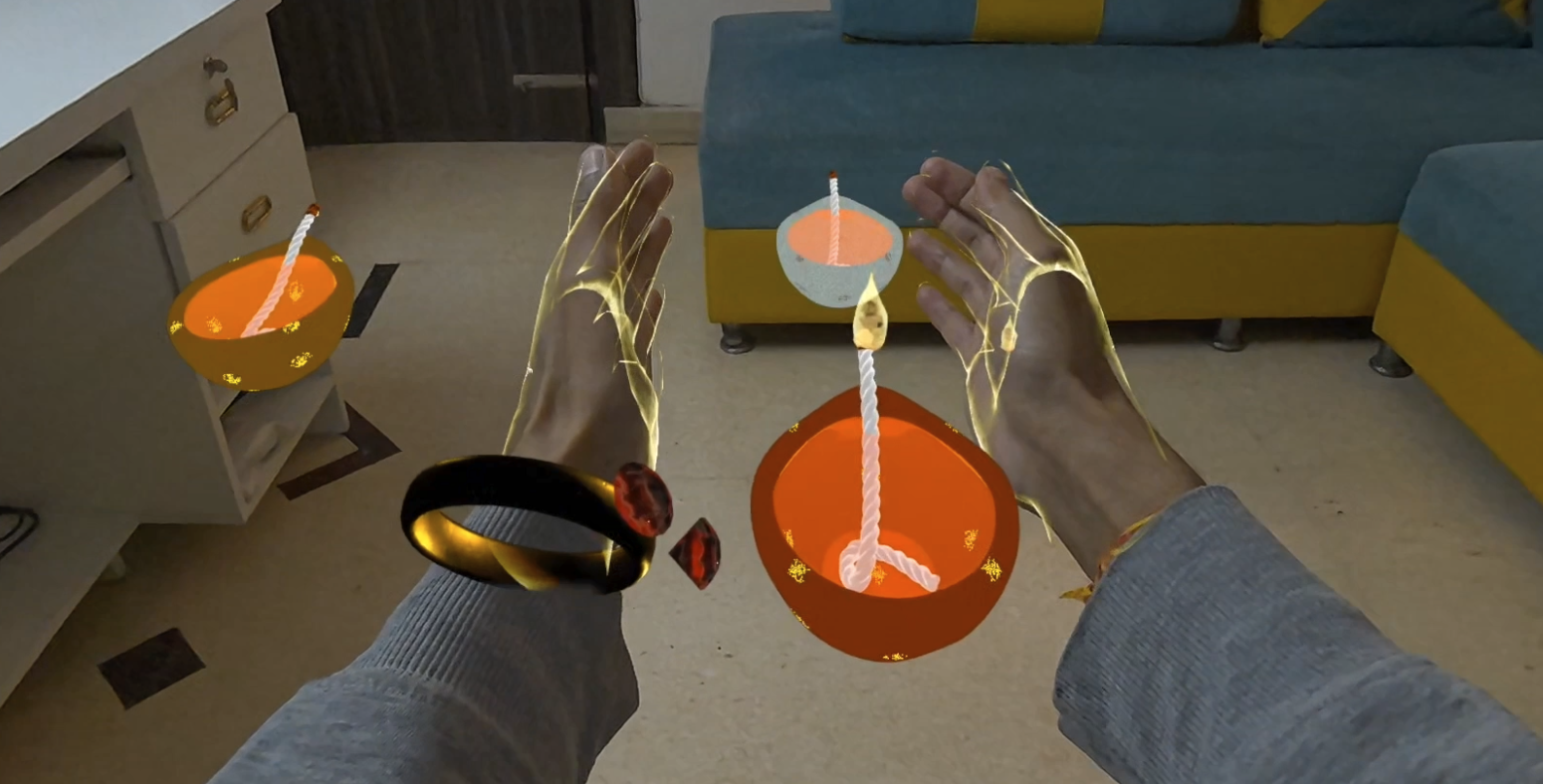
Jyoti Arpan Palm detection
-
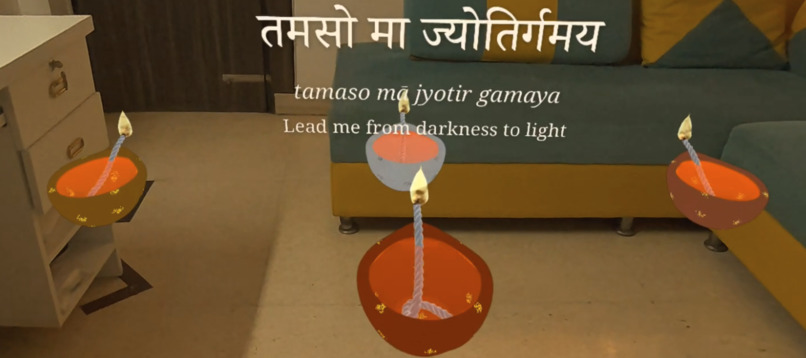
Jyoti Arpan
-
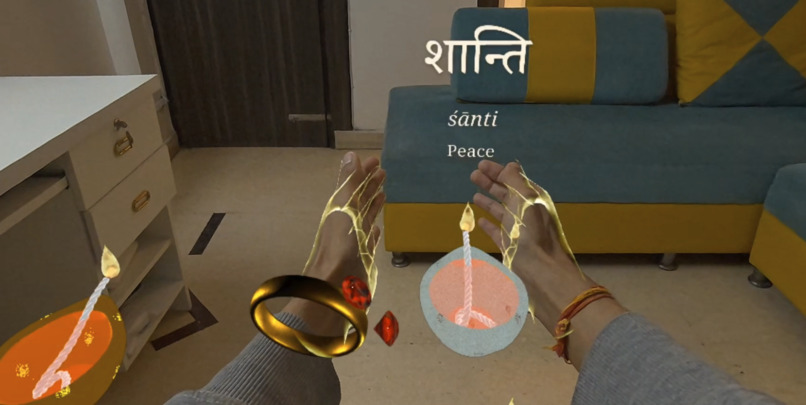
Jyoti Arpan
-

Interactive Fireworks
-

Rangoli creator Menu
-

Meghnad
-

Rangoli creator
-

Menu
-

Gauri - Culture Guide



Inspiration
Ealtic was created from a desire to bring the stories, traditions, and philosophy of ancient Indian culture into spatial computing, not simply as content to watch, but as experiences people can participate in.
From its original release, Ealtic was designed as a hands-only mixed reality experience. We wanted people to interact with cultural objects, stories, and environments using their own hands rather than controllers.
For the Meta VR Start Developer Competition, we wanted to take that philosophy further and explore an interaction where the user's hand was not simply an input device, but part of the meaning of the experience.
That led to Jyoti Arpan, a seated mixed reality ritual of light.
** Please use competition channel to experience Jyoti Arpan.**
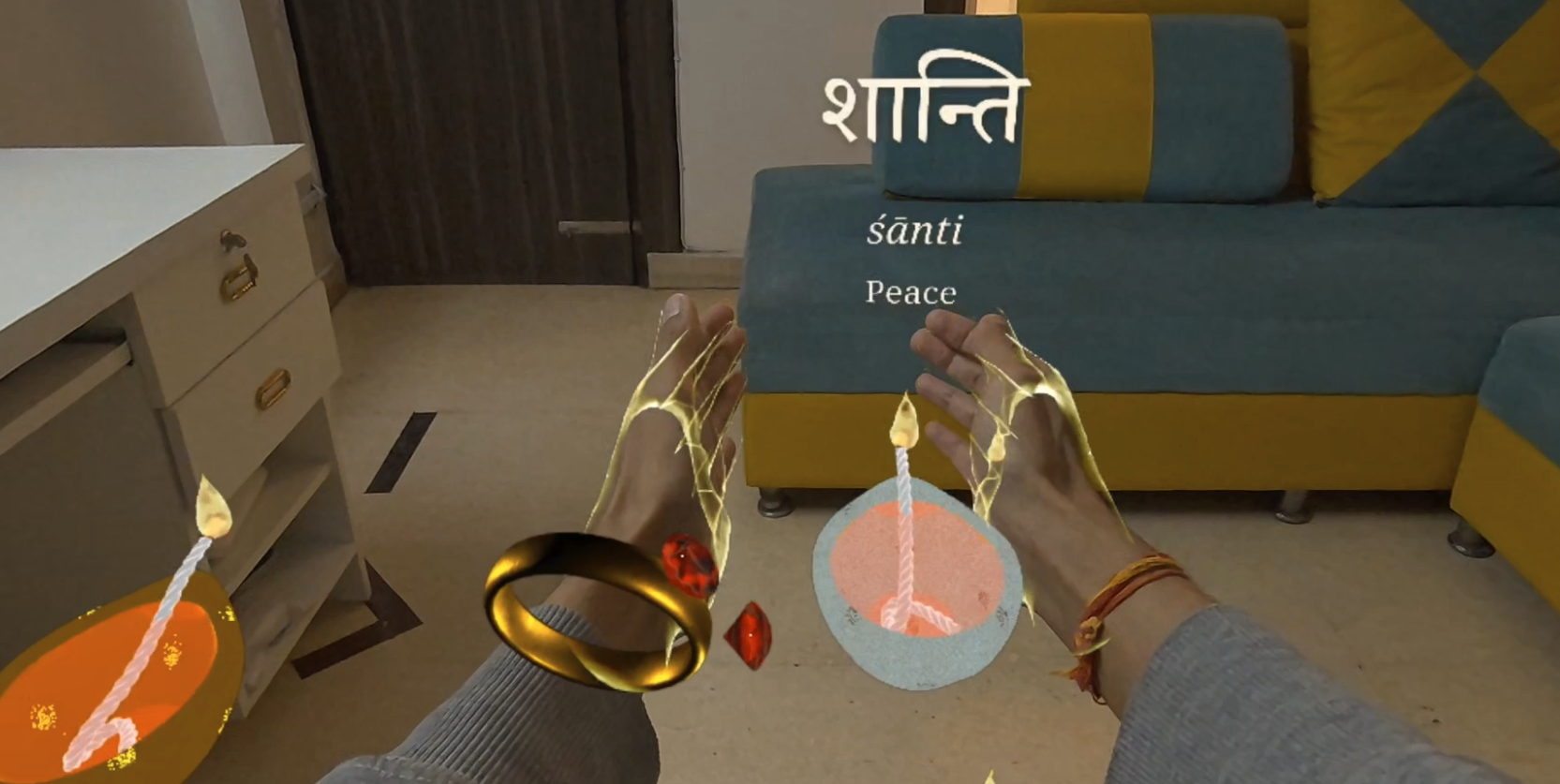
Instead of pressing a button, pinching an interface, or grabbing a virtual flame, the user opens their palm and receives the light. They physically carry it and offer it from one diya to another, progressing through Jñāna (Knowledge), Śānti (Peace), and Karuṇā (Compassion).
The goal was to create a quiet interaction where technology becomes almost invisible and the user's own hand becomes part of the ritual.
What it does
Ealtic is a hands-only mixed reality experience inspired by ancient Indian culture, designed for Meta Quest.
Its existing experiences include interactive cultural stories, Rangoli creation, festival experiences, fireworks, Namaste pose recognition, and other natural hand-driven interactions.
For this competition, we significantly expanded Ealtic with a new experience called Jyoti Arpan.
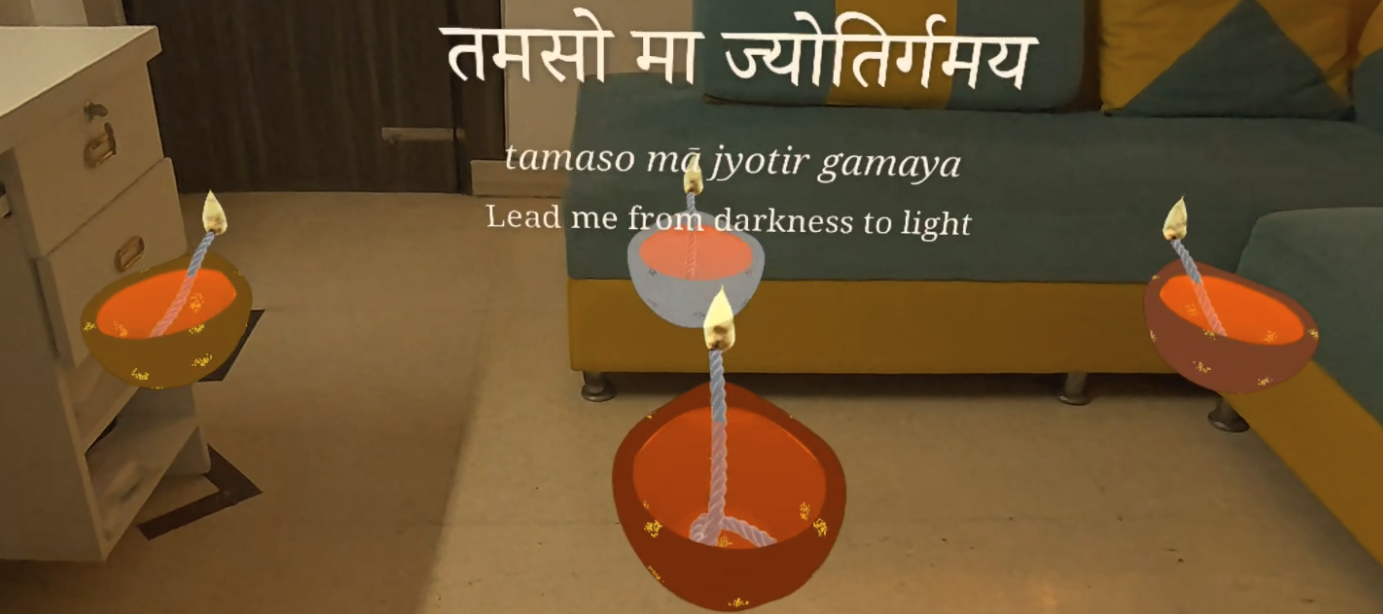
The experience begins with Ananta Jyoti, the source lamp.
The user is invited to hold out an open palm. After the palm remains naturally positioned for a short moment, the flame transfers from the source diya into the user's hand.
The user then carries that light through three symbolic lamps:
Ananta Jyoti → Jñāna → Śānti → Karuṇā
Each offering represents a progression:
Jñāna : Knowledge
Śānti : Peace
Karuṇā : Compassion
The experience works with either hand and only one light can be carried at a time.
Jyoti Arpan is designed to be completed comfortably while seated and within a compact interaction area.
As each diya is illuminated, the mixed reality environment also begins to respond. Light gradually spreads beyond the virtual objects and changes the atmosphere of the user's real room, connecting the symbolic progression of the ritual with their physical surroundings.
Rather than recreating a traditional ritual literally, Jyoti Arpan explores a simple idea through mixed reality:
light being received, carried, and shared.
How we built it
Ealtic is built in Unreal Engine for Meta Quest and has used hand tracking as its primary interaction system since its original release.
For Jyoti Arpan, we developed a new interaction system specifically around open-palm detection, palm orientation, spatial flame transfer, and ritual progression.
The system detects when the user's palm is correctly presented and remains stable for approximately 0.4 seconds before transferring the flame.
Once received, the flame remains associated with the palm rather than behaving like a conventional grabbed object.
Both hands are supported independently. During development, we found that the left and right hands required different palm-axis handling because of their mirrored coordinate systems, so palm orientation became configurable per hand.
When the carried flame enters the activation area of the next diya, that lamp illuminates and the experience advances to the next stage.
Jyoti Arpan's implementation includes:
- Open-palm detection and dwell logic
- Per-hand palm-orientation handling
- Palm-based flame carrying
- Spatial flame-transfer logic
- Sequential four-lamp experience state
- Passthrough mixed reality
- Progressive environmental lighting
- Real-time VFX and audio feedback
- Quest-optimized materials and rendering
The four lamps use a shared core mesh while their materials establish different identities: terracotta, brass/gold, pale ceramic, and copper.
The competition work therefore builds on Ealtic's existing hands-first foundation while introducing a new type of interaction and a complete new cultural experience around it.
Challenges we ran into
Making receiving light feel intentional
Ealtic already supported hands-only interactions, but Jyoti Arpan required something different from conventional grabbing or pinching.
Instant activation caused accidental transfers, while requiring an explicit grab made the interaction feel too mechanical.
We introduced a short open-palm dwell so the user simply presents their hand and allows the light to come to them.
Supporting both hands naturally
The palm orientation behaved differently between the left and right hands because of their mirrored coordinate systems.
We solved this by making the palm orientation configuration independent for each hand.
Making virtual light affect the real environment
Lighting another virtual diya was visually understandable, but we wanted the user's action to have a consequence beyond the virtual object.
This led to progressive environmental lighting, where the atmosphere of the physical room becomes warmer as the user progresses through Knowledge, Peace, and Compassion.
Maintaining Quest performance
Passthrough, transparent hand effects, materials, lighting, VFX, and hand tracking all compete for limited rendering resources.
We continually simplified materials, reduced unnecessary overdraw, and optimized effects to maintain stable performance.
Translating cultural meaning into interaction
One of the most important challenges was avoiding an experience that felt like cultural decoration placed inside MR.
Instead, we focused the design around a meaningful physical action: receiving light and passing it forward.
Accomplishments that we're proud of
For Jyoti Arpan, we are particularly proud of making the user's palm the vessel for the central interaction.
The flame is not selected from a menu or picked up using a standard grab mechanic.
The user opens their palm, receives the light, physically carries it through their real environment, and offers it to the next diya.
For the competition update, we:
- Created the complete Jyoti Arpan ritual as a new Ealtic experience.
- Developed open-palm flame receiving instead of conventional grab interaction.
- Implemented reliable left- and right-hand palm handling.
- Built a sequential four-lamp symbolic progression.
- Created a one-light-at-a-time interaction state.
- Designed the experience for comfortable seated use in a compact area.
- Connected the progression of the ritual to changes in lighting and atmosphere in the user's real room.
These additions build upon Ealtic's existing hands-only foundation rather than replacing it.
More broadly, Ealtic has already brought interactive experiences inspired by Indian culture, including Rangoli, festivals, hand interactions, and stories inspired by the Ramayana to Meta Quest through mixed reality.
What we learned
Hands can communicate meaning beyond input
Ealtic had already taught us that controllers are not necessary for many spatial interactions.
Jyoti Arpan pushed that idea further.
An open palm can communicate receiving, giving, trust, openness, and intention. Designing around those qualities created an interaction very different from simply replacing a controller button with a hand gesture.
Small spaces can still create meaningful MR
The experience does not require locomotion or a large play area.
Receiving a small flame into your real hand while sitting inside your actual room can create a strong sense of presence through a very small interaction.
Mixed reality becomes stronger when the physical environment responds
Passthrough should not simply function as a background.
When the atmosphere of the user's room changes because of their actions, the physical environment itself becomes part of the experience.
Cultural experiences benefit from participation
Watching a cultural story can communicate information.
Participating in an action can create a different type of understanding and emotional connection.
This principle continues to guide Ealtic.
What's next for Ealtic
Our immediate focus is refining Jyoti Arpan through interaction testing, visual polish, spatial audio, progressive environmental lighting, and performance optimization.
Beyond Jyoti Arpan, we want Ealtic to continue growing as a collection of hands-first mixed reality experiences where ancient Indian stories, artistic traditions, festivals, and ideas can be explored through spatial interaction.
Future directions include additional interactive stories, expanded creative experiences such as Rangoli creation, new festival experiences, and deeper ways for the user's real environment to participate in cultural experiences.
Our long-term goal is:
use mixed reality not merely to display culture, but to let people step inside it, interact with it, and carry something meaningful away from the experience.
Built With
- metaquest
- mixedreality
- unreal-engine