Prototype link (Please submit a link to a playable prototype, not a link to your design file) Link
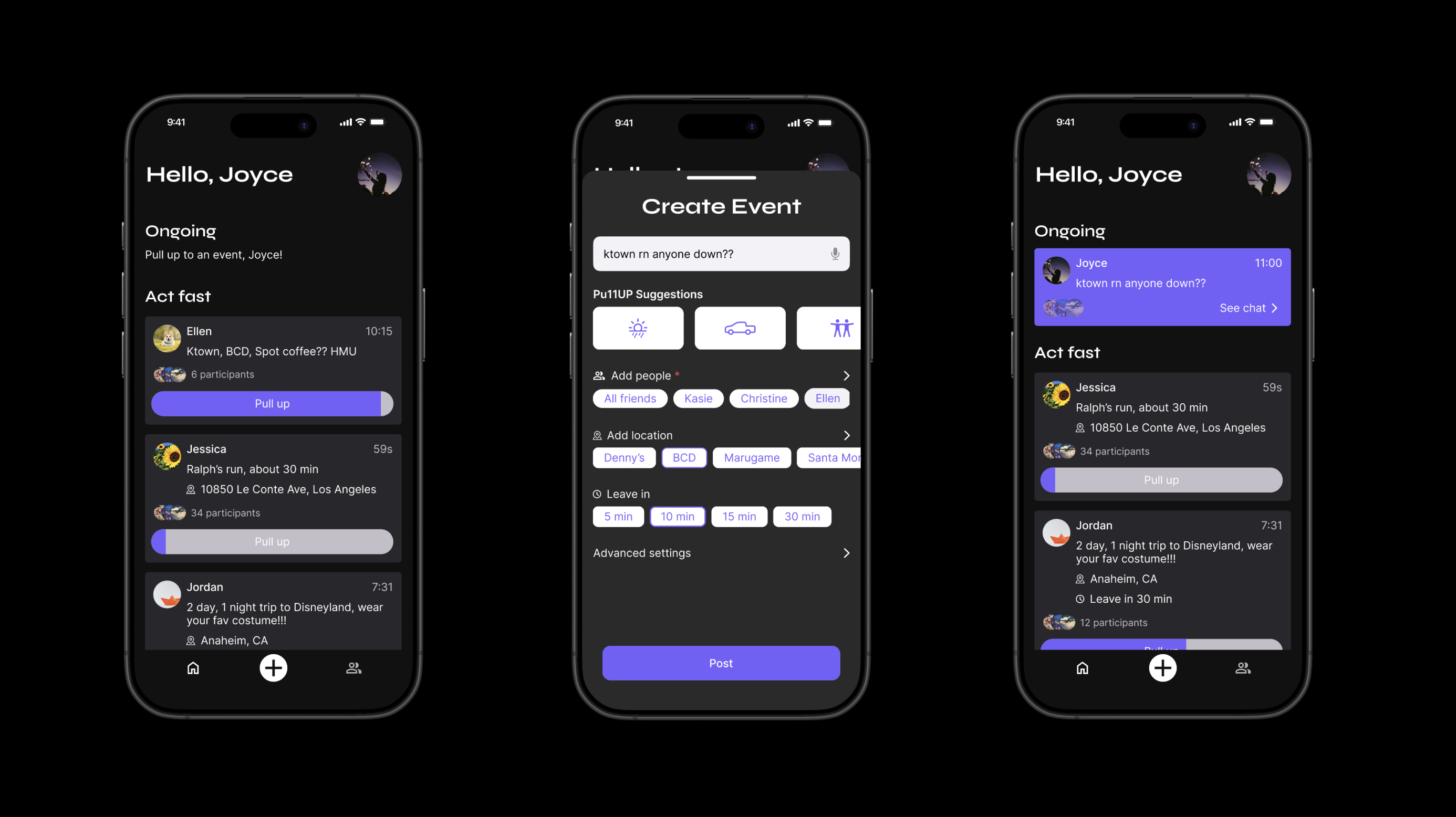
Describe your project (max 150 words) Pu11 up is a spontaneous hangout planning app designed to encourage real-world interactions over digital engagement. By leveraging AI to enhance spontaneity without replacing human decision-making, pu11 up counteracts the over-planned, algorithm-driven nature of modern socializing. Users can create events by typing a simple one-line phrase (e.g., "ktown anyone rn"). The AI suggests similar events, and users choose the visibility—whether it's open to friends, public, or specific invitees. Gamification elements like leaderboards and points for hosting or attending events foster user engagement. Users can join events within 11 minutes after an event is posted. A group chat is created for each hangout, with AI suggesting activities based on past user activities and notifying users for bill splitting post-event. The intuitive nav bar offers easy access to proposed and ongoing hangouts, friends (with leaderboard), and profiles showcasing past events.
Describe your research process and findings. If you conducted any surveys or interviews, please include the survey form and/or interview questions here. If you conducted secondary research by pulling from online sources, please include a link to your sources. (Max 500 words) Our research process focused on understanding how people currently plan social activities and the challenges they face in spontaneous hangouts. We employed both primary and secondary research methods.
Surveys: We distributed an online survey to 11 participants aged, focusing on their social habits, pain points in event planning, and openness to spontaneous plans.
Competitive Analysis: We conducted a competitive analysis of BeReal, Luma, Eventbrite, and Poppin to understand how similar apps address social planning. While these platforms offer event-based connections, they lack features promoting true spontaneity and casual meetups, reinforcing the need for pu11 up's unique approach.
Key Findings:
Overwhelming Planning: Many participants felt that current social platforms overcomplicate planning, leading to fewer spontaneous meetups.
Desire for Flexibility: Users wanted a way to plan that didn't feel like a commitment, valuing the option to "drop in" if free.
Social Proof: Seeing who else was attending an event increased the likelihood of participation.
Gamification Appeal: Younger users found gamification (like leaderboards) motivating, making them more likely to host or attend events.
Describe your most important design decisions. What research findings and/or user testing results led you to make these decisions? (Max 500 words) Our design decisions were heavily influenced by our research findings, focusing on fostering spontaneity, ease of use, and social engagement.
Simplified Event Creation: Decision: Users create events with a simple one-line phrase (e.g., "ktown anyone rn"). Reason: Surveys showed users felt existing platforms required too much effort to organize casual meetups. This minimalist approach reduces friction and encourages spontaneity.
AI-Enhanced Suggestions: Decision: AI suggests events based on user history without overshadowing human choice. Reason: Users appreciated suggestions that aligned with their interests but wanted to maintain control over final decisions. This balances convenience with autonomy.
Visibility Options for Events: Decision: Users can choose event visibility (friends-only, or specific invitees). Reason: Participants expressed concerns about privacy and the desire to control who sees their plans, especially in spontaneous settings. We decided to remove the option of public because we want this product to ensure spontaneity, and not a wide range of choices that make the user too overwhelmed.
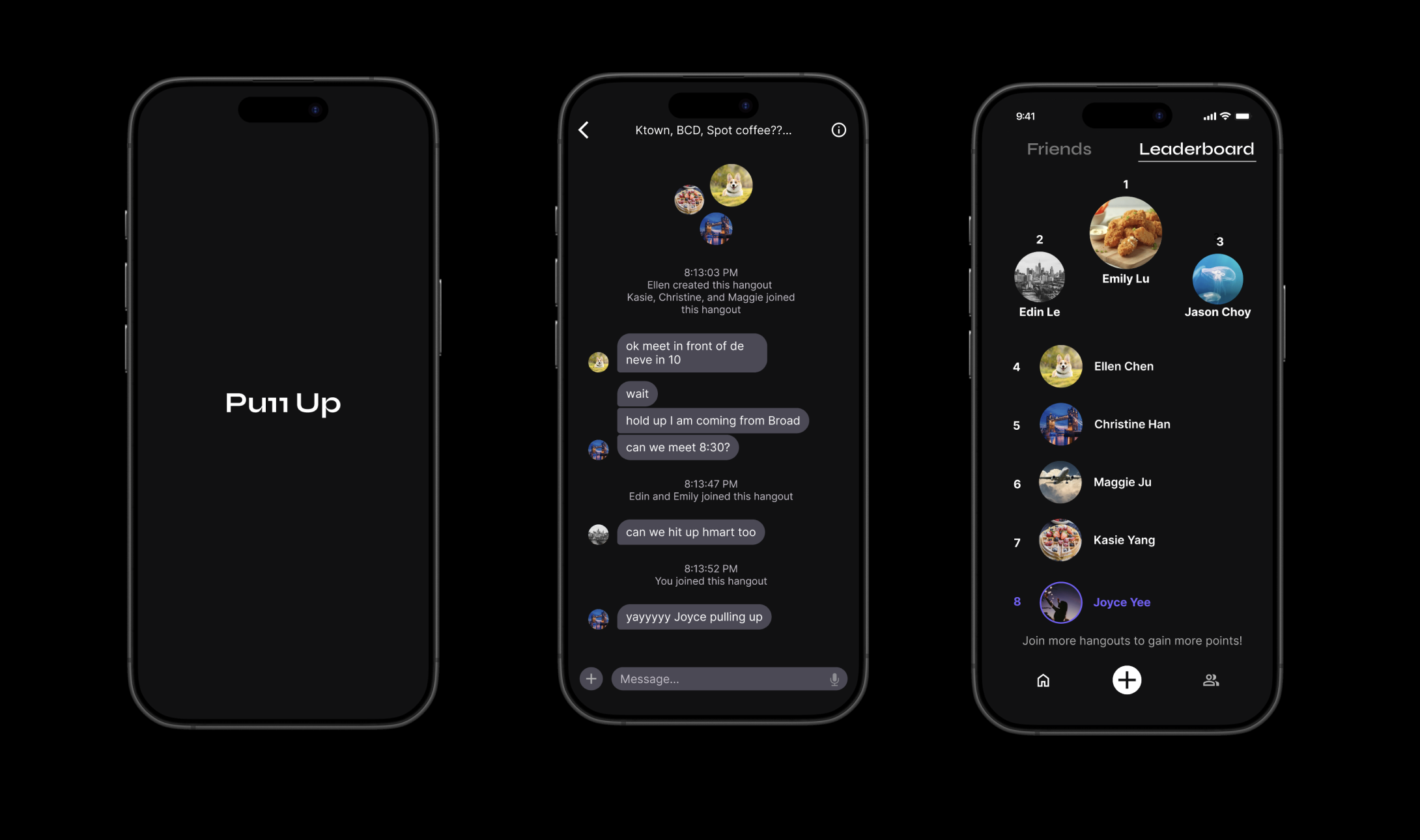
Gamification Elements: Decision: Implementing a leaderboard and point system for hosting/attending events. Users gain points by attending and hosting events, and is ranked based on their "spontaneity." Reason: Users were motivated by gamified elements. This feature encourages regular engagement and fosters a sense of community and further builds on the idea of urgency.
Group Chats & Bill Splitting Notifications: Decision: Each event generates a temporary group chat for rapid communication with post-event bill-splitting reminders. Reason: After joining an event, users are automatically led into a group chat for final coordinations. Users highlighted the hassle of coordinating logistics post-event. Friends either forget or find it awkward to bring up the need to split the bill. This feature streamlines communication and simplifies common pain points like settling expenses.
Intuitive Navigation: Decision: The nav bar includes Proposed Hangouts, Ongoing Hangouts (group chats), a Plus Button for new events, Friends (with leaderboard), and Profile (showcasing past events). Reason: Competitive analysis and usability testing showed that a clear, simple navigation enhances user experience, making it easy to toggle between planning and social engagement.
Overall UI: Decision: Modern, dark-themed interface promotes a sense of excitement and now knowing what is next, building spontaneity. We spent some time researching the different pop ups and pages, ultimately going with pop ups and bottom sheets for the most important features to create a sense of urgency.
Built With
- figma


Log in or sign up for Devpost to join the conversation.