Inspiration
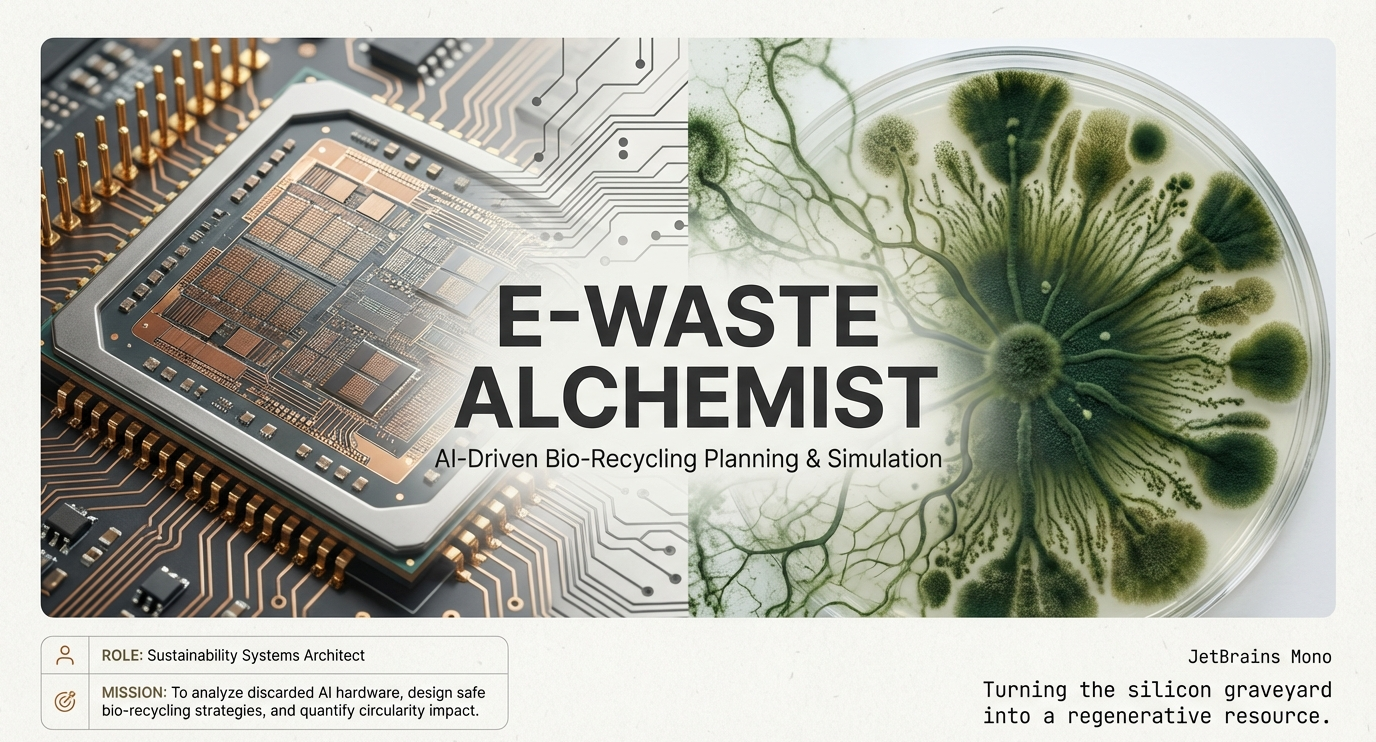
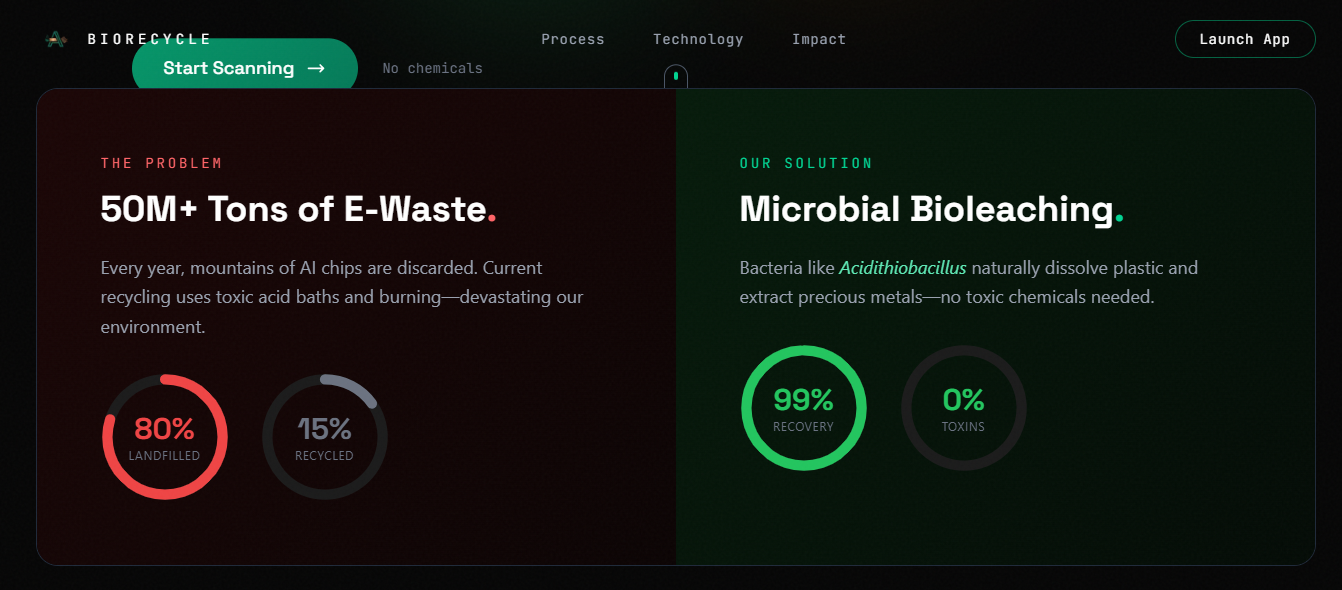
The rapid expansion of AI technologies has led to a surge in discarded GPUs, accelerators, and server hardware. While these devices contain valuable and rare materials, most end up in landfills or are recycled using environmentally harmful methods such as burning or chemical leaching.
E-Waste Alchemist was inspired by the question: Can AI help us plan safer, circular, and regulation-aware recycling pathways for AI-era electronic waste?
What it does
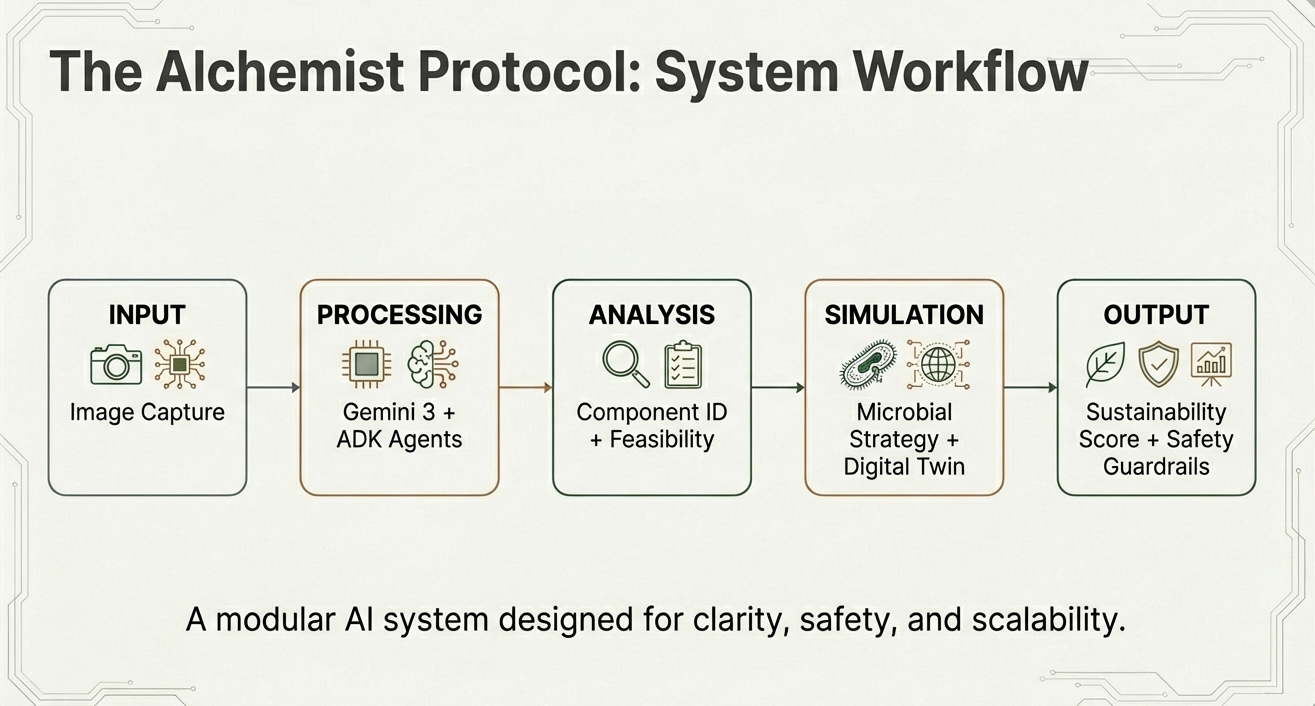
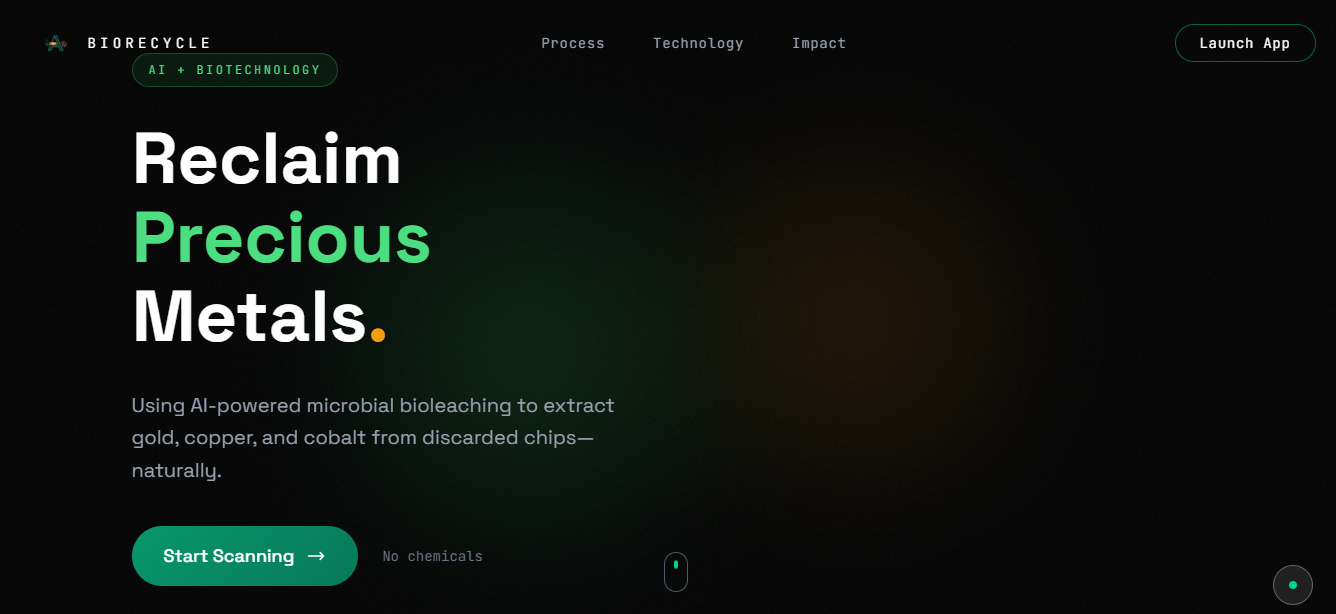
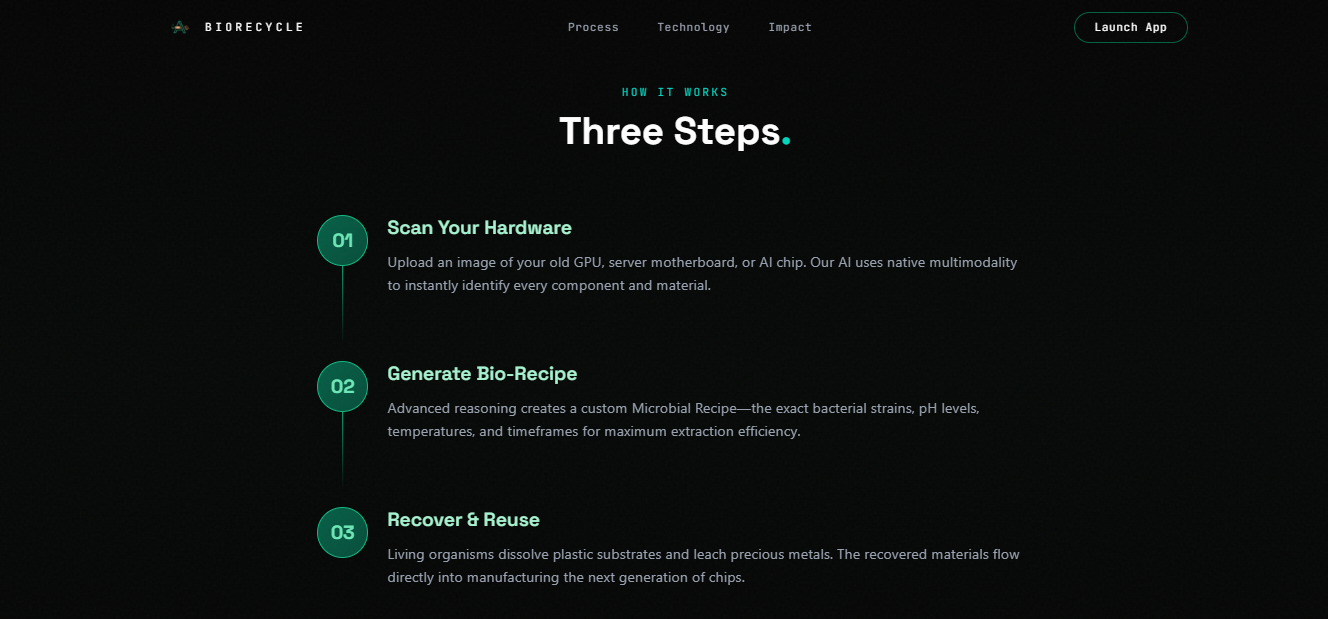
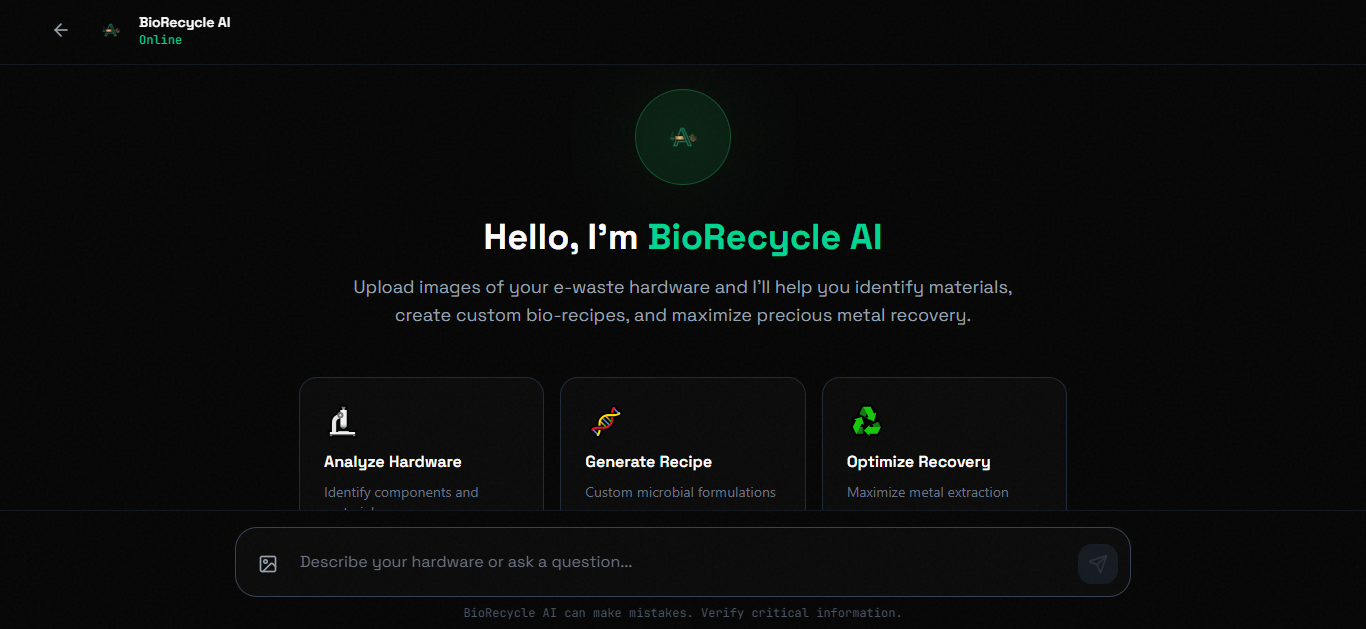
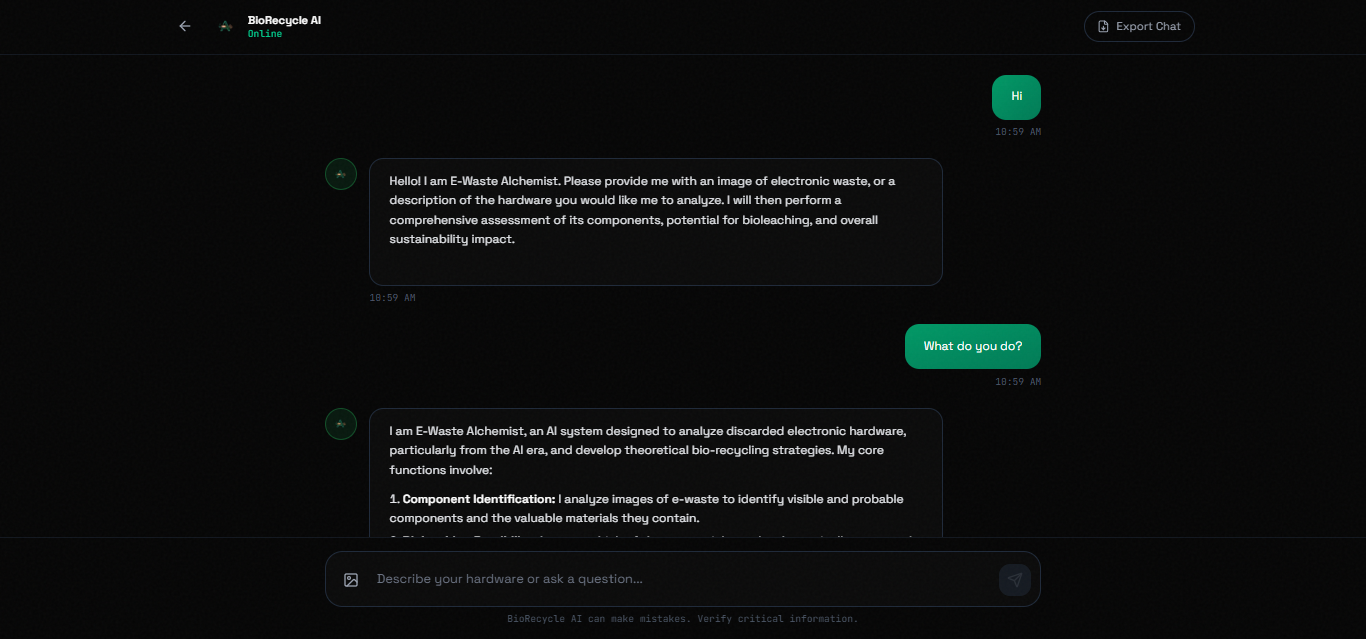
E-Waste Alchemist is an AI-driven sustainability planning and simulation system designed to analyze discarded AI hardware and estimate environmentally responsible recycling outcomes.
The system:
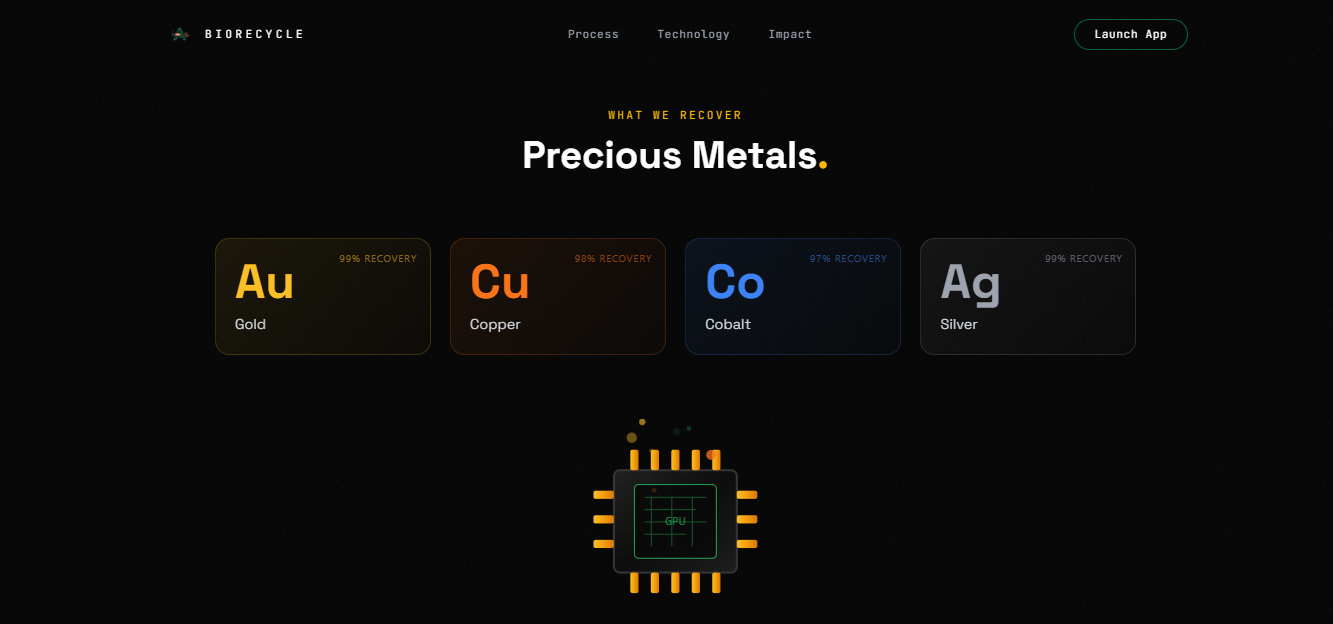
- Identifies recoverable materials from e-waste
- Simulates safe, BSL-1–only microbial bioleaching at a conceptual level
- Builds a digital twin of recycling outcomes
- Quantifies sustainability impact such as CO₂ reduction, material recovery, and circularity
- Enforces biosafety and regulatory guardrails
This project is a decision-support and simulation tool, not a laboratory or DIY recycling guide.
How we built it
The project was built as a modular AI system with a web-based interface:
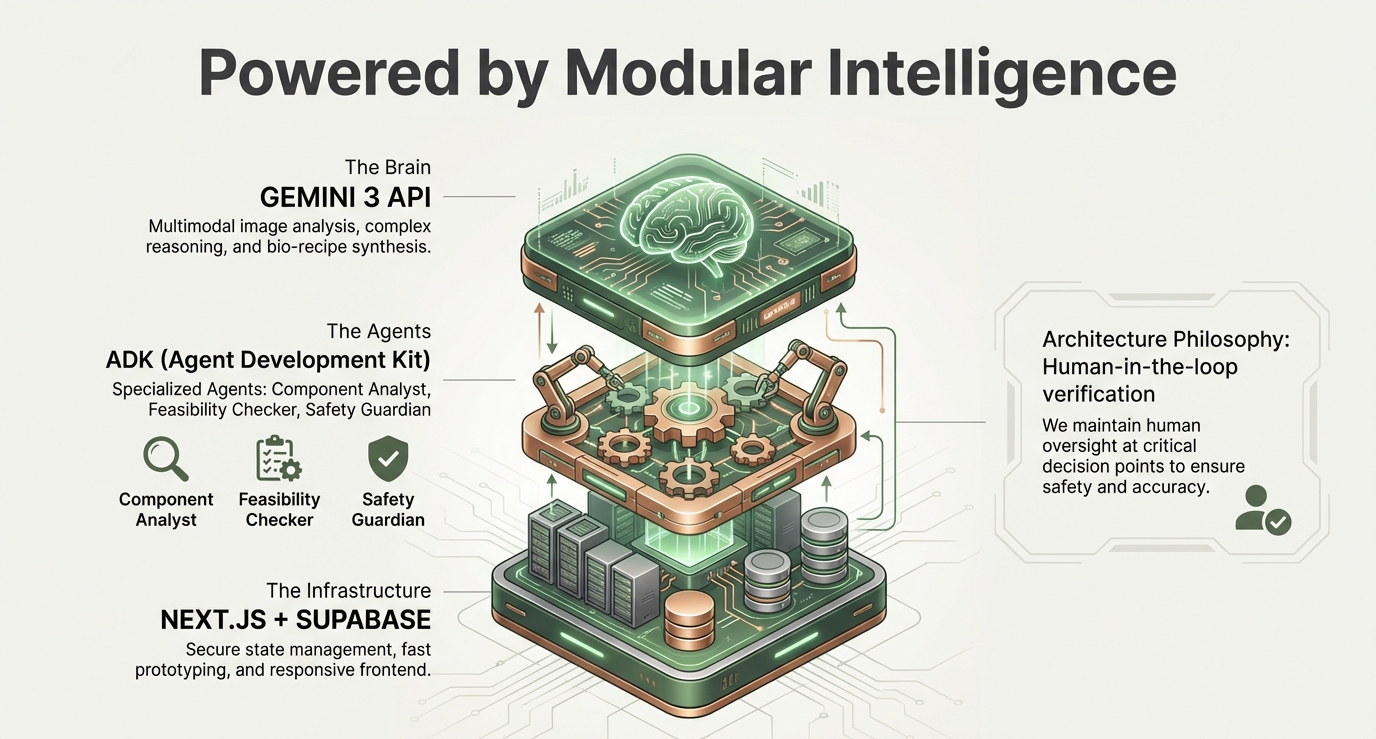
- Next.js is used for both the frontend and backend to enable fast prototyping and seamless integration.
- Gemini API powers reasoning, material analysis, and sustainability insights.
- The Agent Development Kit (ADK) is used to design intelligent agents for component analysis, bioleaching feasibility assessment, sustainability scoring, and biosafety checks.
- Supabase is used for secure data storage and project state management.
- Tailwind CSS is used for clean, responsive, and accessible UI design.
The system architecture emphasizes clarity, safety, and scalability rather than low-level execution.
Impact & Sustainability
E-Waste Alchemist supports:
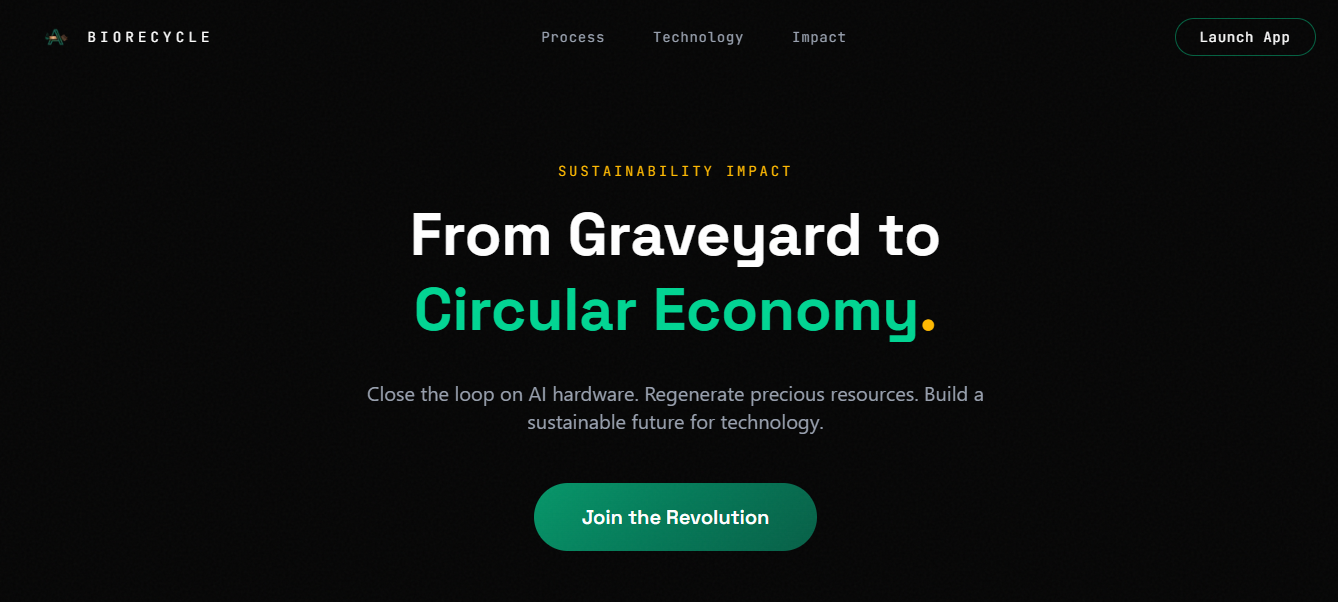
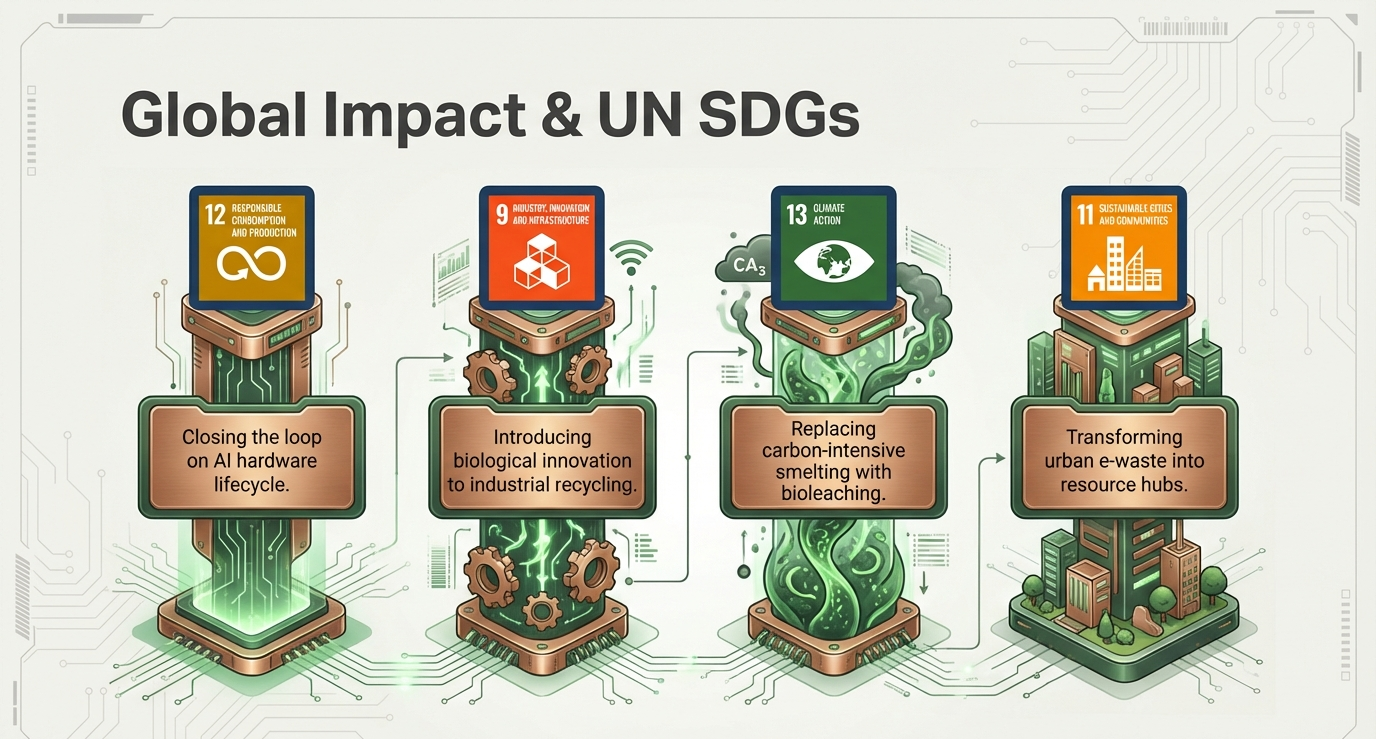
- Circular economy principles
- Responsible AI hardware lifecycle management
- Reduction of toxic runoff and CO₂ emissions
- Alignment with UN SDGs (12: Responsible Consumption, 13: Climate Action, 9: Industry & Innovation)
By rethinking how AI hardware waste is evaluated, the project highlights how AI can contribute to climate-positive and safer technological futures.
Challenges we ran into
One of the main challenges was balancing scientific realism with strict biosafety and ethical boundaries, especially when modeling bioleaching concepts without enabling unsafe practices. Translating complex sustainability and circularity metrics into clear, understandable outputs for a general audience was also challenging.
Accomplishments that we're proud of
We are proud of designing a safety-first AI system that combines environmental sustainability, bioeconomy concepts, and responsible AI. Building a modular, agent-based architecture that simulates recycling outcomes while enforcing biosafety and regulatory guardrails was a key achievement.
What we learned
Through this project, we learned how AI agents can be used as responsible decision-support tools in sustainability-focused domains. We also gained deeper insights into e-waste challenges, circular economy frameworks, and the importance of embedding ethics and safety into AI system design from the start.
What's next for E-Waste Alchemist
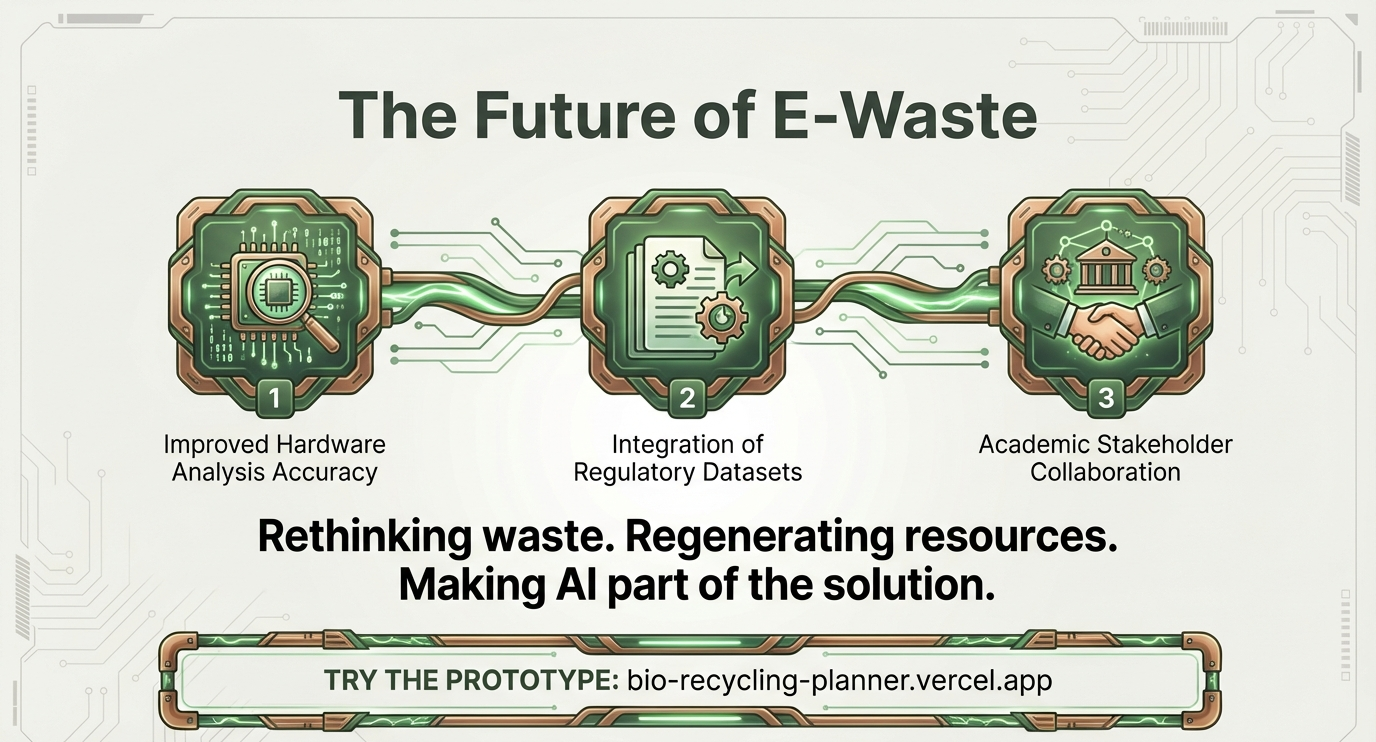
Next steps include improving hardware analysis accuracy, expanding sustainability and circularity metrics, incorporating policy and regulatory datasets, and exploring collaborations with academic and industrial stakeholders to support scalable and regulation-compliant e-waste management solutions.
Built With
- agent-development-kit-adk
- gemini-api
- next.js
- supabase
- tailwind-css


Log in or sign up for Devpost to join the conversation.