-
-
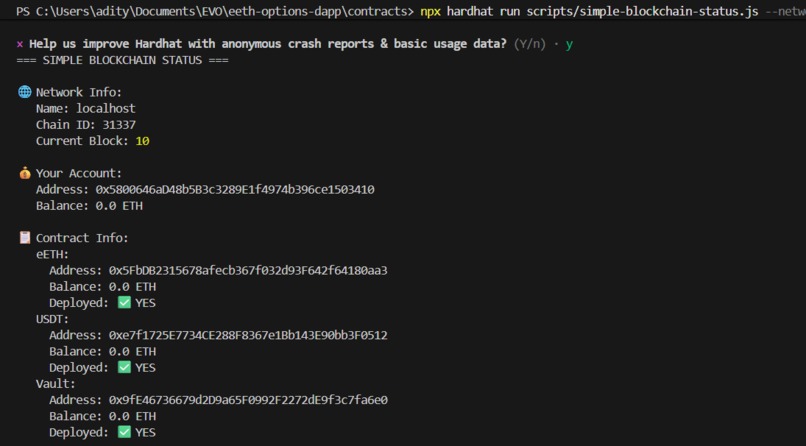
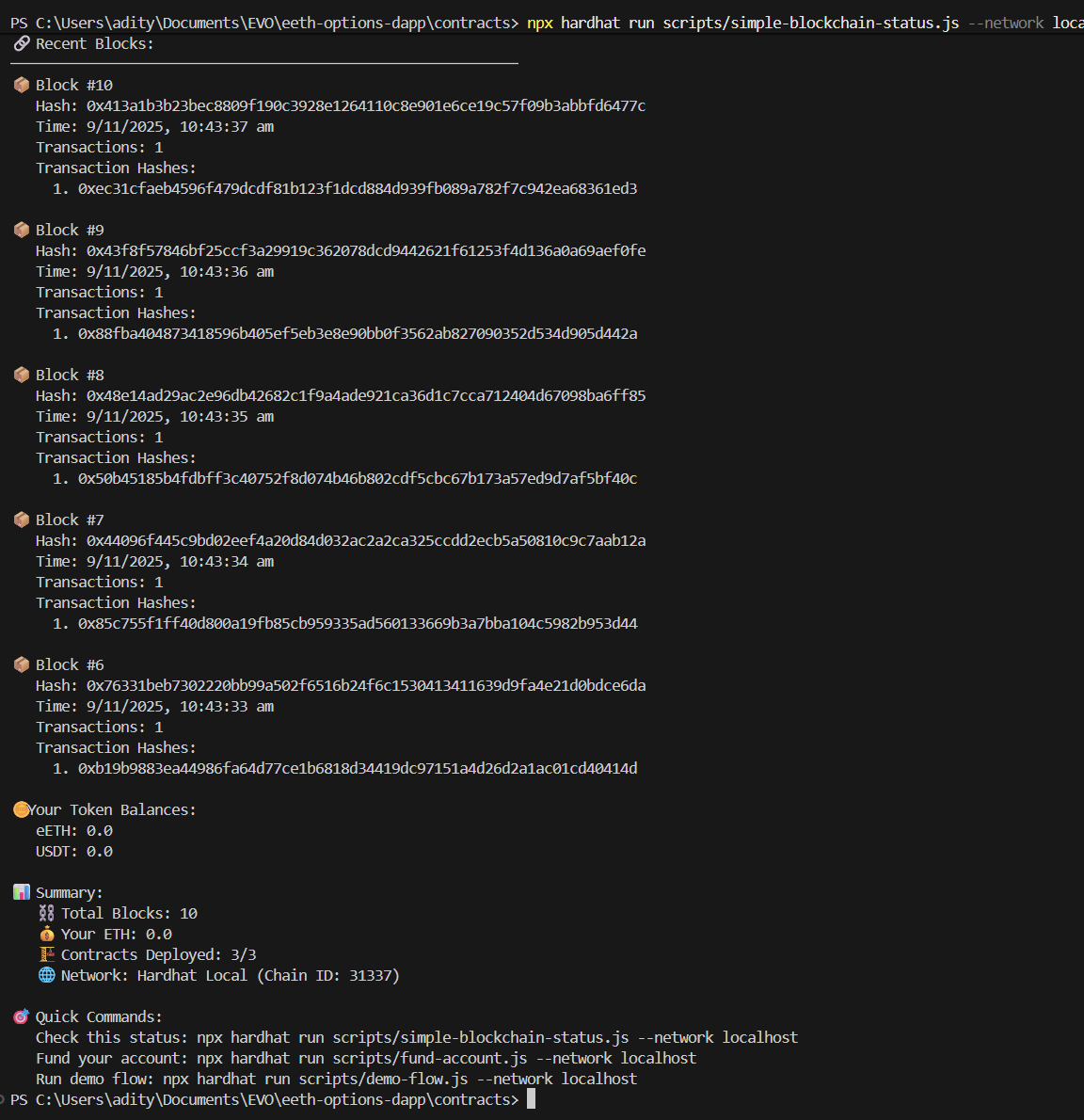
Backend Blockchain Info
-
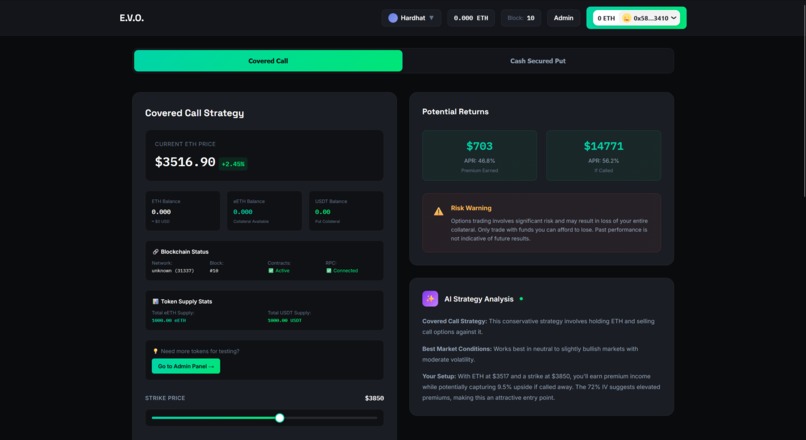
1
-
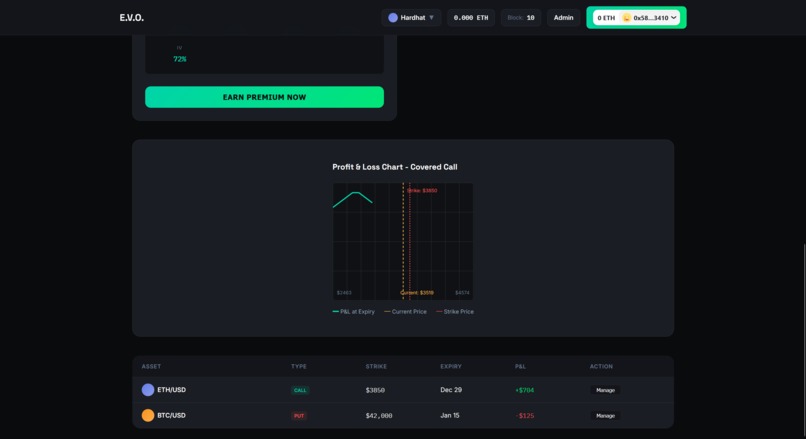
4
-
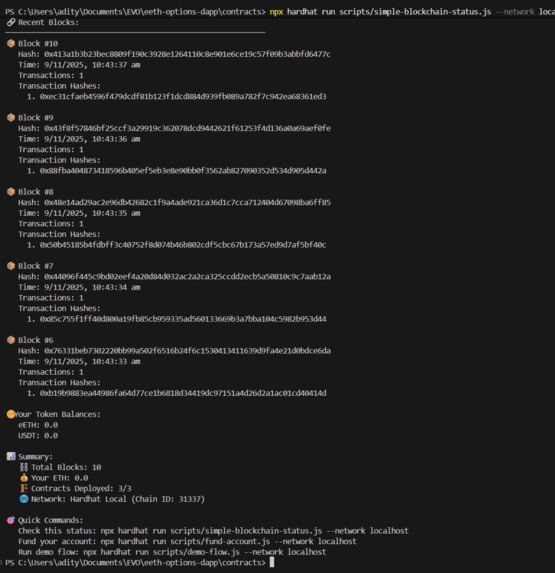
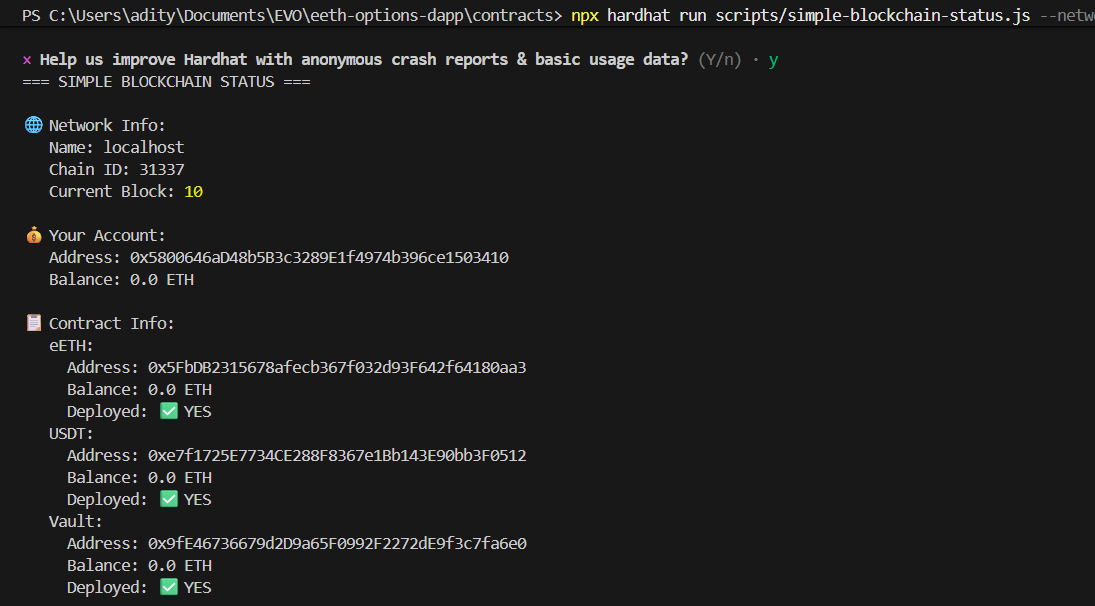
Blockchain info
-
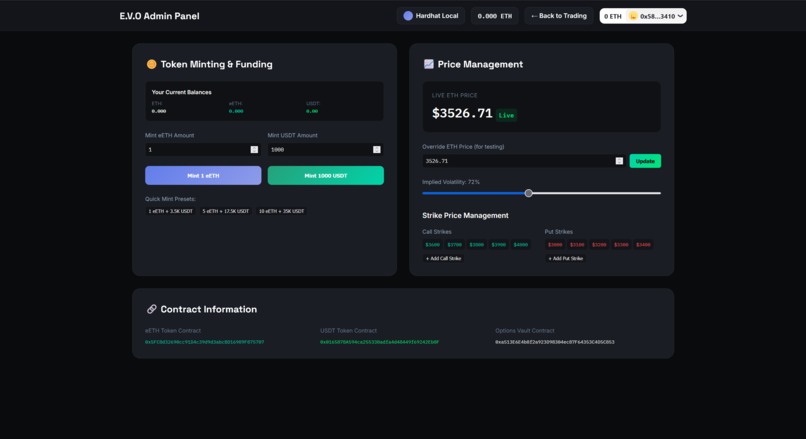
5
-
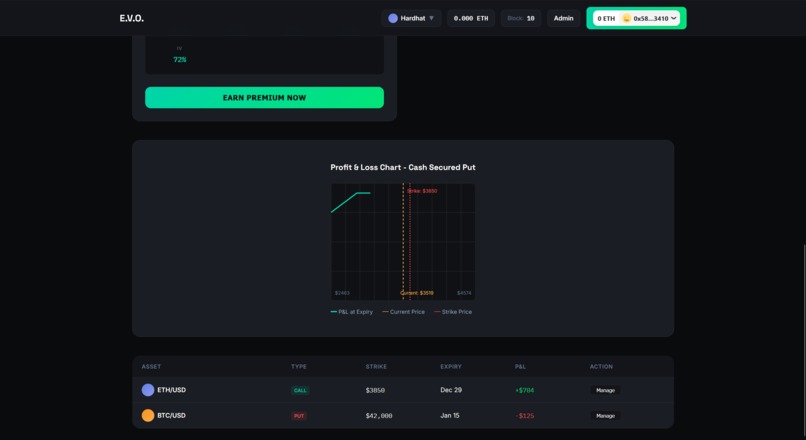
3
-
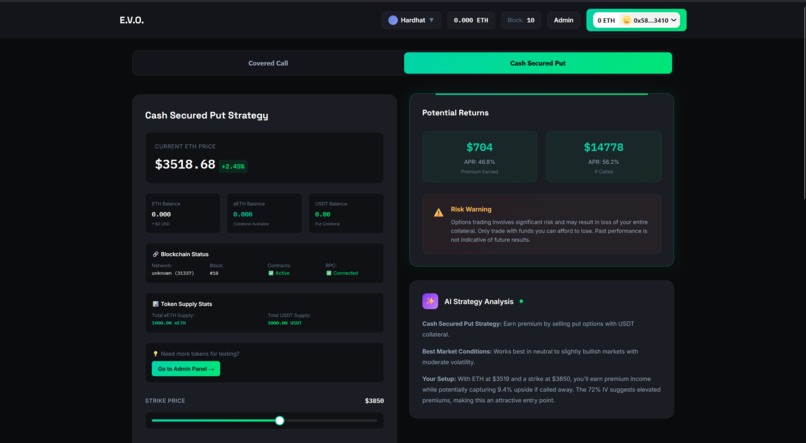
2
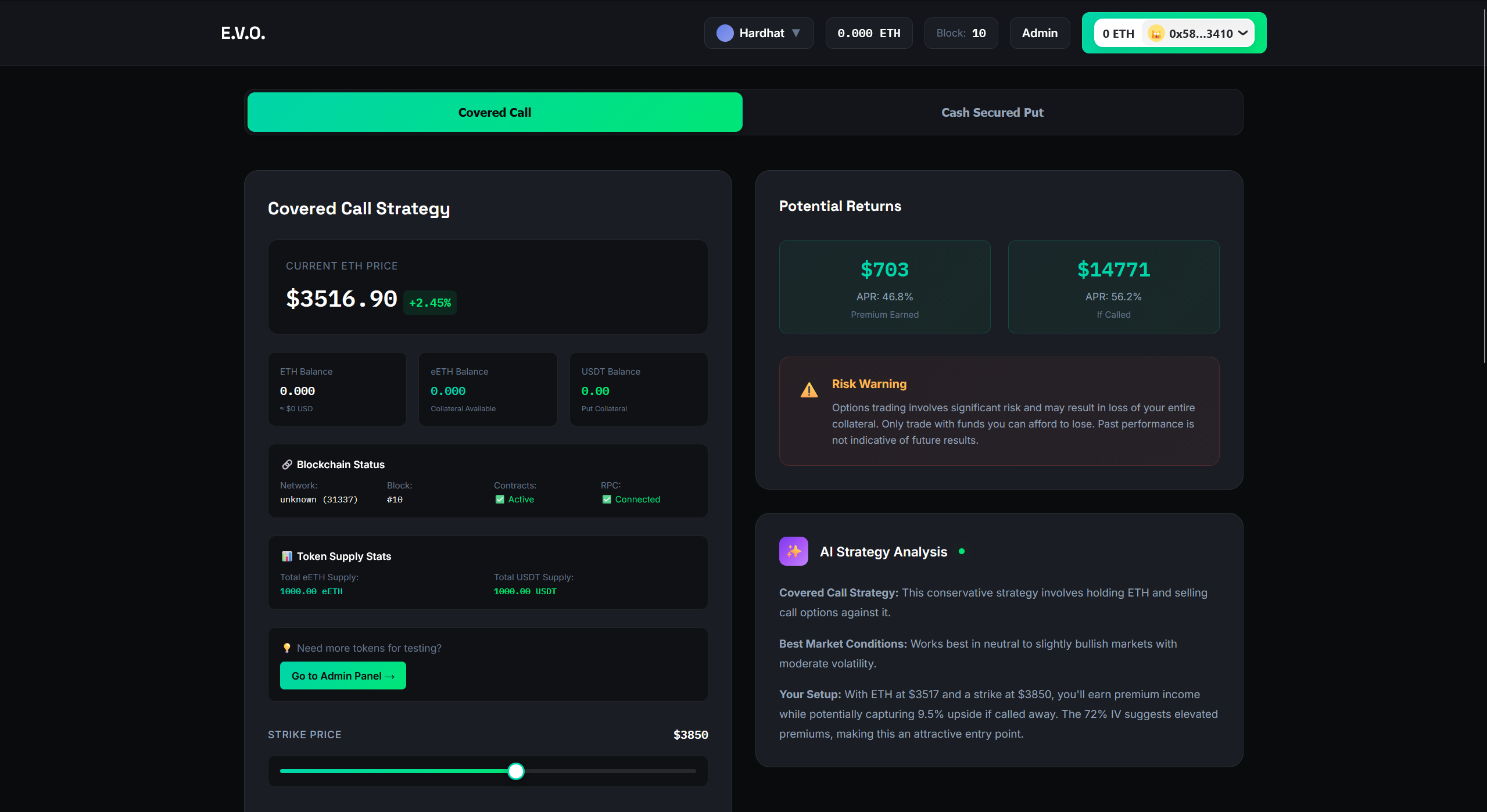
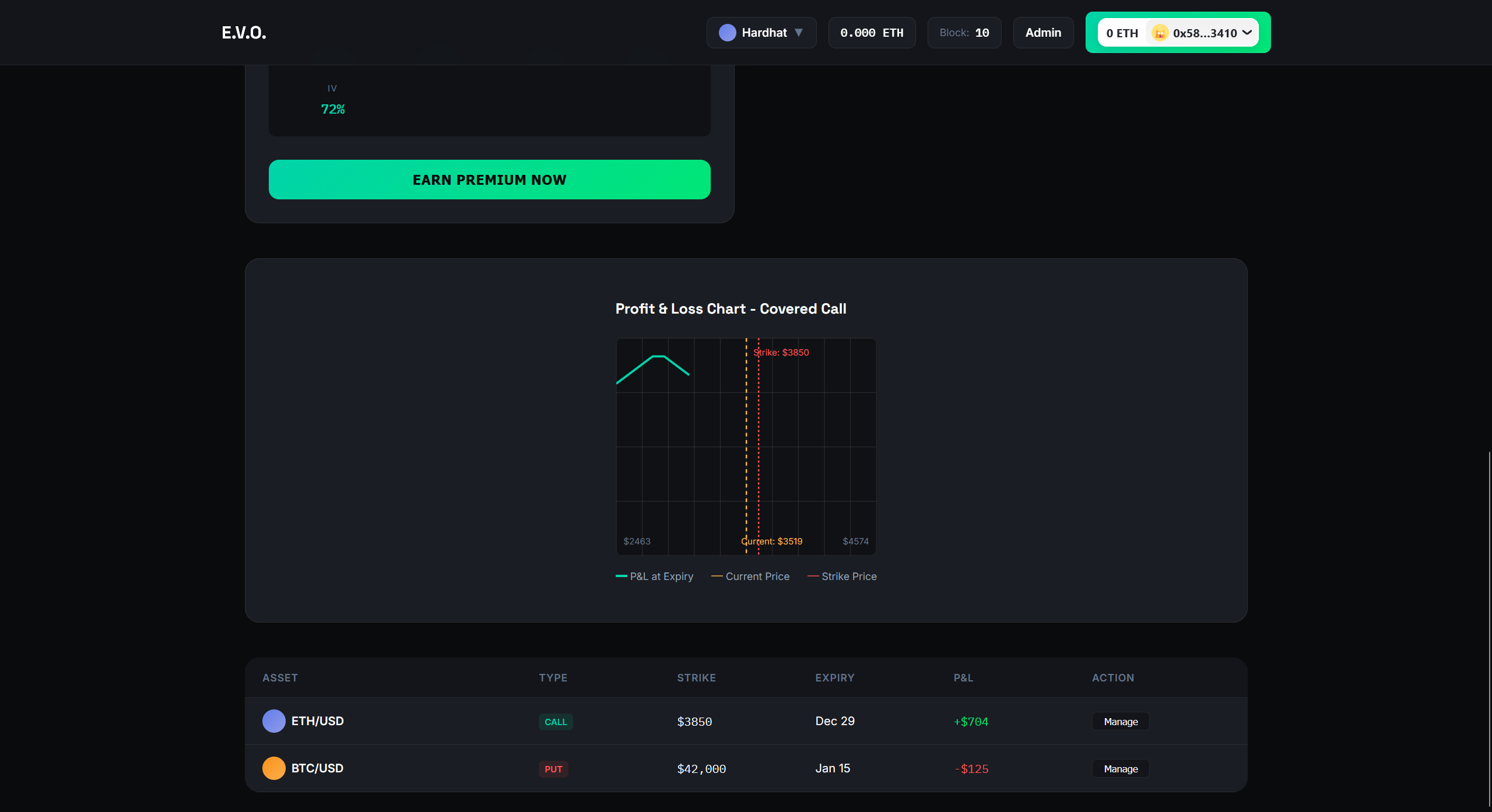
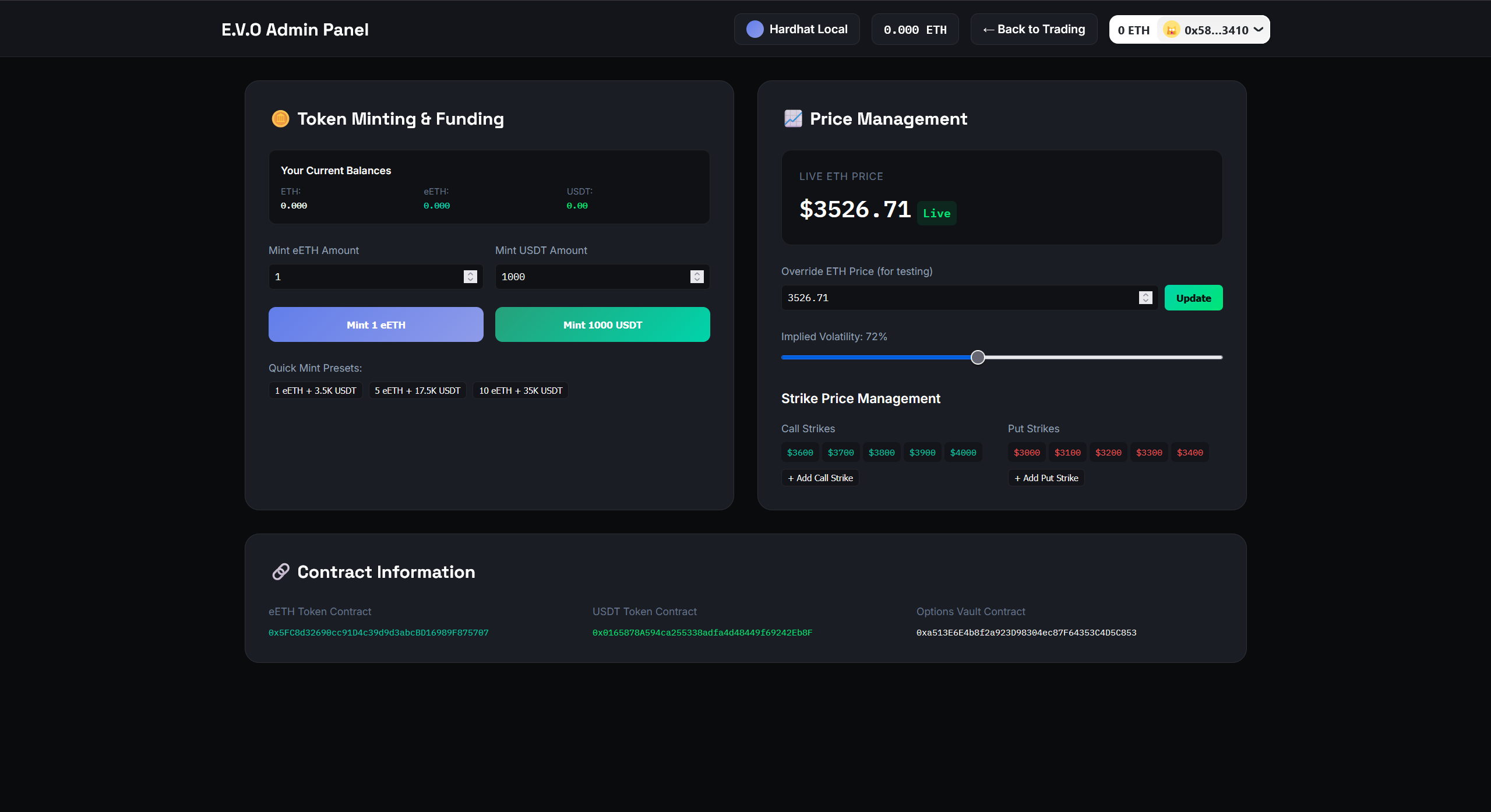
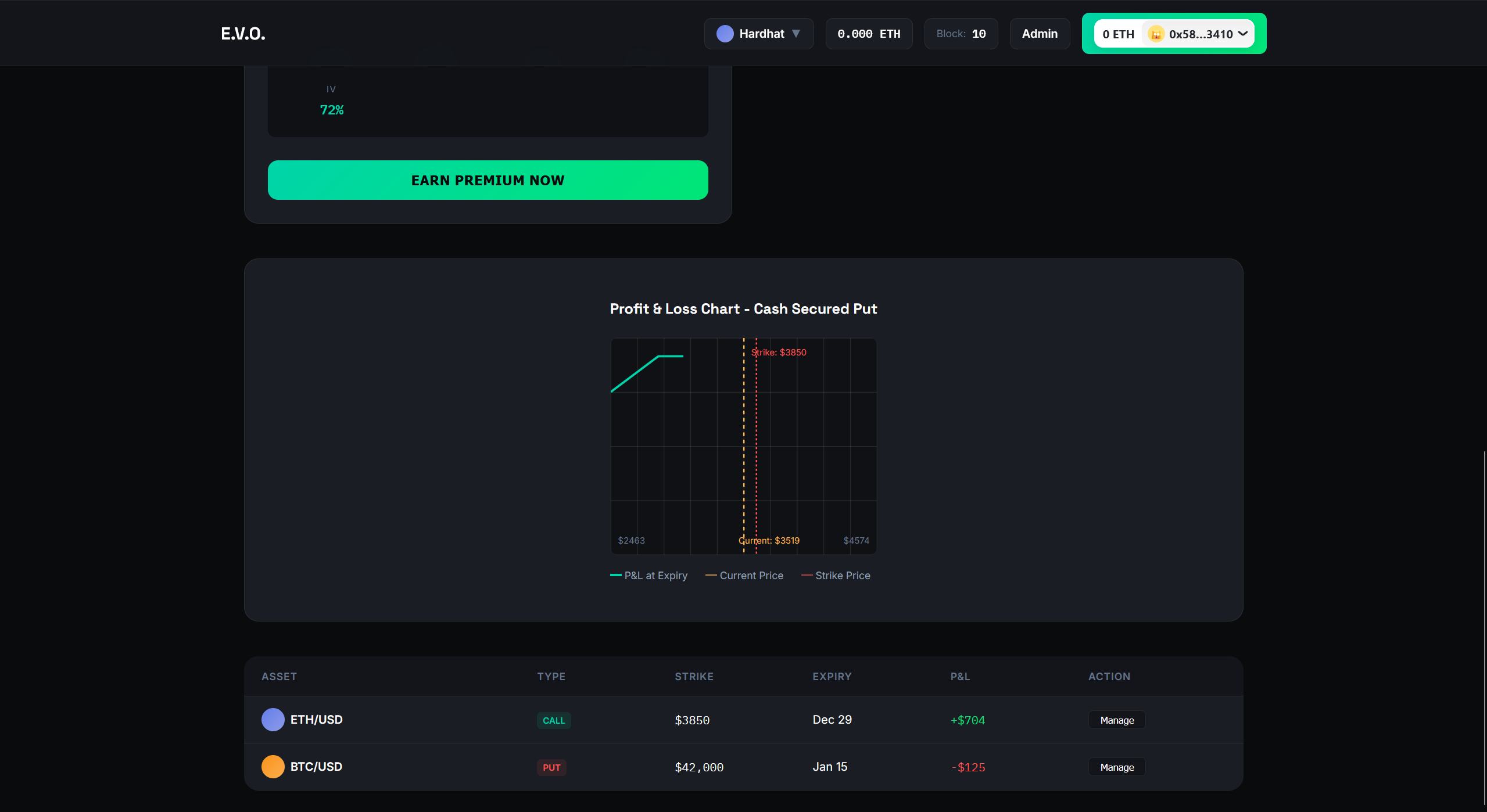
Inspiration We were inspired by sophisticated options protocols like Rysk Finance but saw a specific, un-met need within the rapidly growing Ether.Fi ecosystem. Users holding eETH (Ether.Fi's liquid staking token) are earning staking yield, but their capital could be working even harder. E.V.O. was born from a simple question: "How can we build a dedicated, user-friendly options vault to help eETH holders safely earn additional, non-staking yield on their assets?"
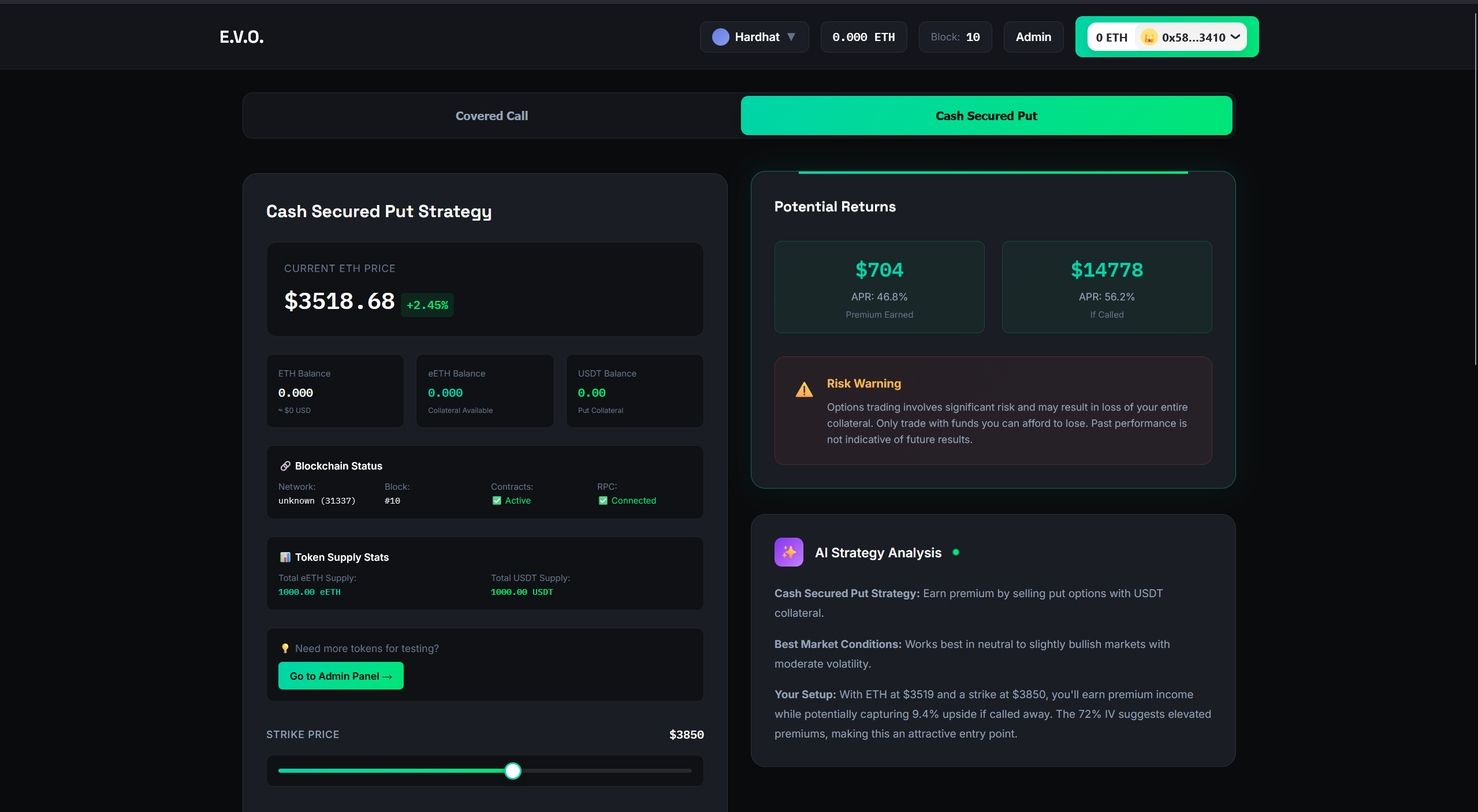
What it does E.V.O. (Ether.fi Vault Options) is a full-stack decentralized application that allows users to earn premium income on their crypto assets. It implements two core, collateralized strategies: Covered Calls: Users lock their eETH as collateral, sell call options against it, and instantly earn a USDT premium. This is ideal for users who are long-term bullish on ETH but want to earn income while they hold. Cash-Secured Puts: Users lock USDT as collateral, sell put options, and also instantly earn a USDT premium. This is for users who are willing to buy ETH at a lower price (the strike price) and get paid for taking on that obligation. Our two key features are: Instant Premium Payment: Unlike traditional vaults that pay at expiry, our smart contract pays the user their full premium the moment they lock their collateral. AI Strategy Analysis: We use the Claude API to analyze the user's selected strike price, expiry, and market conditions. It provides a simple, plain-English explanation of the trade's risk and reward, making a complex product more accessible.
How we built it E.V.O. is built on a modern, three-tier architecture: Smart Contracts (On-Chain): The core logic is built in Solidity and developed using the Hardhat framework. This includes the main EethOptionsVault contract, which handles all collateral locking, position management, and the instant premium payment logic.
Backend API (Off-Chain): We built a Node.js server using TypeScript and Express. This backend serves two purposes:
    It integrates with Tatum.io for live market data.
    It runs our real-time APR calculation engine, feeding accurate yield projections to the frontend.
Frontend (Client-Side): The user interface is a Next.js 14 application built with React. We used wagmi and viem for all Web3 interactions (wallet connection, balance fetching, contract calls) and RainbowKit for a polished, professional wallet connection experience.
Challenges we ran into Instant Premium Logic: The biggest technical challenge was engineering the instant premium payment. This required designing the smart contract to act as a "bank," holding a float of USDT to pay users immediately. This added complexity to the vault's internal accounting and risk management. Real-Time Data Reactivity: Making the UI feel "live" was difficult. The "Potential Returns" card had to update instantly as the user moved the strike price slider. This required a tight, reactive loop between the Next.js frontend, our Node.js backend (for APR calculation), and the wagmi hooks (for wallet balances). Safe AI Integration: Prompt-engineering the Claude API was a delicate balance. We had to ensure it provided helpful, educational analysis without giving speculative, non-compliant financial advice. Smart Contracts and Blockchain logic : Implementing the Blockchain logic was hard as we initially went ahead with foundry but we had issues with how it was interacting with windows laptop, so we had to shift to hardhat.
Accomplishments that we're proud of A Complete Full-Stack DApp: We're incredibly proud of building a functional, end-to-end application—from a secure smart contract to a dynamic backend API and a polished React frontend—not just a concept. The Instant Premium Feature: This is our core technical innovation. Getting the on-chain logic right for this user-centric feature was a major win. AI-Powered UX: Successfully integrating the Claude API to "explain" a trade is a feature we believe bridges the gap between complex DeFi and everyday users. Streamlined Dev Environment: We built a complete, one-command local testing environment (npm run deploy:local) that deploys all contracts, funds test wallets, and starts all servers, which massively accelerated our development speed.
What we learned This project was a deep dive into the full lifecycle of a modern DeFi application. We learned how to architect a hybrid on-chain/off-chain system, using the backend API for complex, gas-intensive calculations (like APR) while keeping the core asset management and settlement logic securely on-chain. We gained a much deeper understanding of options vault mechanics, collateralization models, and the financial engineering required to calculate premiums. We learned how to leverage wagmi and viem effectively to create a fast, responsive, and reliable Web3 user experience that feels as smooth as a traditional web app.
What's next for E.V.O. This build is a solid foundation, and our roadmap is clear: Phase 1 (Q1 2026): Build a comprehensive Position Management Dashboard for users to track their P&L, manage open positions, and view historical trade data. Phase 2 (Q2 2026): Prepare for production by replacing mock data with Chainlink Price Oracles, undergoing a full security audit, and deploying to a public testnet. Phase 3 (Q3 2026): Launch on mainnet and expand to multi-asset support, allowing users to run these strategies on other assets like wrapped Bitcoin (WBTC).
Built With
- claude
- express.js
- hardhat
- next.js
- node.js
- rainbowkit
- react
- solidity
- tatum.io
- typescript
- viem
- wagmi


Log in or sign up for Devpost to join the conversation.