-
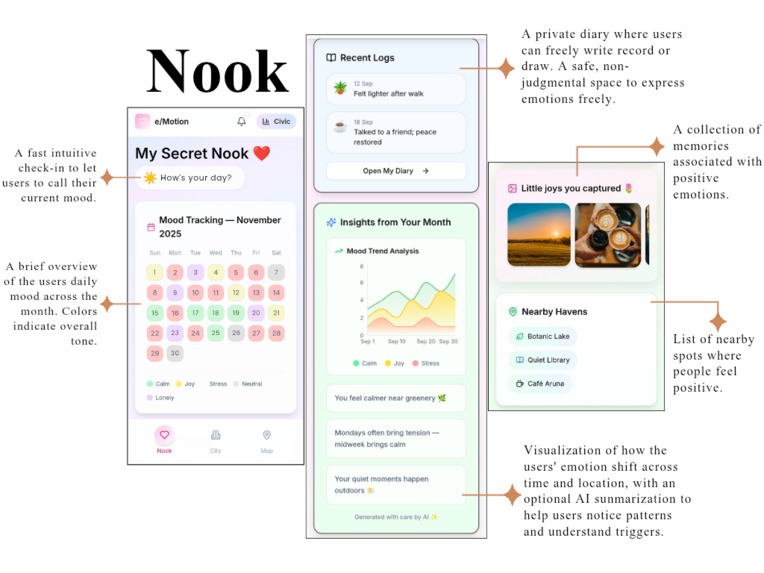
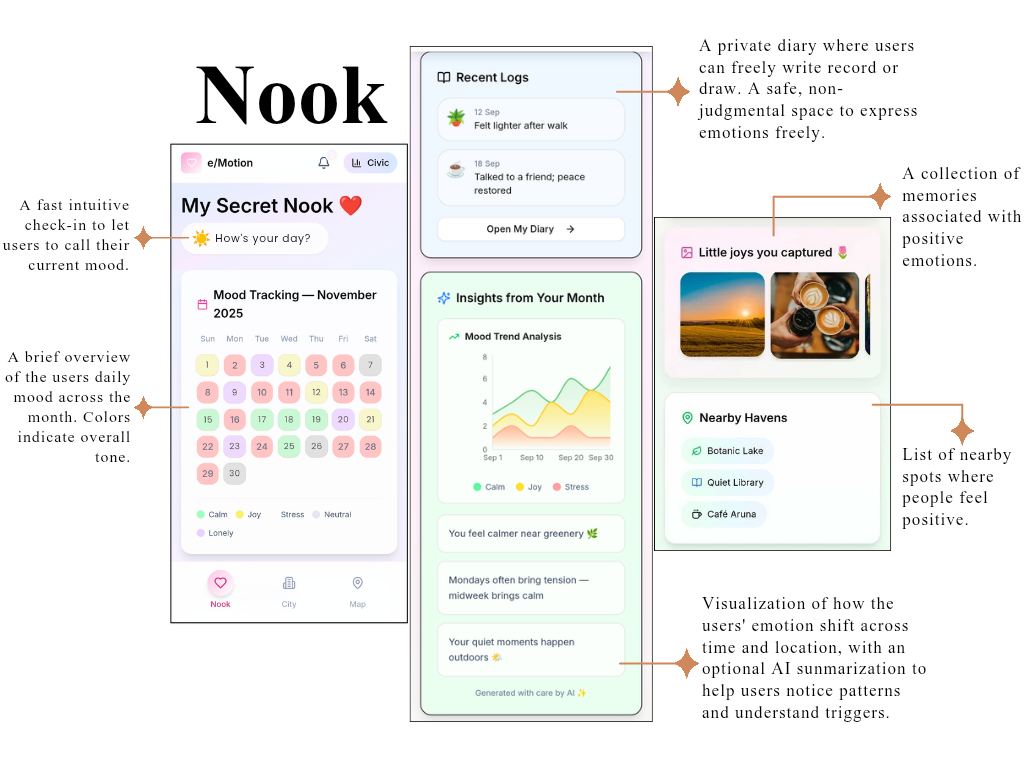
Mockup of Nook
-
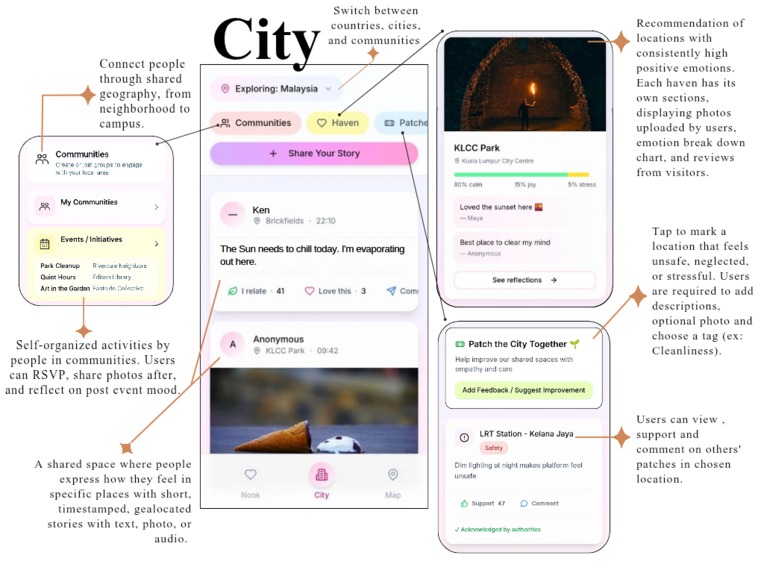
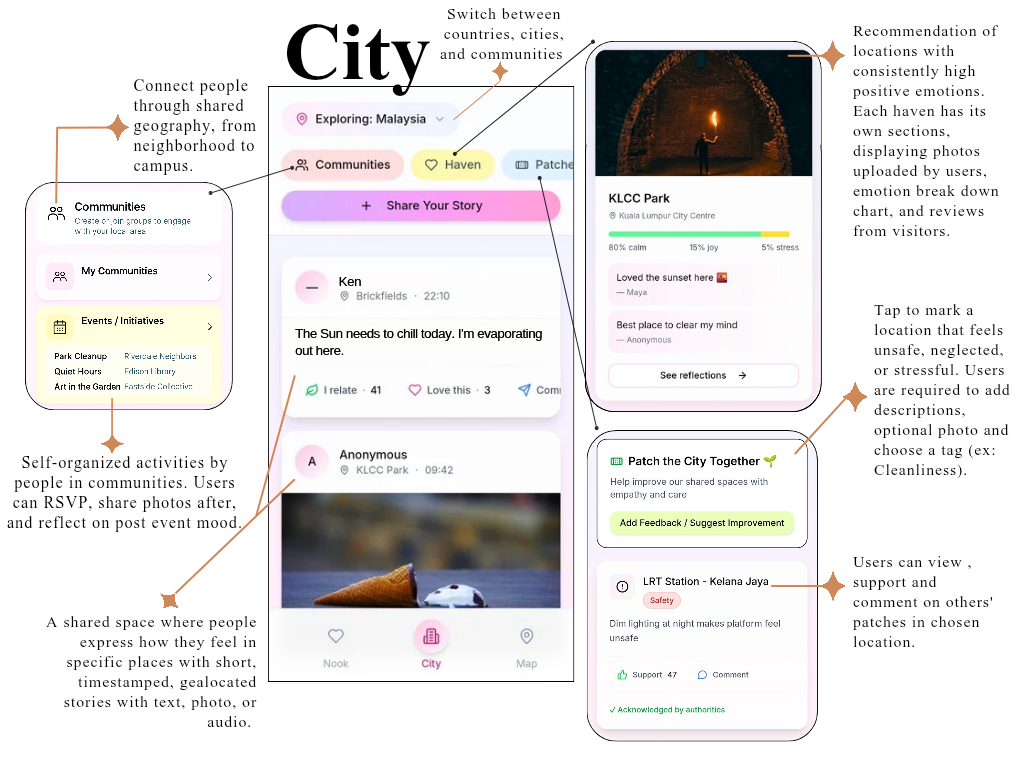
Mockup of City
-
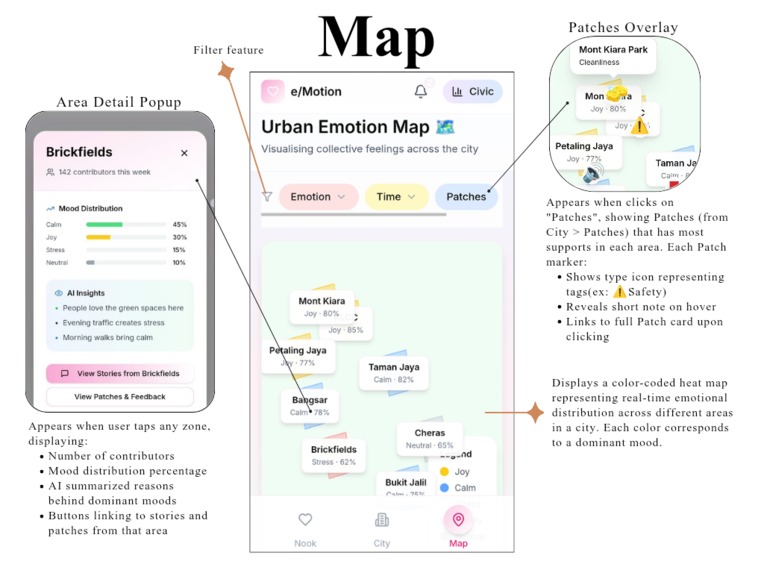
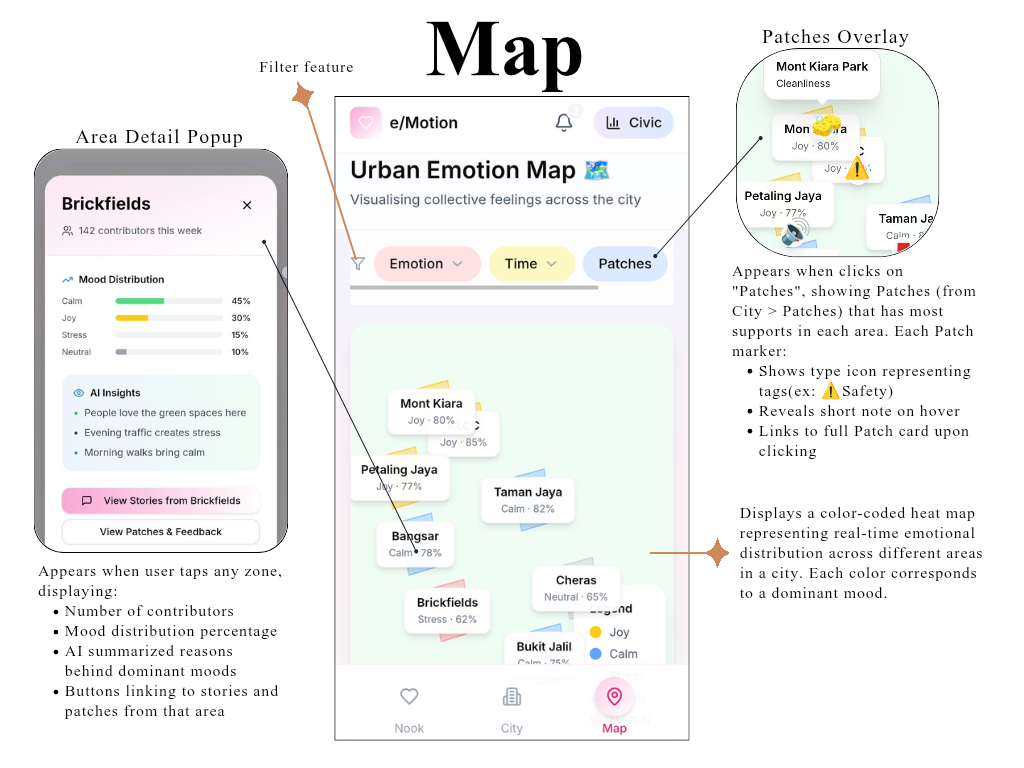
Mockup of Map
-
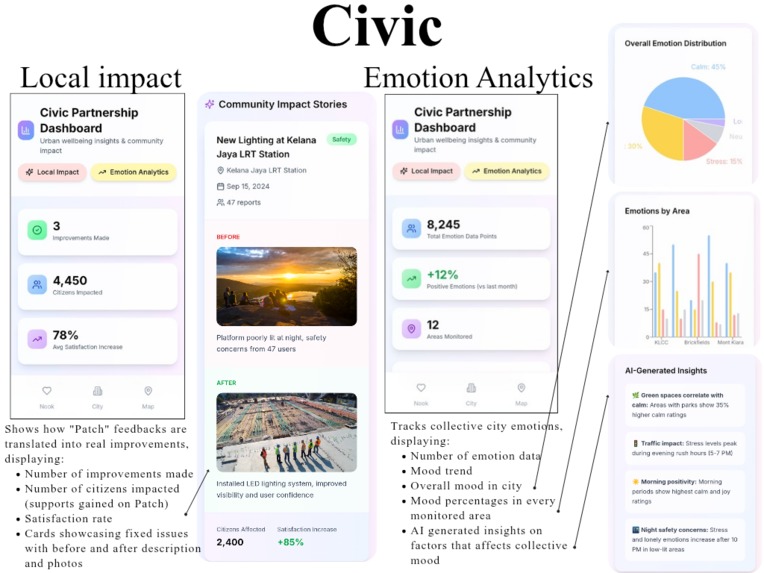
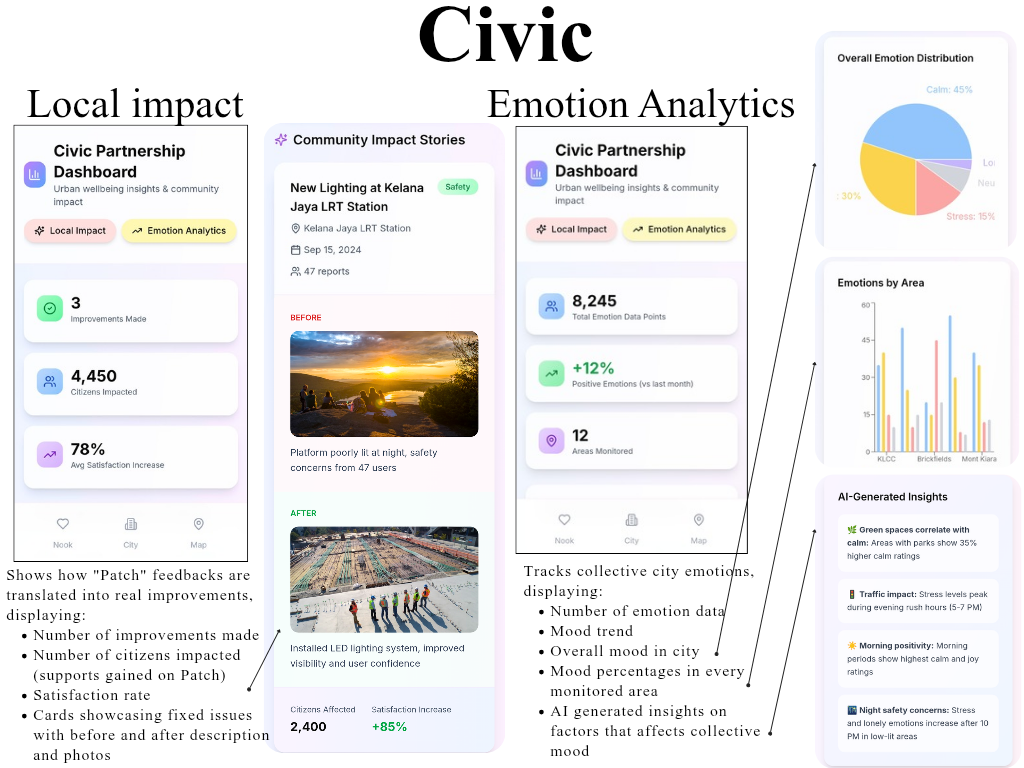
Mockup of Civic Dashboard
Inspiration
Most of us live in cities, yet most cities are blind to how people feel in them.
We track traffic and air quality, but not stress, calm, or belonging. Frustrations about noise, safety, or poor design often end as short online rants that disappear into the void. The systems that could change things rarely hear them. Over time, people stop expecting cities to listen.
That’s what inspired e/Motion, an idea to help cities understand the emotions of their people, and design not just for efficiency, but for wellbeing.
What it does
The goal of e/Motion is to help cities see what’s usually invisible: how people feel in different spaces. It is built around three core spaces:
Nook: a personal wellbeing space. Users can log moods, journal, and receive AI insights that help them see emotional triggers and patterns.
City: the community layer. People can share stories tied to locations, organize small community events, discover Havens (spaces consistently linked with positive emotions), and highlight places that feel unsafe or neglected through Patches.
Emotion Map: a live emotional climate of different areas in the city. Together with the Civic Dashboard, planners and researchers can view anonymized emotion and Patch data, seeing which places uplift or unsettle people, and why.
Together, these layers form a continuous feedback loop between people and place.
How I built it
I started with a simple idea: emotions move.
They travel between people, places, and policies, so the system had to move with them. From that, I designed a three-layer structure:
Personal: where feelings are recognized,
Communal: where they’re shared,
Civic: where they inform change.
This became the backbone of the project. I then turned it into mockups to better see how it would work in real life. Each screen and feature was designed to show how emotions could become information, from personal reflection in Nook, to shared stories in City, to the collective info in Emotion Map and Civic Dashboard.
Challenges I ran into
One of the hardest parts was designing an emotional system that still feels safe to use. How do you visualize collective mood without reducing it to a number? How do you invite honesty without making people feel exposed?
Another challenge was keeping the idea both visionary and realistic. I wanted e/Motion to feel imaginative but also make sense in the real world of policy, data, and urban design.
I also had to find the balance between technology and trust. Emotional data can be powerful, but it’s deeply personal, so it only means something when people believe it’s being used with care and integrity.
What I learned
I learned that designing for emotion isn’t about adding clever features, it’s about building relationships.
Between people and their own feelings. Between neighbors and the places they share. Between citizens and their cities.
When treated with respect, emotional data can reveal things numbers can’t: the signs of belonging, exhaustion, or comfort.
Most of all, I realize that the future of civic technology won't be measured by efficiency alone, but by how well cities listen.
What's next for e/Motion
The next step is to bring e/Motion beyond the mockups: to test it in the real world.
The vision is to collaborate with city councils, researchers and wellbeing organizations so that emotional data can guide real urban decisions. A Civic Partnership Dashboard feature will be added to give city partners access to anonymized emotion data, “Patches,” and wellbeing insights.
In the long term, e/Motion could grow into an open emotional infrastructure for cities, together with environmental sensors, health data, and planning tools.
Its goal is simple but transformative: to make emotion a civic metric.
Built With
- canva
- google-docs
- mobbin
- powerpoint

Log in or sign up for Devpost to join the conversation.